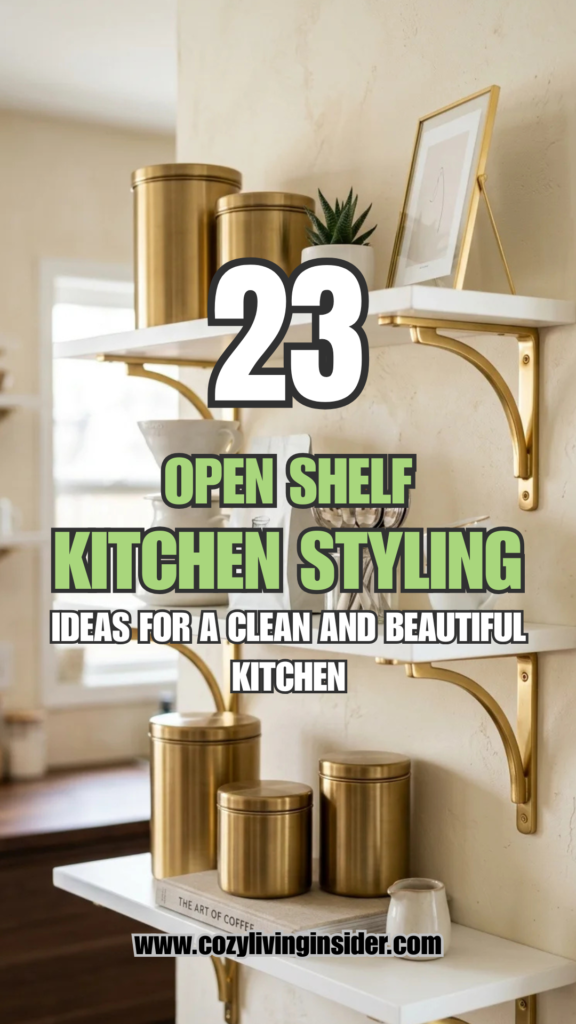

Open shelving has revolutionized modern kitchen design, moving away from the heavy, enclosed feel of traditional upper cabinets toward a more breathable, curated aesthetic. When executed correctly, open shelves serve as both a functional storage solution and a dynamic canvas for personal expression. However, the line between “styled” and “cluttered” is thin. Achieving a clean and beautiful look requires a strategic approach to balance, color, and texture.
Whether you are working with a farmhouse aesthetic, a sleek industrial loft, or a cozy cottage kitchen, these 23 styling ideas will help you transform your open shelves into a stunning focal point.
1. Monochromatic Palette
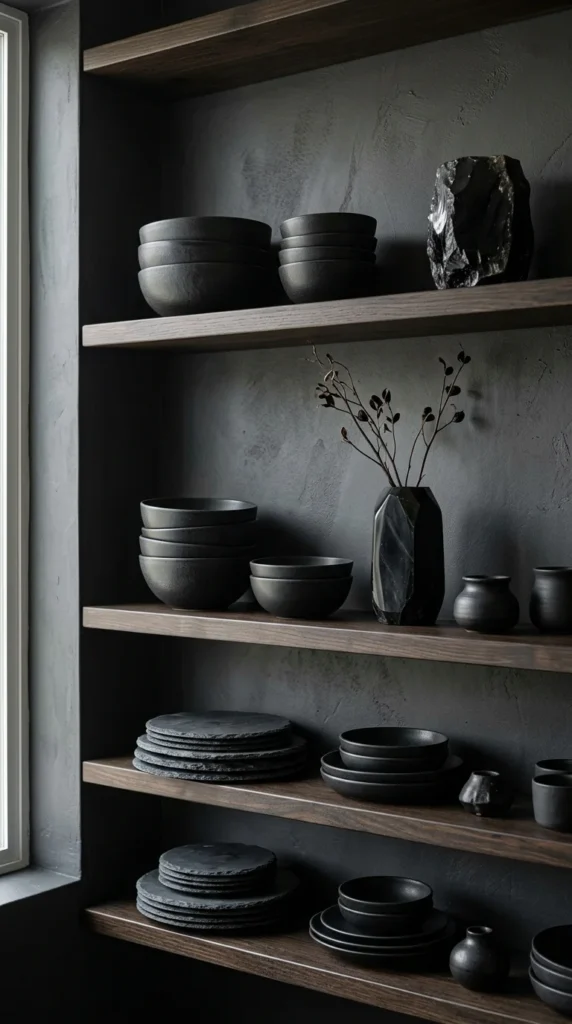
A monochromatic color scheme is one of the most effective ways to ensure your kitchen looks organized and high-end. By choosing dishes, mugs, and decorative items in varying shades of a single color—such as crisp white, deep navy, or matte black—you create a sense of visual harmony. This approach prevents the shelves from looking busy, even if they are fully stocked. It allows the textures of the items to take center stage rather than competing colors.
2. Natural Wood
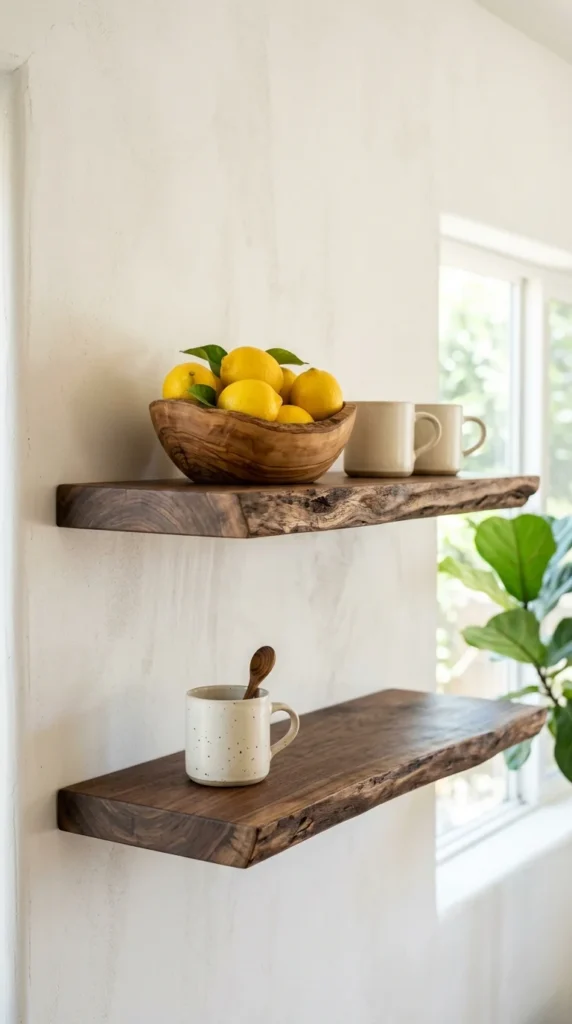
Integrating natural wood elements brings immediate warmth to a kitchen. Raw or reclaimed wood shelves provide an organic contrast to the often cold surfaces of stainless steel appliances and stone countertops. To style these, keep the items simple to let the grain and texture of the wood shine. Use earth-toned pottery or clear glass to complement the natural aesthetic.
3. Glassware Display
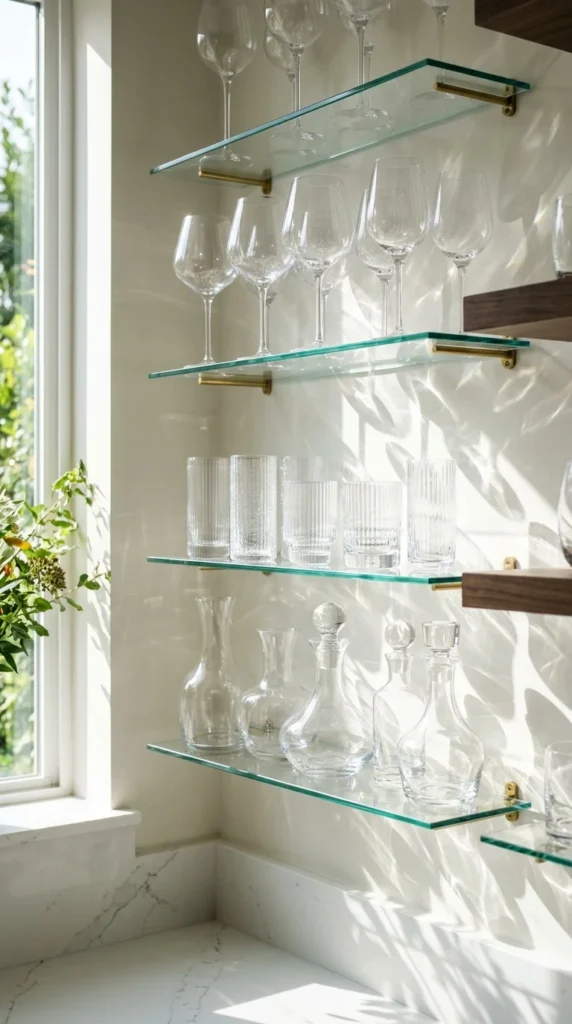
Glassware adds an element of transparency and “airiness” to the kitchen. By grouping clear glasses, carafes, and pitchers together, you allow light to pass through the shelves, making the room feel larger. For a polished look, ensure all glassware is polished and free of water spots. Mixing different heights and shapes of glass can add subtle architectural interest without overwhelming the space.
4. Greenery Integration
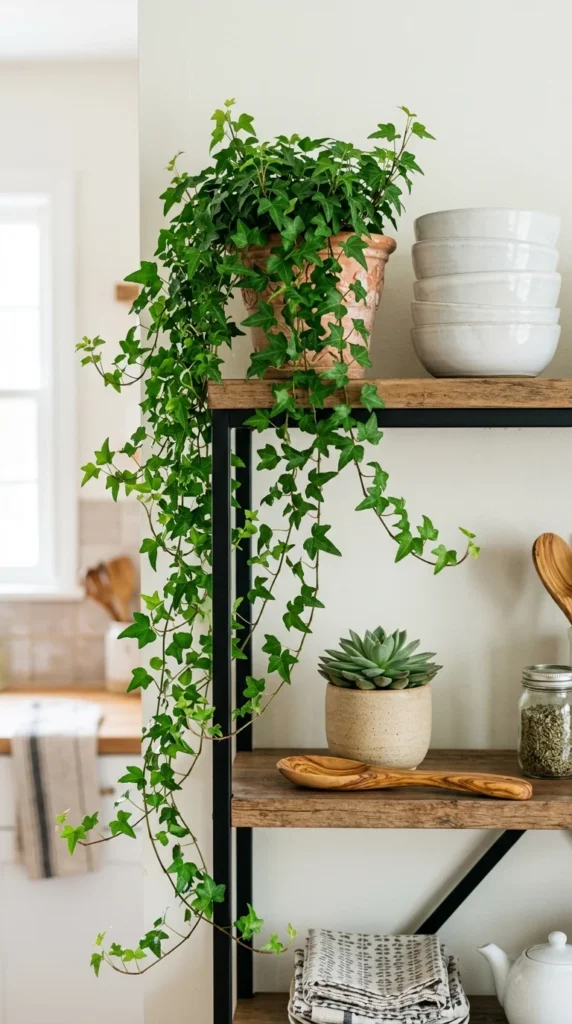
Nothing breathes life into a kitchen like living plants. Incorporating greenery—whether it’s a trailing Pothos, a structural Snake Plant, or fresh culinary herbs like rosemary and basil—adds a vibrant pop of color. Plants also soften the hard lines of the shelving and cabinetry, making the kitchen feel more welcoming and organic.
5. Vintage Accents
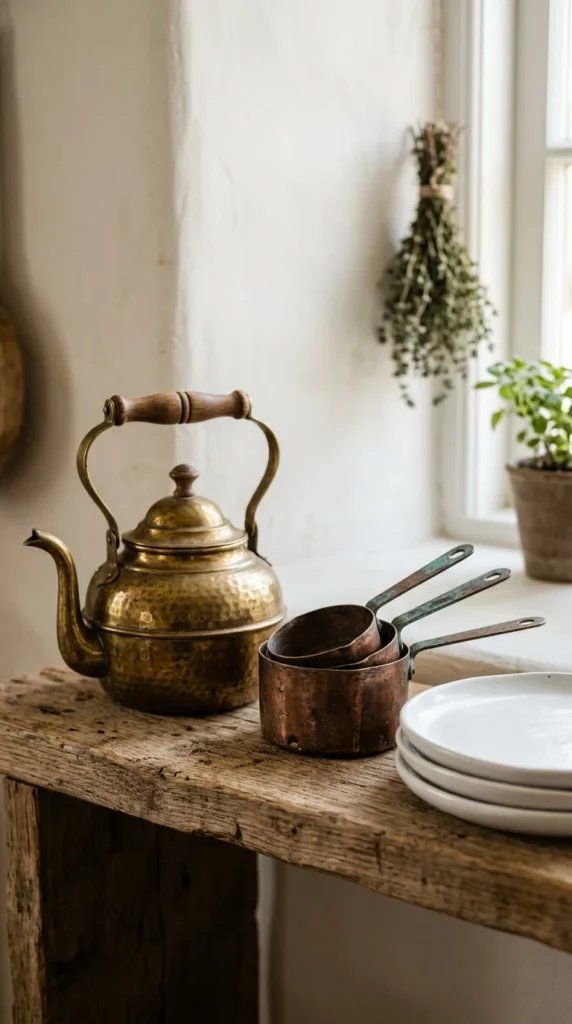
Mixing old with new creates a “collected over time” feel that adds character to your home. Scour antique shops for unique items like vintage brass pepper mills, aged copper pots, or mid-century modern canisters. These pieces act as conversation starters and prevent the kitchen from feeling like a sterile showroom.
6. Metallic Touches
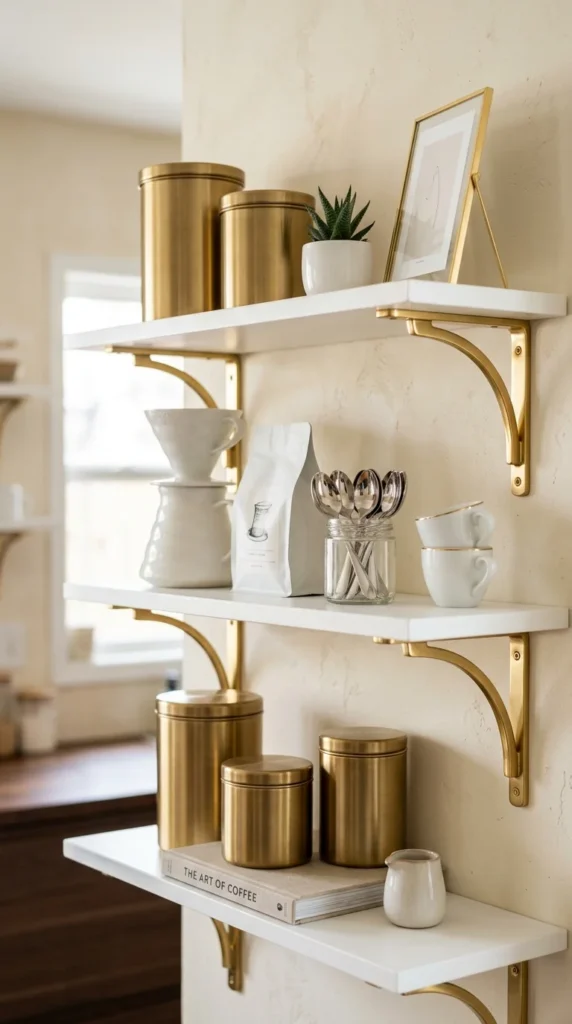
Metallics bring a touch of luxury and reflection to your shelving. Whether you prefer the warmth of brass and copper or the cool edge of chrome and stainless steel, metallic accents can tie in with your kitchen hardware. Use metal trays to group smaller items or choose canisters with metallic lids to add a subtle shimmer to your display.
7. Symmetrical Balance
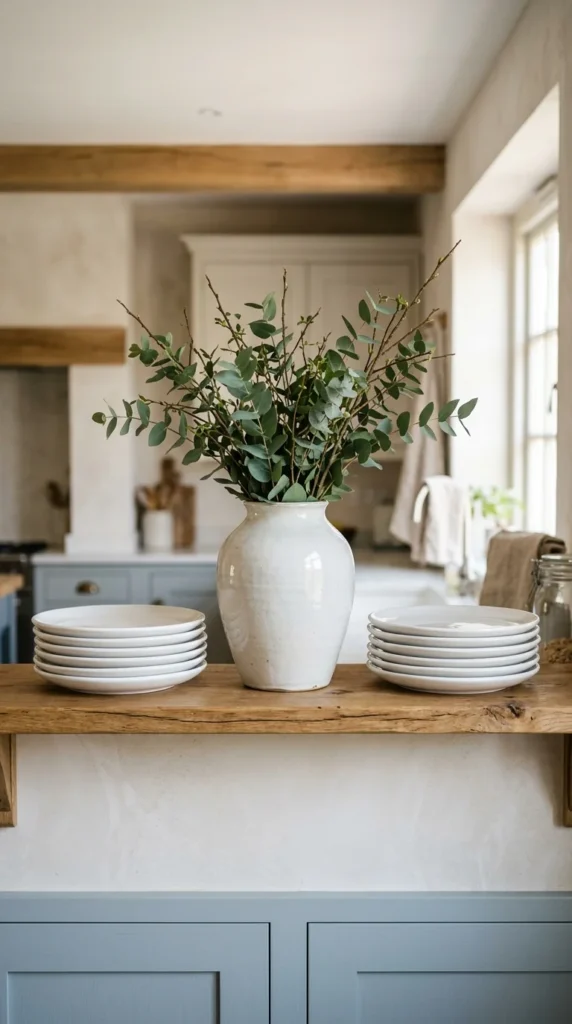
If you prefer an orderly, formal look, symmetry is your best friend. Placing identical items on either side of a central focal point creates a sense of calm and stability. This technique is particularly effective in large kitchens with long runs of shelving, as it provides a structured rhythm that the eye can easily follow.
8. Artisanal Pottery
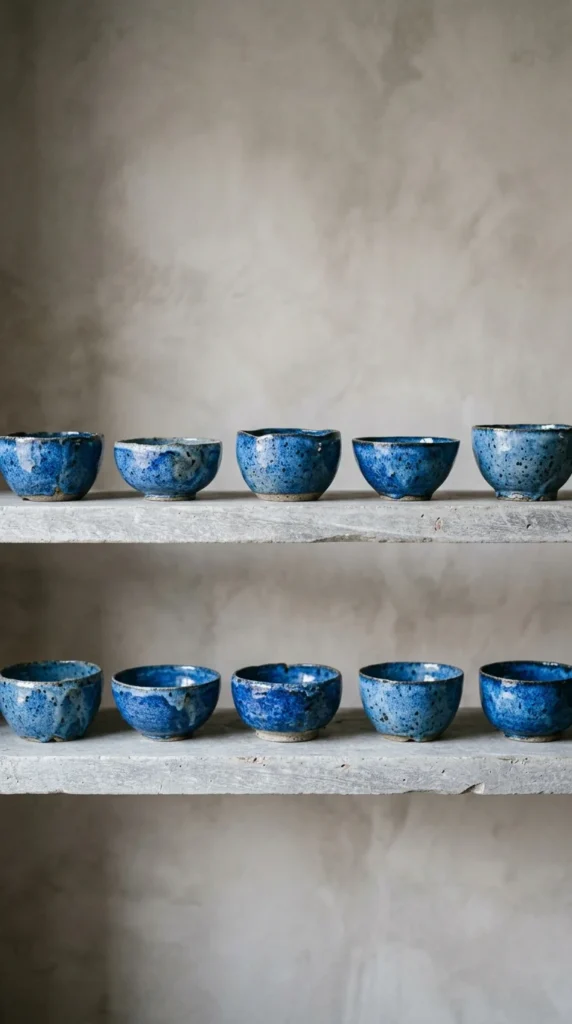
Moving away from mass-produced dinnerware in favor of artisanal, handmade pottery adds a layer of soul to your kitchen. The slight imperfections in glaze and shape found in handcrafted ceramics provide a tactile quality that elevates the overall design. Choose pieces with unique textures or muted, earthy glazes to create a sophisticated, grounded look.
9. Cookware Showcasing
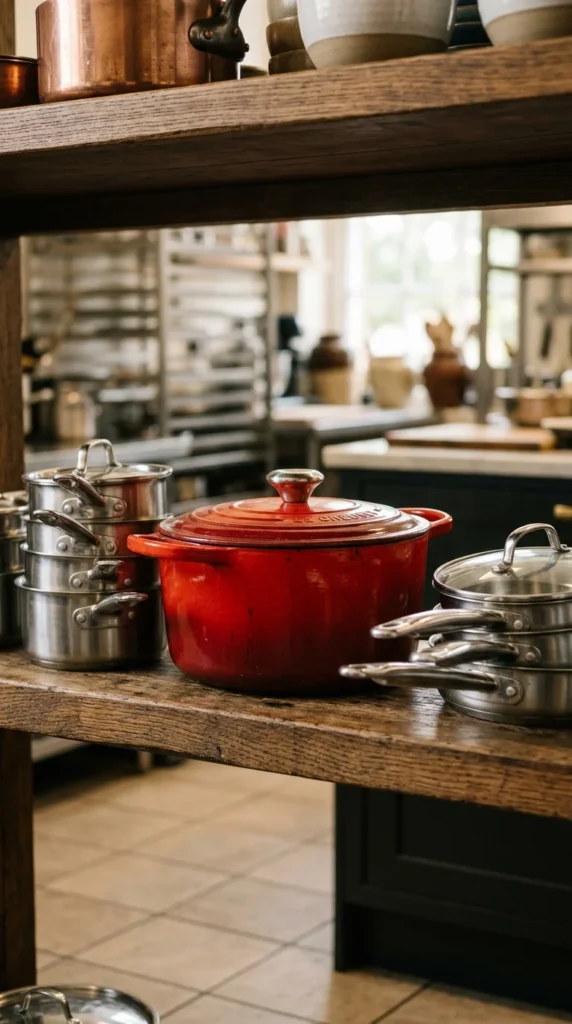
Open shelving isn’t just for decorative items; it’s a great place to store your most beautiful and frequently used cookware. High-quality pieces like Le Creuset Dutch ovens, copper skillets, or professional-grade stainless steel pots deserve to be seen. Placing these heavier items on lower shelves provides a sense of visual weight and grounding to the layout.
10. Texture Layering
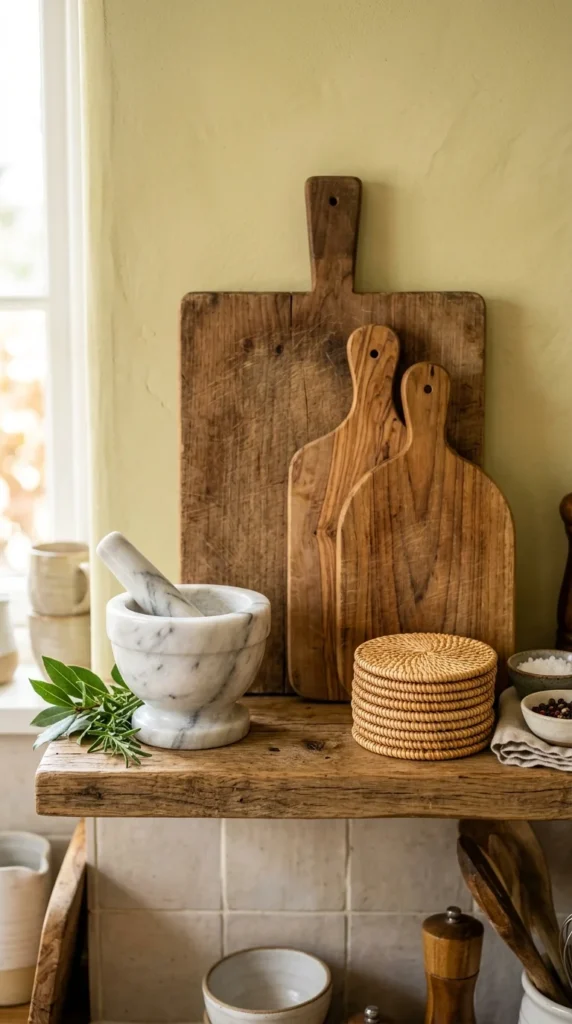
To prevent a kitchen from feeling “flat,” incorporate a variety of textures. Layering different materials—such as the smoothness of marble, the roughness of wood, and the weave of a basket—creates depth. This tactile variety makes the shelves look more curated and intentionally designed.
11. Minimalist Grouping
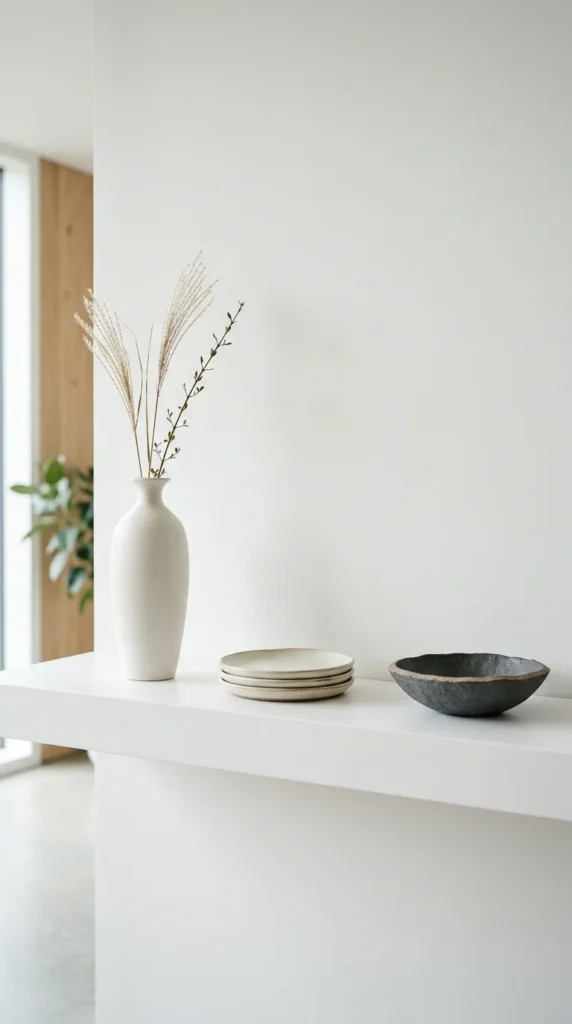
Sometimes, less is more. Minimalist styling involves leaving plenty of “negative space” on your shelves. By choosing only a few high-impact pieces and allowing them room to “breathe,” you create a clean, gallery-like atmosphere. This approach is perfect for modern, high-concept kitchens where simplicity is the primary goal.
12. Vertical Stacking
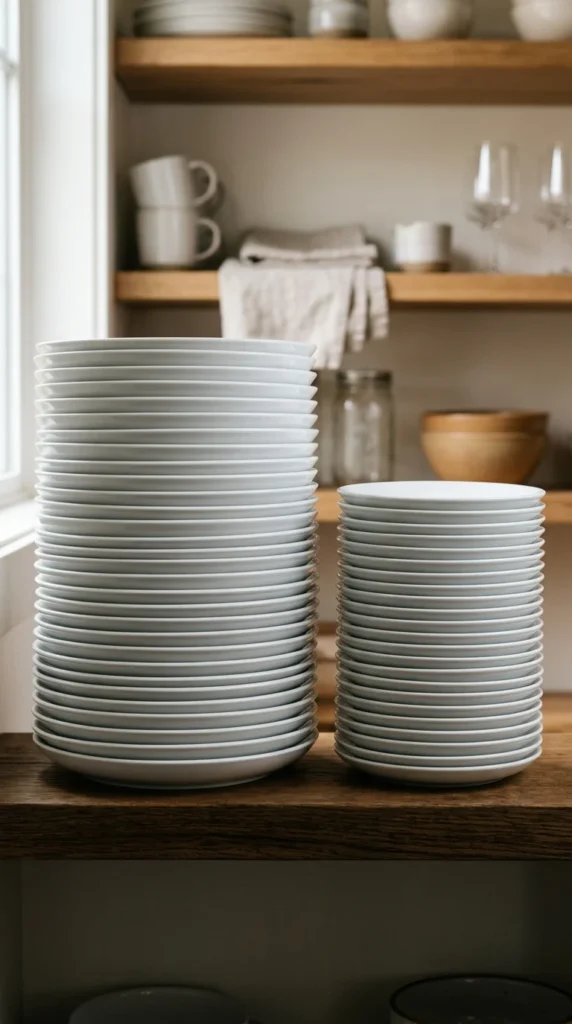
Stacking is the most functional way to use open shelving, but it can also be a design choice. Instead of spreading items out, create neat vertical columns of plates, bowls, and saucers. This utilizes the height of the shelf space and looks organized. To keep it looking clean, ensure the stacks are straight and the items within each stack are identical.
13. Woven Baskets
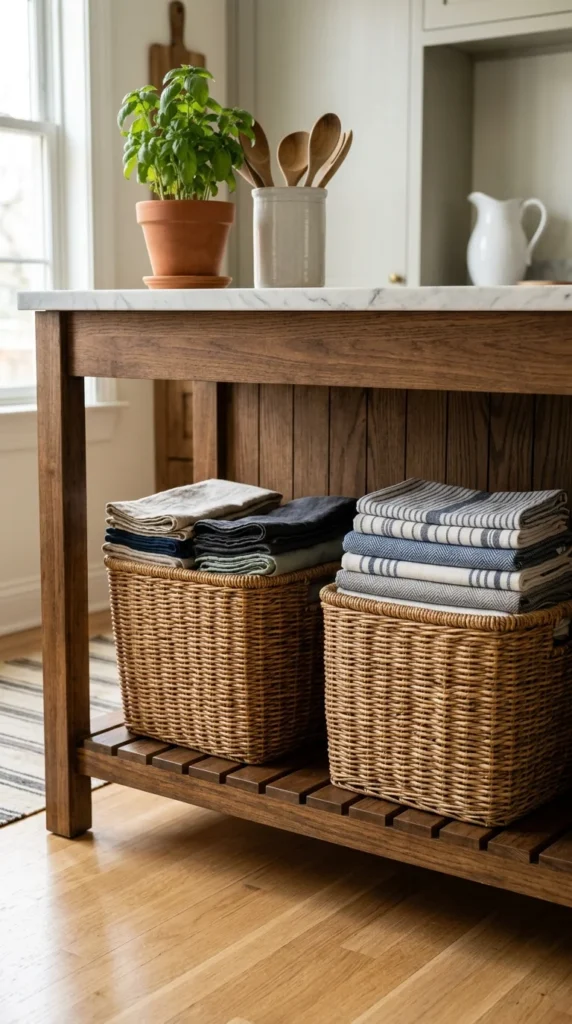
Baskets are the secret weapon for maintaining a “clean” look on open shelves. They provide a place to hide less-than-beautiful necessities like plastic lids, tea bags, or snacks. Choosing baskets made of natural fibers like seagrass or rattan adds a warm, textural element while keeping the visual clutter hidden from view.
14. Seasonal Decor
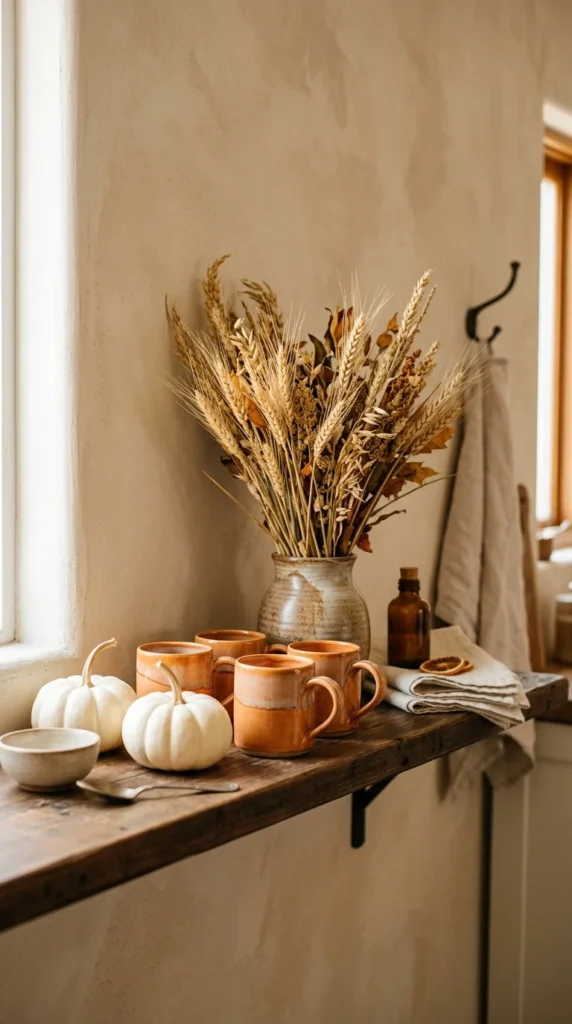
Open shelves offer a flexible space to celebrate the changing seasons. In the spring, you might display vases of fresh tulips; in the winter, you could add sprigs of evergreen and festive mugs. Swapping out a few key pieces allows you to refresh the look of your kitchen throughout the year without a full renovation.
15. Coffee Station
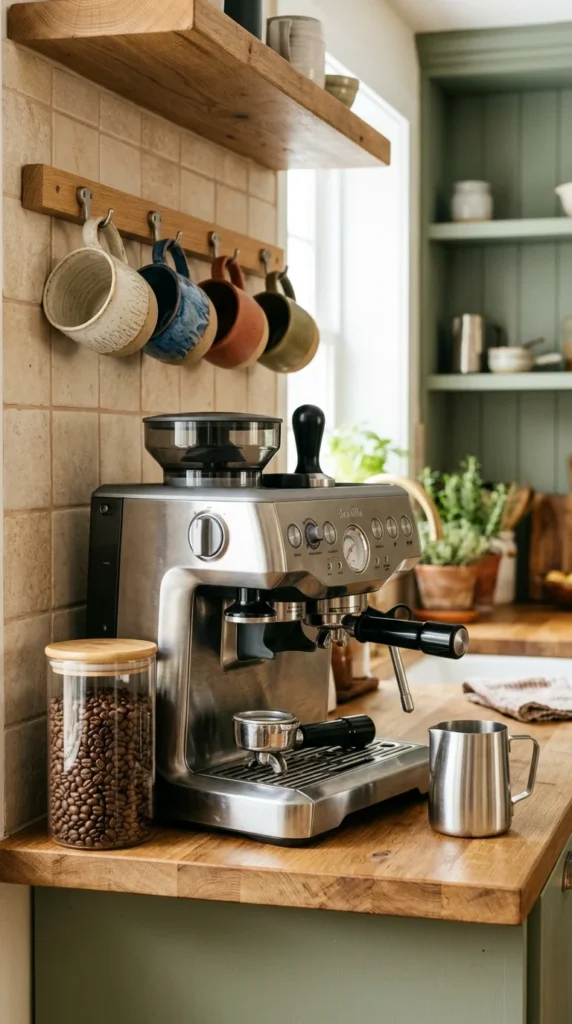
Transform a section of your open shelving into a dedicated coffee or tea bar. Grouping all your morning essentials in one place is both functional and stylish. Use beautiful canisters for coffee grounds and sugar, and display your favorite mugs to create a cozy, cafe-like vibe within your home.
16. Contrasting Backdrops
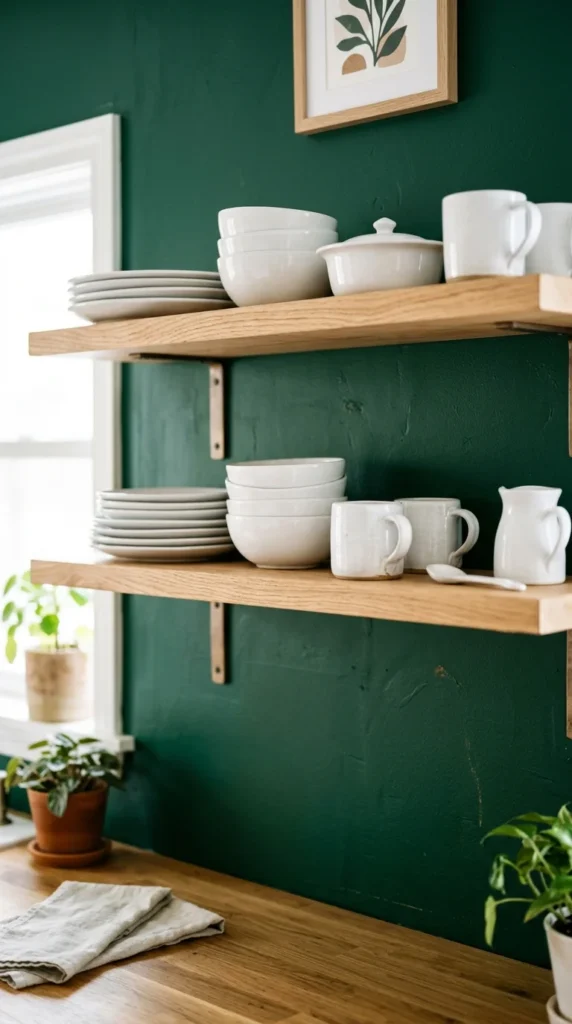
To make your shelving truly “pop,” consider the background. Painting the wall behind your shelves a contrasting color or using a bold patterned tile can frame your items beautifully. A dark background makes white or light-wood items stand out, while a light background can highlight dark or colorful collections.
17. Lighting Highlights
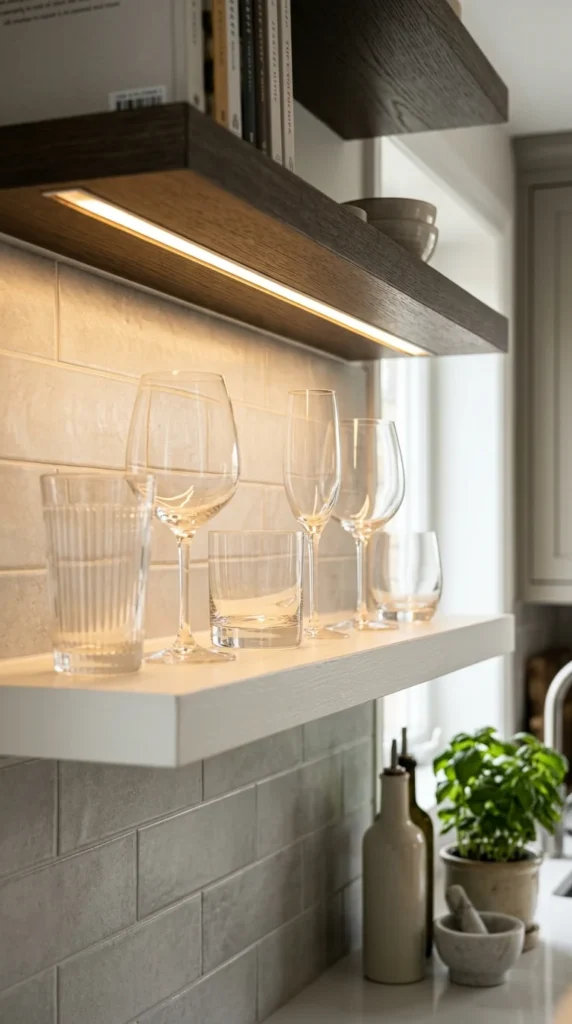
Proper lighting can transform open shelves from ordinary to extraordinary. Under-shelf LED strips or overhead picture lights can highlight your favorite pieces and add an extra layer of ambiance to the kitchen at night. Lighting also makes the shelves more functional by illuminating the workspace below.
18. Functional Canisters
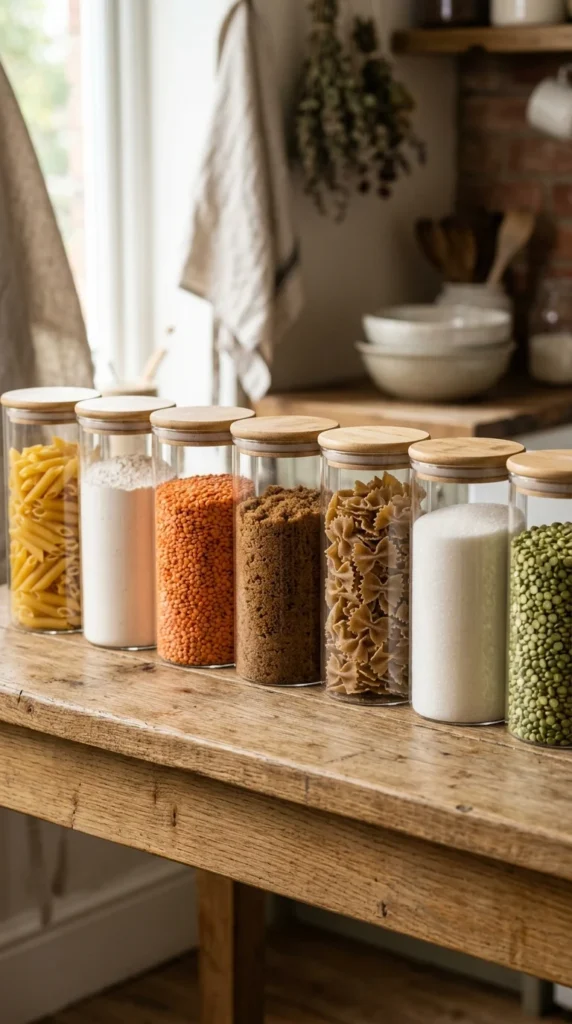
Uniformity is key to a clean look when storing dry goods. Transferring pantry staples from their original packaging into matching glass or ceramic canisters creates a streamlined appearance. Not only does this look beautiful, but it also allows you to see exactly when you need to restock your supplies.
19. Cookbook Collection
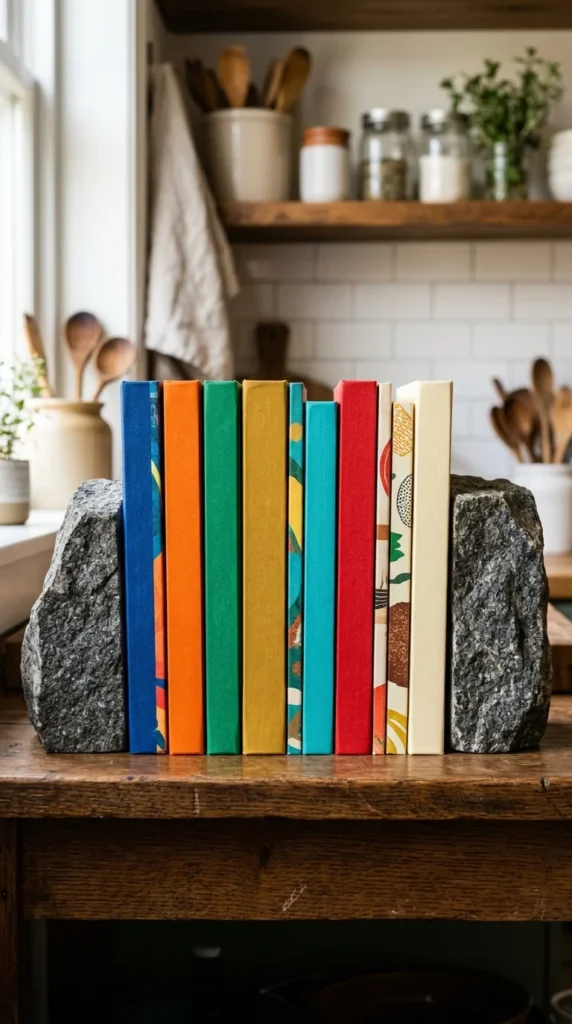
Cookbooks are both functional tools and decorative objects. Organizing your favorite titles on a shelf adds a personal touch and a splash of color. You can organize them by color for a “rainbow” effect or by height for a more traditional look. Using unique bookends can add further personality to the display.
20. Art Pieces
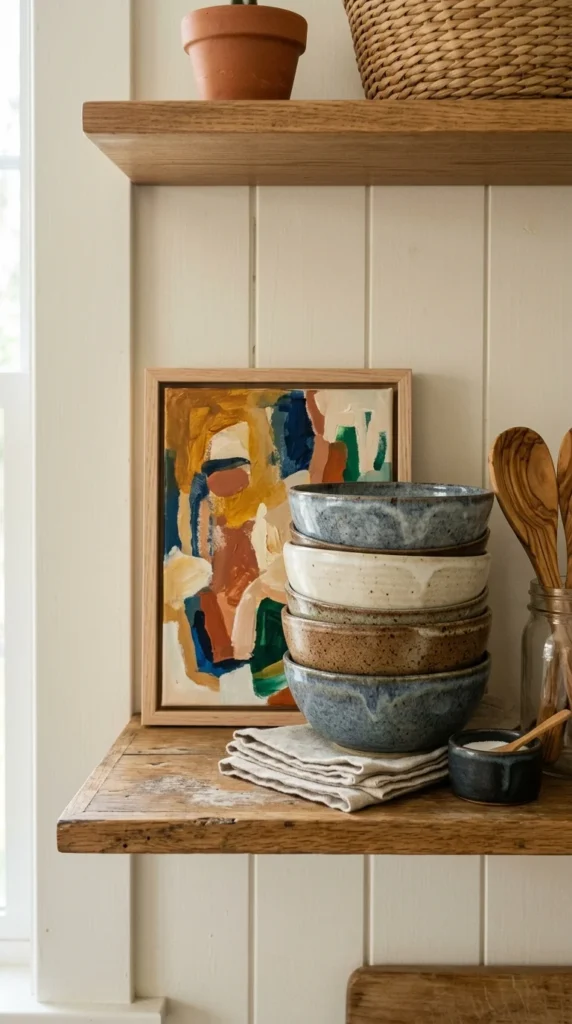
Who says art doesn’t belong in the kitchen? Leaning a small framed painting or a vintage print at the back of a shelf adds sophistication and an unexpected element of homey comfort. Choose art that complements the color palette of your dishes for a cohesive look.
21. Floating Shelves
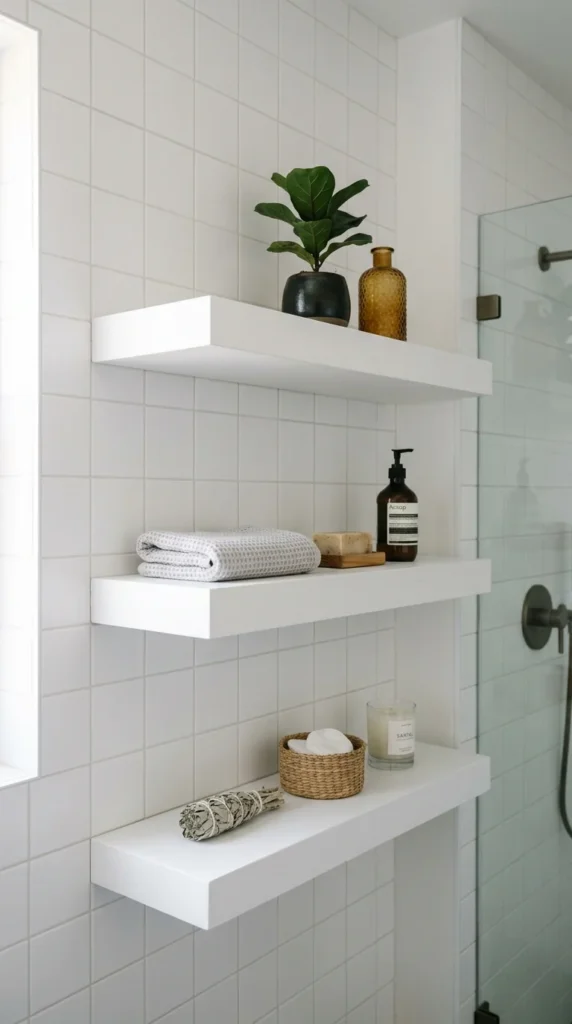
For the ultimate clean look, choose floating shelves with hidden brackets. The lack of visible hardware creates a streamlined, modern aesthetic that works perfectly in minimalist designs. This style emphasizes the items on the shelf rather than the structure itself, making the display feel light and effortless.
22. Corner Optimization
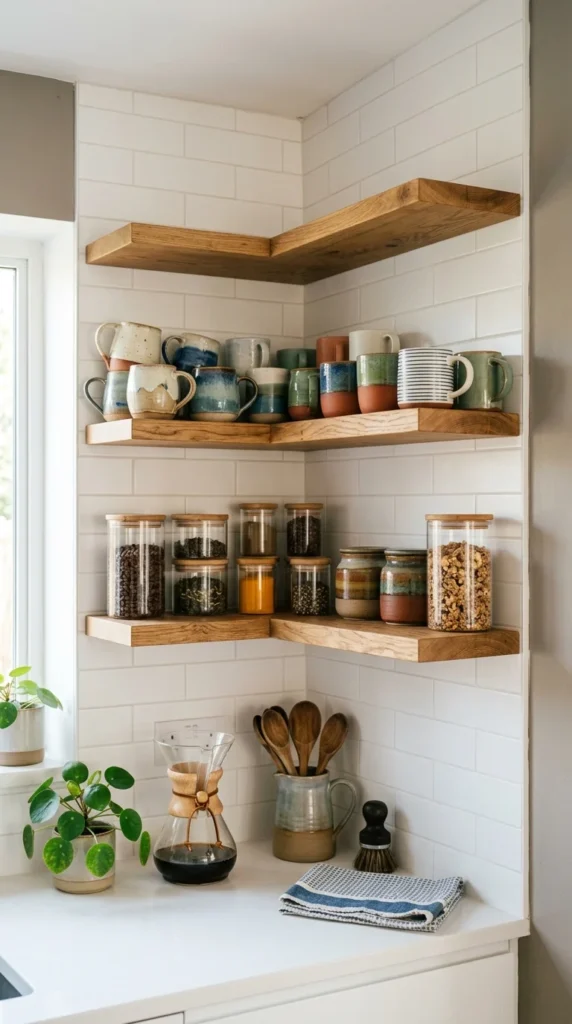
Don’t let corner space go to waste. Custom L-shaped shelves can turn an awkward corner into a functional storage area. Styling corners requires a bit of care; use the corner point for a larger “anchor” item, like a big pitcher or a tall vase, and then taper down with smaller items along the wings of the shelves.
23. Hidden Brackets
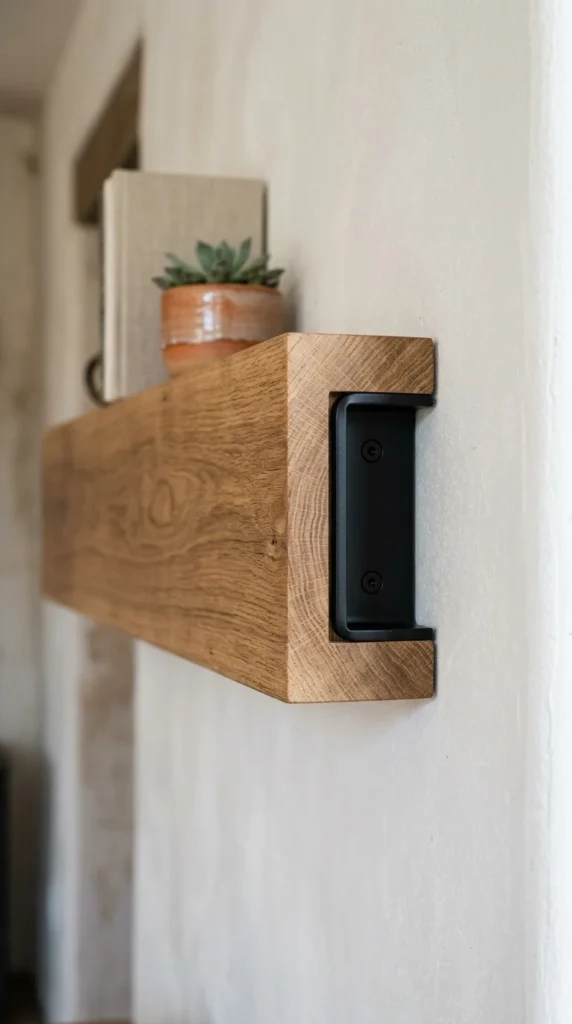
If you want the strength of a bracket but the look of a floating shelf, consider hidden or low-profile brackets. Some designs allow the bracket to be partially recessed into the shelf itself. This provides the necessary weight support for heavy stacks of plates while maintaining the clean, unobstructed lines that make open shelving so appealing.