
Open shelving has transitioned from a rustic farmhouse trend to a staple of high-end interior design. While the concept seems simple—removing cabinet doors to expose your belongings—the execution is what separates a cluttered kitchen from a designer masterpiece. To achieve that coveted “editorial” look, one must approach shelving as a curated gallery rather than mere storage.
The challenge lies in balancing functionality with aesthetics. You want your everyday items within reach, but you also want the arrangement to feel intentional, balanced, and visually stimulating. Here are 11 professional styling ideas to transform your open shelves into a focal point of your home.
1. Layered Art
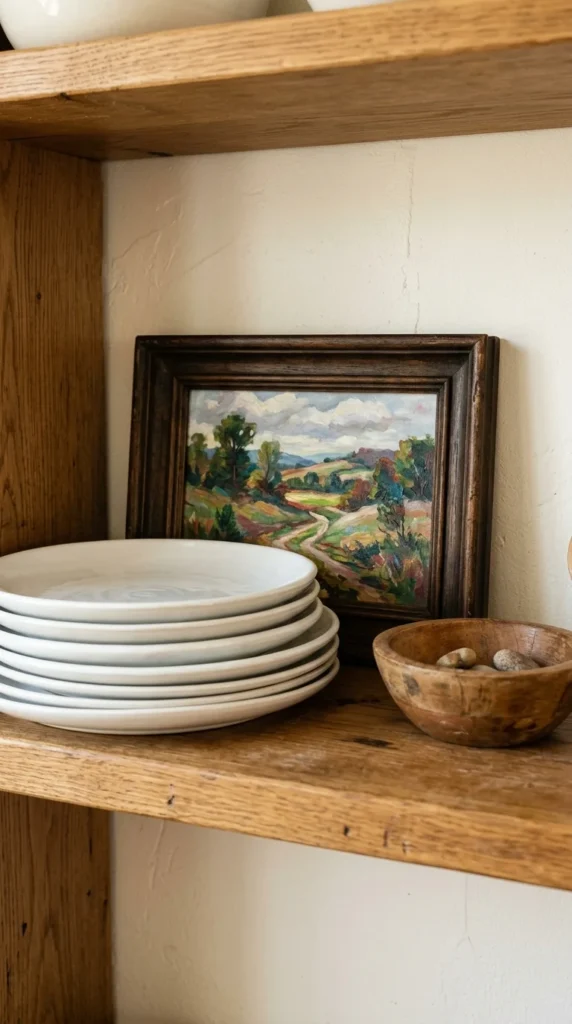
One of the most effective ways to make a kitchen feel like a lived-in, designer space is to incorporate non-utilitarian items. Layering art—whether it’s a small oil painting, a vintage sketch, or a modern abstract print—adds depth and personality.
To execute this, place your larger framed pieces toward the back of the shelf. Lean them against the wall or the backsplash. Then, layer smaller kitchen items in front, such as a stack of bowls or a glass carafe. This layering technique creates a “vignette” feel, moving the eye through different planes of the shelf and breaking up the monotony of rhythmic dishware.
2. Neutral Palette
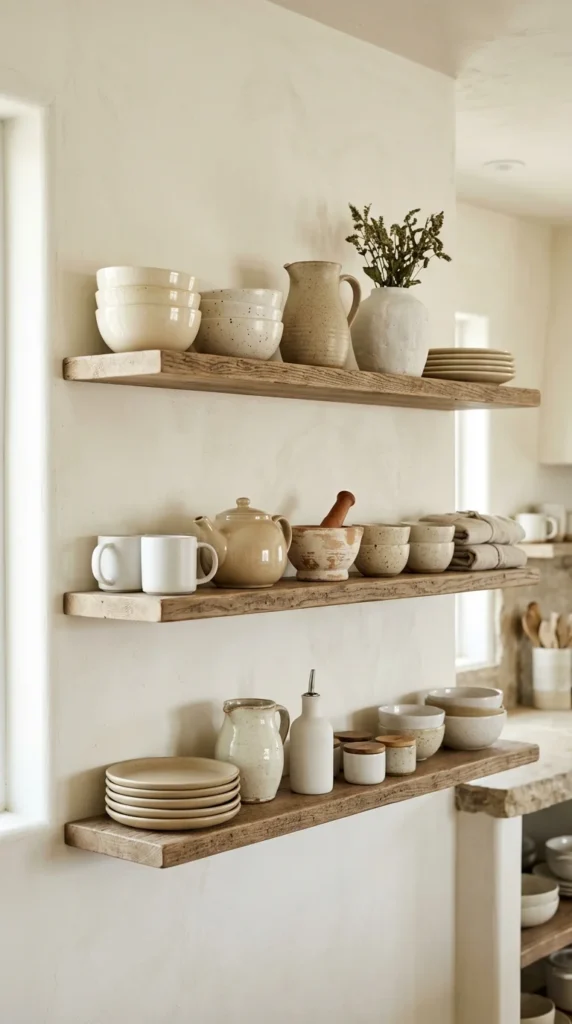
A hallmark of designer kitchens is a cohesive color story. By sticking to a neutral palette—think whites, creams, greys, and wood tones—you create a look that is inherently sophisticated and calming.
When your items share a similar color temperature, the shelf looks organized even if the shapes are varied. This doesn’t mean everything must be identical; rather, focus on “tonal” variety. Mix a matte white ceramic pitcher with glossy cream mugs and a light oak cutting board. The lack of jarring colors allows the textures and silhouettes of the objects to take center stage, providing a high-end, minimalist aesthetic.
3. Organic Textures
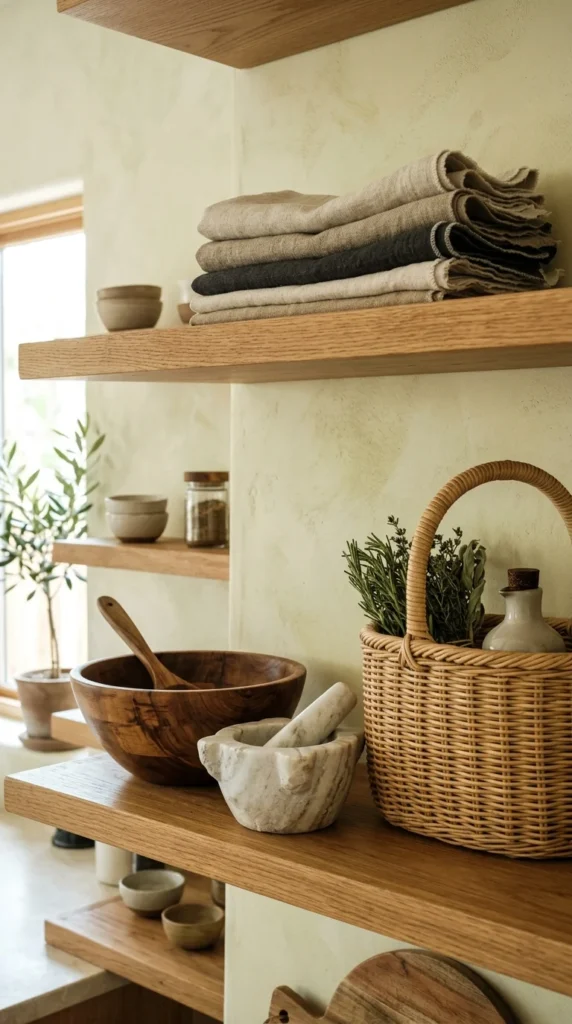
Texture is the secret ingredient in professional interior design. In a kitchen, which can often feel cold due to stainless steel and stone surfaces, adding organic textures brings warmth and “soul” to the space.
Incorporate materials like woven seagrass baskets for storing small gadgets, marble boards for height, and wooden bowls for a sense of earthiness. The contrast between a smooth porcelain plate and a rough, hand-carved wooden spoon creates visual interest. These natural elements soften the hard lines of the cabinetry and make the kitchen feel more inviting and high-end.
4. Metallic Finishes
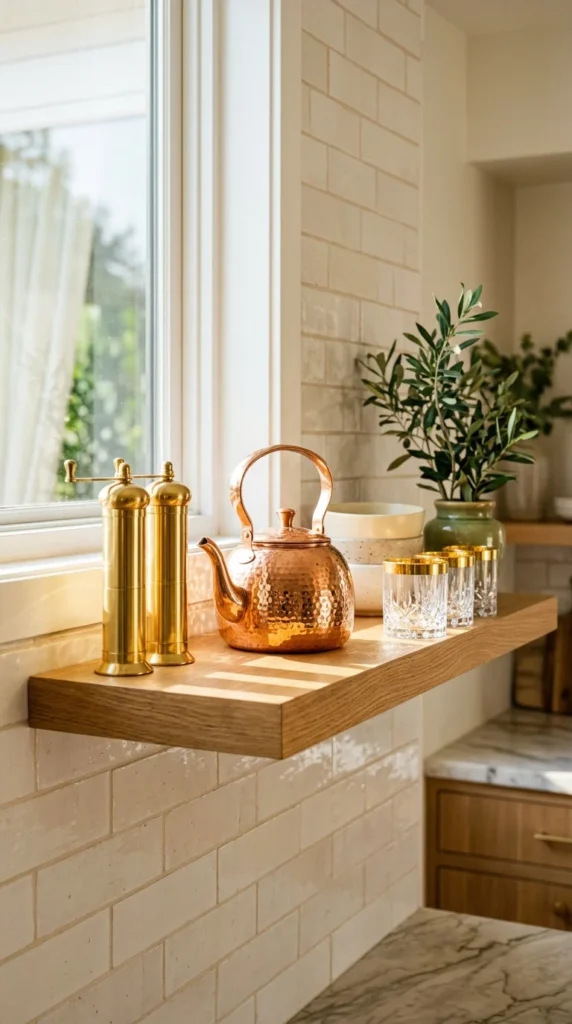
To elevate your shelving from “casual” to “luxury,” introduce metallic accents. Metals act as the “jewelry” of the kitchen. Brass, copper, and polished nickel reflect light and add a sense of opulence.
The key to using metals effectively is consistency and restraint. If your kitchen faucet is unlacquered brass, choose a few brass accessories for your shelves, such as a vintage brass tray or a modern metallic pepper mill. These reflective surfaces break up the matte textures of ceramics and wood, providing a “pop” that draws the eye and suggests a curated, expensive look.
5. Glass Clarity
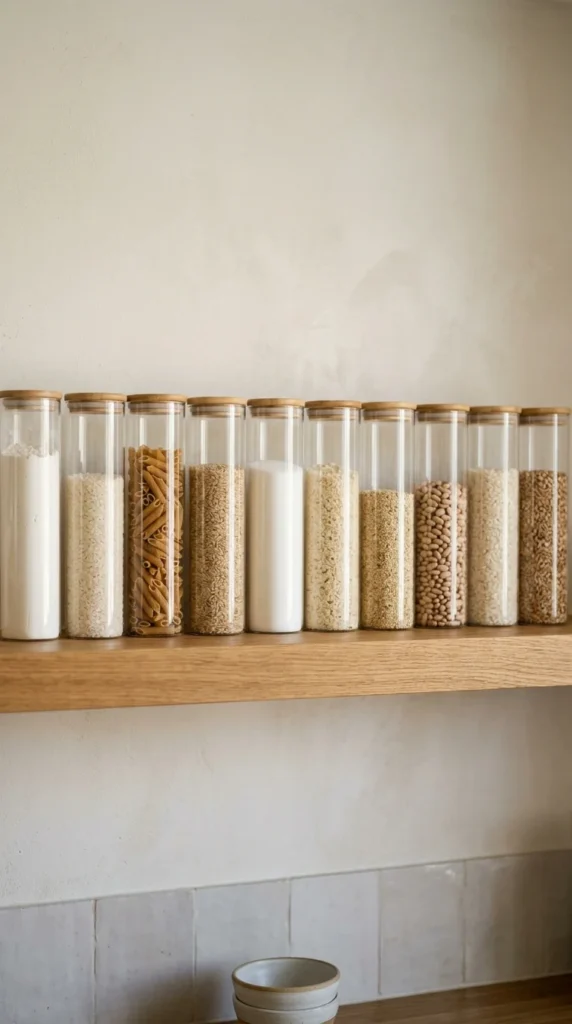
Transparency is a powerful tool in styling. Glassware—whether it’s drinking glasses, wine carafes, or storage jars—adds a sense of lightness to a shelf. It allows the background (like a beautiful tile or marble backsplash) to show through, preventing the shelves from feeling heavy or cramped.
For a designer look, use uniform glass canisters for dry goods. Decanting your pasta, grains, and flour into matching glass jars removes the visual “noise” of commercial packaging. Arrange glassware in odd-numbered groups to create a balanced composition that feels effortless yet precise.
6. Statement Greenery
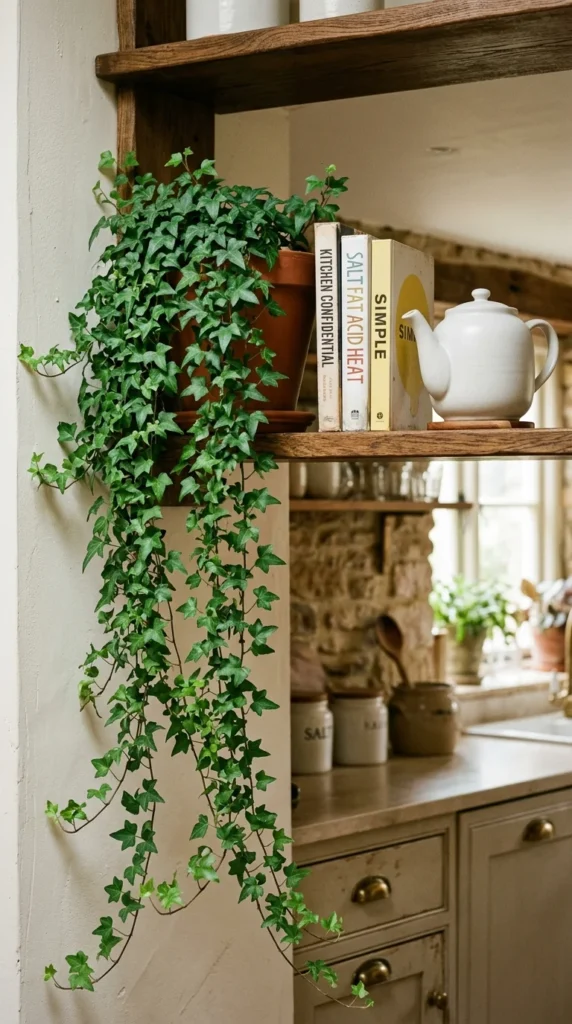
Nothing breathes life into a kitchen like living plants. Greenery adds movement, a vibrant pop of color, and an organic shape that contrasts with the geometric lines of shelves and dishes.
Consider trailing plants like Pothos or Heartleaf Philodendron for higher shelves, as their vines create a beautiful vertical element that draws the eye downward. For lower shelves, small pots of culinary herbs like rosemary or thyme are both beautiful and functional. Choose pots that complement your color palette—terracotta for warmth or stone-grey for a modern touch.
7. Uniform Canisters
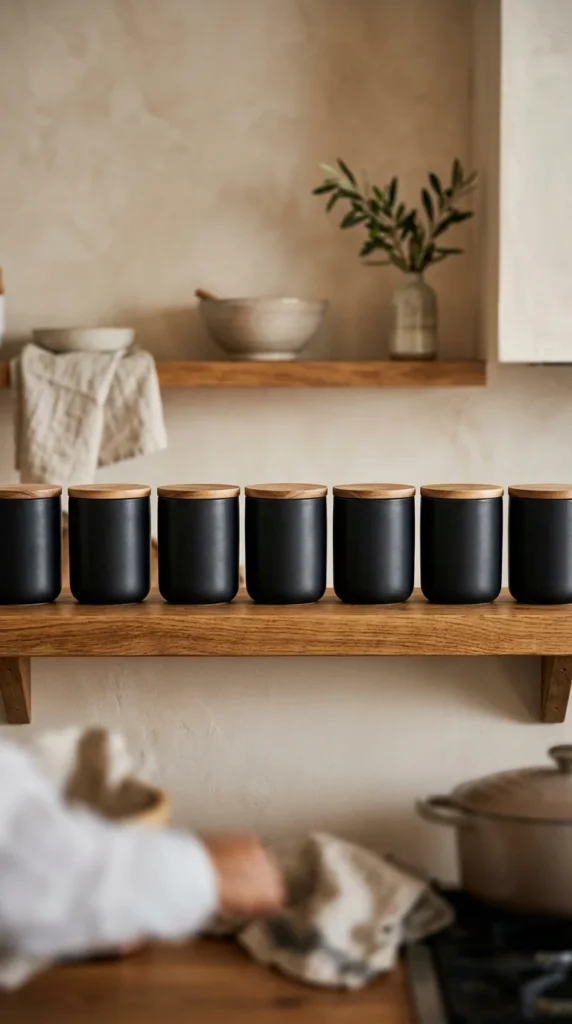
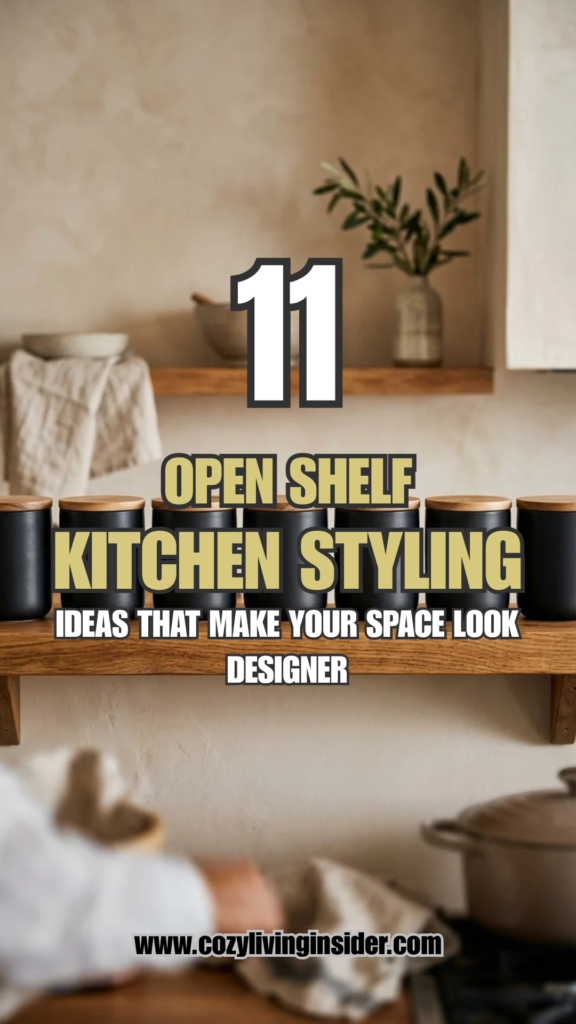
Consistency is the ultimate designer trick for creating a sense of order. Using a set of uniform canisters is the fastest way to make a chaotic shelf look intentional.
When you use identical containers, you create a rhythmic pattern that the brain perceives as “clean.” This works particularly well for items you use frequently, like coffee, tea, and sugar. By hiding the colorful and mismatched labels of store-bought products behind high-quality, uniform vessels, you instantly elevate the professionalism of your kitchen’s organization.
8. Vintage Accents
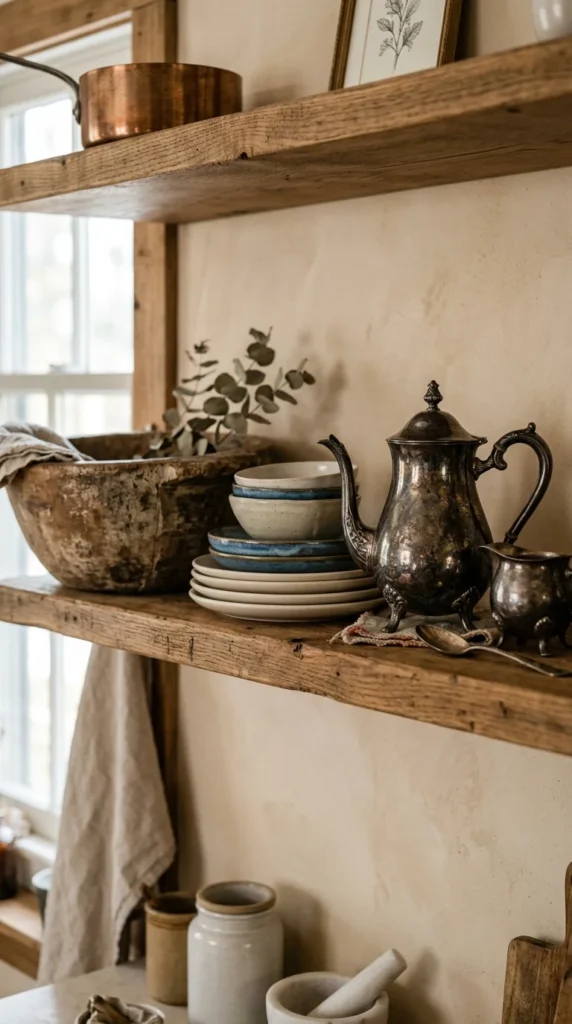
A space that feels too new can often feel sterile. Designers frequently mix “high and low” or “new and old” to give a room character. Adding a few vintage or antique pieces to your kitchen shelves provides a sense of history and uniqueness.
Look for items with a patina—a vintage copper pot, an antique scales set, or a weathered mortar and pestle. These items act as conversation pieces and prevent the kitchen from looking like a showroom floor. The juxtaposition of a modern, clean-lined shelf with a piece that has decades of history creates a sophisticated, “collected over time” vibe.
9. Vertical Stacking
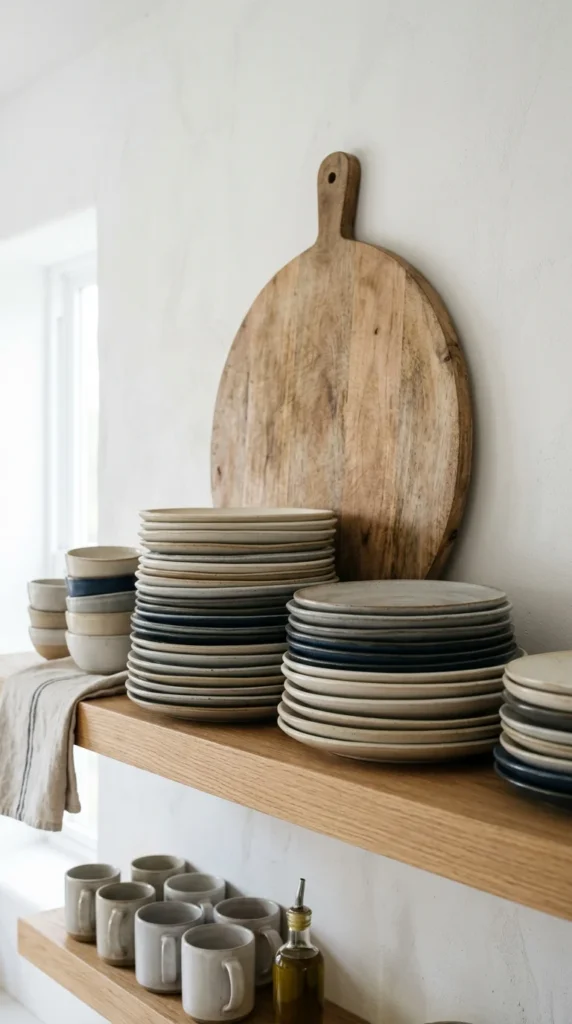
One common mistake in shelving is keeping everything at the same height. This leads to a flat, uninteresting look. Designers use “verticality” to create a more dynamic composition.
Instead of laying all your cutting boards flat, lean the largest one against the back wall. Use it as a backdrop for a stack of bowls or a small vase. You can also stack cookbooks horizontally to act as a pedestal, raising a smaller object (like a sugar bowl) to a new height. This variation in height keeps the eye moving and makes the arrangement feel more professional and architectural.
10. Negative Space
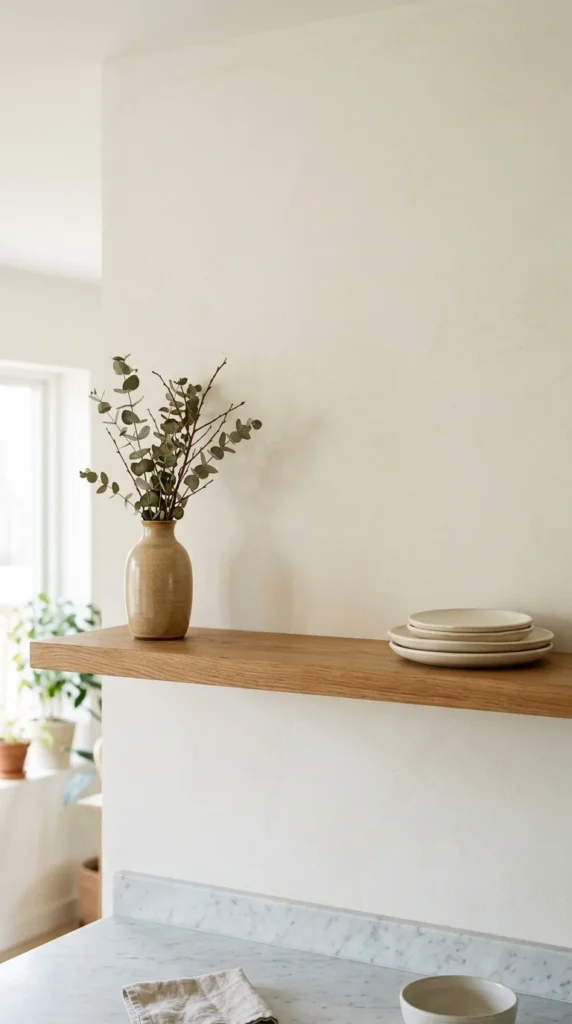
The most important rule of styling is knowing when to stop. “Negative space”—the empty space between objects—is just as important as the objects themselves. A shelf that is packed from end to end feels cluttered and heavy.
By leaving gaps between your “groupings,” you allow each item to “breathe” and be appreciated. Designers often follow the “Rule of Thirds” or create small clusters of objects with plenty of air around them. This deliberate emptiness signals that every item on the shelf is there because it is beautiful or essential, rather than because there was nowhere else to put it.
11. Integrated Lighting
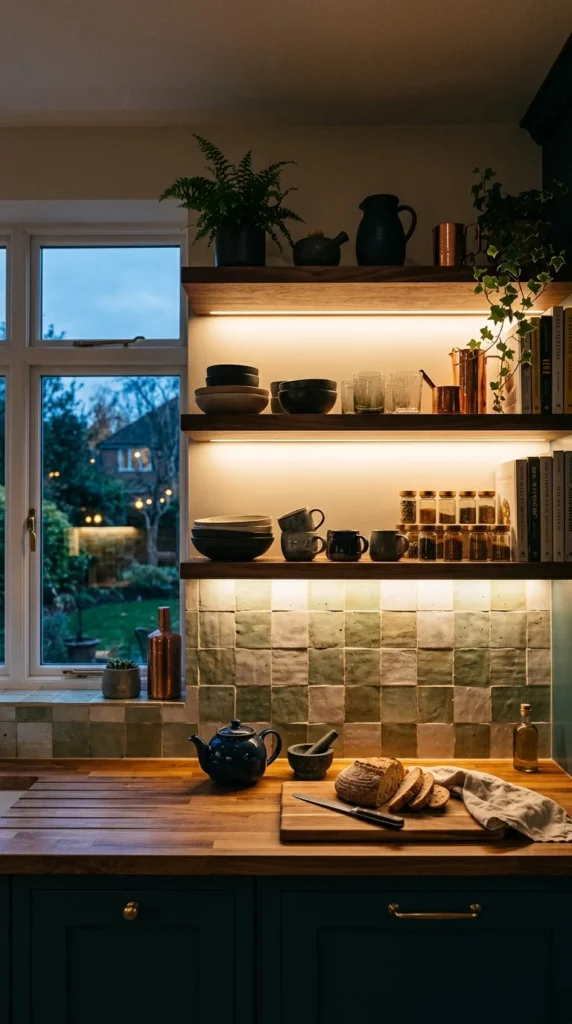
Lighting is the final touch that transforms a shelf into a design feature. Proper lighting adds drama, highlights textures, and makes the kitchen feel high-end even at night.
Consider installing LED strip lighting underneath each shelf to illuminate the items below, or place small battery-operated “puck” lights behind objects for a soft glow. For a more dramatic “designer” look, install library-style sconces above the top shelf. This not only provides task lighting for your countertops but also frames the shelves, turning your curated collection into a true work of art.