
The design world has shifted away from the starkness of cool grays and the predictability of basic beige, landing instead on a sophisticated middle ground: mushroom. This unique hue—a complex blend of taupe, gray, and brown—offers a versatile foundation that feels both organic and elevated. Because mushroom is a “chameleon” color, it shifts beautifully depending on the light, appearing warmer in the afternoon sun and more grounded in the evening.
Designing a living room around this palette allows for an incredible range of styles, from ultra-modern minimalism to cozy, rustic charm. Here are 27 inspired ways to incorporate the mushroom color palette into your home.
1. Monochromatic Layers
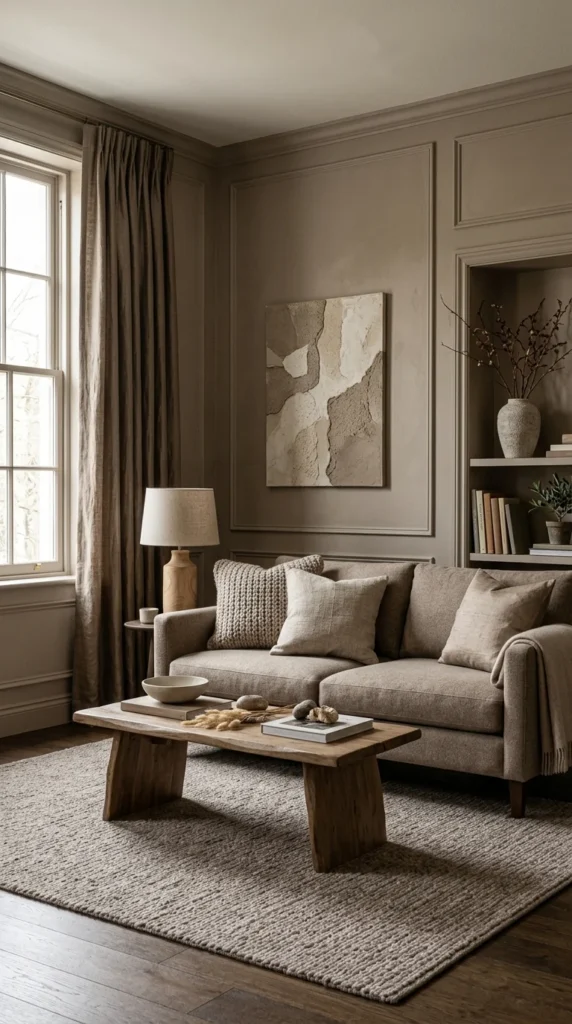
The key to a successful monochromatic room is variation in tone and texture. By using different shades of mushroom—ranging from a light “cremini” to a deep “portobello”—you create depth without the need for high-contrast colors. Focus on mixing materials like matte paint against silk pillows or a chunky knit throw to keep the space from feeling flat.
2. Velvet Upholstery
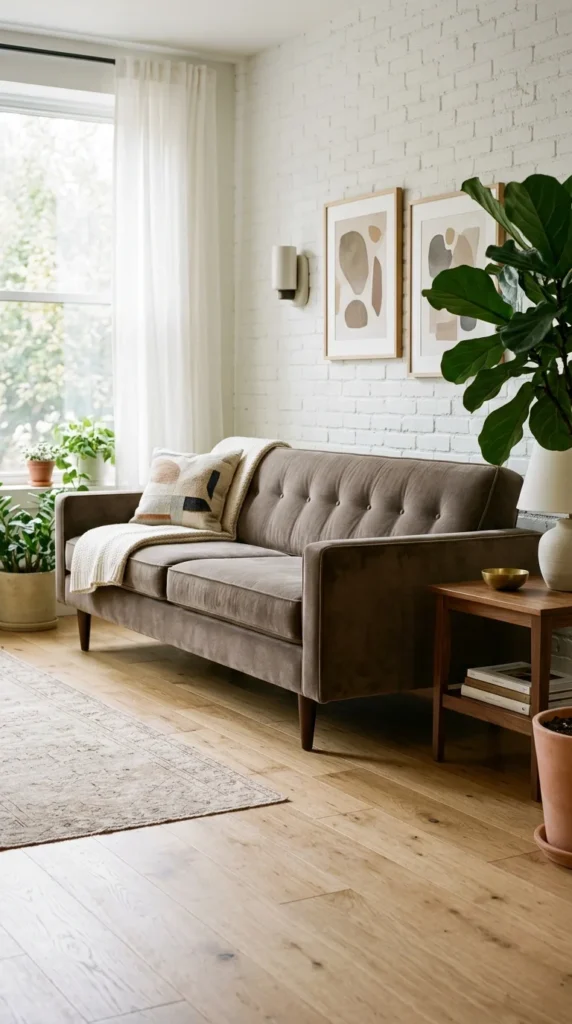
Velvet is perhaps the best medium for mushroom tones because the fabric’s nap catches the light, showcasing the color’s multi-dimensional qualities. A mushroom velvet sofa acts as a soft focal point that feels expensive and inviting. It pairs exceptionally well with metallic accents like brass or brushed gold.
3. Black Accents
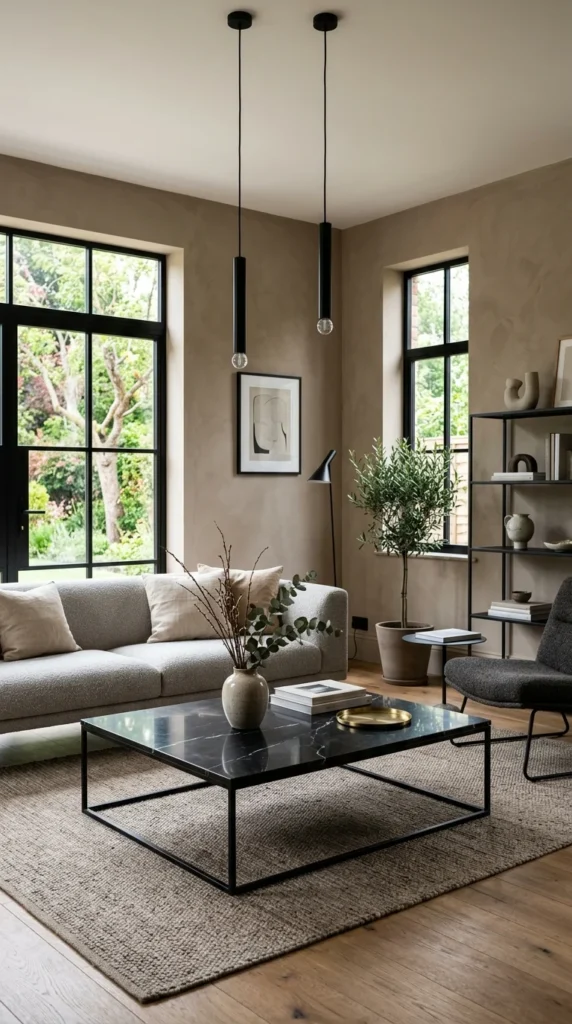
To give mushroom a contemporary edge, introduce black accents. The dark contrast grounds the earthy neutral, preventing it from feeling too traditional. Use black in thin, architectural lines—such as picture frames, slim floor lamps, or the legs of a coffee table—to create a crisp, tailored aesthetic.
4. Warm Woods
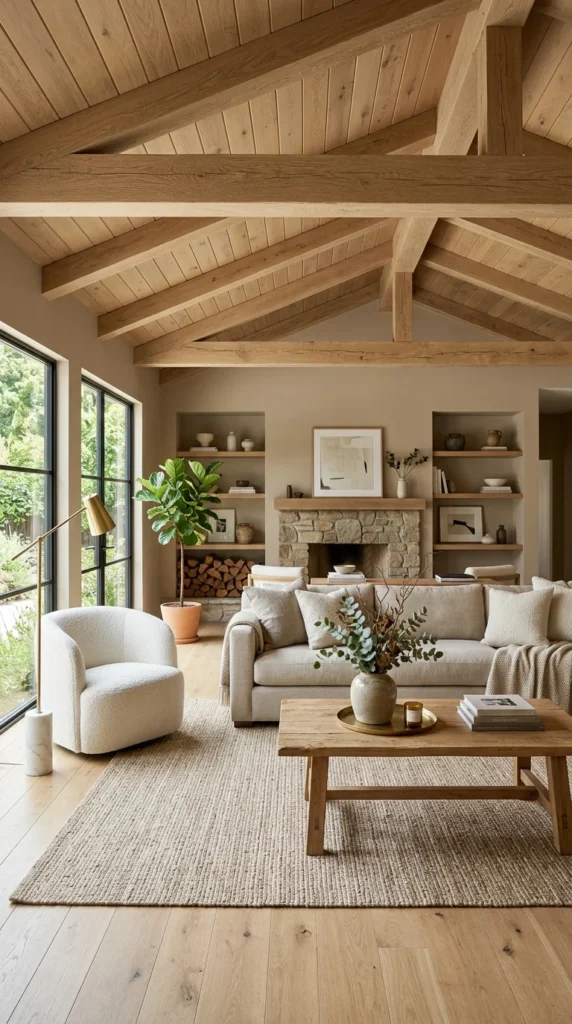
Mushroom is naturally derived from the earth, so it finds its best companion in natural wood. Lighter woods like oak, ash, or maple enhance the warmth of the paint, while darker woods like walnut provide a sophisticated, moody contrast. The combination creates a timeless, “quiet luxury” atmosphere.
5. Metallic Gold
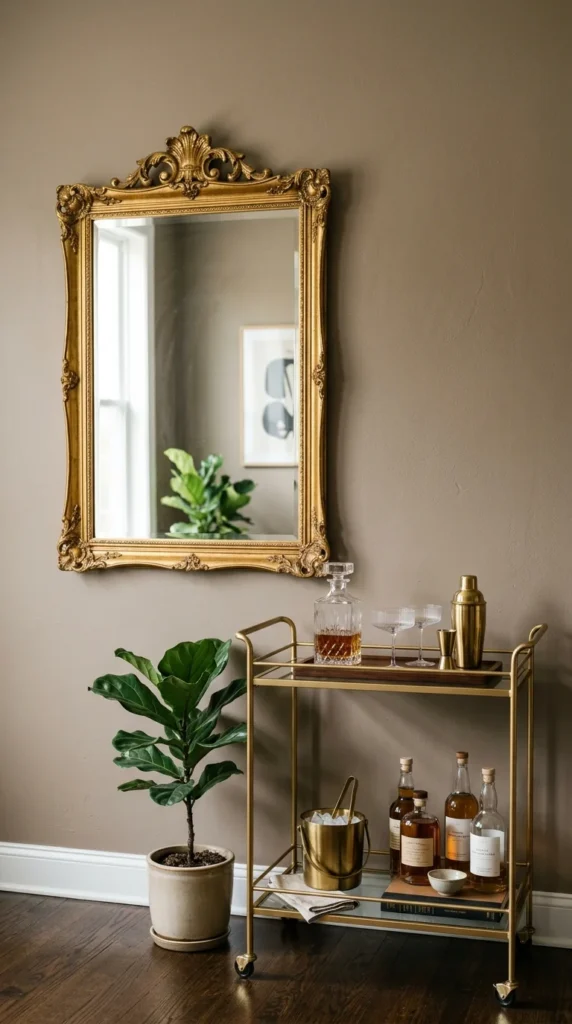
If you want to elevate your living room into the realm of glamour, gold is the answer. The yellow undertones in gold hardware and decor pull out the warmth in mushroom paint. Look for brushed or satin finishes to keep the look sophisticated rather than gaudy.
6. Natural Linen
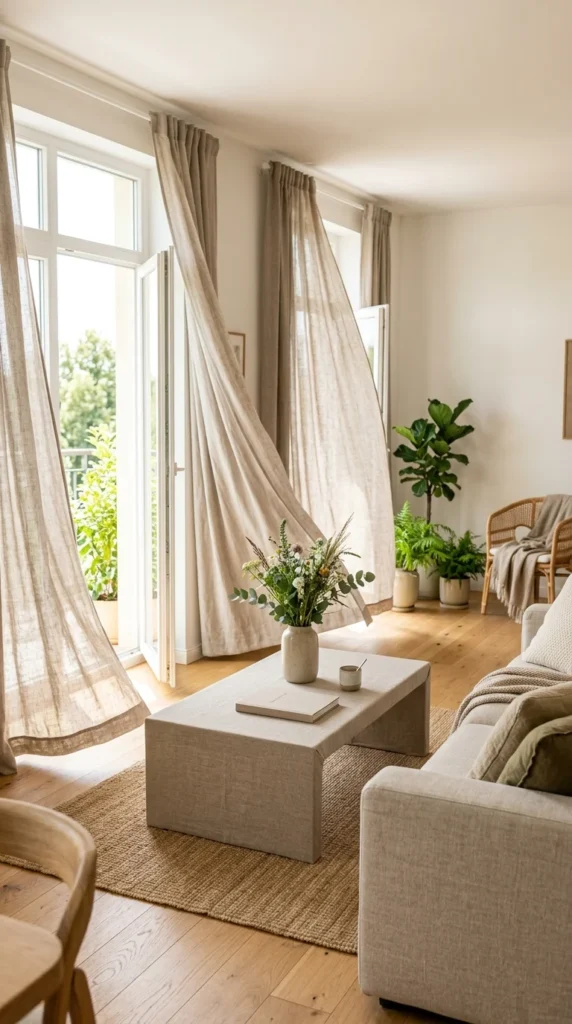
Linen provides a relaxed, breathable texture that perfectly suits the organic nature of mushroom. Whether it’s through floor-to-ceiling drapes or a slipcovered sofa, the tactile quality of linen softens the room and creates a coastal or farmhouse-inspired serenity.
7. Statement Rugs
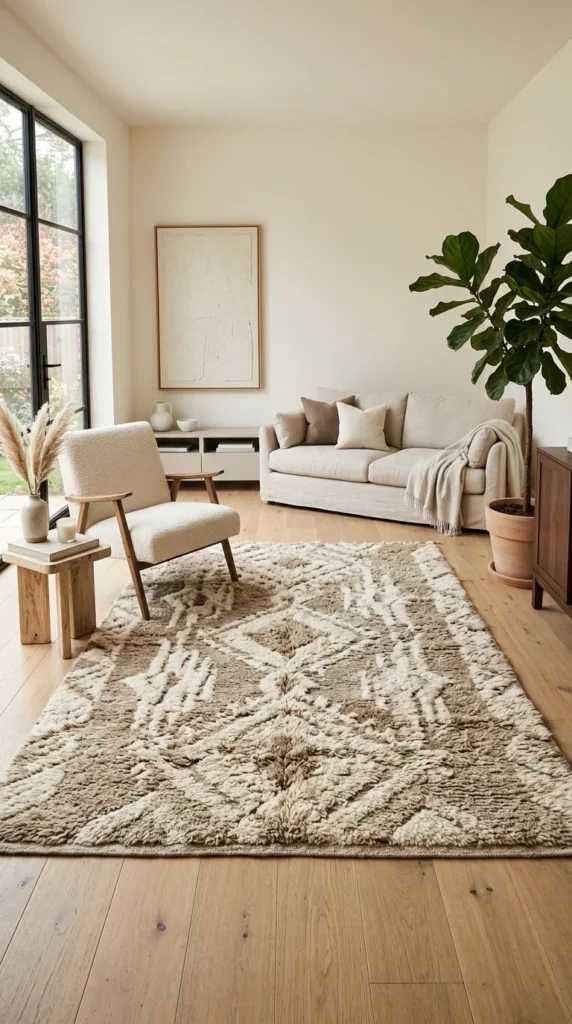
A rug is the soul of the room. A mushroom-toned rug with a subtle pattern or high-low pile adds visual interest underfoot. It serves as a bridge between your furniture and the floor, pulling the entire color story together while providing a soft landing.
8. Darker Trim
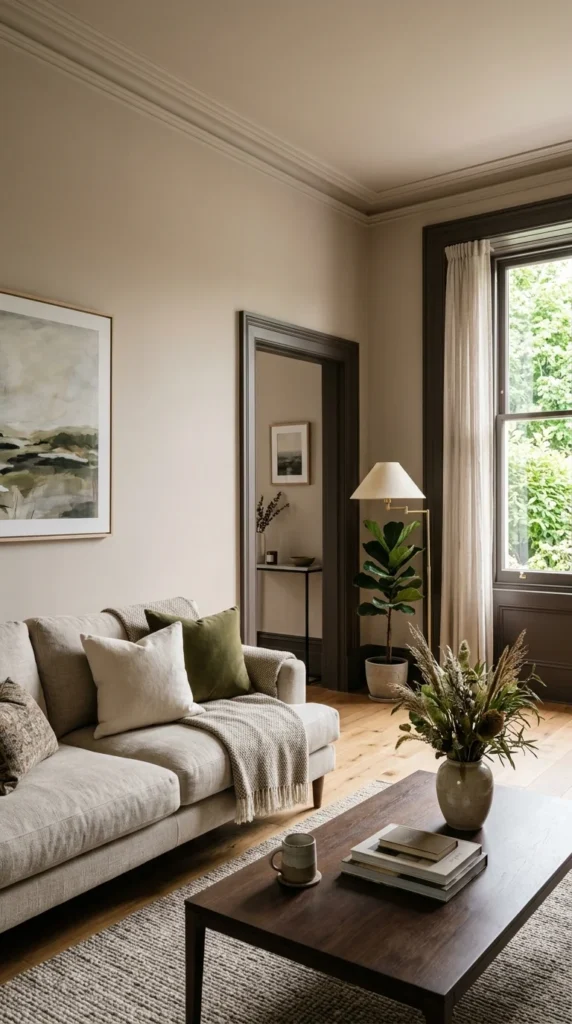
Reversing the traditional “white trim” rule can add immense architectural interest. Painting your baseboards, window casings, and crown molding in a shade darker than your mushroom walls creates a “framed” effect that looks custom and high-end.
9. Oversized Art
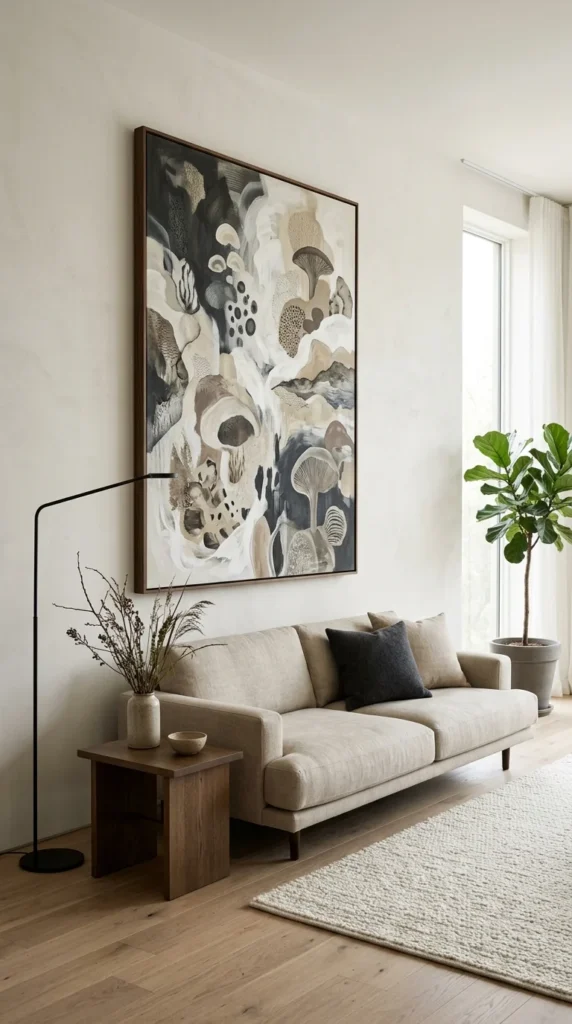
Mushroom walls provide the perfect gallery-like backdrop for large-scale art. Because the color is unobtrusive, it allows the artwork to shine without competing for attention. Choose pieces that incorporate some of the wall’s undertones to create a cohesive look.
10. Indoor Greenery
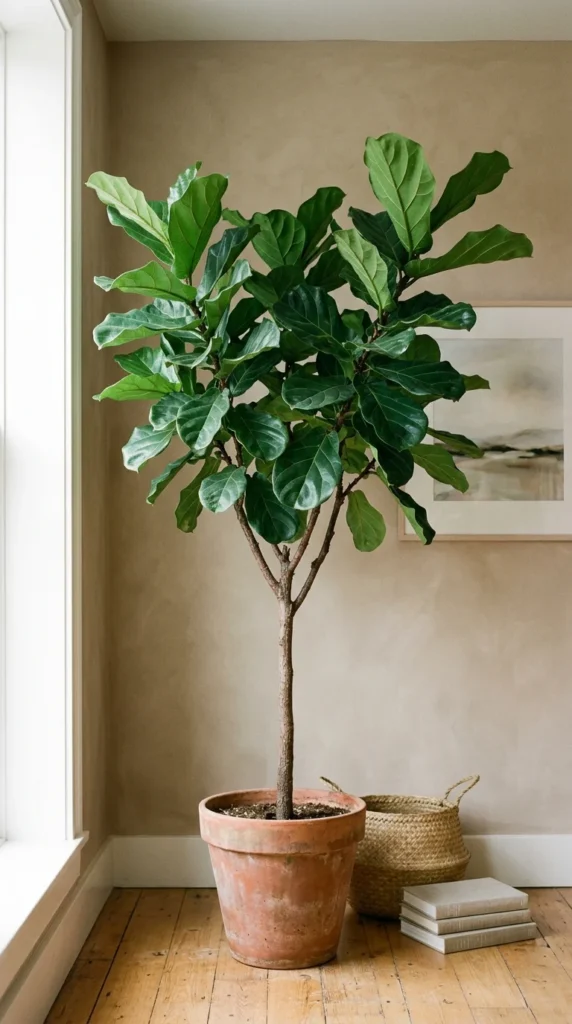
The most natural pairing for any earth tone is green. Large indoor plants like olive trees, ferns, or Fiddle Leaf Figs pop brilliantly against mushroom walls. The green adds a “living” element that makes the neutral palette feel vibrant and fresh.
11. Textured Wallpaper
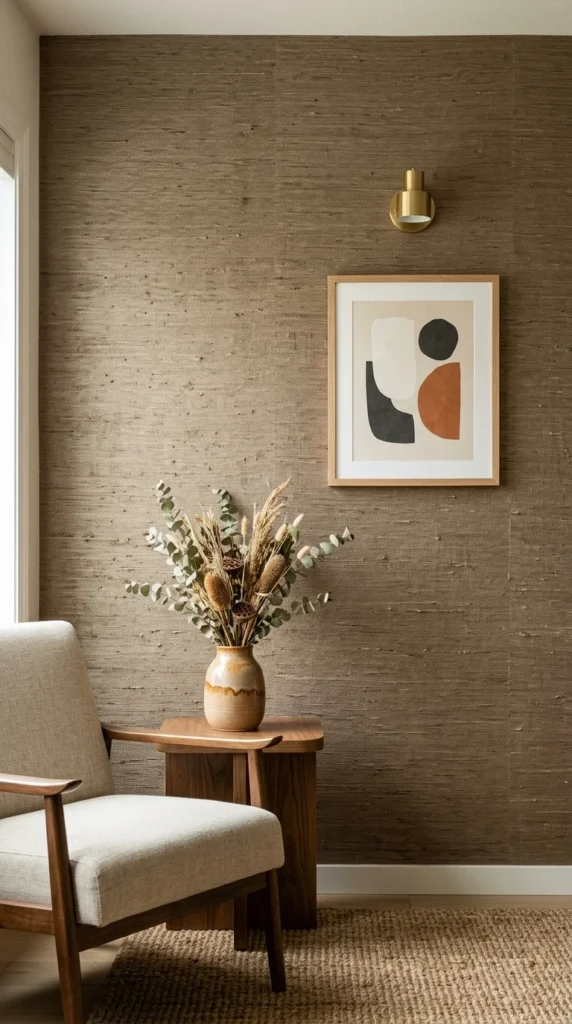
If flat paint feels too simple, mushroom-toned grasscloth or textured wallpaper can add a layer of sophistication. The subtle horizontal lines of grasscloth add movement to the walls and provide a tactile quality that paint simply cannot replicate.
12. Stone Elements
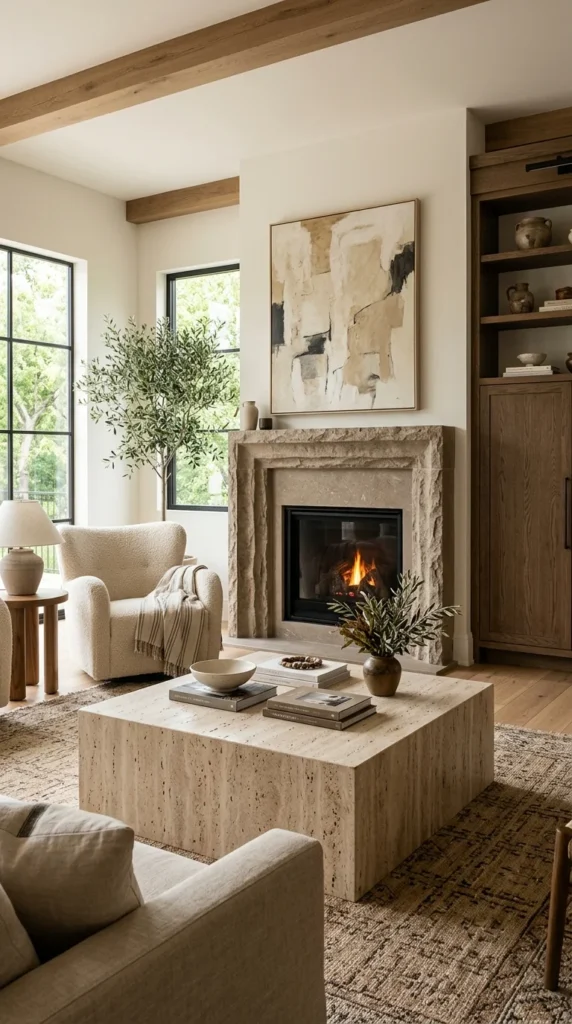
Incorporating stone like travertine, limestone, or marble with beige veining reinforces the earthy aesthetic of the mushroom palette. A stone coffee table or a fireplace surround in these tones adds a sense of permanence and weight to the room.
13. Floor-to-Ceiling Drapes
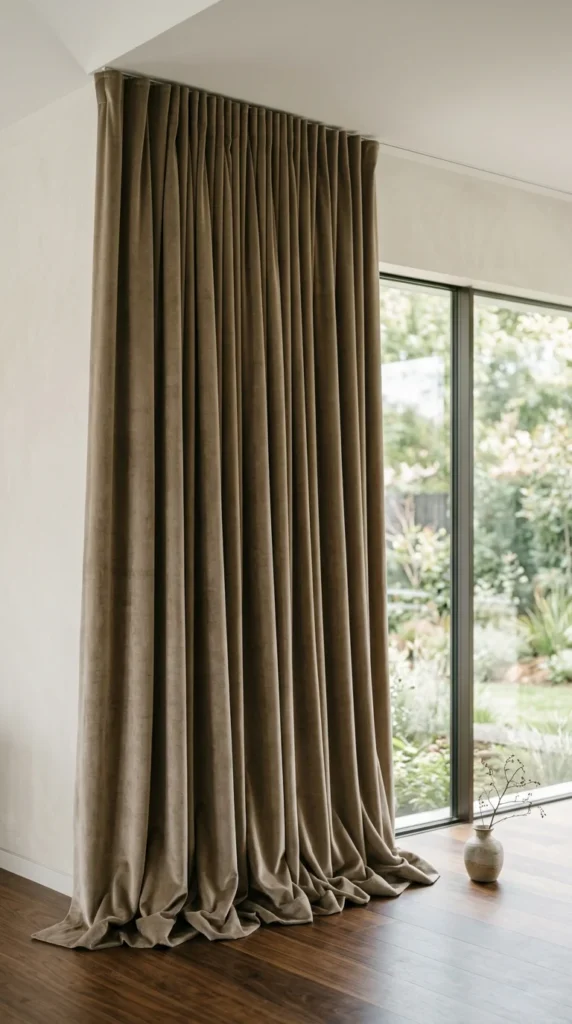
To make a room feel taller and more expensive, use floor-to-ceiling drapes in a solid mushroom hue. When closed, they create a soft wall of fabric; when open, they frame the windows with elegance. Choose a fabric with some weight, like wool or heavy cotton, for a beautiful drape.
14. Built-in Shelving

Painting your built-ins the same color as your walls is a designer secret for making a room feel larger and more integrated. The shelves “disappear” into the wall, allowing the items on display to take center stage without visual clutter.
15. Scandi Minimalism
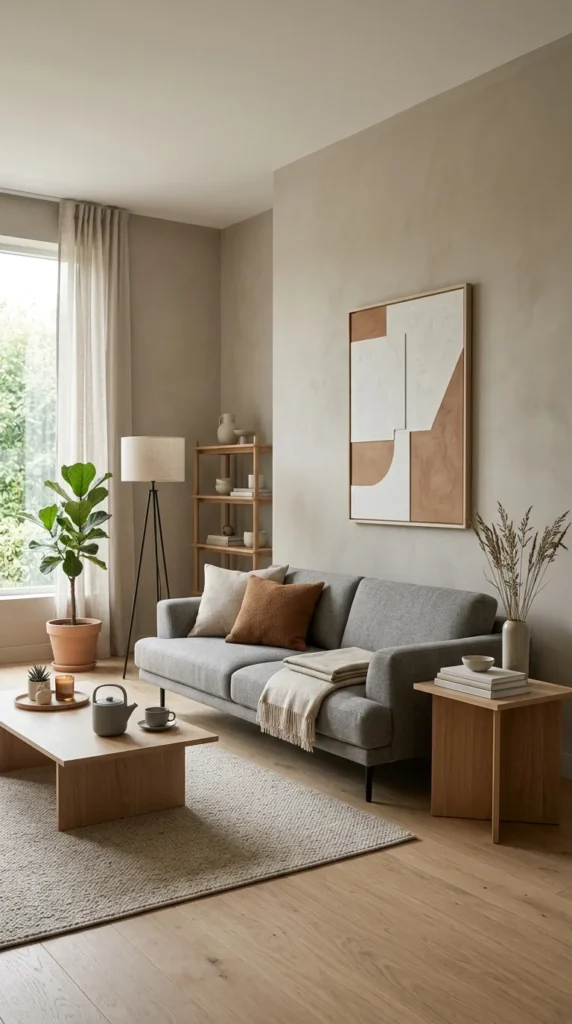
Mushroom is a staple of Scandinavian design. Its ability to feel warm yet clean makes it perfect for minimalist spaces. Keep furniture lines simple and the clutter to a minimum to allow the calming nature of the color to take over.
16. Rustic Beams
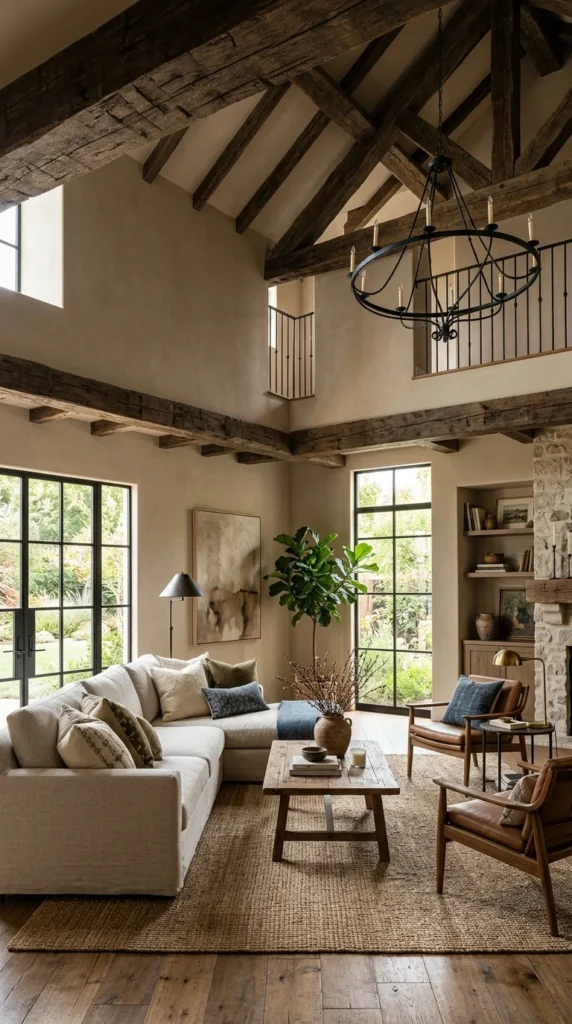
For a modern farmhouse or cottage look, pair mushroom walls with reclaimed wood beams. The rough texture of the wood contrasts beautifully with the smooth, refined finish of the paint, creating a space that feels grounded and historic.
17. Leather Seating
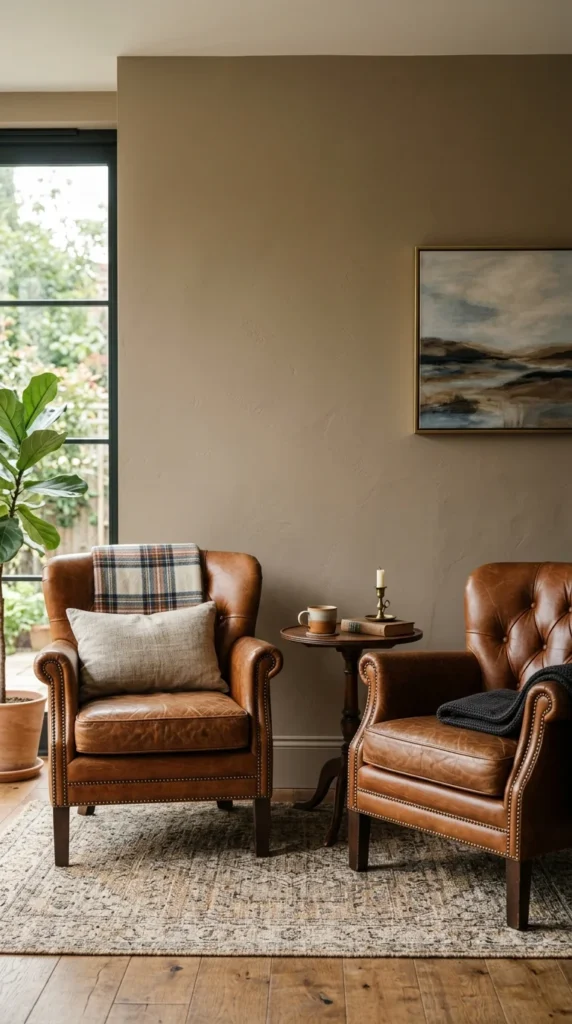
Leather and mushroom are a match made in heaven. Specifically, warm leathers like cognac, tan, or caramel provide a beautiful color contrast that adds warmth to the gray-leaning tones of mushroom. It creates a masculine yet cozy vibe.
18. Soft Lighting
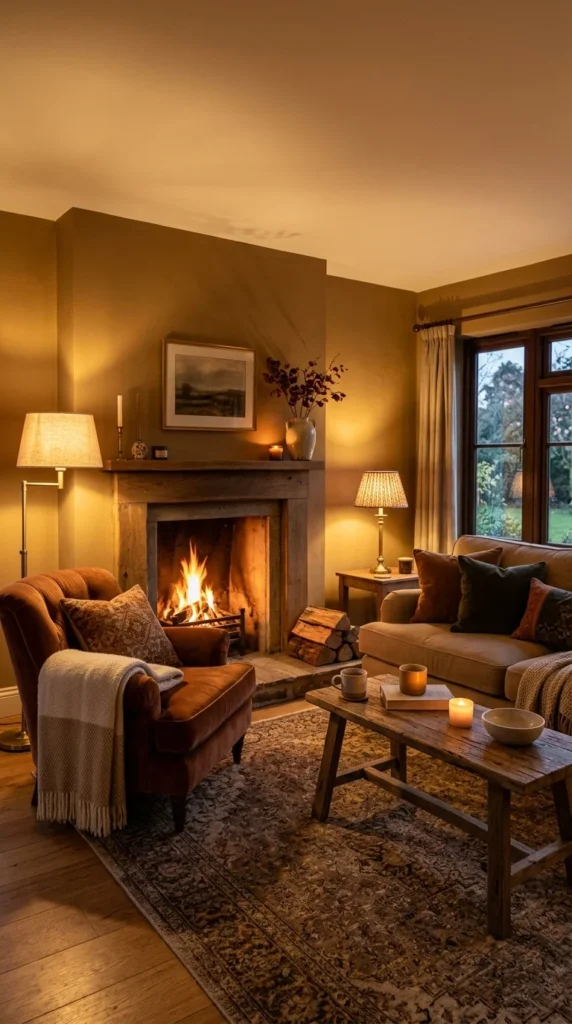
Mushroom is highly reactive to light. Using warm-toned bulbs (2700K to 3000K) will make the color feel cozy and enveloping. Incorporate multiple light sources—sconces, floor lamps, and table lamps—to create layers of warmth.
19. Bold Patterns
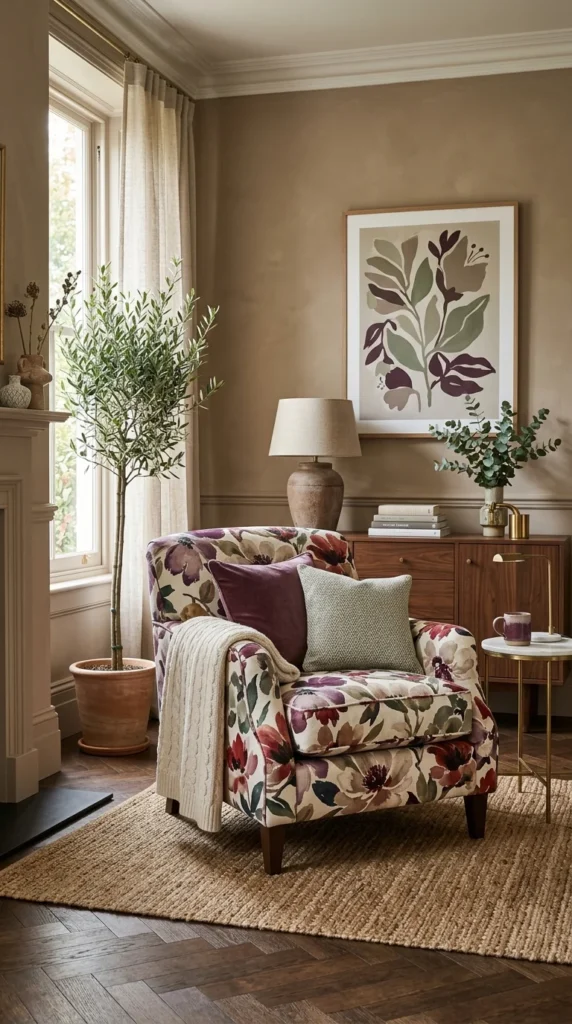
While mushroom is a neutral, it doesn’t have to be boring. It serves as an excellent anchor for bold patterns. Whether it’s a floral armchair or a geometric throw pillow, the neutral wall keeps the pattern from overwhelming the room.
20. Gallery Walls
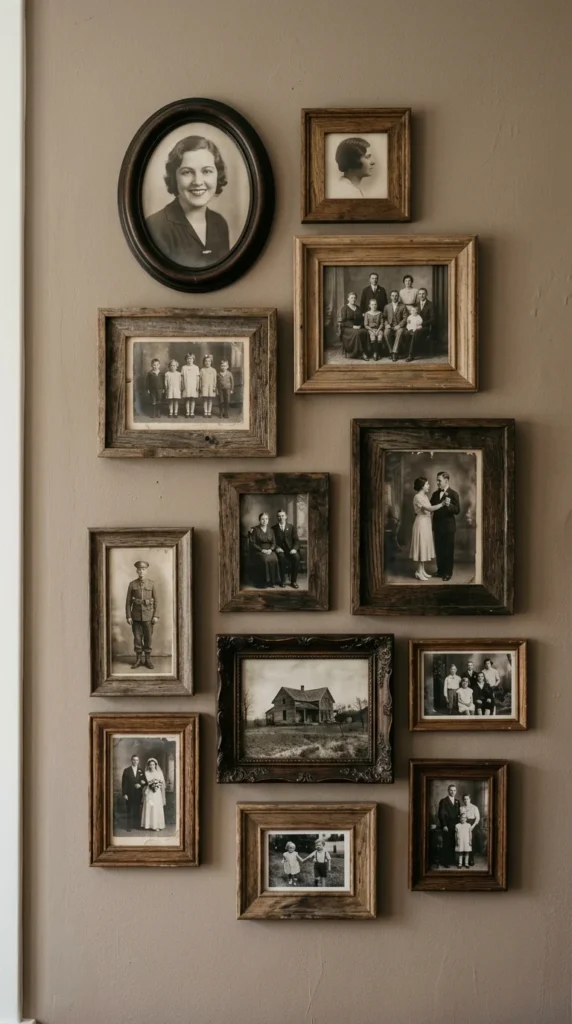
A mushroom wall is the ideal backdrop for a gallery wall. It is warmer than white but more modern than beige, providing a sophisticated canvas for family photos, vintage sketches, or modern prints.
21. Mixed Metals
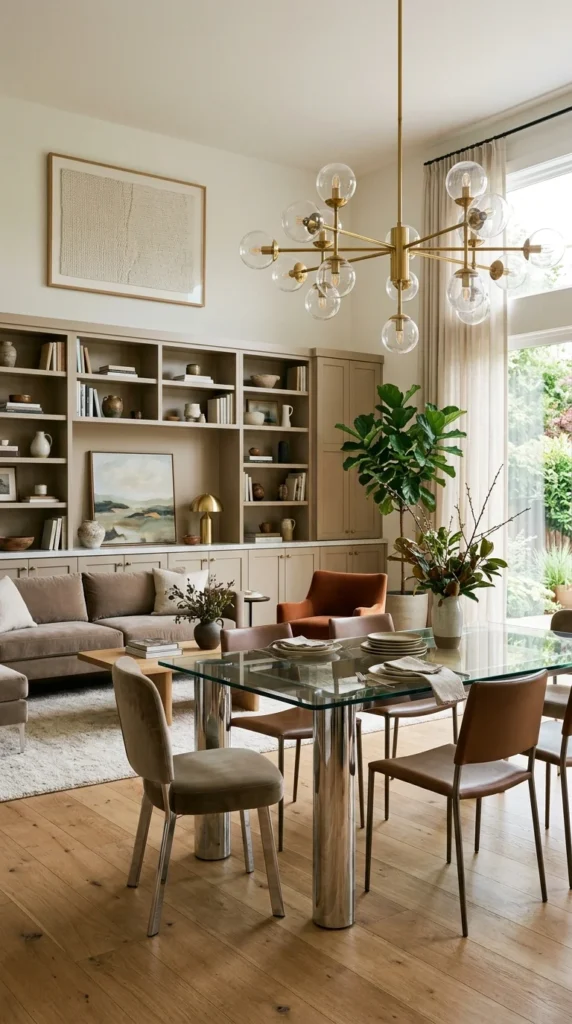
Don’t feel limited to just one metal finish. Mushroom is neutral enough to bridge the gap between “cool” metals like chrome and “warm” metals like brass. Mixing them adds a curated, designer feel to the living room.
22. Plaster Finishes
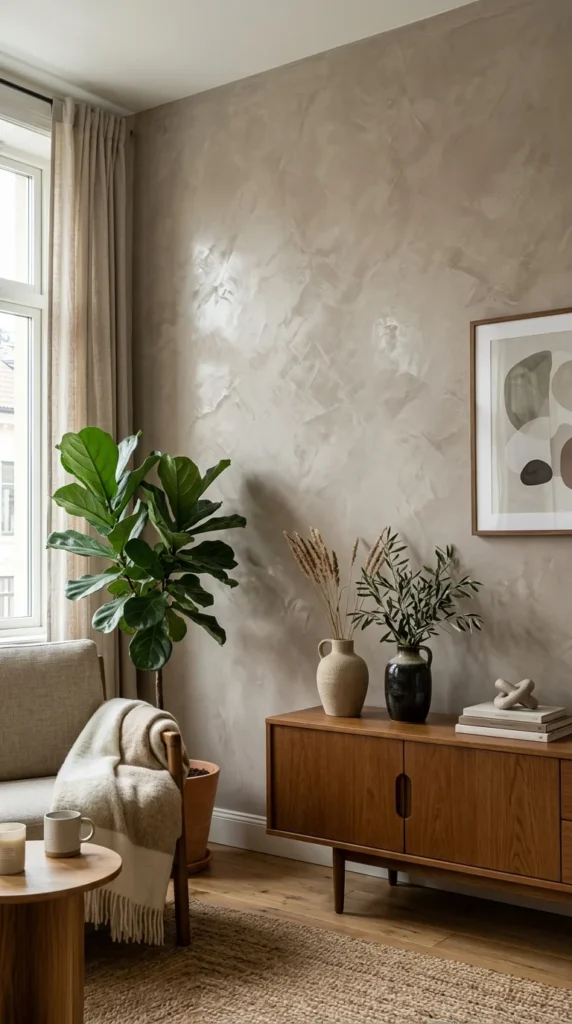
For an Old-World or Mediterranean feel, consider a plaster or lime-wash finish in a mushroom shade. This adds a soft, chalky texture and “mottled” look that gives the walls history and character.
23. Bouclé Furniture
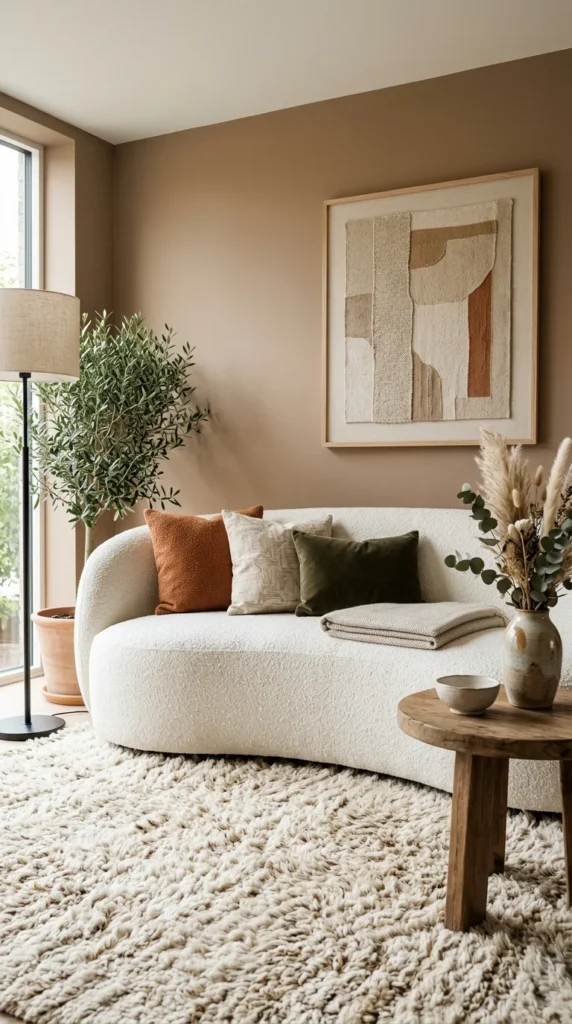
The nubby texture of bouclé fabric is a huge trend that pairs perfectly with the softness of mushroom. The creamy white of the bouclé pops against the slightly darker mushroom walls, creating a high-contrast but soft look.
24. High-Contrast Ceilings
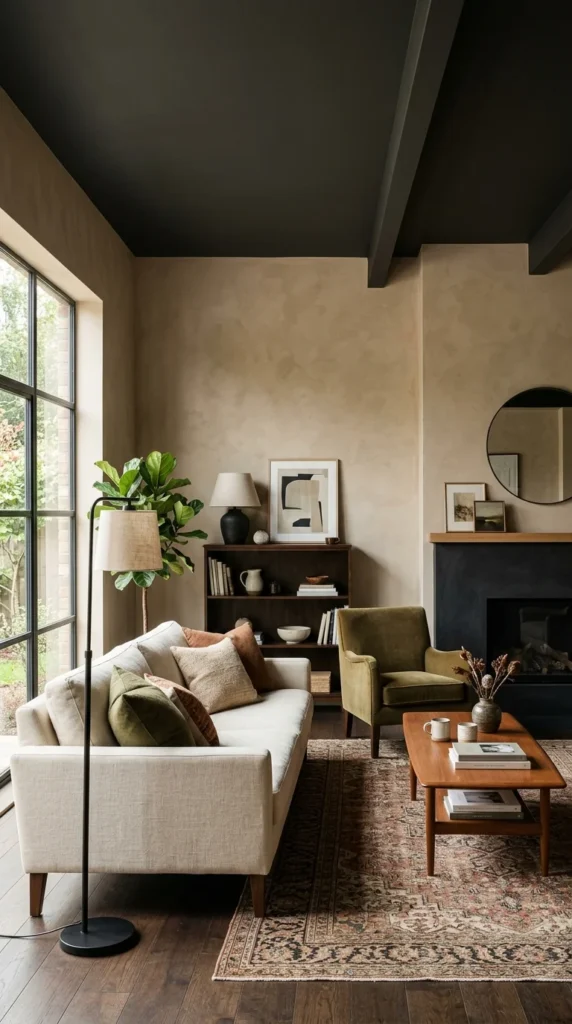
If you have high ceilings, consider painting them a dark, contrasting color while keeping the walls a medium mushroom. This “caps” the room, making it feel intimate and architecturally unique.
25. Cozy Nooks
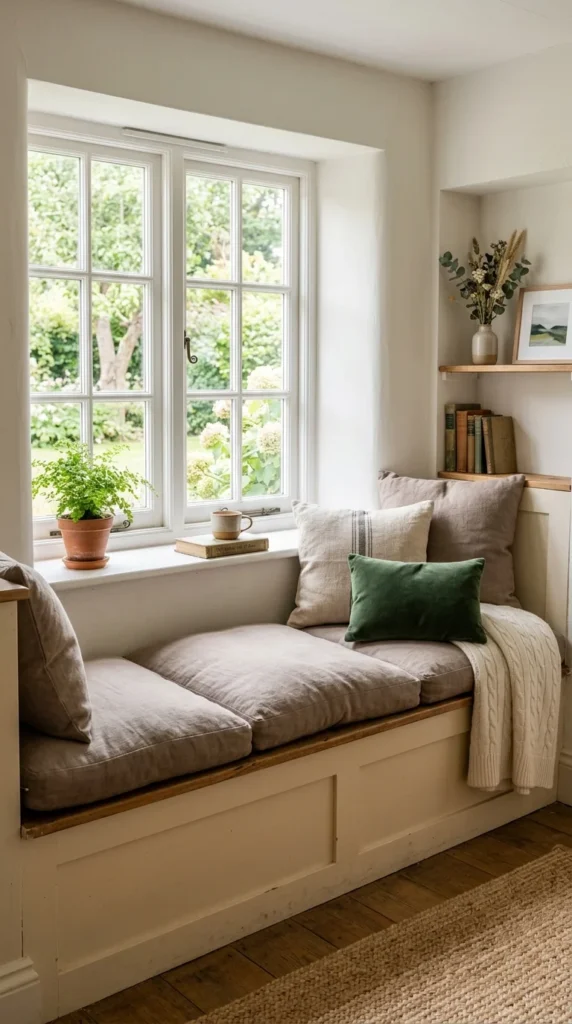
Mushroom is the ultimate “cocooning” color. Use it in smaller corners or reading nooks to create a sense of retreat. Add a soft sheepskin rug and a small side table for the perfect relaxation spot.
26. Layered Lighting
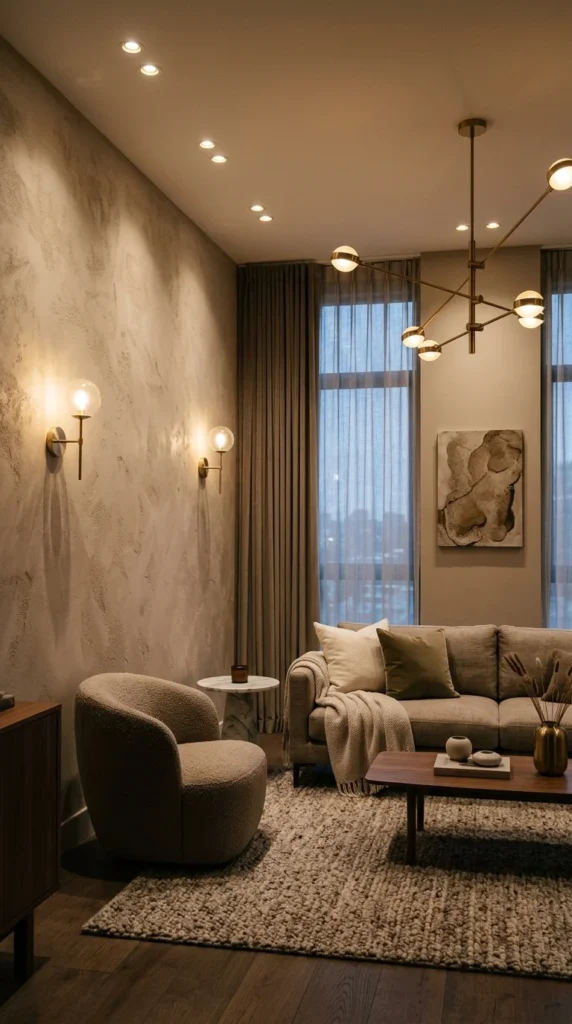
To truly appreciate the depth of mushroom, you need layered lighting. Task lighting, accent lighting, and ambient lighting work together to highlight different areas of the room, casting shadows and highlights that make the paint color come alive.
27. Vintage Finds
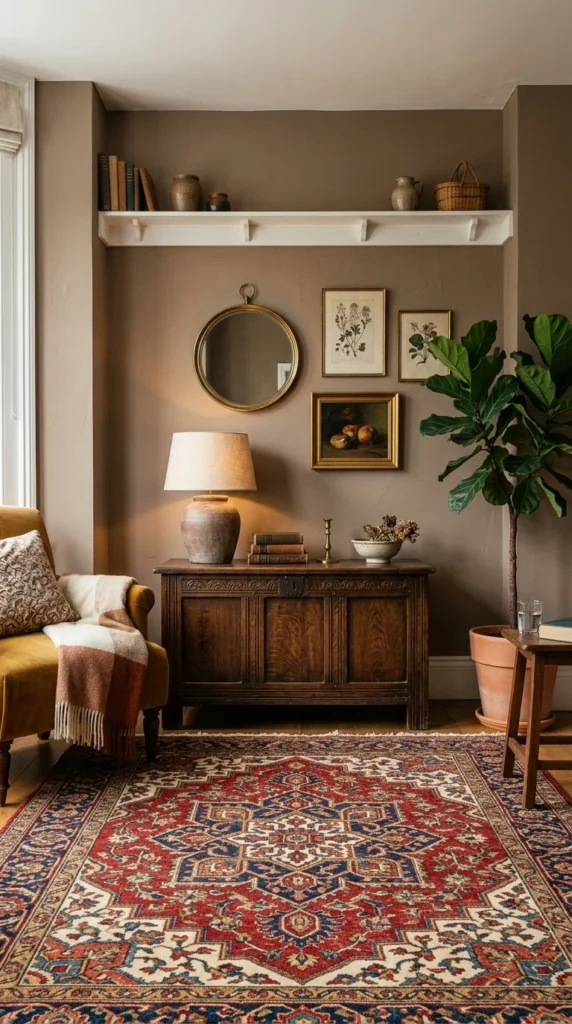
Mushroom has a timeless quality that makes it work beautifully with antiques. Whether it’s a weathered chest of drawers or a vintage rug, the color provides a neutral stage that makes “found” objects feel intentional and moder