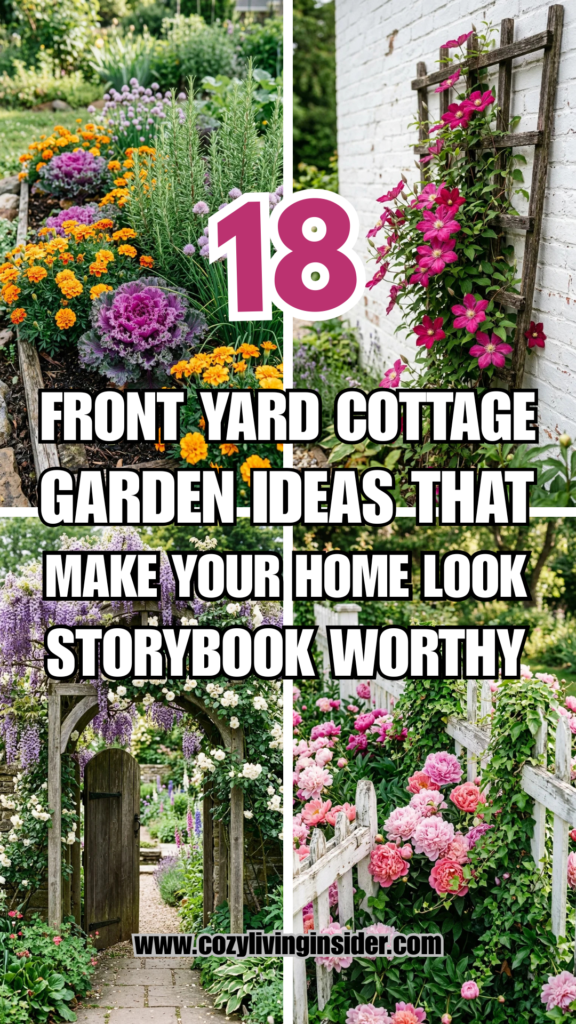

The charm of a cottage garden lies in its intentional imperfection. Unlike the rigid lines of contemporary landscaping, cottage gardens embrace a “more is more” philosophy, blending colors, textures, and heights to create a romantic, ethereal atmosphere. Transforming your front yard into a storybook-worthy sanctuary requires a mix of traditional structures and a lush, layered planting palette. Here are 18 ideas to help you cultivate a front yard that looks like it was pulled from the pages of a classic novel.
1. Picket Fences
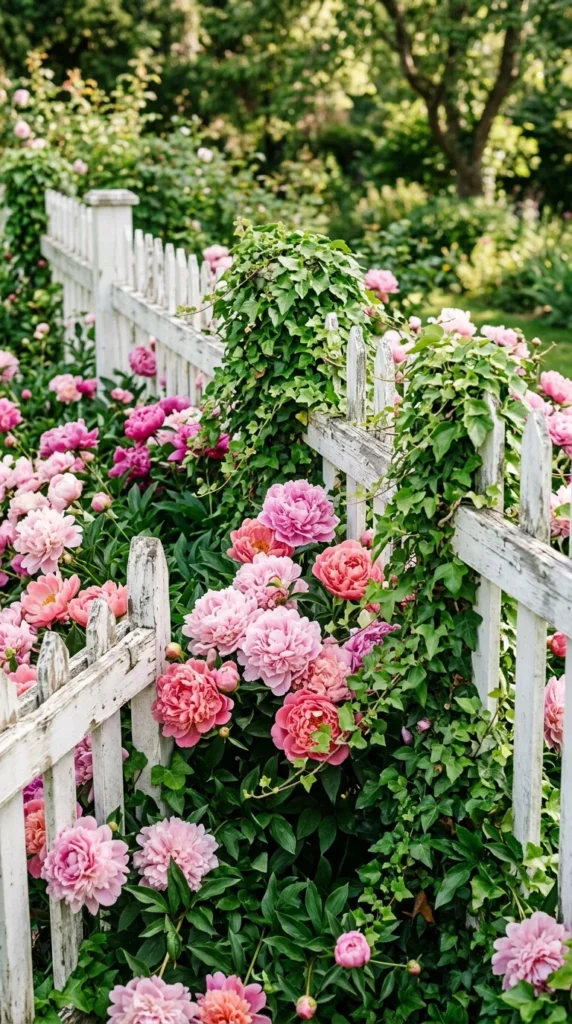
The white picket fence is the quintessential hallmark of cottage design. It serves a dual purpose: providing a structural boundary for the garden while acting as a backdrop that makes the colors of your flowers pop. To achieve the storybook look, avoid high-gloss plastics; instead, opt for painted wood with a slightly matte or distressed finish. Allow your plants to weave through the slats, blurring the line between the hardscape and the flora.
2. Stone Pathways
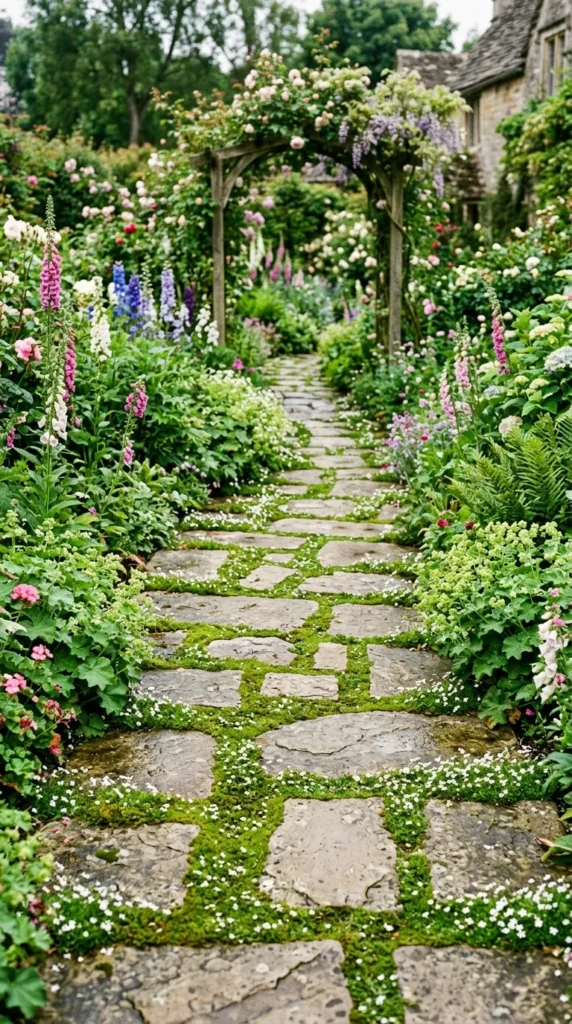
Cottage gardens should never feature straight, clinical concrete sidewalks. Instead, use natural materials like flagstone, slate, or reclaimed bricks to create winding paths. These curves create a sense of mystery, drawing the eye toward hidden corners of the yard. By leaving space between the stones for “steppable” groundcovers like creeping thyme or Irish moss, you soften the hardscape and integrate it fully into the living garden.
3. Flowering Arbors
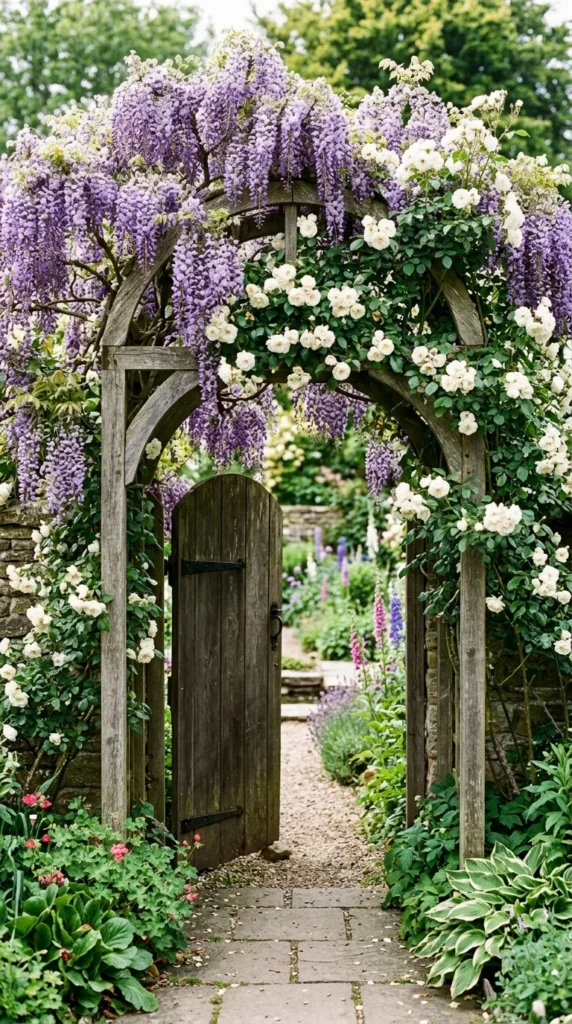
An arbor creates a sense of transition, signaling that one is entering a special, private world. Positioning an arbor over your front gate or at the start of your main walkway adds immediate vertical interest. Choose vigorous climbers that offer both greenery and blossoms. The sight of a house framed by an archway of flowers is one of the most effective ways to establish a “storybook” aesthetic before a visitor even reaches the front door.
4. Perennial Borders
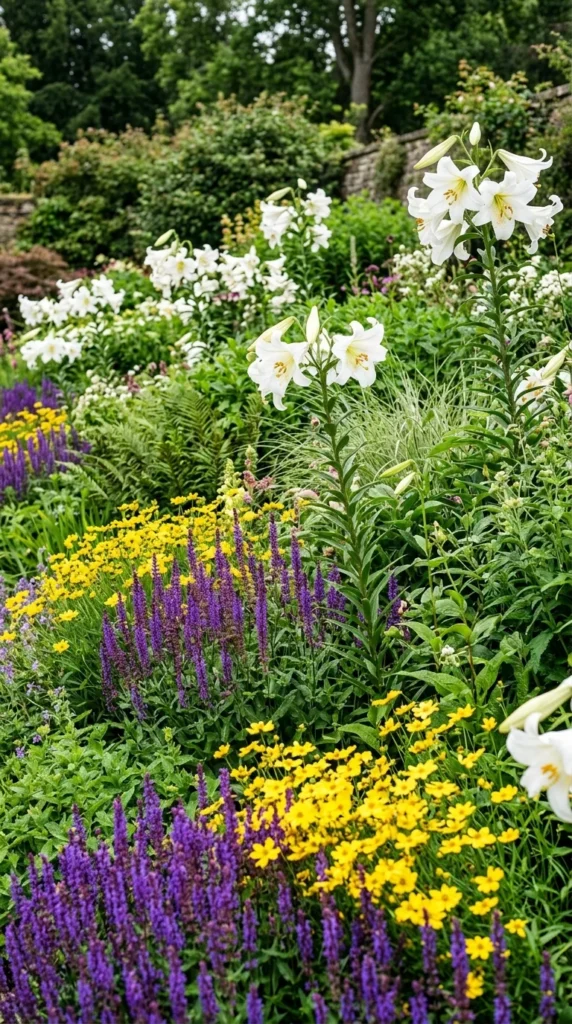
The backbone of any cottage garden is the perennial border. These plants return year after year, growing larger and more impressive with time. The key is to plant in drifts rather than isolated spots. Use “thrillers” like foxgloves for height, “fillers” like geraniums for bulk, and “spillers” like catmint to soften the edges of the bed. Aim for a density that leaves no bare soil exposed, which mimics the lushness of a wild meadow.
5. Window Boxes
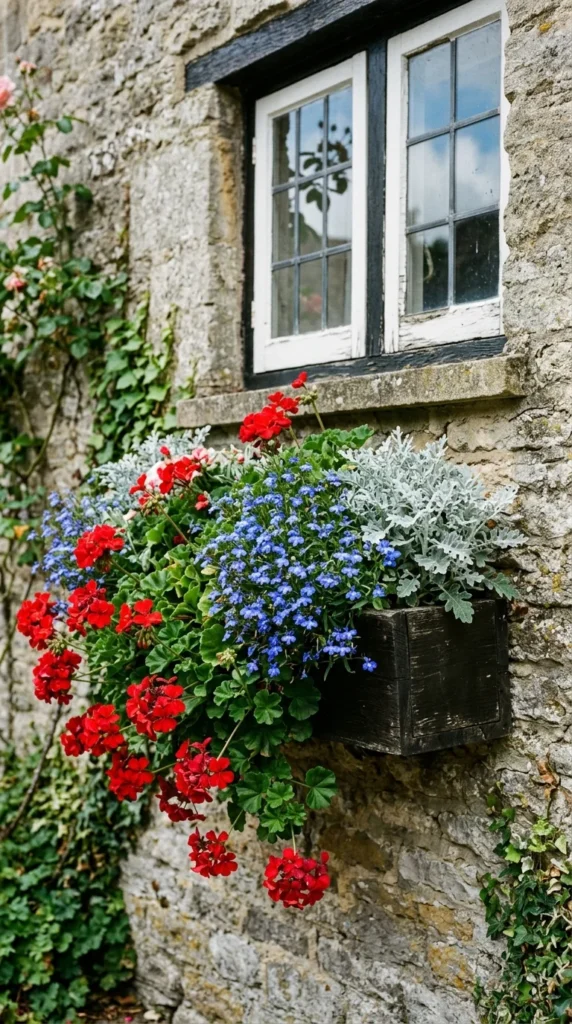
To truly marry your garden to your home, bring the plants up onto the architecture. Window boxes provide a burst of color at eye level and can be changed seasonally to keep the front of the home looking fresh. For a storybook look, choose boxes made of natural materials like wood or wrought iron, and ensure they are packed tightly with a mix of upright and trailing species.
6. Antique Gates
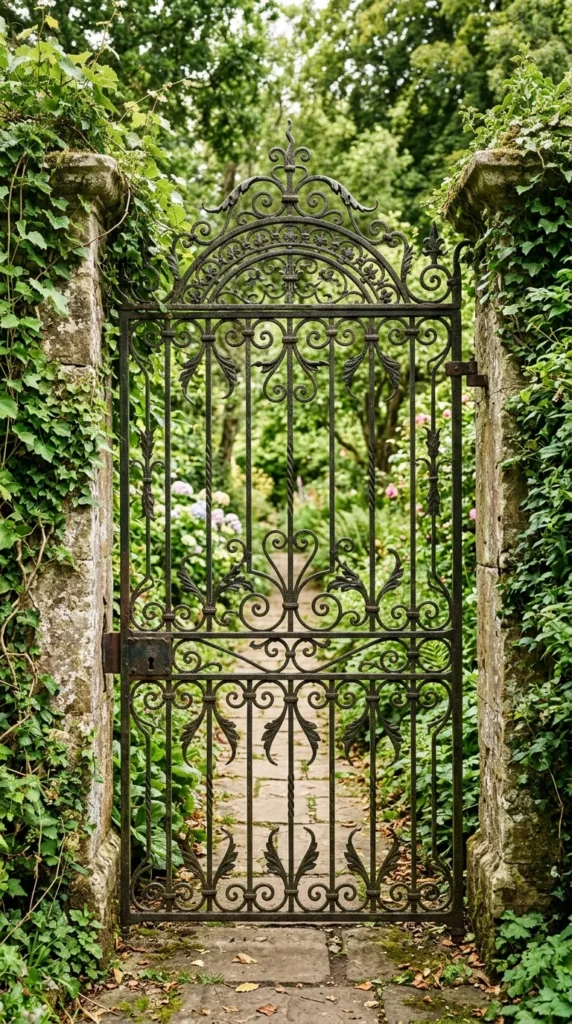
An antique gate acts as a functional piece of art. Whether it is a salvaged iron piece or a rustic wooden farm gate, the goal is to add a sense of history. A gate that looks like it has been there for decades adds soul to a new landscape. It provides a focal point and a sense of security without feeling closed off or unwelcoming.
7. Lavender Hedges
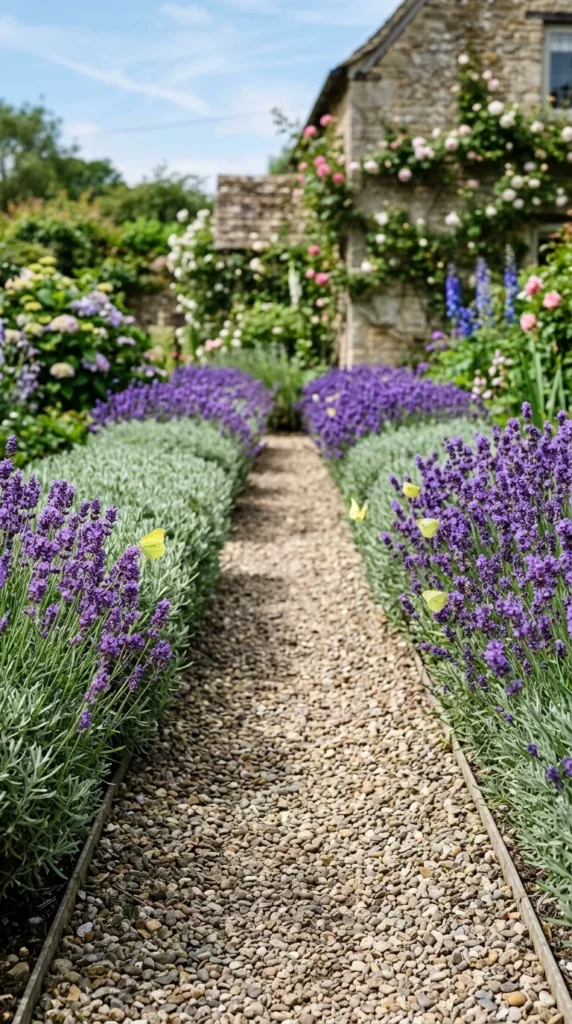
Lavender offers a trifecta of benefits: structure, color, and scent. Using it as a low hedge along a path or driveway provides a sensory experience every time you walk by. The silvery foliage stays attractive even when the plant isn’t in bloom, and the formal shape of a trimmed hedge provides a nice contrast to the more chaotic, free-form flower beds elsewhere in the yard.
8. Hidden Seating
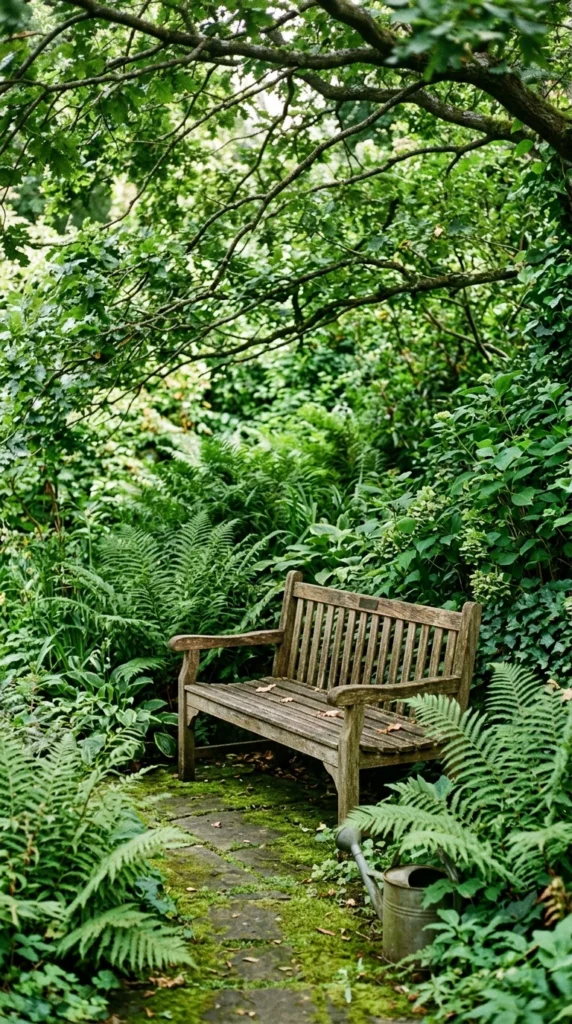
A cottage garden should be a place to linger, not just a space to pass through. Tucking a small bench or a pair of bistro chairs into a corner of the front yard creates an inviting “outdoor room.” This encourages you to spend time in the garden and adds to the home’s perceived coziness. Choose furniture that looks like it can withstand the elements, such as cedar, stone, or heavy metal.
9. Birdbaths
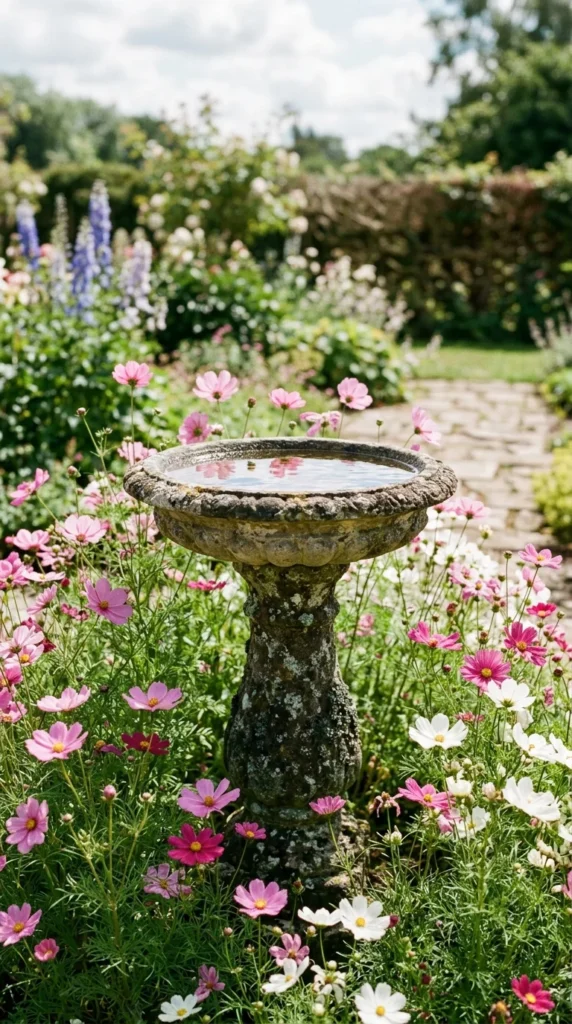
Water is a vital element for inviting life into the garden. A stone birdbath serves as a beautiful focal point and a watering station for local wildlife. The sound of birds splashing adds to the tranquil, fairy-tale atmosphere. Positioning a birdbath in the middle of a flower bed ensures it feels integrated rather than like an afterthought.
10. Climbing Clematis
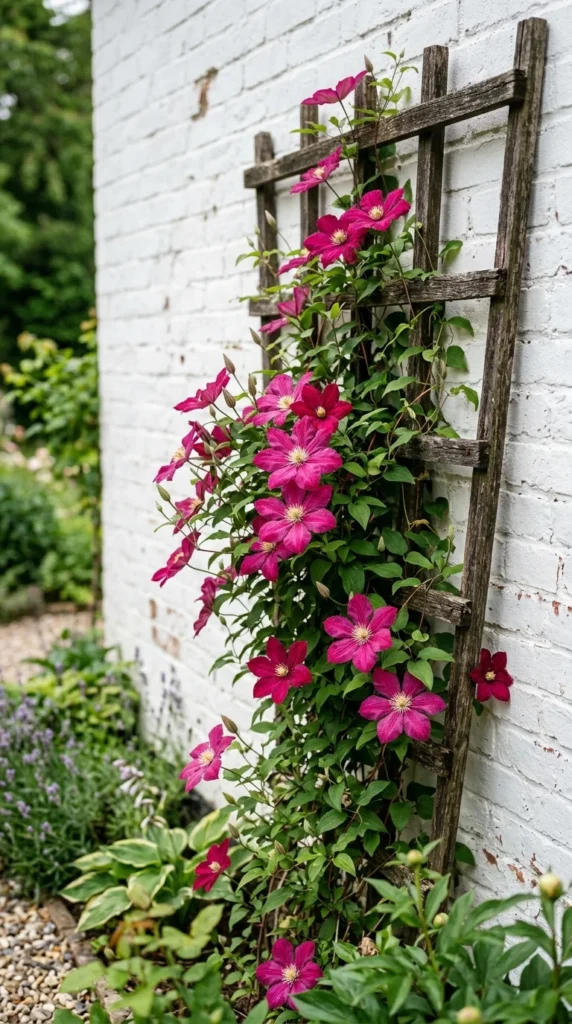
If you have limited ground space, look upward. Clematis is often called the “Queen of Climbers” for its spectacular blooms and ability to thrive in small footprints. Training clematis up a porch pillar or a trellis adds a layer of sophistication. Mixing different varieties that bloom at different times can ensure your vertical surfaces stay colorful from spring through autumn.
11. Foxgloves
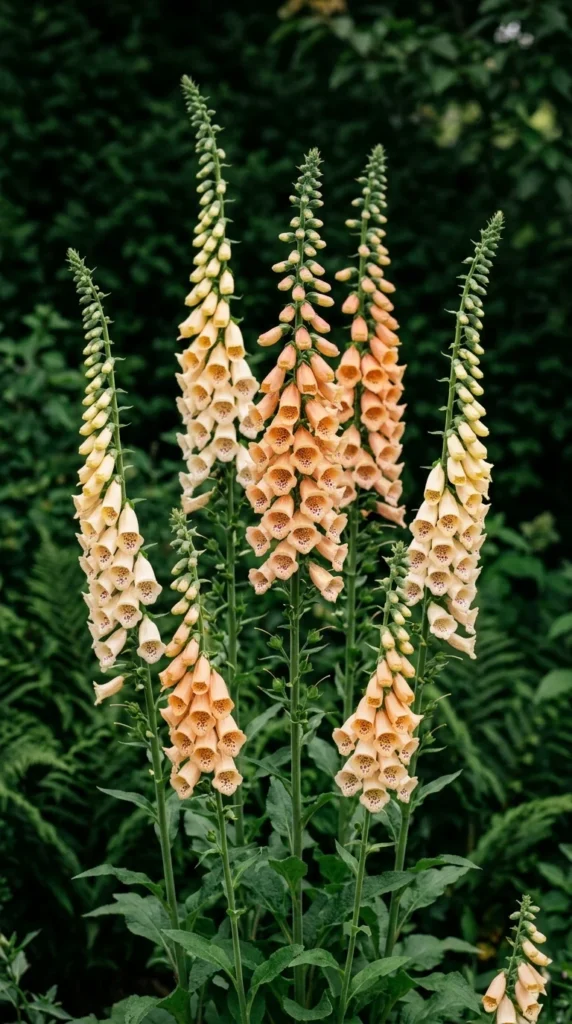
Few plants scream “storybook” as loudly as the foxglove. These tall, stately spires provide dramatic verticality that breaks up the rounded shapes of most garden shrubs. Their unique spotted throats and bell-like flowers have a whimsical quality that feels plucked straight from a forest glen. Plant them in the back of your borders to provide a high-contrast backdrop for shorter plants.
12. Gravel Paths
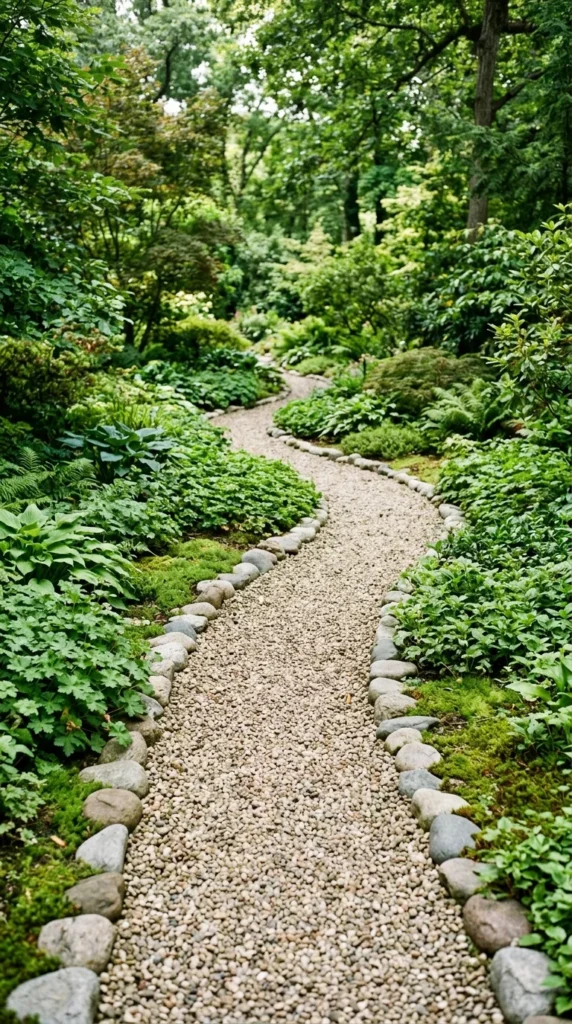
The sound of crunching gravel underfoot is a hallmark of European cottage gardens. Gravel is an excellent choice for pathways because it is permeable, affordable, and easy to install in irregular shapes. It provides a casual, rustic feel that concrete or pavers simply cannot replicate. Use a “pea” gravel or crushed stone for the best texture and visual appeal.
13. Rustic Pottery
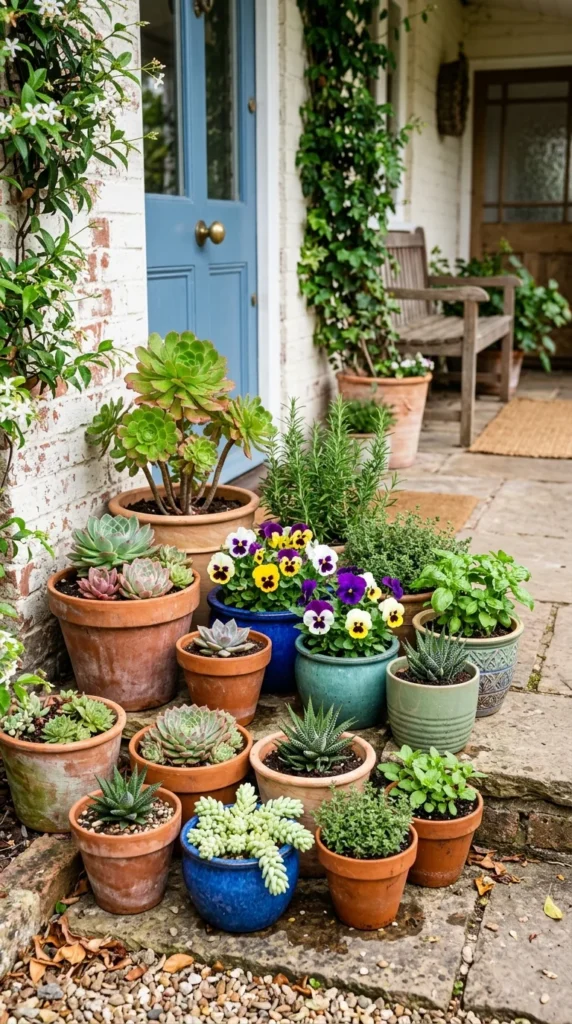
Containers allow you to add height and interest to porches, steps, and patios. For a cottage look, avoid matching sets. Instead, mix and match different sizes, shapes, and materials. Terracotta, aged lead, and glazed ceramics in earthy tones work best. Grouping pots in odd numbers (threes or fives) creates a more natural, curated look than symmetrical pairings.
14. Hollyhocks
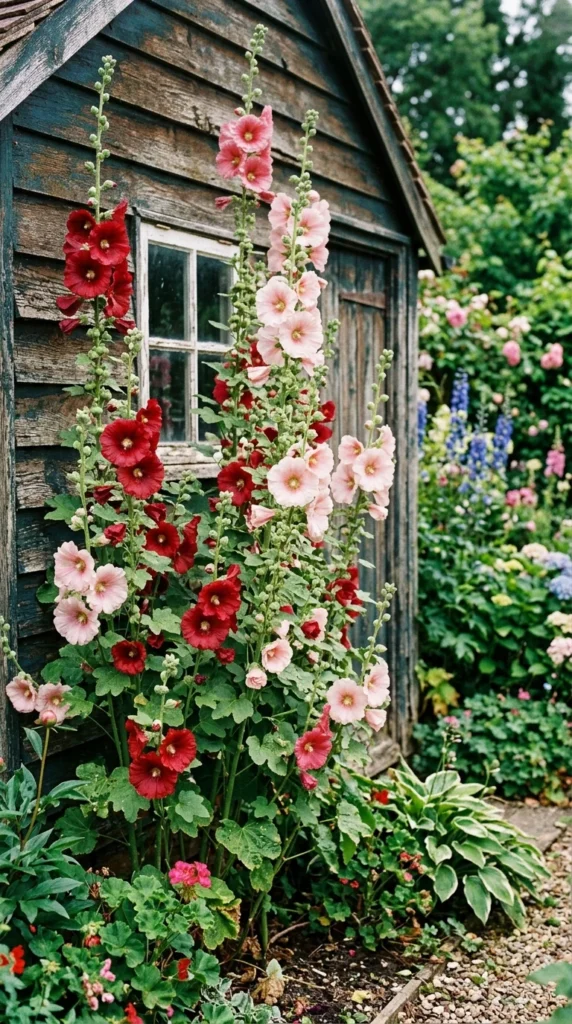
Hollyhocks are the traditional “skyline” of the cottage garden. These biennial plants are famous for their height, often reaching six to eight feet. They are perfect for planting against a wall or fence, where they can be supported. Their old-fashioned charm and towering presence make them an essential element for anyone wanting to capture a nostalgic, rural aesthetic.
15. Edible Borders
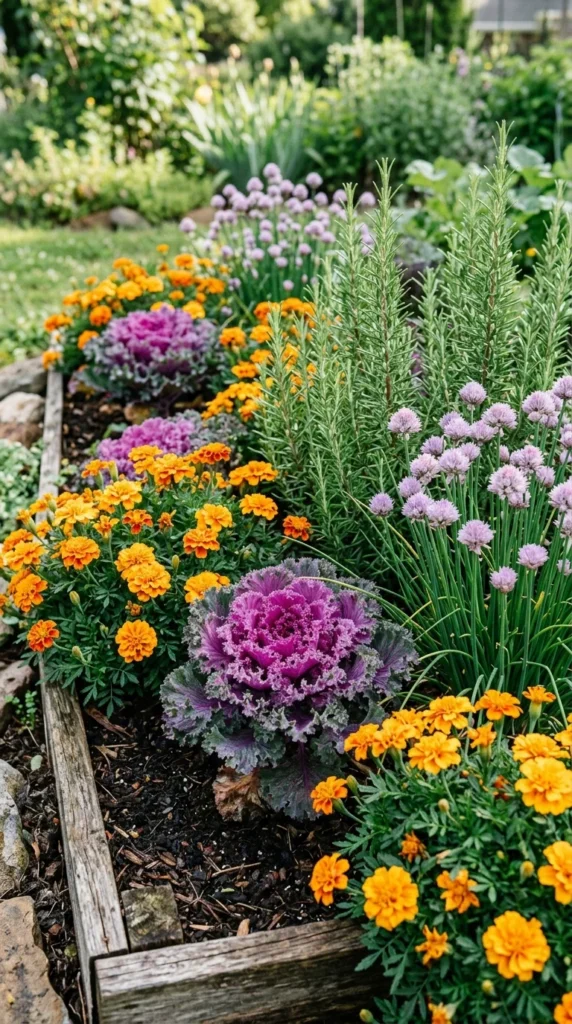
Historically, cottage gardens were functional as well as beautiful, providing food and herbs for the household. Integrating edibles into your front yard beds adds texture and utility. Curly kale, rainbow chard, and various herbs like sage and rosemary have beautiful foliage that complements ornamental flowers perfectly. This “food forest” approach adds a layer of authenticity to the storybook theme.
16. Sun-Dappled Lawns
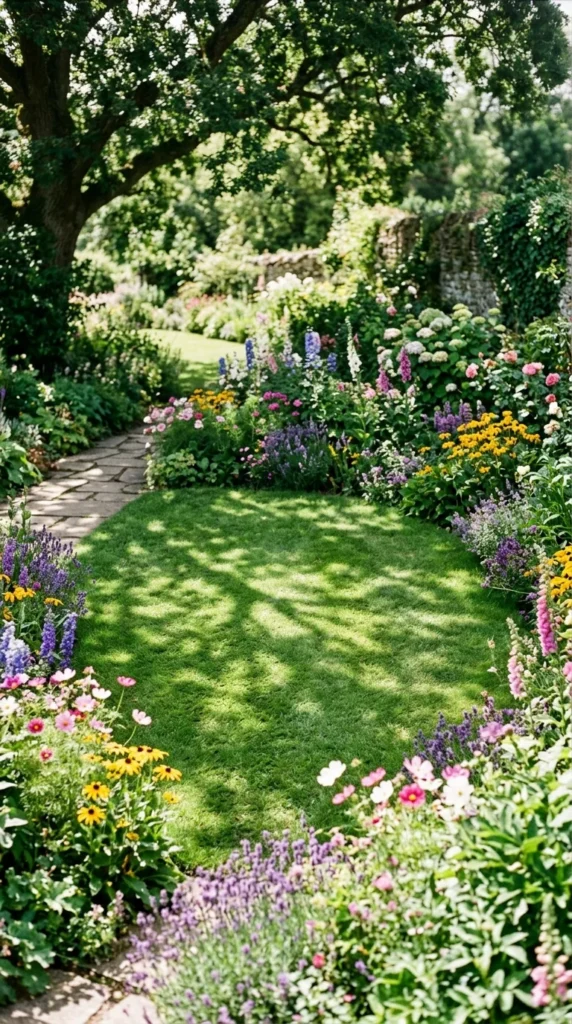
While cottage gardens are known for their density, having a small, well-defined patch of lawn can act as a visual “palate cleanser.” It provides a place for the eye to rest amidst the riot of color. Keep the lawn small and give it a soft, rounded shape to ensure it feels like a natural clearing in a woodland rather than a formal suburban yard.
17. Water Features

The soft sound of trickling water adds a layer of serenity that completes the storybook experience. You don’t need a massive pond; a simple stone bubbler or a wall-mounted fountain can be incredibly effective. Water features attract dragonflies and birds, further enhancing the “living” nature of your front yard sanctuary.
18. Lantern Lighting

To ensure your garden looks storybook-worthy even after the sun goes down, pay attention to lighting. Avoid harsh floodlights. Instead, use soft, warm-toned lanterns, string lights, or low-voltage path lights. Lanterns hanging from hooks or nestled among the plants create a magical, firefly-like effect that makes the garden feel enchanting during the evening hours.