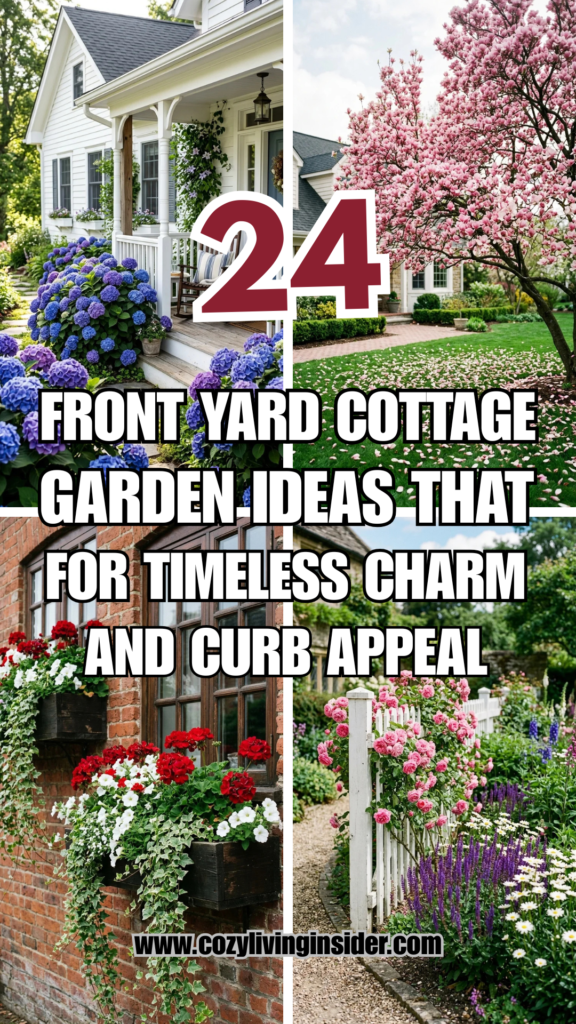

The cottage garden is a celebration of abundance, blending the practical with the whimsical to create a landscape that feels both timeless and effortless. Unlike formal gardens that rely on strict symmetry and manicured lawns, the cottage aesthetic embraces a “beautifully blurred” approach. By mixing perennials, annuals, shrubs, and hardscape elements, you can transform a standard front yard into a romantic sanctuary that boosts curb appeal and invites biodiversity.
1. Picket Fences
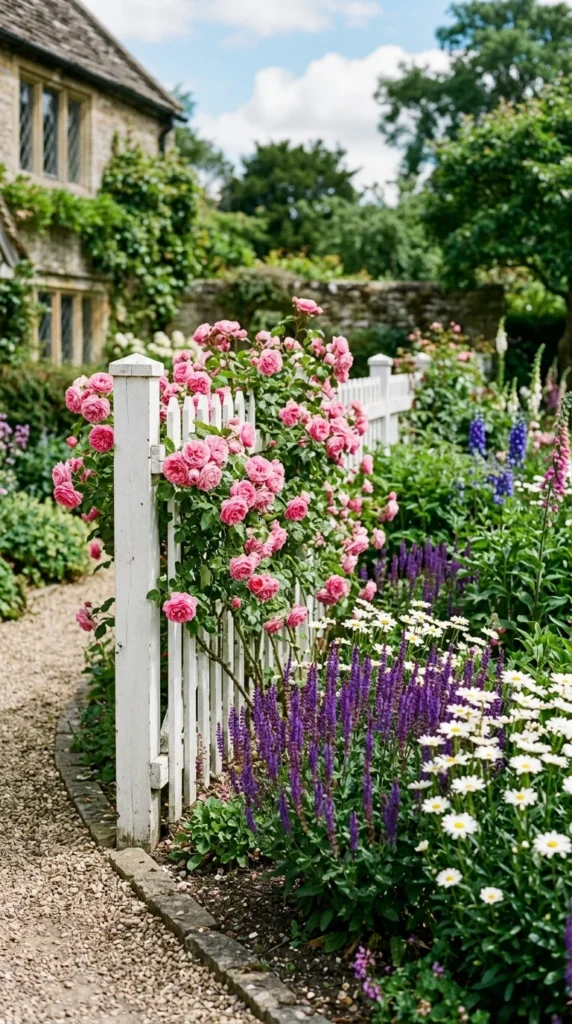
A white picket fence is the quintessential framework for a cottage garden. It provides a crisp, structural boundary that contrasts beautifully with the soft, overflowing shapes of the plants behind it. For a truly authentic look, allow your flowers to spill over and through the slats. This creates an inviting sense of neighborly charm while clearly defining your property line.
2. Gravel Paths
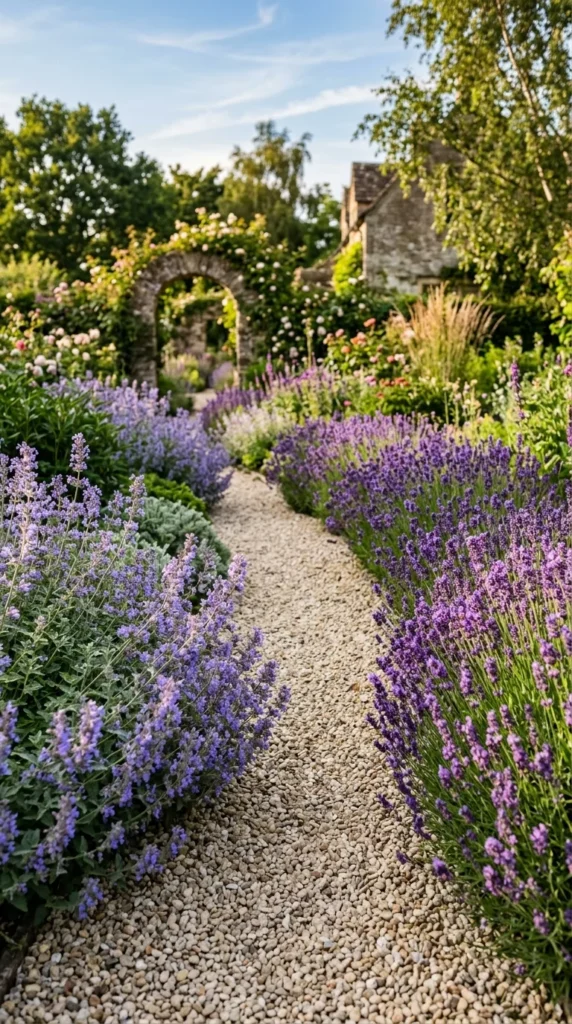
Gravel is the preferred material for cottage walkways because of its informal texture and the pleasant crunching sound it makes underfoot. Unlike solid concrete, gravel allows water to permeate the soil and provides a home for “self-seeders.” Plants like Mexican daisy or thyme can tuck themselves into the edges of the path, softening the transition between the walkway and the flower beds.
3. Climbing Roses
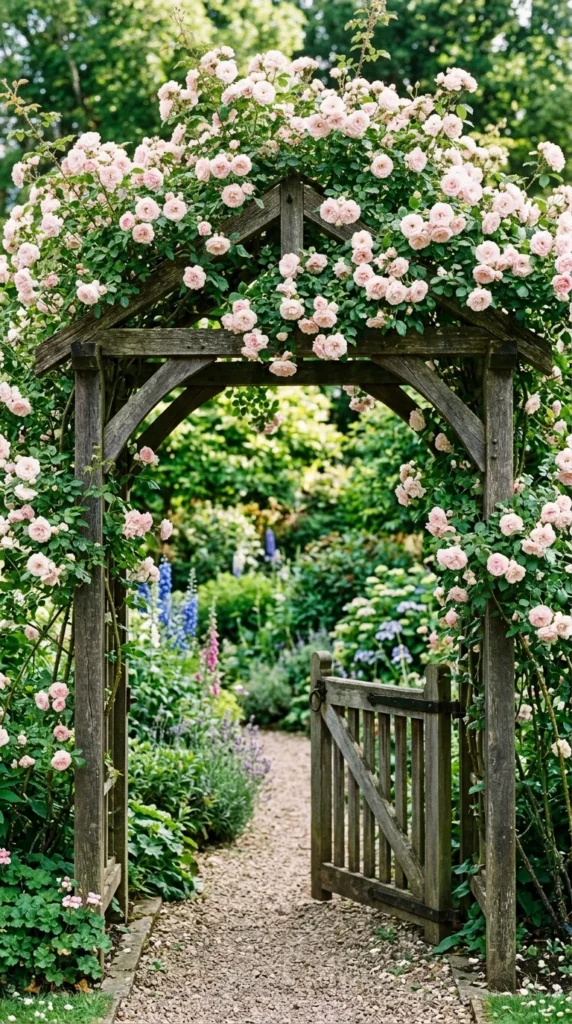
No cottage garden is complete without the vertical interest and intoxicating fragrance of roses. Climbing varieties are particularly effective for front yards as they utilize vertical space, drawing the eye upward toward the architecture of the home. Train them over doorways, porch railings, or trellises to create a “living curtain” of color that lasts throughout the summer.
4. Perennial Borders
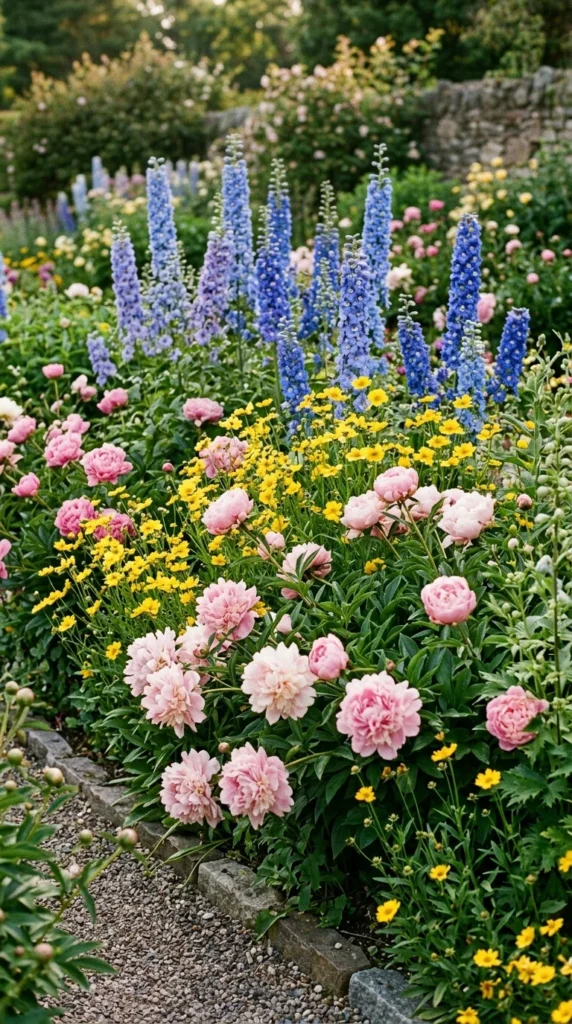
The backbone of the cottage look is the perennial border. By selecting plants that return year after year, you build a sustainable ecosystem that evolves with the seasons. Layering is key: place taller spires like foxgloves in the back, mid-height blooms like coneflowers in the center, and low-growing groundcovers at the front to create a sense of depth and Victorian-era opulence.
5. Birdbaths
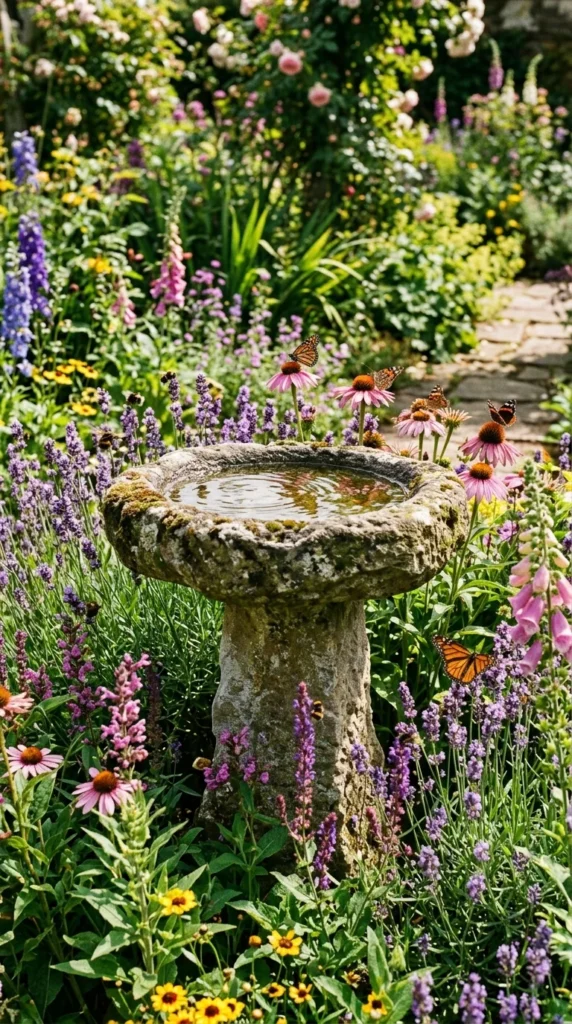
Incorporating a focal point like a birdbath adds a sense of history and utility to the front yard. A weathered stone or terra cotta basin serves as a visual anchor amidst the chaotic growth. Beyond its aesthetic value, it invites wildlife into your garden, turning your front yard into a sanctuary for birds and pollinators, which are essential for a healthy garden ecosystem.
6. Lavender Edging

Lavender is a staple of the cottage aesthetic for its scent, color, and resilience. Planting a row of lavender along a path or the edge of a porch provides a sensory experience for anyone approaching the front door. Its silvery-grey foliage offers year-round interest, while the summer blooms attract honeybees and butterflies in droves.
7. Arbor Entrances
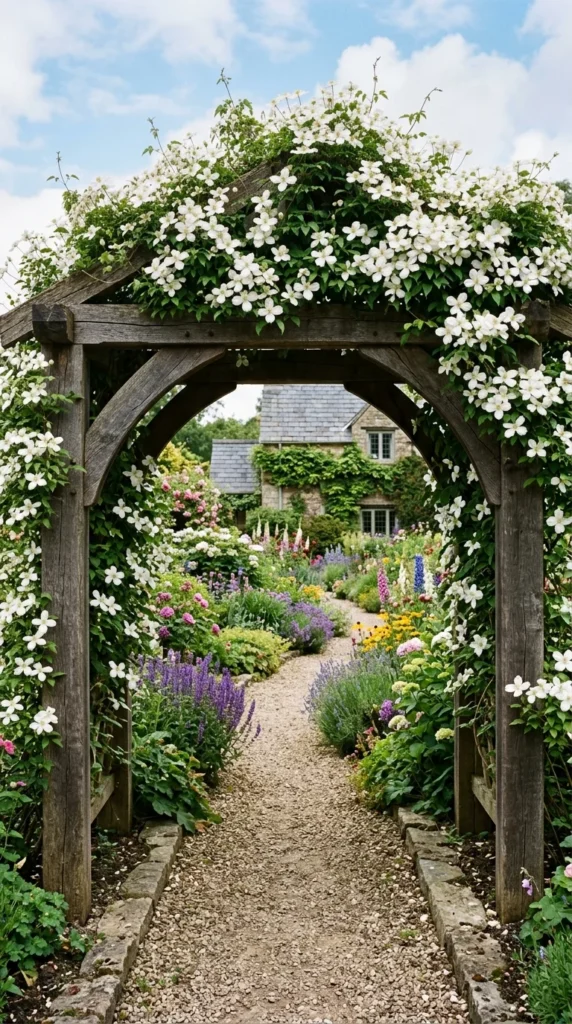
An arbor creates a formal transition into your private sanctuary. Placing one at the start of your garden path signals a change in atmosphere. When covered in jasmine, honeysuckle, or clematis, the arbor becomes a fragrant portal that frames the view of your home, making the entrance feel grand yet intimate.
8. Window Boxes
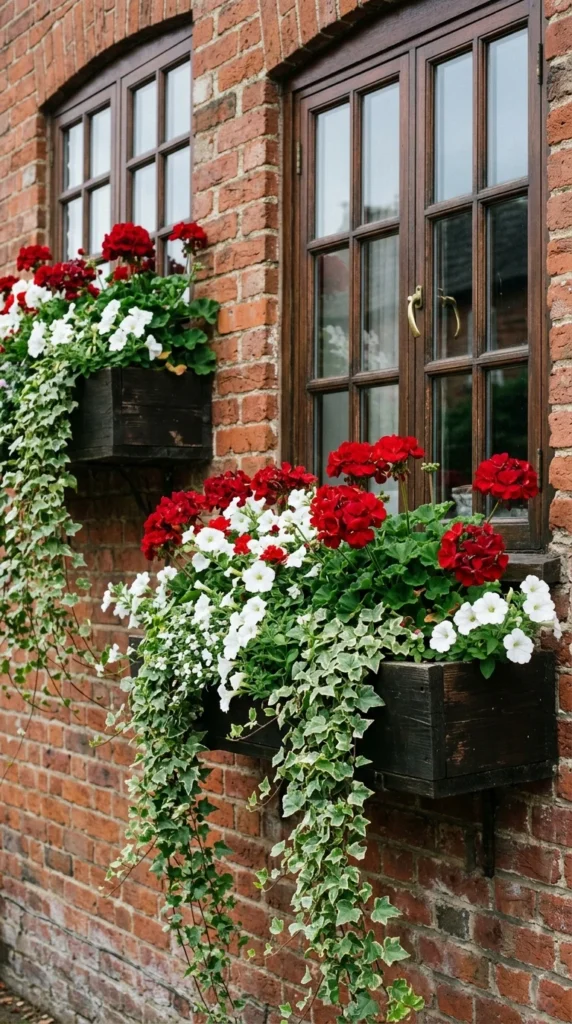
Window boxes bridge the gap between the garden and the architecture of the house. They allow you to bring the cottage charm directly onto the facade. For the best effect, use the “thriller, filler, spiller” method: a central tall plant, mounding flowers to fill the space, and trailing vines to cascade over the edge.
9. Stone Walls
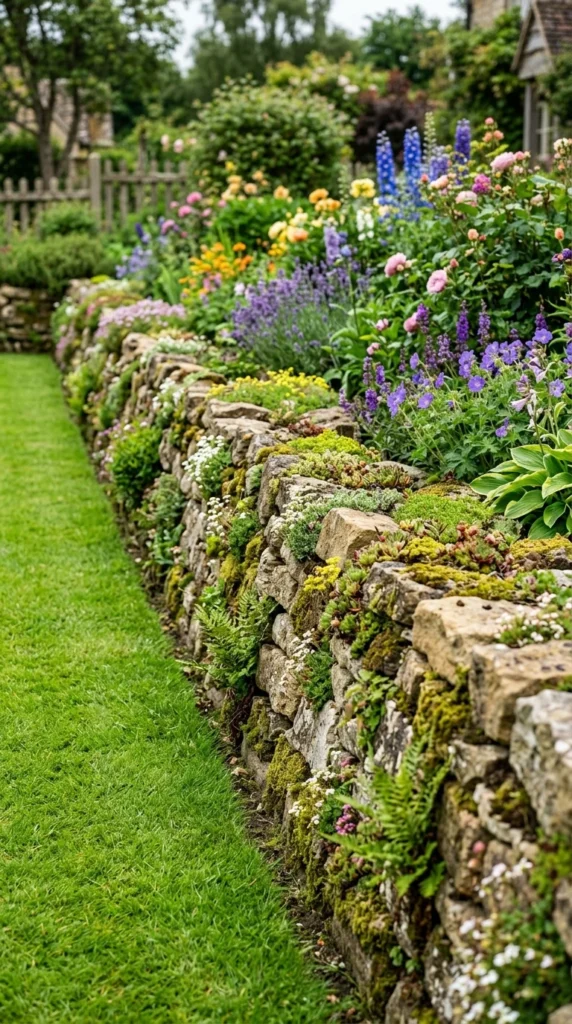
Dry-stack stone walls offer a rugged, earthy structure that grounds the ethereal nature of flowers. These walls can be used to create raised beds or to navigate slopes in a front yard. The nooks and crannies between stones are perfect for planting succulents or creeping phlox, which will eventually drape over the rock like a living tapestry.
10. Mixed Textures
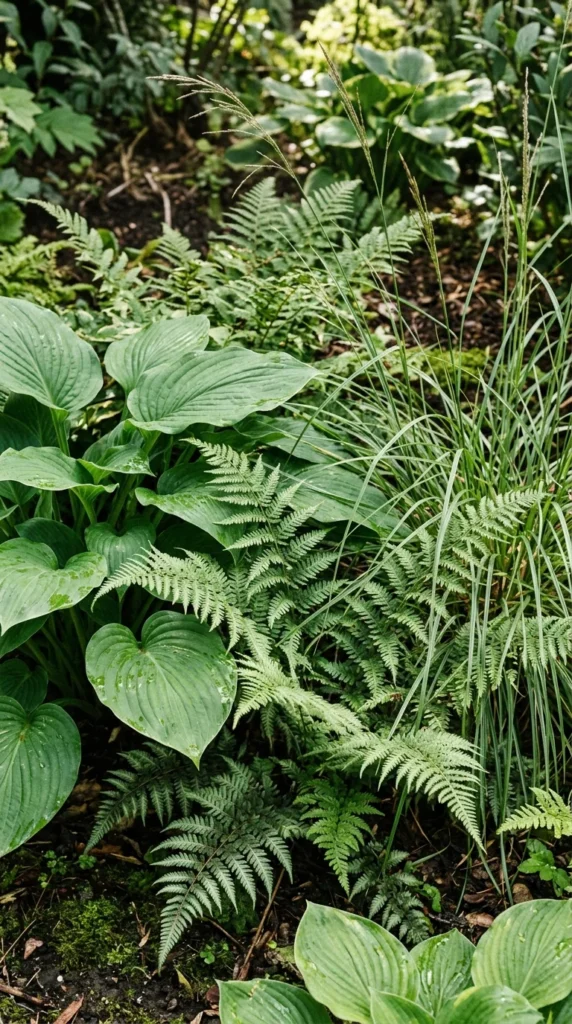
Cottage gardens thrive on diversity. Instead of focusing solely on flowers, pay attention to the foliage. Combining the large, heart-shaped leaves of hostas with the delicate, airy fronds of ferns or the spiky blades of ornamental grasses creates visual complexity. This ensures the garden remains interesting even when the main blooms have finished for the season.
11. Wildflower Meadows
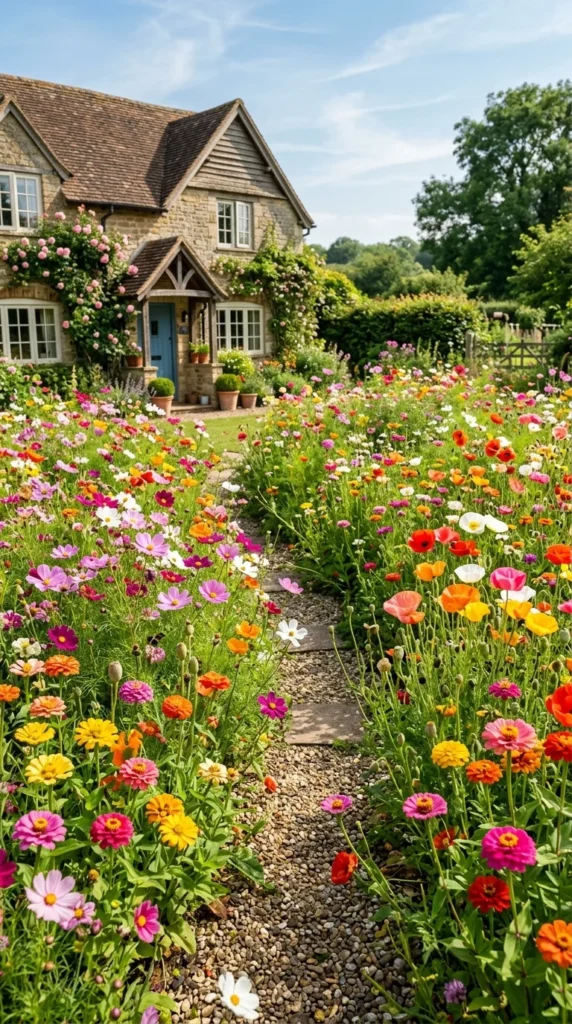
For a more relaxed and eco-friendly approach, consider replacing a portion of your lawn with a wildflower meadow. This “managed wildness” fits perfectly within the cottage philosophy. It requires less water and mowing than a traditional lawn and provides a continuous kaleidoscope of color from spring through autumn.
12. Herb Circles
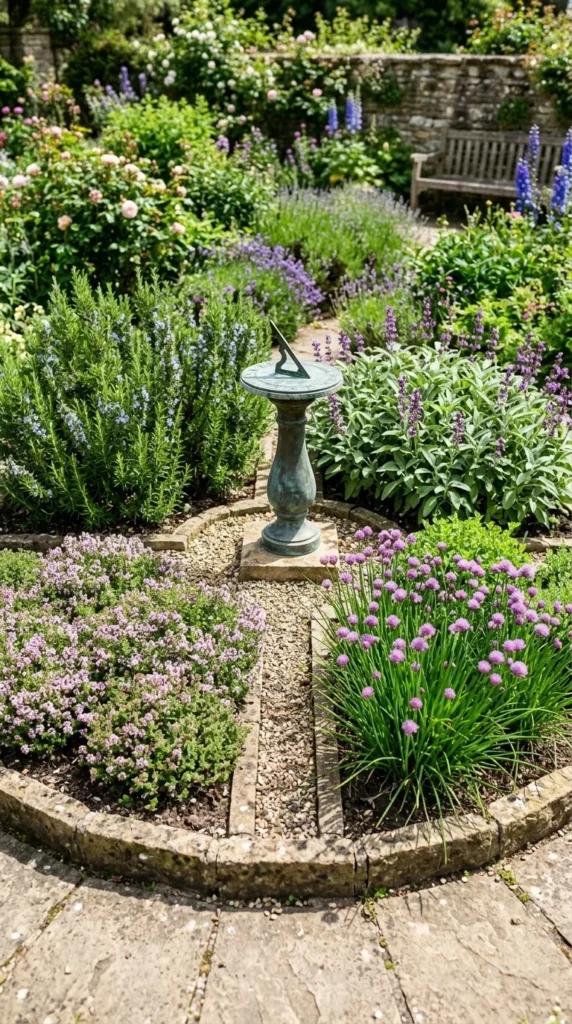
Traditionally, cottage gardens were functional as well as beautiful. Integrating herbs like rosemary, sage, and thyme into your front yard design honors this heritage. A circular herb garden can serve as a geometric centerpiece, offering aromatic foliage and useful culinary ingredients just steps from your front door.
13. Vintage Statuary
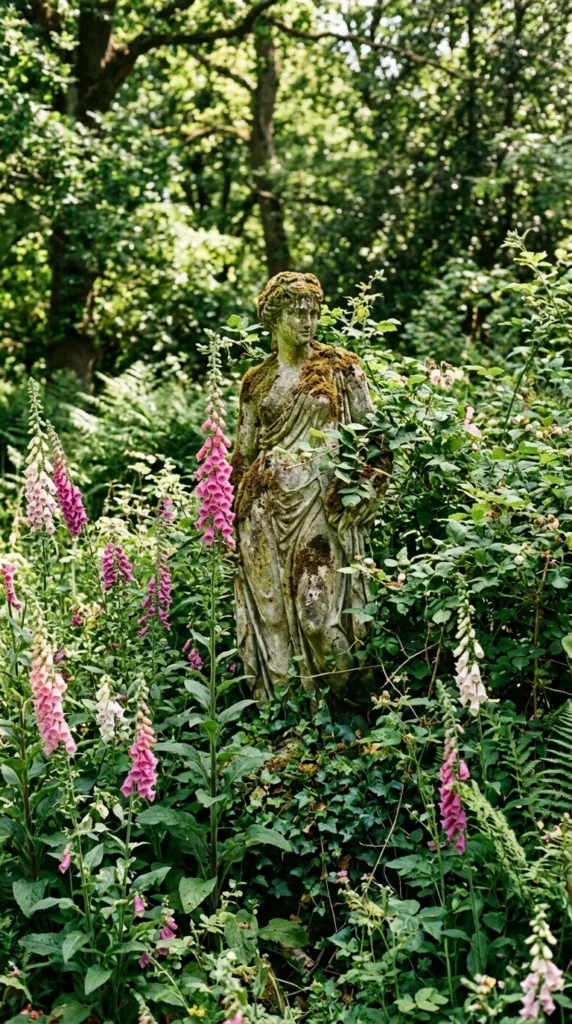
A piece of weathered garden art—be it a sundial, a cherub, or a simple stone orb—adds a touch of mystery and “found object” charm. The key is to tuck these items into the foliage so they aren’t immediately obvious, rewarding the viewer who takes a closer look at your garden’s details.
14. Foxgloves and Delphiniums
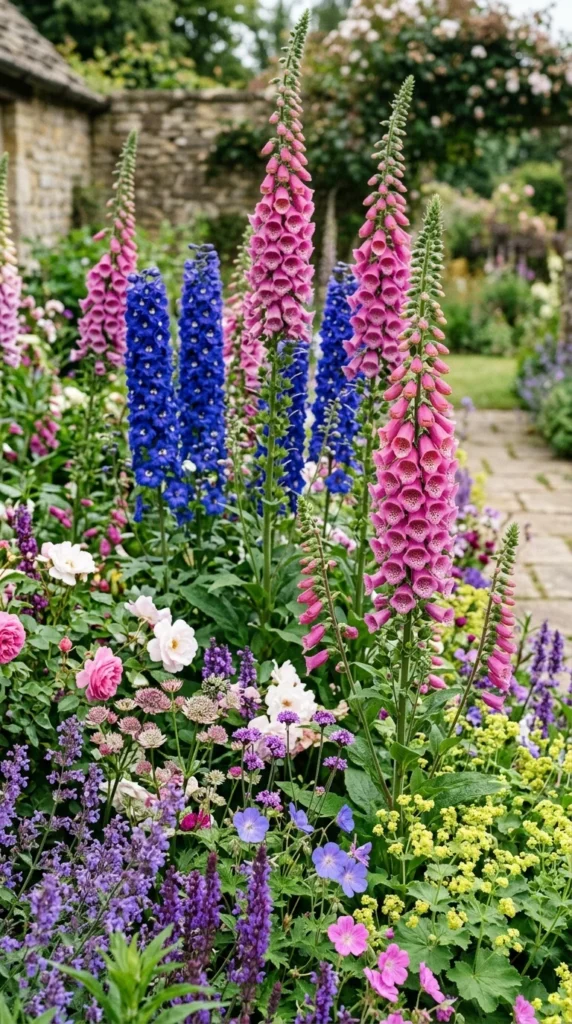
To achieve the “height” characteristic of English cottage gardens, you must include vertical spires. Foxgloves (Digitalis) and Delphiniums are the royalty of this category. Their towering flower spikes provide a sense of drama and architectural structure that breaks up the rounded shapes of shrubs and mounds.
15. Repurposed Planters

Cottage style is inherently thrifty and creative. Using an old wheelbarrow, a galvanized wash tub, or even a vintage bicycle as a planter adds whimsy and character. These items tell a story and give your front yard a unique personality that cannot be replicated with store-bought pots.
16. Seating Nooks
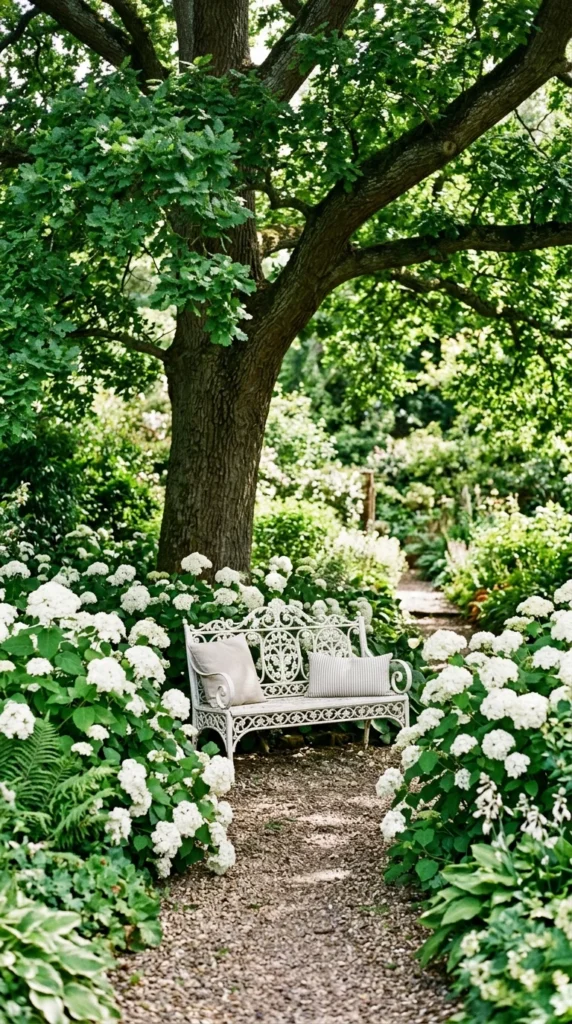
Even in a front yard, a place to sit is vital. A simple wrought iron bench or a pair of Adirondack chairs provides a destination within the garden. It suggests a lifestyle of leisure and appreciation for nature, encouraging you—and passersby—to slow down and enjoy the view.
17. Natural Mulching
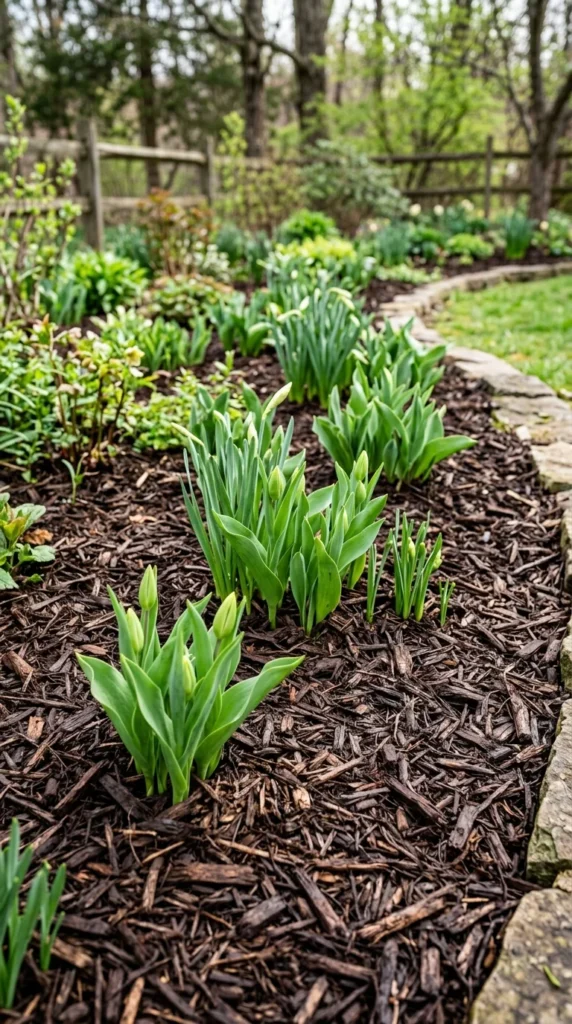
While the plants are the stars, the ground cover matters. In a cottage garden, avoid dyed red or black mulches. Opt for natural cedar, pine bark, or even a layer of compost. This looks more organic and enriches the soil over time, supporting the heavy feeding requirements of a densely planted garden.
18. Boxwood Hedges
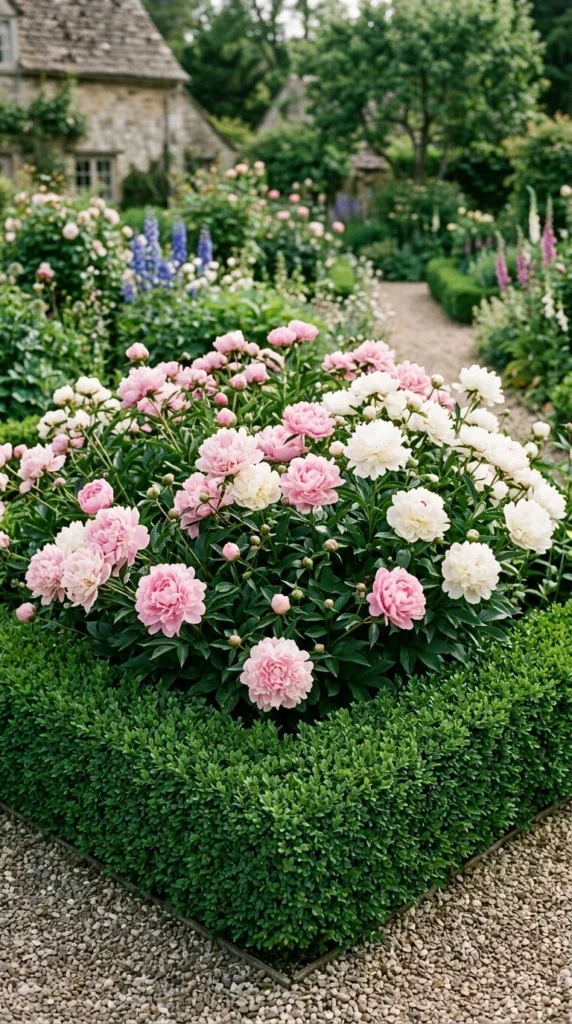
To prevent a cottage garden from looking like a mess, gardeners often use “formal bones.” A low, clipped boxwood hedge can provide a clean line that contains the “chaos” of the perennials. This juxtaposition between the tidy green hedge and the sprawling flowers is a hallmark of sophisticated garden design.
19. Flowering Trees
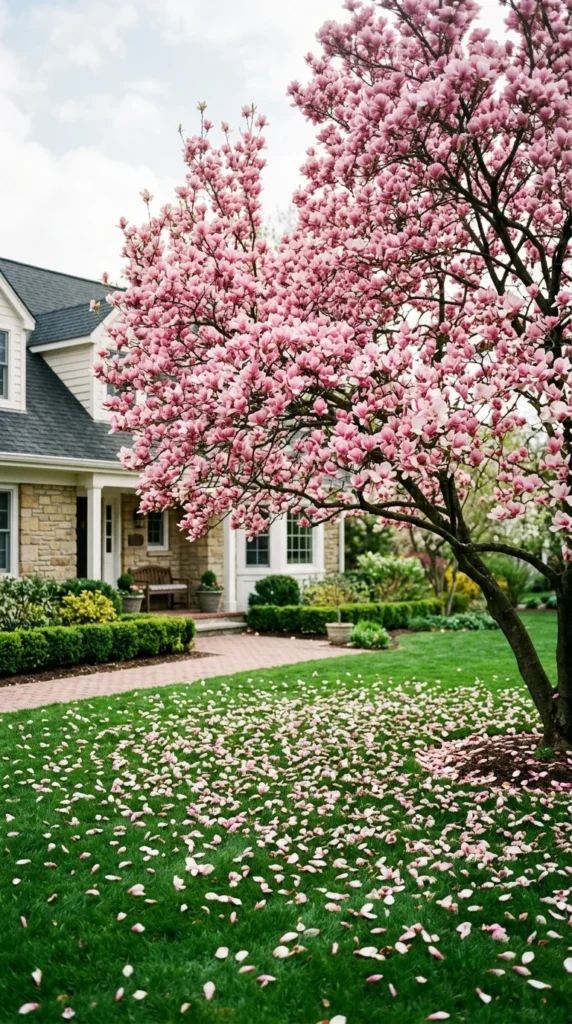
Anchor your garden with a small flowering tree. Varieties like Magnolia, Dogwood, or Crabapple provide a spectacular spring display and a structural canopy for the rest of the year. The shade they provide also allows you to experiment with shade-loving cottage plants like hellebores and bleeding hearts.
20. Stepping Stones
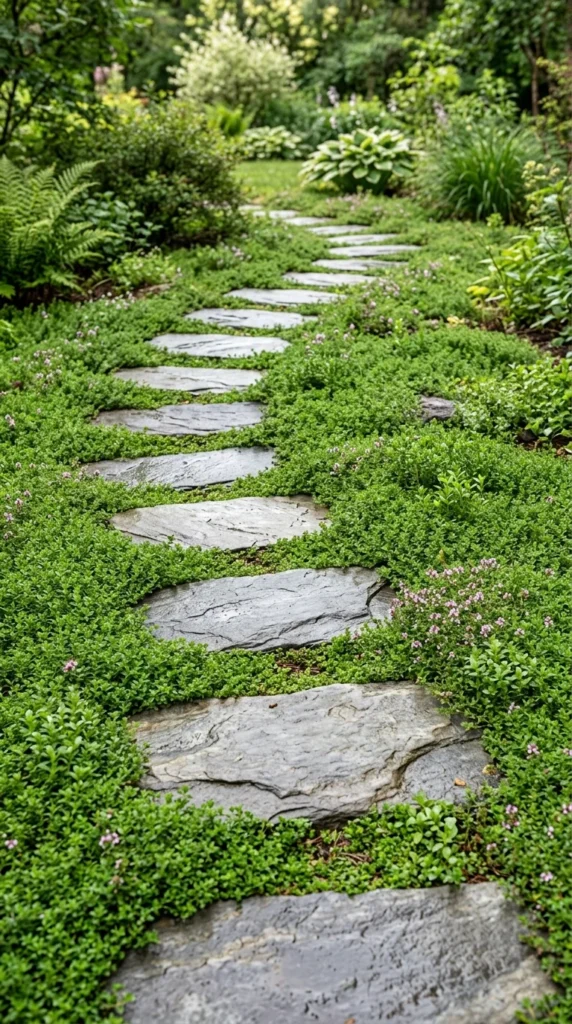
Stepping stones offer a more organic alternative to a continuous path. By spacing out flat rocks and allowing groundcovers like Irish moss or thyme to grow between them, you create a “secret garden” feel. This approach is perfect for side yards or secondary paths that lead away from the main entrance.
21. Bee-Friendly Blooms

The cottage garden is a living system. By choosing “open” flowers like zinnias, cosmos, and sunflowers, you provide easy access for pollinators. A garden buzzing with life feels more vibrant and “settled” than one that is sterile. It also ensures that your fruiting plants and neighboring gardens stay productive.
22. Arched Gateways
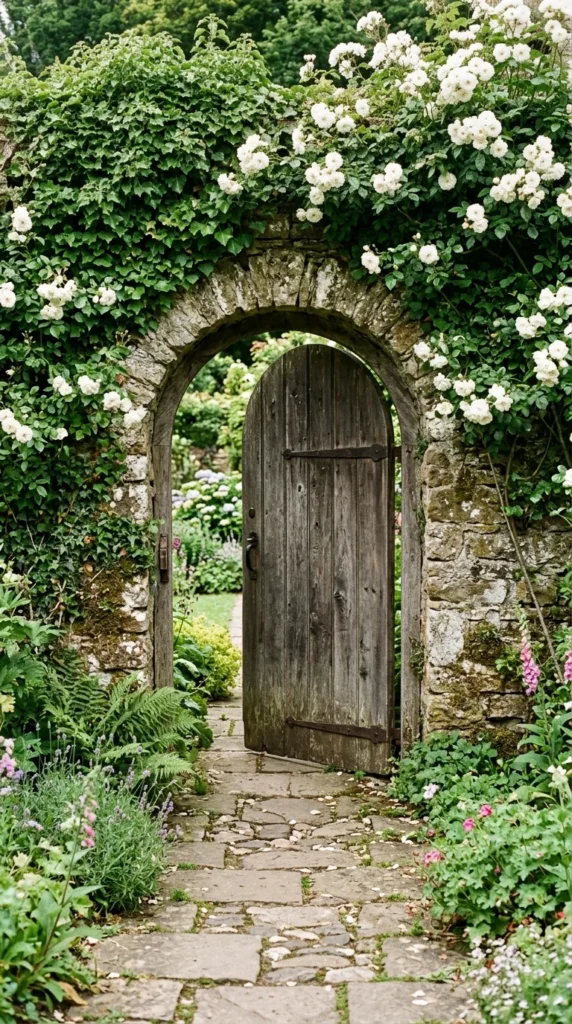
If your cottage garden is fenced, the gate is your opportunity to make a first impression. An arched gateway, perhaps with a decorative latch or a bell, creates a sense of arrival. It frames the path to your front door and acts as a charming “window” into your private floral world.
23. Hydrangea Clusters
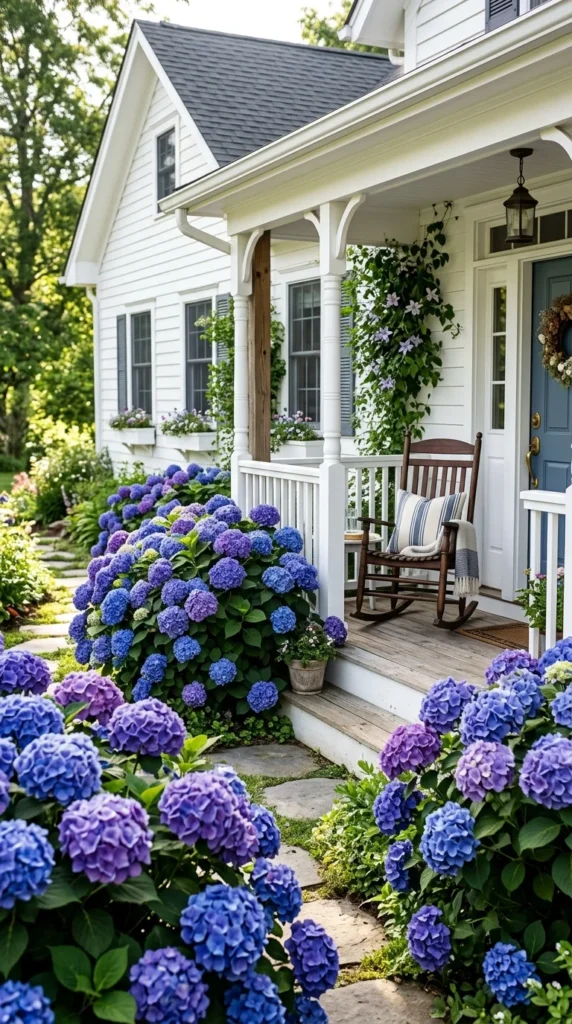
Hydrangeas offer massive color impact with relatively little maintenance. Their large, rounded flower heads provide a soft, cloud-like texture that fills large gaps in the landscape. Whether you choose the classic blue mophead or the elegant white “Annabelle,” they provide a lush, established feeling to any front yard.
24. Evening Lighting
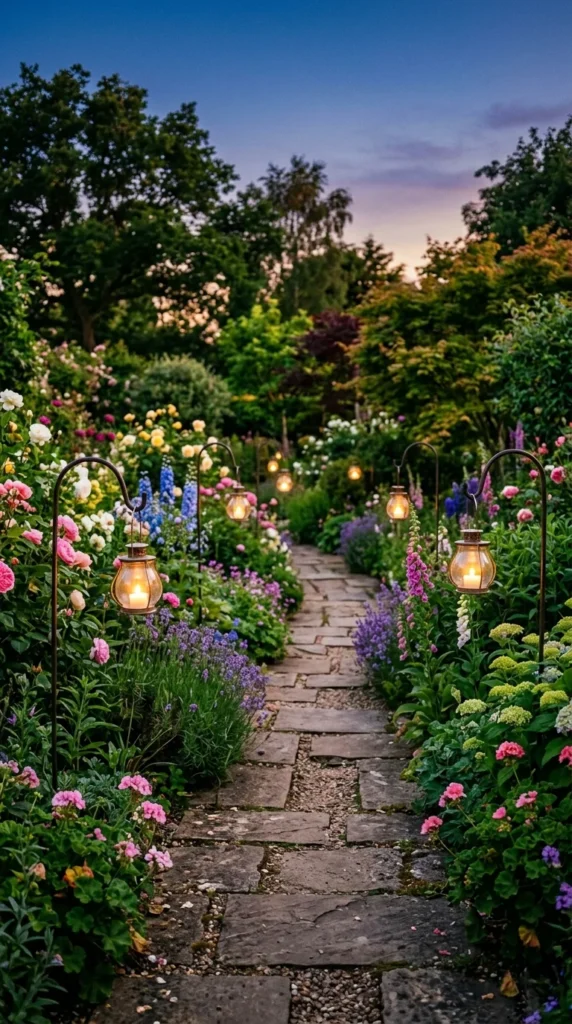
A cottage garden shouldn’t disappear when the sun goes down. Soft, warm lighting—such as copper lanterns, solar-powered “fairy” lights in the trees, or path lights—extends the magic into the evening. Avoid harsh floodlights; instead, aim for a gentle glow that highlights the textures of the leaves and the pale colors of white flowers, which “pop” in the twilight.