
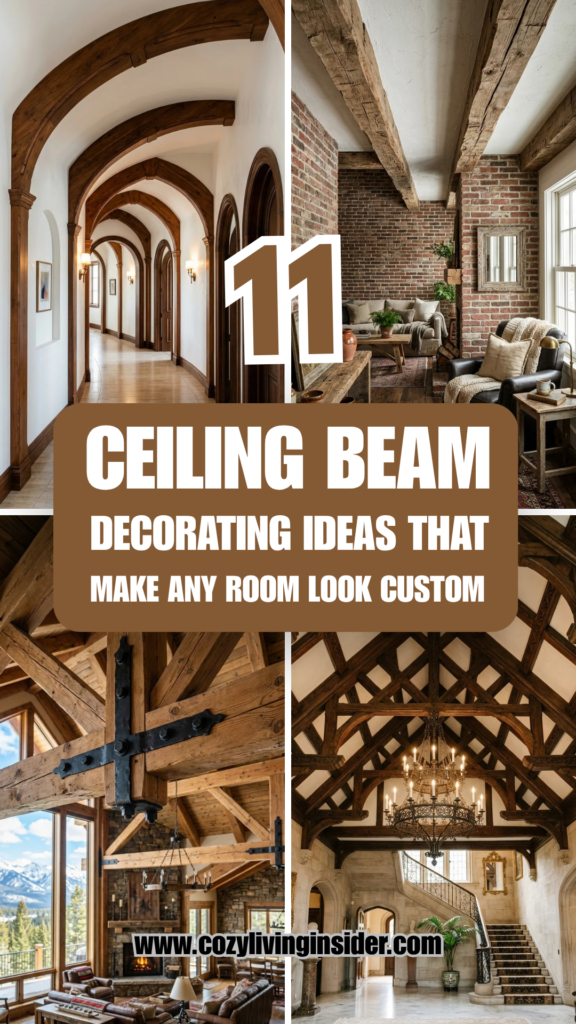

Architectural details are the secret ingredient that transforms a standard house into a bespoke home. Among these details, ceiling beams stand out as one of the most impactful design elements available to homeowners and designers alike. Historically used as structural necessities to support the weight of the roof, beams have evolved into a premier decorative tool that adds depth, warmth, and a sense of permanence to any interior.
Whether you are working with an open-concept living area, a cozy bedroom, or a modern kitchen, the right beam treatment can draw the eye upward, making a space feel larger and more intentional. From the rugged charm of reclaimed timber to the sleek lines of modern painted finishes, here are 11 ceiling beam decorating ideas to elevate your home to a custom-built masterpiece.
1. Natural Wood
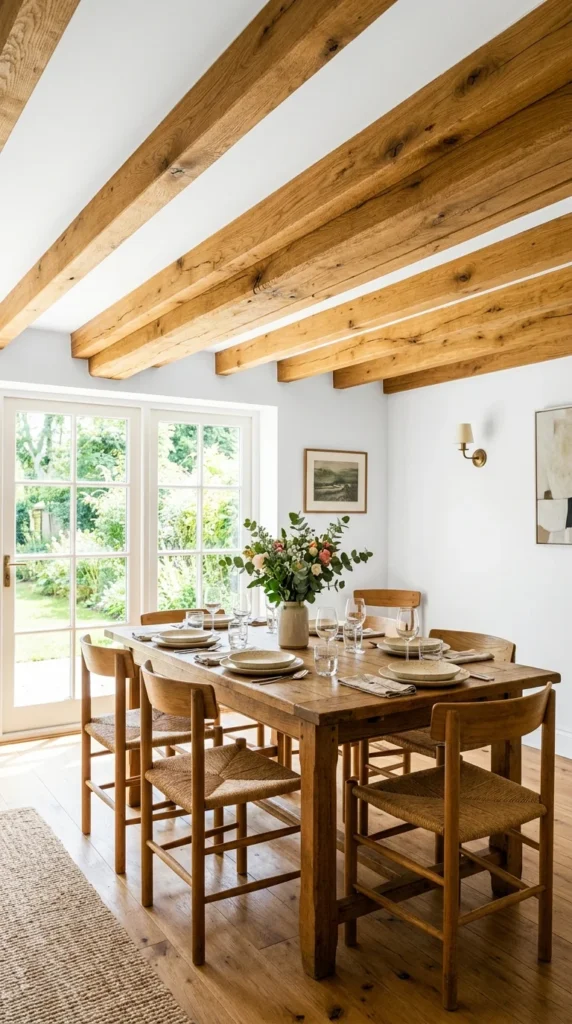
There is nothing quite like the organic beauty of natural wood. Using unpainted, stained wood beams is the quintessential way to introduce warmth into a room. The natural variations in grain, color, and texture provide a tactile quality that breaks up the monotony of flat drywall. For a classic look, species like White Oak or Douglas Fir offer a timeless appeal that works in both traditional and contemporary settings. When choosing a stain, consider the other wood elements in your room—such as flooring or cabinetry—to ensure a harmonious balance. A light, clear coat can preserve the “raw” look of the wood, while a medium-toned stain can add a layer of sophisticated richness.
2. Painted White
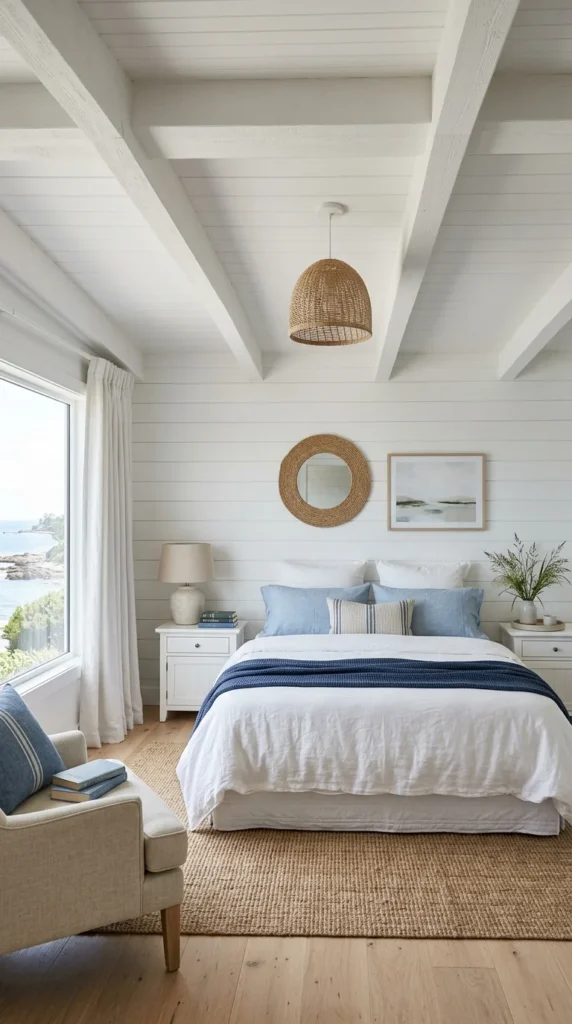
If you love the architectural interest of beams but prefer a more understated, airy aesthetic, painting them white is an excellent strategy. This approach is particularly effective in rooms with lower ceilings or smaller footprints, as it provides the structural detail without visually “heavying” the space. White beams against a white ceiling create a play of light and shadow that adds a “hidden” layer of luxury. This style is a hallmark of Modern Farmhouse and Coastal design, offering a clean, monochromatic look that feels fresh and expansive.
3. Bold Black
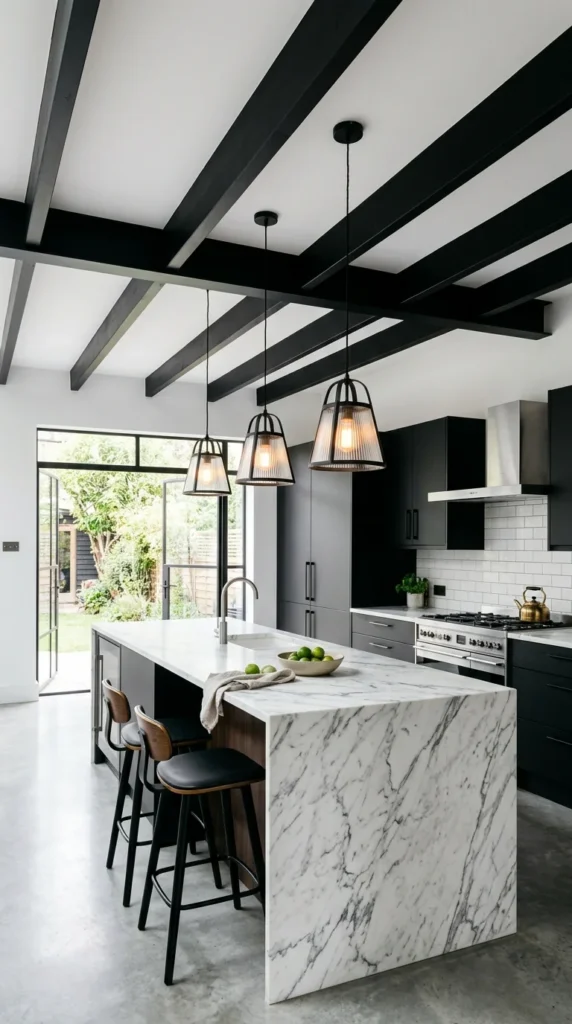
For those who want to make a definitive style statement, black beams offer an unparalleled level of drama. This high-contrast look defines the “ceiling plane,” essentially framing the room from above. Black beams work exceptionally well in industrial lofts or modern minimalist homes where clean lines and bold silhouettes are celebrated. To keep the look cohesive, pair black beams with other black accents throughout the room, such as window frames, light fixtures, or hardware. The result is a sophisticated, “custom-tailored” appearance that feels both edgy and expensive.
4. Reclaimed Timber
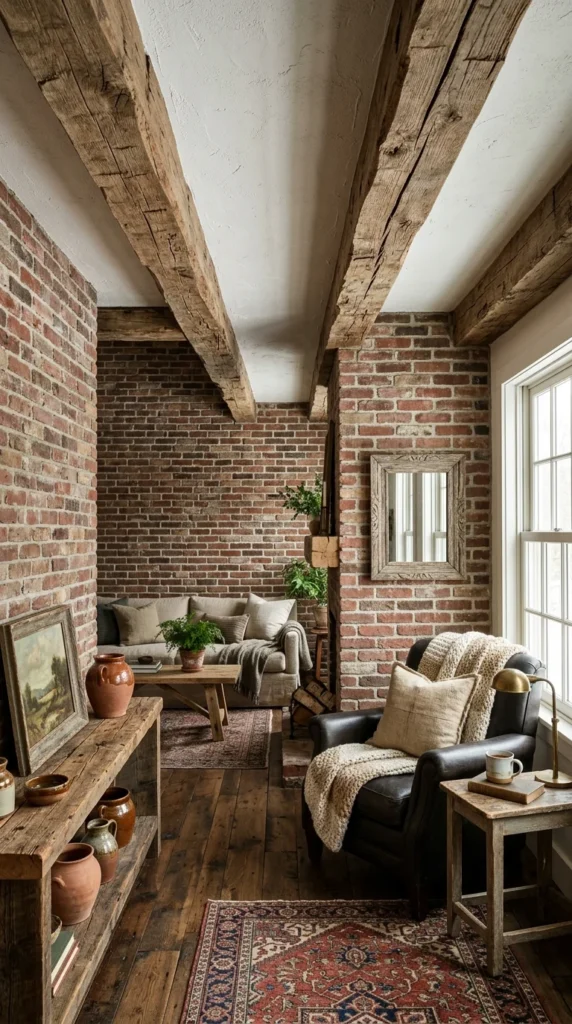
Reclaimed timber brings a sense of history and soul into a home that new materials simply cannot replicate. These beams are often salvaged from old barns, warehouses, or factories, and they carry the character of their previous lives in the form of nail holes, weathering, and hand-hewn marks. Using reclaimed wood is not only an eco-friendly choice but also a way to ground a modern space with something ancient and sturdy. Because each piece is unique, reclaimed beams instantly make a room feel like a custom renovation, adding a layer of “lived-in” luxury.
5. Box Beams
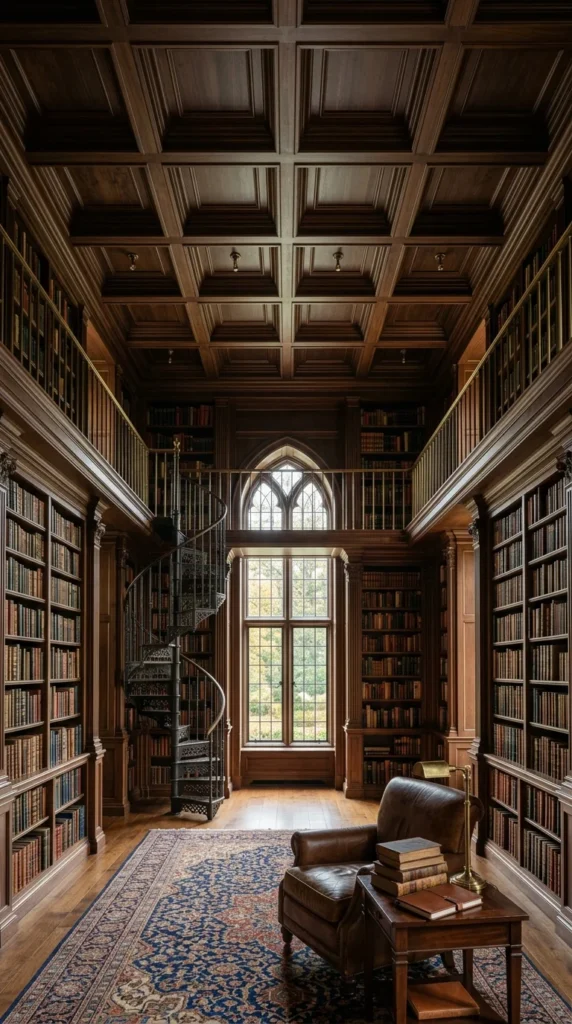
Not every home is built with the structural capacity to support solid wood timbers. This is where box beams shine. Constructed from three pieces of high-quality lumber joined together to look like a solid beam, box beams are hollow, lightweight, and incredibly versatile. Their primary advantage is the ability to hide unsightly elements like electrical wiring, plumbing, or structural steel I-beams. From a design perspective, they offer the same visual impact as solid timber but allow for more precision in size and placement, making them a favorite for creating perfectly symmetrical grid patterns or coffered ceilings.
6. Geometric Patterns
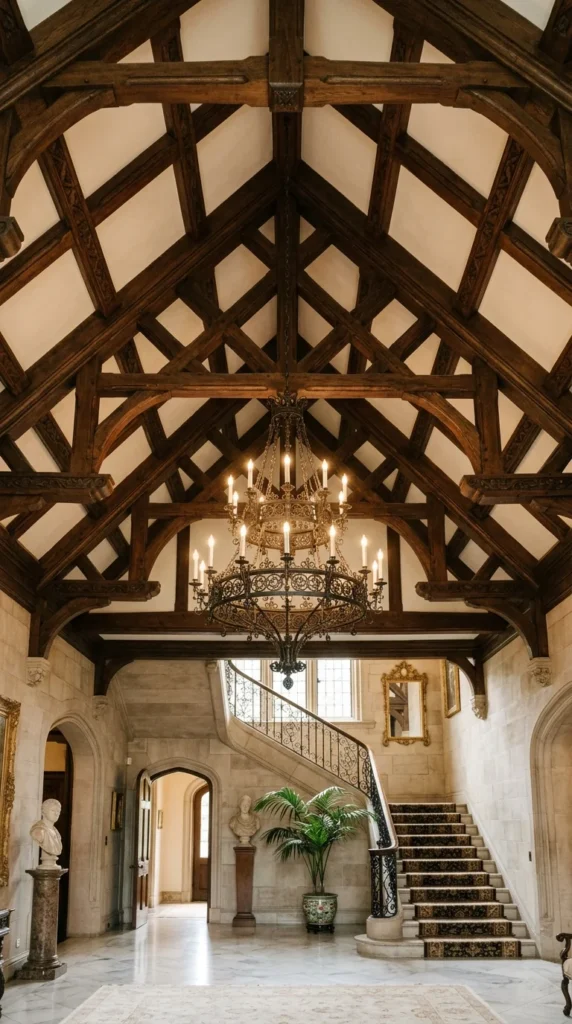
While most people think of beams running parallel to one another, arranging them in geometric patterns can take a room’s design to the next level. A “criss-cross” or X-pattern adds a dynamic energy to the ceiling, while a classic grid creates a sophisticated coffered look. Geometric beam layouts are particularly effective in rooms with high, vaulted ceilings, as they fill the vertical void and create a sense of intimacy. This technique transforms the ceiling into a piece of art, often becoming the primary focal point of the entire home.
7. Faux Wood
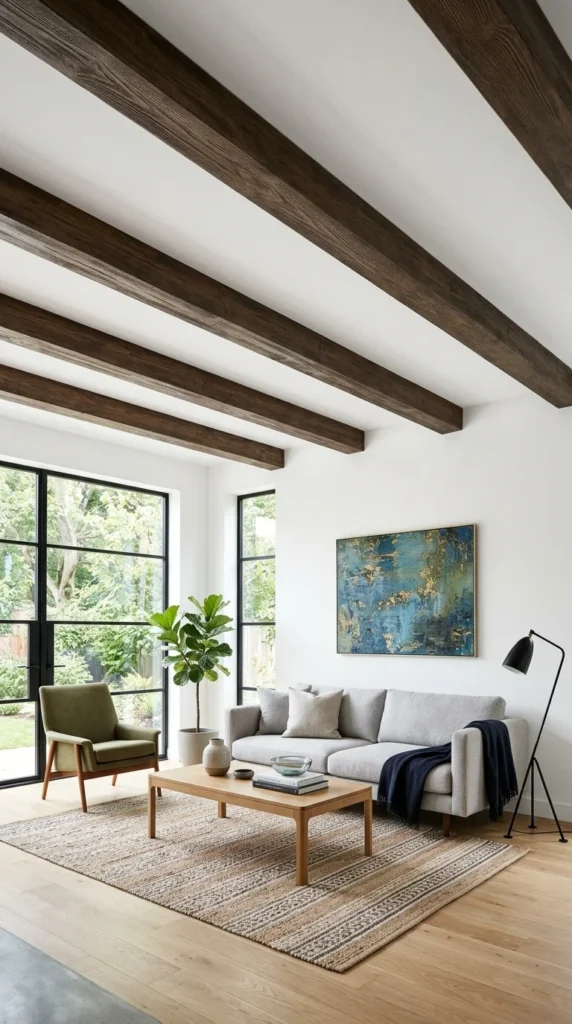
Advancements in manufacturing have made faux wood beams a highly viable option for achieving a custom look on a budget. Made from high-density polyurethane, these beams are molded from real wood pieces to capture every nuance of the grain and texture. They are incredibly lightweight, making them easy to install as a DIY project without the need for heavy structural reinforcement. Because they are resistant to warping, rotting, and pests, they are also an excellent choice for high-moisture areas like bathrooms or covered outdoor patios where real wood might struggle.
8. Integrated Lighting
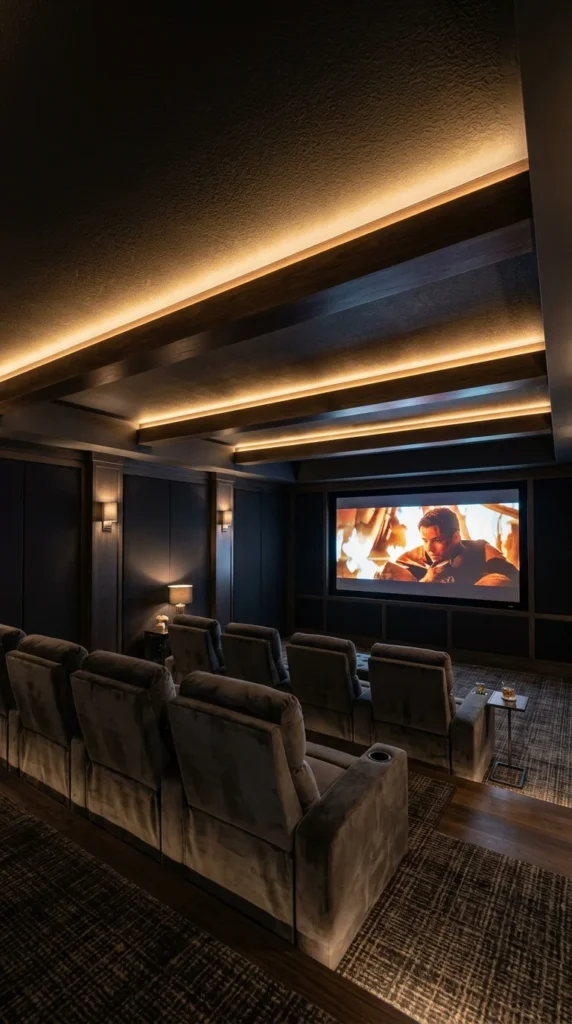
To truly make your ceiling beams look custom, consider integrating lighting directly into or around them. Recessed “can” lights can be installed into the bottom of box beams to provide functional task lighting, while LED strips hidden along the top edge of the beams can create a “halo” effect that makes the ceiling appear to float. This layered lighting approach enhances the architectural depth of the beams at night, shifting the mood of the room from bright and functional to cozy and atmospheric with the flick of a switch.
9. Iron Straps
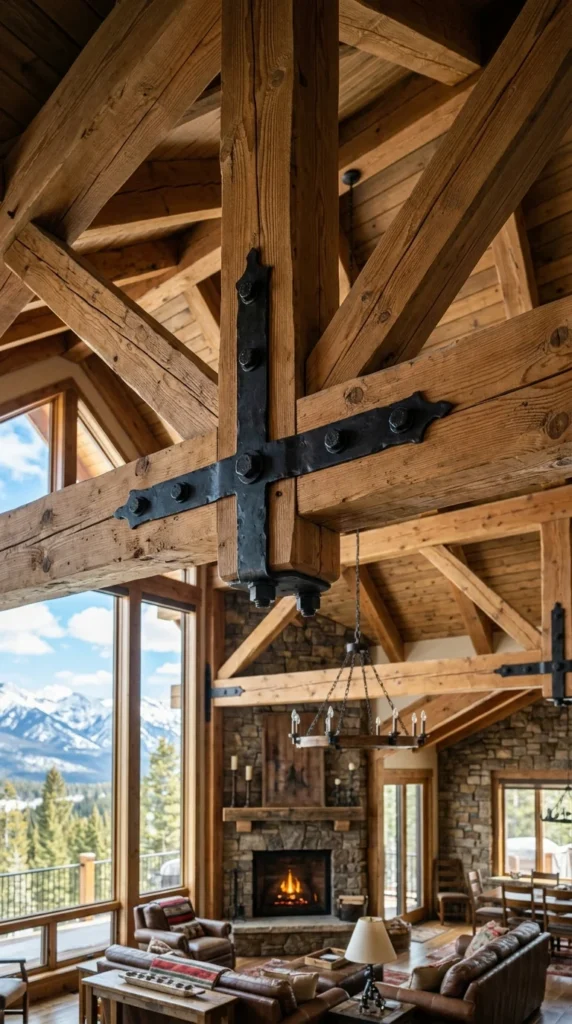
Adding hardware to your beams is a subtle detail that yields significant results. Decorative iron straps or “U-brackets” give the impression that the beams are structurally joined, providing an authentic, Old-World feel. This look is particularly effective in Mediterranean, Craftsman, or Industrial-style homes. The contrast between the warm wood and the cool, dark metal adds a layer of “engineering” beauty that makes the ceiling feel like a deliberate, handcrafted architectural feature rather than an afterthought.
10. Contrast Colors
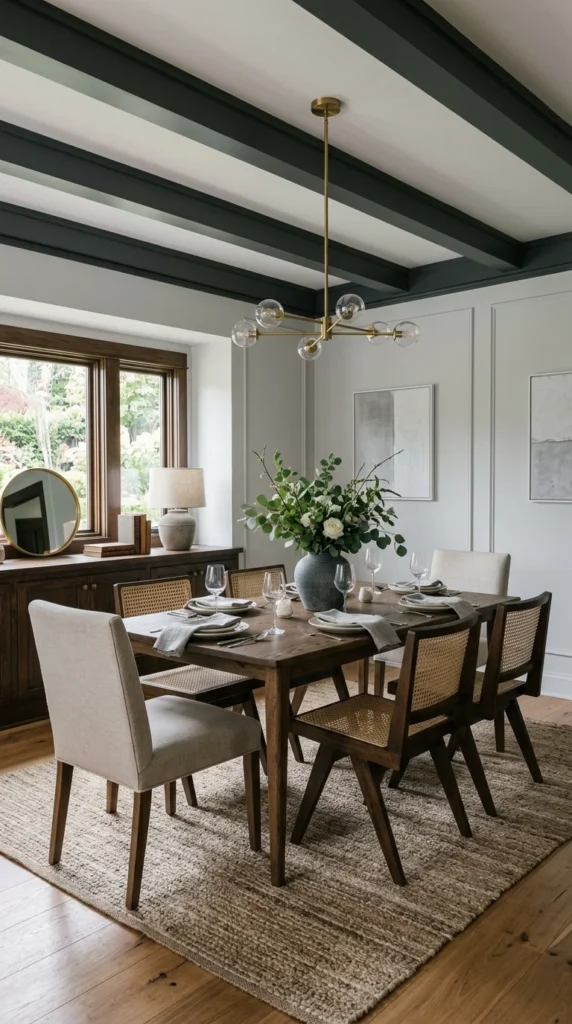
Who says beams have to be wood-toned or white? Painting beams in a contrasting color—such as navy blue, sage green, or deep charcoal—can define a room’s color palette in an unexpected way. This technique works best when the beam color is pulled from another element in the room, such as an island color, a rug, or a piece of statement furniture. By using color on the beams, you draw attention to the height of the room while injecting a sense of personality and playfulness that feels entirely bespoke.
11. Arched Beams
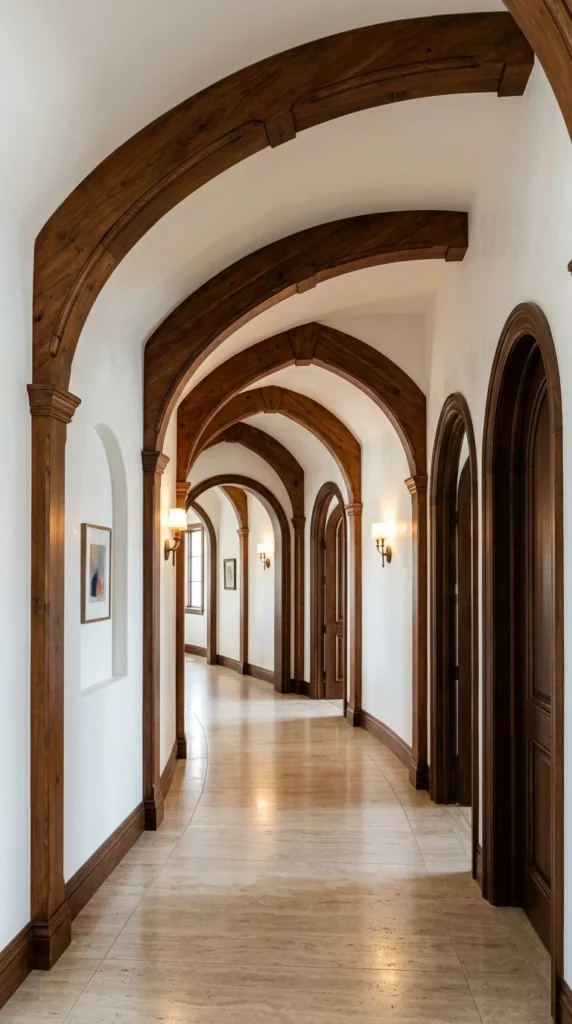
For the ultimate in custom architectural design, arched beams offer a level of elegance that straight lines cannot match. These curved elements soften the hard angles of a room and create a sense of flow and movement. Arched beams are frequently seen in Gothic-inspired libraries, Mediterranean villas, or high-end rustic lodges. While they require a more complex installation and often a higher budget, the visual payoff is a space that feels like a historic estate. They are the pinnacle of ceiling decoration, turning a functional structure into a graceful work of art.