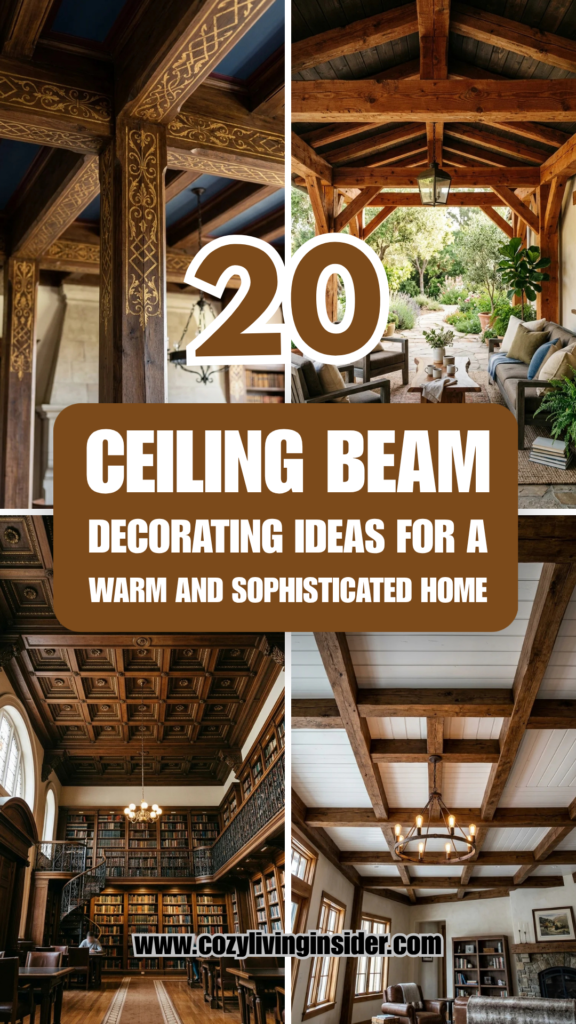

Ceiling beams are more than just structural necessities; they are powerful architectural elements that define the character of a room. Often referred to as the “fifth wall,” the ceiling offers a vast canvas for design expression. Whether you are working with original structural timber or installing decorative faux beams, these elements can transform a cold, cavernous space into a cozy sanctuary or add a touch of historical gravity to a modern build.
From the rugged charm of reclaimed wood to the sleek lines of industrial steel, ceiling beams influence the visual weight and perceived height of a room. They draw the eye upward, highlighting the scale of the architecture while grounding the interior design. Below, we explore 20 professional-grade decorating ideas to help you utilize ceiling beams to create a warm, layered, and architecturally significant home.
1. Natural Oak
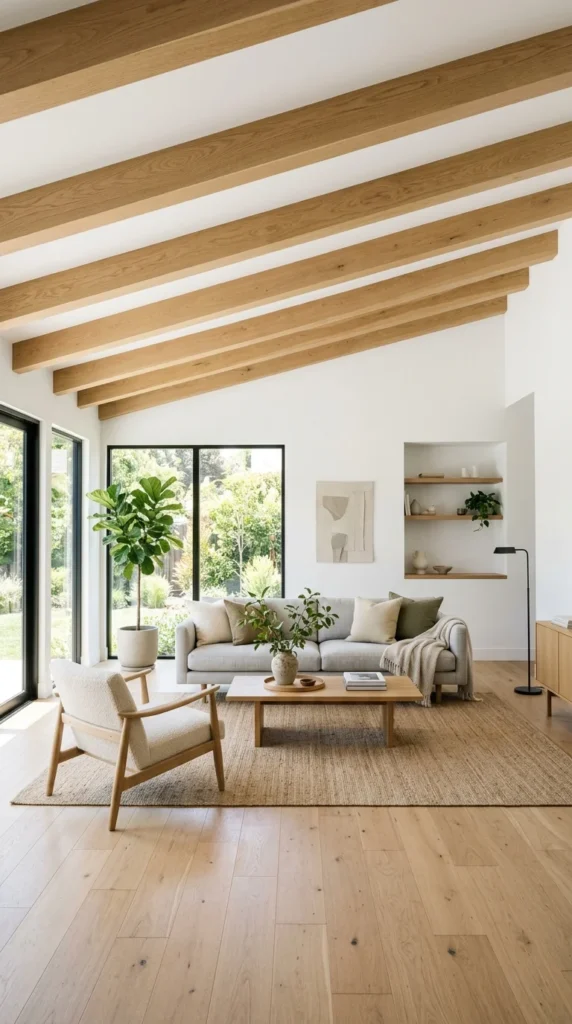
Natural oak beams are the gold standard for creating a timeless, organic look. Because oak features a tight grain and a warm, golden hue, it bridges the gap between rustic and contemporary styles. Leaving the wood in its natural state, perhaps with a simple clear matte sealant, allows the inherent beauty of the grain to take center stage. This approach works exceptionally well in Scandinavian or Modern Farmhouse designs where light and texture are paramount.
2. White Wash
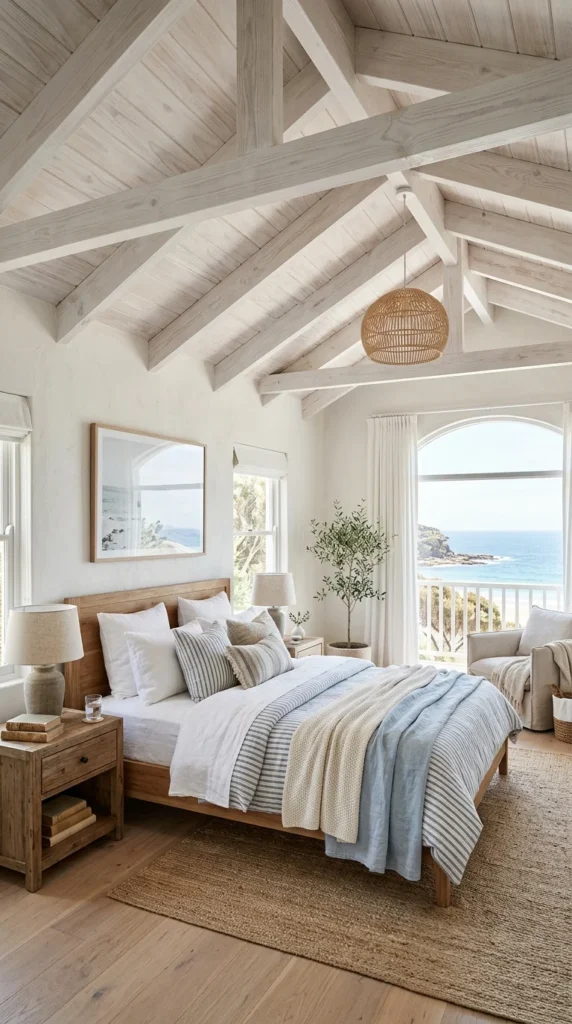
If you want the architectural interest of beams without the visual weight of dark wood, a white-washed finish is the ideal solution. This technique involves thinning white paint or using a specialized pickling stain to coat the wood. It softens the appearance of the timber, making it feel lighter and airier. White-washed beams are a staple in coastal and Shabby Chic interiors, providing a sense of “weathered elegance” that feels both clean and lived-in.
3. Reclaimed Wood
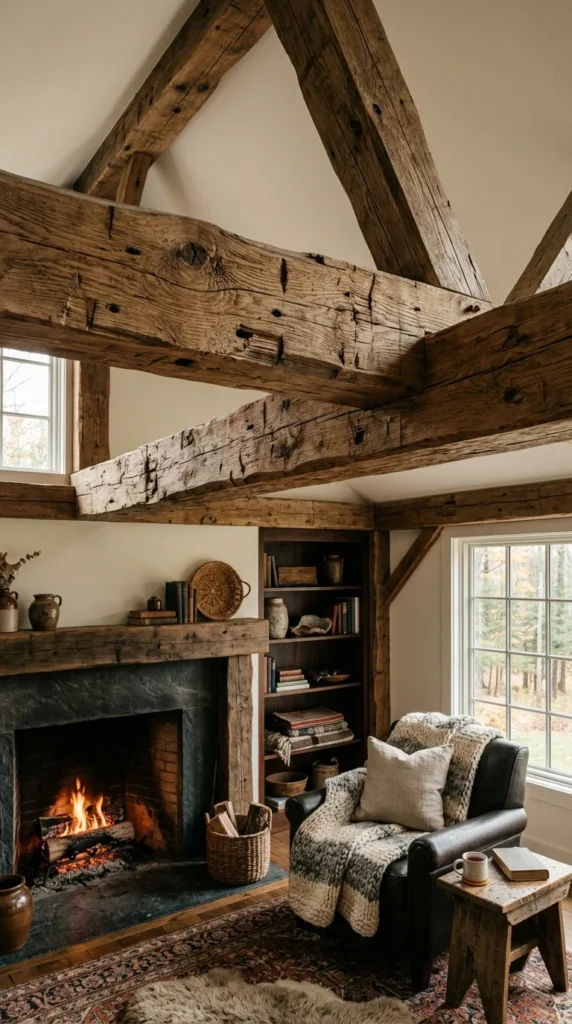
Reclaimed wood beams bring a sense of history and soul to a home. These beams are often salvaged from old barns, factories, or warehouses, carrying with them the patina of age—complete with original saw marks, bolt holes, and weathered textures. Using reclaimed timber is an excellent way to introduce “wabi-sabi” or the beauty of imperfection into your space. They serve as an instant focal point, suggesting that the home has evolved over decades.
4. Painted Black
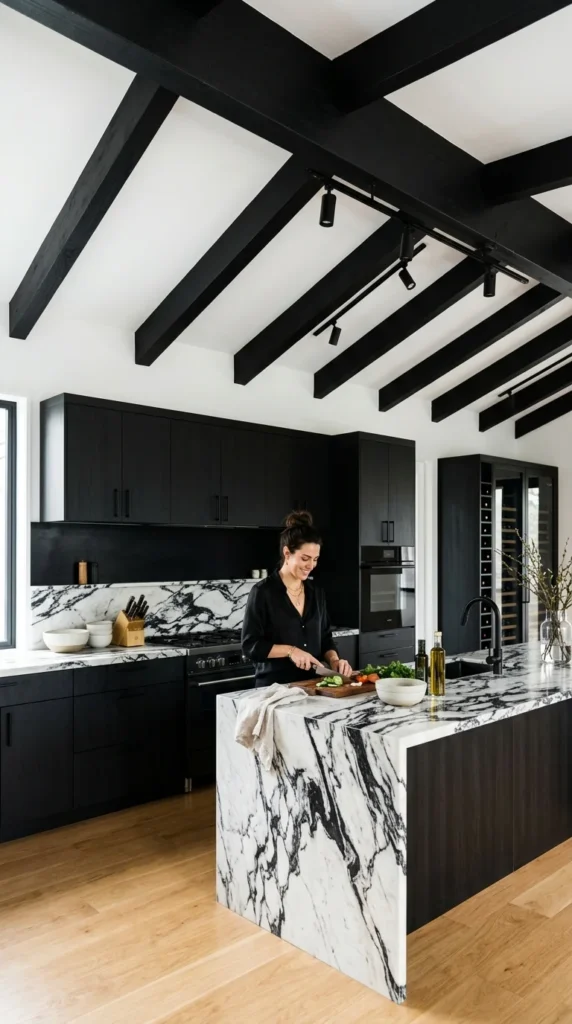
For a bold, graphic statement, consider painting your ceiling beams black. This high-contrast look is particularly effective in modern and industrial spaces. Black beams act like a frame for the room, drawing sharp lines that emphasize the geometry of the ceiling. When paired with white walls and neutral furniture, black beams provide a sophisticated edge that prevents a room from feeling too “soft” or traditional.
5. Boxed Faux
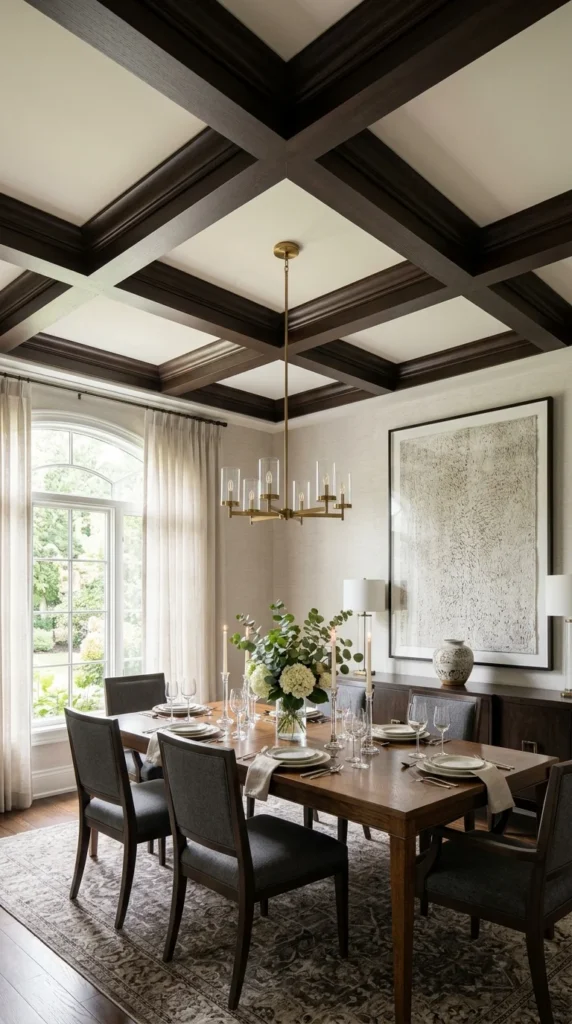
Not every home comes with structural timber, but “boxed” or faux beams allow any homeowner to achieve the look. These are typically hollow U-shaped structures made from lightweight wood or high-density polyurethane. Because they are hollow, they are easy to install and provide a perfect channel for hiding electrical wiring or plumbing. When crafted with mitered edges, they are indistinguishable from solid timber, offering a clean, polished appearance perfect for formal living areas.
6. Vaulted Trusses
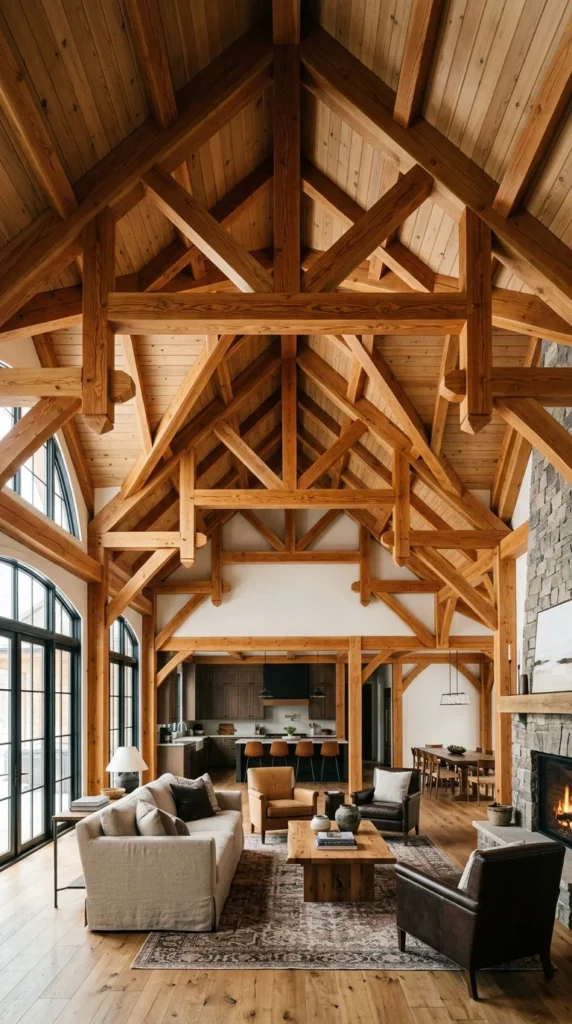
Vaulted trusses are the pinnacle of architectural drama. Instead of simple parallel beams, trusses utilize a series of interconnected timbers to create triangular shapes that support the roof. This look is synonymous with mountain lodges and grand estates. Trusses add incredible depth to a room, making the ceiling feel like a work of art. They work best in rooms with significant vertical height, where the complexity of the woodwork can be fully appreciated.
7. Coffered Grid
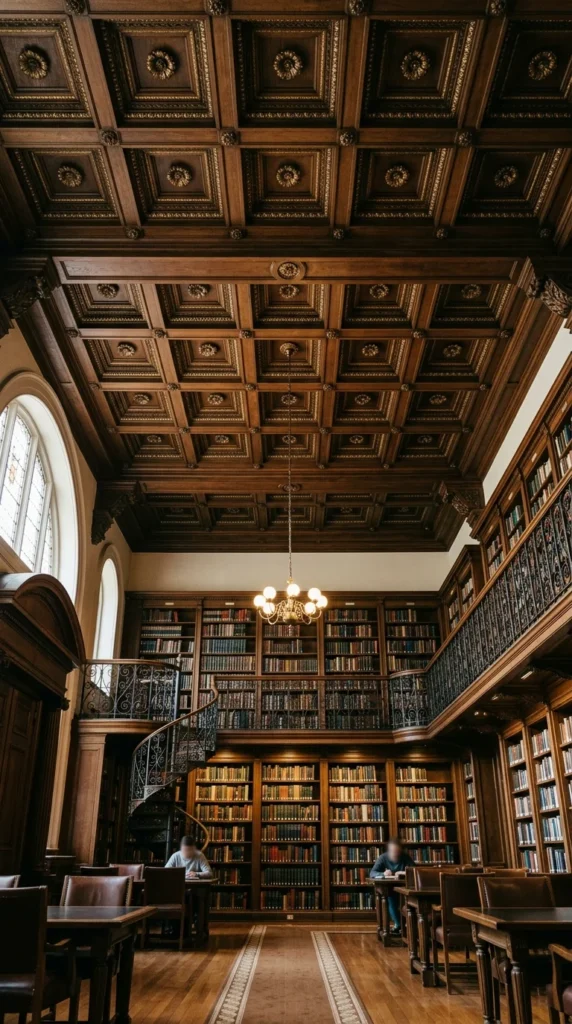
A coffered ceiling uses beams to create a grid of recessed panels. This is a classic architectural technique used to add a sense of luxury and formality to libraries, dining rooms, and primary suites. You can keep the beams the same color as the ceiling for a subtle textured look, or use contrasting stains to make the grid pop. Coffering also helps with acoustics, breaking up sound waves in large, echoing rooms.
8. Rustic Pine
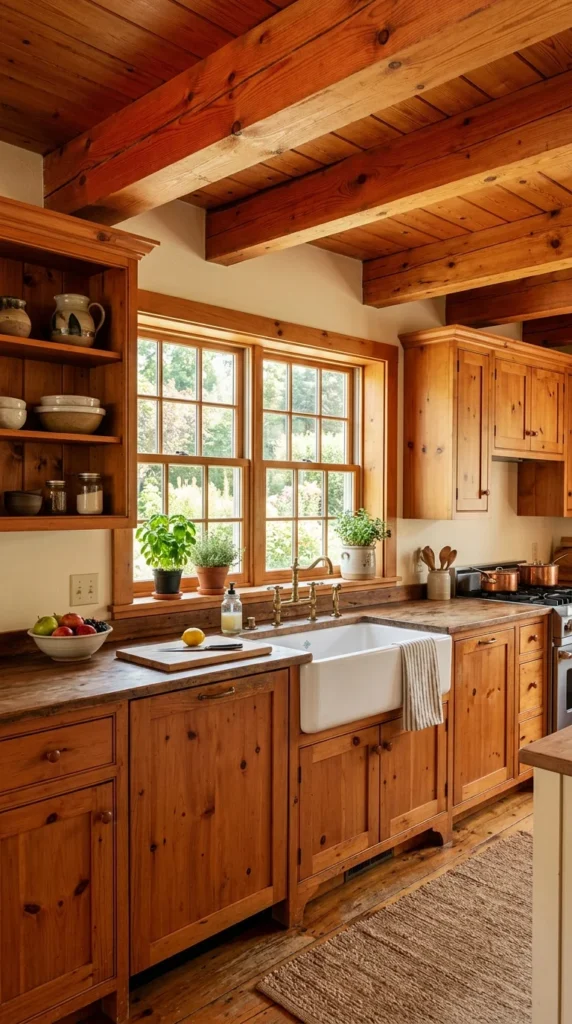
Pine is a softer wood that often features prominent knots and a distinct grain pattern. It is more affordable than oak or walnut and offers a quintessentially “lodge” or “country” feel. Rustic pine beams can be stained in a variety of honey and amber tones to create a cozy, inviting atmosphere. This material is perfect for vacation homes or kitchens where a relaxed, informal vibe is desired.
9. Polished Walnut

Walnut is a premium hardwood known for its rich, chocolate-brown color and smooth texture. Polished walnut beams provide an air of mid-century modern sophistication. Unlike rustic beams, walnut is usually sanded to a very fine finish and treated with a satin or gloss lacquer. This emphasizes the wood’s natural elegance and makes it feel more like a piece of high-end furniture than a construction material.
10. Industrial Steel
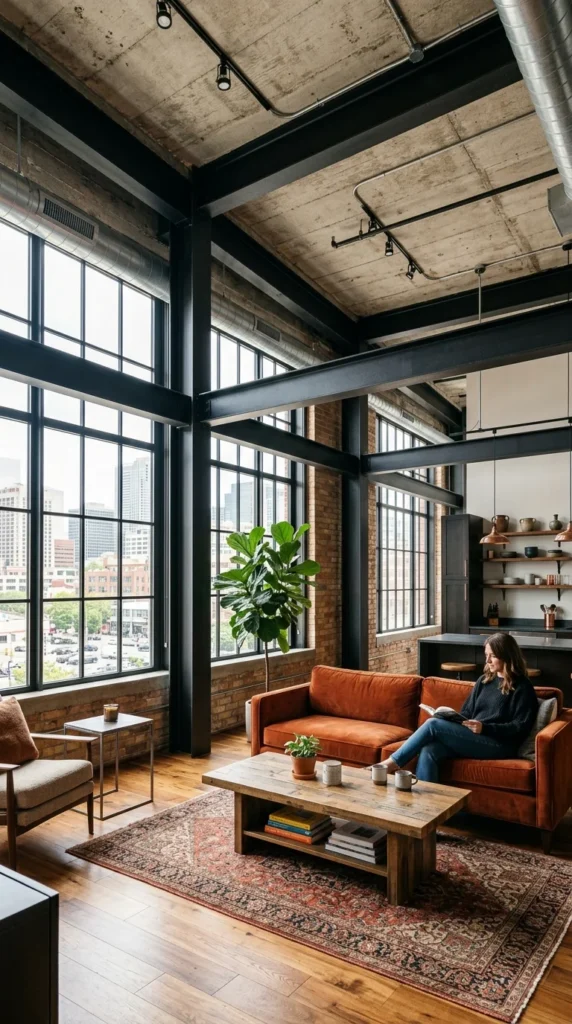
For those who prefer an urban or “factory-to-loft” aesthetic, steel beams are the way to go. Whether they are actual structural I-beams or decorative metal wraps, steel introduces a hard, masculine edge to an interior. Often painted in matte black or charcoal grey, steel beams look spectacular when paired with brick walls, concrete floors, and large-scale glass installations.
11. Herringbone Pattern
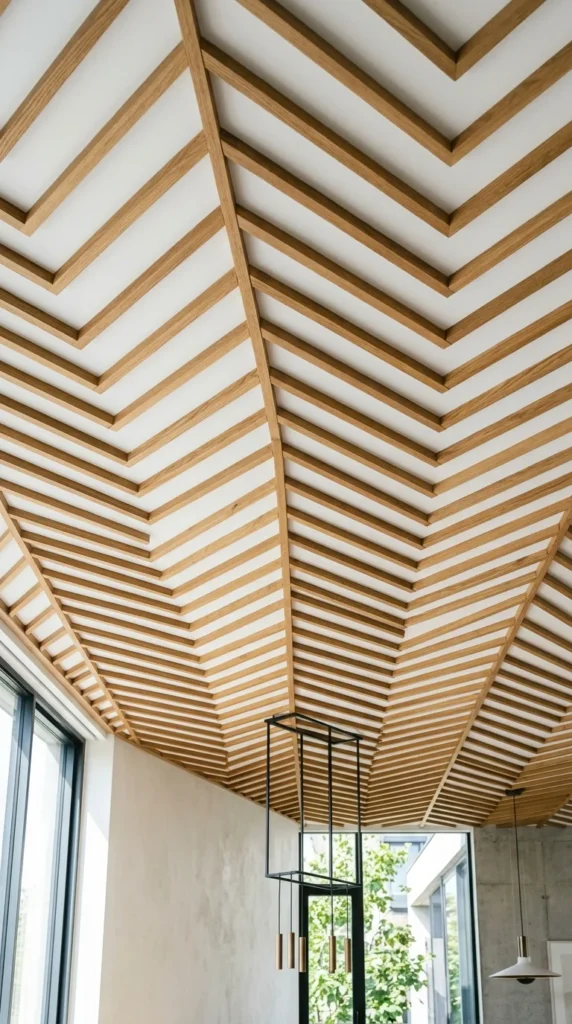
If you want to move away from traditional straight lines, a herringbone beam pattern offers a dynamic and artistic alternative. By arranging smaller beams or planks in a chevron or herringbone layout between larger support beams, you create a sense of movement and visual interest. This technique is often used in entryways or master bedrooms to create a “jewelry-box” effect on the ceiling.
12. Shiplap Infill
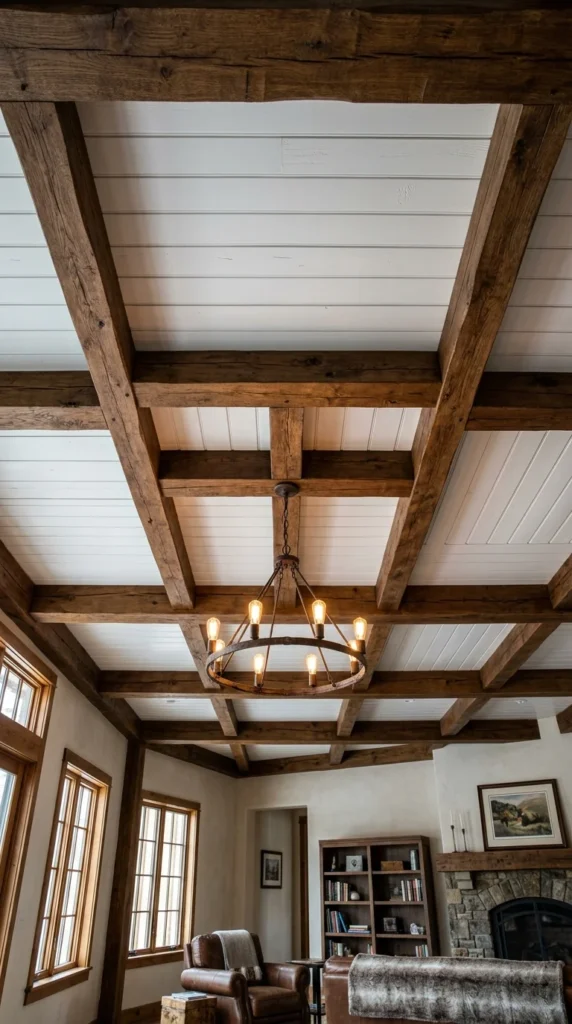
To add even more warmth to your ceiling, consider filling the spaces between your beams with shiplap or tongue-and-groove planks. This “layered” approach adds a massive amount of texture and detail. Often, designers will stain the beams a dark color and paint the shiplap white to create a crisp, clean contrast that feels reminiscent of a historic farmhouse or a luxury coastal cottage.
13. Minimalist Slim
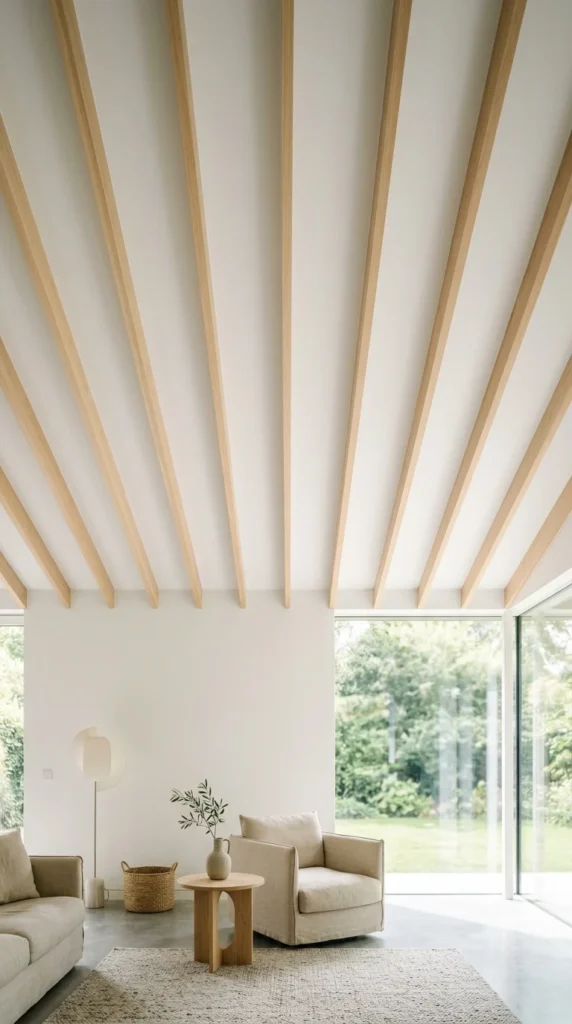
In modern architecture, less is often more. Minimalist slim beams provide the rhythm and structure of traditional beams without the bulk. These are often thin, square-profile timbers spaced evenly across the ceiling. They create a clean, linear look that guides the eye through the space without overwhelming the other design elements. This style is particularly effective in homes with lower ceilings where thick beams might feel oppressive.
14. Distressed Cedar
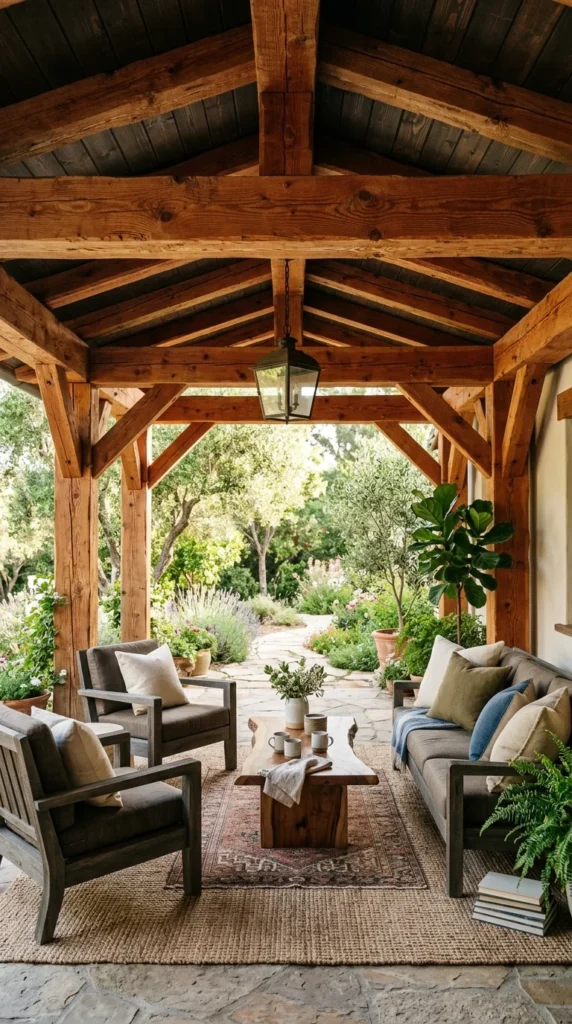
Cedar is naturally rot-resistant, making it a favorite for both indoor and outdoor spaces. Distressed cedar beams are intentionally “beaten” or wire-brushed to bring out the rough texture of the wood. This gives the beams a weathered, “sun-baked” appearance that works beautifully in Mediterranean, Spanish Colonial, or Southwestern style homes. The scent of natural cedar also adds a subtle, pleasant aroma to the room.
15. Integrated Lighting
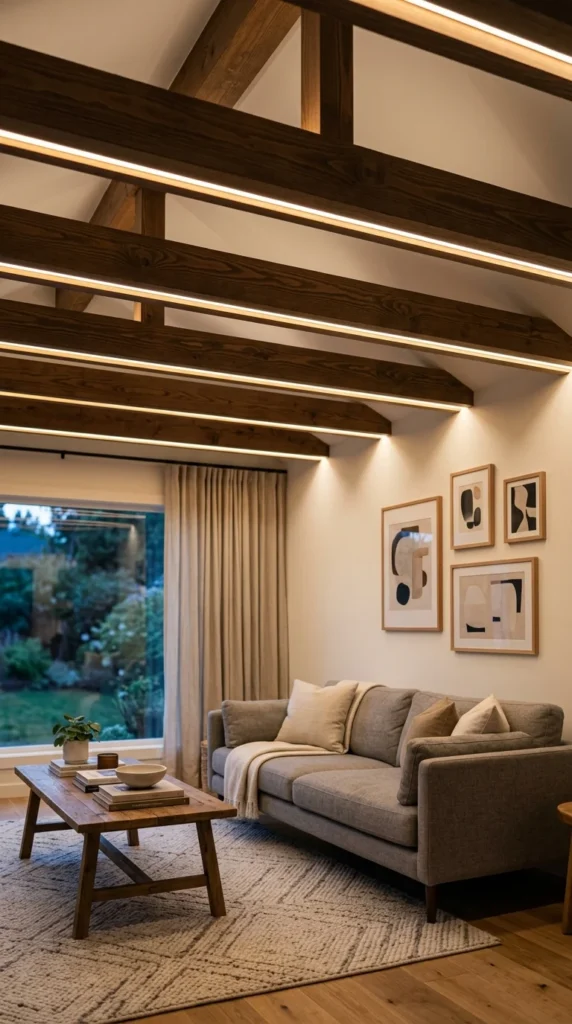
Modern technology allows beams to be more than just decorative; they can be functional light sources. By carving a channel into the bottom or sides of a beam, you can install recessed LED strips or “puck” lights. This creates a clean, integrated lighting solution that eliminates the need for bulky chandeliers or cluttered track lighting. It also highlights the texture of the beams themselves from below.
16. Arched Curves
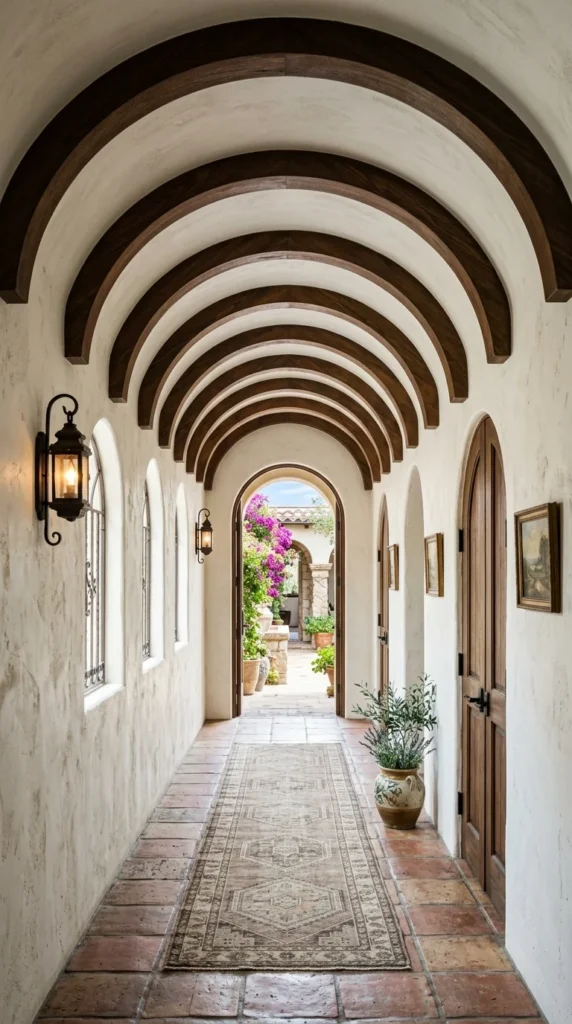
While most beams are straight, arched beams add a soft, organic quality to a room. This is a common feature in Mediterranean and Tuscan-style architecture. Curved beams require expert craftsmanship, often utilizing steam-bending or laminated veneers. They follow the radius of a vaulted or barrel-ceiling, creating a sense of height and fluidity that feels incredibly grand and custom-made.
17. Dark Mahogany
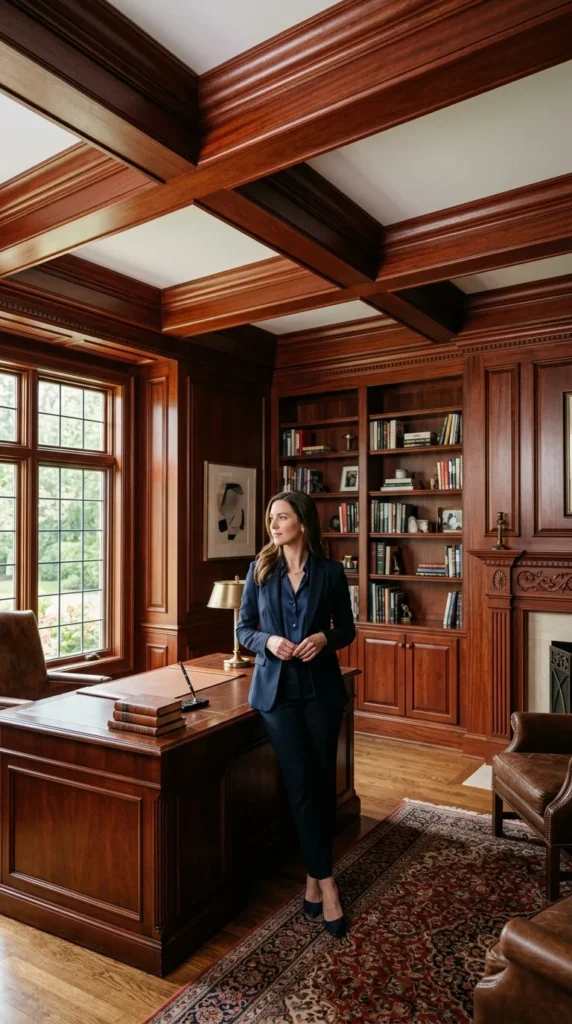
Mahogany is synonymous with traditional luxury. With its deep reddish-brown tones and straight grain, mahogany beams create a sense of weight and importance. This look is perfectly suited for home offices, formal dining rooms, or “gentleman’s club” style lounges. When paired with leather upholstery and brass accents, mahogany beams evoke a sense of old-world prestige.
18. Driftwood Grey

For a modern take on the coastal look, move away from white and toward driftwood grey. This cool-toned stain mimics the look of wood that has been bleached by the sun and salt spray. It is a sophisticated neutral that pairs excellently with cool color palettes—blues, greens, and greys. Driftwood beams offer a relaxed, breezy feel that is perfect for beach houses or any space meant for relaxation.
19. Stenciled Designs
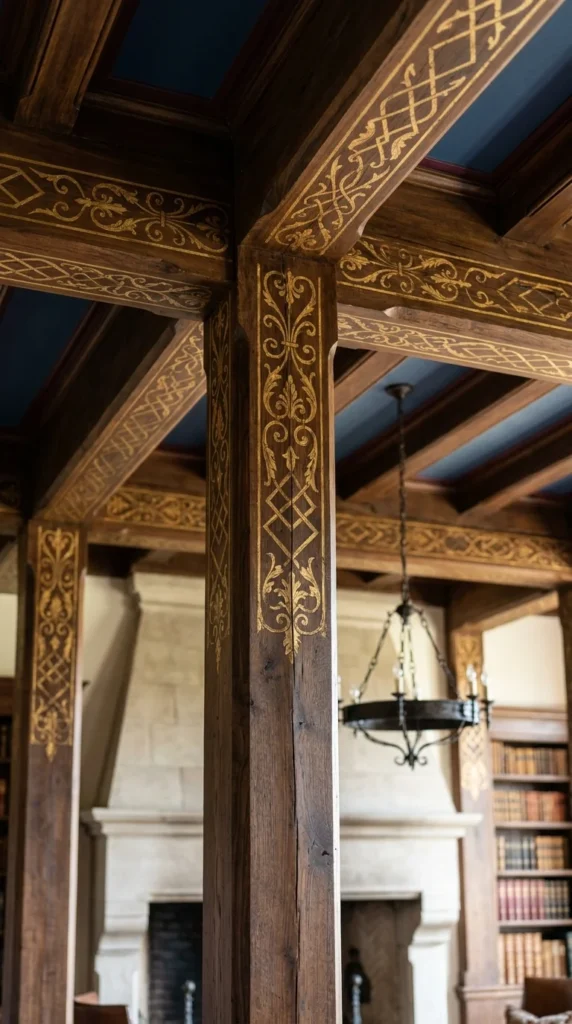
For a truly bespoke and artistic look, ceiling beams can be hand-painted or stenciled. This technique was historically used in European palaces and cathedrals to add color and intricate detail to the woodwork. You can use stencils to add subtle geometric patterns or floral motifs along the sides of the beams. This adds a layer of “hidden” detail that reveals itself only upon closer inspection, making the architecture feel deeply personal.
20. Vertical Transition
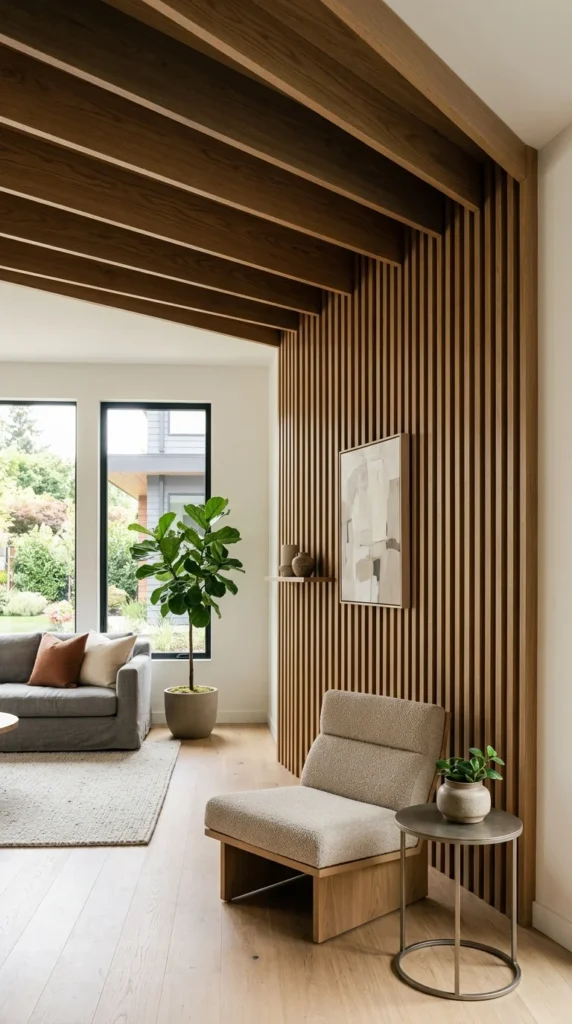
One of the most contemporary ways to use beams is to have them “wrap” from the ceiling down onto the walls. This creates a continuous architectural “rib” that defines a specific zone within an open-concept home. For example, beams over a dining table might turn 90 degrees at the wall and continue down to the floor. This creates a dramatic, cocoon-like effect and a seamless transition between the horizontal and vertical planes of the room.