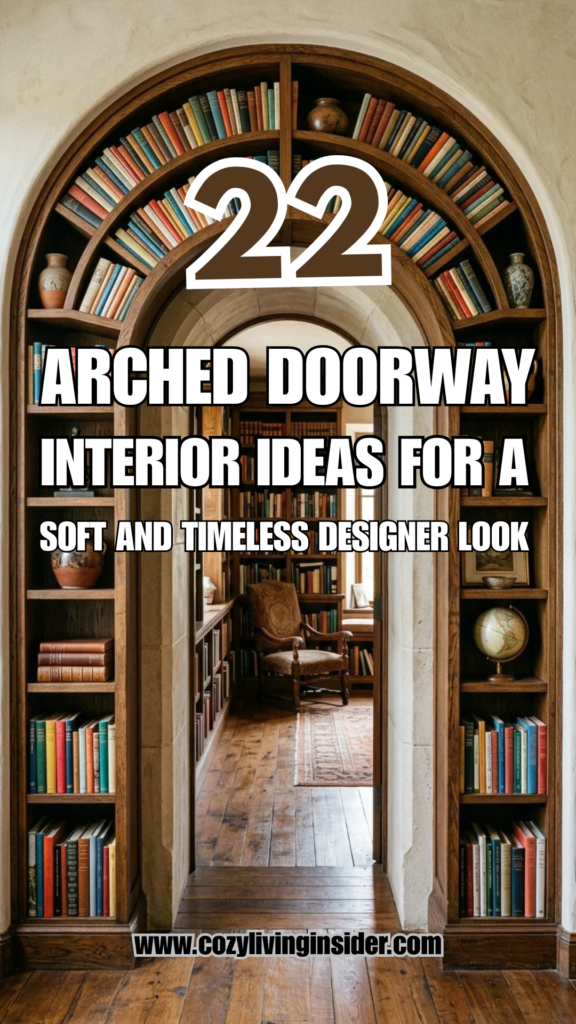

In the realm of interior architecture, few elements possess the transformative power of the arch. While straight lines and sharp angles dominated the minimalist movements of the late 20th century, contemporary design has seen a magnificent resurgence of the curve. Arched doorways are more than just structural transitions; they are sculptural statements that soften the visual landscape of a home, evoke a sense of historical grandeur, and create a fluid rhythm between rooms.
Whether you are renovating a historic property or looking to add character to a modern build, the arched doorway offers a versatile solution that bridges the gap between traditional elegance and modern softness. From the organic textures of raw plaster to the industrial edge of steel-framed glass, arches can be adapted to suit any aesthetic. Here are 22 designer-approved arched doorway ideas to inspire your next interior project.
1. Minimalist Plaster
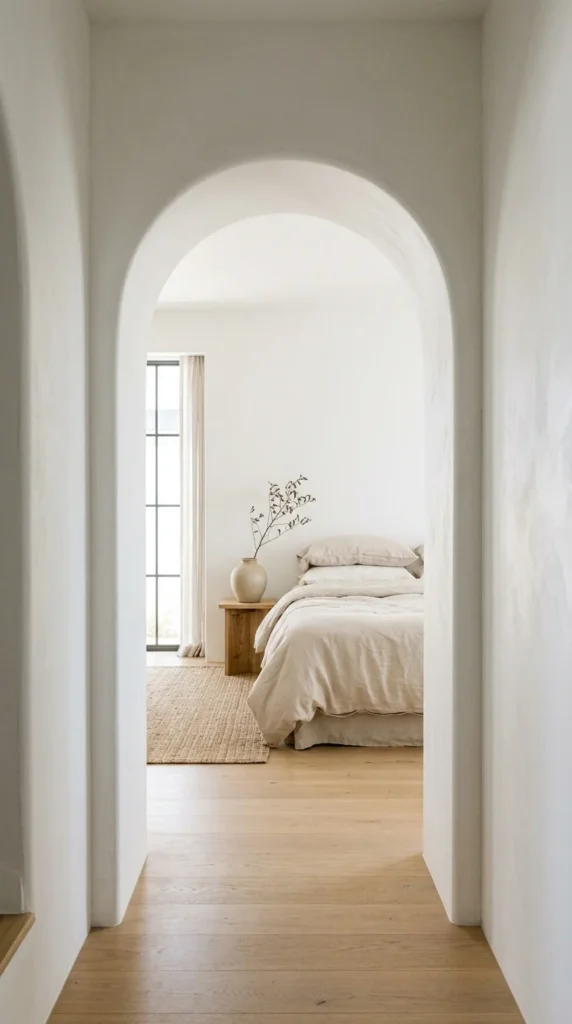
The minimalist plaster arch is the epitome of the “less is more” philosophy. By removing traditional casing and trim, the arch becomes a pure geometric form integrated directly into the wall’s surface. This look is particularly effective in “Soft Modern” or “Organic Modern” homes where the goal is to create a sense of calm and continuity. The lack of ornamentation allows the play of light and shadow within the curve to take center stage, making the transition between rooms feel effortless and ethereal.
2. Natural Wood
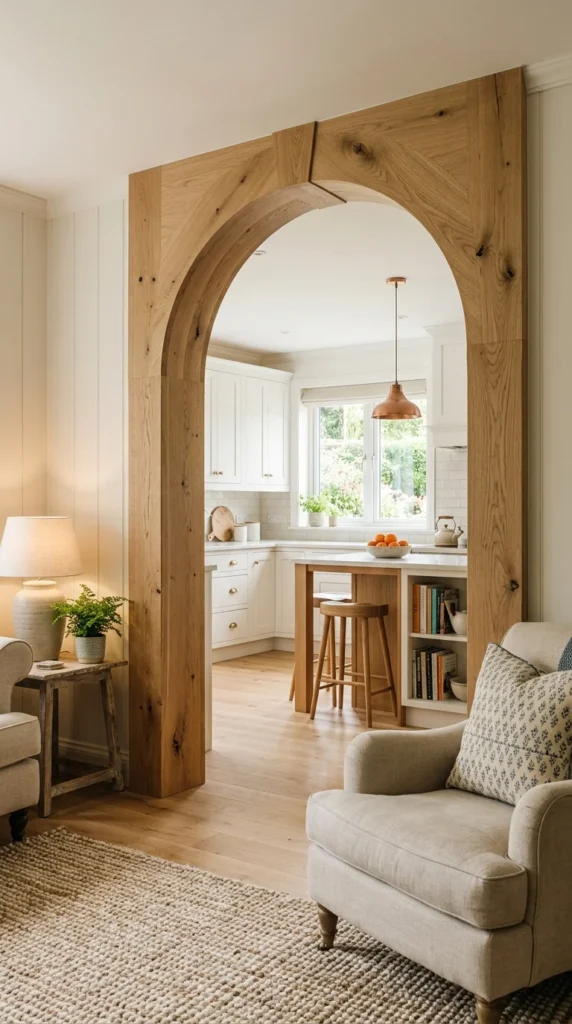
Incorportating natural wood into an arched doorway adds an immediate sense of warmth and architectural “weight.” Using light woods like oak, maple, or ash provides a Scandinavian or Japandi feel, while darker woods like walnut or mahogany lean toward a more classic, mid-century aesthetic. The wood frame acts as a piece of furniture in itself, defining the boundary between spaces with an organic touch that grounds the room.
3. Double Arches
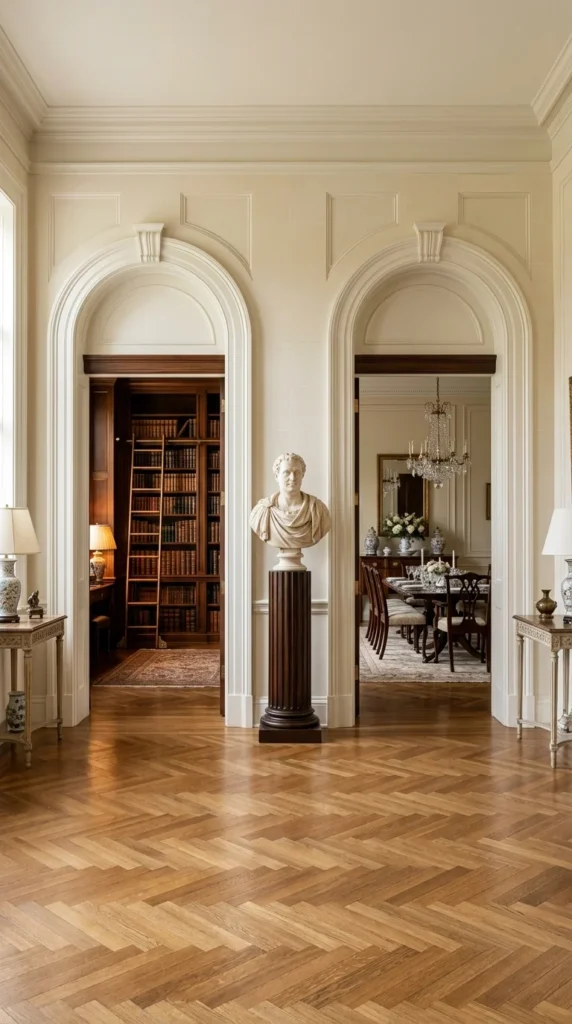
For those looking to make a grand architectural statement, double arches offer unparalleled symmetry and rhythm. This configuration is often found in larger homes or at the end of a grand hallway. It creates a “gallery” effect, framing the views into two separate rooms like works of art. The repetition of the curve reinforces the design language of the home and provides a sense of balance that is inherently pleasing to the eye.
4. Contrasting Paint
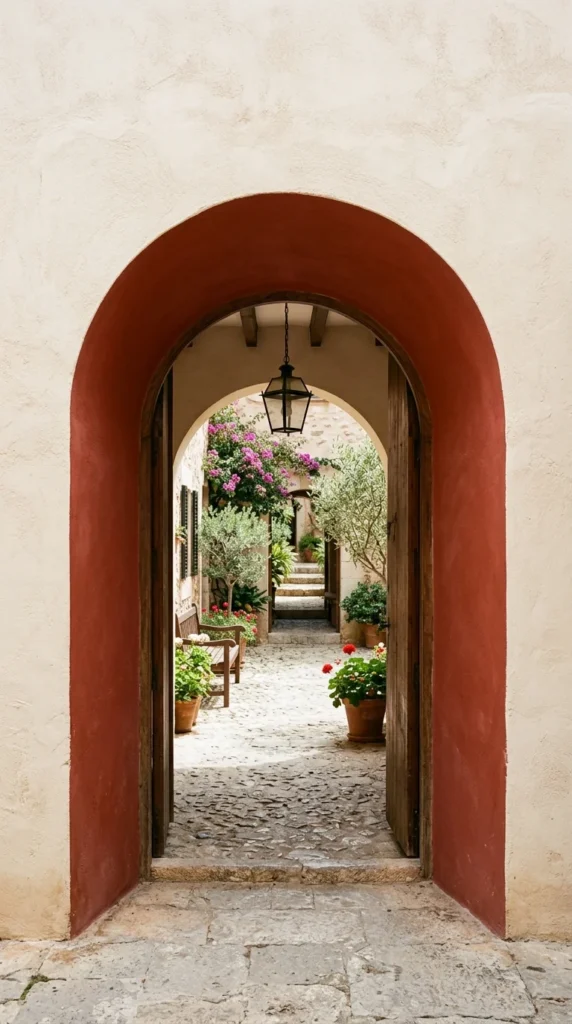
One of the most cost-effective ways to enhance an arch is through the strategic use of paint. By painting the inner curve (the soffit) a contrasting color to the surrounding walls, you emphasize the depth of the doorway. This technique turns a simple structural element into a bold focal point. Darker tones like charcoal, navy, or forest green create a moody, sophisticated vibe, while earthy ochres or terracottas add a Mediterranean warmth.
5. Glass Paneling
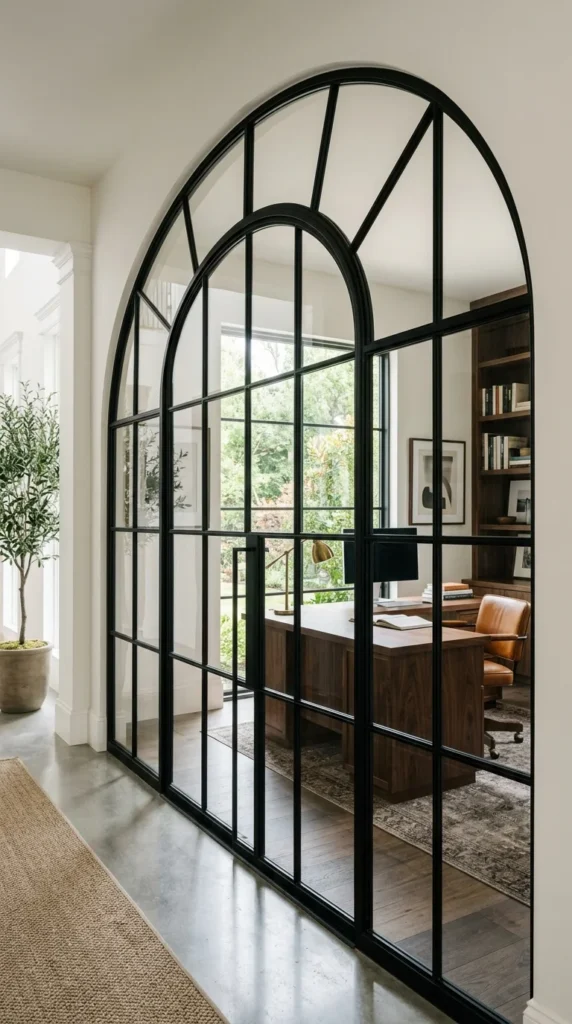
If you want to maintain an open, airy feel while still providing a physical barrier, glass-paneled arched doors are the ideal solution. Often referred to as “Crittall-style” when framed in black steel, these doors allow light to flow freely between rooms while offering acoustic privacy. The juxtaposition of the industrial metal frame with the soft curve of the arch creates a sophisticated, modern-industrial look that works beautifully in urban lofts and contemporary homes alike.
6. Stone Cladding
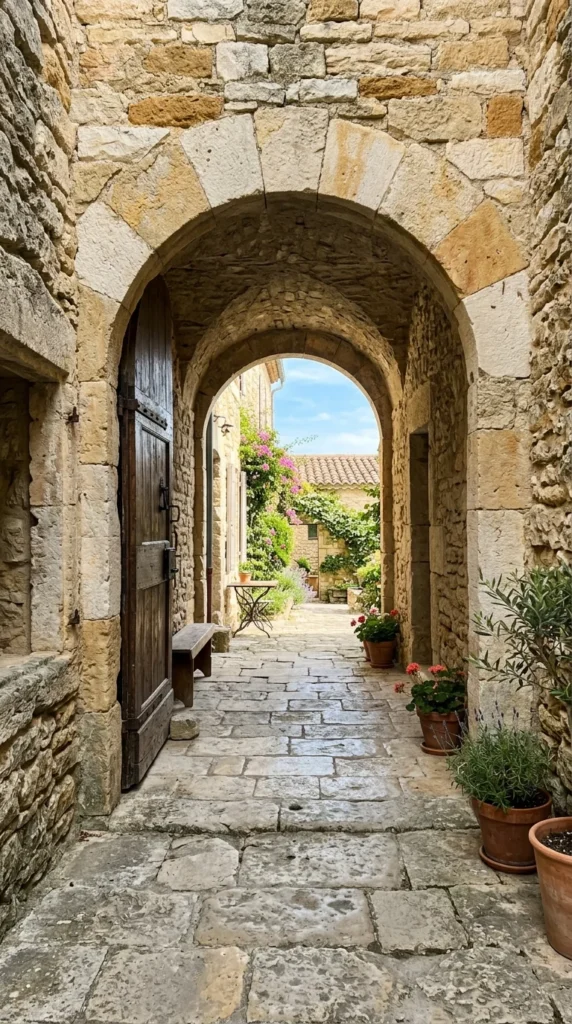
To evoke a sense of history and permanence, stone cladding is an excellent choice. This idea works particularly well in Mediterranean, Spanish Colonial, or French Provincial designs. Using natural stone—whether it be limestone, travertine, or even reclaimed brick—adds a tactile quality that smooth plaster cannot replicate. It gives the impression that the home was built to last for centuries, providing a rugged, timeless charm.
7. Built-in Bookshelves
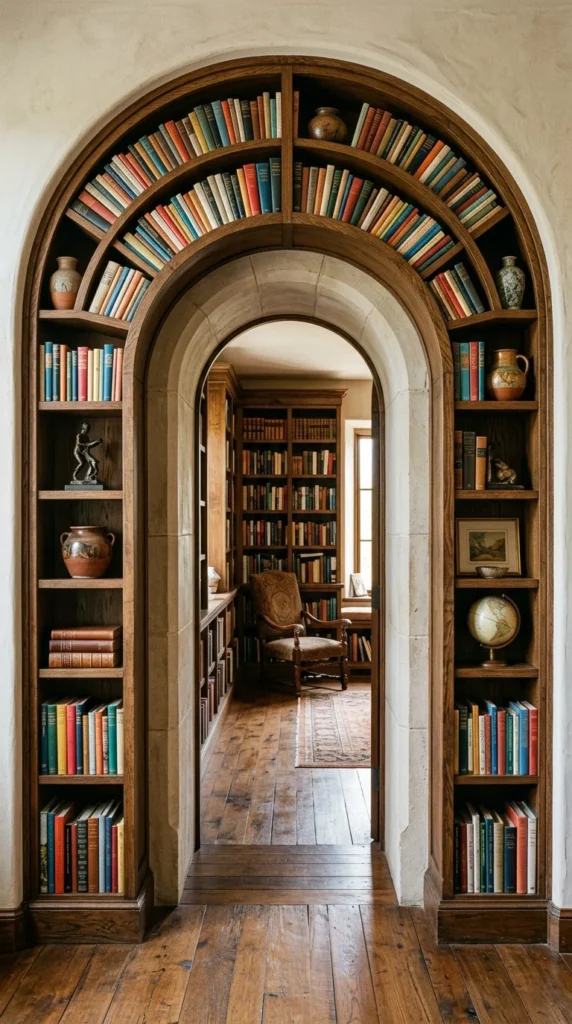
Maximizing functionality, the arched bookshelf doorway transforms a simple transition into a storage masterpiece. By wrapping bookshelves around the arch, you utilize the vertical space and create a “secret passage” feel. This is a favorite among bibliophiles and designers looking to add “character” to a room. The arch provides a soft break in the otherwise rigid lines of the shelving, making the space feel more curated and less like a standard office.
8. Fluted Detailing
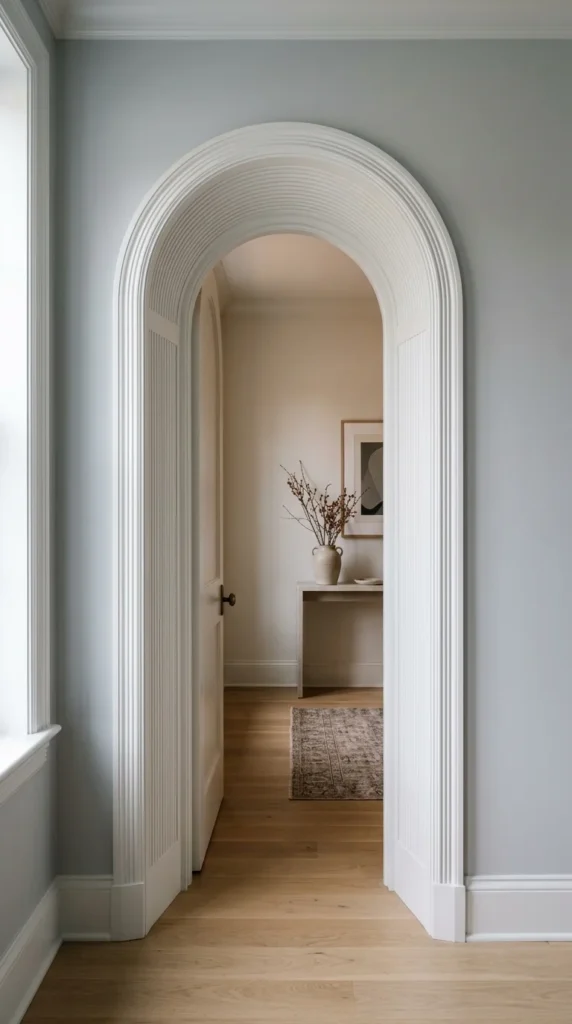
Fluted textures are a major trend in contemporary interior design, and applying them to an arched doorway adds a layer of Neoclassical sophistication. The vertical ribs draw the eye upward, emphasizing the height of the arch, while the texture provides a subtle visual interest that feels tactile and high-end. This detail is perfect for formal dining rooms or primary suites where you want an extra touch of luxury.
9. Kitchen Pass-throughs
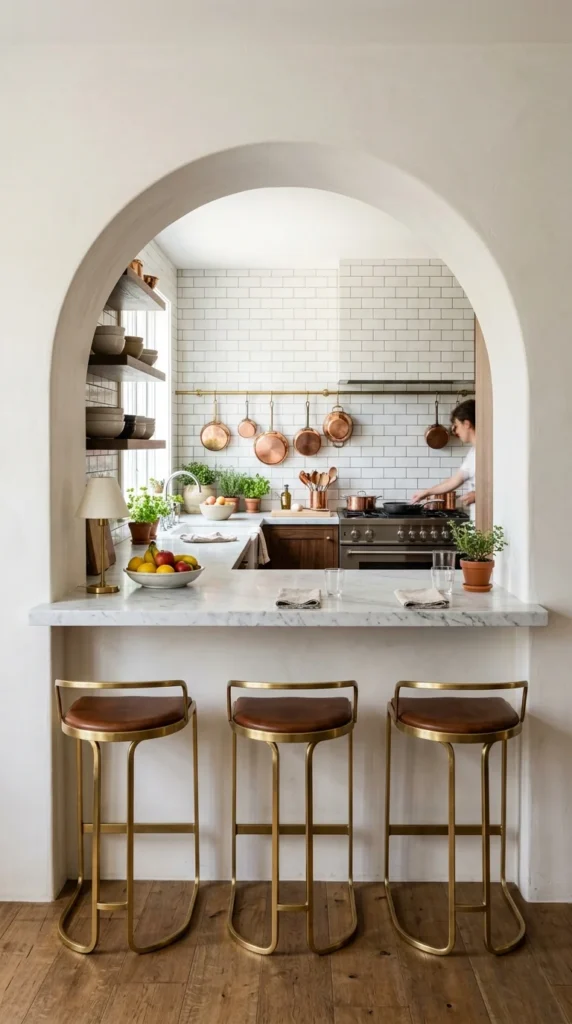
Arched pass-throughs are a charming way to connect a kitchen to a dining or living area without fully removing the wall. This “open-but-defined” approach keeps the kitchen’s mess contained while allowing the cook to interact with guests. The arch adds a level of architectural intent that a standard rectangular cutout lacks, making the pass-through feel like a deliberate design choice rather than an afterthought.
10. Bedroom Entryways
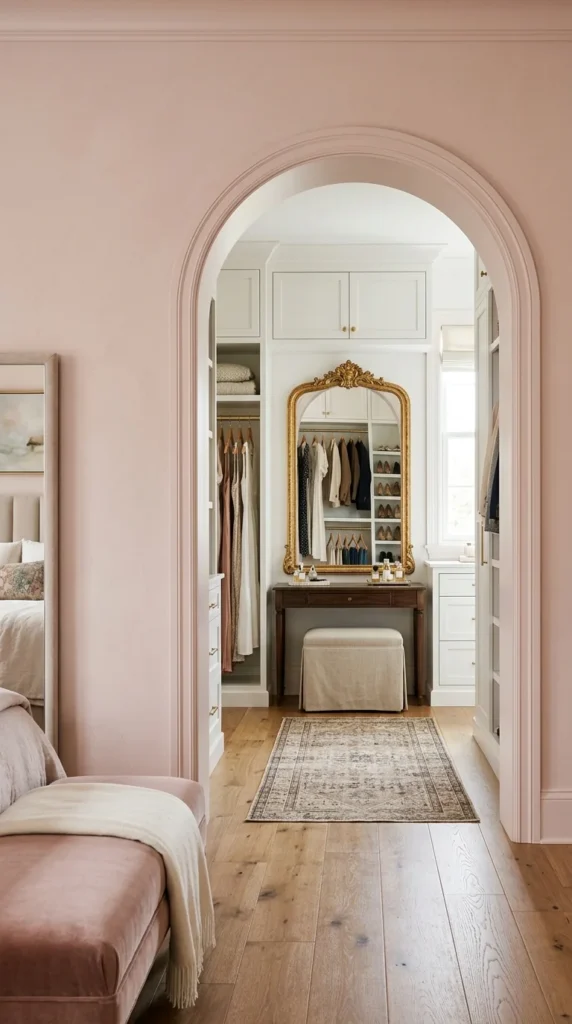
In the primary suite, an arched doorway creates a sense of sanctuary. Using an arch to separate the sleeping area from the ensuite bathroom or dressing room adds a romantic, feminine touch. It softens the transition and provides a feeling of flow that is conducive to relaxation. When painted in tonal hues—colors that are only slightly different from one another—the effect is incredibly soothing and high-end.
11. Bathroom Alcoves
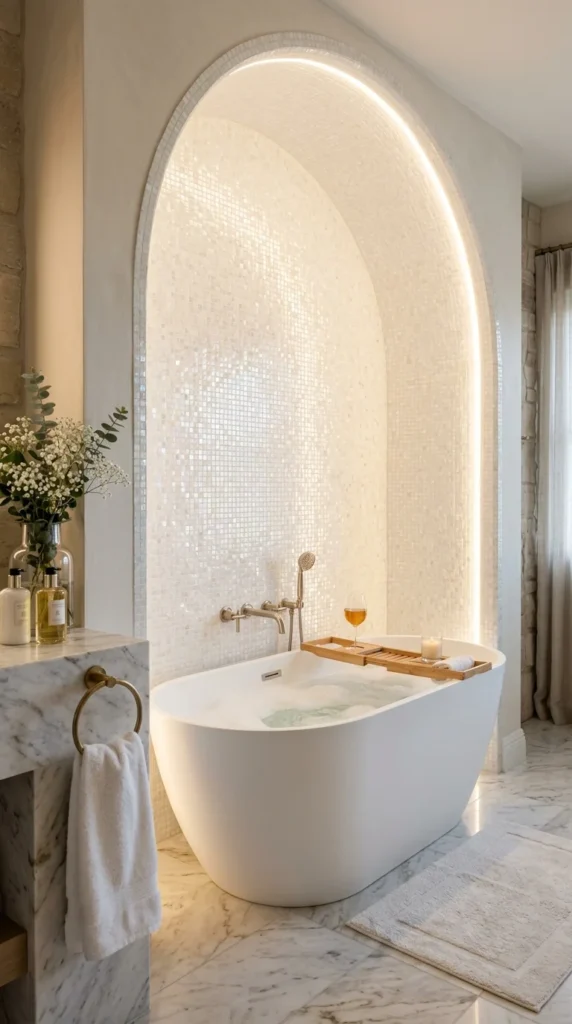
Arches aren’t just for doorways; they are exceptionally effective as alcoves. In a bathroom, placing a bathtub or a vanity inside an arched recess creates a focal point that feels like a private spa. The curve of the arch echoes the curves of the bathtub, creating a harmonious and balanced visual. Tiling the interior of the alcove adds texture and protects the walls from moisture, combining beauty with practicality.
12. Tiled Archways
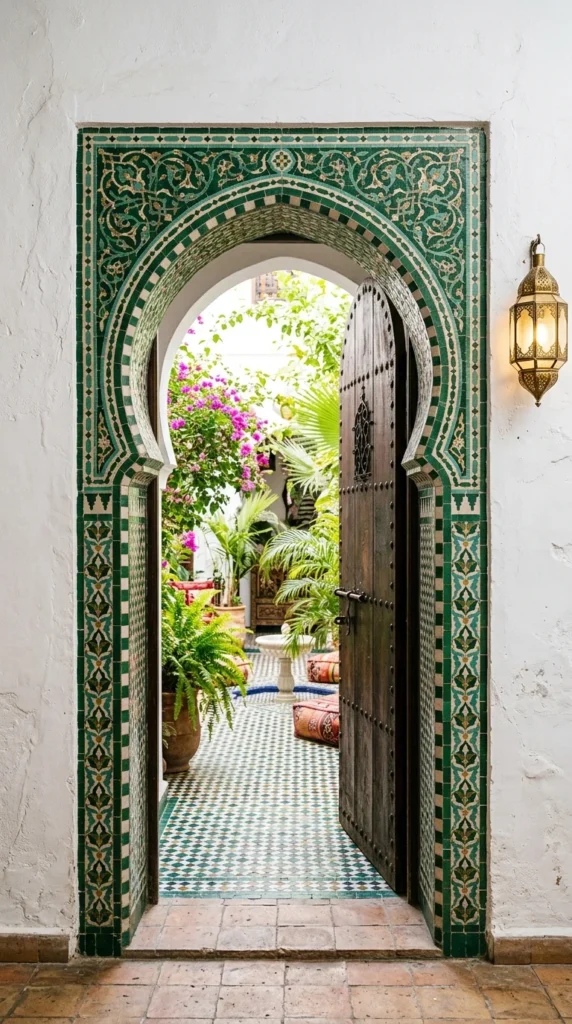
For a splash of color and pattern, consider tiling the entire arched doorway. Using Zellige or encaustic tiles can transport a space to the Mediterranean or the Middle East. This look is bold and eclectic, perfect for mudrooms, sunrooms, or kitchens. The reflective quality of glazed tiles also helps to bounce light into darker hallways, making the arch a beacon of color and light.
13. Brass Inlays
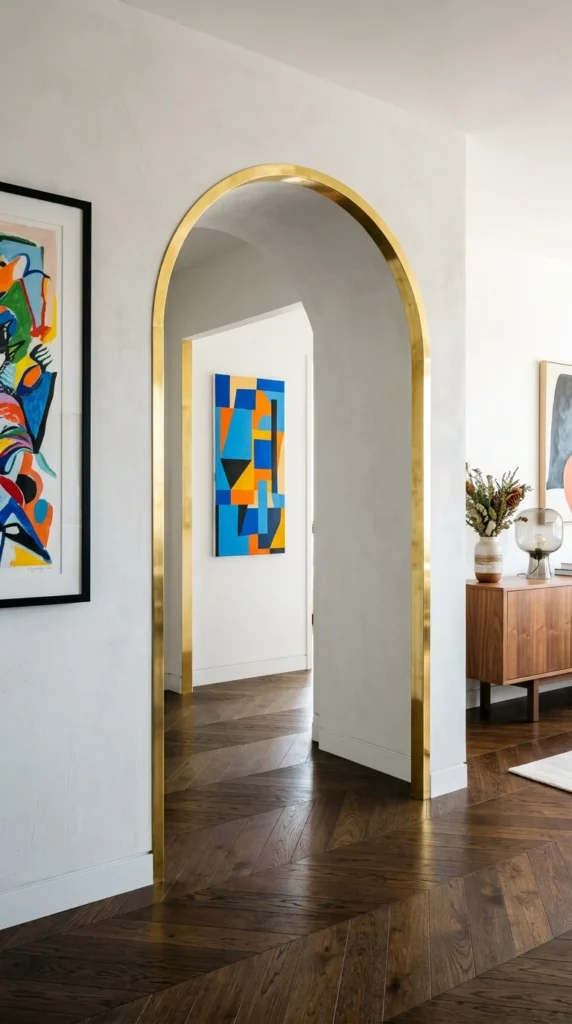
For the ultimate in modern luxury, a brass inlay adds a “jewelry-like” finish to an arched doorway. This subtle detail catches the light as you move through the home, providing a hint of glamour without being over-the-top. Metal inlays—whether brass, bronze, or black steel—work best in minimalist settings where they can act as the primary decorative element.
14. Transitional Hallways
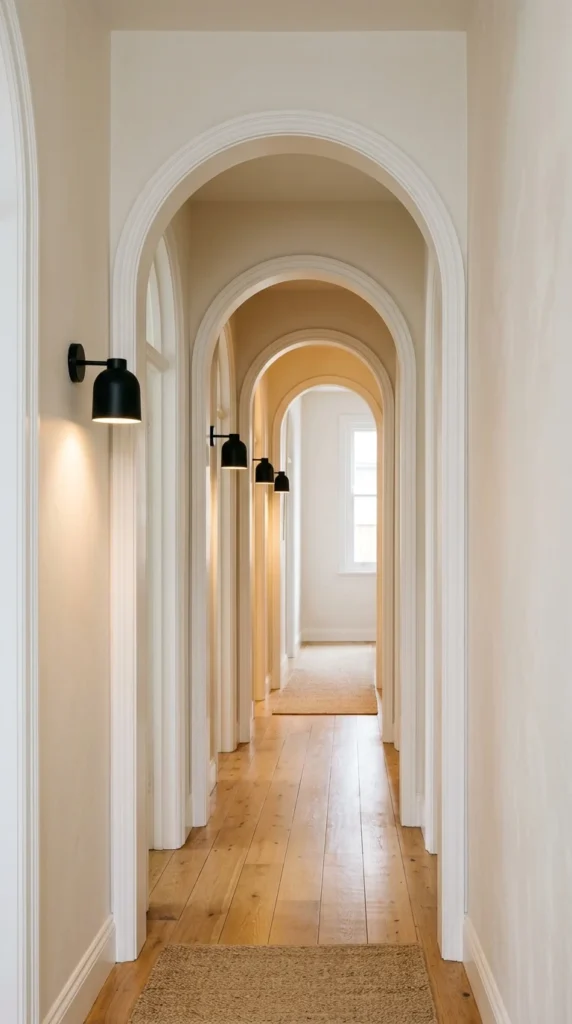
Long hallways can often feel like “dead space.” By introducing a series of repeating arches, you turn a functional corridor into a stunning architectural journey. This technique, often used in Spanish and Italian architecture, creates a sense of depth and perspective. It leads the eye through the house, making the journey from one end to the other feel intentional and grand.
15. Hidden Pantries
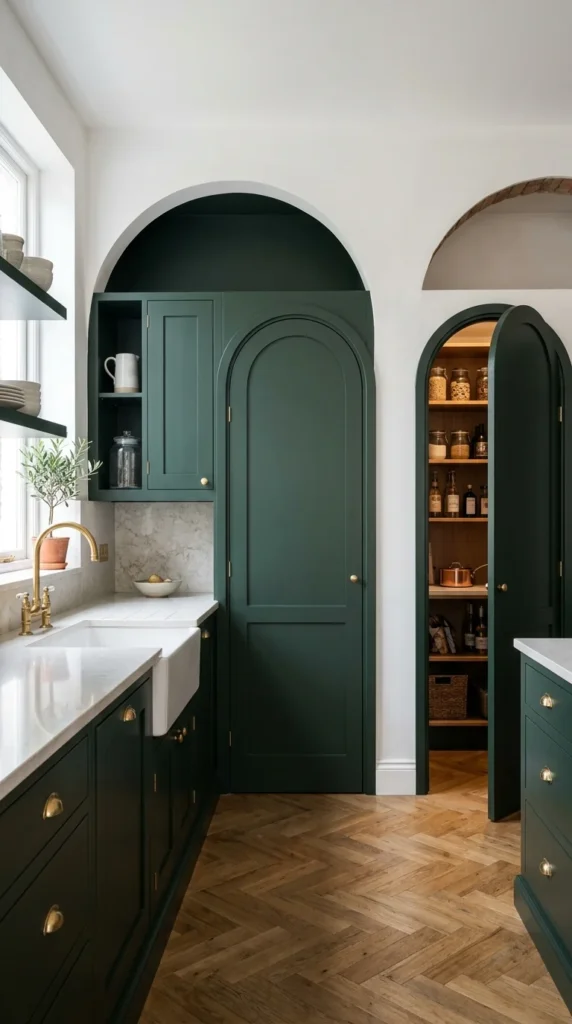
The “speakeasy” or hidden room trend is perfectly complemented by the arched doorway. A seamless arched door that matches the wall color or cabinetry can hide a pantry, a home office, or even a powder room. The arch adds a layer of whimsy and mystery, making the discovery of the hidden space even more delightful.
16. Gothic Pointed Arches
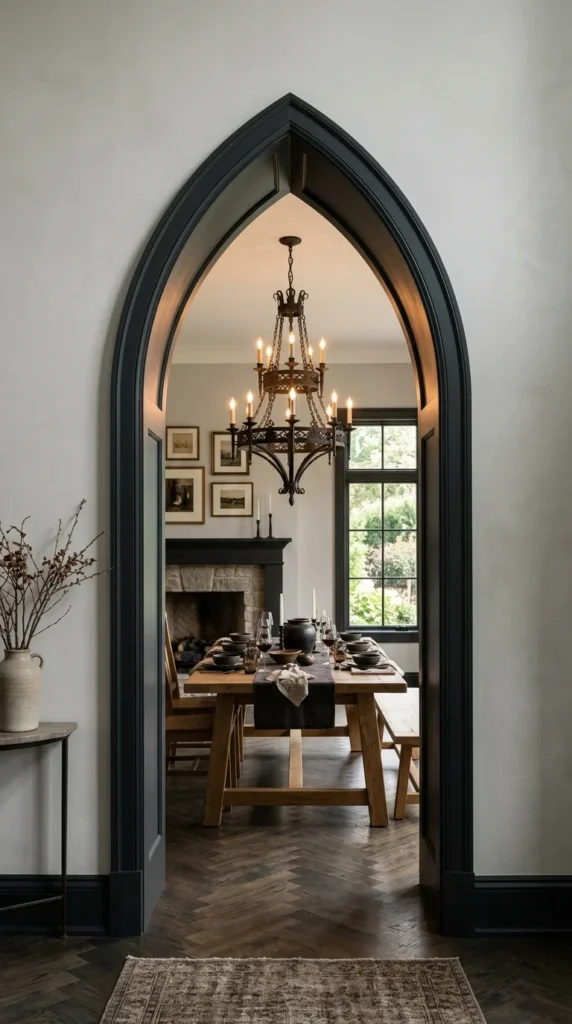
While rounded arches are more common, the pointed Gothic arch offers a more dramatic and edgy aesthetic. This style works exceptionally well in homes with high ceilings, as the point draws the eye significantly upward. When executed in a modern context—with clean lines and a monochrome palette—it feels fresh and sophisticated rather than dated or ecclesiastical.
17. Softened Corners
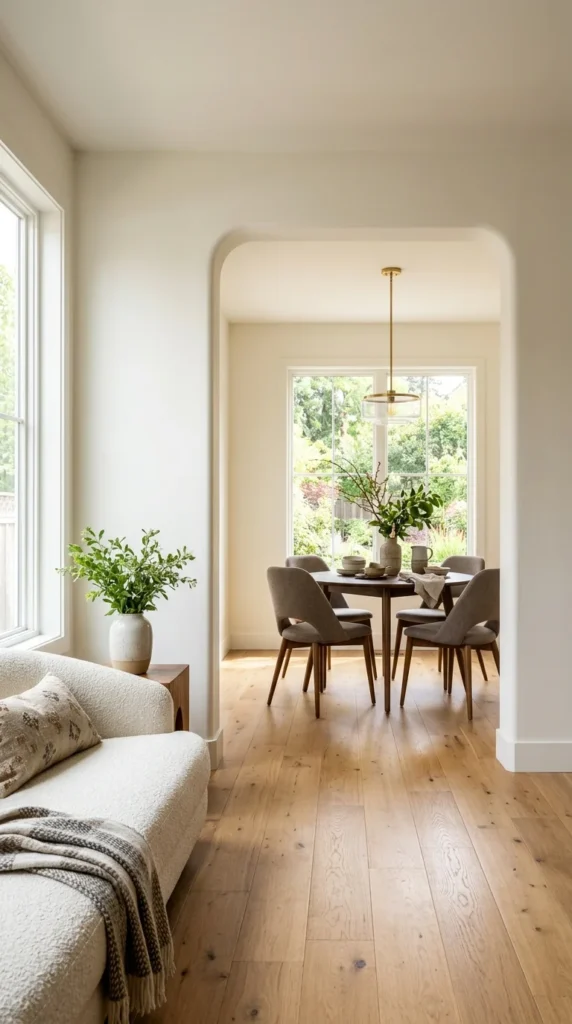
If a full semi-circular arch feels too traditional for your taste, “softened corners” (or radiused corners) are a perfect middle ground. This involves creating a rectangular opening but rounding off the top corners. It provides the “softness” of an arch while maintaining the clean, linear feel of modern architecture. It’s a subtle way to incorporate the curve trend without fully committing to a traditional arch.
18. Dark Trim
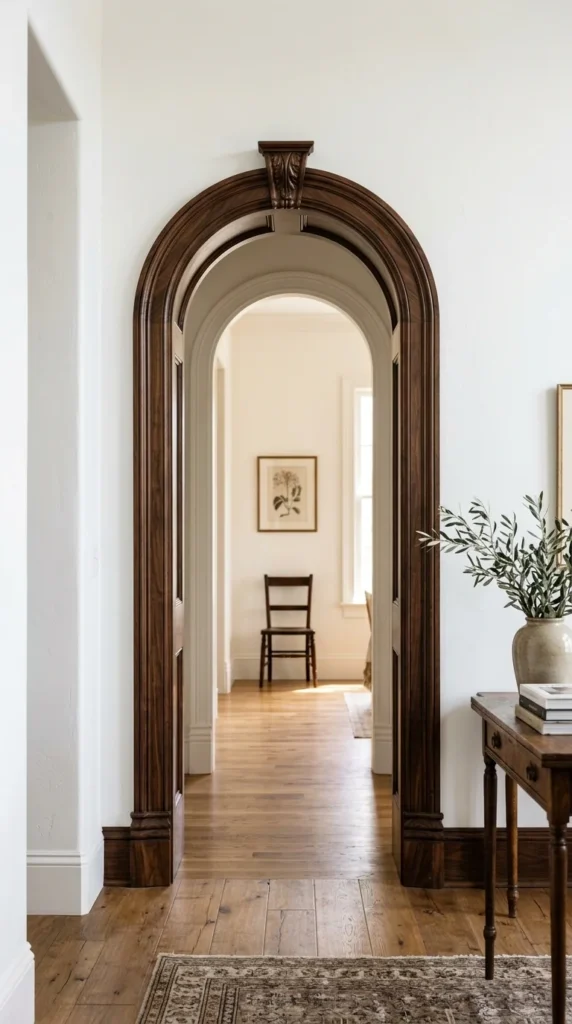
Using dark trim on a light wall creates a high-contrast look that defines the arch as a piece of art. This is a classic approach that suits traditional, colonial, or transitional homes. The dark molding acts as a frame, highlighting the view into the next room. It adds a sense of formality and structure that is perfect for entryways or formal living spaces.
19. Layered Arches
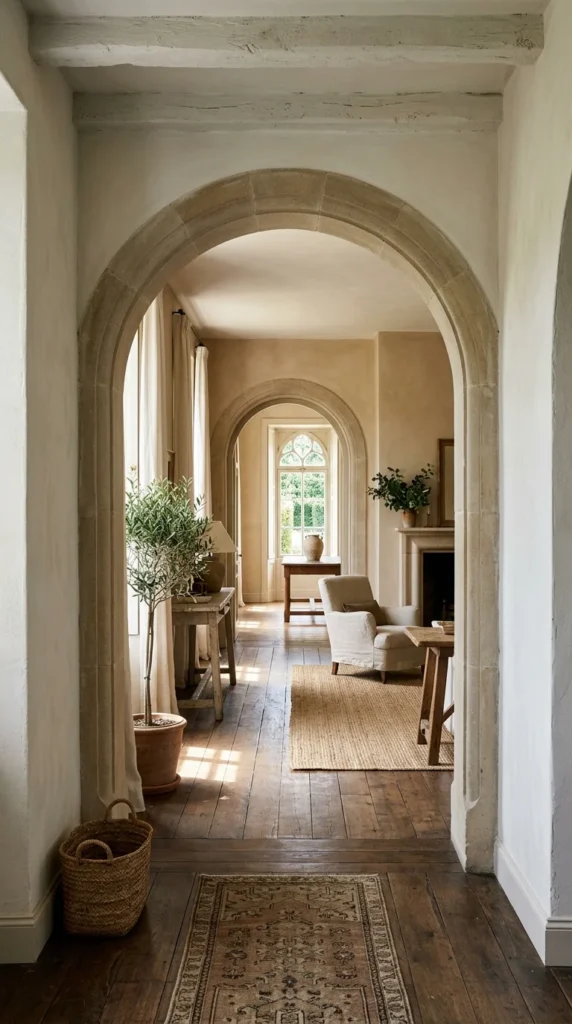
Layered arches, or “arches within arches,” create a phenomenal sense of depth and visual intrigue. When you align multiple arches throughout a home, you create a “telescoping” effect that makes the house feel larger and more interconnected. This design choice is often used by luxury architects to create long sightlines that showcase the scale of a property.
20. Greenhouse Glass
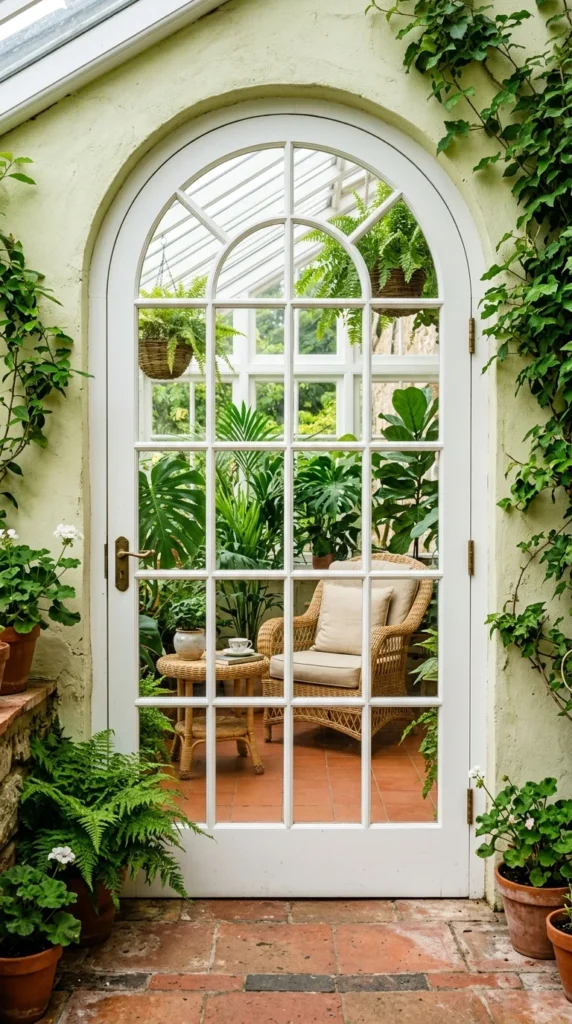
Using a “greenhouse” style arched door indoors brings an element of the garden inside. The delicate grid of the glass panes adds a vintage, romantic feel that works beautifully in cottage-style or traditional homes. This type of door is particularly effective for sunrooms, breakfast nooks, or any room where you want to maximize the feeling of light and connection to nature.
21. Mudroom Storage
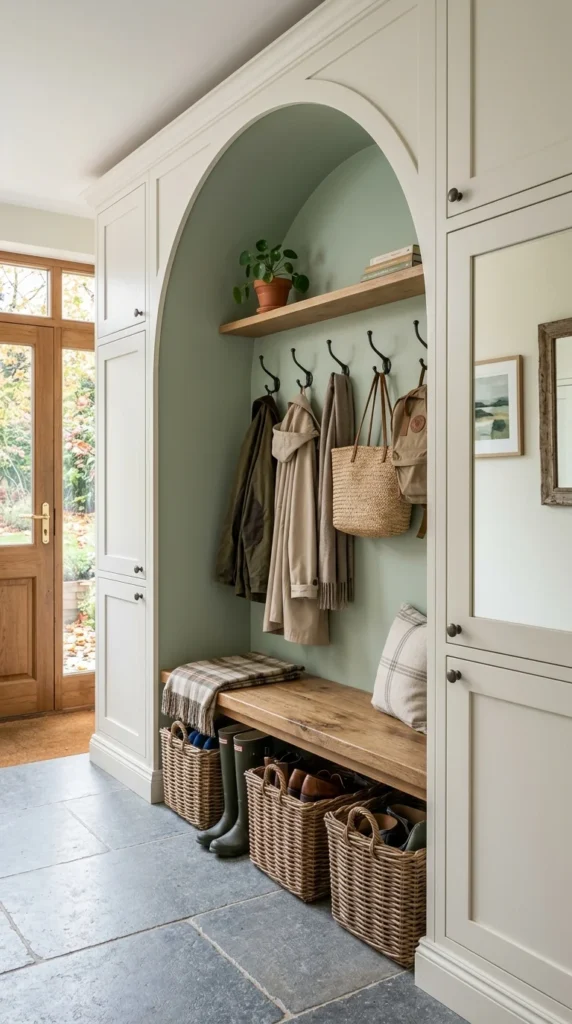
Incorporating an arch into a mudroom or “drop zone” adds a designer touch to a purely functional space. The arch frames the storage area, making the hooks and baskets feel more organized and integrated. It’s a great way to carry the architectural language of the rest of the house into the more utilitarian rooms, ensuring a cohesive look throughout.
22. Reading Nooks
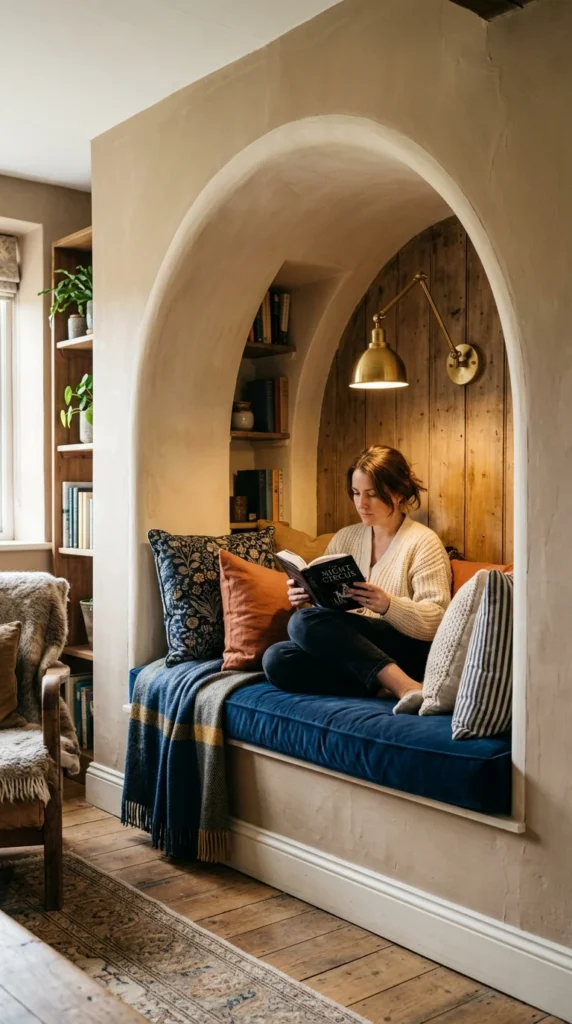
The arched reading nook is perhaps the most “Instagrammable” use of the curve. By carving a deep arch into a wall, you create a built-in piece of furniture that feels incredibly cozy and protected. It is a “micro-space” within a larger room, providing a sense of enclosure that is perfect for curling up with a book. Adding a contrasting paint color or wallpaper to the back of the nook further enhances the “hideaway” feel.
Conclusion: Embracing the Curve
The arched doorway is a testament to the fact that architecture doesn’t have to be rigid to be impactful. By introducing curves into your home, you break up the monotony of “boxy” rooms and create a space that feels more organic, flowing, and timeless. Whether through the simple addition of a plaster arch or the grand statement of a stone-clad entryway, these 22 ideas demonstrate that there is an arch for every style and every home. As we move toward more personalized and character-driven interiors, the arch remains a classic tool in the designer’s kit, offering a soft, sophisticated transition that will never go out of style.