
Designing a small living room is often a delicate balancing act between aesthetics and utility. When every square inch counts, the arrangement of furniture, the choice of color palettes, and the use of light become critical factors in determining whether a space feels cramped or cozy. However, a limited footprint does not mean you have to sacrifice style. By employing strategic layout techniques and choosing pieces that work double duty, you can transform a compact area into a sophisticated sanctuary.
The following 21 layout ideas offer a comprehensive guide to maximizing your living space, ensuring that your home remains both functional for daily life and inviting for guests.
1. Floating Furniture
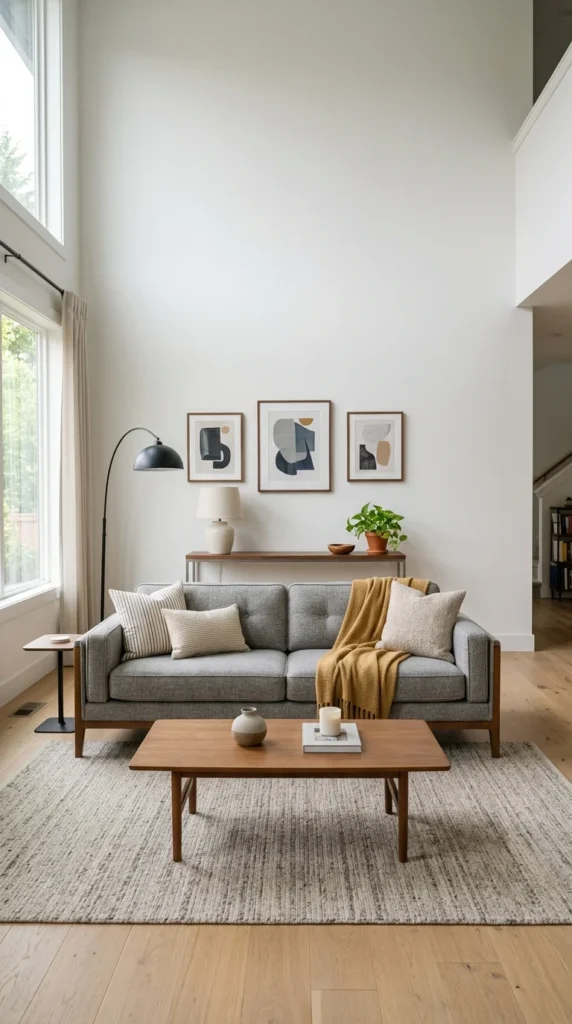
One of the most common mistakes in small living room design is pushing all the furniture against the walls. While it may seem like this opens up the floor, it can actually make the room feel boxy and restricted. “Floating” your furniture—positioning pieces away from the perimeter—creates a sense of flow and makes the walls feel further away than they actually are. This layout works exceptionally well if you place a slim console table behind the sofa to define the space.
2. Corner Sectionals
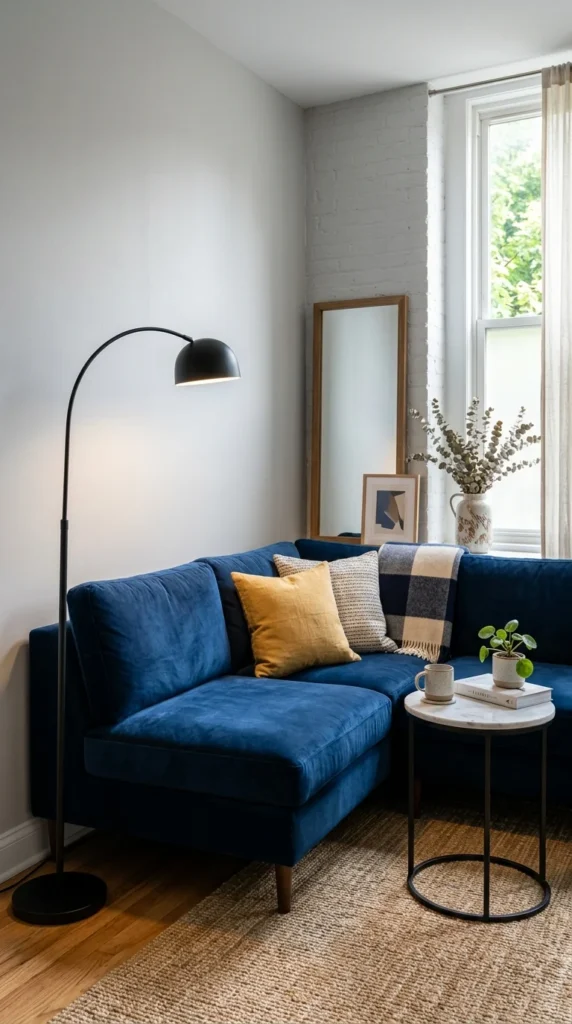
To maximize seating without cluttering the center of the room, a corner sectional is an ideal solution. By hugging two walls, the sectional provides ample room for family and guests while leaving the middle of the room open for movement. This layout eliminates the need for multiple bulky armchairs and creates a singular, cohesive focal point that feels organized and intentional.
3. Ghost Furniture
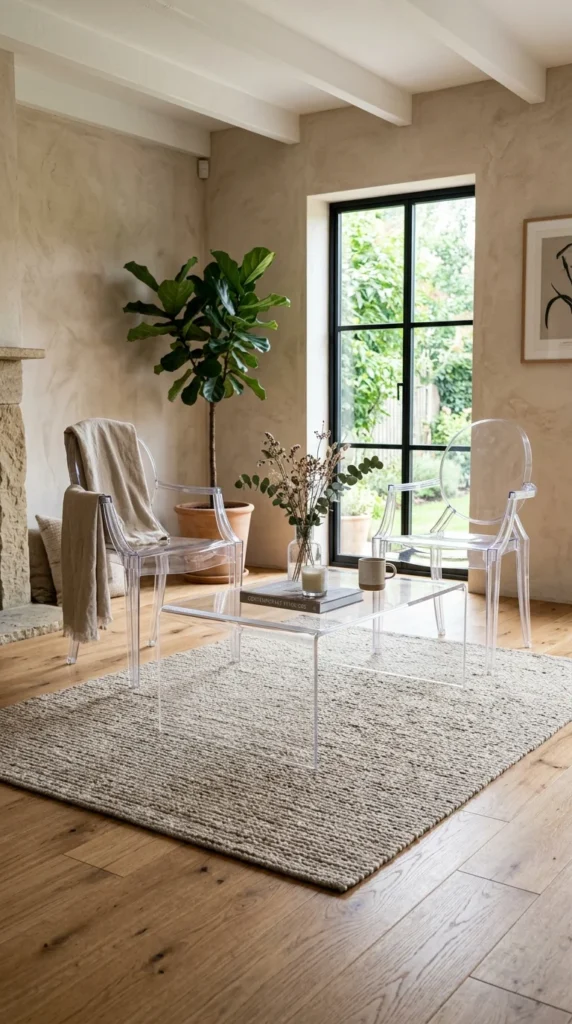
Visual weight is a crucial concept in small-space design. Pieces made of clear acrylic or glass, often referred to as “ghost furniture,” provide the utility of a table or chair without taking up visual space. Because the eye can see right through these items, the room feels larger and less cluttered. This is an excellent choice for coffee tables or side chairs that would otherwise block the view of a beautiful rug or flooring.
4. Wall-Mounted Desks
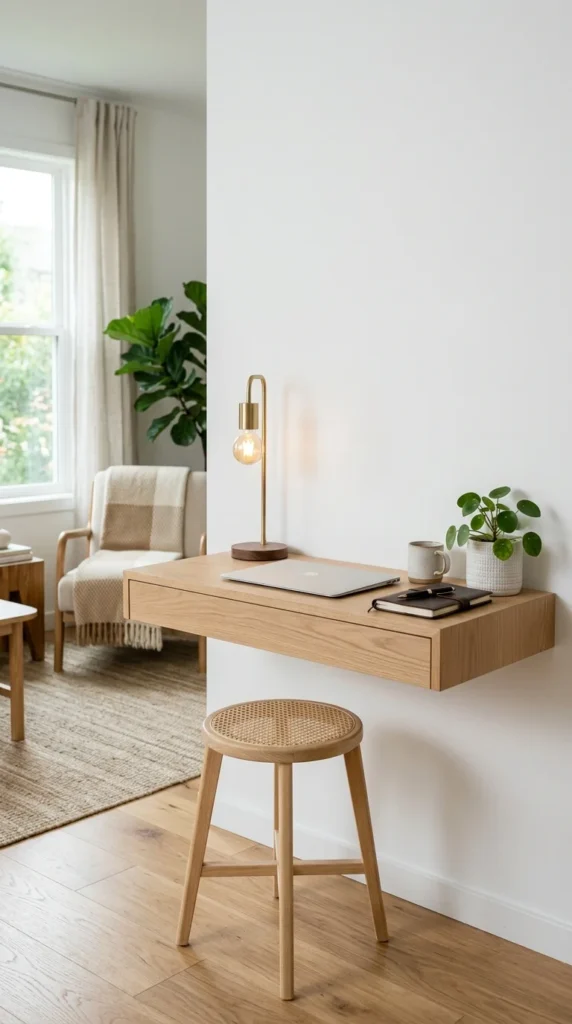
In an era where remote work is common, many small living rooms must double as offices. Instead of a heavy executive desk, opt for a wall-mounted or floating desk. These units take up zero floor space, maintaining an open feel. When paired with a stool or a chair that can be tucked away entirely, the workspace disappears when not in use, preserving the room’s primary function as a place of relaxation.
5. Mirrored Surfaces
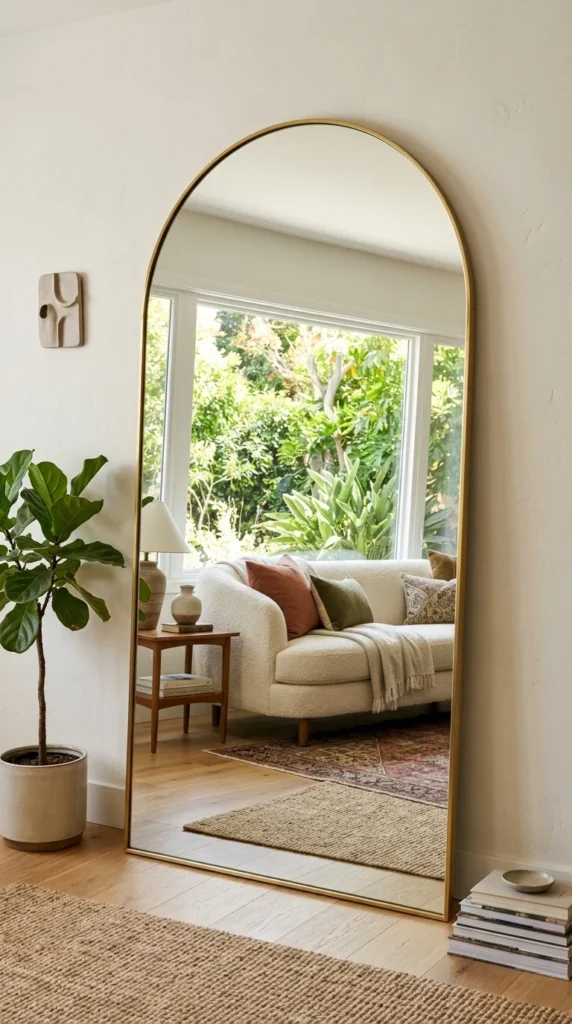
Mirrors are the oldest trick in the interior design book for a reason: they work. By placing a large mirror opposite a window, you reflect natural light and the view of the outdoors, effectively “doubling” the size of the room. Whether it is a gallery wall of smaller mirrors or one massive statement piece, the reflective surfaces break down the boundaries of the walls.
6. Nested Tables
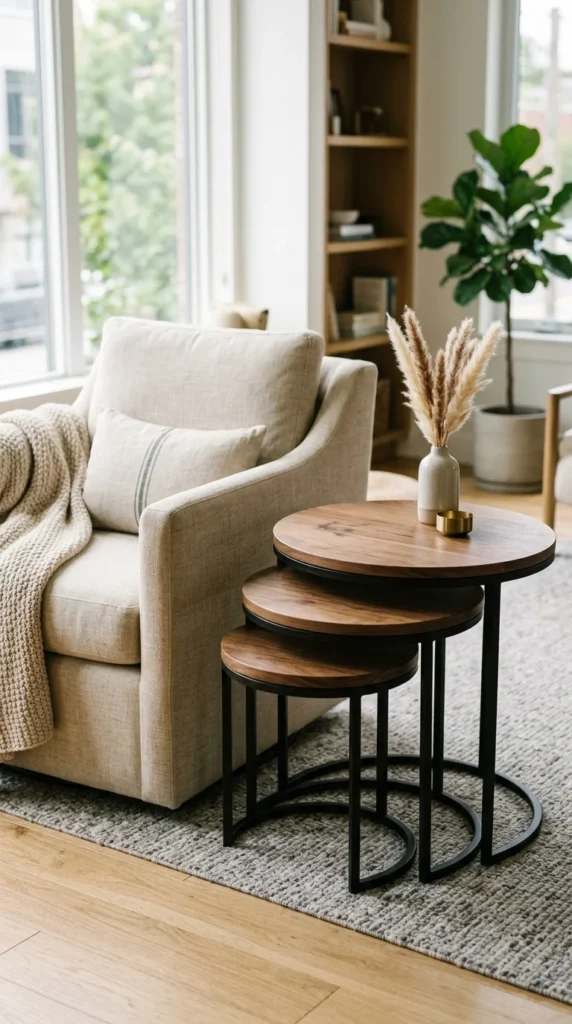
Flexibility is key in a small home. Nested tables provide multiple surfaces for drinks or snacks when entertaining but can be stacked into a single footprint when you need more floor space. This “staircase” effect adds visual interest and ensures you are never caught without a place to set a cup of coffee, regardless of how small the layout is.
7. Vertical Shelving
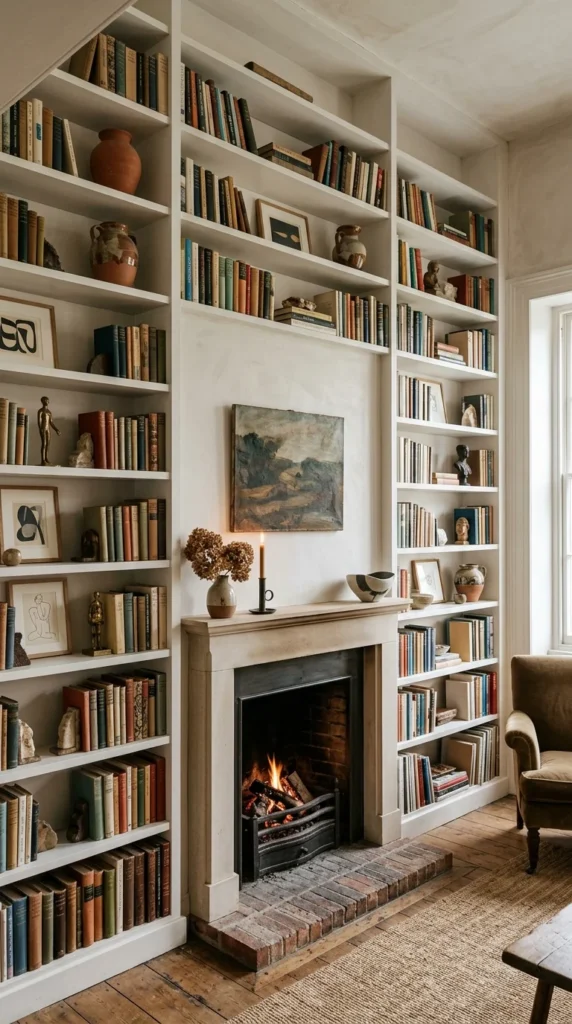
When you run out of floor space, look up. Vertical shelving units or floor-to-ceiling bookcases draw the eye upward, emphasizing the height of the room rather than its narrow width. Using the “fifth wall”—the ceiling—for storage and display keeps the floor clear and provides an opportunity to showcase your personality through decor and literature.
8. Armless Seating
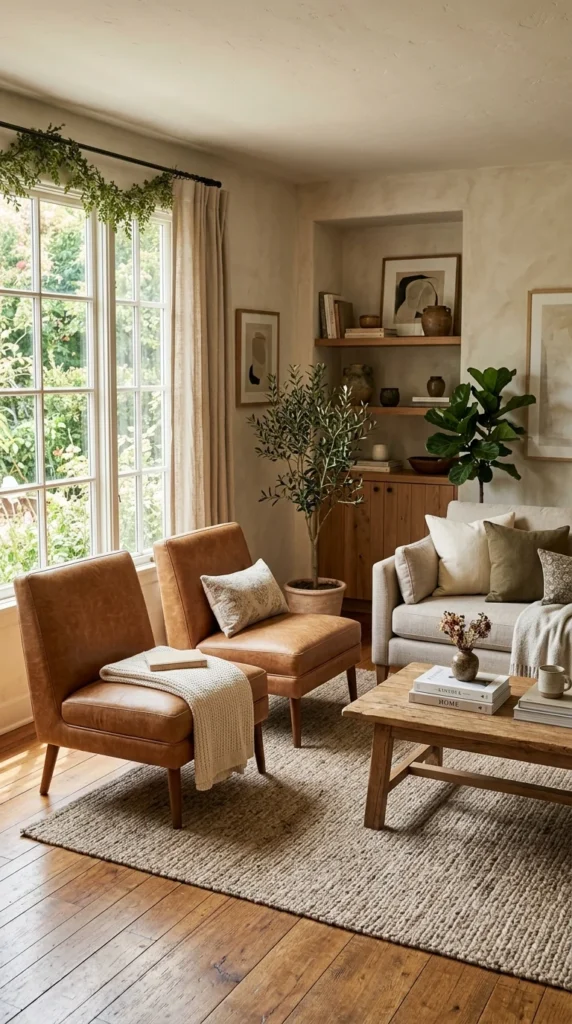
Traditional armchairs can be quite wide, taking up valuable inches on either side. Armless chairs, such as slipper chairs, offer a streamlined silhouette that fits into tight corners or narrow pathways. They provide the same comfort as a standard chair but with a much smaller physical and visual footprint, making them perfect for supplementary seating.
9. Multipurpose Ottomans
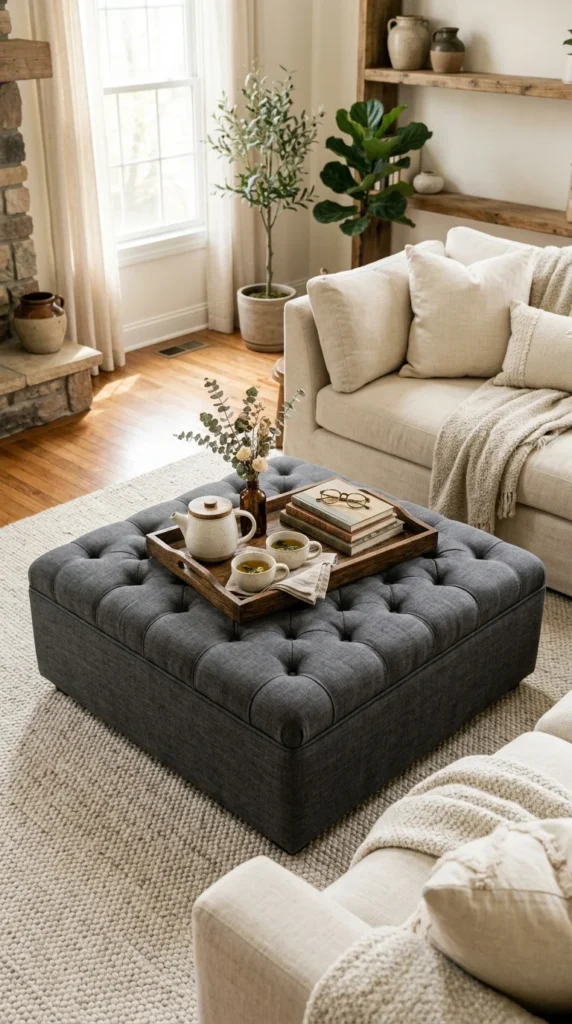
In a small living room, every piece of furniture should earn its keep. A large ottoman can serve as a coffee table when topped with a sturdy tray, an extra seat for guests, or a footrest for movie nights. Choosing one with internal storage adds even more functionality, providing a hidden spot for blankets, pillows, or board games.
10. Symmetrical Balance
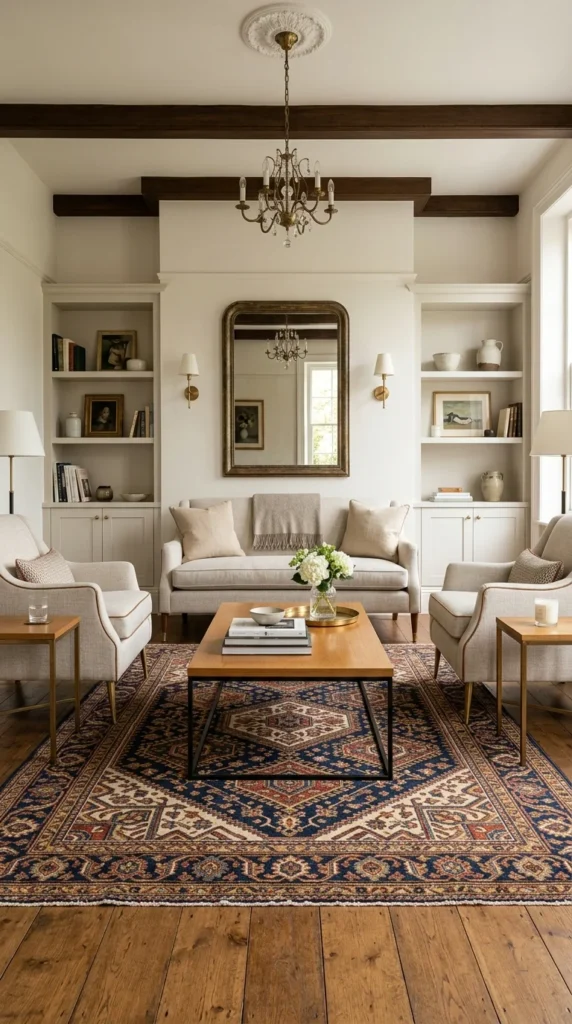
Symmetry creates a sense of order and calm, which is vital in a compact space where chaos can easily take over. By mirroring furniture on either side of a central axis—like a fireplace or a window—you create a structured layout that feels professional and polished. This balance makes the room feel intentional and well-proportioned.
11. High-Legged Furniture
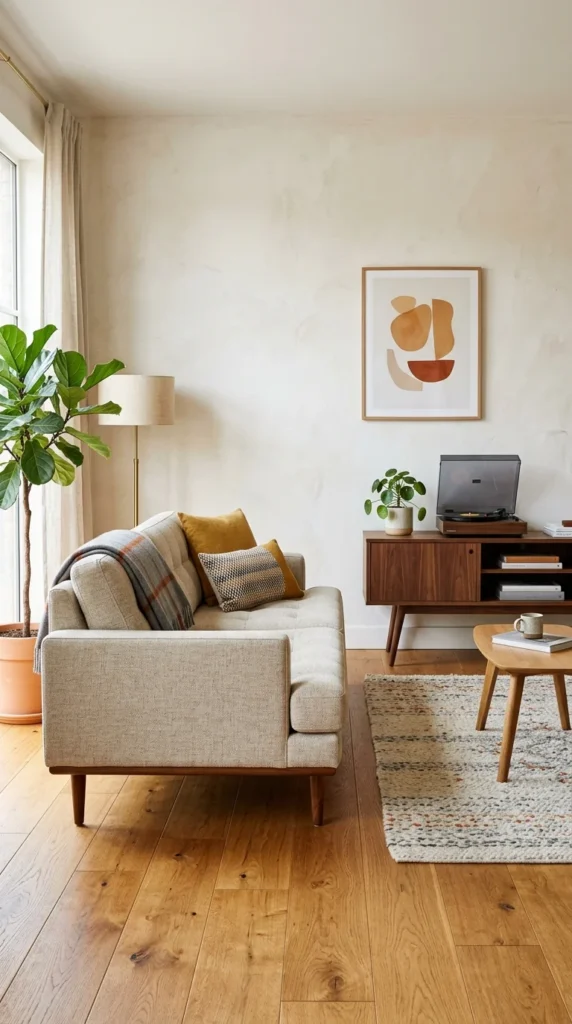
Furniture that sits directly on the floor can feel heavy and “grounded” in a way that shrinks the room. Conversely, sofas, chairs, and cabinets with long, slender legs create a sense of lightness. Seeing the floor continue underneath the furniture tricks the brain into perceiving more open space, contributing to an airy, breathable atmosphere.
12. Zone Definition
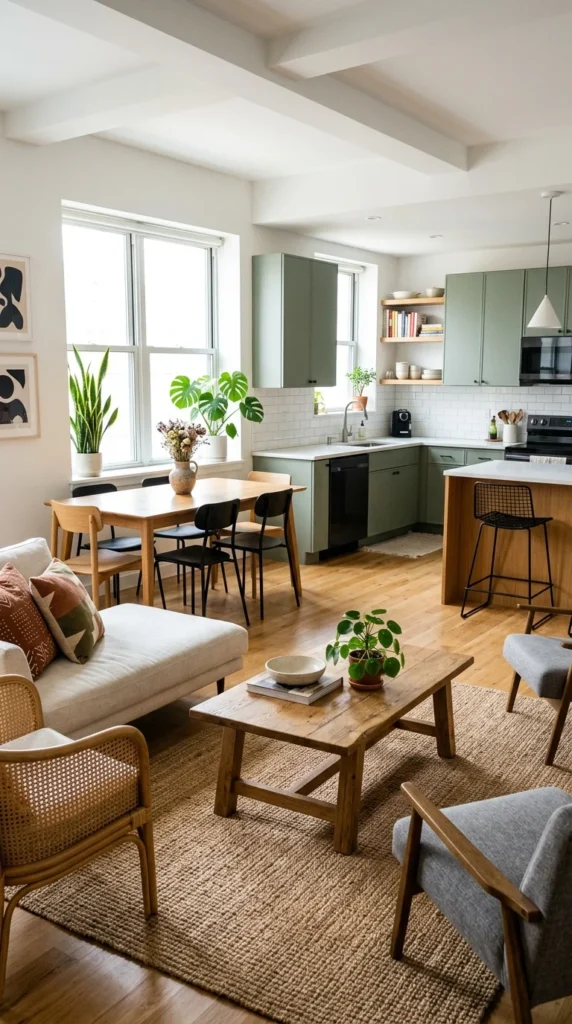
In studio apartments or open-plan homes, the living room often bleeds into other areas. Use area rugs to define the boundaries of the living “zone.” A rug that is large enough for all the furniture legs to sit on creates a cohesive island, signaling where the relaxation area begins and ends without the need for physical walls or dividers.
13. Statement Art
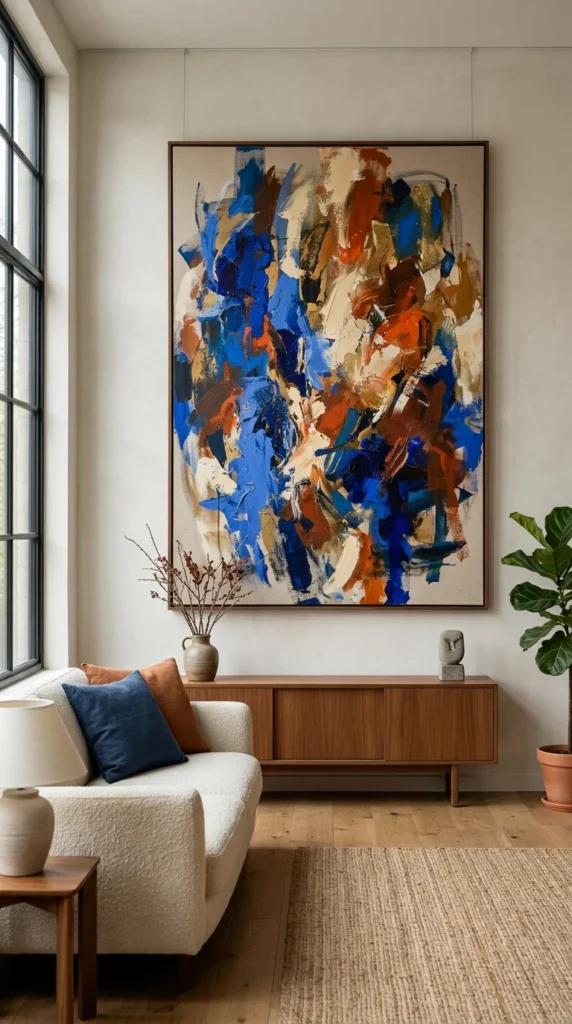
Counterintuitively, a single large piece of art can make a small room feel bigger than a collection of small pieces. A gallery wall can sometimes feel cluttered and busy, whereas one oversized statement piece provides a clean focal point. It gives the eye a place to rest and creates a sense of grandeur that transcends the room’s dimensions.
14. Monochrome Palettes
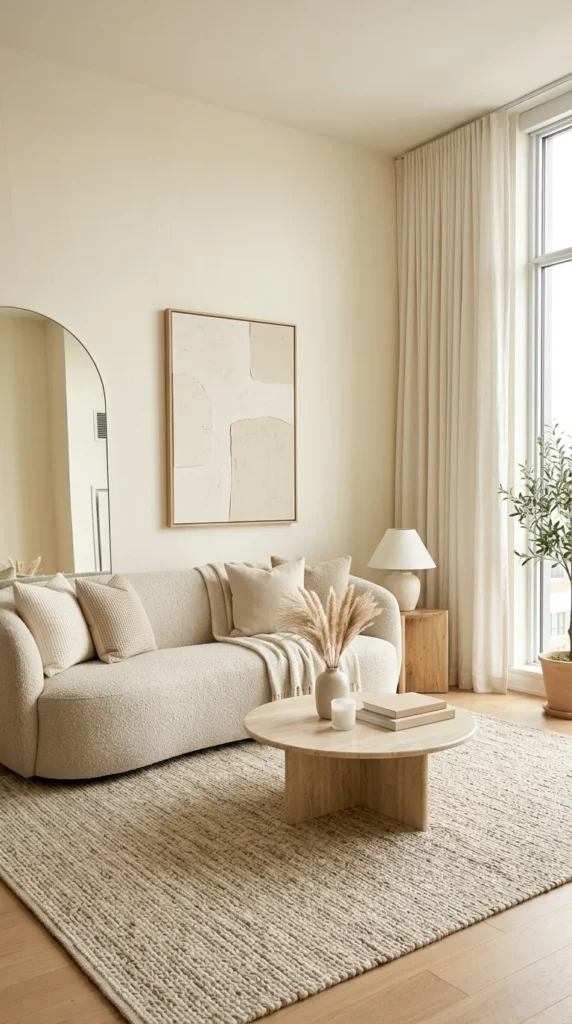
A monochromatic color scheme—using different shades, tones, and tints of a single color—eliminates visual boundaries. When the walls, furniture, and curtains are in the same color family, the eye moves across the space without interruption. This creates a seamless transition that makes the room feel significantly more expansive and tranquil.
15. Built-In Seating

If your living room has an awkward nook or a bay window, consider custom built-in seating. This utilizes “dead space” that standard furniture can’t reach. Built-ins often include under-seat storage, providing a two-in-one solution that maximizes every inch of the architecture. It creates a cozy reading corner while keeping the main floor area open.
16. Circular Coffee Tables
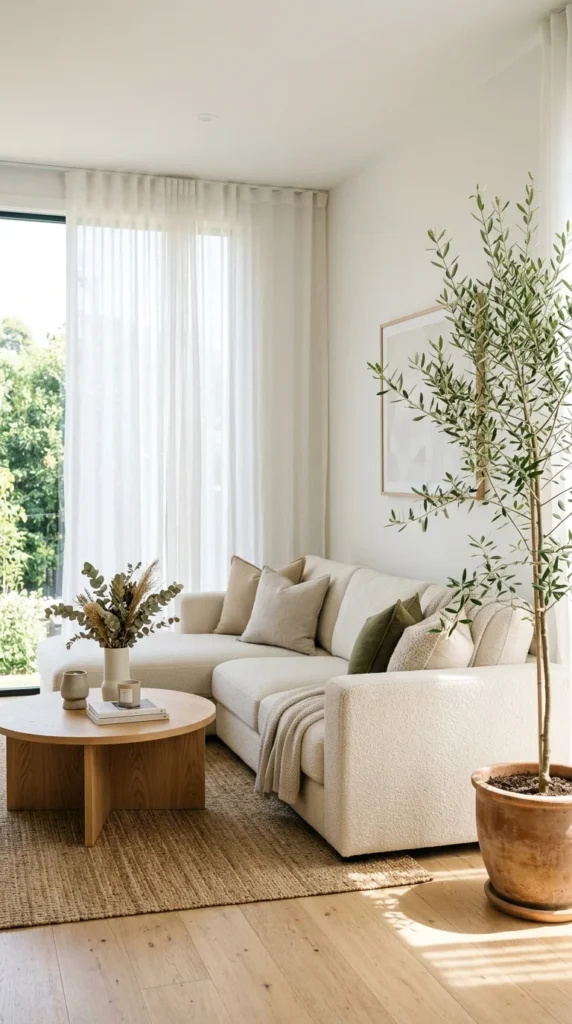
In tight quarters, sharp corners are the enemy of movement. A circular or oval coffee table is much easier to navigate around and helps to soften the straight lines of the walls and sofa. The absence of corners also makes the space feel less “blocked,” promoting a smoother flow of traffic through the room.
17. Sliding Barn Doors
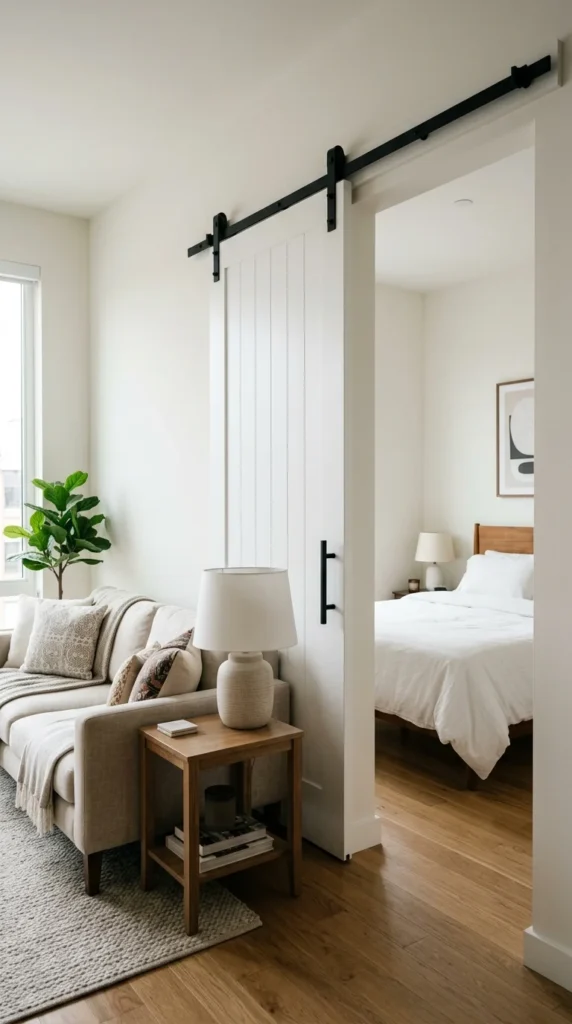
Traditional doors require a “swing zone” that can eat up several square feet of usable floor space. Replacing a standard door with a sliding barn door or a pocket door eliminates this issue. This allows you to place furniture closer to the doorway, reclaiming lost territory for a chair, a plant, or a bookshelf.
18. Strategic Lighting
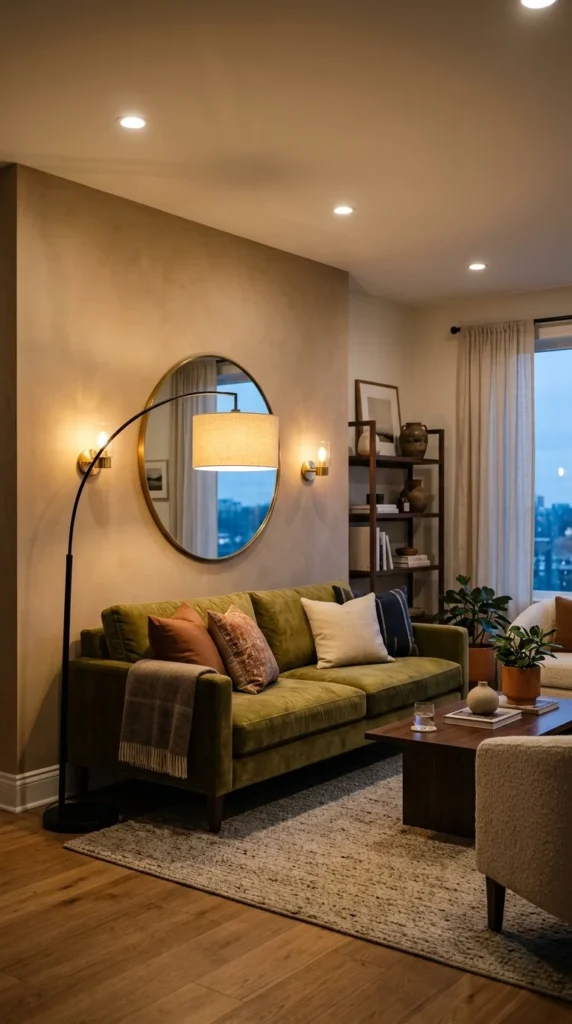
Good lighting can completely change the perception of space. Instead of relying on a single overhead light, which can create harsh shadows and make corners feel cramped, use a “layered” approach. Combine floor lamps, table lamps, and wall sconces to illuminate every corner of the room. This adds depth and warmth, making the space feel larger and more inviting at night.
19. Exposed Windows
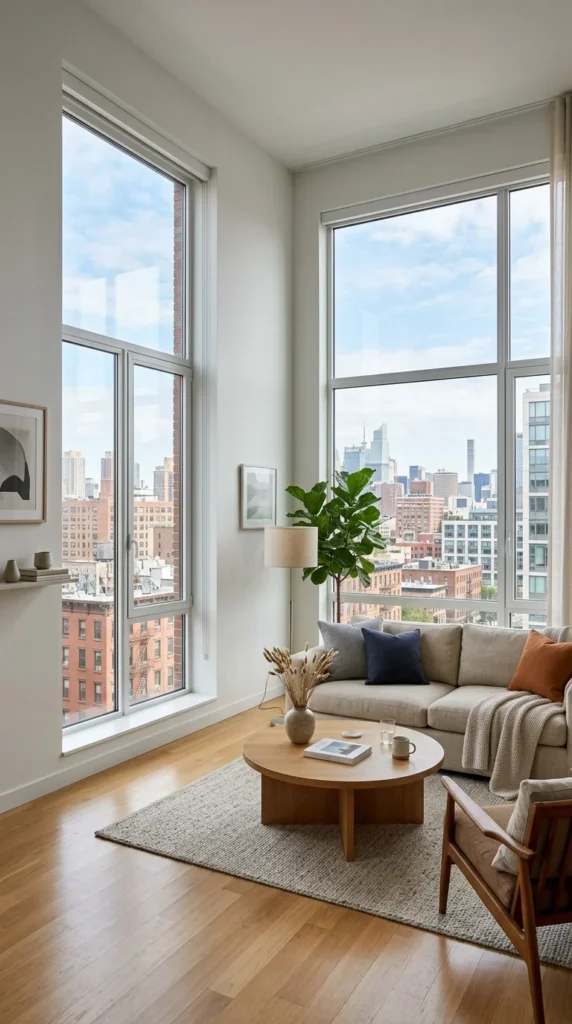
If privacy allows, keep your windows as clear as possible. Natural light is the most effective tool for making a small room feel spacious. Use sheer curtains or Roman shades that can be fully retracted during the day. Connecting the interior of your home with the view outside extends the visual field far beyond the walls.
20. Layered Textures
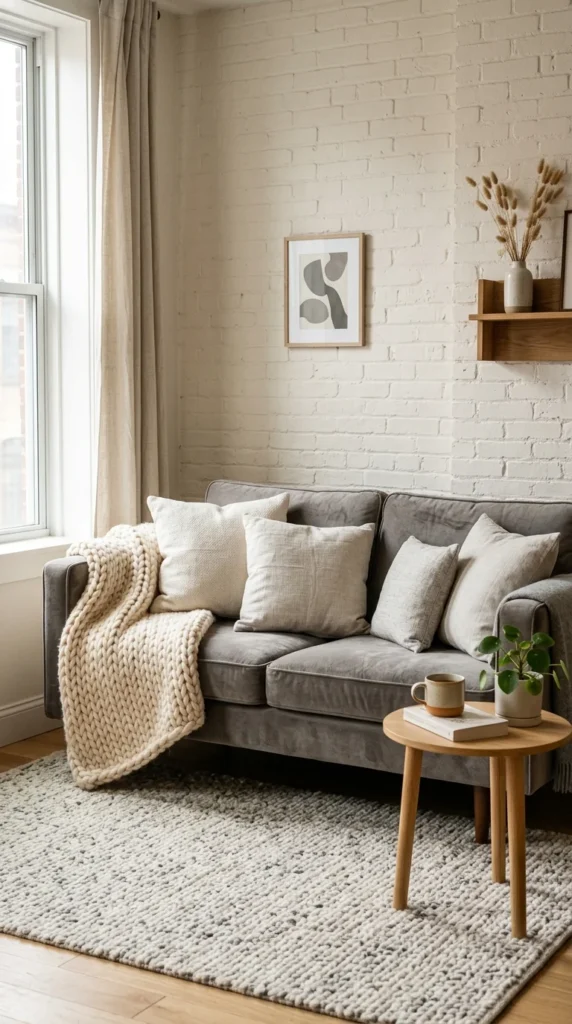
When you can’t use a lot of color or furniture, use texture to add interest. Layering different materials—such as a leather chair, a wool rug, and silk pillows—gives the room “depth” without taking up physical space. This tactile variety makes a small room feel rich and curated rather than plain and utilitarian.
21. Greenery Accents
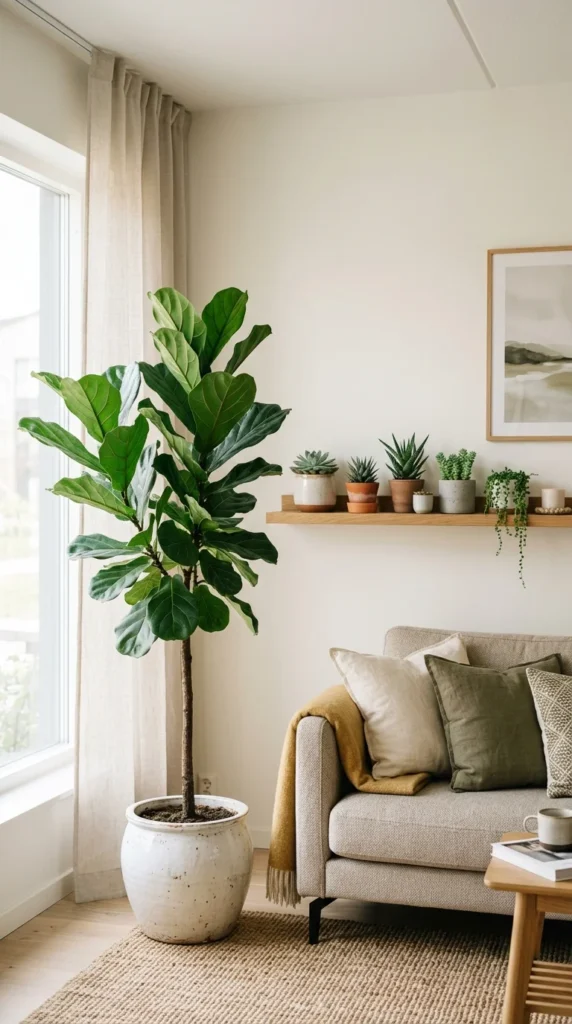
Plants are the final touch for any small living room layout. They add life, color, and a sense of freshness. Vertical plants like a Fiddle Leaf Fig or a Snake Plant take up very little floor space but add significant height and vitality. Placing plants at different levels—some on the floor, some on shelves—draws the eye around the room, making it feel vibrant and lived-in.