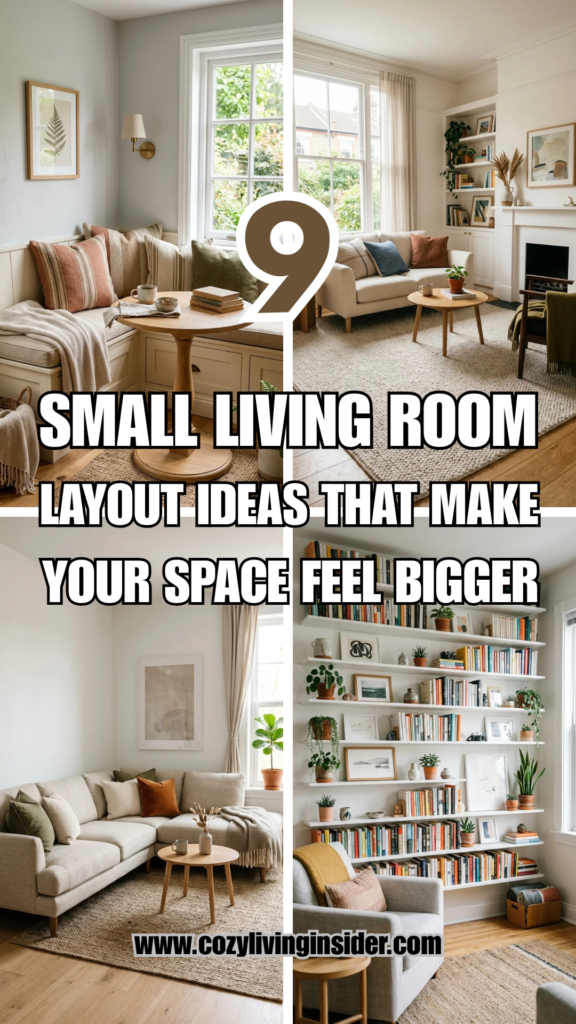

Living in a compact space does not mean you have to sacrifice style or comfort. The challenge of a small living room lies in the delicate balance between functionality and aesthetics. Often, the instinct is to push every piece of furniture against the walls to clear the floor, but interior design experts suggest that strategic layouts and mindful furniture choices can trick the eye into perceiving a much larger area. By manipulating sightlines, utilizing vertical space, and choosing pieces with a lighter visual weight, you can transform a cramped quarters into an airy sanctuary.
Here are nine expert-approved layout ideas to maximize your small living room.
1. Floating Furniture
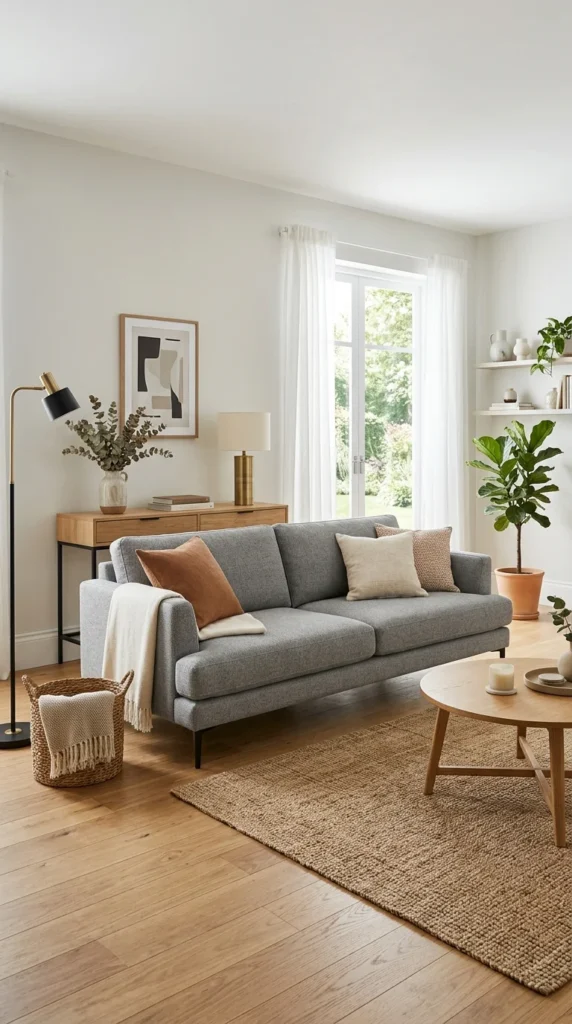
The most common mistake in small room design is the “perimeter squeeze,” where all furniture is pushed against the walls. While this seems like it would create more open floor space, it actually highlights the room’s boundaries, making it feel boxed in. “Floating” your furniture involves pulling pieces away from the walls, even if only by a few inches.
By creating a small gap between the sofa and the wall, you create shadows and depth that suggest the room continues beyond the furniture. This layout encourages a more intimate seating arrangement in the center of the room, which fosters better conversation. If space allows, placing a slim console table behind a floating sofa provides a surface for lamps or decor without the bulk of a heavy cabinet, adding both function and a sense of luxury.
2. Leggy Pieces
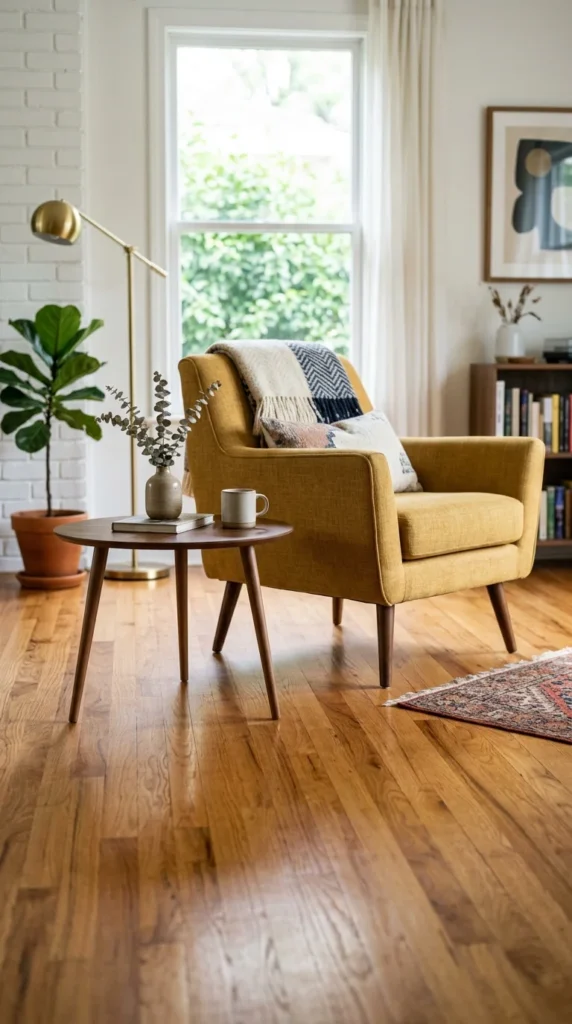
In a small space, visual weight is everything. Furniture that sits flat on the floor acts like a visual block, stopping the eye and making the room feel heavy. To combat this, opt for furniture with “legs.” Whether it is a mid-century modern sofa with tapered wooden pegs or a side table with slim metal hairpin legs, raising the bulk of the furniture off the ground allows light and air to flow underneath.
When you can see the floor extending all the way to the baseboards, the brain perceives the room as being larger. This “leggy” aesthetic creates a sense of “breathebility.” It is a simple optical illusion: the more floor space that is visible, the less cluttered the room feels, even if the actual square footage remains the same.
3. Multi-functional Ottomans
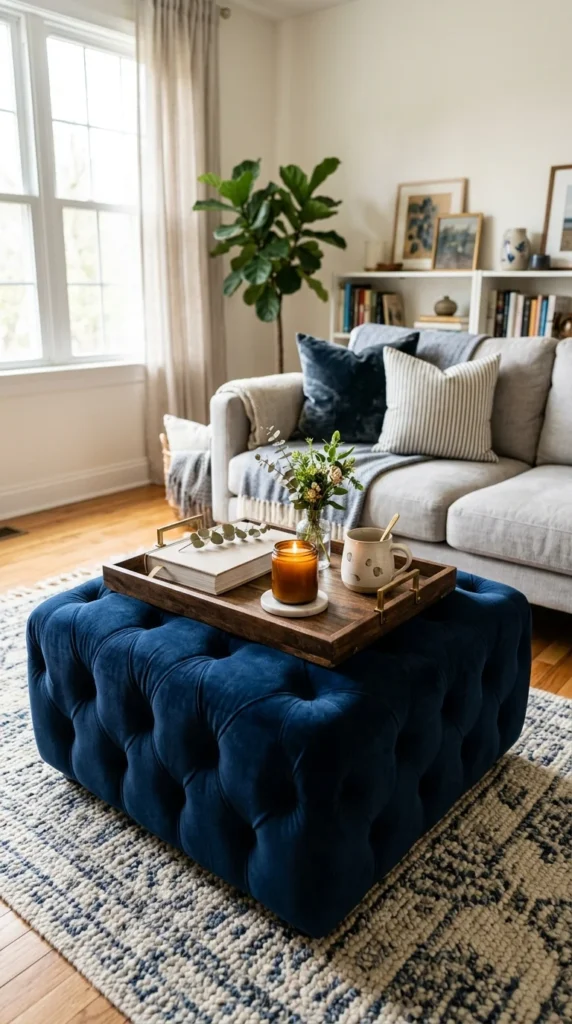
In a small layout, every piece of furniture must earn its keep. Traditional coffee tables can be rigid and space-consuming. Replacing a standard table with a large, upholstered ottoman provides a versatile centerpiece that serves multiple purposes.
During the day, a tray placed on top turns the ottoman into a stable surface for drinks and decor. When guests arrive, the tray can be removed to provide extra seating. Many ottomans also come with internal storage, allowing you to tuck away blankets, remote controls, or board games. This reduces visual clutter—one of the primary enemies of small spaces—while ensuring the room remains highly functional for various activities.
4. Vertical Storage
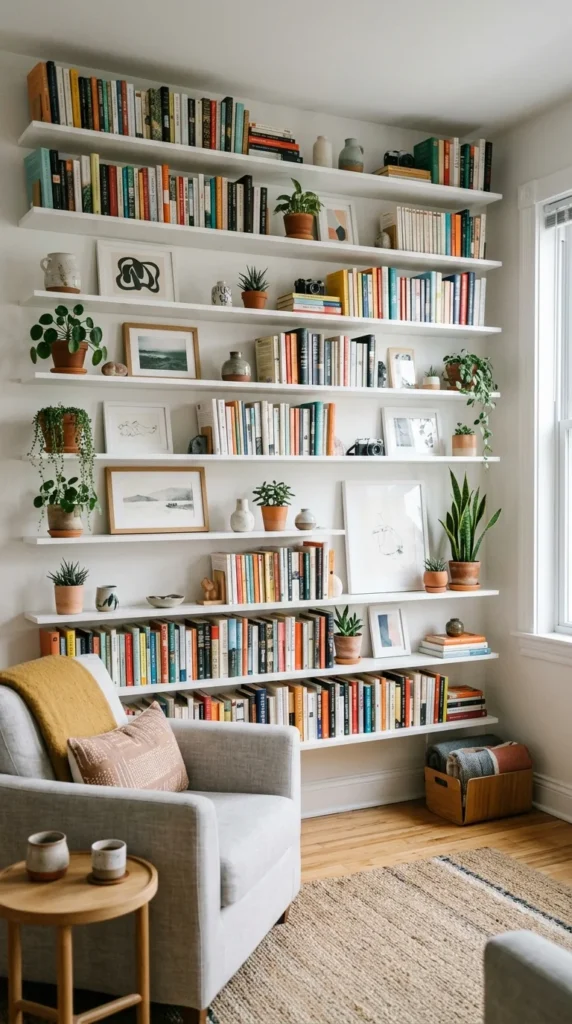
When you run out of floor space, the only way to go is up. Utilizing vertical space is a classic design trick for making a room feel taller and more expansive. Floor-to-ceiling shelving units or high-mounted floating shelves draw the eye upward, highlighting the height of the ceiling rather than the narrowness of the floor.
To keep this from feeling overwhelming, use a mix of “closed” and “open” storage. Use lower cabinets for items you want to hide and upper open shelves for curated displays. Using the same color for the shelves as the walls helps them blend into the architecture, preventing the room from feeling “closed in” by heavy wooden structures. This approach maximizes utility while keeping the footprint of the furniture to a minimum.
5. Mirrored Surfaces
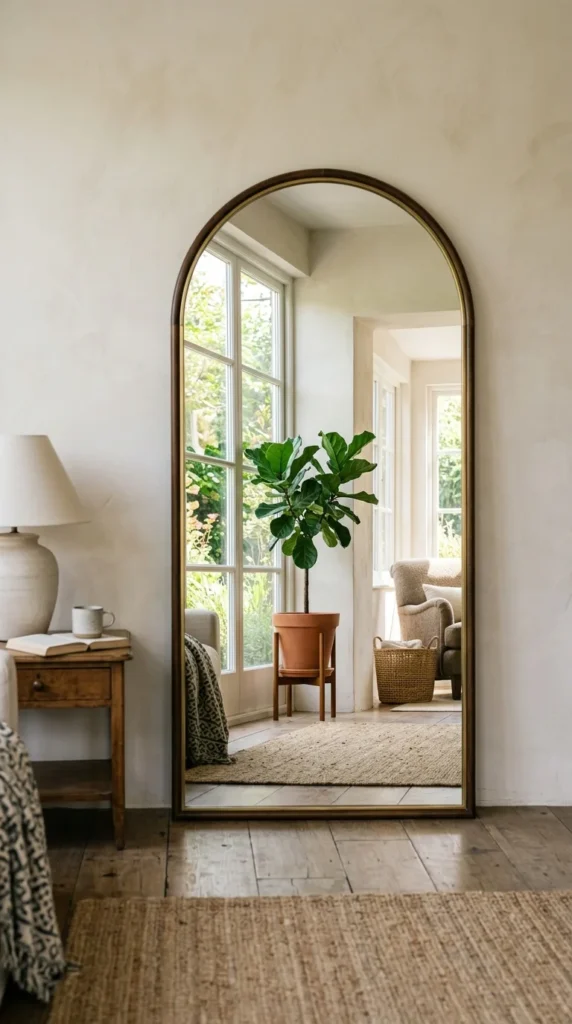
Mirrors are perhaps the most effective tool in a designer’s kit for expanding a space. By reflecting light and the interior of the room, a well-placed mirror can effectively double the perceived depth of a living area.
For maximum impact, place a large mirror opposite a window. This not only reflects a beautiful view but also bounces natural light into the darker corners of the room, making the entire space feel brighter and more inviting. If a massive wall mirror feels too intimidating, consider mirrored furniture, such as a sideboard or nesting tables, which provide a similar (though subtler) effect by breaking up solid surfaces and adding a touch of glamour.
6. Transparent Elements
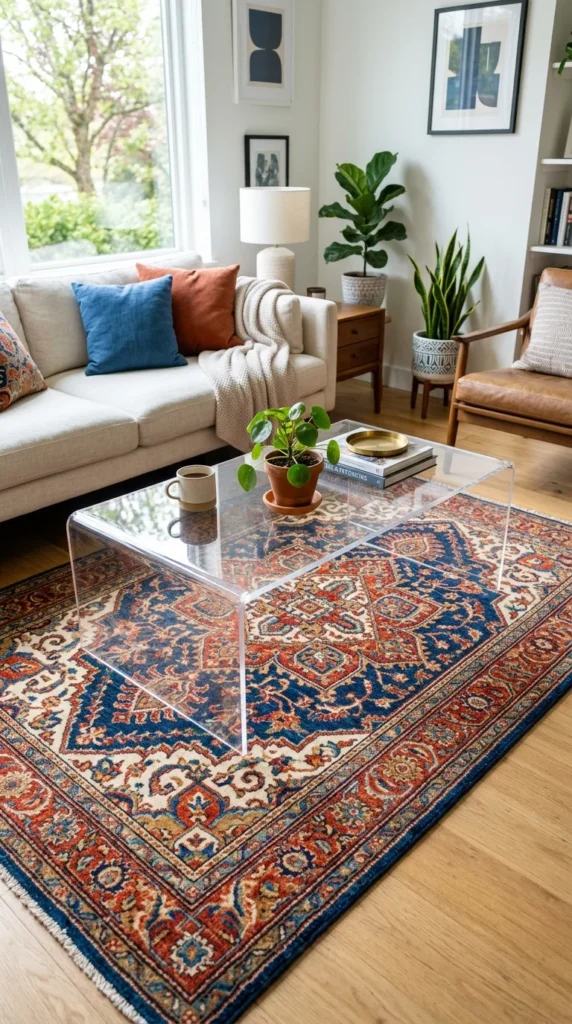
“Now you see it, now you don’t.” Using furniture made of transparent materials like glass, acrylic, or Lucite is a brilliant way to add functionality without adding visual bulk. An acrylic coffee table or “ghost” chairs provide the necessary surfaces for a living room but take up zero “visual square footage.”
Because the eye can see right through these pieces to the walls and floors beyond, the room feels much less crowded. This is particularly effective in very narrow living rooms where a solid wooden coffee table would create a physical and visual barricade. Transparent pieces add a modern, chic vibe while allowing the room’s color palette and architectural details to remain the focal point.
7. Scale Adjustment
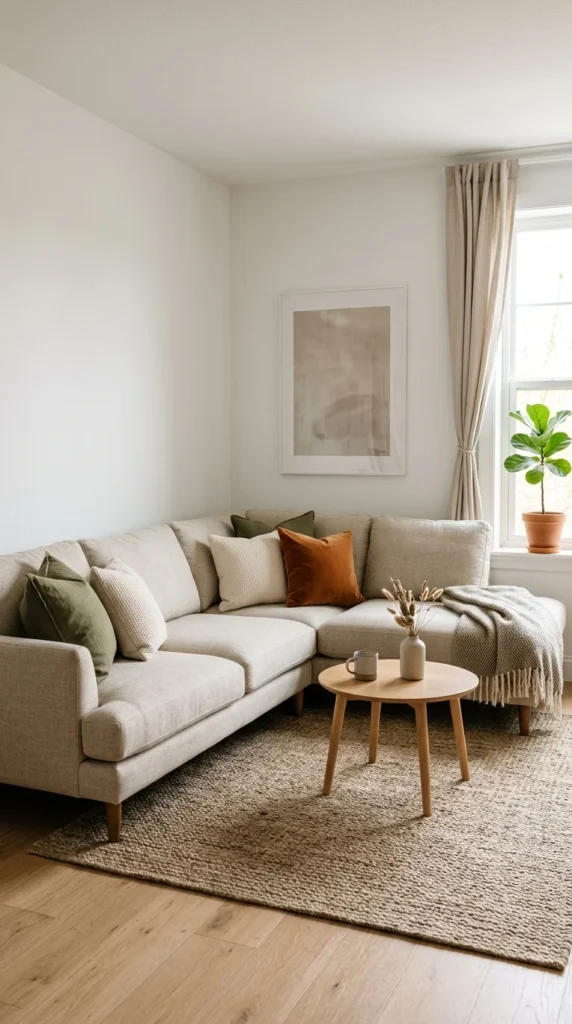
It sounds counterintuitive, but sometimes one large piece of furniture is better than several small ones. A room filled with many small chairs, tables, and stools can look “bitsy” and cluttered, which actually makes the space feel smaller and more chaotic.
Instead, try using a single, properly scaled sectional or a large sofa. A large piece that fits the proportions of the room can anchor the space and provide more seating than a collection of smaller items. By reducing the number of individual pieces, you reduce the “visual noise” in the room. This creates a cleaner, more streamlined look that feels intentional and spacious rather than cramped and makeshift.
8. Oversized Rugs
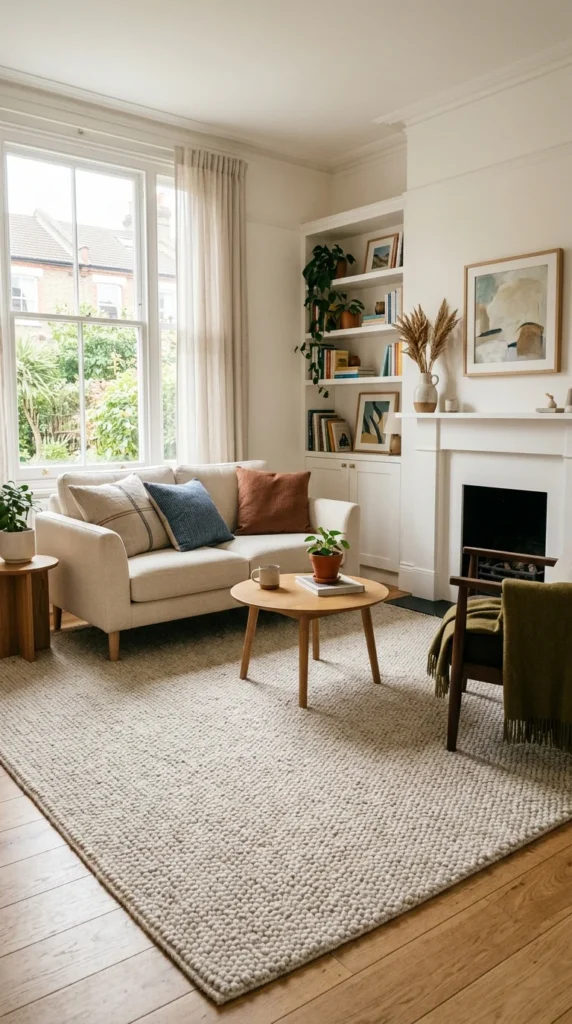
The size of your rug can dictate how large your room feels. A common mistake is choosing a rug that is too small—often referred to as a “floating island” rug—which sits in the middle of the floor with no furniture touching it. This chops up the floor space and makes the room look disjointed.
To make a small living room feel larger, choose an oversized rug that extends under the front legs of all your seating pieces (or even better, covers most of the floor, leaving only a small border of wood or tile). A large, unified rug draws the eye out to the edges of the room, creating a cohesive “zone” that feels expansive. Opt for light colors or subtle patterns to keep the floor from feeling too heavy.
9. Corner Utilization
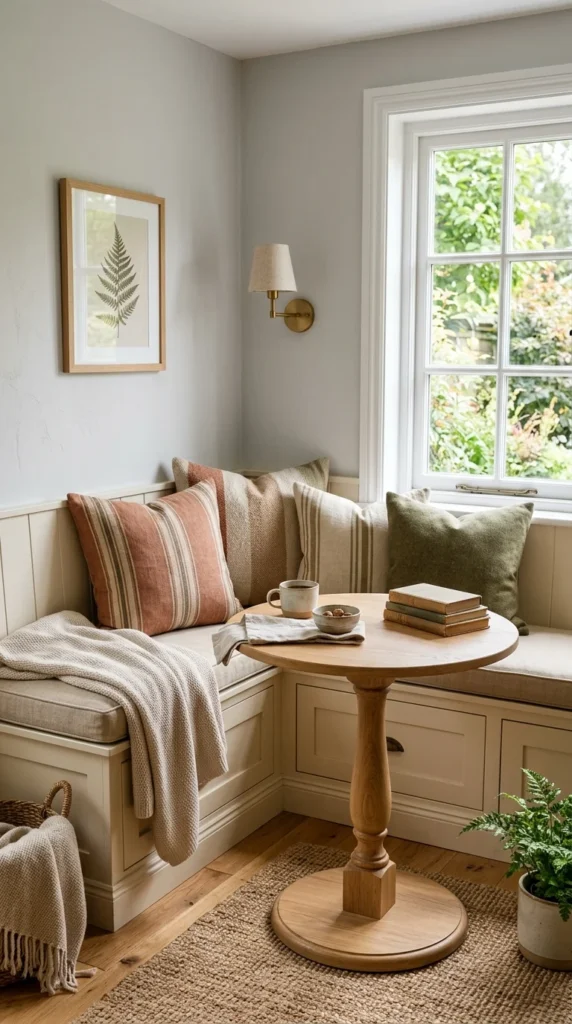
Corners are often the most underutilized areas in a small home. By ignoring them, you lose valuable real estate that could enhance the layout. Designing into the corners can actually open up the center of the room.
Consider a corner-hugging L-shaped sofa or building a custom banquette. Alternatively, a corner can be turned into a dedicated zone, such as a small reading nook with a single armchair and a tall lamp, or a compact home office with a corner desk. By pushing the “activity” of the room into the corners, you create a larger, unobstructed central area that allows for better movement and a feeling of freedom within the space.