
Architecture is often a game of angles. For decades, modern construction has leaned heavily on the efficiency of the right angle—sharp corners, rectangular windows, and boxy rooms. While functional, this reliance on linear geometry can sometimes leave a home feeling sterile or mass-produced. Enter the arch: an ancient architectural element that has seen a massive resurgence in contemporary interior design.
Arches break the monotony of straight lines, introducing an organic, sculptural quality that mimics the curves found in nature. Whether you are embarking on a full-scale renovation or looking for ways to add character to a cookie-cutter space, integrating arched doorways is one of the most effective ways to signal “custom design.” Here are eight ways to use arched doorways to elevate your home’s aesthetic.
1. Entryway Transition
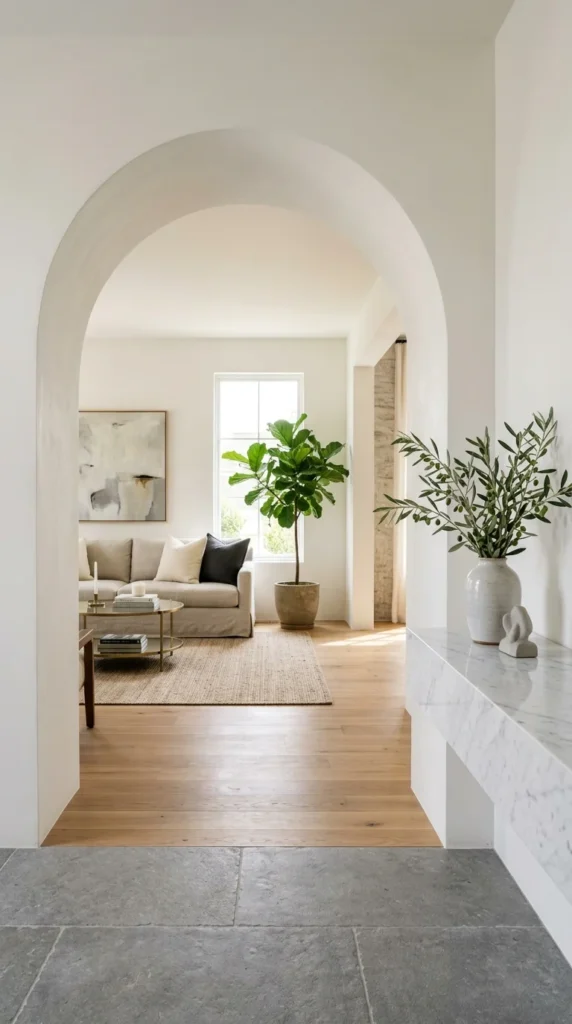
The entryway sets the psychological tone for the entire home. When a guest walks through your front door, the first interior transition they encounter should feel intentional. Replacing a standard rectangular header with a wide, soft arch creates a “portal” effect. This doesn’t just move people from point A to point B; it invites them into a new experience.
A seamless plaster arch in the entryway creates a sense of flow and continuity. By removing the traditional casing or trim, the arch feels like a structural carving rather than an additive piece of carpentry. This “monolithic” look is a hallmark of high-end custom homes, bridging the gap between Mediterranean warmth and modern minimalism.
2. Recessed Nooks
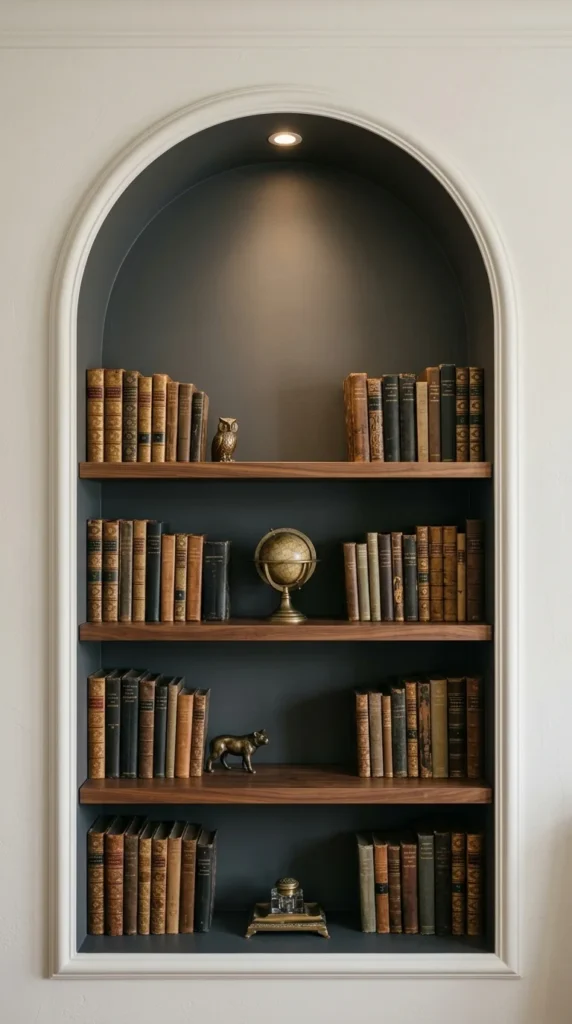
Not every arch needs to be a functional doorway for foot traffic. One of the most effective ways to use this silhouette is through recessed wall nooks or “alcoves.” These custom-built features serve as architectural jewelry for a room, providing a dedicated space for styling and storage that feels permanent rather than furniture-based.
In a dining room, a pair of symmetrical arched niches can house a dry bar or display fine china. In a living room, they can flank a fireplace to create a sense of balance. The key to making these feel truly custom is the depth; a deep-set arch suggests thick, substantial walls, which is a luxury trait often found in historic European villas or adobe-style estates.
3. Kitchen Portals
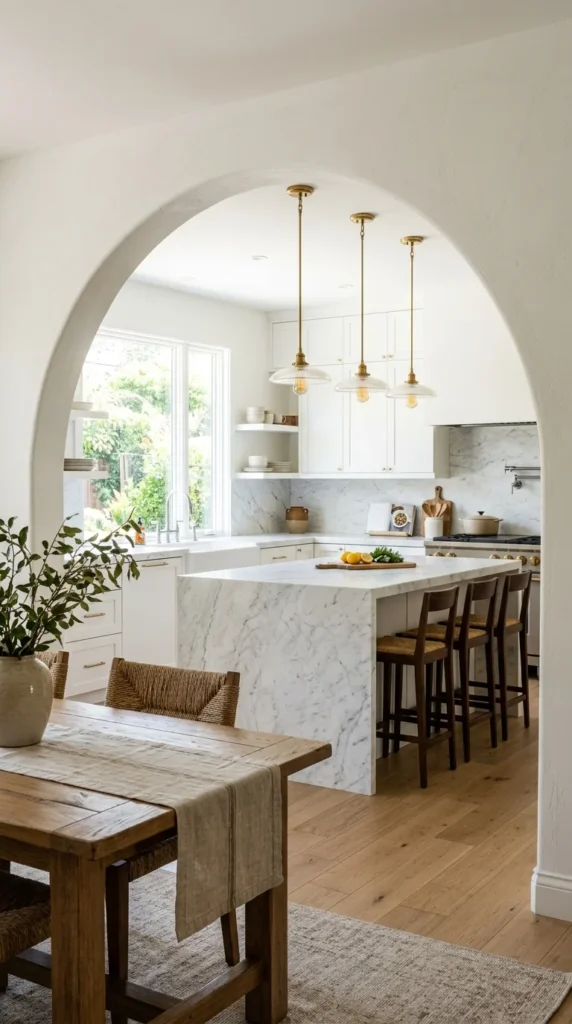
The kitchen is often the busiest room in the house, and in many modern floor plans, it is completely open to the living area. While “open concept” is popular, it can sometimes feel cavernous and undefined. An arched portal between the kitchen and the dining or living area provides the perfect middle ground.
By framing the view into the kitchen with an arch, you create a visual boundary without sacrificing the airy feel of an open plan. It acts as a picture frame, highlighting the cabinetry and backsplash as a focal point. This is also an excellent opportunity to experiment with “softening” the hard surfaces—stone, metal, and wood—that typically dominate kitchen design.
4. Bathroom Enclosures
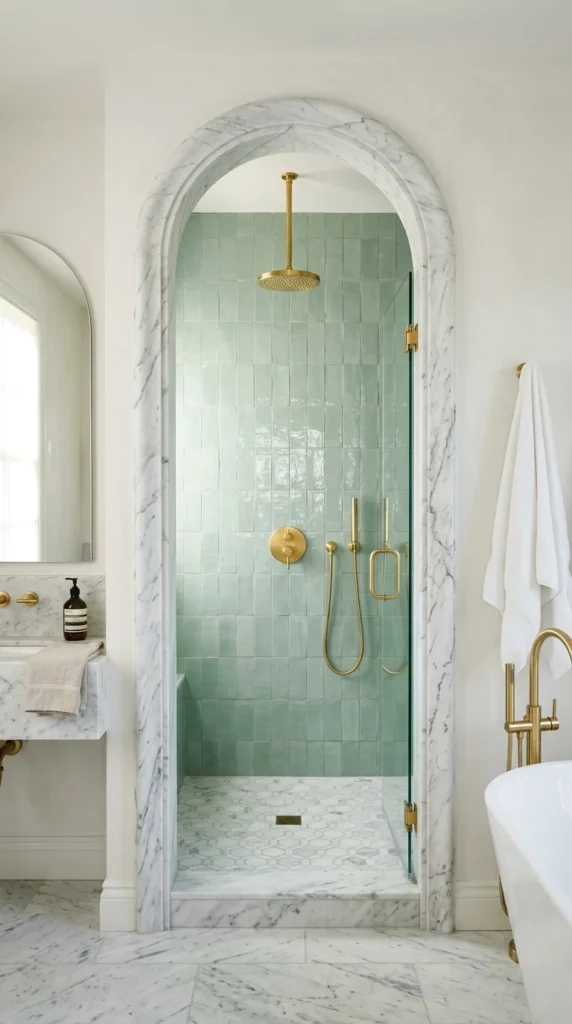
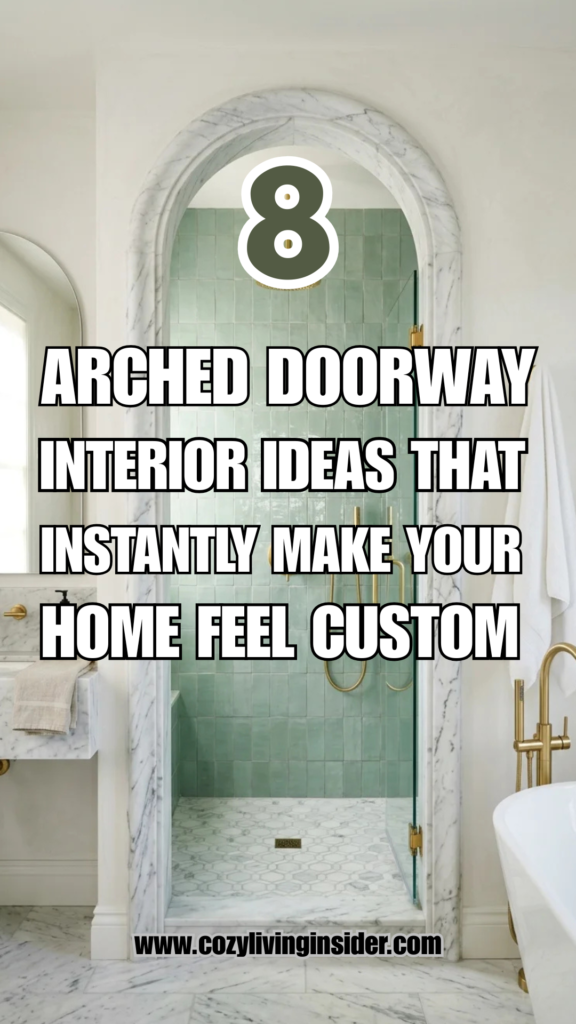
The bathroom is a space for ritual and relaxation, making it the perfect candidate for the “sanctuary” aesthetic that arches provide. Using an arch to frame a walk-in shower or a freestanding soaking tub elevates the room from a utilitarian space to a spa-like retreat.
An arched shower entry eliminates the need for bulky glass doors or metal frames, allowing for a “wet room” feel that is both sophisticated and easy to maintain. When paired with high-quality materials like marble or handcrafted tiles, the arch emphasizes the height of the ceiling and adds a layer of architectural intrigue that standard bathrooms lack.
5. Paired Openings
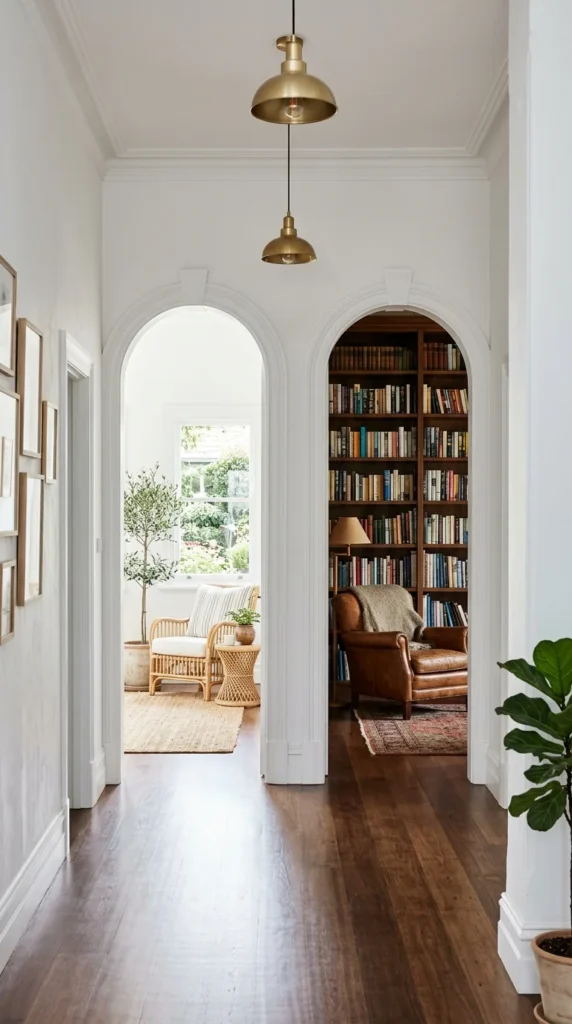
Symmetry is a fundamental principle of classic design, and nothing communicates “custom architecture” quite like paired arched openings. This technique is particularly effective in long hallways or as a transition between a primary bedroom and a walk-in closet or ensuite.
By doubling the arches, you create a sense of rhythm and repetition. This draws the eye upward and forward, making the space feel more expansive. This approach works best in homes with high ceilings, as it allows the arches to stand tall and command attention. It creates a “gallery” feel that turns a simple transition into a design statement.
6. Arched Fenestration
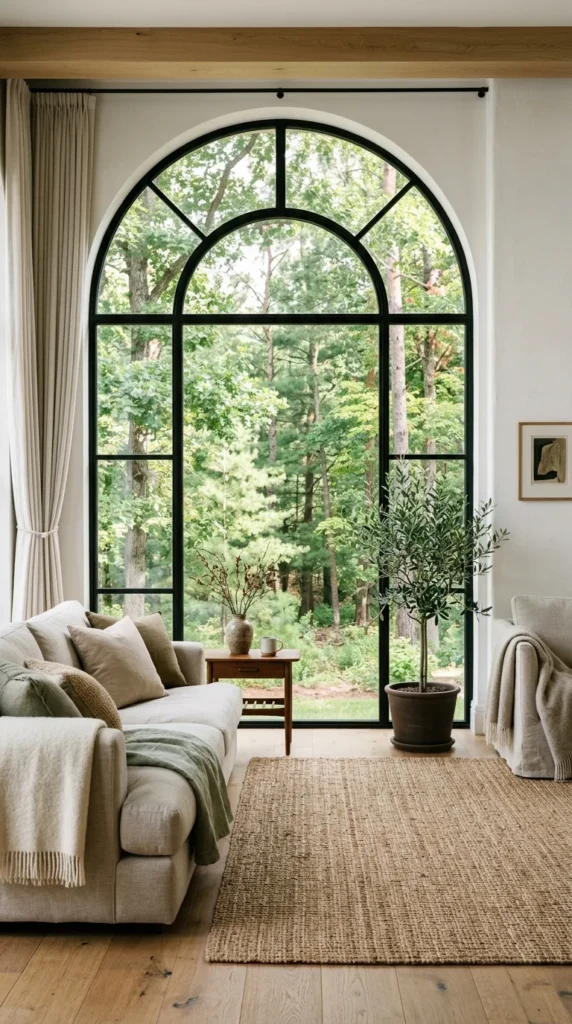
While we often focus on interior doorways, arched windows (fenestration) play a massive role in the interior experience of a home. An arched window softens the incoming light and frames the outdoor view in a way that feels intentional and artistic.
If you are building or doing a major renovation, replacing standard windows with arched versions can completely transform the facade and the interior mood. Inside, the curved header of the window provides a beautiful contrast to the horizontal lines of furniture. Even if the window itself is fixed, the silhouette adds a layer of “old-world” charm that grounds a modern home in history.
7. Painted Outlines
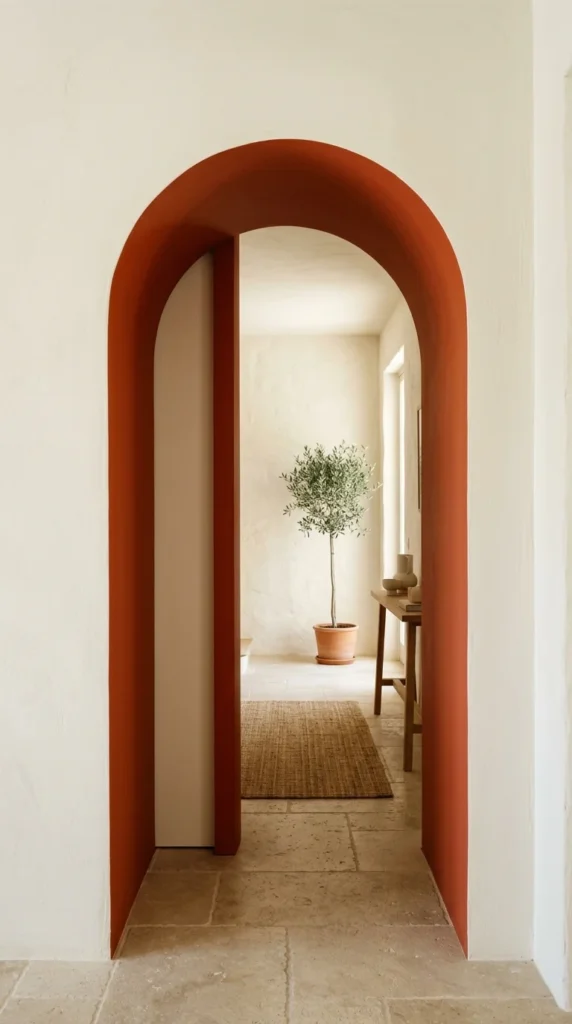
If you have existing arches and want to make them pop, or if you are looking for a way to modernize the look, consider using color. Painting the interior “return” of an arch (the flat surface inside the curve) in a contrasting tone is a bold move that defines the space.
This technique treats the arch as a piece of art. For a subtle look, choose a color just one or two shades darker than your wall color. For a high-contrast, modern look, use black, navy, or a deep earthy tone. This draws the eye to the craftsmanship of the curve and adds depth to the room without requiring expensive structural changes.
8. Sequential Arcades
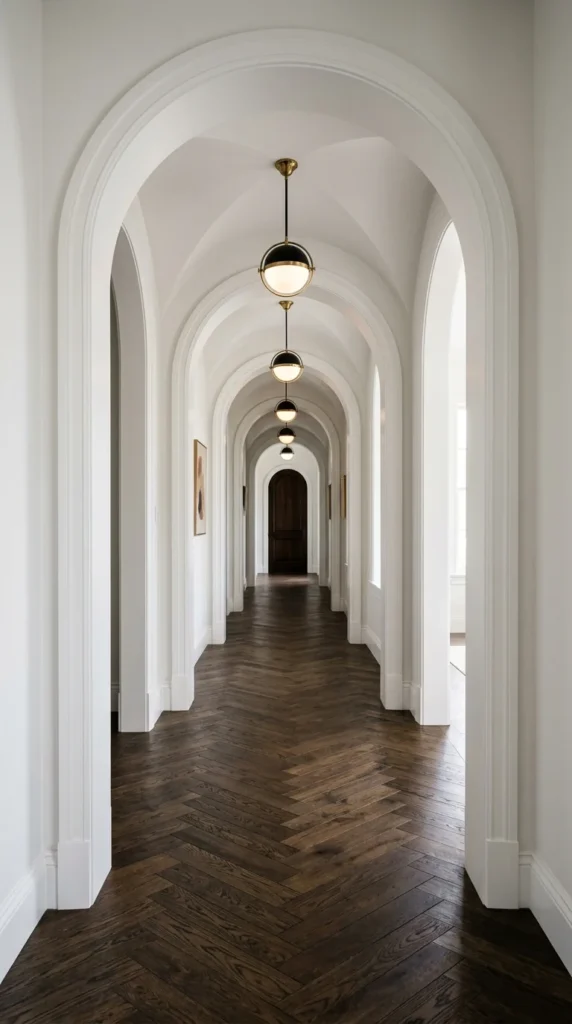
The “arcade”—a series of arches supported by columns or piers—is one of the most iconic elements of classical architecture. Bringing this concept indoors creates a breathtaking sense of perspective. It is most commonly used in long hallways or to separate a dining room from a main circulation path.
A sequential arcade creates a journey through the home. As you walk through the series of arches, the view shifts and evolves, providing a sense of discovery. This is the ultimate “custom” feature, as it requires precise planning and execution. It moves the home away from being a collection of rooms and toward being a cohesive architectural masterpiece.