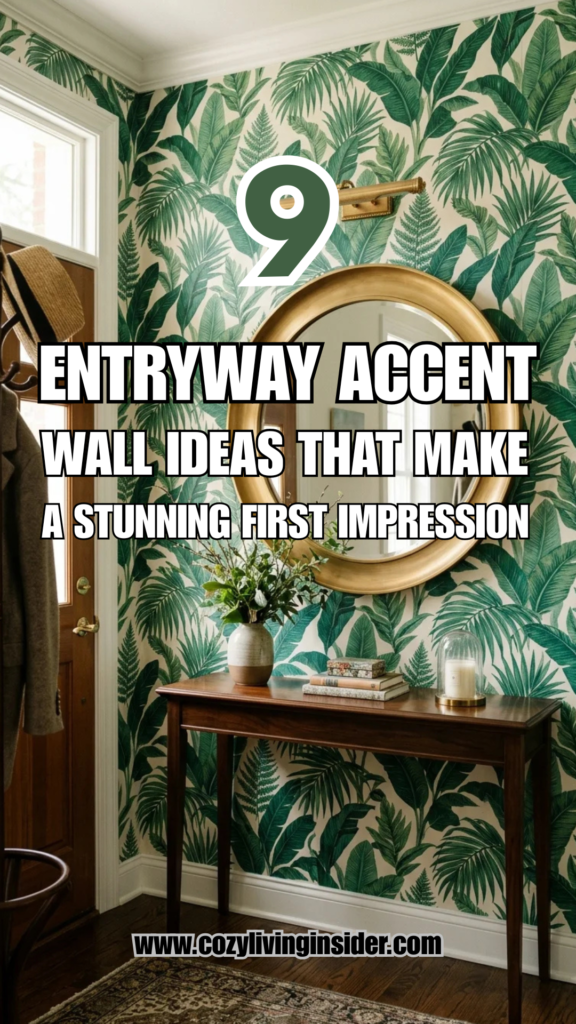

The entryway serves as the handshake of your home. It is the first space guests encounter and the last thing you see before heading out into the world. While functionality—storage for keys, coats, and shoes—is paramount, the aesthetic impact of this transitional space should never be an afterthought. An accent wall in the entryway is one of the most effective ways to define the home’s character and create an immediate sense of style.
Whether you are working with a grand foyer or a narrow hallway, a well-executed accent wall can provide depth, texture, and a focal point that anchors the entire room. Below, we explore nine sophisticated entryway accent wall ideas to transform your home’s entrance into a breathtaking introduction.
1. Wood Paneling
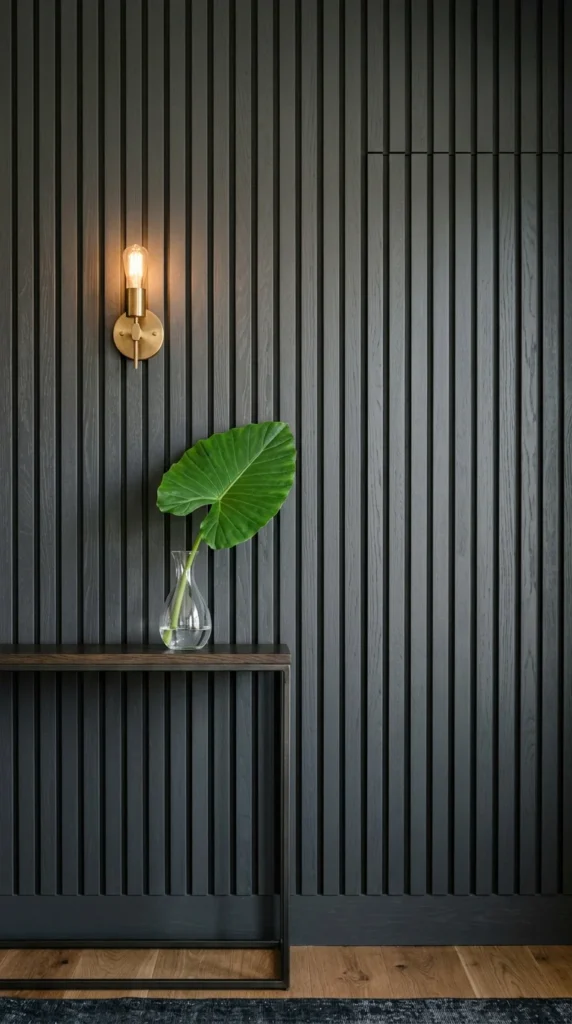
Wood paneling has evolved far beyond the dated basements of the 1970s. Modern applications, such as vertical slats, shiplap, or traditional board and batten, offer a tactile quality that paint alone cannot achieve. Vertical slats, in particular, are a favorite in contemporary and Scandinavian design, as they draw the eye upward and create a sense of height.
Choosing a dark, moody stain like walnut or charcoal can add an air of mystery and luxury, while light oak or white-washed pine keeps the space feeling airy and organic. The natural grain of the wood introduces an element of “biophilic design,” connecting the indoors with the natural world and creating a calming atmosphere the moment you step through the door.
2. Bold Paint
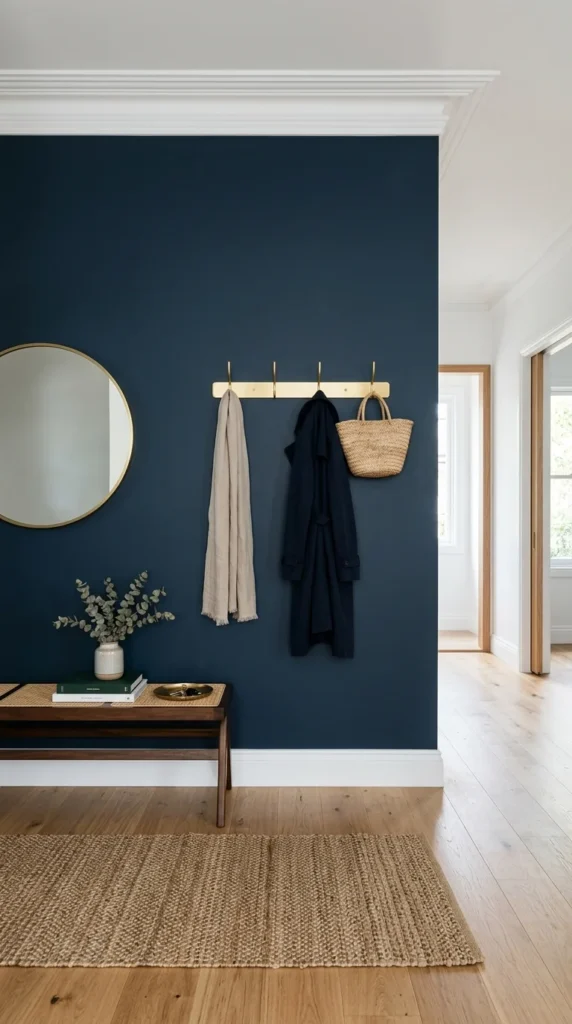
Paint remains the most accessible and cost-effective way to make a statement. However, for an entryway accent wall to truly resonate, one must be willing to embrace saturated, high-contrast colors. Deep emerald greens, navy blues, or even a sophisticated terracotta can provide a “jewel box” effect, especially in smaller entryways.
When using a bold color, consider the finish. A matte finish offers a velvety, modern look that hides wall imperfections, while a high-gloss finish can reflect light beautifully, making a dim hallway feel more dynamic. To keep the space from feeling overwhelmed, balance the bold wall with neutral elements like a light wood bench or a minimalist white pedestal.
3. Graphic Wallpaper
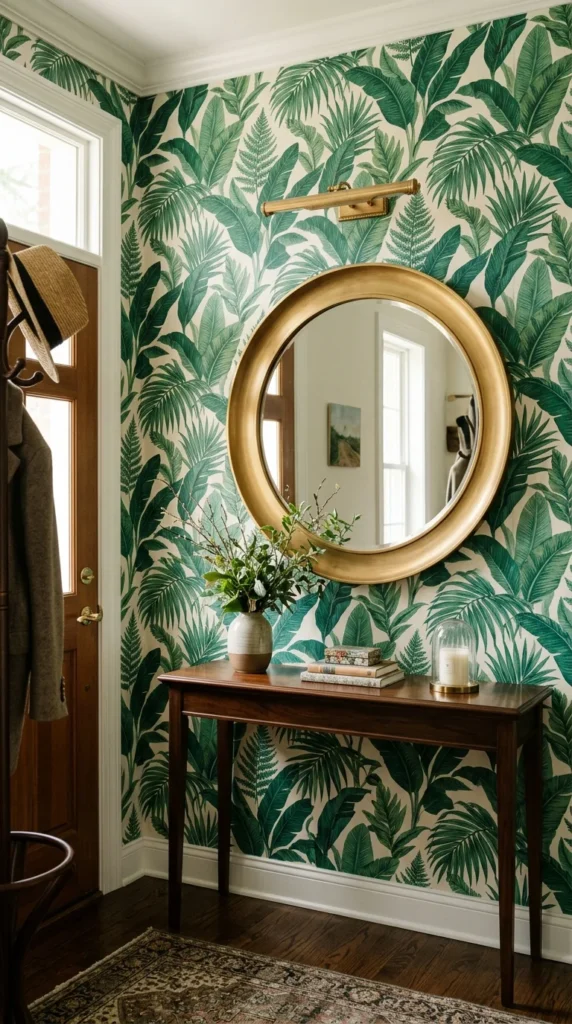
Wallpaper has seen a massive resurgence in interior design, and the entryway is the perfect place to experiment with daring patterns. Because entryways are usually transitional zones where people don’t linger for long periods, you can afford to be more adventurous with scale and color without the risk of the pattern becoming tiring.
Large-scale florals, geometric motifs, or even landscape murals can turn a flat wall into a piece of art. For those who prefer a more subtle approach, grasscloth wallpaper provides an incredible amount of texture and a soft, organic sheen that feels both high-end and inviting. Ensure the wallpaper coordinates with the color palette of the adjacent rooms to create a cohesive flow throughout the home.
4. Gallery Wall
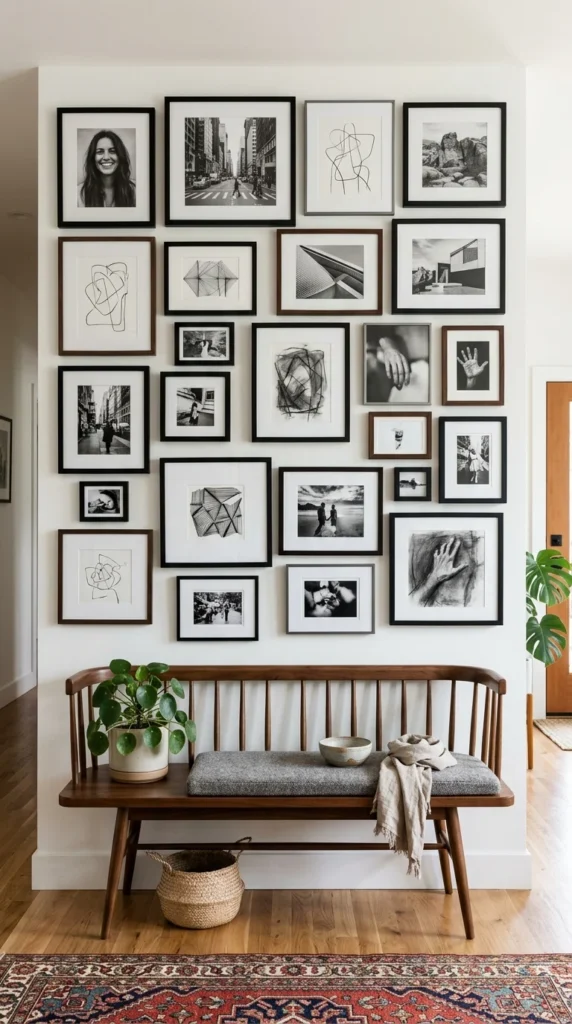
A gallery wall is perhaps the most personal way to design an entryway. It tells the story of the inhabitants through photography, art, and mementos. To keep the look professional and curated rather than cluttered, stick to a consistent theme or color palette. For example, using identical frames with oversized white matting creates a clean, museum-like aesthetic.
Alternatively, an eclectic mix of vintage frames in different finishes can suit a bohemian or maximalist home. When planning a gallery wall, start by laying the frames on the floor to find the perfect arrangement before putting any nails in the wall. Focus on centering the arrangement at eye level to ensure it feels grounded and intentional.
5. Oversized Mirror
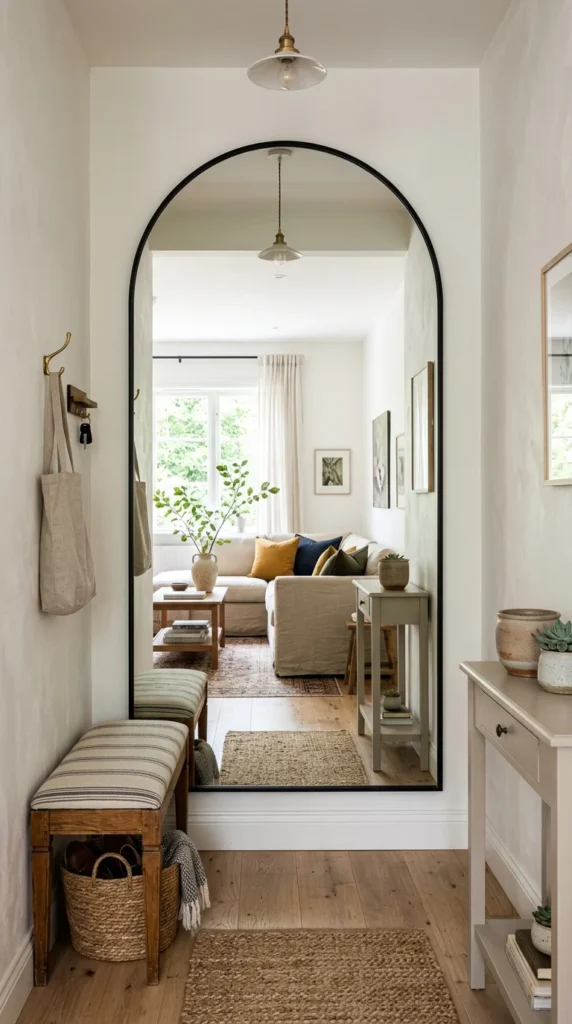
If your entryway is small or lacks natural light, an oversized mirror is the ultimate design hack. A mirror functions as a “window” that reflects light and the surrounding decor, instantly doubling the perceived size of the space.
Instead of a standard rectangular mirror, consider a massive round mirror or an arched “mantel” style mirror that leans against the wall for a relaxed, contemporary feel. The frame of the mirror itself serves as a decorative element—think blackened steel for an industrial look, or ornate gilded wood for a touch of traditional elegance. Beyond the aesthetics, it provides the practical benefit of a final “outfit check” before leaving the house.
6. Exposed Brick
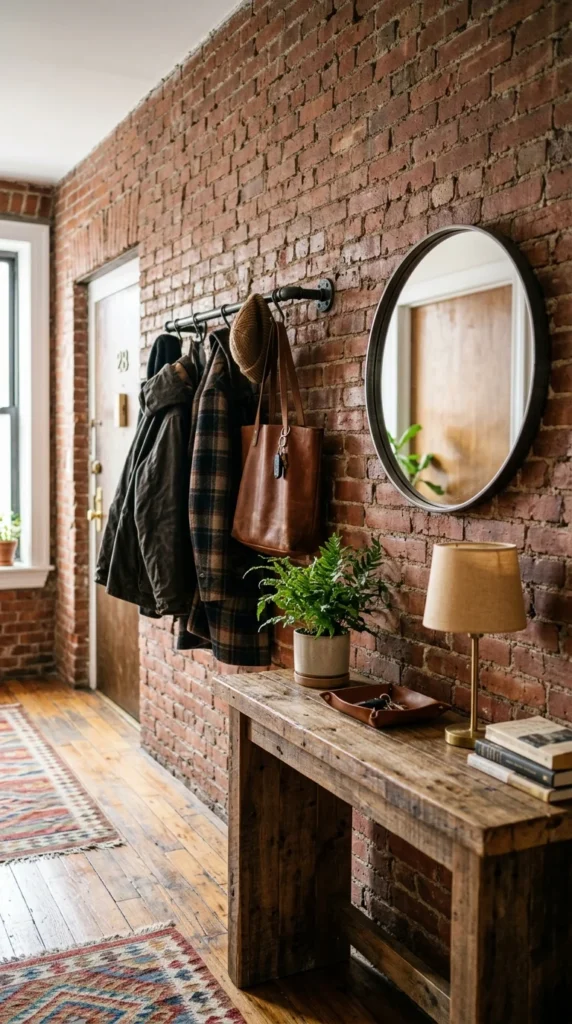
For homes with an industrial, rustic, or historical architectural bent, an exposed brick accent wall adds an unmatched level of character and “soul.” If you aren’t lucky enough to have original brick behind your drywall, high-quality brick veneers can provide an identical look with a fraction of the depth.
Exposed brick introduces a variety of earthy tones—reds, oranges, browns, and creams—which create a warm and grounded feeling. To keep the brick from looking too heavy, pair it with modern elements like sleek metal shelving, glass light fixtures, or a minimalist bench. The juxtaposition of the raw, rugged brick with polished modern furniture creates a sophisticated, “collected” look.
7. Integrated Storage
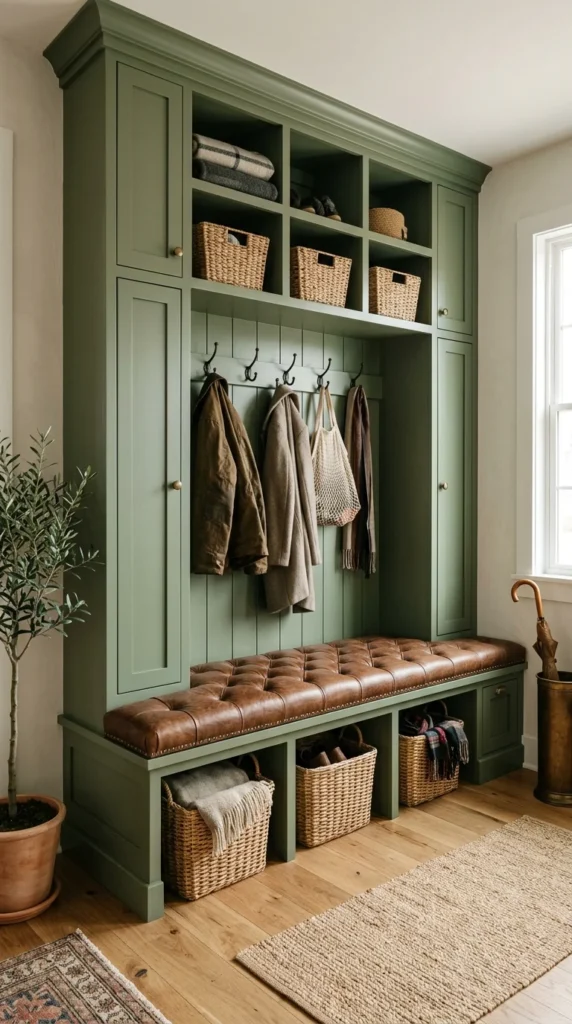
In many homes, the entryway must work hard. Combining an accent wall with integrated storage is the pinnacle of functional design. Custom millwork that includes a built-in bench, cubbies, and hooks can be painted in a contrasting color to the rest of the walls, turning a storage unit into a stunning architectural feature.
To elevate this look, consider adding a backsplash to the open areas of the built-in—perhaps using a contrasting wood grain, a subtle wallpaper, or even a different paint color. This adds layers of visual interest and prevents the cabinetry from looking like a flat block of wood. Integrated LED strip lighting under the shelves can also highlight the textures and provide a soft glow for those arriving home at night.
8. Statement Artwork
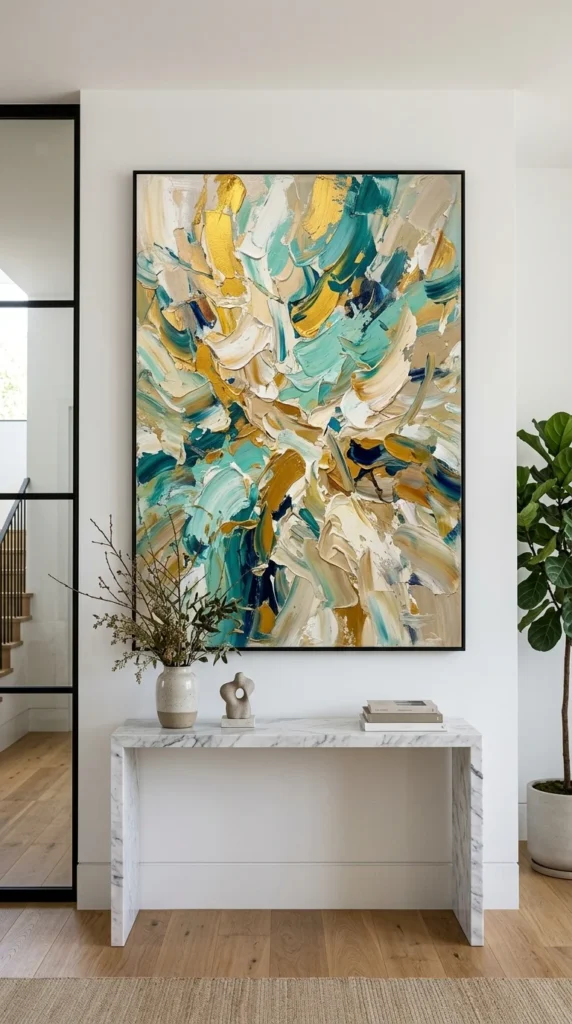
Sometimes, less is more. A single, large-scale piece of artwork can serve as an accent wall all on its own. This approach works best in minimalist or modern homes where the goal is to create a high-impact focal point without cluttering the space with various objects.
A massive canvas—whether it’s a bold abstract, a serene landscape, or a modern textile piece—commands attention and sets the mood for the home. When choosing art for the entryway, consider the “vibe” you want to project. Vibrant colors suggest energy and creativity, while muted tones and soft textures suggest peace and sanctuary. Pair the artwork with a simple console table and focused spotlighting to truly let the piece shine.
9. Dimensional Tile
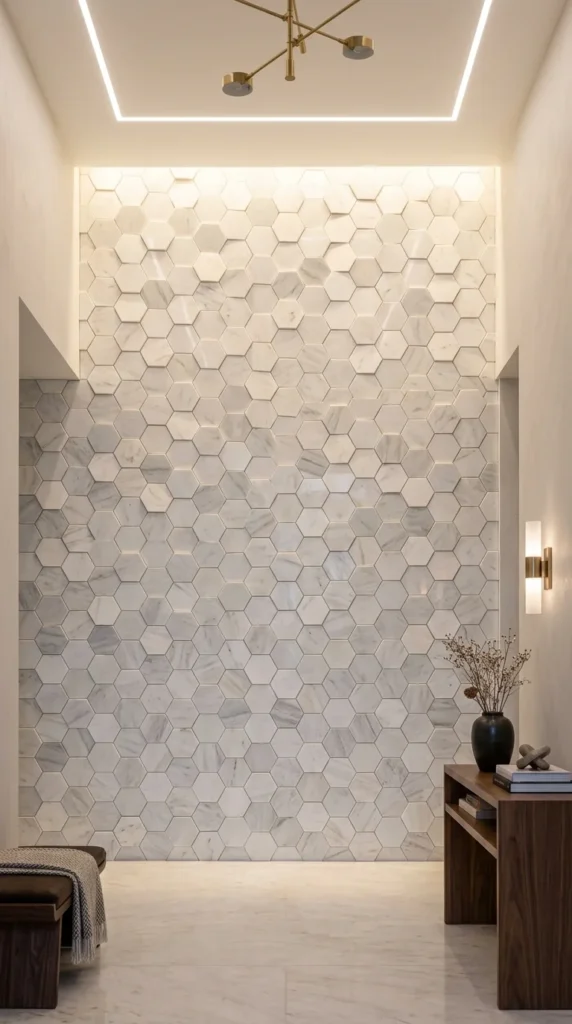
Tile is often reserved for kitchens and bathrooms, but dimensional or textured tile can create a breathtaking accent wall in a foyer. Materials like marble, slate, or even high-end porcelain with 3D patterns offer a level of permanence and luxury that is hard to replicate with other materials.
Geometric patterns, such as hexagons or chevrons, can add movement to a hallway. Because tile is incredibly durable, it is an excellent choice for high-traffic entryways where walls might get bumped by bags or bikes. When using tile on a feature wall, pay close attention to lighting; directional wall washers or sconces will cast shadows that emphasize the three-dimensional nature of the tiles, creating a dynamic look that changes throughout the day.