
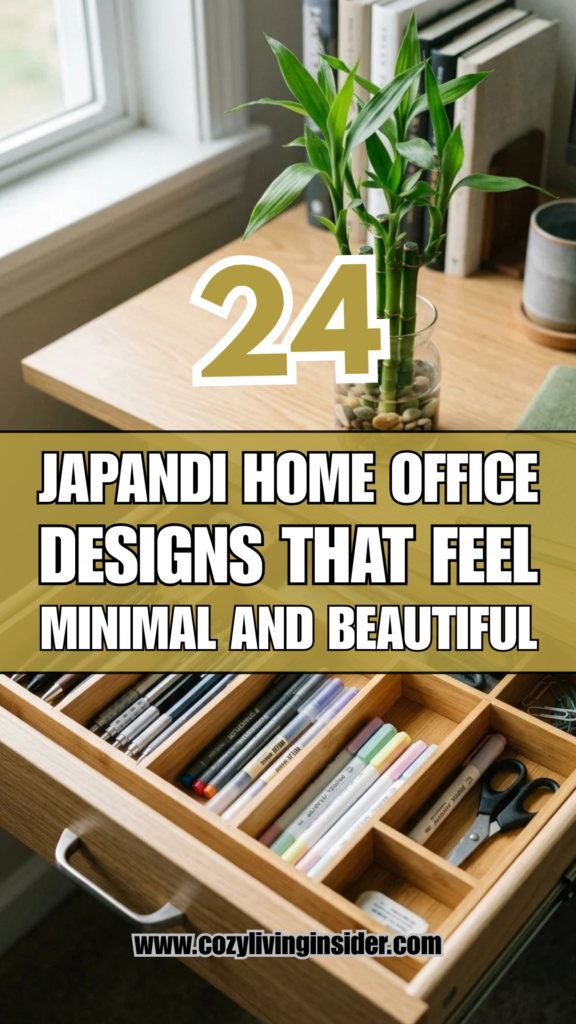

The Japandi design movement has taken the interior design world by storm, offering a perfect marriage between the rustic warmth of Scandinavian “Hygge” and the sleek, functional elegance of Japanese “Wabi-sabi.” When applied to a home office, this aesthetic creates a sanctuary of productivity—a space that feels both disciplined and deeply comforting.
A Japandi home office isn’t just about aesthetics; it is about intentionality. It prioritizes natural materials, a neutral color palette, and a clutter-free environment that allows the mind to focus. Below, we explore 24 design concepts that embody the essence of Japandi style, providing inspiration for a workspace that is as beautiful as it is functional.
1. Neutral Tones
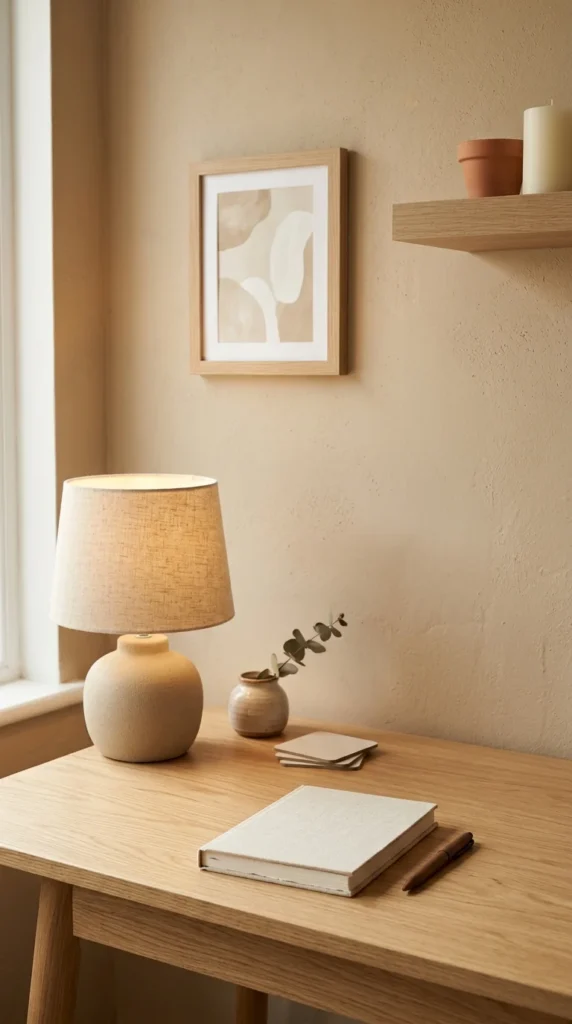
The foundation of any Japandi space is a palette of muted, earthy tones. Move away from stark whites and instead embrace shades of oatmeal, stone, sand, and taupe. These colors reflect natural light softly, reducing eye strain and creating a cohesive, tranquil backdrop that doesn’t distract from deep work.
2. Natural Wood
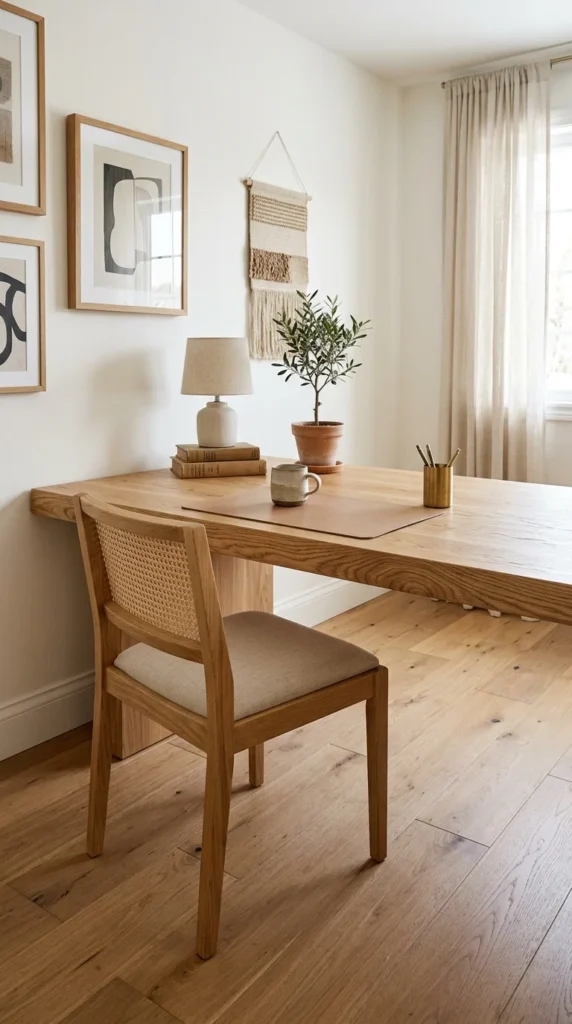
Wood is the soul of Japandi design. In a home office, using light-colored woods like oak, ash, or maple brings a sense of the outdoors inside. The focus should be on the quality of the material and the beauty of the natural grain, rather than ornate carvings or heavy stains.
3. Hidden Storage
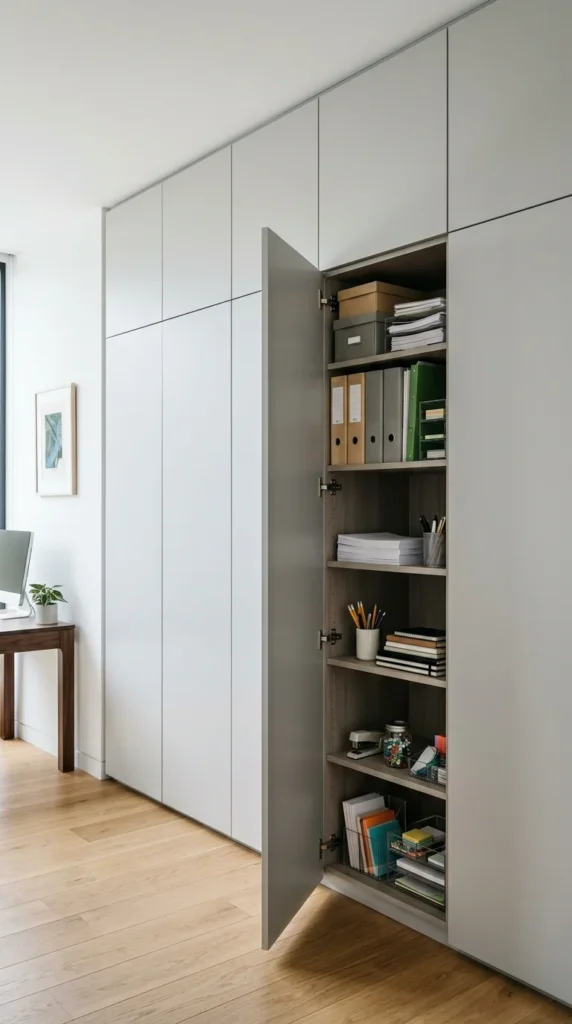
Clutter is the enemy of focus. Japandi offices utilize “hidden” storage—sleek, built-in cabinetry that blends into the walls. By removing visual noise like loose papers and tangled cables, the room feels larger and the mind feels clearer.
4. Slatted Panels
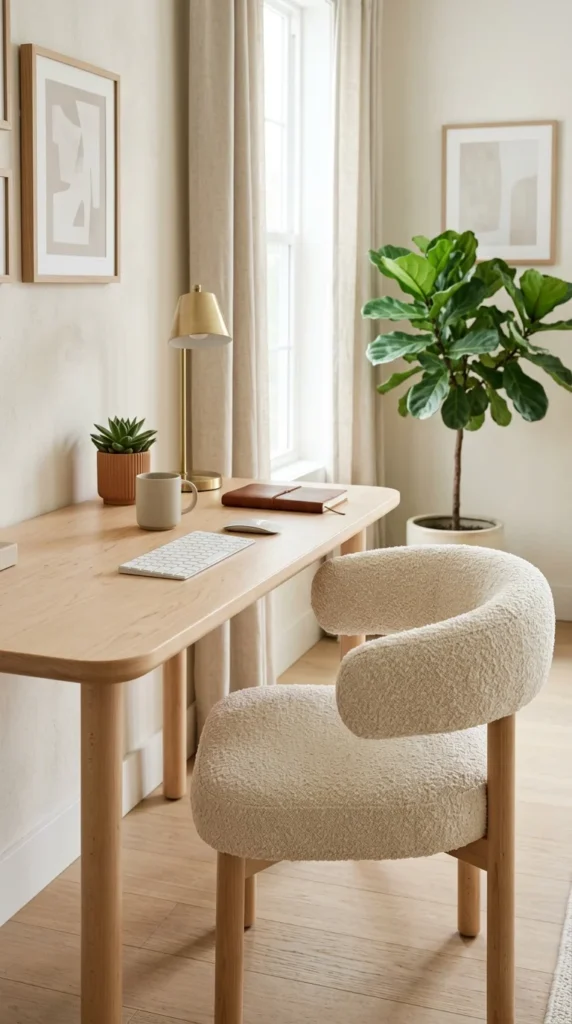
Drawing inspiration from traditional Japanese architecture, vertical wooden slats (or “koshi”) add texture and depth without overwhelming the space. They can be used as a feature wall behind the desk or as a room divider to separate the workspace from a living area.
5. Large Windows
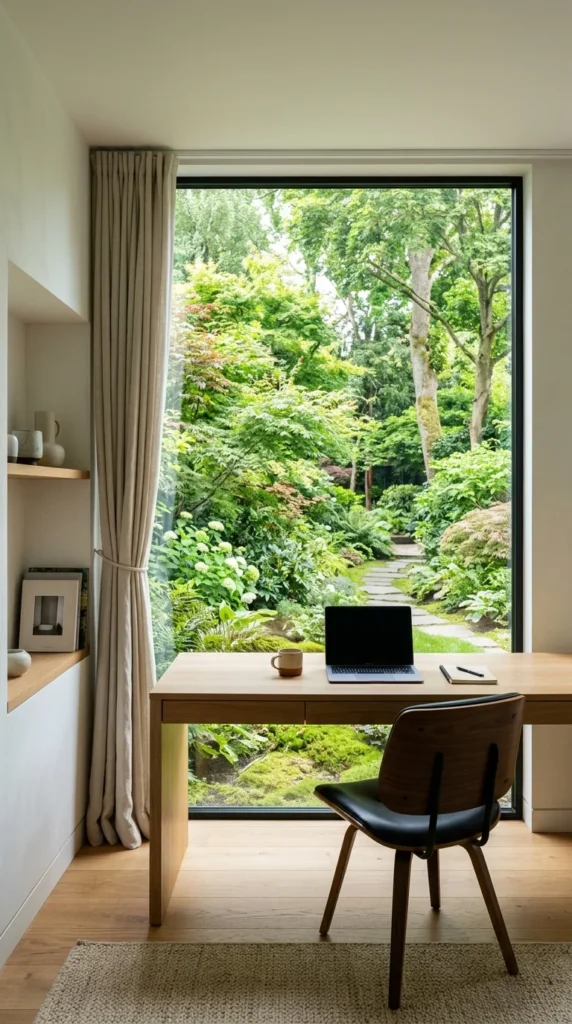
Lighting is a critical component of the Japandi philosophy. Maximizing natural light is essential. Positioning a desk near a large window not only provides the best light for working but also connects the inhabitant with the shifting rhythms of the day, a key element of the Zen lifestyle.
6. Statement Plants
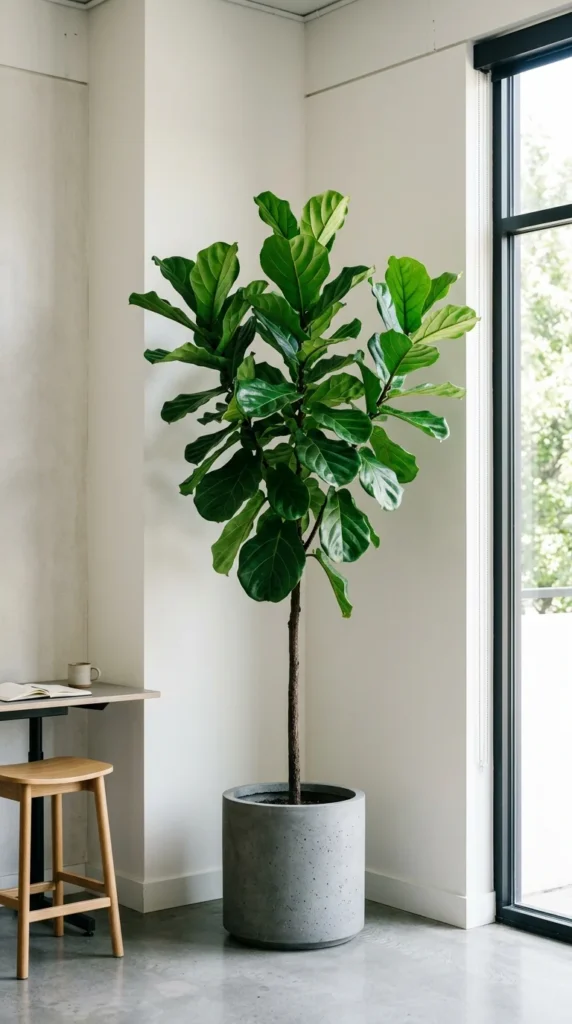
While Japandi is minimalist, it is never cold. A single, large architectural plant—like a Bonsai, a Dracaena, or a delicate Japanese Maple—brings life and organic shapes into the room. It acts as a living sculpture that purifies the air and provides a restful focal point.
7. Woven Textures
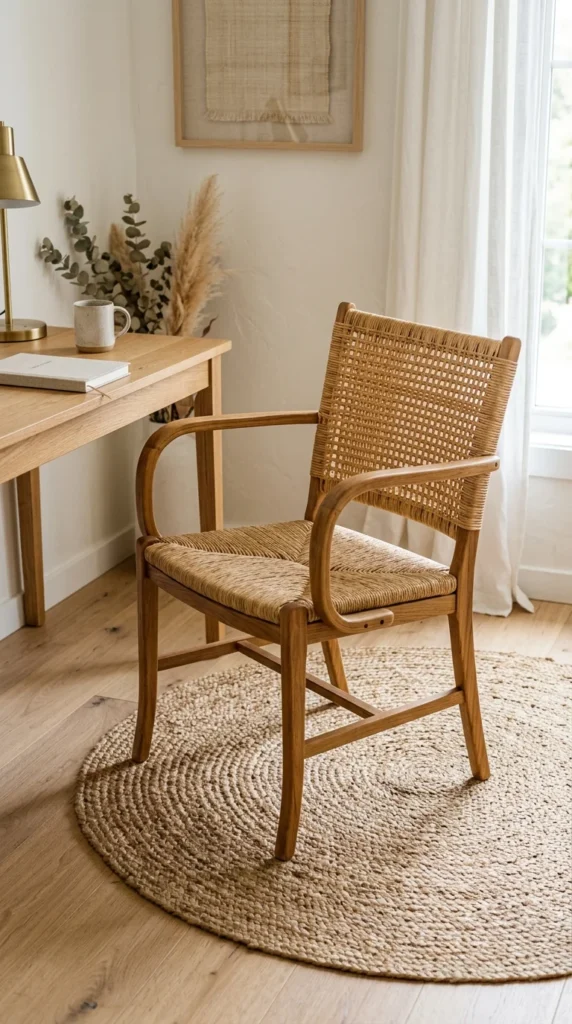
To prevent a minimal space from feeling flat, incorporate woven textures. Rattan, jute, and seagrass bring a “craftsman” feel to the office. Whether it’s a rug under the desk or a basket for discarded papers, these materials add a Scandinavian touch of coziness.
8. Curved Furniture
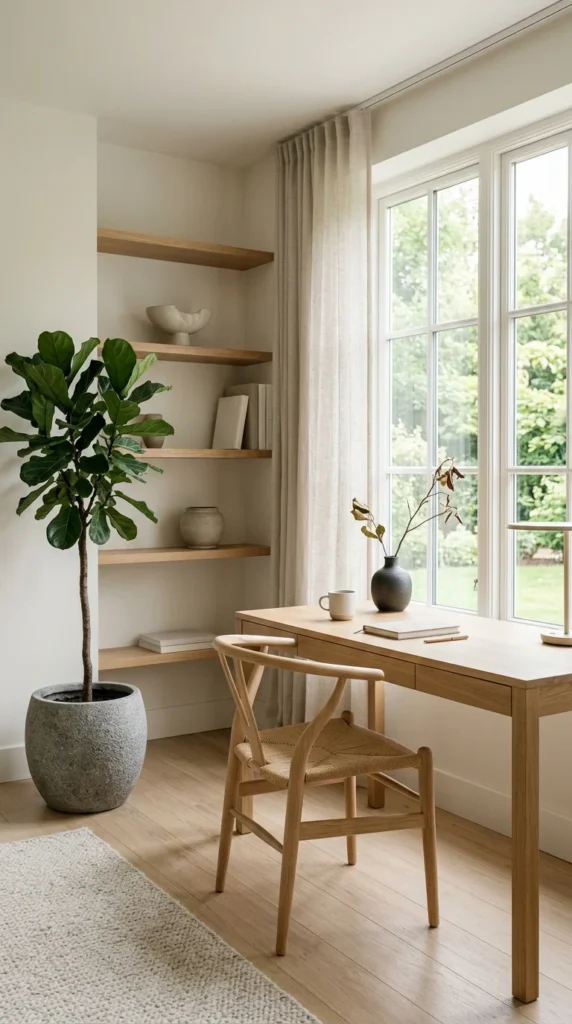
Japandi often softens the “hard” lines of modern minimalism with organic curves. Furniture with rounded edges feels more approachable and fluid, mimicking the shapes found in nature. A curved desk or an arched shelving unit can make the office feel more inviting.
9. Minimalist Lighting
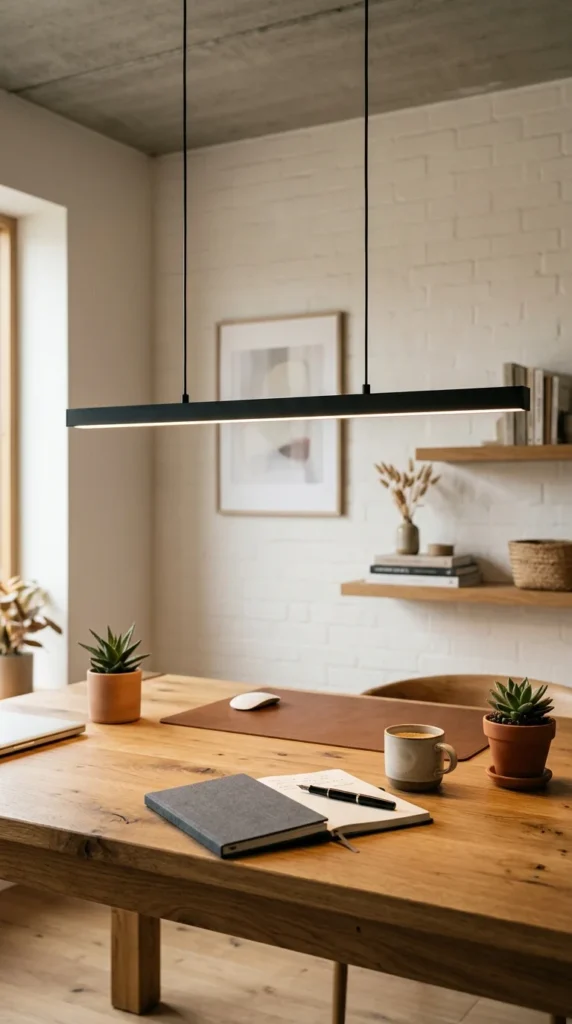
Lighting fixtures in a Japandi office should be functional yet sculptural. Think of a single pendant light with clean lines or a slim, matte-finished floor lamp. Avoid ornate chandeliers; the goal is a fixture that serves its purpose while maintaining a low visual profile.
10. Stone Accents
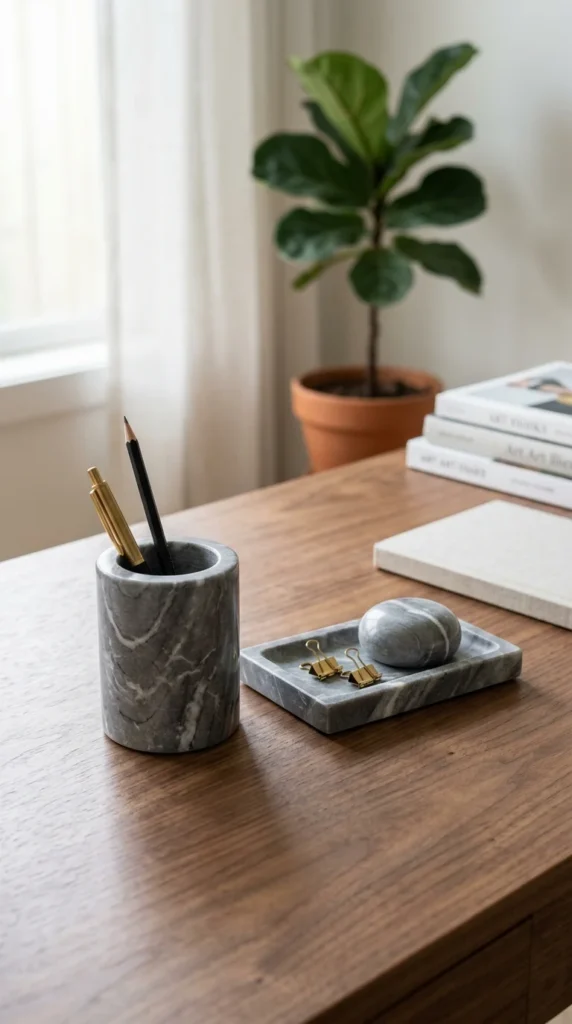
Introducing stone adds an element of “earthiness” and permanence. Whether it’s a marble desk organizer, a stone base for a lamp, or a slate coaster, these heavy, natural materials ground the lighter wooden elements of the room.
11. Paper Lanterns
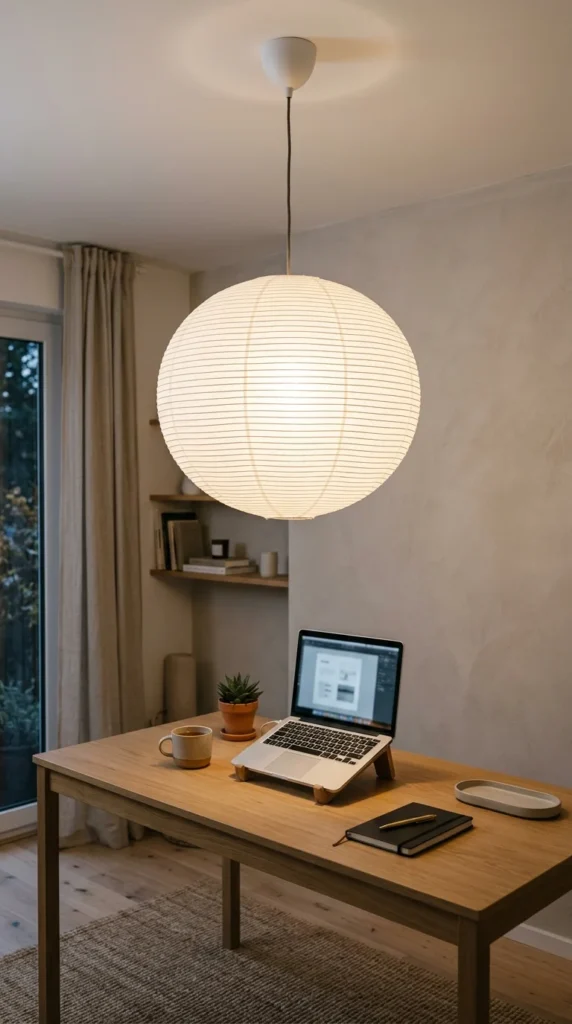
A nod to Japanese tradition, the paper lantern (or Akari style) provides soft, diffused light that is far more pleasant than harsh overhead LEDs. These lanterns act as weightless, ethereal clouds that soften the geometric lines of office furniture.
12. Tactile Fabrics
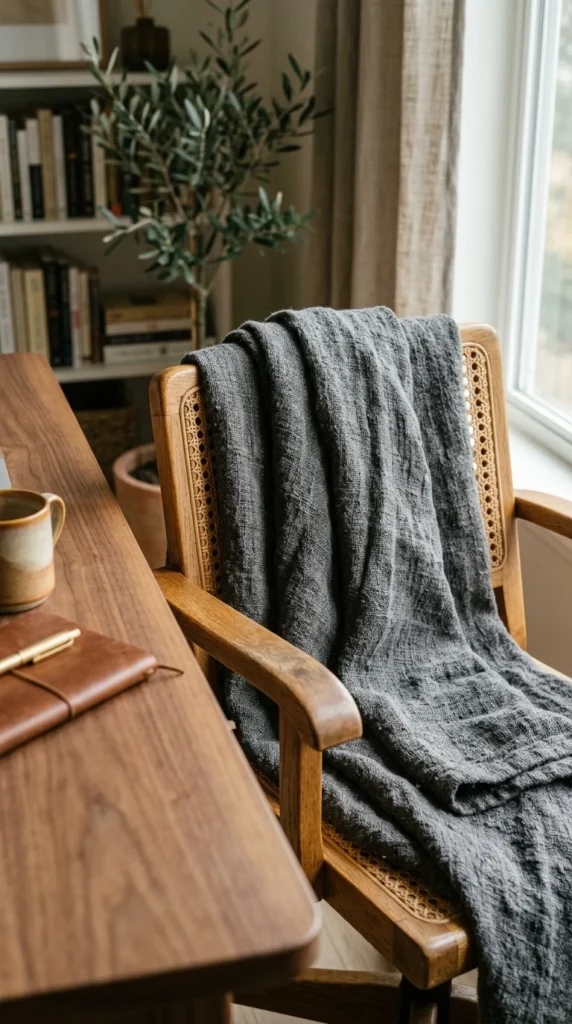
Incorporate high-quality, natural textiles like linen, wool, and cotton. A linen curtain or a wool throw draped over a chair adds the “Hygge” comfort necessary for long working hours, ensuring the space feels lived-in and loved.
13. Low Seating
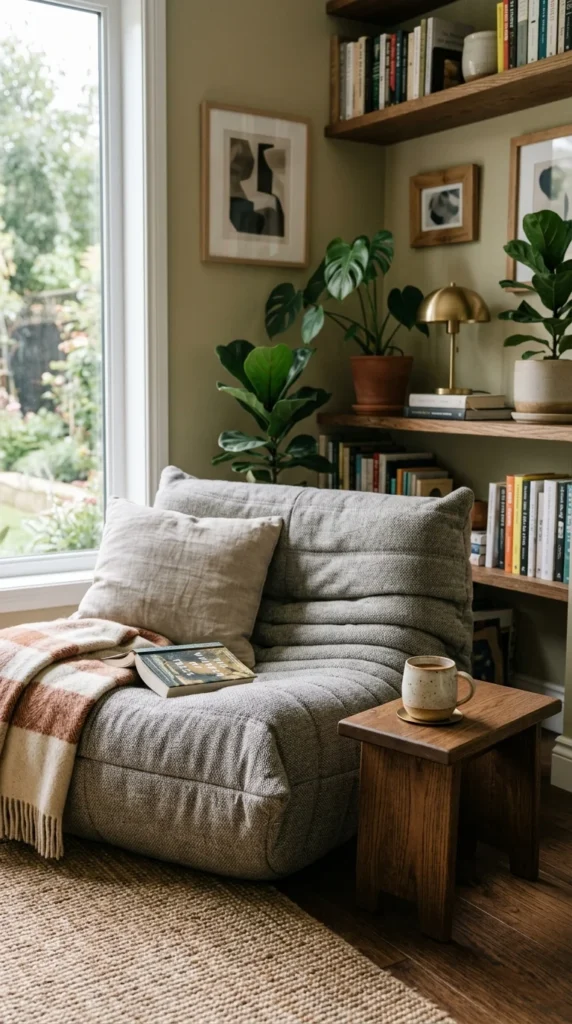
In true Japanese fashion, keeping the furniture low to the ground can make a ceiling feel higher and a room feel more expansive. A low-profile lounge chair in the corner of the office offers a perfect spot for reading or taking a break from the screen.
14. Floating Desks
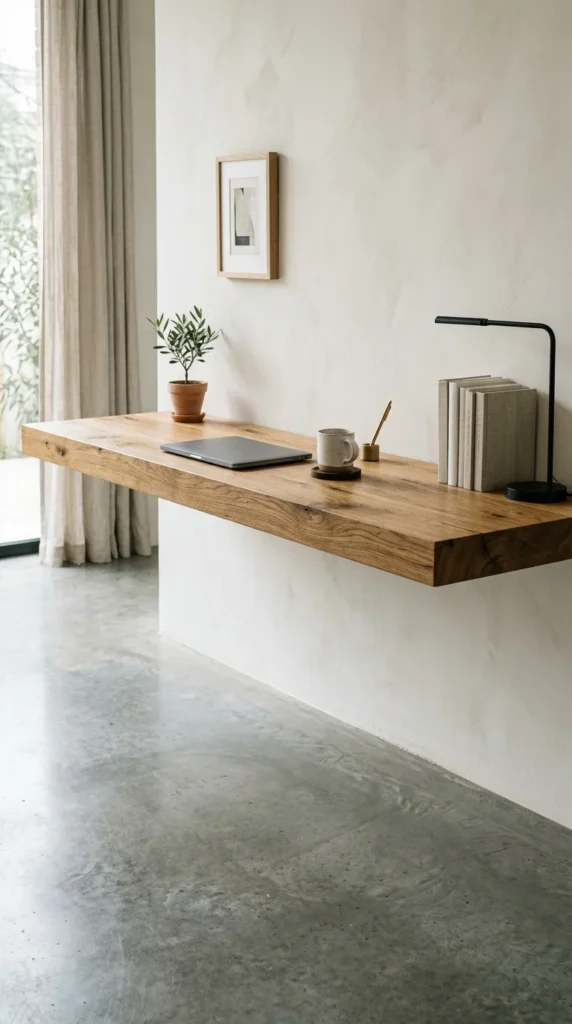
To maximize floor space and maintain a clean look, consider a floating desk. This wall-mounted solution is ideal for smaller rooms, as it keeps the floor visible, making the entire office feel more open and airy.
15. Shoji Screens
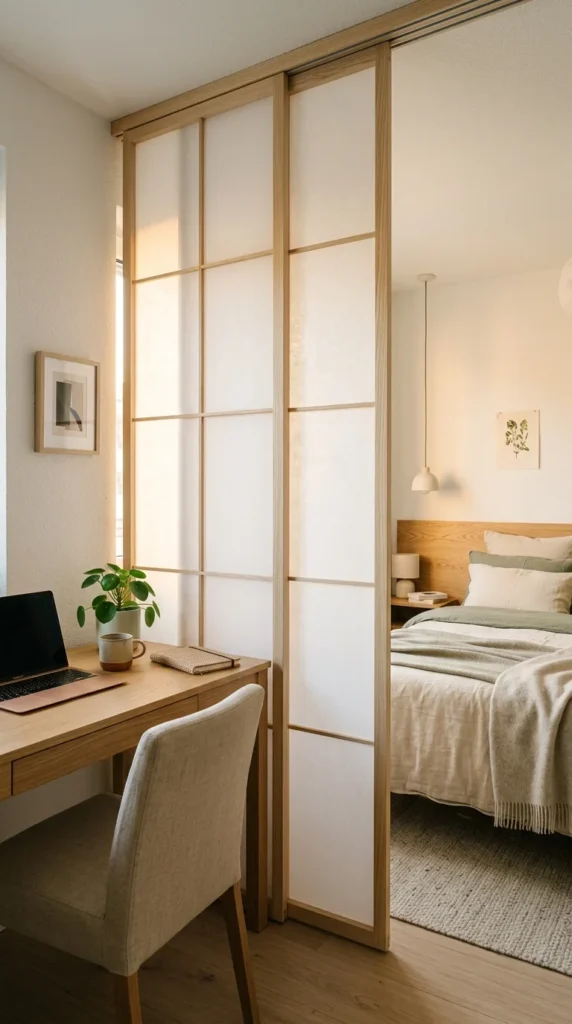
If your home office is part of a multi-purpose room, Shoji-inspired screens are a beautiful way to create a boundary. They provide privacy and a sense of “going to work” without the permanence or weight of a solid wall.
16. Zen Corners
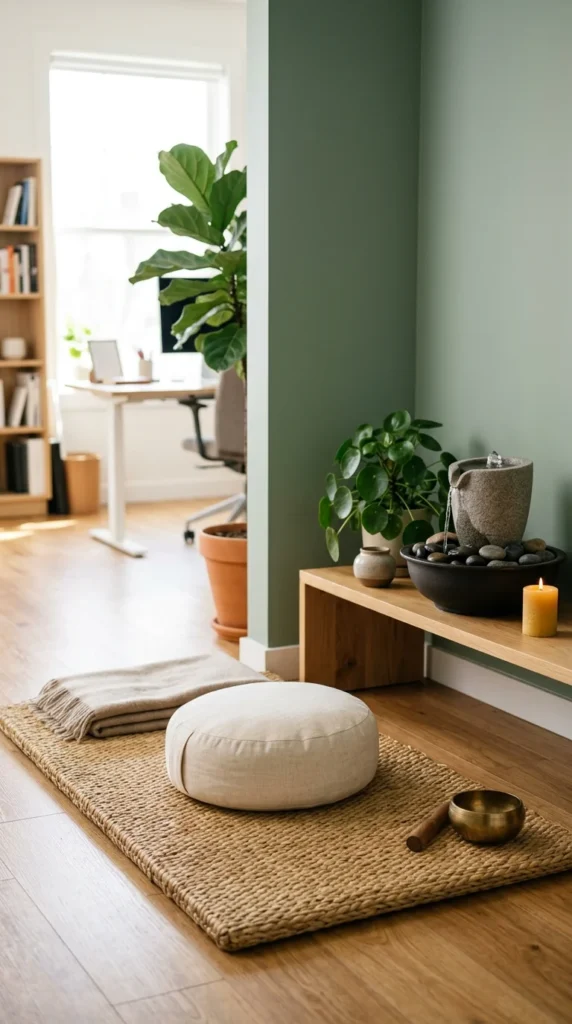
A Japandi office isn’t just for labor; it’s for well-being. Dedicating a small corner to mindfulness—perhaps with a meditation cushion or a simple incense burner—reminds you to breathe and reset throughout the workday.
17. Monochromatic Art
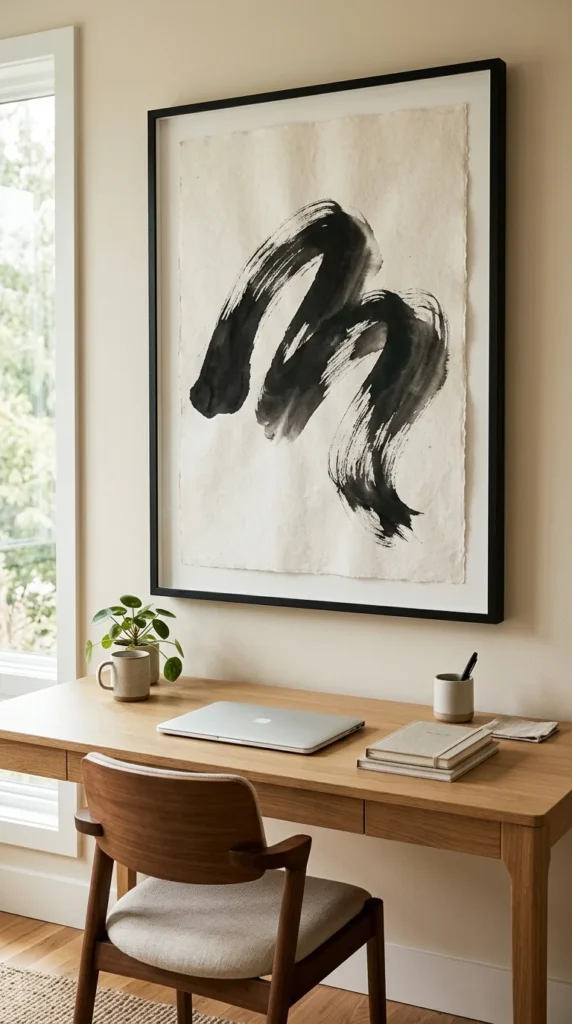
Wall art should be chosen with care. Instead of a gallery wall, opt for one large, impactful piece of monochromatic art. Japanese calligraphy or Scandinavian abstract prints in black, white, or grey maintain the color story while adding personality.
18. Bamboo Details
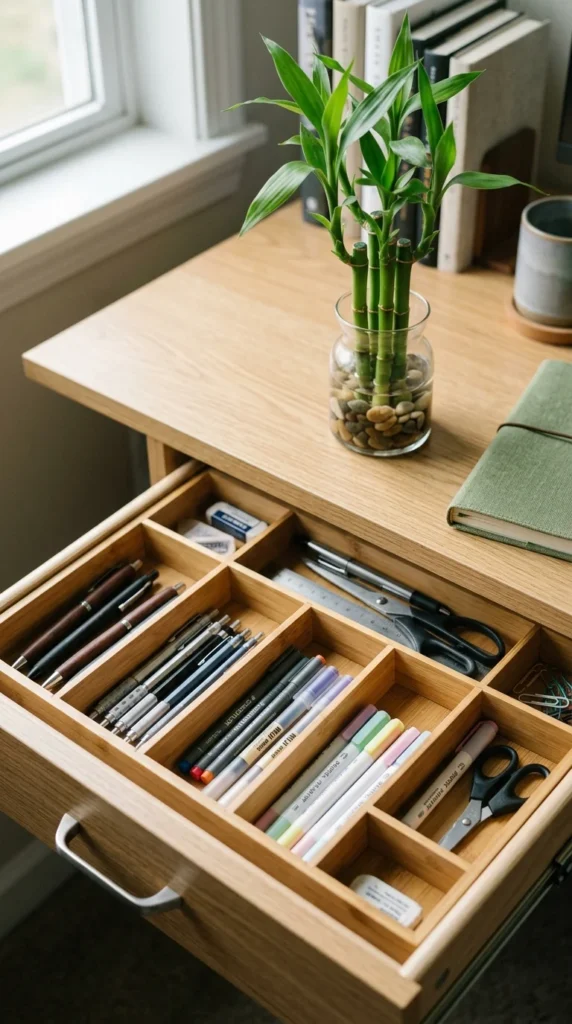
Bamboo is a sustainable, fast-growing material that fits perfectly into the Japandi ethos. It can be used for flooring, desk accessories, or even as a window blind. Its light color and fine grain add a delicate, Eastern aesthetic to the room.
19. Open Shelving
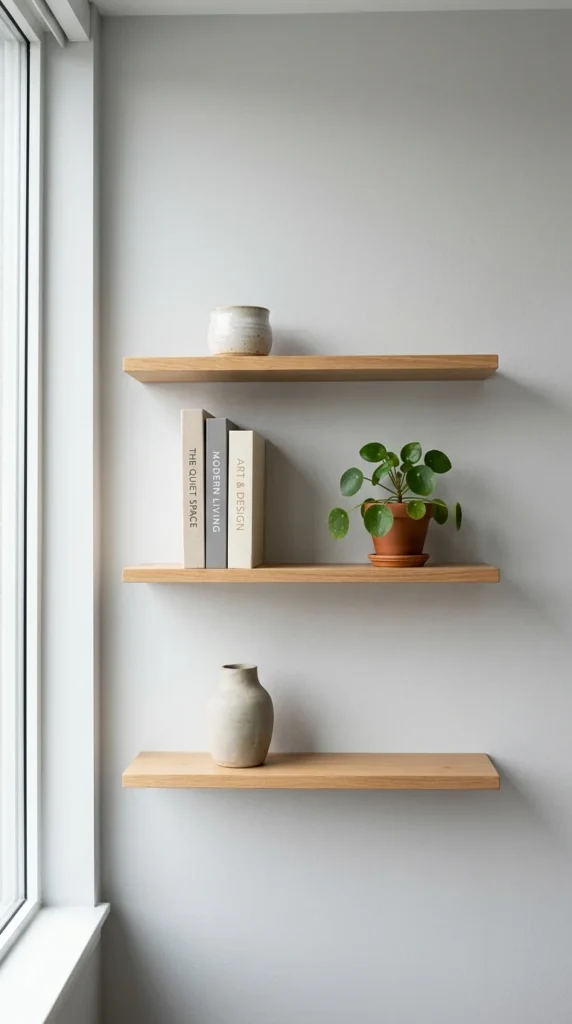
The key to Japandi open shelving is “negative space.” Rather than cramming shelves full of books, leave gaps between items. This allows each object to be appreciated individually and keeps the room from feeling cluttered or heavy.
20. Earthy Pottery
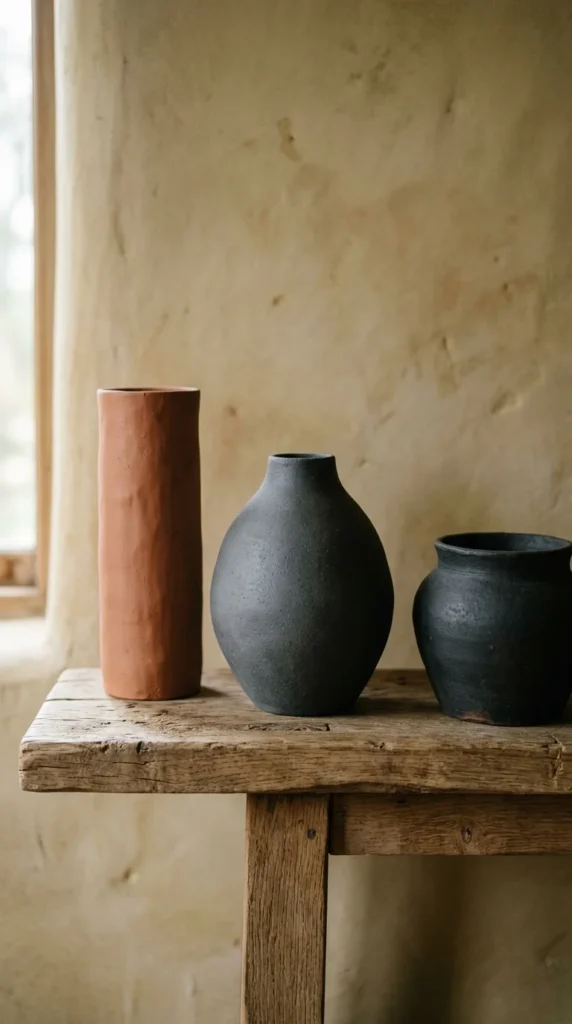
Hand-crafted ceramics embody the “Wabi-sabi” principle of finding beauty in imperfection. A few pieces of matte pottery on a desk or shelf provide a tactile, human touch that balances the precision of modern office technology.
21. Matte Finishes
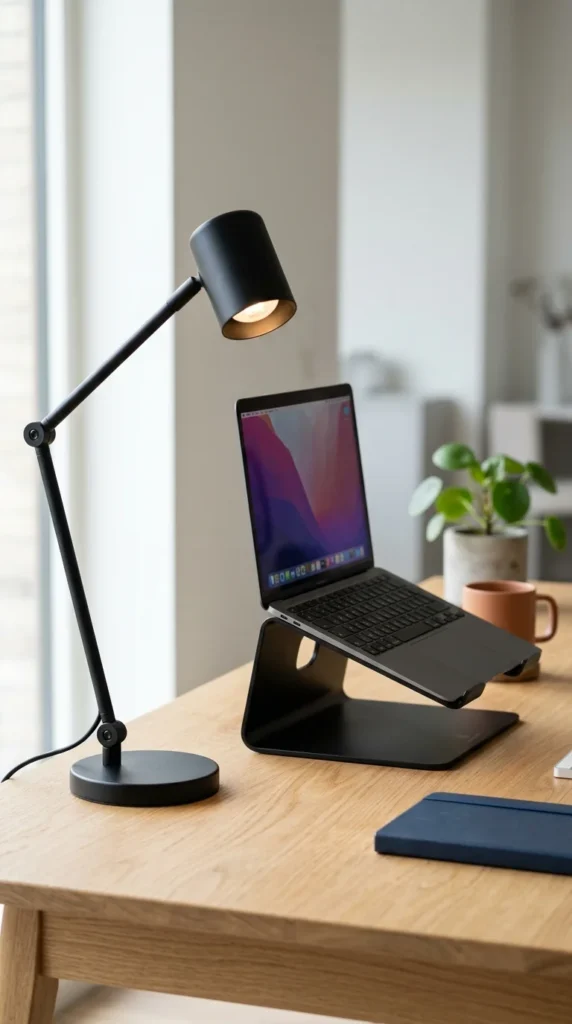
In a Japandi office, avoid high-gloss surfaces which can feel cold and corporate. Instead, opt for matte finishes on metal, plastic, and wood. Matte surfaces absorb light rather than reflecting it, contributing to a softer, more relaxed environment.
22. Functional Zoning
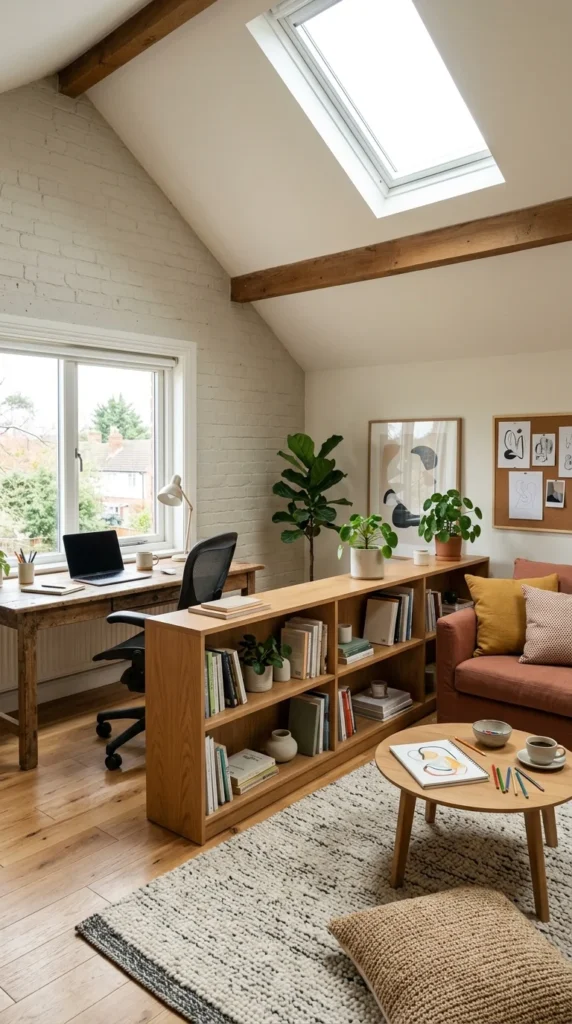
Even in a small office, creating different “zones” can boost productivity. A dedicated area for computer work and a separate spot for thinking or reading helps the brain transition between different types of tasks while keeping the overall design cohesive.
23. Soft Rugs
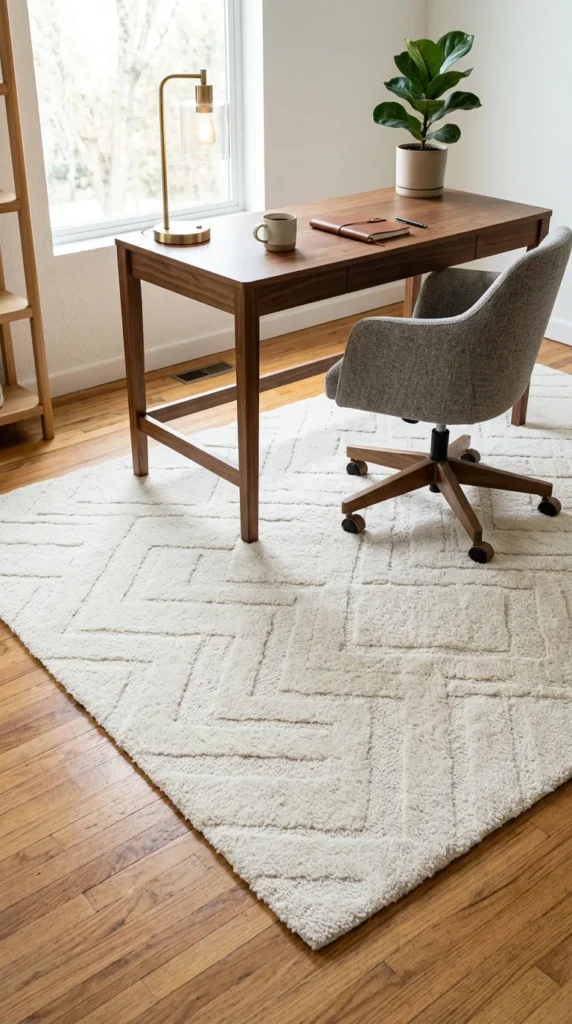
Underfoot comfort is a hallmark of Scandinavian design. A high-quality wool or plush rug adds warmth and sound dampening to the office, making the space feel more insulated and private—essential for deep concentration and video calls.
24. Integrated Greenery
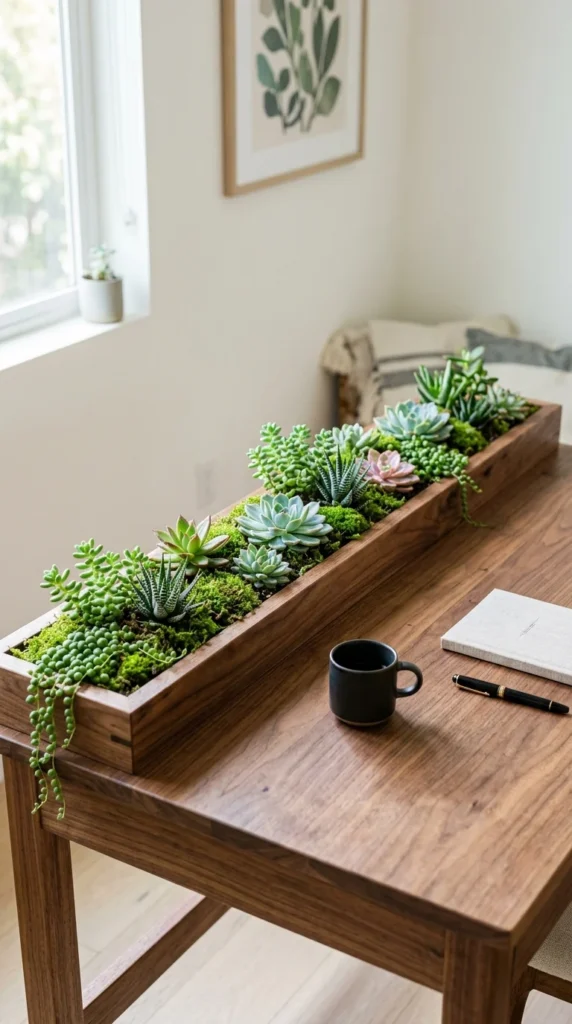
For the ultimate Japandi look, integrate nature directly into the furniture. A desk with a built-in planter or a shelving unit that incorporates climbing vines blurs the line between the built environment and the natural world, creating a truly harmonious workspace.
By focusing on quality over quantity and balance over excess, these 24 Japandi design elements can transform any home office into a professional sanctuary. It is a style that honors the need for modern functionality while never losing sight of the peace found in simplicity.