


In the modern era of remote work, the environment in which we spend our professional hours has a profound impact on our mental clarity and efficiency. The Japandi aesthetic—a harmonious fusion of Japanese minimalism and Scandinavian functionality—has emerged as the gold standard for home office design. By combining the “wabi-sabi” philosophy of finding beauty in imperfection with the “hygge” concept of cozy contentment, Japandi creates a space that is both visually tranquil and highly practical.
Here are 17 curated ideas to transform your workspace into a Japandi sanctuary.
1. Natural Wood
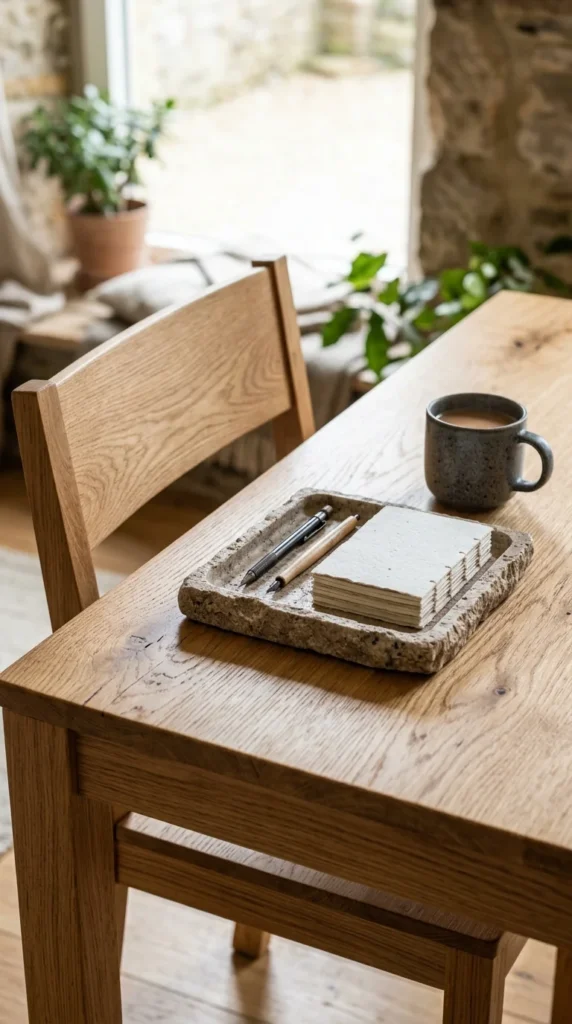
The foundation of any Japandi space is the use of natural materials. Incorporating light-toned woods like oak, ash, or bamboo brings warmth to the room while maintaining a clean, organic feel. A solid wood desk serves as the focal point of the office, grounding the space and providing a tactile connection to nature. Avoid high-gloss finishes; instead, opt for matte or oiled surfaces that celebrate the natural texture of the timber.
2. Neutral Palette
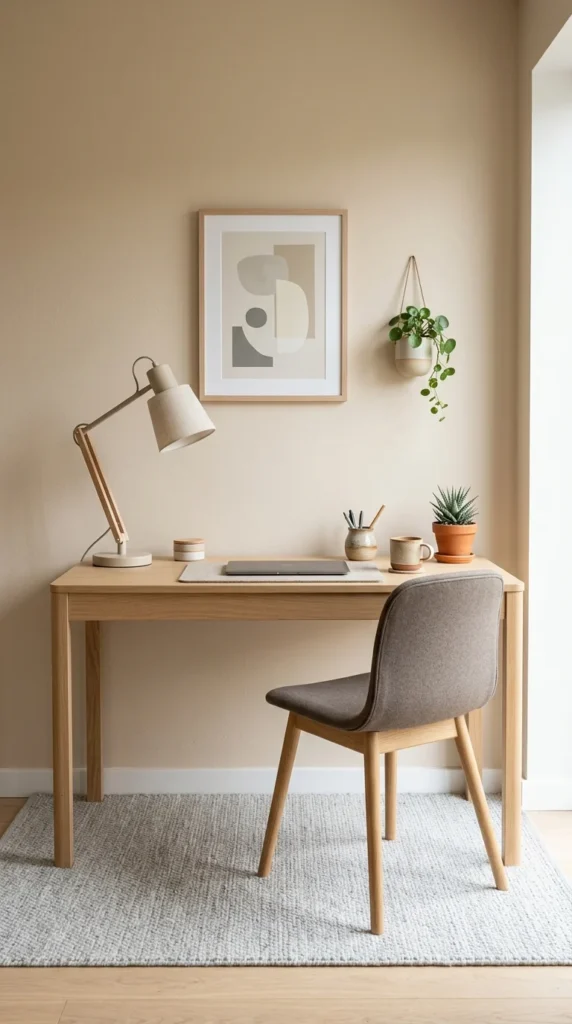
Japandi design relies on a muted color palette to reduce visual noise. Stick to “stony” neutrals such as cream, beige, oatmeal, and soft greys. To add depth without breaking the tranquility, you can introduce “Scandi” cool tones like slate or “Japanese” warmth through earthier browns. This monochromatic approach ensures that your mind remains focused on the task at hand rather than being distracted by bold, clashing colors.
3. Low Furniture
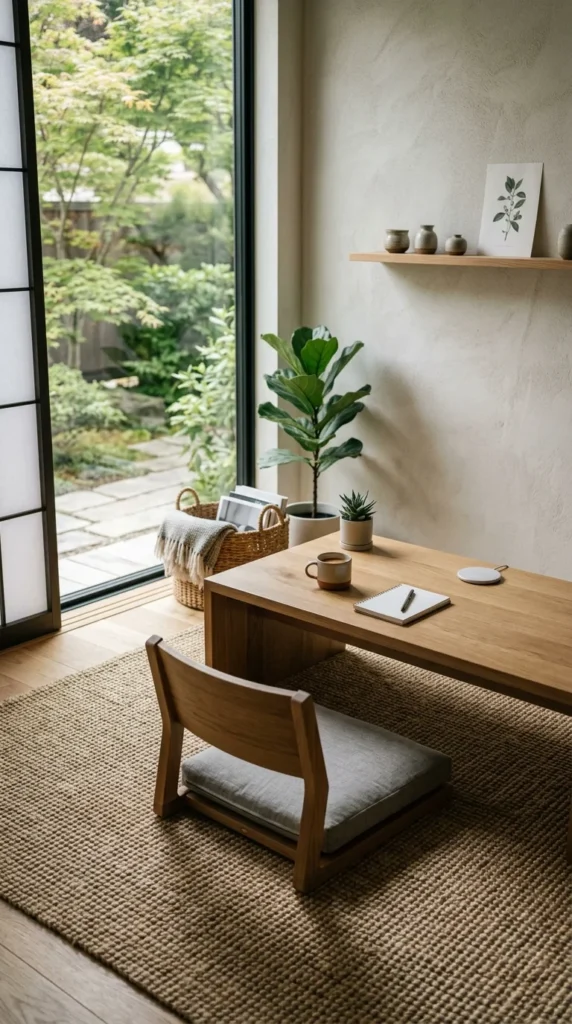
Japanese design often emphasizes a lower center of gravity. Incorporating low-profile furniture can make a small home office feel more spacious and airy. A low-slung desk or a storage credenza that sits close to the floor creates an unobstructed line of sight, which is essential for a calm environment. This “closer to the earth” approach fosters a sense of groundedness and stability during high-stress workdays.
4. Indoor Greenery
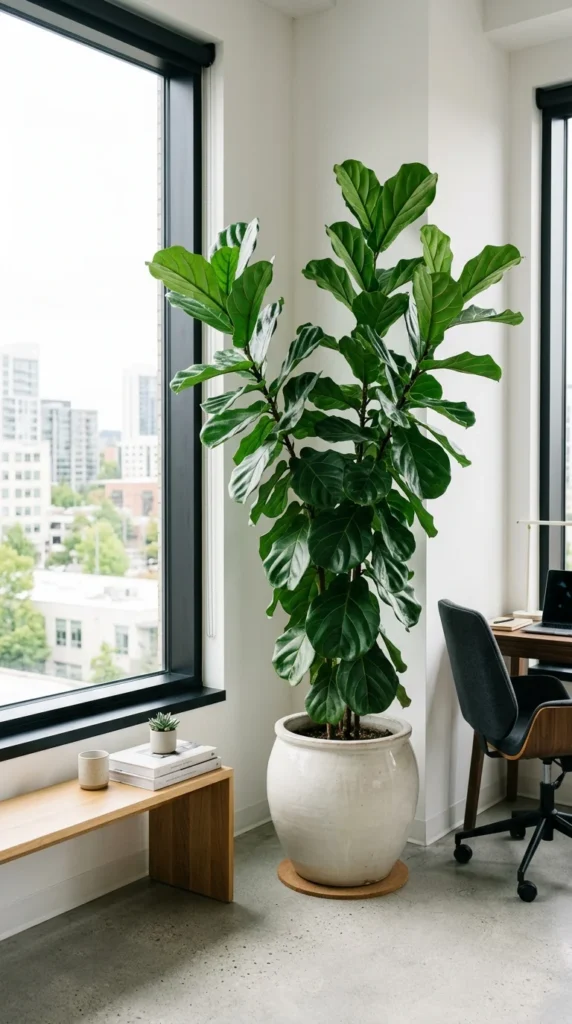
Bringing the outdoors in is a core tenet of both design styles. In a Japandi office, greenery should be used purposefully rather than excessively. Instead of a dozen small pots, choose one or two “statement” plants, such as a tall Bonsai tree, a Snake Plant, or a delicate Japanese Maple. These plants not only purify the air but also provide a soft, organic contrast to the straight lines of the furniture.
5. Textured Walls
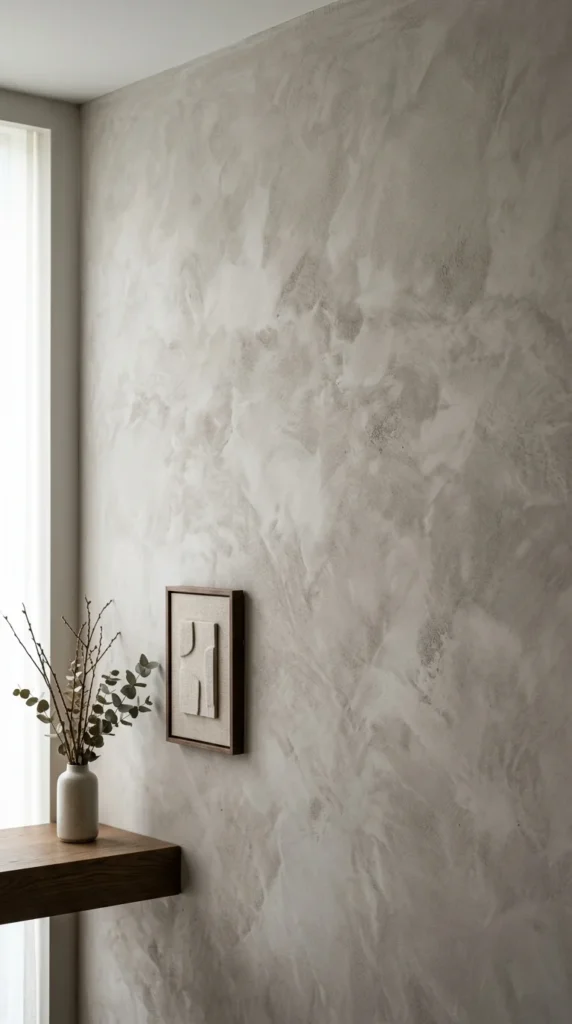
To prevent a minimalist room from feeling cold or sterile, add texture to the walls. Lime-wash paint or plaster finishes create a soft, mottled effect that mimics natural stone. This adds a layer of “wabi-sabi” imperfection and depth. The way light hits a textured wall changes throughout the day, providing a dynamic yet soothing backdrop for your video calls and deep-work sessions.
6. Smart Storage
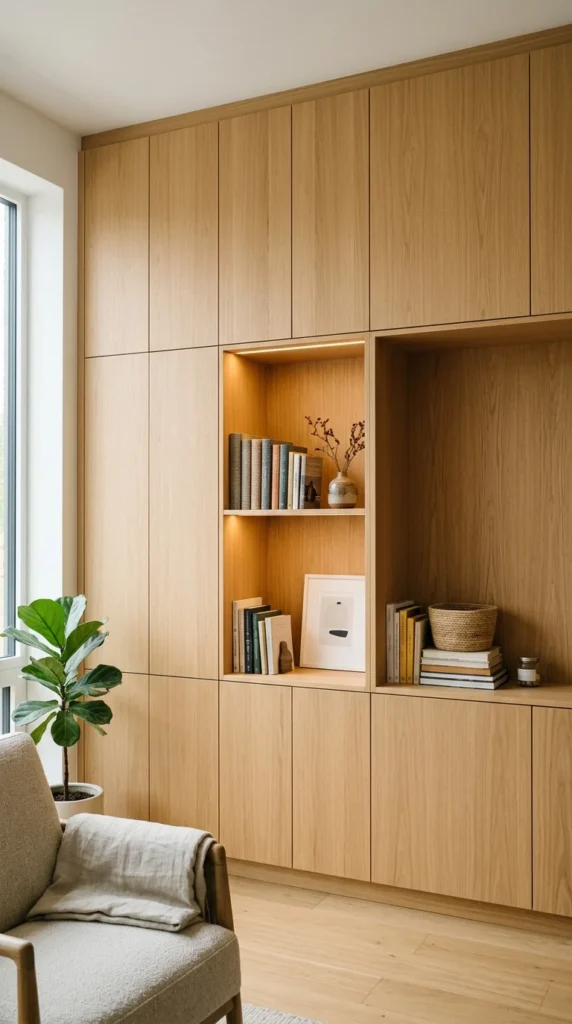
Clutter is the enemy of productivity. Japandi offices utilize smart, hidden storage to keep the workspace pristine. Look for desks with integrated cable management and cabinets with “push-to-open” mechanisms to maintain a seamless look. By tucking away stationery, files, and electronics, you create a “clear desk, clear mind” environment that promotes deep focus.
7. Woven Textures
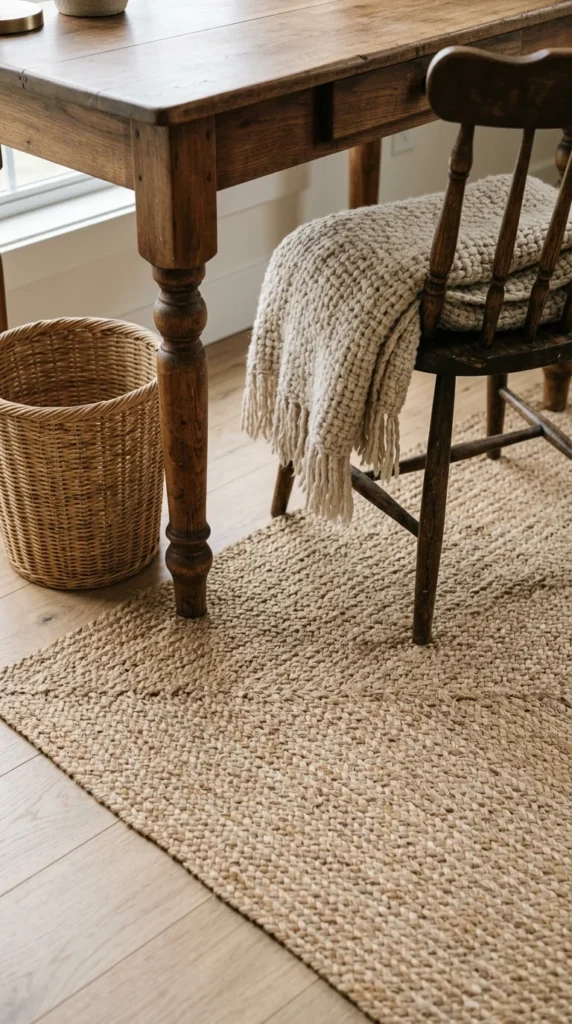
Introduce tactile variety through woven elements. A large jute or sisal rug adds an earthy foundation, while rattan baskets or a cane-back chair introduce intricate patterns without the need for color. These elements represent the Scandinavian love for cozy textures and the Japanese appreciation for traditional craftsmanship, bridging the two cultures perfectly.
8. Slat Panels
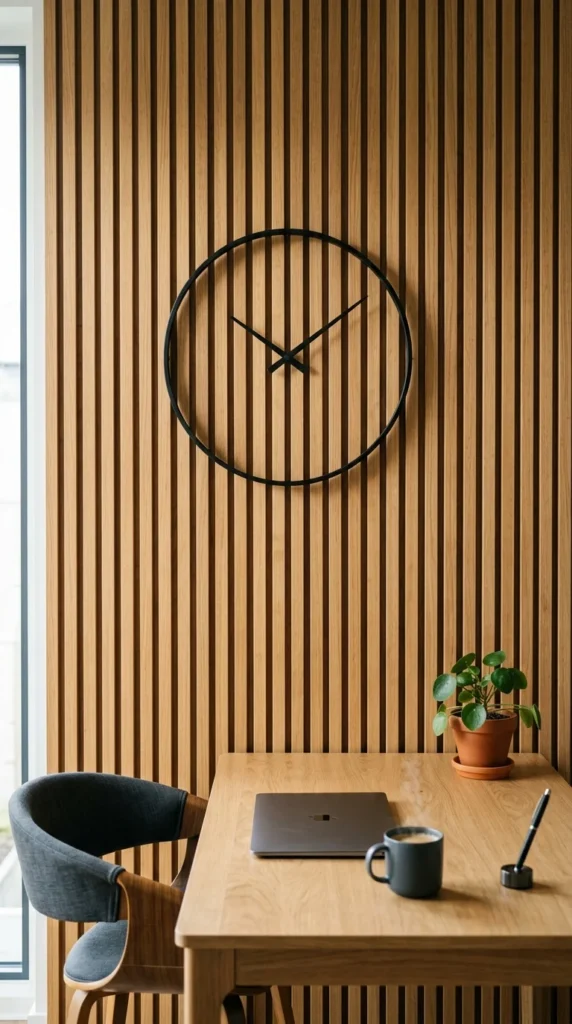
Wooden slat panels, or “tambour” details, are a hallmark of Japandi design. Using these as an accent wall or on the front of a desk adds architectural interest and a sense of rhythm to the room. Beyond aesthetics, wood slats can also improve the acoustics of your home office, reducing echoes during meetings—a perfect blend of form and function.
9. Ample Sunlight
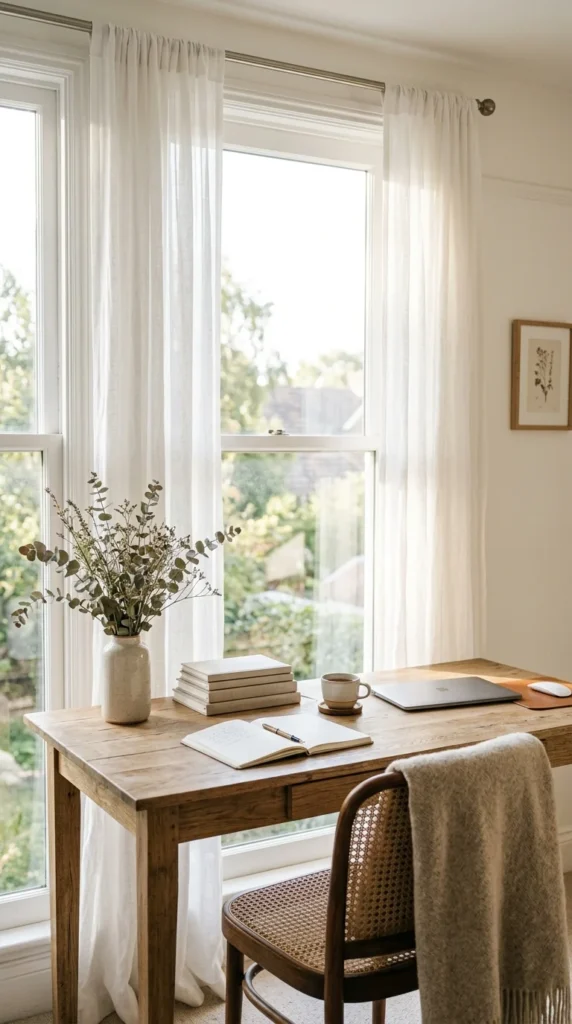
Natural light is essential for maintaining a healthy circadian rhythm and boosting mood. In a Japandi office, windows should be treated with minimalism. Use sheer linen curtains or bamboo blinds that allow light to filter through while providing privacy. Positioning your desk near a window allows you to take “micro-breaks” by looking at the outside world, which reduces eye strain and mental fatigue.
10. Minimalist Lighting
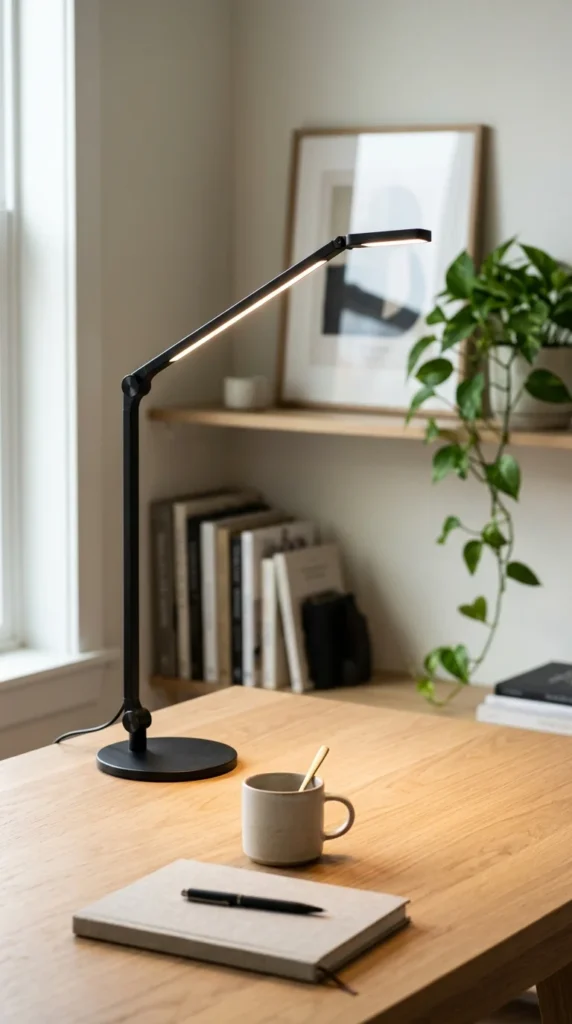
When the sun sets, the lighting should remain soft and intentional. Avoid harsh overhead fluorescent lights. Instead, use a combination of task lighting—like a slim, matte black metal desk lamp—and ambient lighting. A minimalist floor lamp with a warm-toned bulb can create a cozy “hygge” corner, making the office feel inviting even during late-night projects.
11. Zen Decor
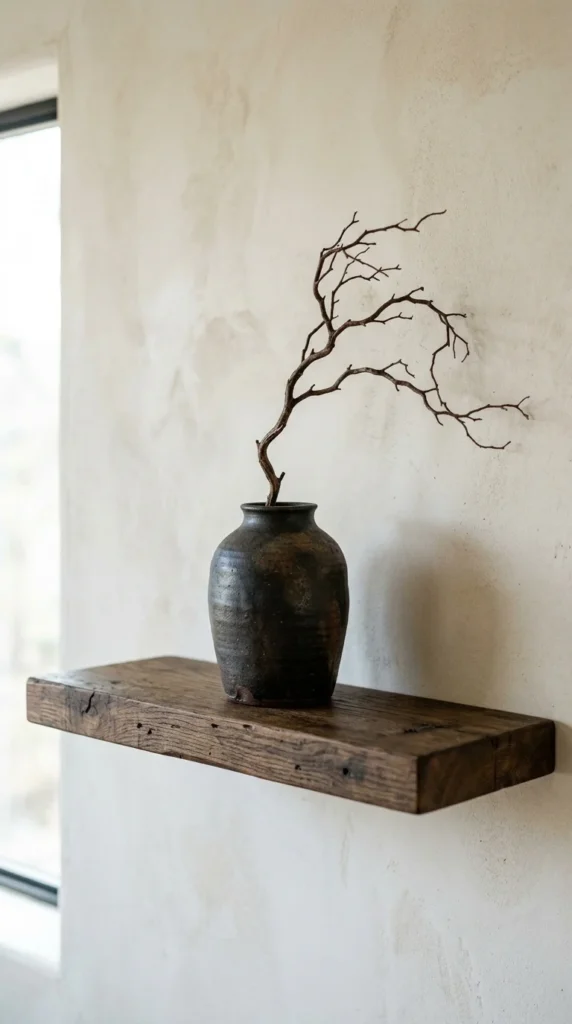
Decor in a Japandi office should be intentional and sparse. Every object should have a purpose or bring a sense of peace. A single ceramic bowl, a piece of abstract stone sculpture, or a framed piece of Japanese calligraphy can serve as a point of reflection. The goal is to create a space that feels curated, not cluttered, where each item has room to “breathe.”
12. Ergonomic Seating
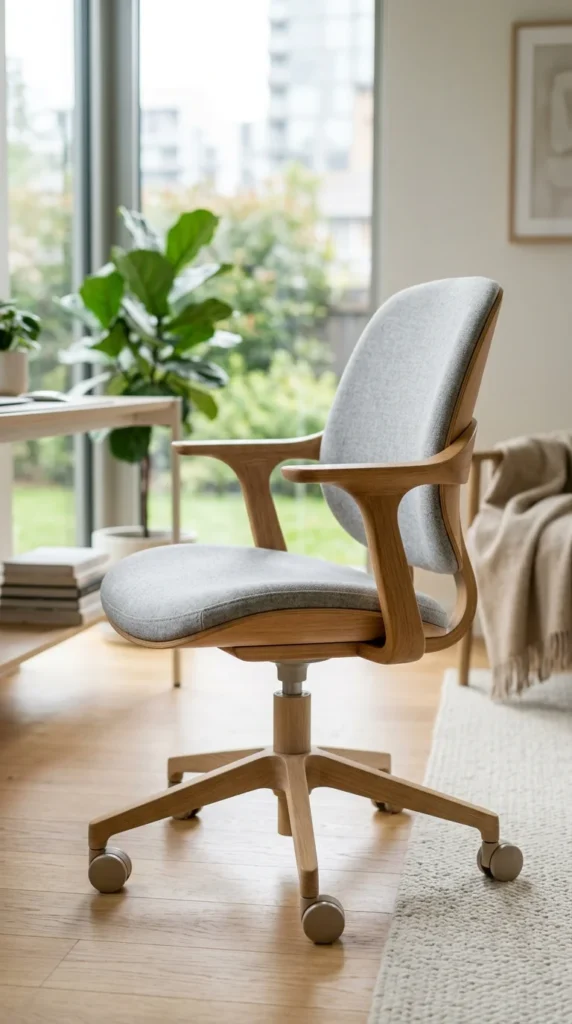
While aesthetics are vital, a home office must be functional. Choose a chair that offers the ergonomic support needed for long hours but fits the Japandi visual language. Look for chairs that utilize natural materials like wood and wool but include adjustable features. A Scandi-style task chair in a neutral fabric is often the perfect middle ground between a clinical office chair and a decorative dining chair.
13. Paper Lanterns
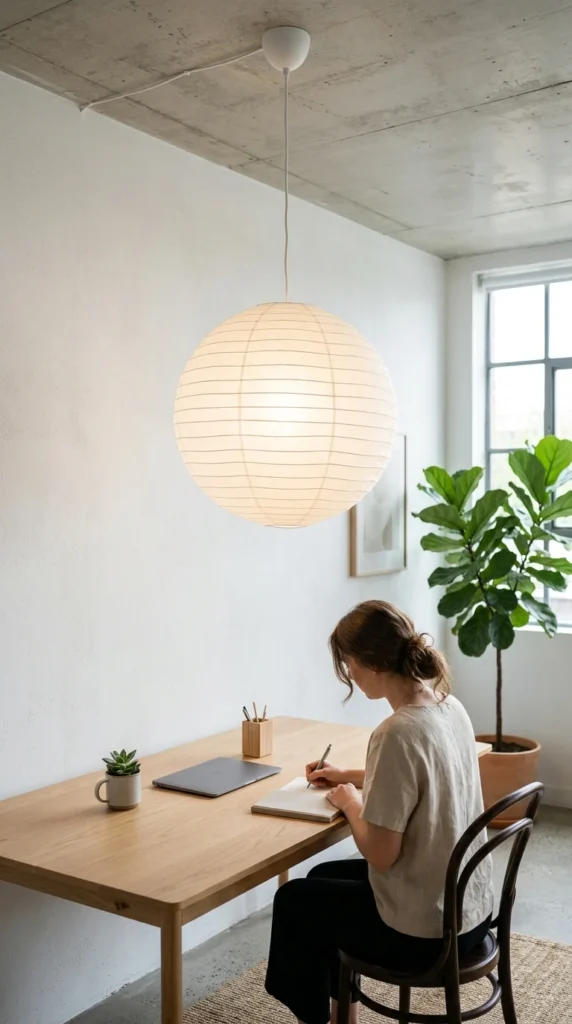
The Akari-style paper lantern is an iconic element that fits beautifully into Japandi interiors. These lamps, made from washi paper and bamboo, diffuse light in a way that feels organic and soft. Hanging a large paper pendant light in the center of your office adds a touch of Japanese heritage while providing the warm, ambient glow that Scandinavian design thrives on.
14. Stone Elements
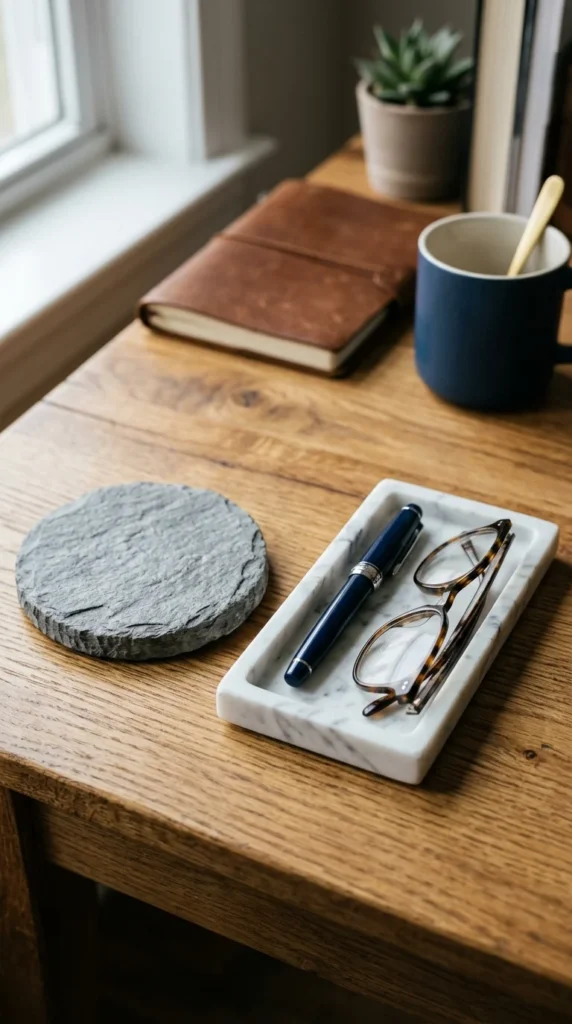
To balance the warmth of the wood, introduce cold materials like stone. A marble tray, slate coasters, or a concrete pen holder adds a sophisticated, grounded feel to the desk. These materials represent the “earth” element of Zen design and provide a sturdy, permanent feel to the workspace.
15. Open Shelving
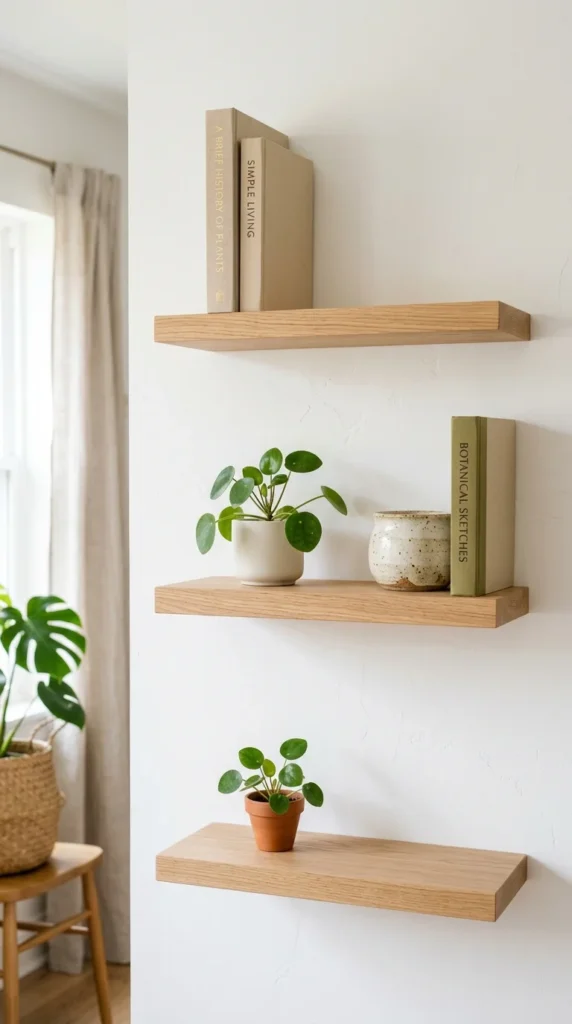
Open shelving should be used as a display of edited essentials rather than a catch-all for clutter. Use floating wooden shelves to hold a few reference books and a single piece of art. By keeping the shelves sparsely populated, you emphasize the “minimalism” aspect of Japandi, allowing the architecture of the room to shine through.
16. Sustainable Fabrics
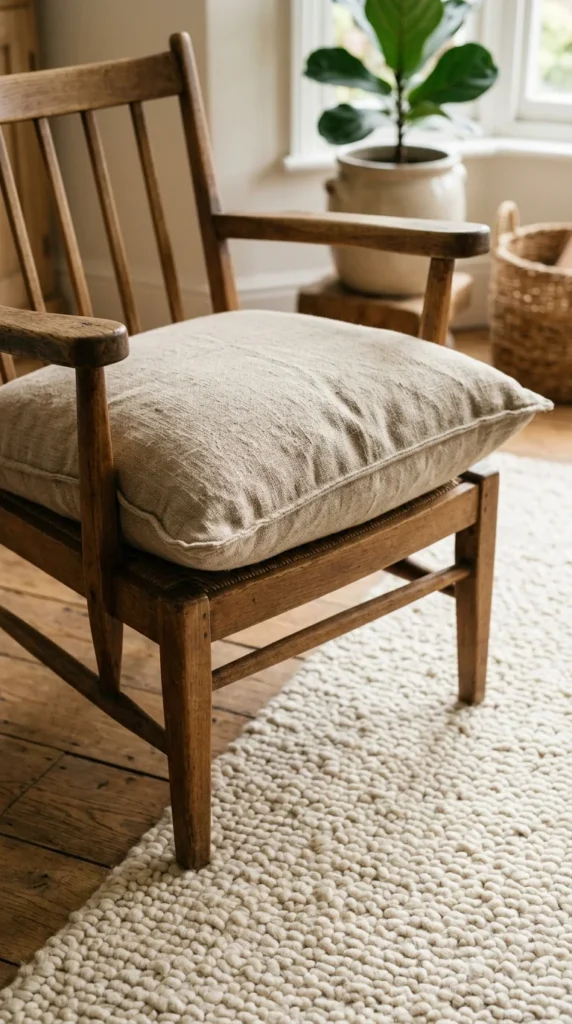
Both Japanese and Scandinavian cultures have a deep respect for sustainability and quality. Choose natural, long-lasting fabrics for your office accessories. Linen, wool, and organic cotton should be your go-to materials for cushions, throws, and chair upholstery. These fabrics age gracefully, embodying the wabi-sabi principle of beauty over time.
17. Negative Space
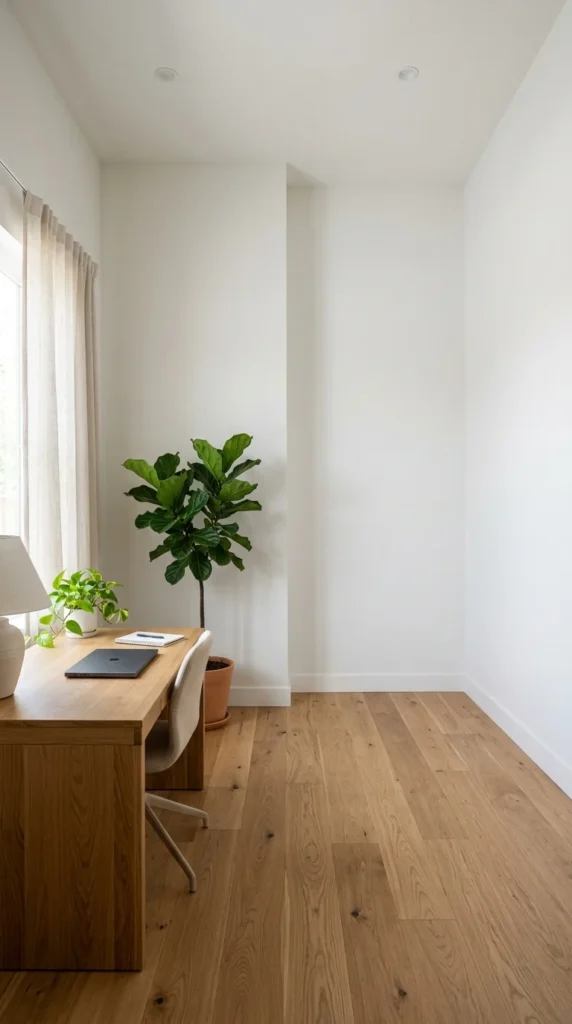
Perhaps the most important element of Japandi design is what isn’t there. Negative space—or “Ma” in Japanese—is the interval between objects. Don’t feel the need to fill every corner of your office. Leaving a wall blank or a corner empty allows the mind to rest and creates a sense of physical and mental freedom. This openness is what ultimately makes a Japandi workspace feel like a sanctuary for productivity.