
The mailbox is often the first thing visitors see when approaching a home, yet it is frequently the most overlooked element of residential landscaping. A well-designed mailbox area does more than just hold correspondence; it serves as an anchor for your property’s curb appeal, bridging the gap between the street and your front door. Modern mailbox landscaping focuses on clean lines, intentional plant selections, and high-quality materials that reflect the architectural style of the home. By combining hardscaping with thoughtful greenery, you can transform a functional necessity into a sophisticated design statement.
1. Concrete Structures
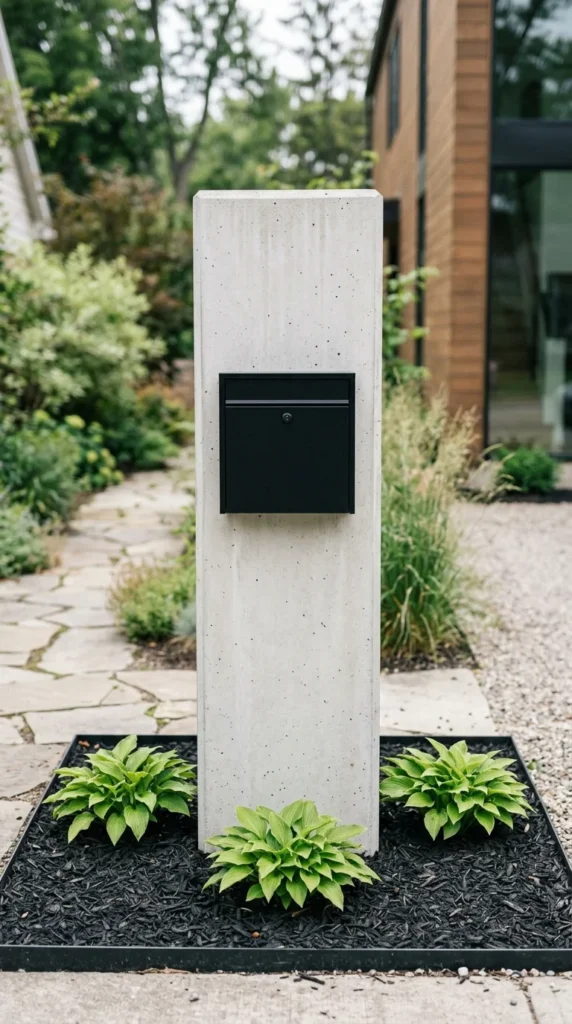
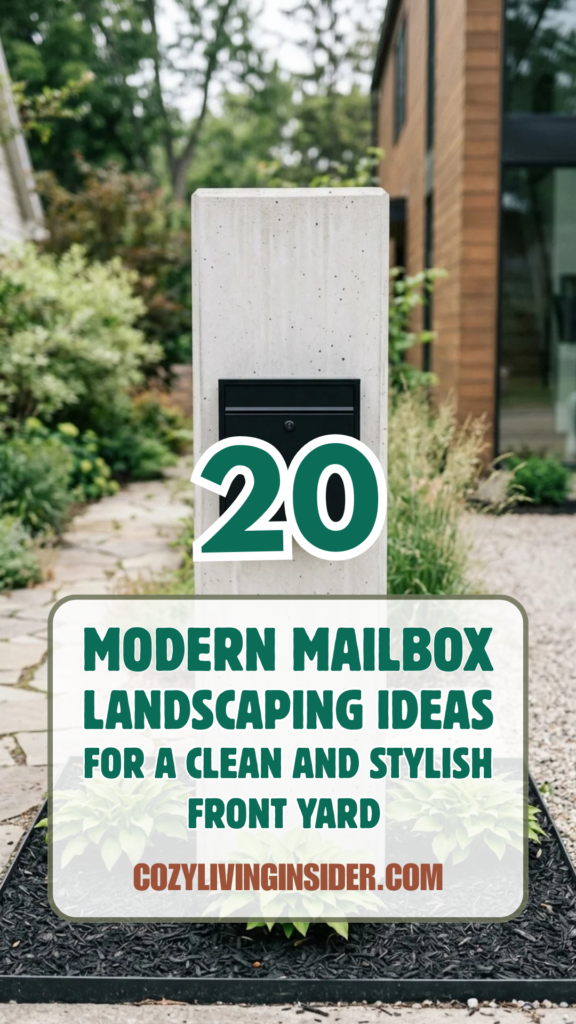
Concrete is a staple of modern design due to its industrial aesthetic and incredible durability. A poured concrete mailbox pillar offers a monolithic, architectural look that pairs perfectly with contemporary homes. To landscape this, keep the surrounding area minimalist. A simple square border filled with dark basalt mulch or black lava rock provides a sharp contrast against the light gray concrete. Use low-profile plants like hostas or silver falls dichondra to soften the edges without obscuring the structure’s clean lines.
2. Ornamental Grasses
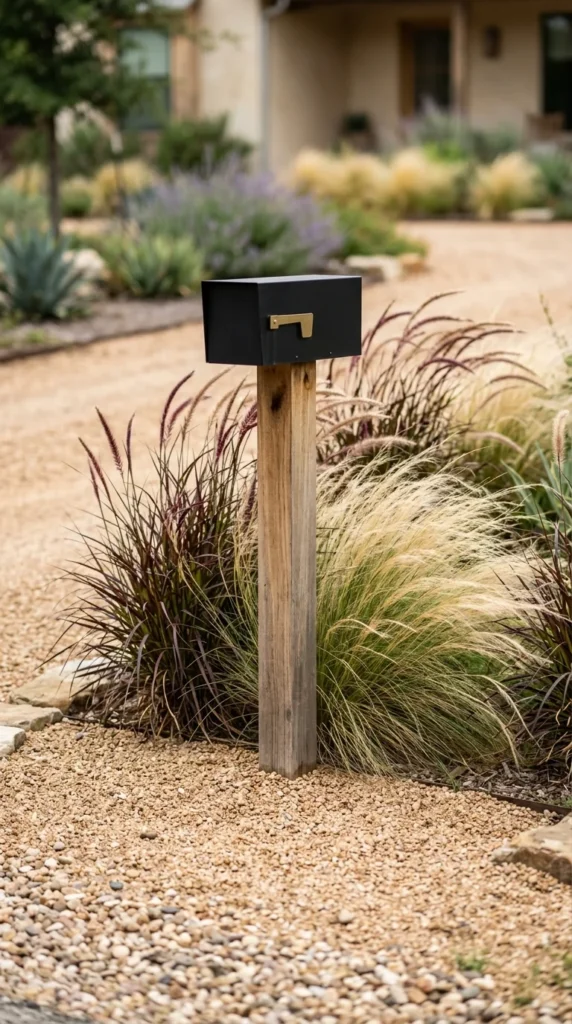
For homeowners who prefer movement and texture, ornamental grasses are an excellent choice. Varieties such as Mexican Feather Grass, Blue Oat Grass, or Pennisetum provide a soft, airy feel that contrasts beautifully with the rigid structure of a mailbox. These plants are particularly effective because they offer year-round interest; they dance in the breeze during summer and provide a golden, structural silhouette during the winter months. Because they are generally drought-tolerant, they are ideal for the harsh conditions often found near the street.
3. Cedar Wood
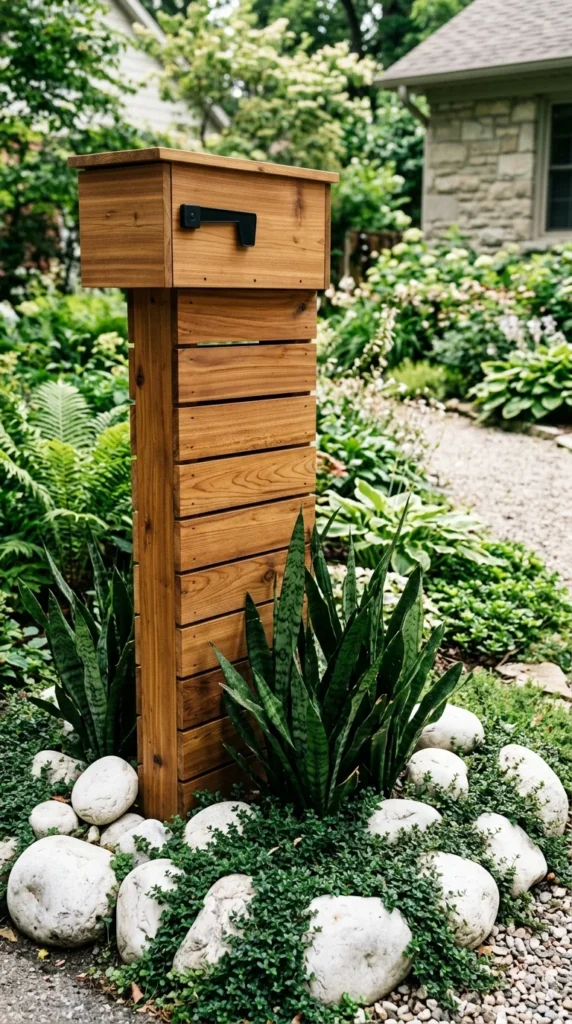
Cedar wood brings an organic warmth to modern landscaping. A mailbox post designed with horizontal cedar slats creates a “spa-like” or mid-century modern vibe. To complement the wood’s natural grain, use a palette of forest greens and earthy stones. Large white river boulders can be used to ground the design, while groundcovers like creeping thyme or sedum can fill the gaps between the rocks, creating a lush, low-maintenance carpet that requires very little water.
4. Desert Xeriscape
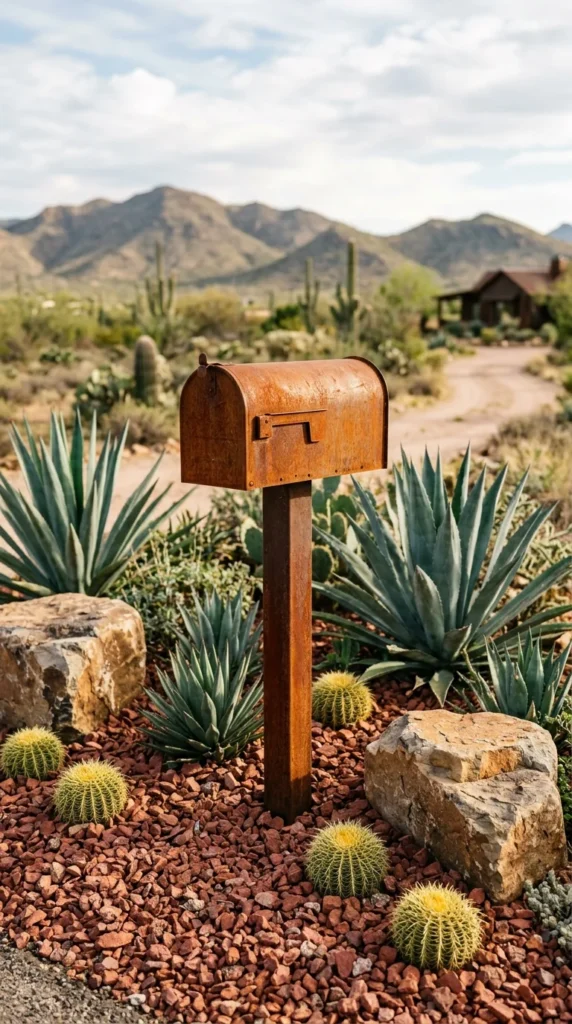
In arid climates or for those seeking a low-water lifestyle, a desert xeriscape is both practical and visually striking. This style relies on the geometric shapes of succulents and cacti. An Agave parryi or a cluster of Golden Barrel Cacti can serve as living sculptures around the mailbox. Using a variety of crushed stone or decomposed granite instead of organic mulch ensures that the area stays tidy and weed-free while highlighting the unique forms of the desert flora.
5. Boxwood Borders
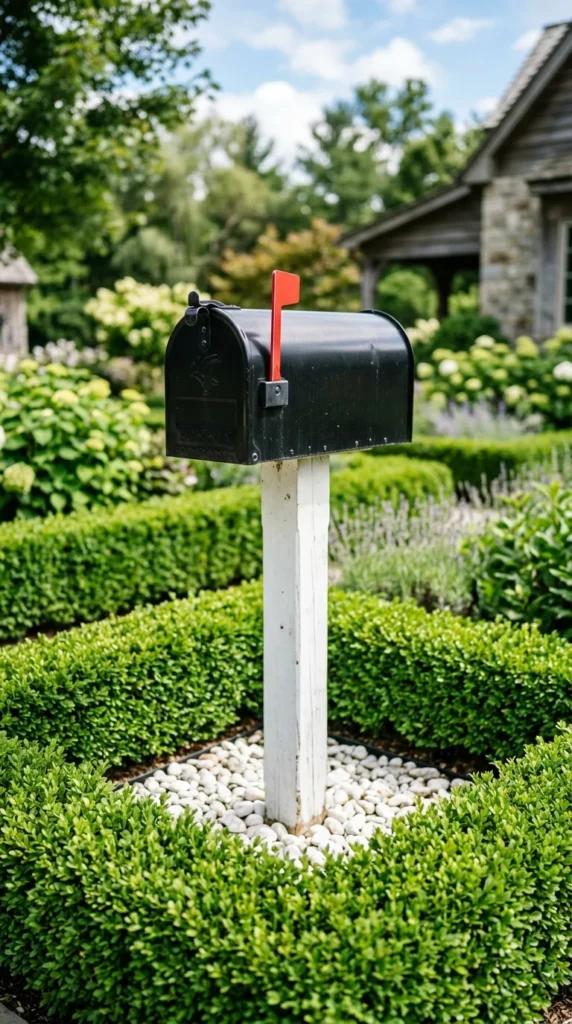
For a look that is both modern and timeless, a tightly clipped boxwood border is unmatched. This “parterre” style creates a formal frame around the mailbox, providing a sense of order and cleanliness. To keep it modern, maintain the boxwoods in a sharp, rectangular shape rather than rounded spheres. Filling the interior of the boxwood frame with white marble chips or polished black pebbles adds a layer of sophisticated texture that highlights the vibrant green of the leaves.
6. Tiered Stone
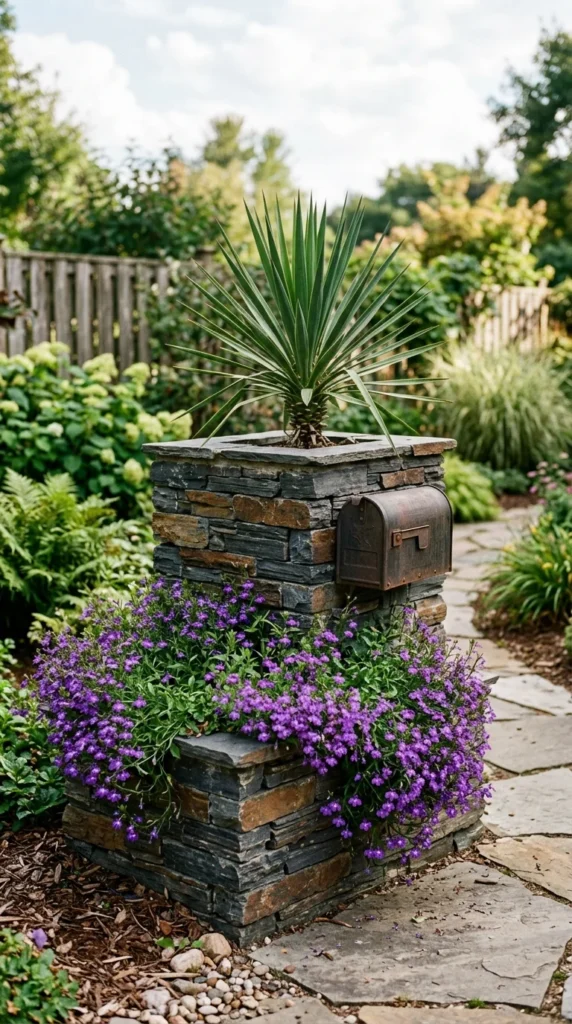
Tiered landscaping adds vertical interest and allows for a variety of planting zones. Using stacked slate or fieldstone to create a multi-level planter around the mailbox provides a sturdy, permanent feel. The different levels can be used to separate “spiller” plants, like trailing ivy or lobelia, from more “upright” focal points like Yucca or Red Hot Poker. This approach is particularly useful if your mailbox is located on a slight slope or embankment.
7. Solar Lighting
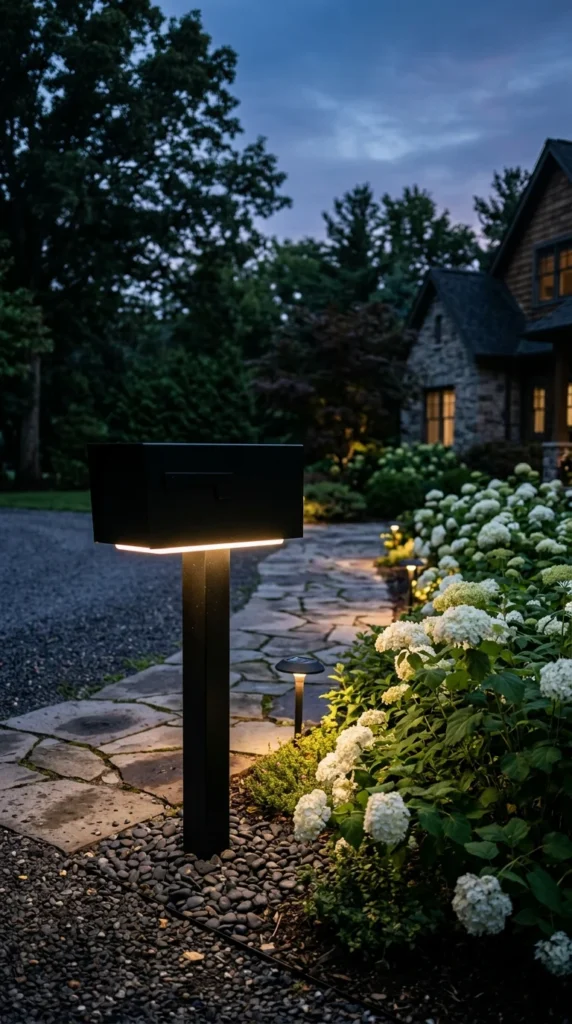
Modern landscaping isn’t just about what you see during the day; it’s about how the space functions at night. Integrating solar-powered LED lighting into your mailbox design ensures safety and enhances nighttime curb appeal. Use “up-lighting” to highlight the texture of a stone post or “path-lighting” to define the perimeter of the planting bed. Discreet, warm-toned LEDs create a high-end, professional look that makes the home feel welcoming after the sun goes down.
8. Wildflower Patch
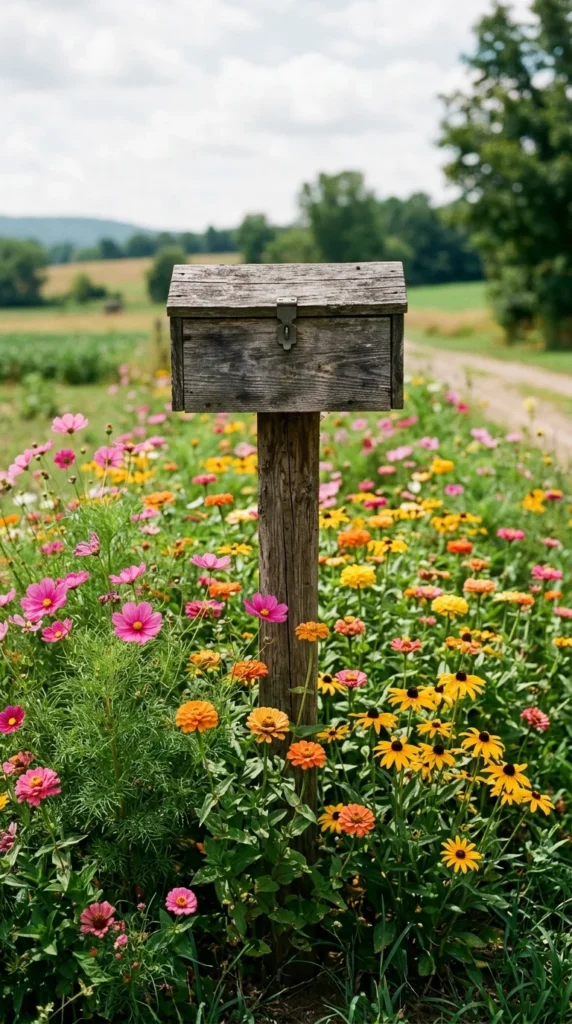
If your aesthetic leans toward “modern cottage,” a controlled wildflower patch can provide a burst of color and support local pollinators. The key to keeping this look “clean” is to define the edges of the patch with a sharp metal or plastic border. This prevents the flowers from looking like weeds encroaching on the lawn. Choose a mix of annuals and perennials that bloom at different times to ensure the mailbox area remains colorful from spring through late autumn.
9. Lavender Bed
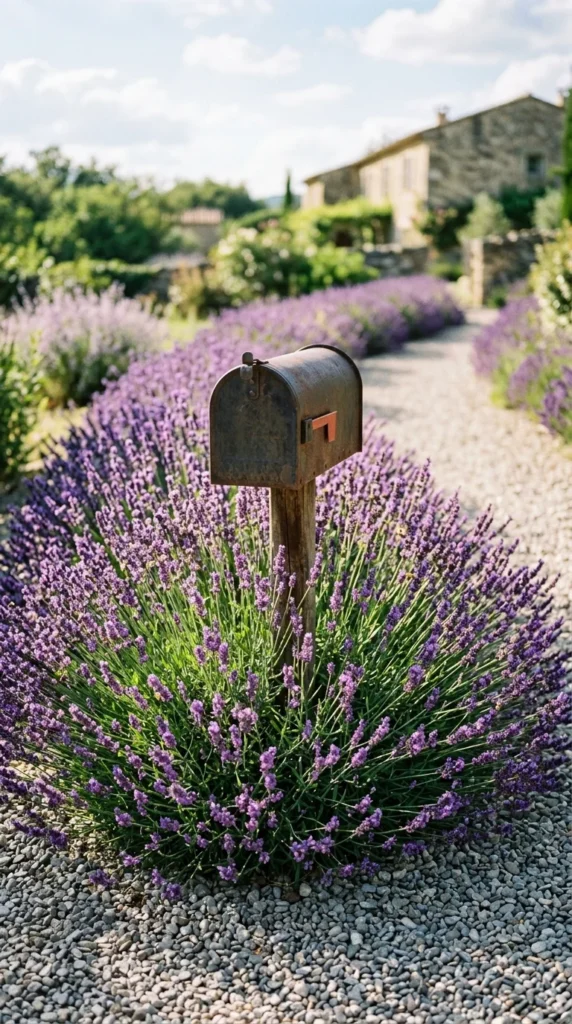
Lavender is a favorite for mailbox landscaping because of its incredible fragrance and silvery-green foliage. It thrives in the sunny, well-drained conditions typically found along the roadside. A mass planting of a single variety, like ‘Munstead’ or ‘Hidcote’ lavender, creates a powerful visual impact through repetition. The purple hues are particularly striking when paired with gray stone or silver metal mailbox posts, offering a Mediterranean flair to the front yard.
10. Black Metal
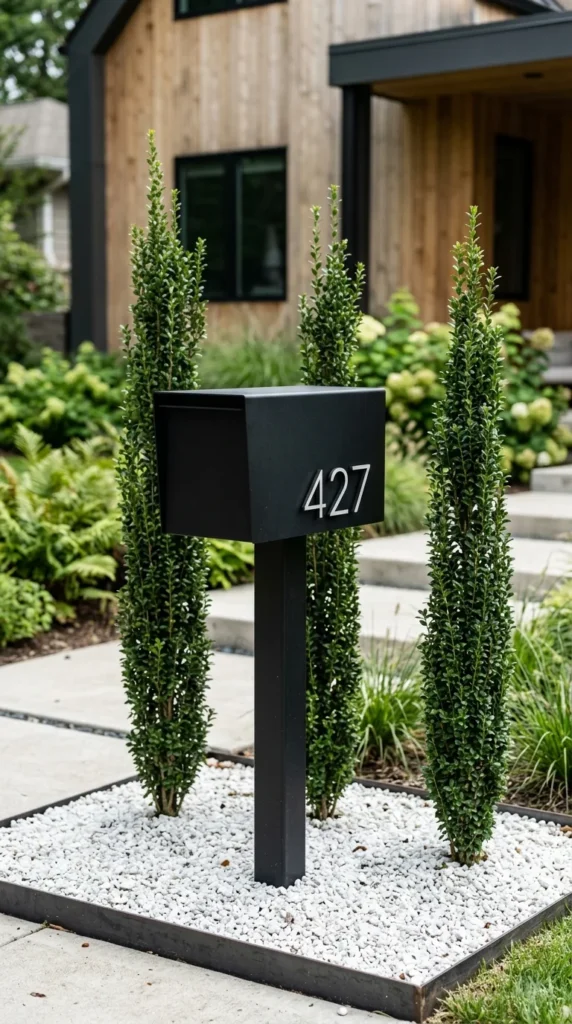
The “Modern Farmhouse” or “Industrial” trend often utilizes black metal accents. A heavy-gauge black steel mailbox post makes a bold statement. To keep the look sophisticated, use high-contrast landscaping. White limestone gravel and dark green, columnar plants like ‘Sky Pencil’ Holly or Italian Cypress create a monochromatic color scheme that is incredibly chic. This look is very low-maintenance and stays looking “new” for years with minimal effort.
11. River Rocks
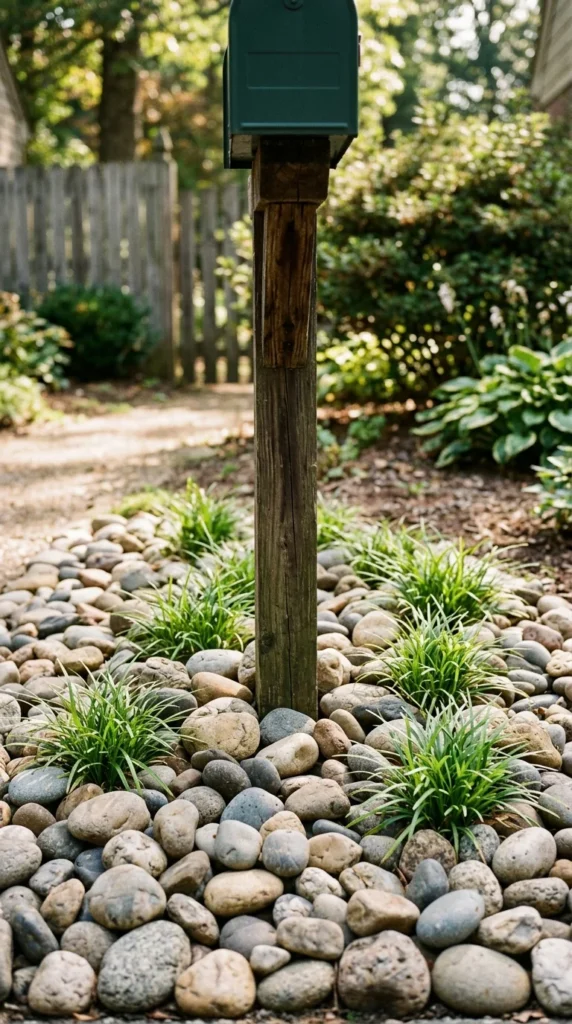
River rocks are an excellent hardscaping choice for areas that might experience heavy rain runoff from the street. They provide excellent drainage while offering a clean, organic texture. Using a mix of sizes—from small pebbles to large “cobble” stones—creates a more natural look. Intersperse the rocks with small tufts of Mondo grass or Liriope to add pops of green and prevent the stone bed from looking too cold or sterile.
12. Tropical Palms
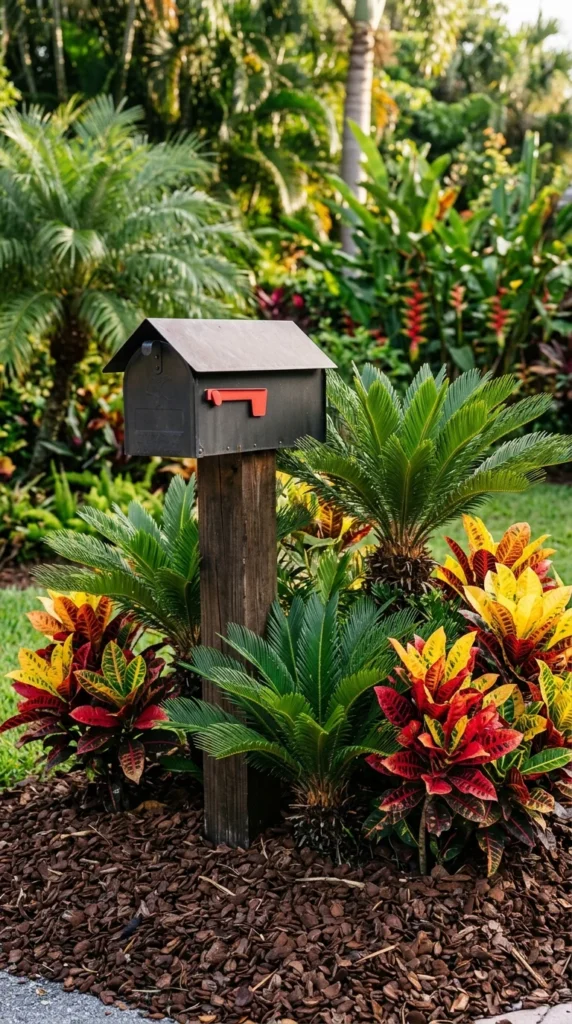
For homes in warmer zones, tropical plants can turn a mailbox into a mini-vacation spot. Small palm varieties like the Sago Palm or Pygmy Date Palm offer dramatic, architectural fronds. Pairing these with colorful foliage plants like Crotons or Bromeliads adds a layer of “jungle” sophistication. Ensure the plants are hardy enough to handle the occasional exhaust heat from passing vehicles, which tropicals are surprisingly good at managing.
13. Climbing Clematis
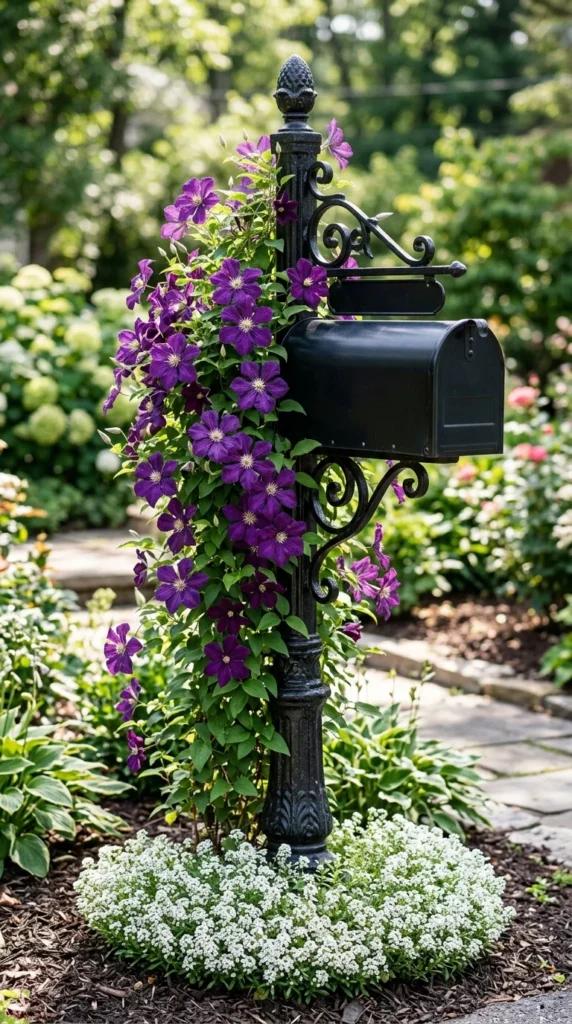
Vertical interest is key in small-space landscaping. Using your mailbox post as a trellis for climbing vines can be a beautiful way to integrate greenery. Clematis is a popular choice because it produces stunning, large blooms and isn’t as aggressive or damaging as ivy. To keep it modern, ensure the vine is neatly trimmed and doesn’t obscure the mailbox handle or flag. A base of low-growing white flowers like Alyssum provides a “cloud” effect at the bottom of the post.
14. Paver Surround
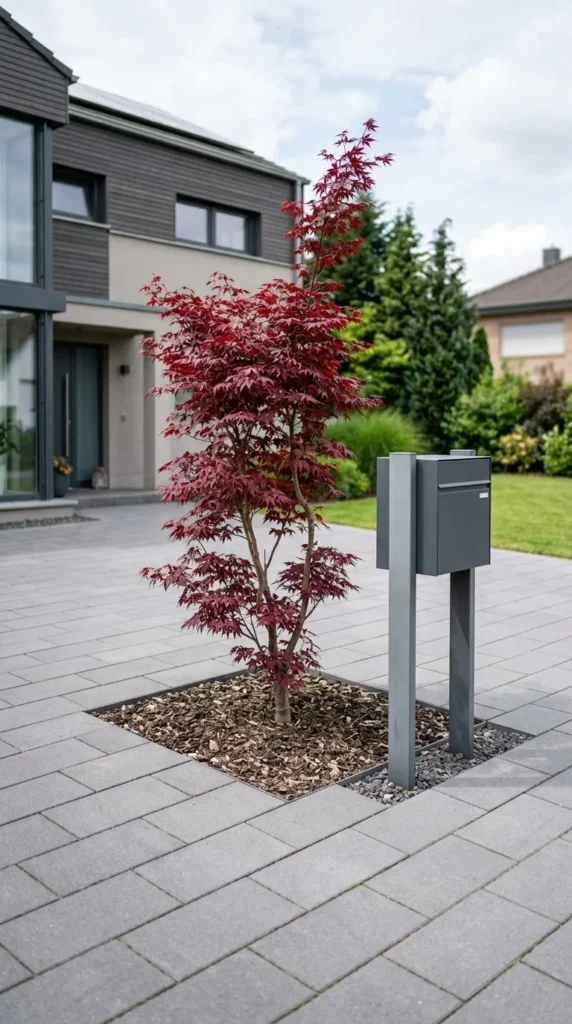
Using the same pavers for your mailbox surround as you do for your driveway or walkway creates a cohesive, unified look for your property. This “built-in” appearance suggests high-end custom design. By creating a dedicated paved pad for the mailbox, you also make it easier for the mail carrier to access the box and for you to trim the lawn around it without hitting the post with a mower.
15. Succulent Garden
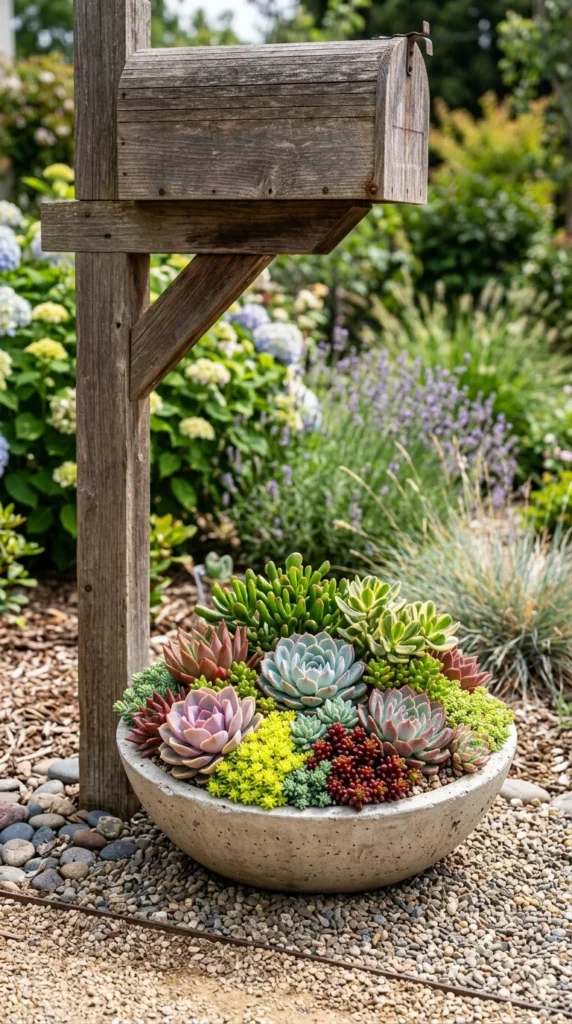
Succulents are the jewels of the plant world, offering a vast array of colors and geometric shapes. A dedicated succulent garden at the base of a mailbox works best in well-draining soil or elevated planters. Because succulents grow slowly, the arrangement will maintain its “designed” look for a long time. Mix different heights and colors—such as the upright ‘Sticks on Fire’ with the trailing ‘String of Pearls’—for a dynamic and modern mini-landscape.
16. Corten Steel
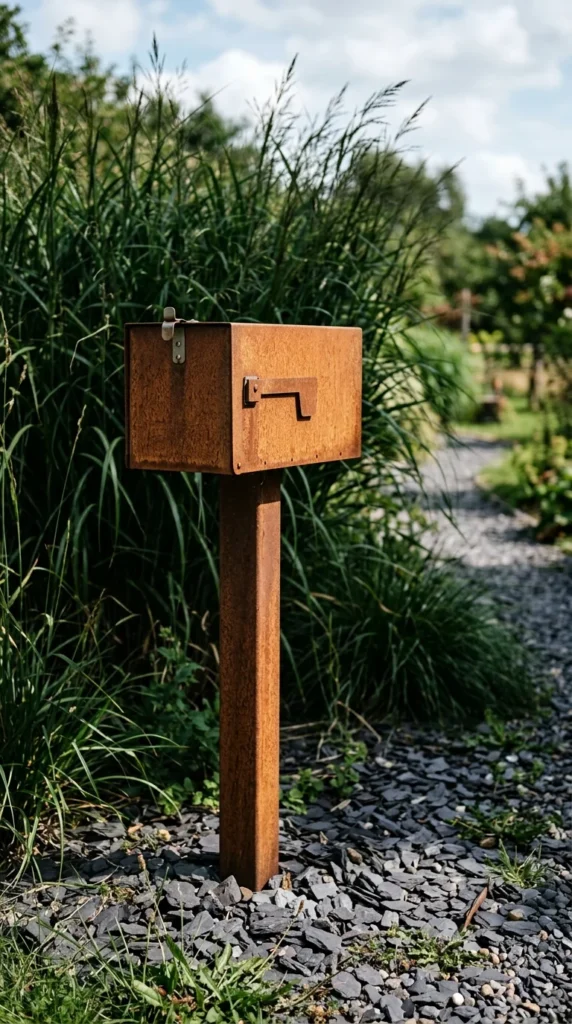
Corten steel is a favorite among architects for its “living” finish—it develops a stable, rust-like appearance over time that protects the metal beneath. This earthy, orange-brown patina looks stunning against a backdrop of deep greens and charcoals. Landscape this with dark slate chips and simple, structural plants like Equisetum (Horsetail) to emphasize the raw, industrial beauty of the material.
17. Japanese Zen
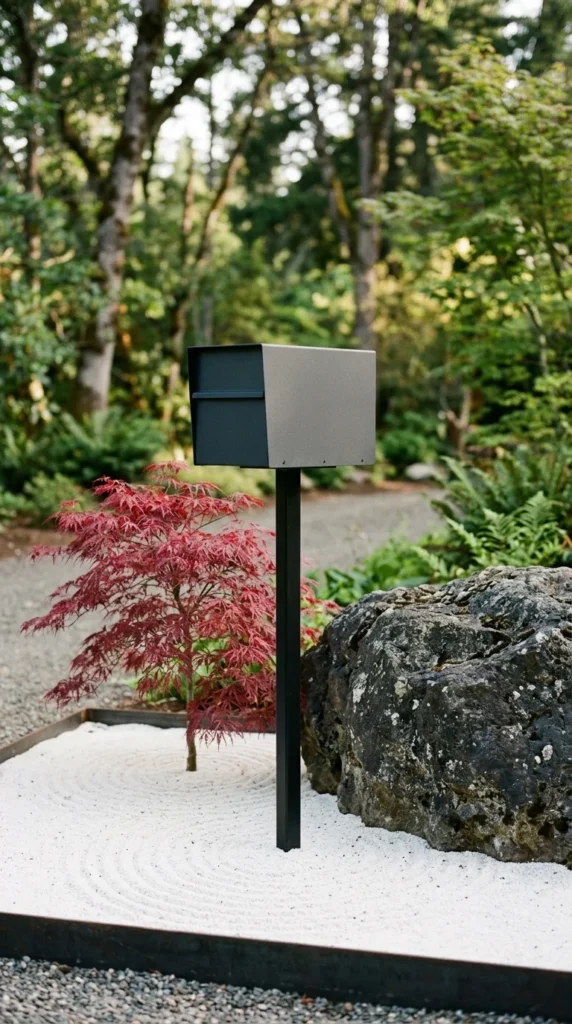
A Zen-inspired mailbox area focuses on balance and tranquility. Use a “less is more” approach with a few carefully chosen elements: a single decorative boulder, a dwarf Japanese Maple, and a bed of fine gravel. This style of landscaping is all about the “negative space” between the objects, creating a sense of calm right at the edge of your property. It requires very little maintenance once the initial balance is achieved.
18. Hydrangea Clusters
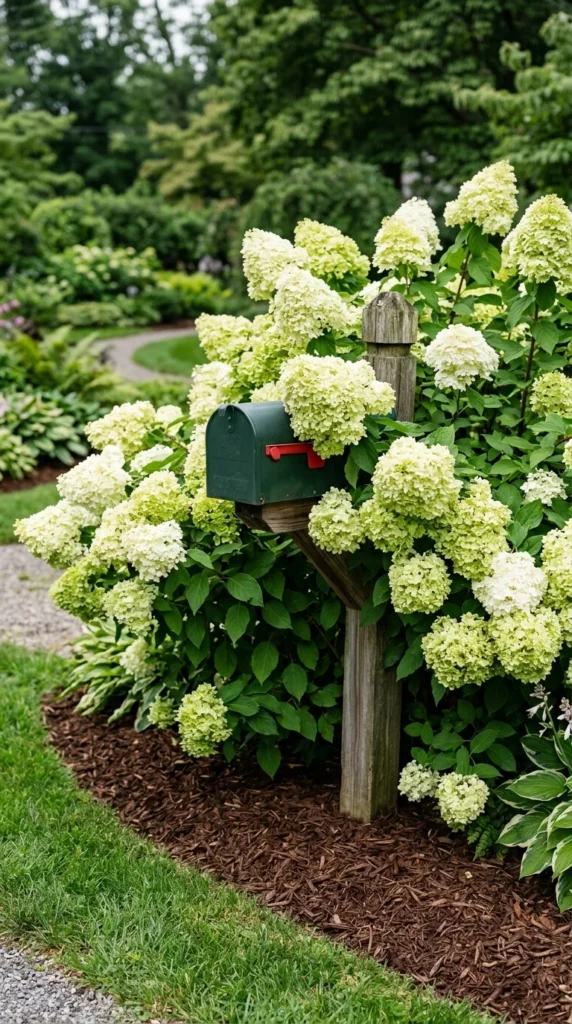
For a high-impact, voluminous look, ‘Limelight’ or ‘Annabelle’ hydrangeas are hard to beat. These shrubs produce massive flower heads that can transform a simple mailbox into a floral destination. Because they grow quite large, they are best suited for mailboxes that have a bit of extra space around them. The pale greens and creamy whites of the flowers feel modern and fresh, especially when paired with a simple black or white mailbox.
19. Mulched Bed
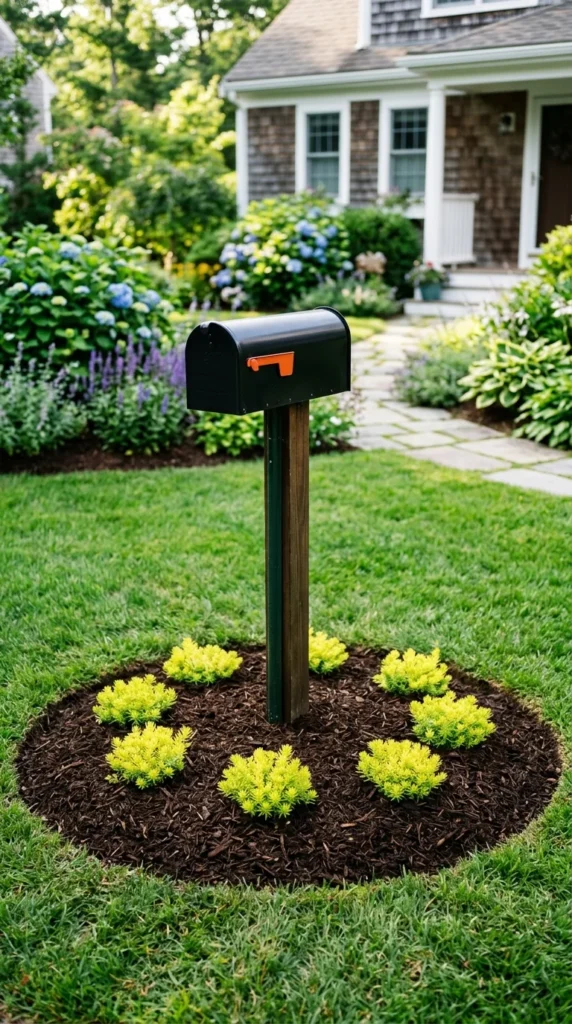
Sometimes the cleanest look is the simplest. A perfectly edged, circular or kidney-shaped bed filled with high-quality hardwood mulch provides a professional finish. Using a “pre-emergent” weed preventer and a sharp spade to edge the grass creates a crisp line that defines the space. Adding a few low-maintenance perennials like ‘Lemon Ball’ Sedum provides a pop of neon green that stays low to the ground and requires almost no care.
20. Brick Foundation

If your home features significant brickwork, matching the mailbox foundation to the house is a classic way to create architectural harmony. This makes the mailbox feel like a permanent part of the home’s structure. To modernize the look, keep the floral accents simple and monochromatic. A neat row of pansies or marigolds in a single color keeps the focus on the masonry while adding a touch of seasonal cheer.