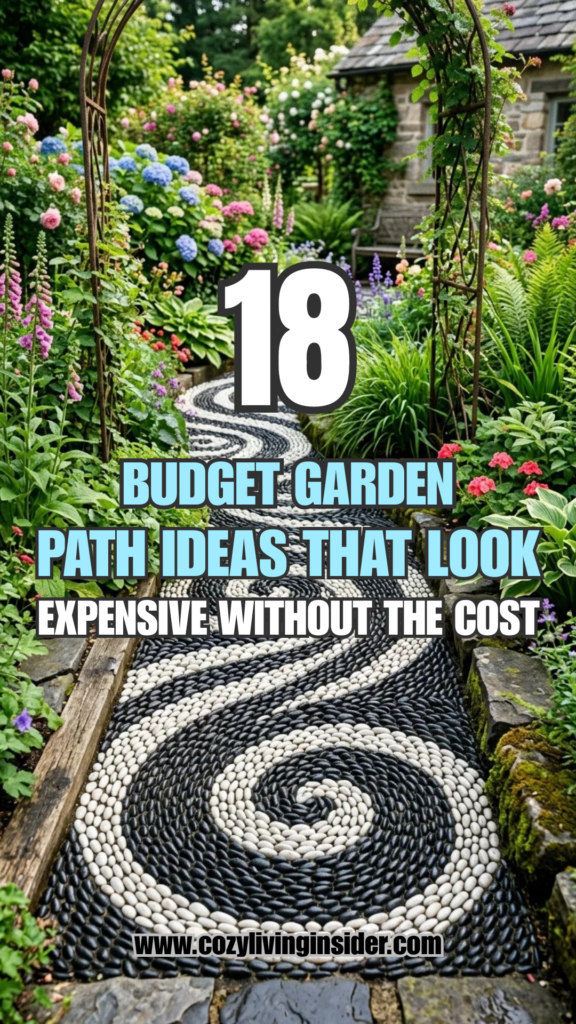

Creating a visually stunning garden doesn’t require a professional landscape architect or a massive bank account. Often, the difference between a mundane yard and a curated outdoor sanctuary lies in the structure of its walkways. A well-designed path does more than lead from point A to point B; it defines the garden’s flow, highlights specific plant beds, and adds a layer of architectural depth.
By utilizing recycled materials, DIY techniques, and natural elements, you can achieve a “high-end” look on a shoestring budget. Here are 18 innovative garden path ideas that provide maximum aesthetic impact for minimum financial investment.
1. Pea Gravel
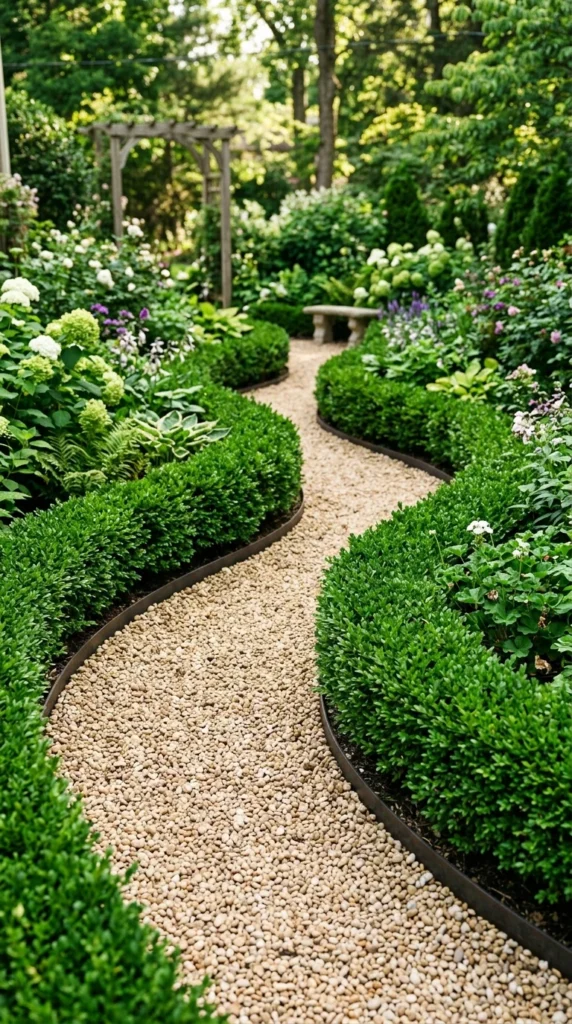
Pea gravel is the gold standard for budget-friendly elegance. These small, smooth stones provide a soft, crunching sound underfoot that evokes the atmosphere of a classic European estate. Because it is a loose-fill material, it is incredibly easy to install, even on uneven terrain.
- Why it looks expensive: The uniform texture provides a clean, minimalist backdrop that makes colorful plants “pop.”
- Pro Tip: Use a heavy-duty landscape fabric underneath to prevent weeds and install a sturdy border (like metal or pressure-treated wood) to keep the stones contained.
2. Wood Slices
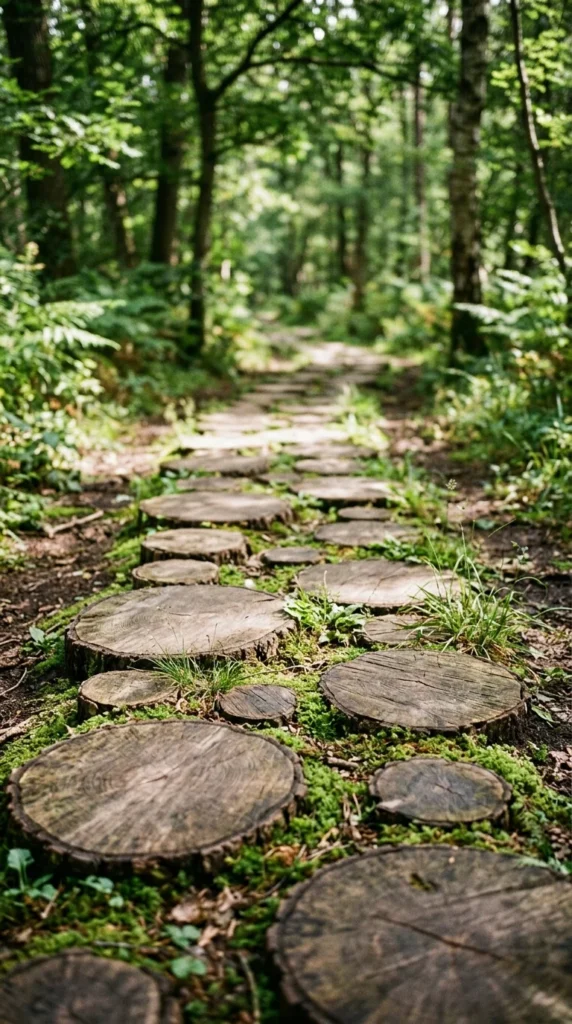
Also known as “log stepping stones,” wood slices offer an organic, whimsical aesthetic perfect for woodland gardens or cottage-style landscapes. If you have a fallen tree or can source rounds from a local arboricultural service, this project can be nearly free.
- Why it looks expensive: It creates a bespoke, hand-crafted feel that mimics high-end organic modernism.
- Pro Tip: Treat the slices with a clear wood preservative to prevent rot and sink them into a bed of sand for stability.
3. Reclaimed Bricks
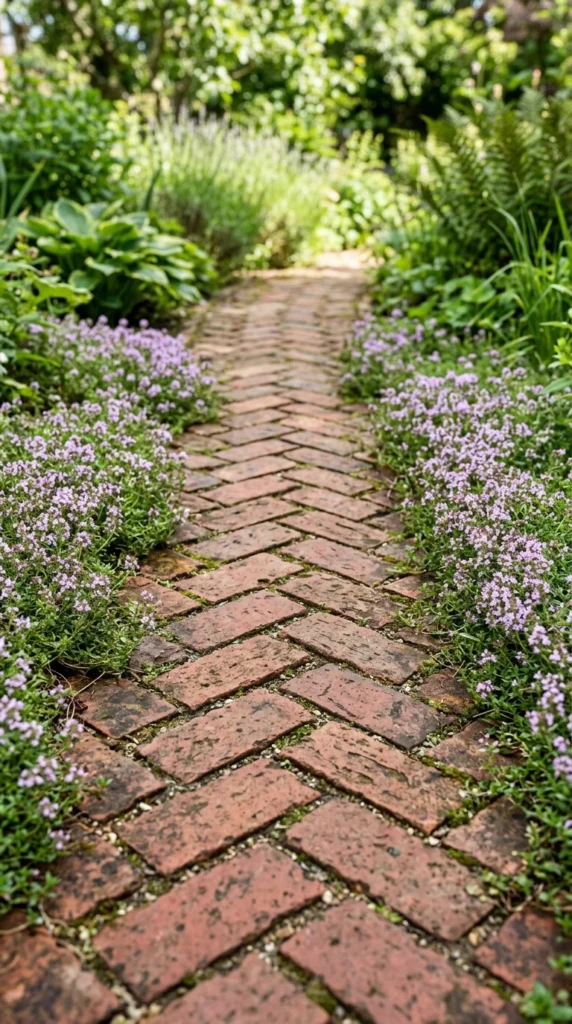
New bricks can be pricey, but reclaimed bricks are often available for free or at a deep discount on online marketplaces. The weathered texture and varied color palette of old bricks add instant history and character to a garden.
- Why it looks expensive: The intricate patterns, such as herringbone or basketweave, suggest professional craftsmanship.
- Pro Tip: Lay the bricks on a compacted sand base to ensure they stay level over time.
4. Bark Mulch
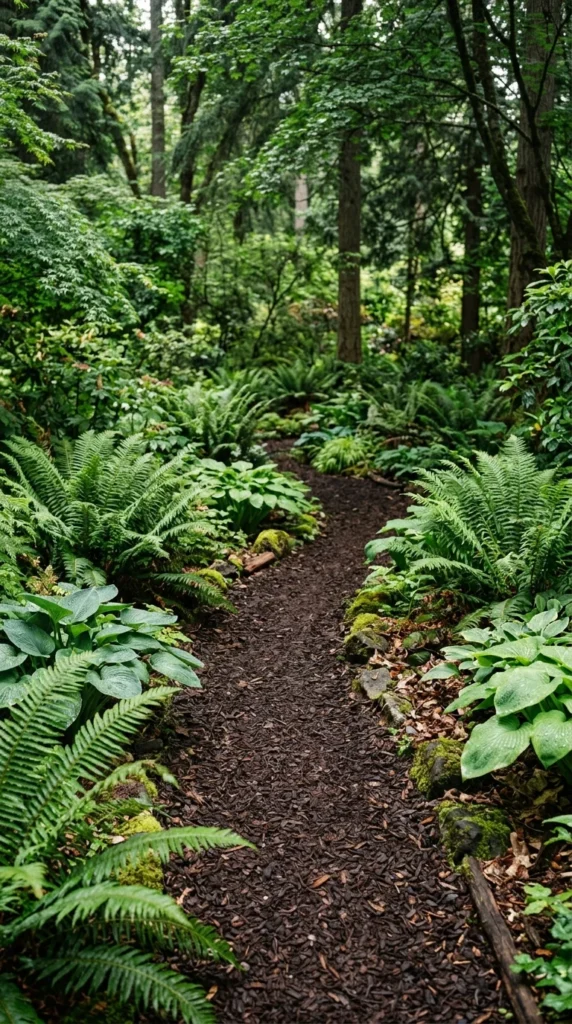
For a naturalistic and extremely low-cost option, bark mulch or wood chips are hard to beat. This material is particularly effective for large properties where paving would be cost-prohibitive.
- Why it looks expensive: It gives the garden a “manicured forest” appearance, looking intentional rather than wild.
- Pro Tip: Choose “double-ground” mulch for a finer, more sophisticated texture.
5. Flagstone Scraps
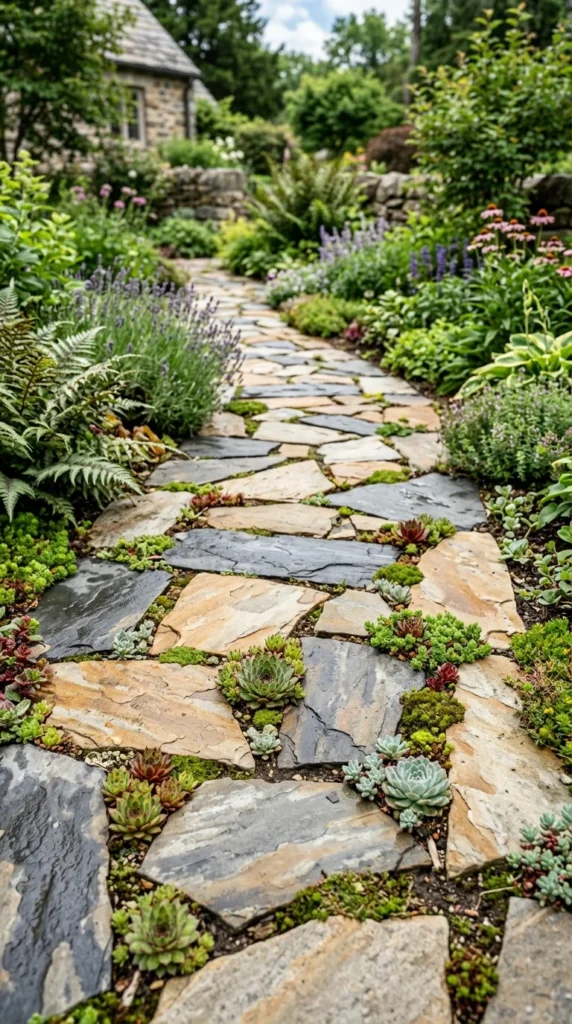
While large, uniform flagstones are expensive, many stone yards sell “irregulars” or broken fragments at a fraction of the cost. You can piece these together like a puzzle to create a stunning, natural walkway.
- Why it looks expensive: The irregular, “crazy paving” style is a staple of high-end Mediterranean and mid-century modern landscapes.
- Pro Tip: Fill the gaps with “Steppable” plants like Irish Moss or Corsican Mint for a lush, living look.
6. Concrete Molds
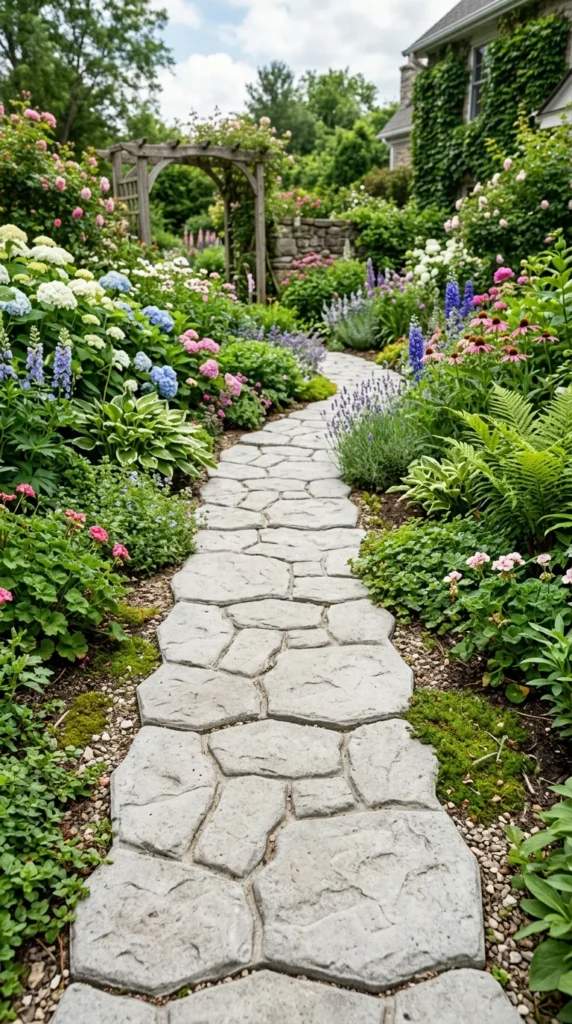
Plastic path molds allow you to pour wet concrete into sections that mimic the look of expensive stone or brick. This DIY-friendly method requires only bags of pre-mix concrete and a bit of patience.
- Why it looks expensive: Once stained or sealed, it is nearly indistinguishable from real stone masonry.
- Pro Tip: Add concrete pigment to the mix to achieve a more natural, earth-toned hue rather than basic industrial grey.
7. Pallet Wood
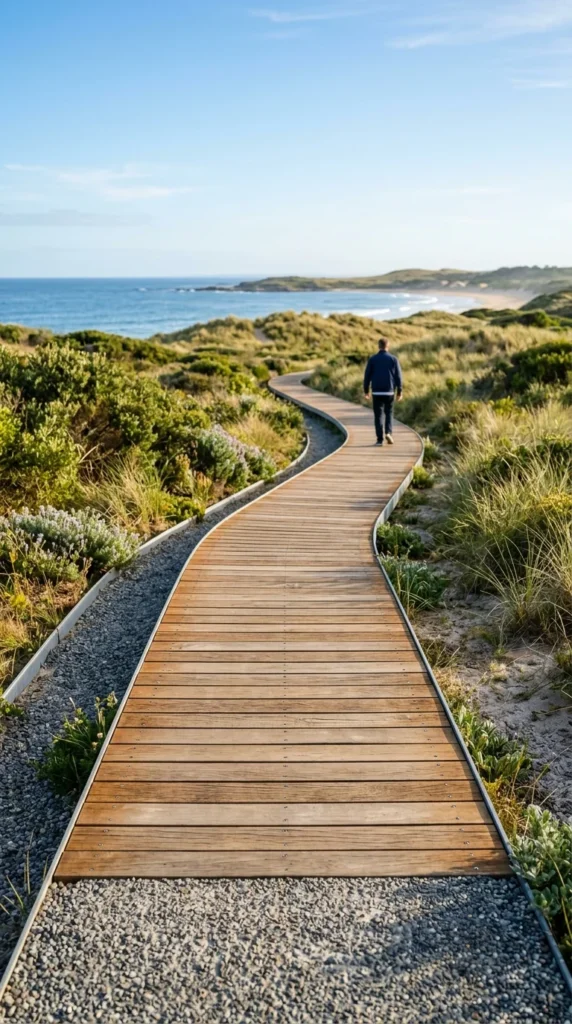
Upcycling shipping pallets into a “garden boardwalk” is a fantastic way to add structure to damp or uneven areas. By dismantling the pallets and staining the planks, you can create a sleek, contemporary walkway.
- Why it looks expensive: A boardwalk design adds a level of architectural intentionality that sets it apart from ground-level paths.
- Pro Tip: Ensure you use pallets marked “HT” (Heat Treated) rather than chemically treated ones for a safer garden environment.
8. Crushed Shells
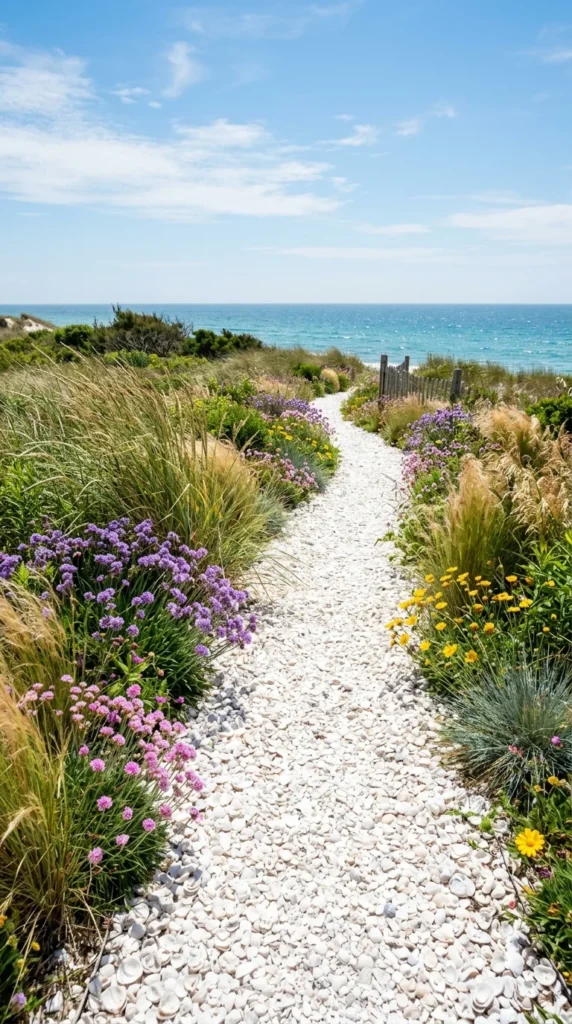
If you live near the coast, crushed oyster or clam shells can be a sustainable and affordable alternative to stone. They provide a bright, reflective surface that illuminates shaded areas of the garden.
- Why it looks expensive: It evokes the refined, airy feel of a Cape Cod or Hamptons beach house.
- Pro Tip: Wash the shells thoroughly before installation to remove any residual salt that might affect your soil’s pH.
9. Decomposed Granite
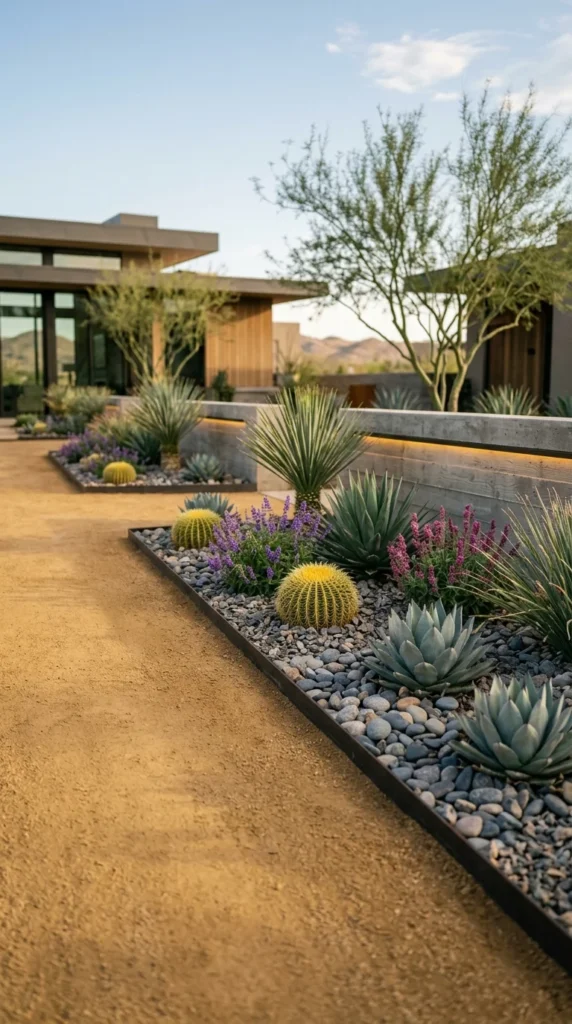
Decomposed granite (DG) is a fine, silty material that packs down to create a hard, stable surface. It’s a favorite in modern and xeriscape designs for its clean lines and earthy tones.
- Why it looks expensive: Its smooth, seamless finish is a hallmark of high-end contemporary landscape architecture.
- Pro Tip: Mix the DG with a stabilizer (a liquid binder) to prevent it from washing away during heavy rain.
10. Stepping Stones
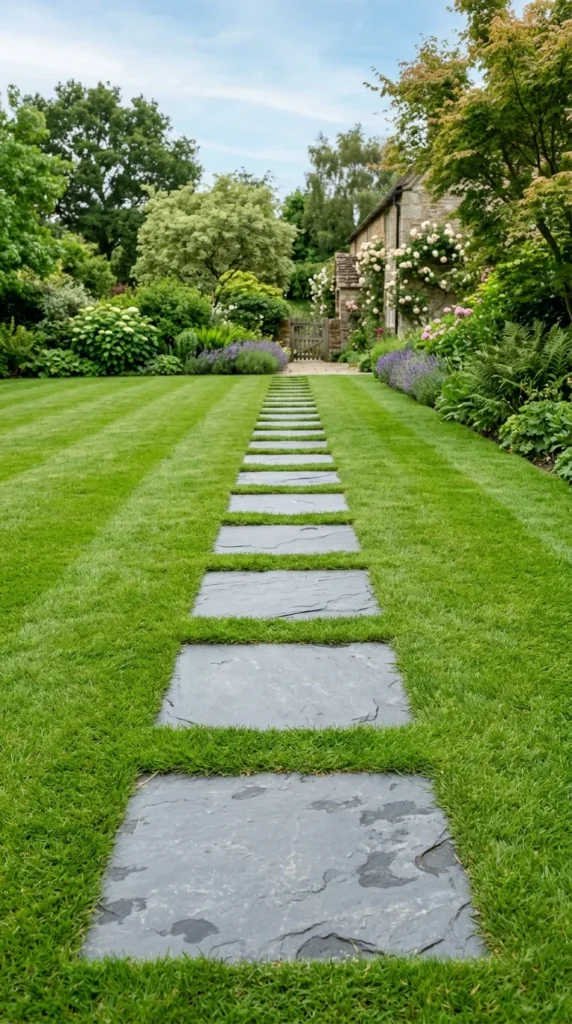
Sometimes, less is more. Placing large stepping stones with significant gaps between them allows the grass or groundcover to remain the star while providing a clear walking route.
- Why it looks expensive: The “floating” look is minimalist and sophisticated, often seen in high-end zen gardens.
- Pro Tip: Ensure the top of the stone is flush with the soil level so you can mow right over them.
11. Pine Needles
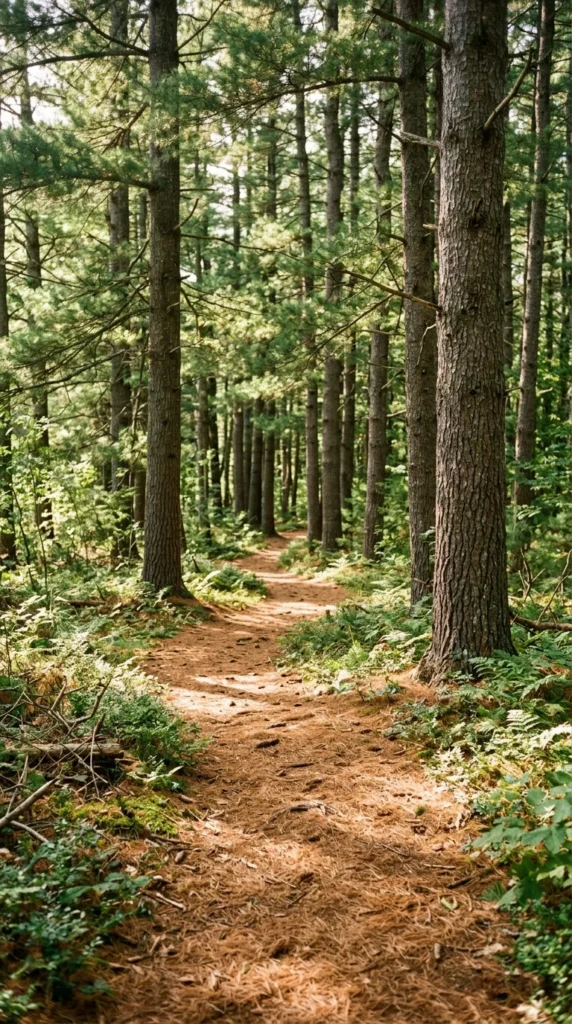
Often called “pine straw,” this is an excellent choice for acidic-loving gardens (like those with azaleas and rhododendrons). It is lightweight, easy to spread, and incredibly inexpensive.
- Why it looks expensive: It creates a cohesive, monochromatic look that feels like a professionally maintained botanical garden.
- Pro Tip: Pine straw knits together, making it less likely to wash away on slopes than wood chips.
12. Cinder Blocks
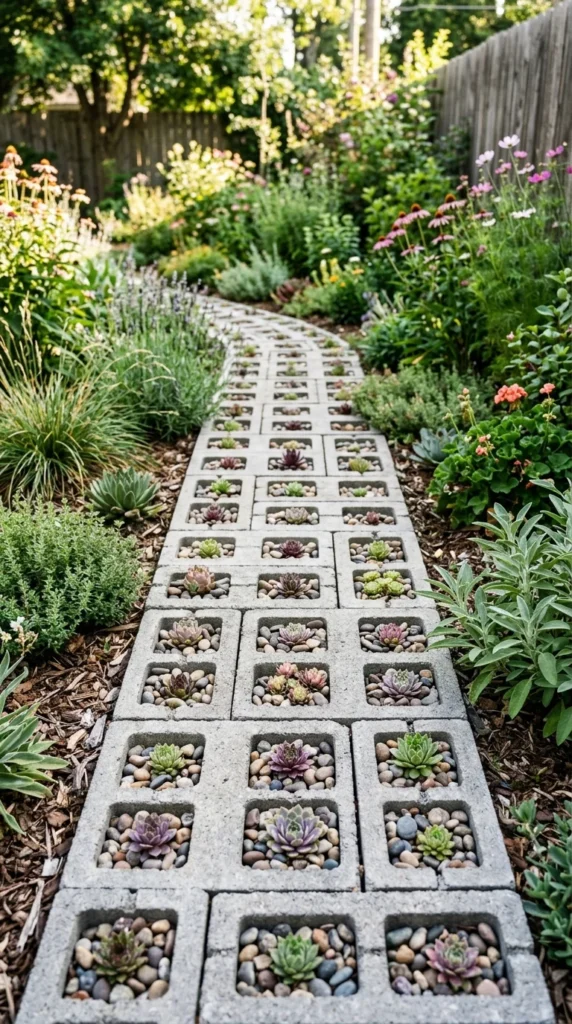
Standard cinder blocks are incredibly cheap and can be used to create a modern, industrial-chic path. By laying them flat, you can use the hollow centers as mini-planters for succulents or herbs.
- Why it looks expensive: It utilizes geometric repetition, a core principle of modern high-design.
- Pro Tip: Paint or stain the concrete blocks a dark charcoal grey for a more premium, slate-like finish.
13. River Rocks
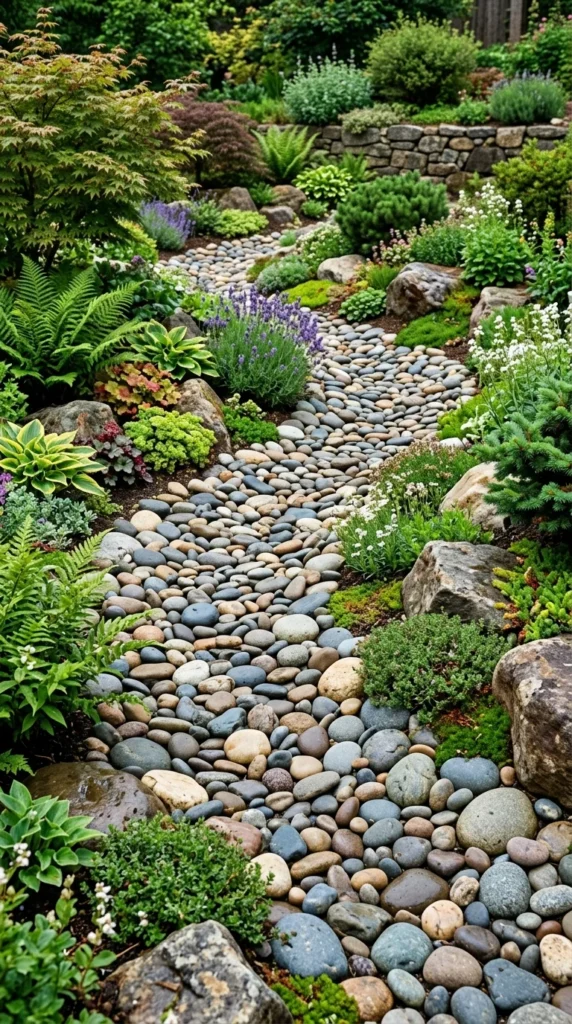
River rocks offer a tactile, water-inspired aesthetic. While buying them in bulk can be costly, sourcing them from local suppliers or using them as an accent for other materials keeps the budget low.
- Why it looks expensive: It adds a luxury “spa” or “zen” vibe to the outdoor space.
- Pro Tip: Use larger stones on the edges and smaller pebbles in the center to create a sense of depth and movement.
14. Cobblestone Pavers
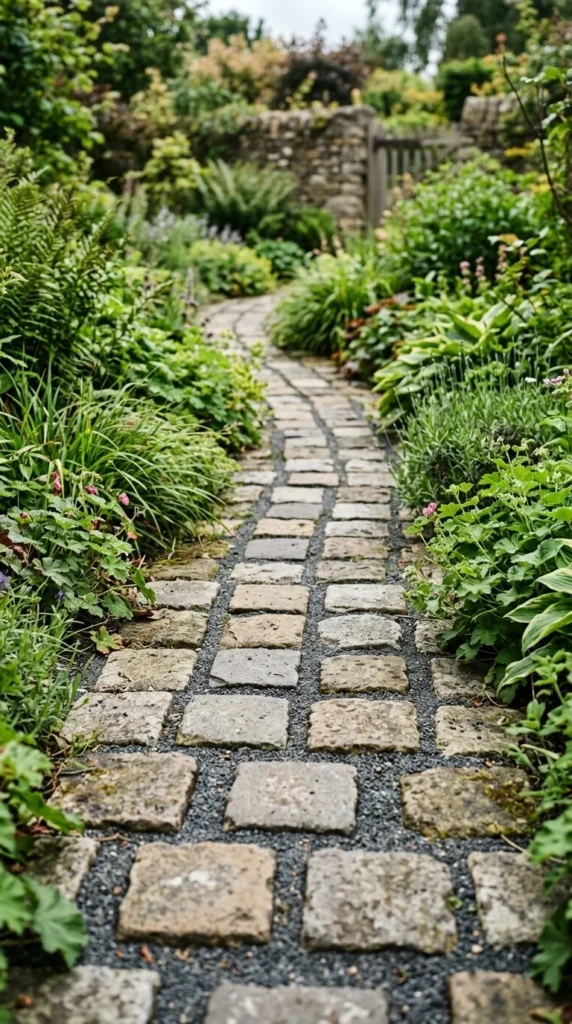
You can achieve the look of an old European street by using small, tumbled concrete pavers. These are often sold individually at big-box stores, allowing you to buy exactly what you need over time.
- Why it looks expensive: The “tumbled” texture gives the stones an aged, authentic appearance.
- Pro Tip: Lay them in a slight curve to make a small garden appear larger and more intriguing.
15. Slate Chippings
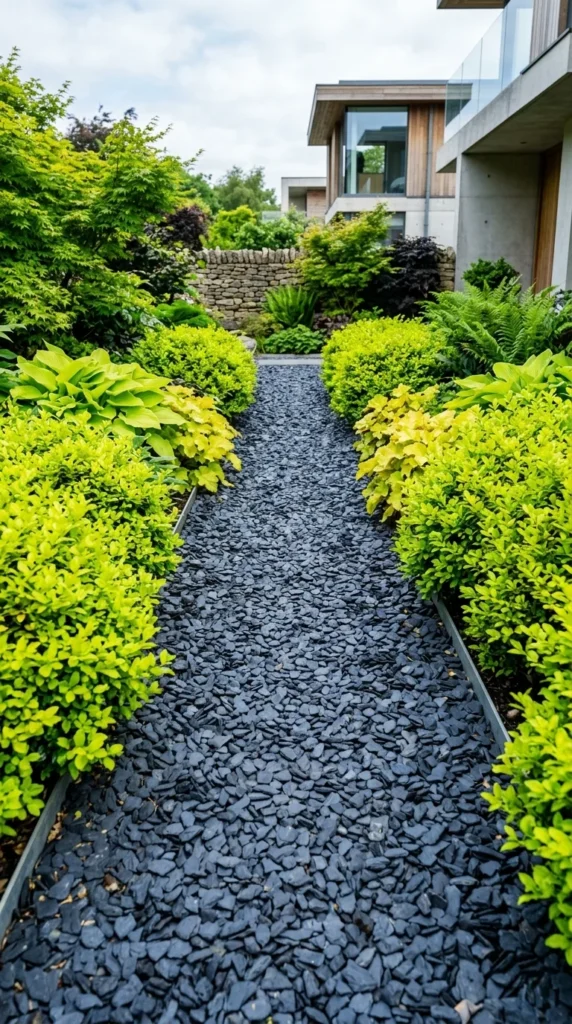
Slate chippings are flat, angular pieces of stone that provide a very different texture than rounded gravel. They stay in place better and offer a sleek, premium color palette.
- Why it looks expensive: The dark, cool tones of slate are a favorite in modern “architectural” gardens.
- Pro Tip: Slate darkens beautifully when wet, making it a great choice for rainy climates.
16. Mosaic Pebbles
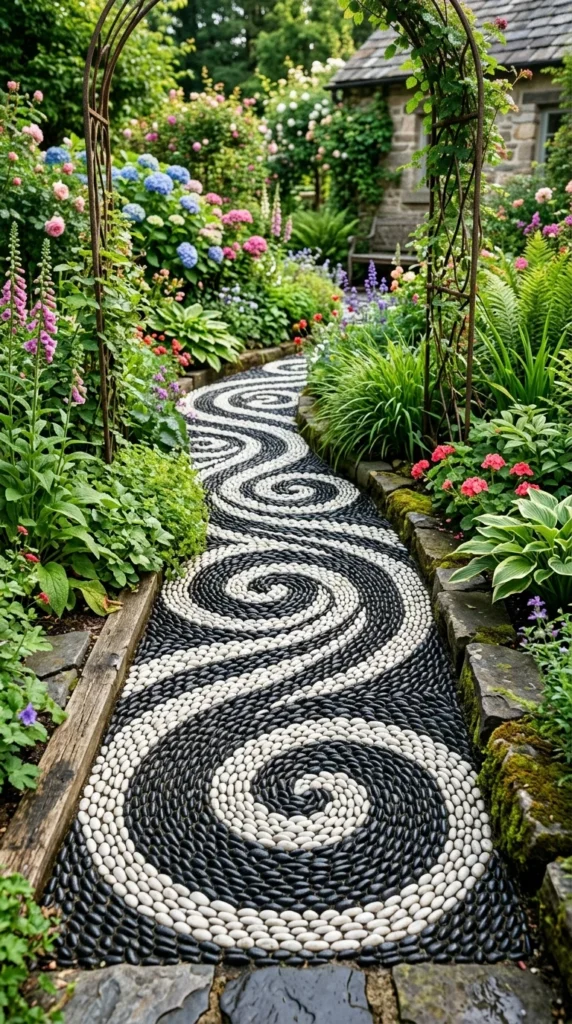
This is the ultimate low-cost, high-labor project. By collecting various colored pebbles and setting them into a thin layer of wet mortar, you can create intricate patterns or “stone carpets.”
- Why it looks expensive: It is a literal work of art, reminiscent of ancient Mediterranean villas.
- Pro Tip: Start with a small section, as this method is time-consuming but yields breathtaking results.
17. Grass Pathways
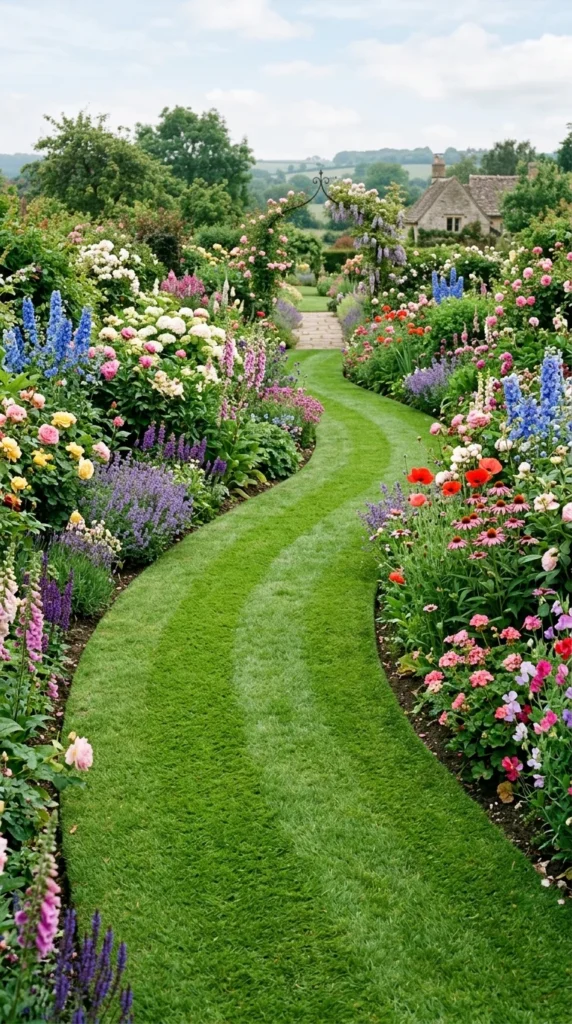
Sometimes the best path is the one you already have. By intentionally shaping a path through taller meadow grass or flower beds and keeping it meticulously mowed, you create a soft, verdant walkway.
- Why it looks expensive: It suggests a sprawling estate where “negative space” is used to frame the landscape.
- Pro Tip: Use a crisp edge (sharpened with a spade) between the grass path and the planting beds to maintain the look.
18. Railroad Ties
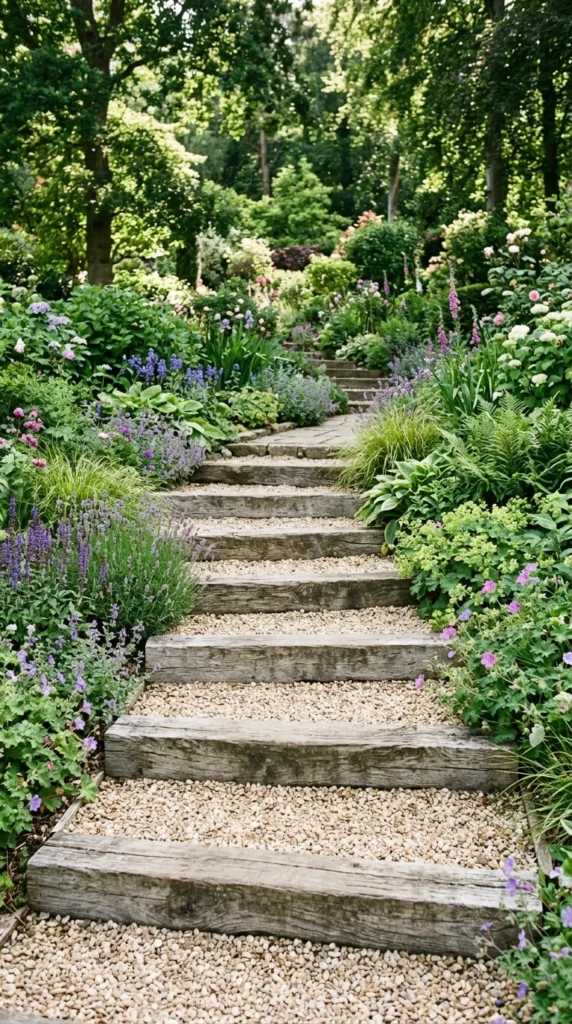
For gardens with elevation changes, reclaimed railroad ties or large timber beams provide a heavy, structural look that feels permanent and expensive.
- Why it looks expensive: The scale of the wood suggests a level of construction and stability found in professional landscaping.
- Pro Tip: If using reclaimed ties, ensure they are not weeping excess creosote, which can be harmful to nearby sensitive plants.