
Raised garden beds are a cornerstone of modern, efficient gardening. They offer superior drainage, better soil control, and an ergonomic advantage that traditional in-ground gardening often lacks. However, the layout of these beds is just as critical as the soil you put in them. A well-planned layout can maximize solar exposure, improve airflow, and significantly increase your yield per square foot.
Whether you are working with a sprawling suburban lawn or a compact urban patio, the following seventeen layout ideas provide a blueprint for creating a garden that is both aesthetically pleasing and exceptionally productive.
1. U-Shaped Layout
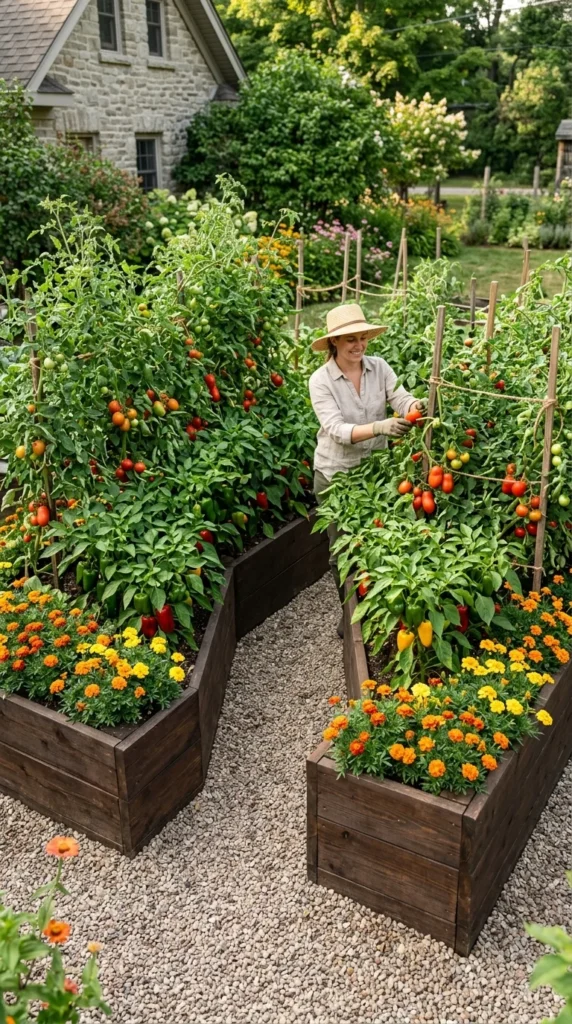
The U-shaped layout is the gold standard for accessibility and space maximization. By wrapping the garden bed around a central workspace, you create a “cockpit” effect where every plant is within arm’s reach. This design minimizes the amount of square footage lost to pathways while providing a massive continuous planting area. It is particularly effective for large-scale vegetable production, allowing for easy harvesting and maintenance without ever stepping into the bed and compacting the soil.
2. Keyhole Garden
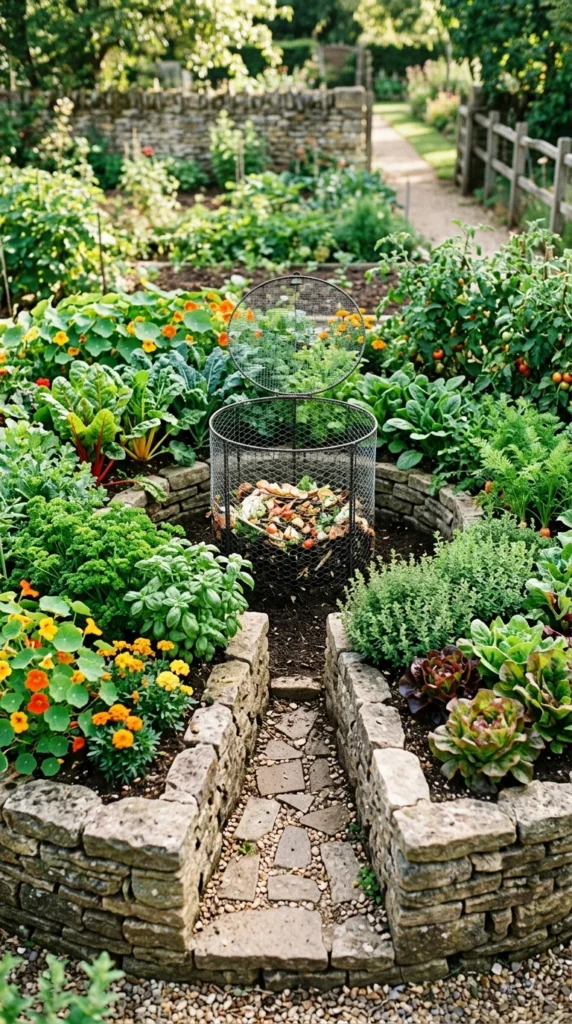
Originating from permaculture practices, the keyhole garden is a circular raised bed with a notched pathway leading to a central composting basket. As you add kitchen scraps and organic matter to the center, nutrients leach directly into the surrounding soil, feeding the plants. This layout is incredibly efficient for dry climates as it retains moisture exceptionally well and provides a self-fertilizing ecosystem that yields massive harvests with minimal external input.
3. Vertical Trellis
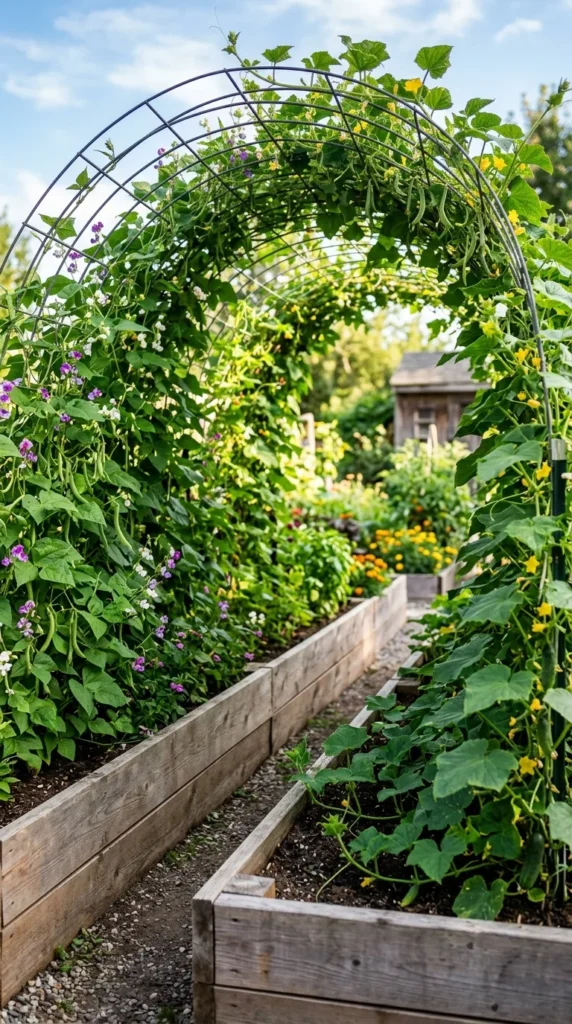
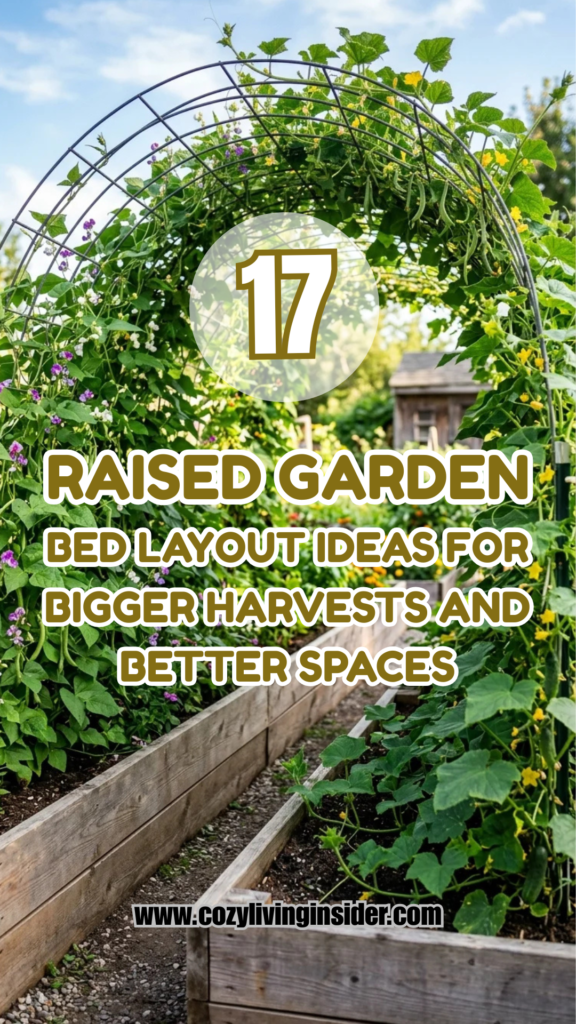
When horizontal space is limited, the only way to go is up. Integrating a vertical trellis system between two raised beds transforms your garden into a three-dimensional powerhouse. This layout is perfect for “heavy” climbers like squash, melons, and cucumbers, as well as aesthetic favorites like climbing roses or sweet peas. By lifting the foliage off the ground, you improve airflow—reducing the risk of powdery mildew—and keep the fruit clean and easy to pick.
4. L-Shaped Corner
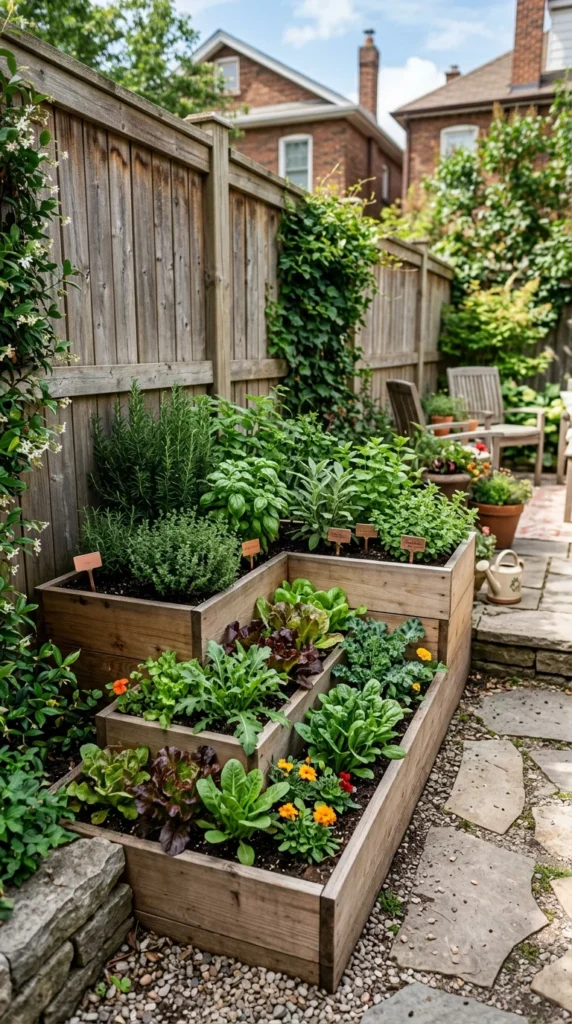
The L-shaped layout is the ultimate solution for utilizing underused corners of a yard or patio. It creates a defined border that feels integrated into the landscape architecture. This design is excellent for creating a “kitchen garden” feel, where culinary herbs and quick-growing greens are positioned closest to the house for easy access during meal preparation.
5. Grid Alignment
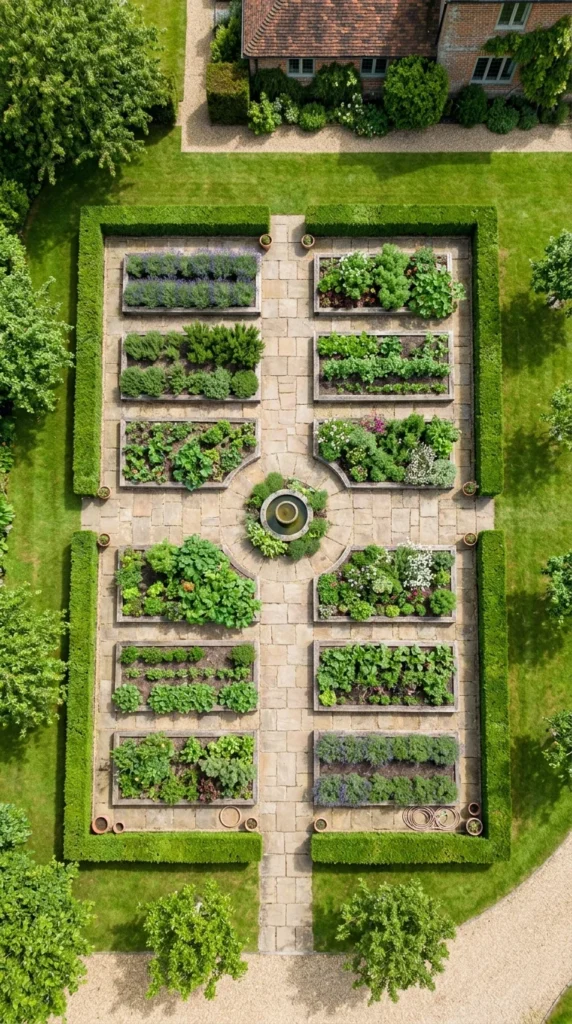
For the gardener who values symmetry and order, the grid alignment offers a formal, clean aesthetic. This layout makes it incredibly easy to plan crop rotations and irrigation lines. By keeping the beds uniform in size, you can easily swap out seasonal covers, bird netting, or cold frames. The wide, straight paths between the beds allow for easy wheelbarrow access, making the transport of compost and mulch a breeze.
6. Enclosed Protection
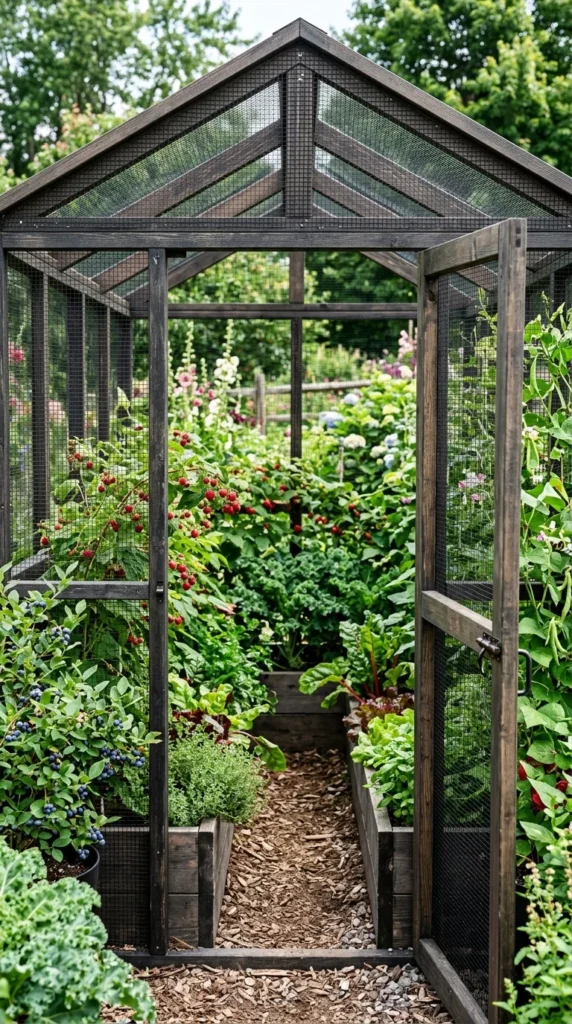
In areas with high pest pressure—from deer to rabbits and birds—an enclosed layout is a necessity. This design features raised beds housed within a “garden cage” or a fenced-in enclosure. By planning the layout with a central aisle and perimeter beds, you create a protected sanctuary where your harvest is safe from wildlife. This is particularly effective for strawberry patches and blueberry bushes which are frequent targets for birds.
7. Tiered Steps
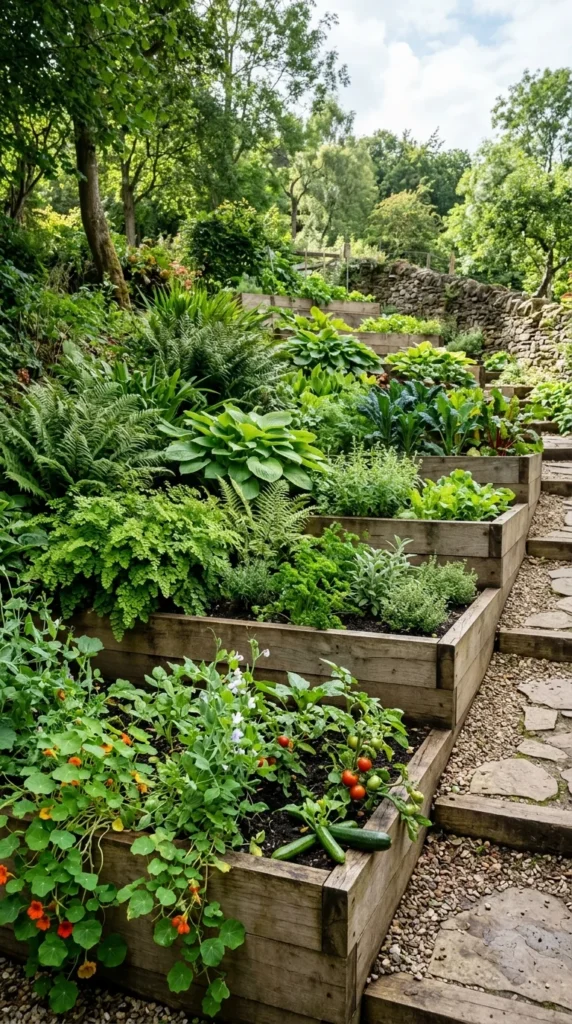
If your property has a significant slope, tiered raised beds are the best way to prevent erosion and create usable planting space. By terracing the beds, you create flat, manageable surfaces that catch rainwater rather than letting it run off. Each tier can be dedicated to a different microclimate; use the top, driest tier for Mediterranean herbs like rosemary and thyme, and the lower, more moisture-retentive tiers for leafy greens.
8. Interlocking Squares
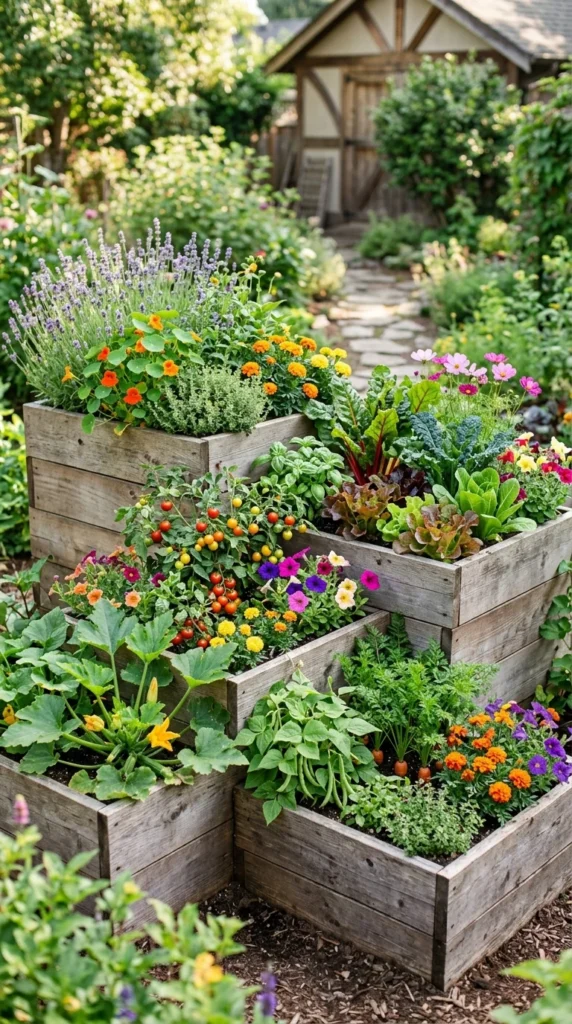
The interlocking square layout breaks away from traditional linear designs to create a visual centerpiece. By varying the heights of the interlocking beds, you can create depth and interest. This layout works well for “chaos gardening” or cottage-style vegetable gardens where flowers and food crops are intermingled to attract pollinators and create a dense, tapestry-like appearance.
9. Circular Cluster
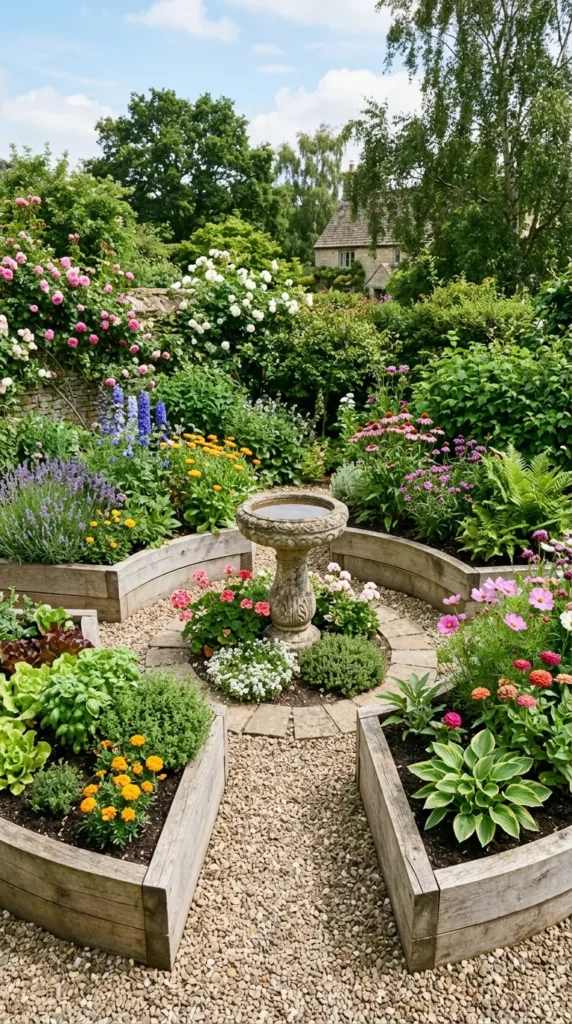
Circular clusters provide a soft, organic feel to the landscape. By using curved beds (often made from flexible metal edging or stone), you create a natural flow that guides the eye through the garden. This layout is ideal for a sensory garden or a dedicated pollinator space, as it allows you to stand in the center and be completely surrounded by the sights and scents of your plants.
10. Pyramid Planter
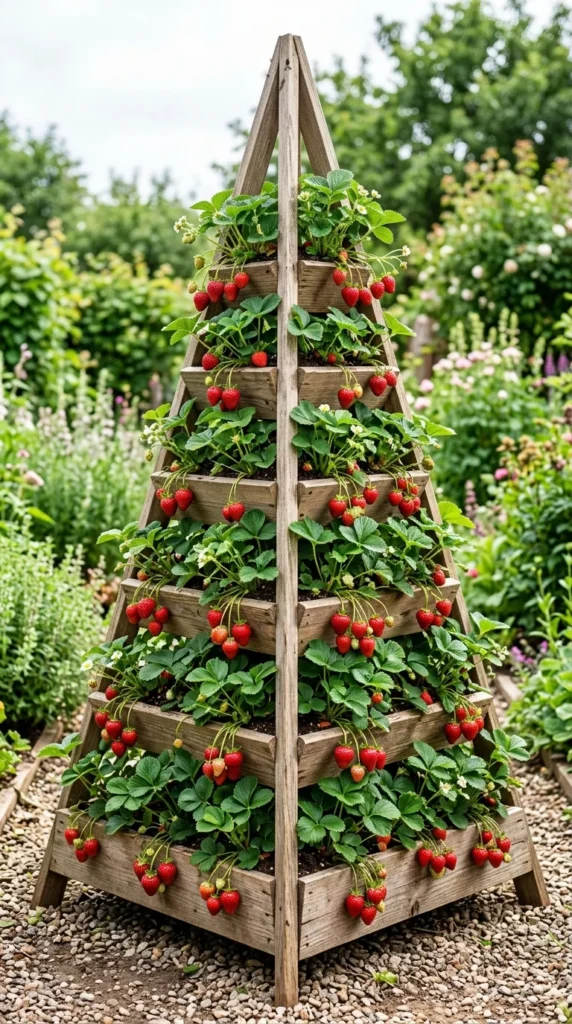
The pyramid layout is a space-saving marvel. By stacking smaller beds on top of larger ones, you maximize the planting surface area relative to the footprint on the ground. This is the premier layout for strawberries, as the cascading fruit stays off the soil and the vertical height makes harvesting painless for the back and knees.
11. Hugelkultur Bed
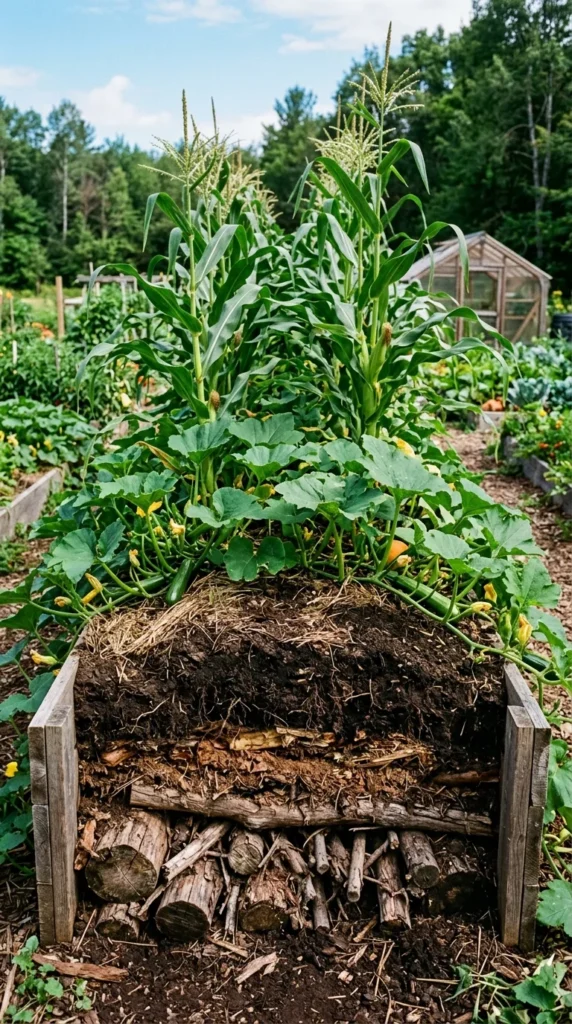
Hugelkultur is a traditional German technique that involves building a raised bed over a base of rotting wood. Over time, the wood breaks down, creating a sponge-like interior that retains moisture and releases nutrients for years. While these can be built as mounds, they are most effective when contained within high raised bed walls. This layout is perfect for heavy-feeding crops like pumpkins and corn.
12. Checkerboard Pathing
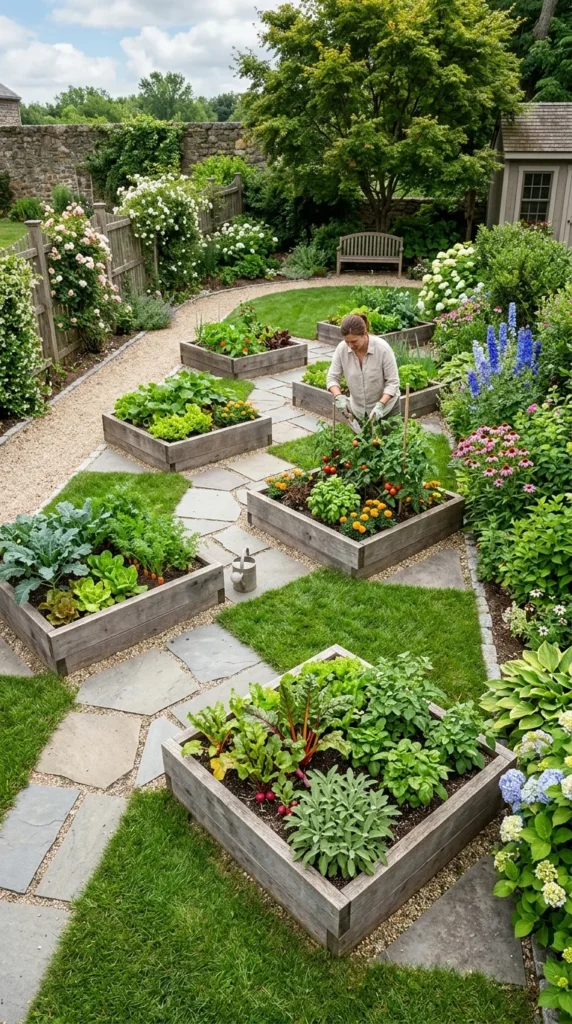
The checkerboard layout alternates planting beds with open space or decorative pavers. This design prevents the garden from feeling cramped and provides ample room for two people to work side-by-side. It is an excellent choice for community gardens or family spaces where children need room to run between the growing areas without trampling the plants.
13. Greenhouse Topper
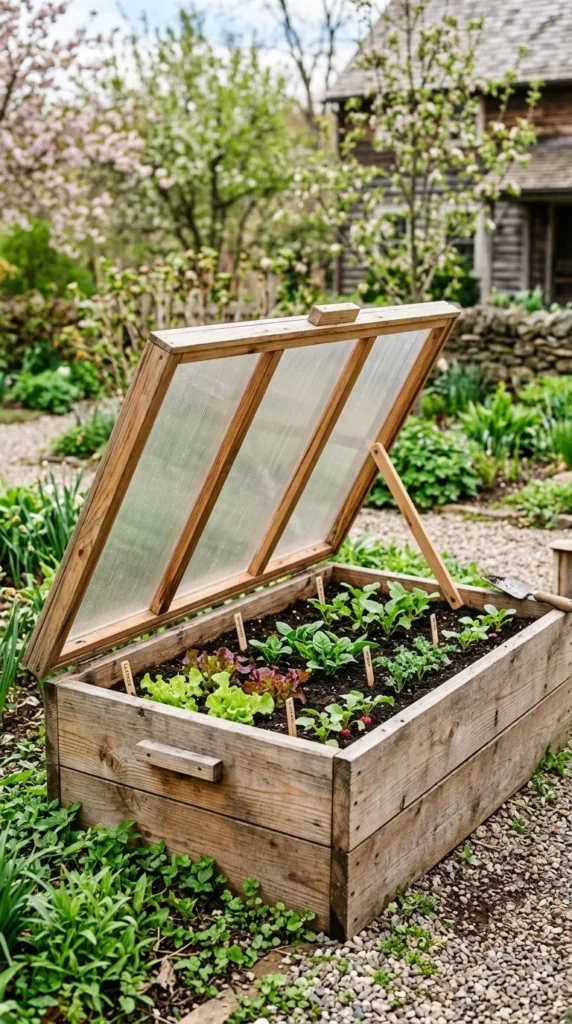
For gardeners in cold climates, integrating a greenhouse or “cold frame” topper directly into the raised bed layout is a game-changer. This layout allows for year-round production by protecting plants from frost in the winter and accelerating growth in the spring. The bed itself acts as an insulated base, holding the heat of the earth and the compost longer than traditional pots.
14. Wheelchair Accessible
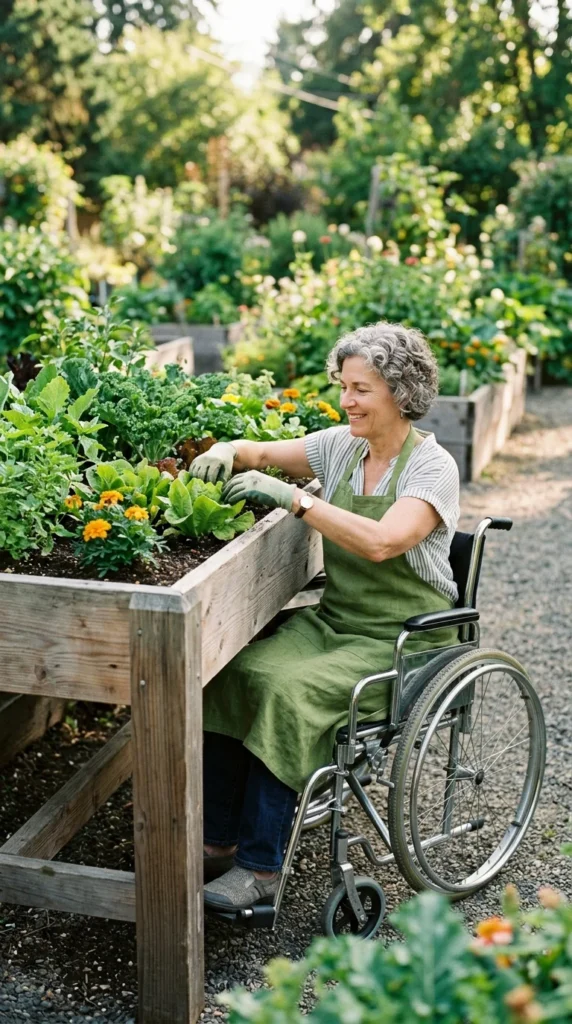
Gardening should be accessible to everyone. The wheelchair-accessible layout features beds that are elevated on sturdy legs or built with a “kick-in” space at the bottom to allow a seated gardener to get close to the plants. These beds are usually narrower—no more than three feet wide—ensuring that everything can be reached from one side.
15. Bench Integration
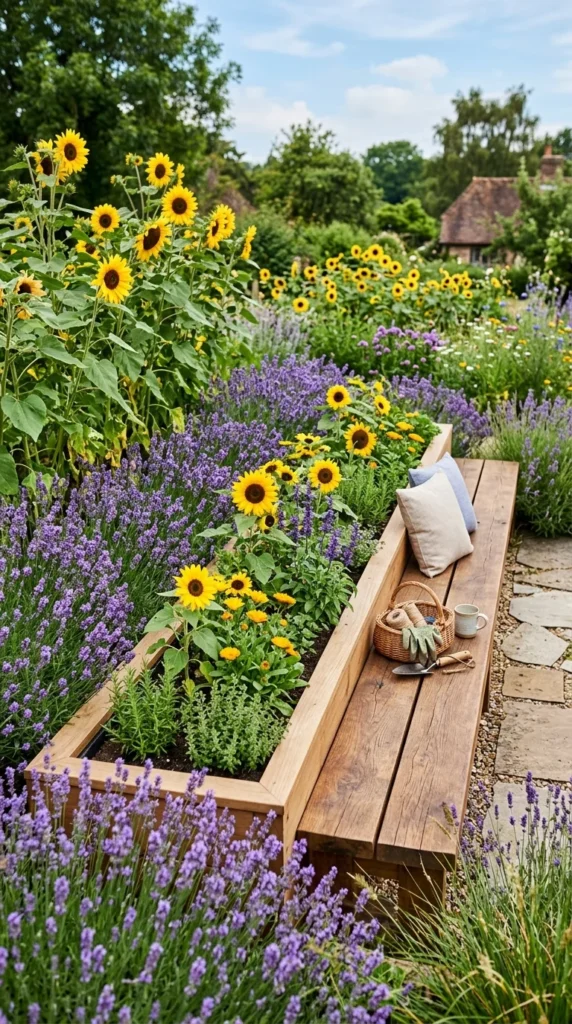
Why choose between a garden and a seating area? Integrating a bench into the structure of your raised bed turns the garden into a living piece of furniture. This layout encourages you to spend more time in your garden, observing the plants and enjoying the peace. The wide cap-rail of the bed serves as a perfect place to set down your morning coffee or garden tools.
16. Herb Spiral
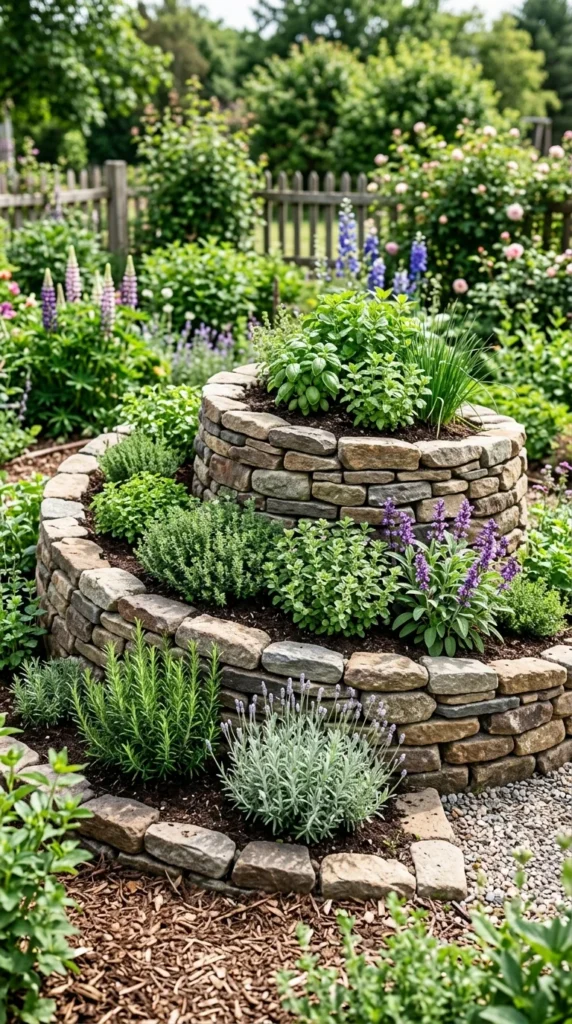
The herb spiral is a classic of permaculture design that packs a massive variety of plants into a tiny footprint. The verticality creates multiple microclimates: the top is hot and dry (perfect for rosemary), while the bottom is cool and moist (ideal for mint and parsley). This layout is not only incredibly productive but serves as a stunning sculptural element in any backyard.
17. Native Pollinator Border

A perimeter layout dedicated to native pollinators serves as a “living fence.” By placing these beds around the edges of your main vegetable garden, you create a buffer zone that attracts bees, butterflies, and predatory insects that hunt garden pests. This layout ensures that your fruiting crops, like tomatoes and squash, have a constant supply of pollinators nearby to guarantee a heavy harvest.