
The “mushroom” color palette has emerged as a cornerstone of modern interior design, offering a sophisticated middle ground between the stark coolness of gray and the sometimes overly traditional warmth of beige. Often described as a complex “greige” or a muted taupe, mushroom is an earthy, organic hue that adapts fluidly to various lighting conditions and design styles. It provides a neutral backdrop that feels grounded, intentional, and timelessly elegant.
Integrating mushroom tones into a living room requires a delicate balance of texture, contrast, and light. When executed correctly, this color creates a sanctuary-like atmosphere that is both inviting and high-end. Below are eight expert-curated ideas to transform your living space into a mushroom-toned masterpiece.
1. Monochromatic Layers
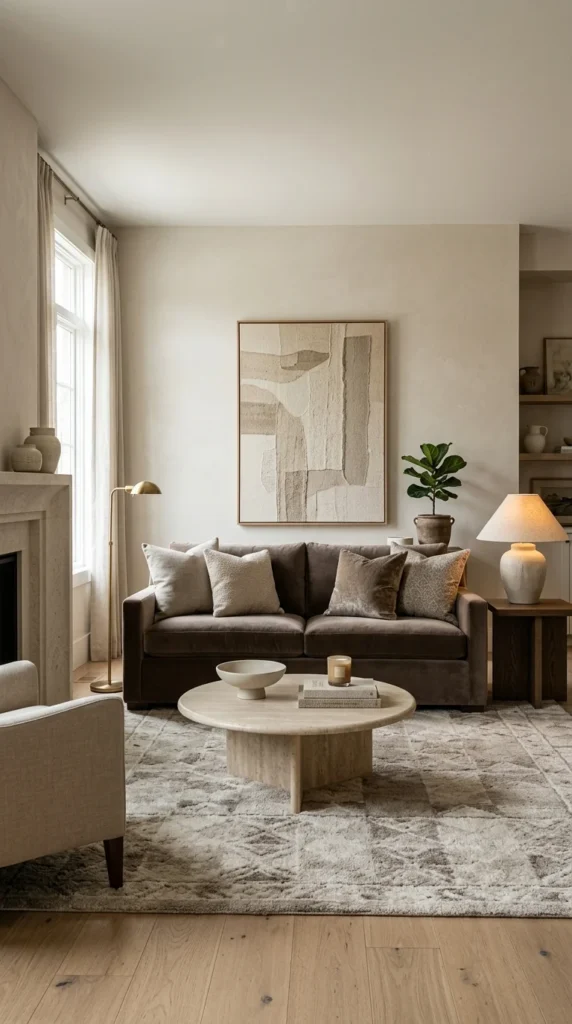
The key to a successful monochromatic mushroom living room is the intentional layering of shades. Rather than sticking to a single flat tone, incorporate a spectrum of “mushroom” hues—from light oatmeal and sandy taupe to deep, muddy browns and charcoal-tinged grays.
This approach prevents the room from feeling one-dimensional or washed out. Start with a mid-tone mushroom on the walls and introduce a darker, more saturated shade for the primary seating. Finish the look with lighter accents in the rug and curtains. By varying the saturation, you create a rhythmic flow that guides the eye through the room, making the space feel expansive yet incredibly intimate.
2. Velvet Textures
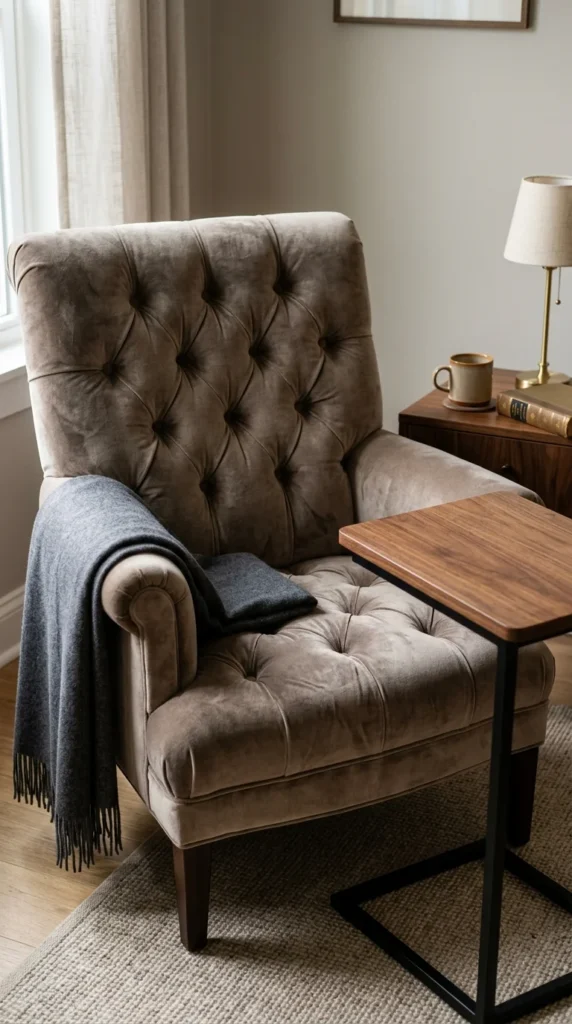
Texture is the silent hero of neutral interiors. Mushroom is a color that can sometimes appear flat in matte finishes; however, when applied to luxurious fabrics like velvet, it takes on a luminous, multidimensional quality. A mushroom-colored velvet sofa or a pair of accent chairs acts as a focal point that screams elegance.
Velvet’s natural sheen allows it to reflect light differently from various angles, showcasing the complex undertones of the mushroom palette. In the morning, the fabric may look like a warm beige, while under evening lamplight, it may lean toward a moody, sophisticated gray. Pairing these soft, tactile surfaces with harder elements like stone or glass creates a balanced sensory experience.
3. Dark Accents
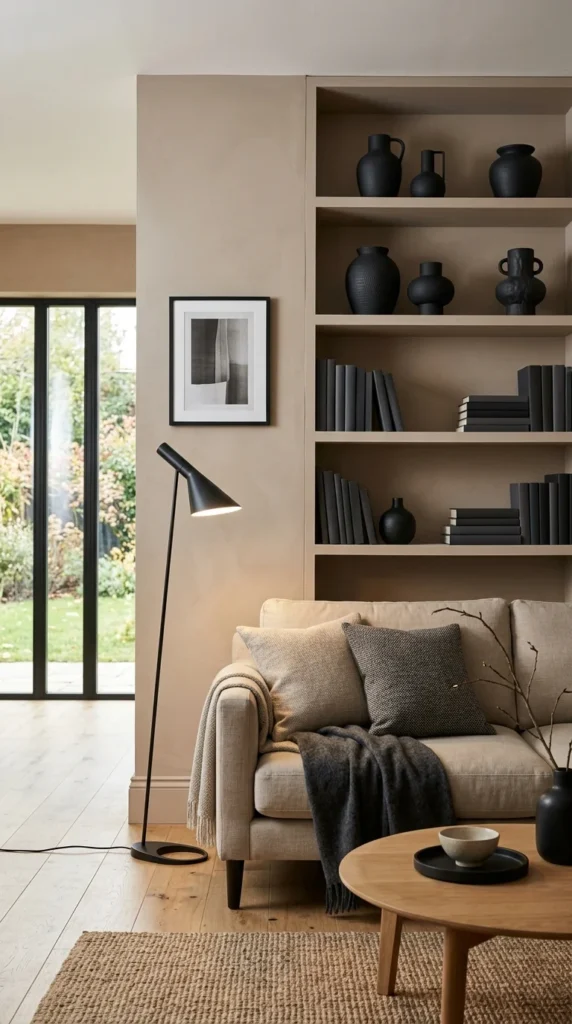
To prevent a mushroom-colored room from feeling too airy or ethereal, it is essential to ground the space with dark, high-contrast accents. Charcoal, matte black, or deep espresso brown are perfect companions for this earthy neutral.
Consider using black metal picture frames, dark hardware on cabinetry, or a statement charcoal area rug. These “anchor” points provide a visual weight that makes the lighter mushroom tones pop. This juxtaposition is what elevates a room from “simple” to “designed.” The dark elements act as a frame, highlighting the softness of the mushroom walls and upholstery while adding a touch of contemporary edge.
4. Natural Wood
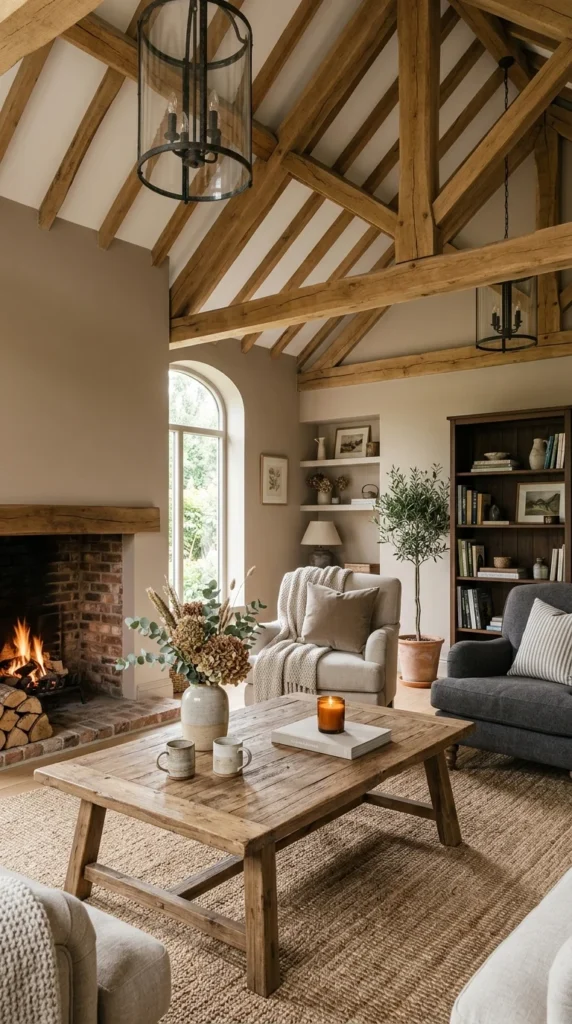
Since mushroom is an organic, earth-derived color, it pairs naturally with raw wood elements. Whether you prefer the golden hues of light oak or the rich, chocolatey depths of walnut, wood brings a necessary warmth to the mushroom palette.
Incorporate wood through architectural details like ceiling beams or wall paneling, or through furniture pieces like side tables and credenzas. The grain of the wood adds a layer of organic pattern that mimics the variations found in nature. This combination reinforces the “cozy” aspect of the design, making the living room feel like a refined retreat nestled in the natural world.
5. Botanical Infusions
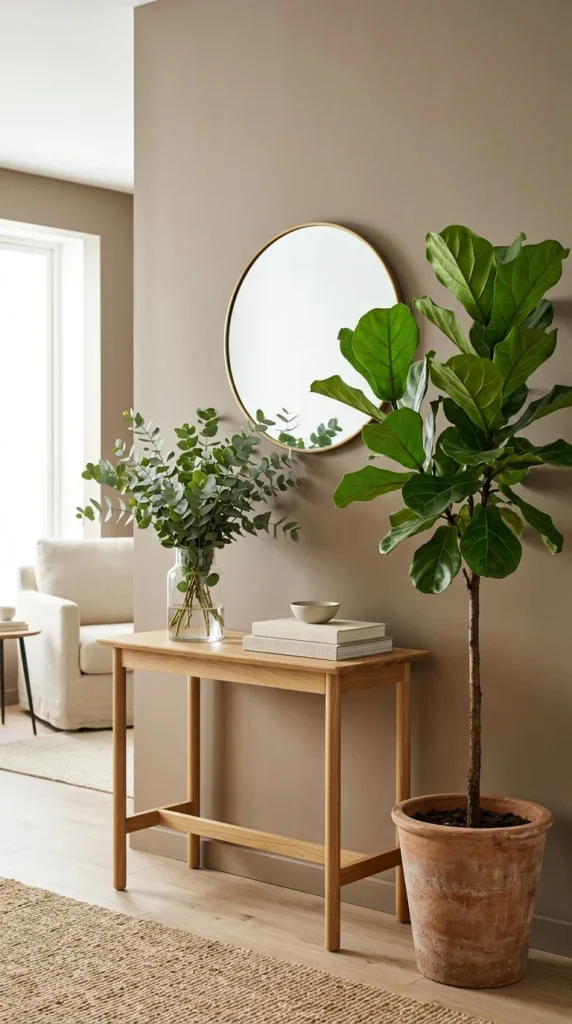
Mushroom tones serve as the perfect “blank canvas” for indoor greenery. Because mushroom has a slight green or brown undertone depending on the light, it harmonizes beautifully with botanical elements. The vibrancy of live plants breathes life into a neutral room, adding movement and a sense of freshness.
Large-scale plants like Monstera or Olive trees can fill empty corners, while smaller succulents or trailing vines can be placed on bookshelves to add pops of color. The green of the foliage acts as a bridge between the interior and the outdoors, enhancing the calming, restorative vibes that mushroom colors are known for.
6. Metallic Accents

If your goal is to lean into the “elegant” side of the mushroom spectrum, metallic accents are non-negotiable. Warm metals, such as unlacquered brass, brushed gold, or copper, work best with the warm-leaning undertones of mushroom.
These reflective surfaces add a jewelry-like finish to the room. You can introduce metallics through lighting fixtures, decorative trays on coffee tables, or even metallic threads in throw pillows. The subtle sparkle of gold against a muted taupe wall creates a high-contrast look that feels expensive and curated without being over-the-top.
7. Oversized Soft Goods
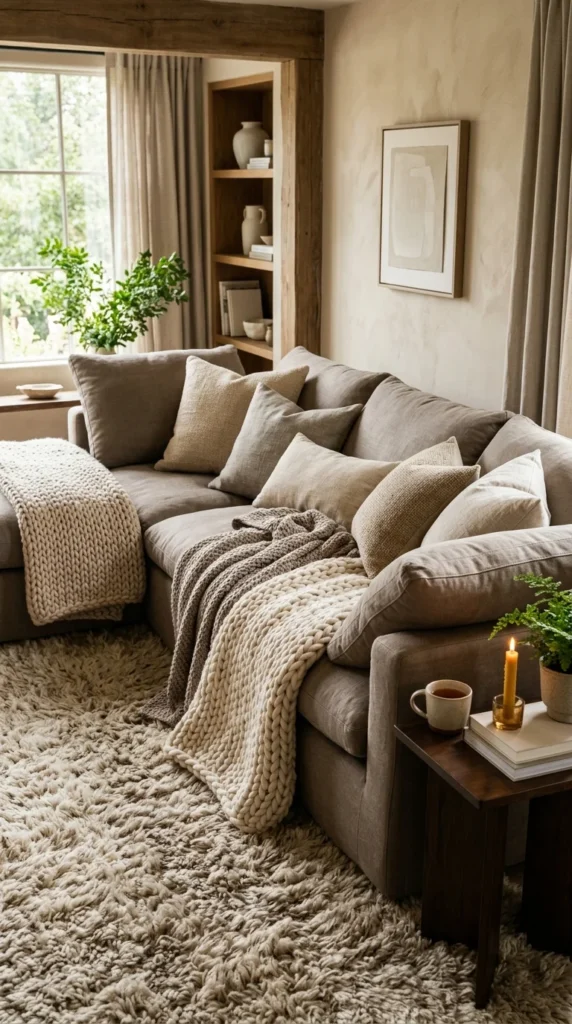
The “coziness” of a mushroom living room is often determined by the volume of soft goods. To achieve a high-end “hygge” look, choose oversized textiles that invite relaxation. Think floor-to-ceiling drapes in a heavy linen, extra-large wool throws, and deep-seated sofas.
When selecting these items, look for materials with visible weaves, such as bouclé or tweed. These textures interact with the mushroom color to create a sense of depth and comfort. The goal is to create an environment where every surface looks and feels soft, turning the living room into a cocoon of neutral comfort.
8. Architectural Lighting
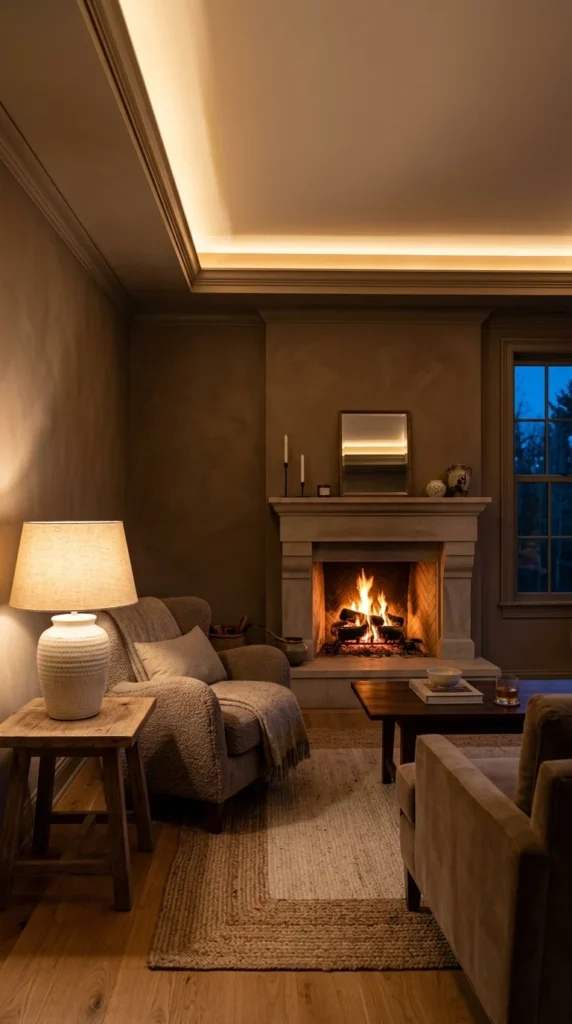
Lighting is the most critical factor in how mushroom color is perceived. Because it is a “chameleon” color, it can look vastly different under various light temperatures. To maximize elegance, avoid harsh overhead lighting and instead opt for a layered lighting scheme.
Use a combination of floor lamps, table lamps, and wall sconces with warm-toned bulbs (around 2700K to 3000K). This creates “pools” of light that highlight specific areas of the room, adding drama and intimacy. In the evening, the warm light will pull out the beige and brown tones of the mushroom paint, making the room feel incredibly snug and sophisticated.