
In the world of interior design, the television was once considered a necessary eyesore—a black rectangle that disrupted the flow of a beautifully curated room. However, contemporary design philosophy has shifted. Today, the TV wall is treated as an architectural focal point, often referred to as the “modern hearth.” By utilizing sophisticated wall paneling, you can transform a standard entertainment setup into a high-end installation that exudes “quiet luxury” and architectural intentionality.
To elevate your living space, you must look beyond the screen and focus on the textures, lighting, and materials that surround it. Here are 11 TV wall panel ideas designed to make your living room look undeniably expensive.
1. Slatted Wood
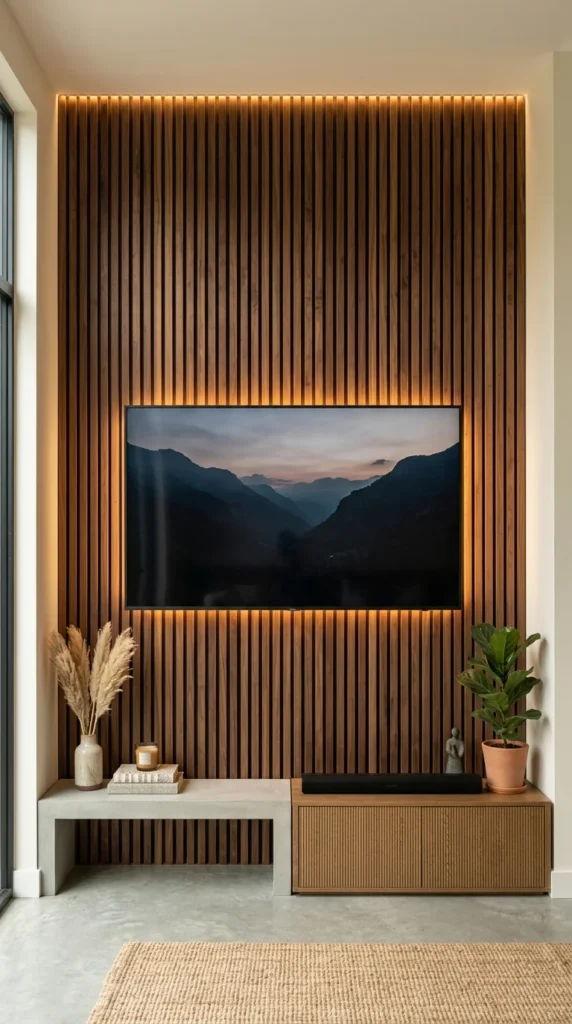
Vertical wood slats, often referred to as fluted or tambour panels, have become a hallmark of high-end mid-century modern and Japandi aesthetics. The repetition of thin wooden strips creates a sense of rhythm and height, drawing the eye upward and making the ceiling feel higher.
To achieve an expensive look, opt for hardwoods like walnut, oak, or teak rather than cheap laminates. The depth of the slats is crucial; deeper grooves create more dramatic shadows, which add a three-dimensional quality to the wall. For a truly bespoke feel, integrate hidden storage behind the slats or run the paneling across the entire length of the wall to create a seamless, expansive appearance.
2. Marble Slabs
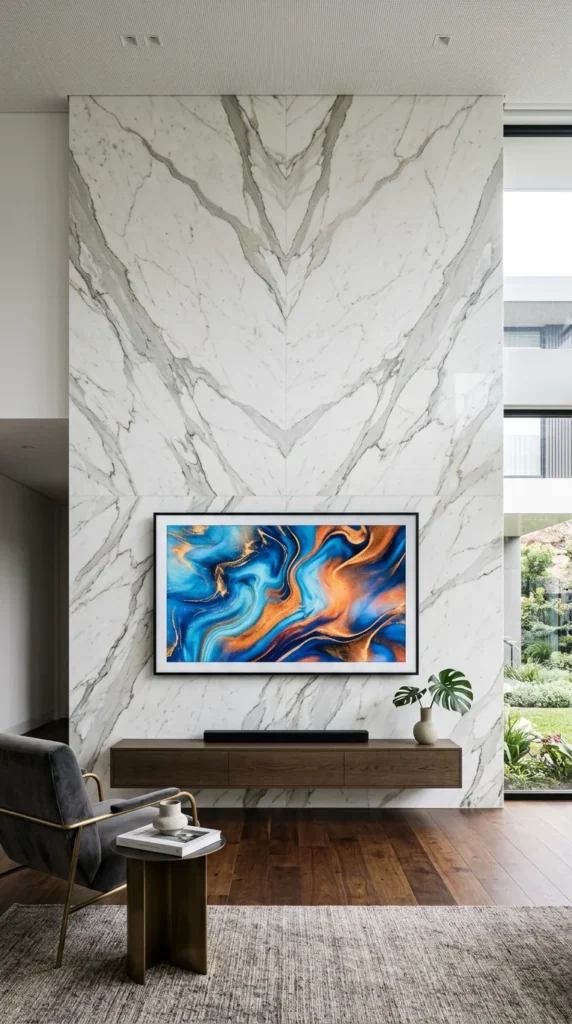
Nothing says “opulence” quite like natural stone. A floor-to-ceiling marble slab—or high-quality porcelain book-matched tiles—transforms the TV wall into a piece of fine art. The continuous veining of the stone provides a natural movement that breaks up the static nature of the television screen.
When implementing this look, “book-matching” (where two or more slabs are joined to mirror each other’s patterns) is the gold standard. This technique requires precision and high-quality material, making the space feel custom-built and incredibly prestigious. Pair the marble with a recessed TV niche to keep the screen flush with the stone for a clean, museum-like finish.
3. Backlit Panels
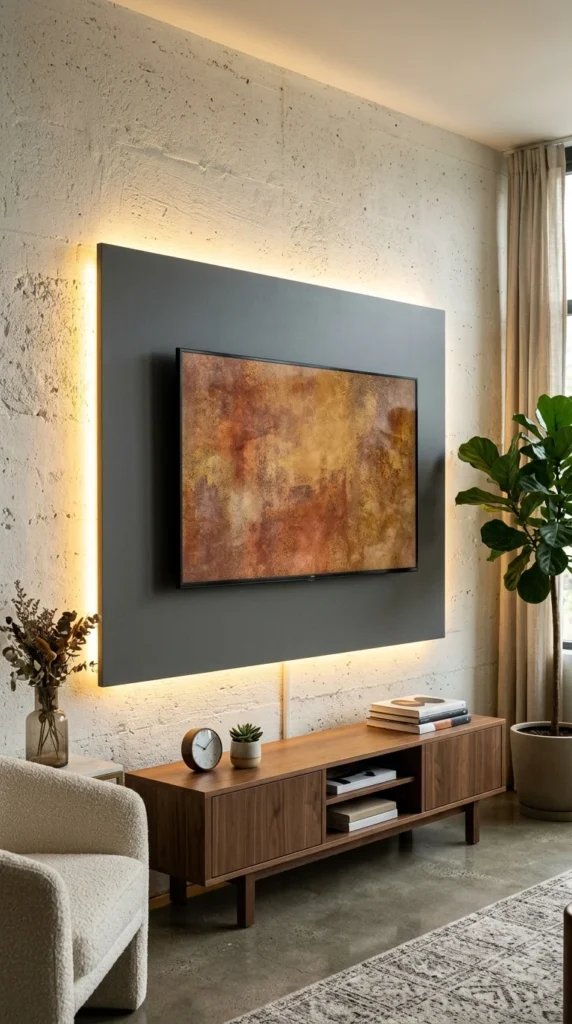
Lighting is the secret weapon of professional interior designers. By installing a floating panel and lining the perimeter with LED strips, you create a “halo” effect. This not only adds depth and drama but also reduces eye strain by providing a soft ambient glow behind the screen.
To make this look expensive, ensure the light source is completely invisible. Use high-CRI (Color Rendering Index) LEDs that offer a warm, natural glow rather than a harsh blue light. Smart lighting integration that allows you to dim the “halo” or change its temperature based on the time of day will further enhance the sophisticated atmosphere of the room.
4. Leather Upholstery
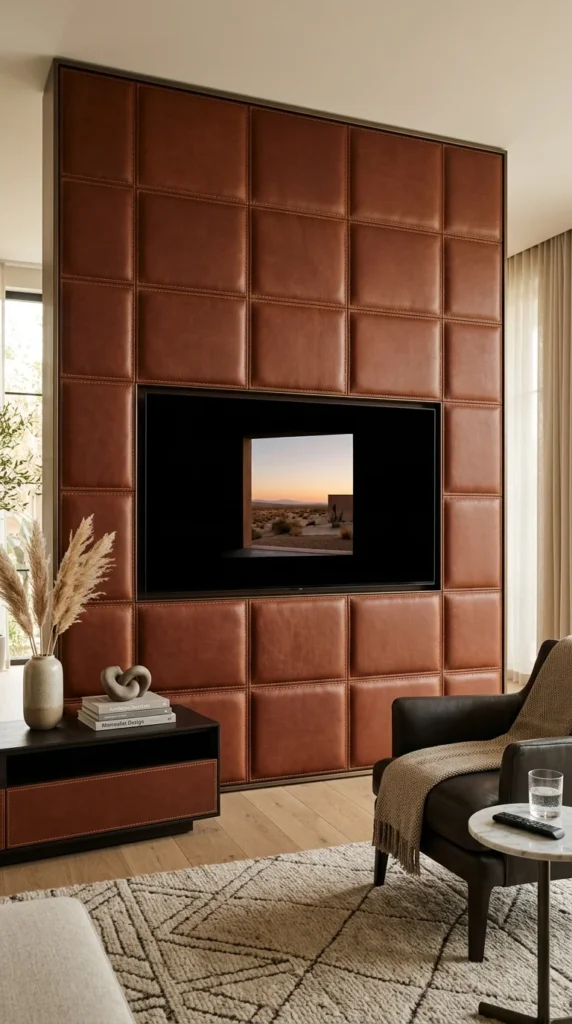
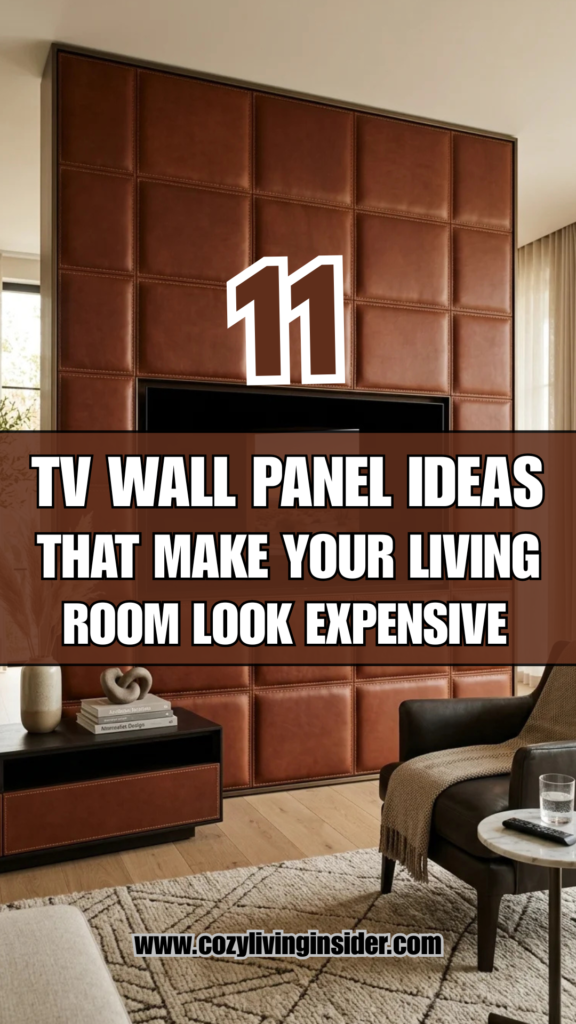
For a look that is both masculine and incredibly tactile, upholstered leather panels are an elite choice. This design move borrows from high-end hotel lobbies and private members’ clubs. The softness of the leather provides a beautiful contrast to the glass and metal of the television.
Beyond aesthetics, leather panels provide excellent acoustic properties, absorbing sound and preventing echoes—a common issue in modern minimalist homes. Using large-format squares with subtle stitching details can create a grid pattern that looks organized and intentional. Stick to neutral, earthy tones like tobacco, charcoal, or cream to maintain a timeless appeal.
5. Built-in Library
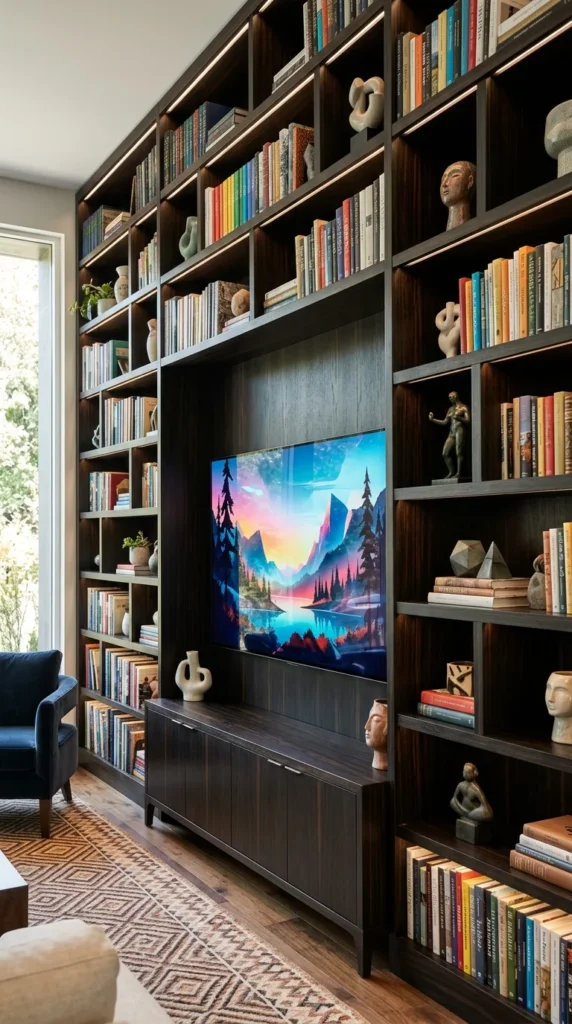
An expensive home often feels like a curated home. Integrating your TV wall into a floor-to-ceiling custom library or shelving unit makes the technology feel like a part of a larger, more intellectual composition. This approach avoids the “black hole” effect where the TV stands out too starkly against a bare wall.
The key to making this look expensive is customization. Use thick, sturdy shelving and avoid visible brackets. Mix open shelving for decor and books with closed cabinetry at the bottom to hide wires and media consoles. Incorporating integrated spotlights within the shelves can highlight your curated items, turning the entire wall into a sophisticated gallery.
6. Concrete Finish
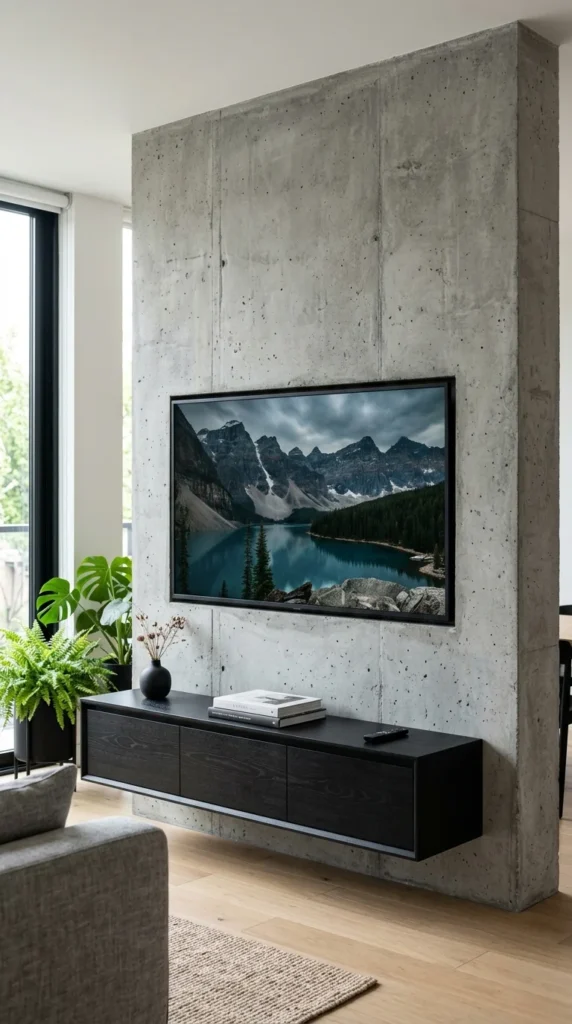
The “Industrial Chic” aesthetic relies heavily on raw, honest materials. A TV wall finished in polished concrete or high-end microcement offers a sleek, monolithic look that is synonymous with modern luxury architecture. It provides a neutral, matte backdrop that allows the colors of the TV screen to pop without distraction.
To prevent concrete from feeling cold or “unfinished,” pair it with warm elements like a wooden floating console or soft wool rugs. The subtle variations in the hand-applied texture of the cement ensure that no two walls are exactly alike, giving your living room a unique, artisanal quality.
7. Mirrored Accents
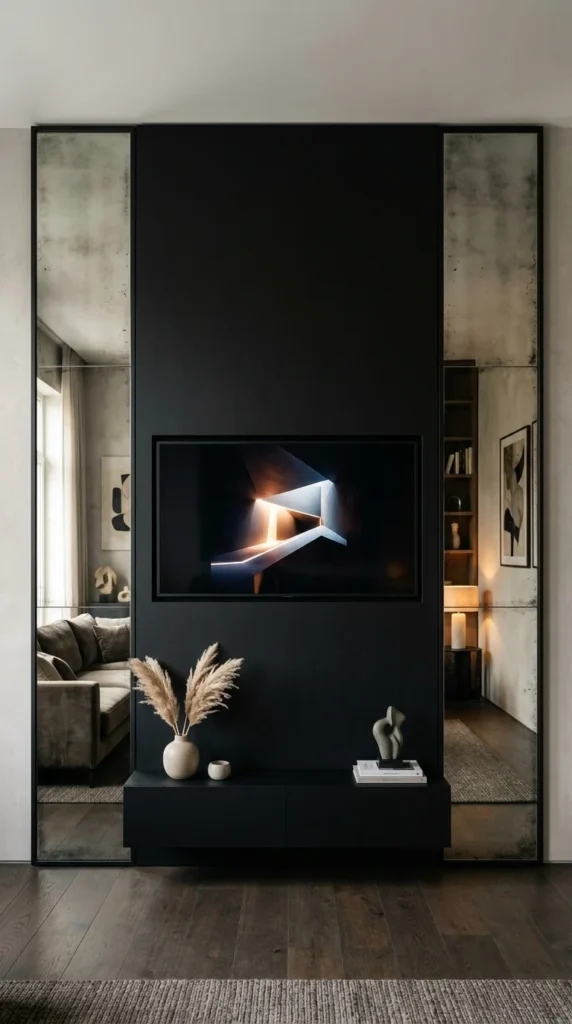
Mirrors are a classic tool for expanding a space and reflecting light, but a full mirrored wall can sometimes feel dated. The expensive approach involves using mirrored accents—specifically smoky glass, bronze-tinted mirrors, or antiqued “mercury” glass.
By placing mirrored panels on either side of the TV or as a border around a central wooden or stone panel, you create a sense of infinite depth. This technique is particularly effective in smaller living rooms where you want to maintain a high-end, airy feel. The reflective surfaces catch the ambient light of the room, adding a layer of sparkle and sophistication.
8. Dark Charcoal
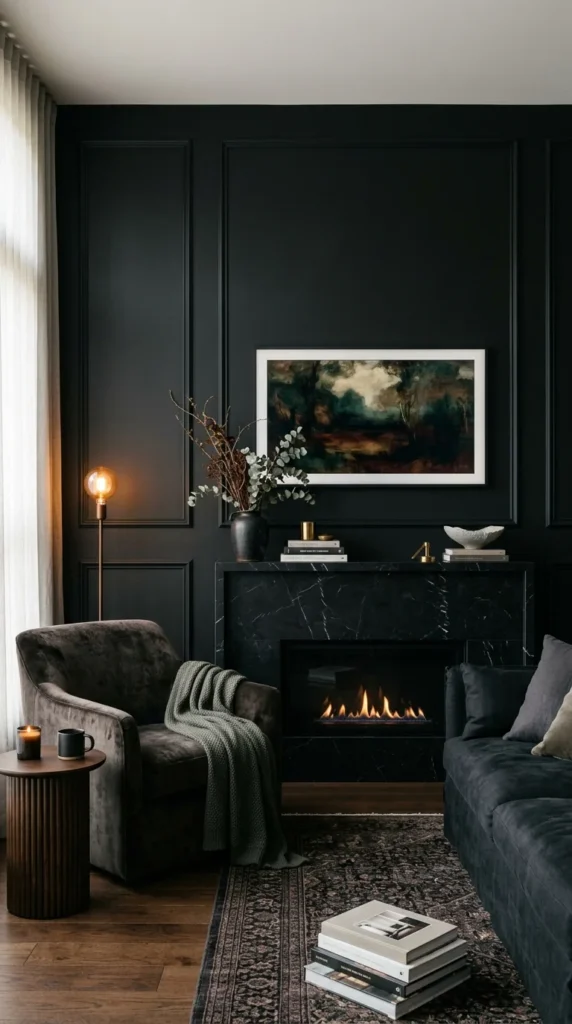
There is a certain “power” in dark, moody colors. A charcoal or matte black TV wall is a bold choice that actually makes the room feel more expansive by making the boundaries of the wall recede. Furthermore, when the TV is off, it virtually disappears into the dark background, solving the aesthetic problem of the “big black box.”
To make a dark wall look expensive rather than just “dark,” pay attention to the finish. A dead-matte paint or a subtle lime-wash texture will look much more sophisticated than a glossy finish. Add architectural interest with simple picture frame molding or “shaker” style panels to give the flat color more dimension.
9. Gold Metal Inlays
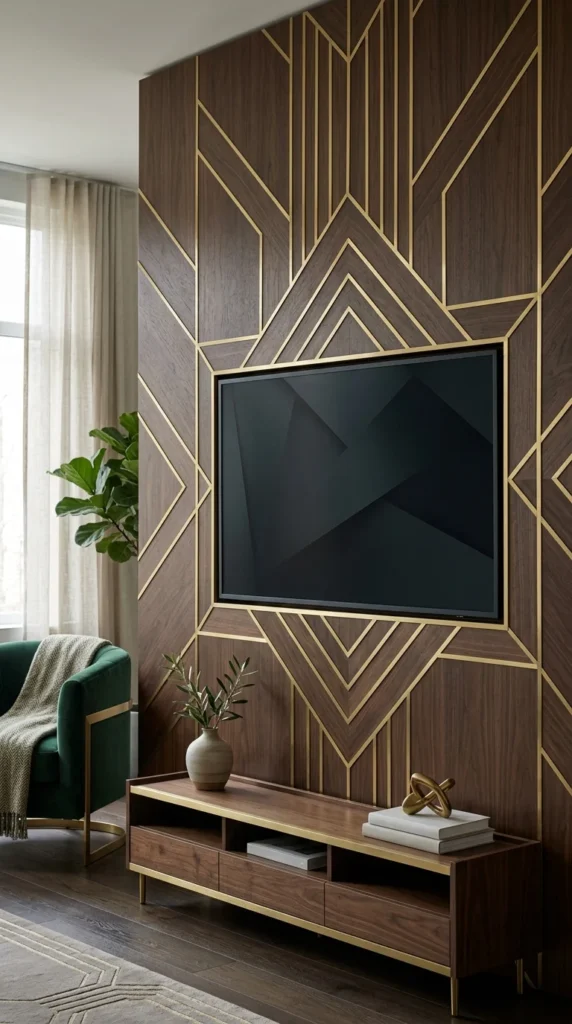
Metals like brass, gold, and champagne bronze are synonymous with luxury. Integrating thin metal inlays into wood or stone paneling creates a bespoke, Art Deco-inspired look that feels incredibly high-end. These metal “strings” catch the light and add a geometric precision to the wall design.
The secret here is restraint. Thin, 1/4-inch inlays are far more elegant than thick metallic bands. You can create a simple grid, a sunburst pattern, or asymmetrical lines. When paired with high-quality wood grain, the contrast between the organic timber and the industrial metal creates a stunning visual tension.
10. Floating Cabinets
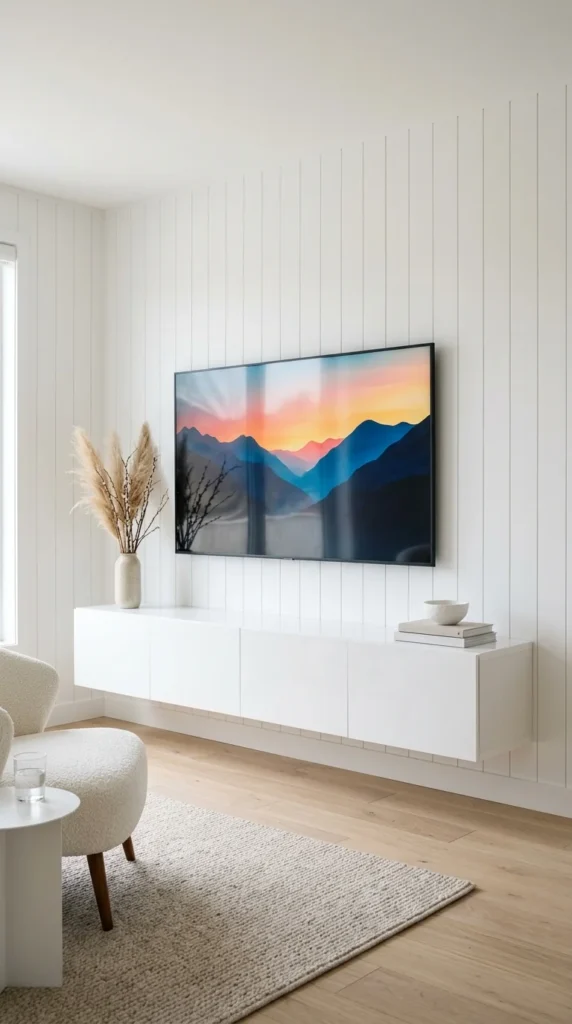
Minimalism is often the hardest style to execute because every detail is exposed. A long, low-profile floating cabinet that spans the width of the TV wall creates a clean, streamlined look that screams “designer home.” By lifting the cabinetry off the floor, you maintain a sense of openness and “flow.”
For a premium look, choose handle-less designs with push-to-open mechanisms. Ensure the cabinet is deep enough to house all your tech but slim enough to look elegant. Wiring should be completely concealed within the wall or through a dedicated channel behind the paneling to maintain the illusion of effortless simplicity.
11. Natural Stone Stack
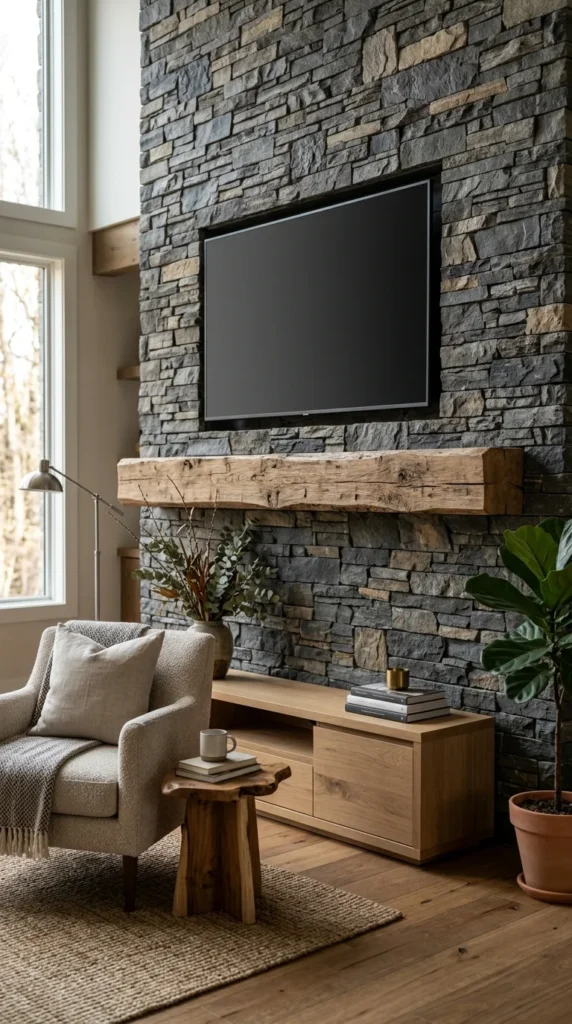
While marble represents “smooth” luxury, stacked stone or split-face slate represents “textural” luxury. This look works exceptionally well in homes that lean toward a modern mountain, coastal, or organic modern style. The heavy texture of the stone provides a dramatic backdrop that feels permanent and grounded.
To ensure this looks expensive, avoid “faux” stone wallpapers or plastic panels. Use real stone veneers or thin-cut natural stone. Lighting is essential for this idea; use ceiling-mounted “wall washers” or downlights to graze the surface of the stone. This highlights the crags and shadows of the material, making the wall look like a structural element of the home.
Pro-Tips for an “Expensive” Finish:
- Cable Management: No matter how expensive your panels are, visible wires will immediately ruin the aesthetic. Always plan for internal conduits.
- Scale: Don’t be afraid to go big. A panel that stops 2 feet from the ceiling often looks like an afterthought. Taking your design from floor to ceiling creates a custom, architectural feel.
- Symmetry vs. Asymmetry: Symmetrical designs feel formal and traditional, while asymmetrical designs (like a TV offset to one side with art on the other) feel modern and avant-garde. Choose the one that matches your home’s overall personality.