
In the world of interior design, the bathroom is often the most challenging space to optimize. Homeowners frequently grapple with the paradox of needing significant storage while wanting to maintain an airy, open atmosphere. The solution that has taken the design world by storm is the floating vanity. By detaching the cabinetry from the floor, you create a visual illusion of more square footage, as the eye can track the flooring all the way to the wall. This architectural sleight of hand is the secret weapon for making even the most cramped powder rooms feel like expansive spas.
Beyond the aesthetics, floating vanities offer unparalleled versatility. They can be mounted at custom heights to suit the user, make cleaning the floors a breeze, and provide a modern edge that traditional floor-mounted cabinets simply cannot match. If you are looking to renovate your sanctuary, here are eight floating vanity ideas designed specifically to maximize your perceived space.
1. All-White Minimalism
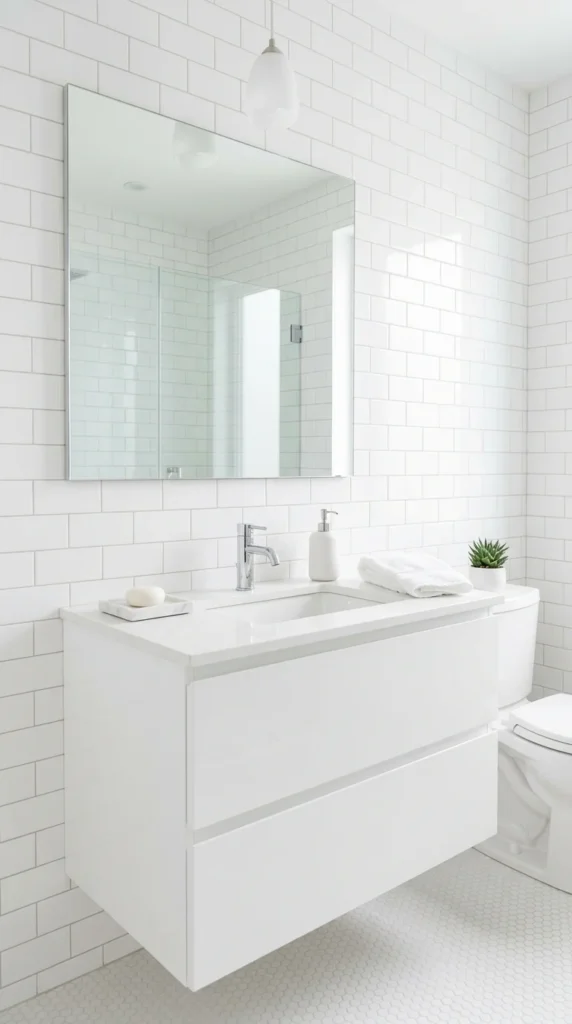
The most effective way to make a space feel larger is to minimize visual “noise.” An all-white floating vanity achieves this by blending into the walls, effectively disappearing into the architecture. When the vanity matches the wall color, the boundaries of the room become less defined, which trick the brain into perceiving a larger area.
To keep this look from feeling sterile, play with textures. Pair a high-gloss white vanity with matte white wall tiles or a marble countertop with subtle grey veining. The reflection of light off white surfaces further illuminates dark corners, ensuring that every inch of the bathroom feels bright and open. This approach is particularly effective in small powder rooms where natural light may be limited.
2. Natural Wood
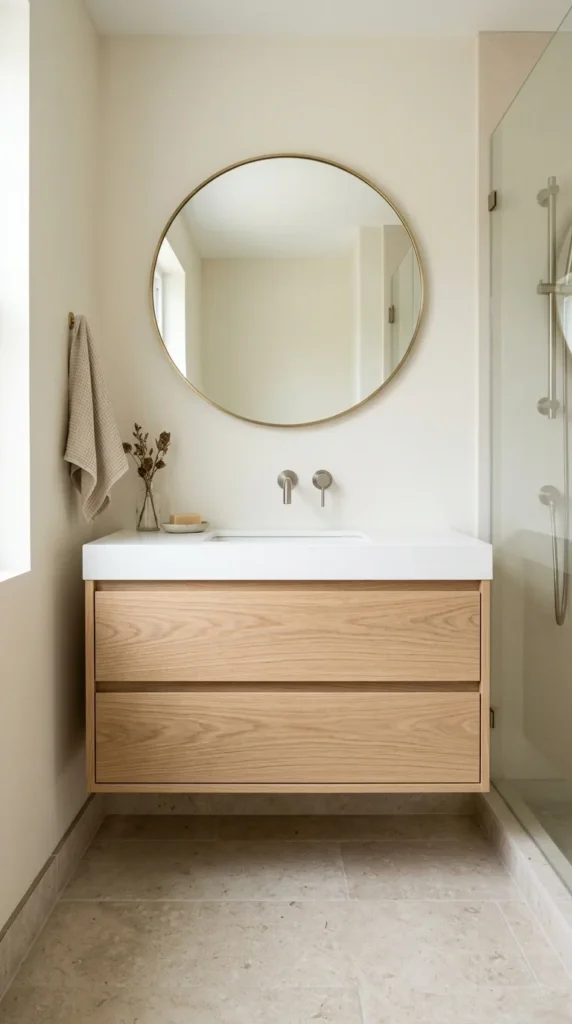
Incorporating natural wood into a floating design provides a “grounding” effect without the heavy footprint of a traditional cabinet. Light woods, such as oak, maple, or birch, are ideal for small spaces because their pale hues keep the room feeling light and breezy. The organic texture of the wood adds warmth and character, preventing the modern “floating” look from feeling too industrial or cold.
When selecting a wood vanity to increase the sense of space, look for horizontal grain patterns. Horizontal lines naturally draw the eye across the room, creating a sense of width. Pairing a wood vanity with a light-colored floor allows the furniture to “pop” without overwhelming the visual field, maintaining that crucial sense of openness underneath the unit.
3. Under-Cabinet Lighting
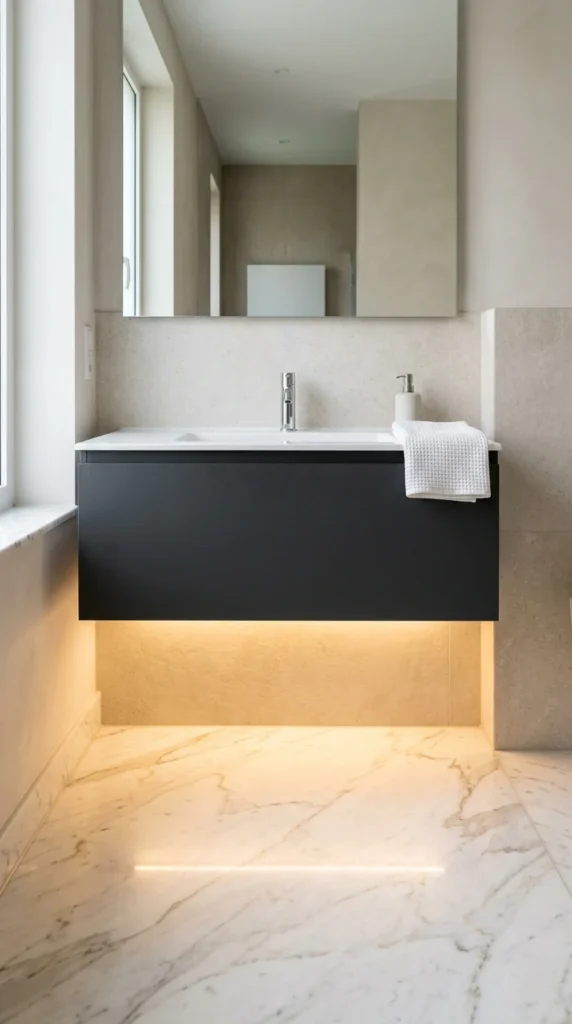
One of the most sophisticated ways to emphasize a floating vanity is through the use of integrated LED lighting. By installing a moisture-resistant light strip along the underside of the vanity, you create a “glow” that highlights the floor space beneath. This light eliminates shadows that typically hide the floor, making the room feel significantly more expansive.
In addition to the spatial benefits, under-cabinet lighting serves as an excellent nightlight. It provides enough illumination for midnight trips to the bathroom without the harsh glare of overhead lights. When the floor is lit up, it reinforces the floating illusion, making the heavy cabinetry appear as though it is weightlessly hovering in mid-air.
4. Double Basins
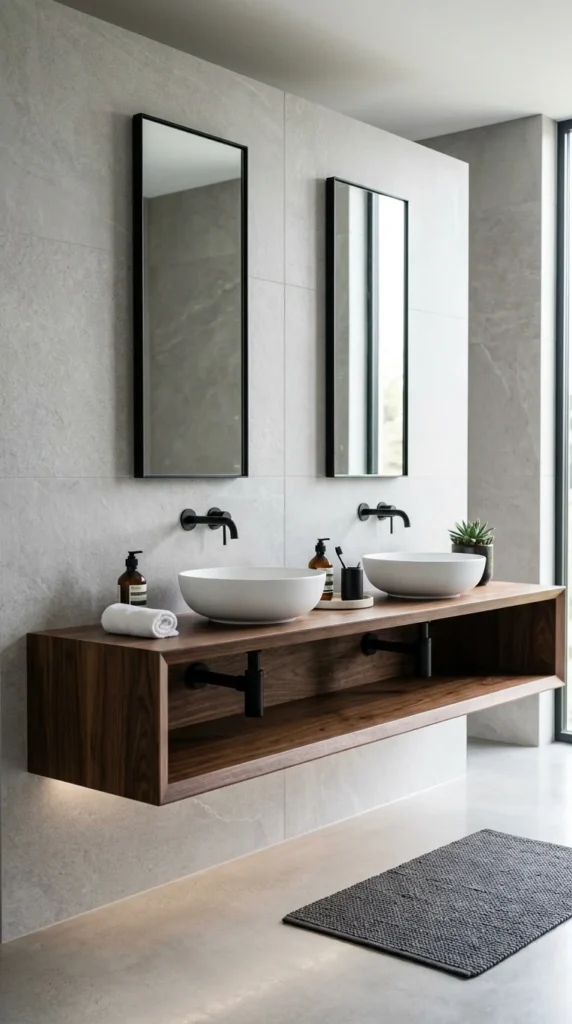
Many homeowners believe that a double vanity is only for large, master suites. However, a floating double vanity can actually work wonders in a medium-sized bathroom. By lifting a wide unit off the floor, you prevent the room from feeling “divided” by a massive block of cabinetry.
The key to a space-saving double vanity is the “long and lean” approach. Choose a model that is elongated but shallow in depth. This provides the luxury of two sinks for couples while keeping the walkways clear. Using a single, continuous countertop across both basins creates a long horizontal line that stretches the room visually, making the wall appear longer than it actually is.
5. Open Shelving
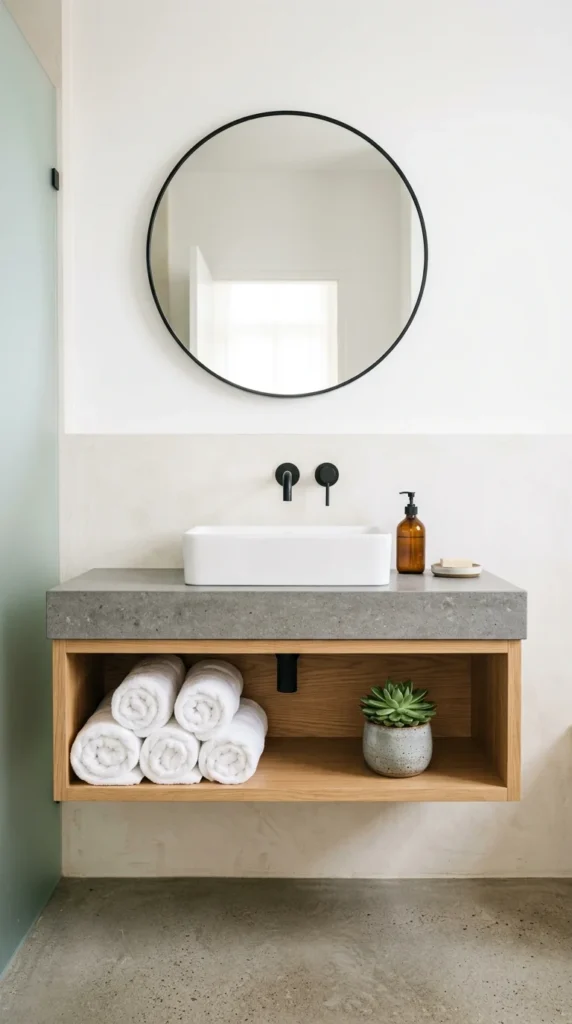
For those who are disciplined with organization, a floating vanity with open shelving is the ultimate space-enhancer. By removing cabinet doors and drawer fronts, you eliminate the visual bulk of the vanity. The ability to see through the vanity to the wall behind it creates an incredible sense of transparency and airflow.
Open shelving works best when styled with “breathable” items. Instead of cluttering the shelf with toiletries, use it to display rolled white towels or decorative baskets. This creates a spa-like aesthetic that feels curated rather than cramped. If you need hidden storage for less attractive items, you can always choose a hybrid model that features one drawer and one open shelf.
6. Integrated Sinks
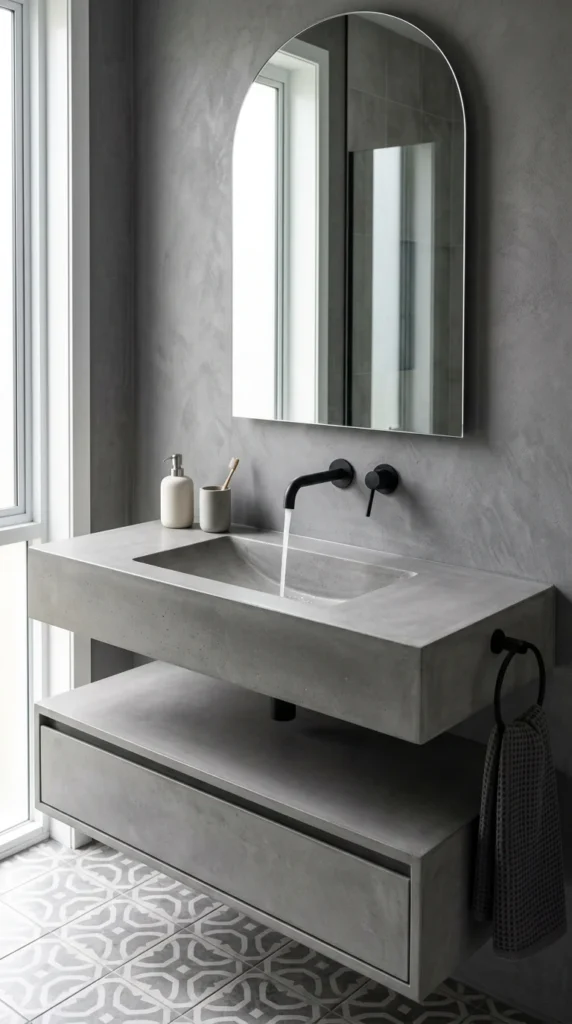
Visual clutter is the enemy of a small bathroom. Traditional drop-in or undermount sinks create extra lines and seams that break up the visual flow. An integrated sink, where the basin is molded from the same material as the countertop (such as quartz, concrete, or solid surface materials), offers a sleek, monolithic look that is incredibly easy on the eyes.
This “all-in-one” look simplifies the vanity’s silhouette. When the vanity is a single, uninterrupted unit, it feels lighter and more architectural. This clean aesthetic allows other elements of the bathroom, like a beautiful tile pattern or a statement mirror, to take center stage, contributing to a more organized and spacious feel.
7. Bold Contrasts
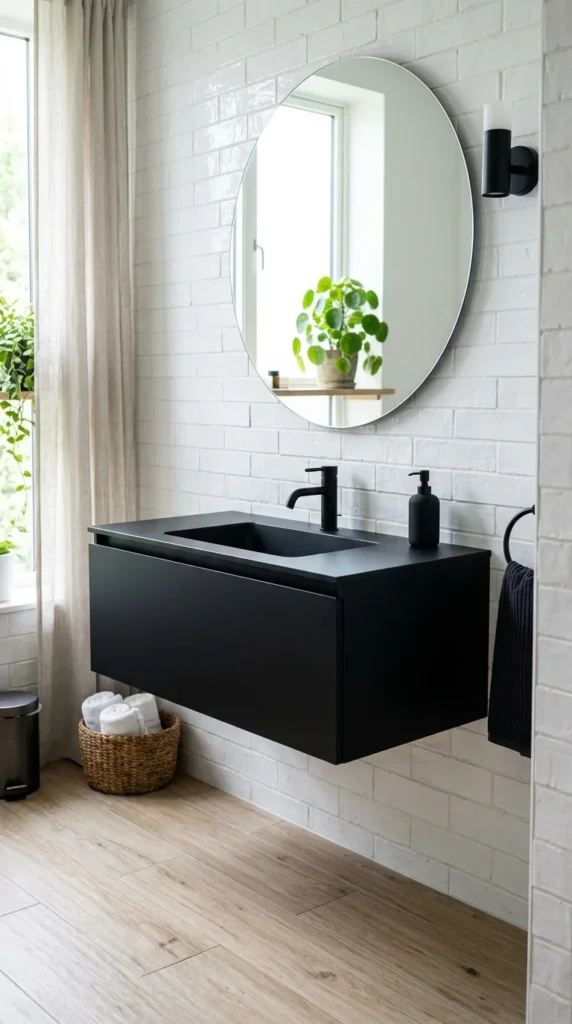
While light colors are the standard for small spaces, a high-contrast approach can also create a sense of depth. A dark floating vanity against a light wall creates a “recessive” effect. Because the vanity is floating, the dark color doesn’t feel heavy; instead, it acts as a focal point that draws the eye, while the surrounding light colors expand the rest of the room.
To make this work, ensure the flooring remains light. The contrast between a dark vanity and a light floor emphasizes the “gap” between the two, which is the very feature that makes the bathroom look bigger. Using matte finishes for dark vanities also helps to absorb light in a way that feels sophisticated and modern, rather than oppressive.
8. Mirrored Accents
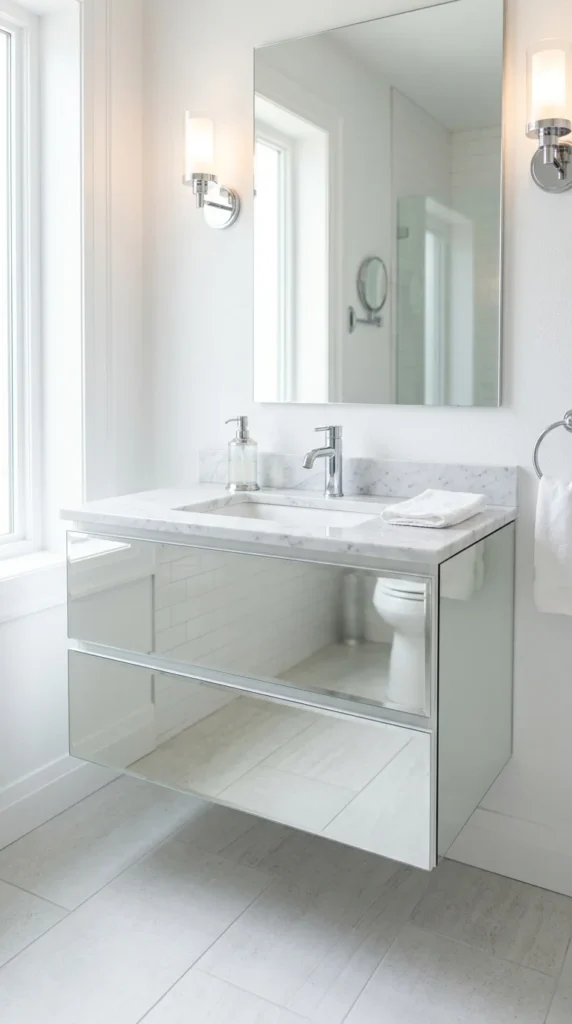
Mirrors are the oldest trick in the book for expanding a room, but they aren’t just for the walls. A floating vanity with mirrored or highly reflective drawer fronts can almost entirely “disappear.” By reflecting the floor tiles, the vanity creates the illusion that the floor continues indefinitely underneath the cabinetry.
This idea is perfect for windowless bathrooms or basements where light is scarce. The mirrored surfaces bounce whatever light is available around the room, doubling the brightness. When combined with the floating design, the vanity becomes a functional piece of art that actively works to enhance the room’s dimensions and light quality.
Choosing the Right Height and Proportions
When implementing these ideas, the “float” height is critical. Standard vanities sit about 34 to 36 inches off the floor. For a floating vanity, you generally want at least 8 to 12 inches of clearance from the floor to the bottom of the unit. This gap is large enough to be meaningful to the eye but small enough to allow for sufficient storage depth within the drawers.
Furthermore, consider wall-mounted faucets. By moving the plumbing fixtures from the vanity deck to the wall, you can opt for a narrower vanity, saving precious inches of floor space while maintaining a high-end, custom look. With the right combination of light, material, and placement, a floating vanity will transform your bathroom from a functional necessity into a spacious architectural highlight.