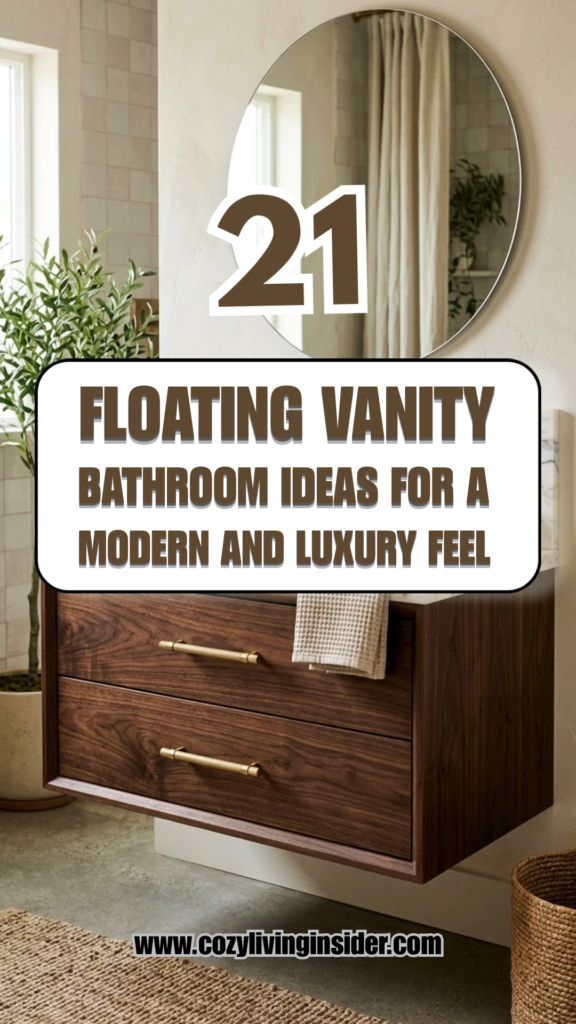

The bathroom has evolved from a purely functional space into a sanctuary for relaxation and rejuvenation. In modern interior design, the floating vanity has emerged as a cornerstone of the luxury aesthetic. By lifting the cabinetry off the floor, these fixtures create an illusion of space, facilitate easier cleaning, and provide a sleek, streamlined look that traditional floor-mounted units simply cannot match.
Whether you are remodeling a compact powder room or designing a sprawling master ensuite, a floating vanity serves as a dramatic focal point. Below are 21 innovative floating vanity ideas to help you achieve a sophisticated, high-end atmosphere in your home.
1. Minimalist White
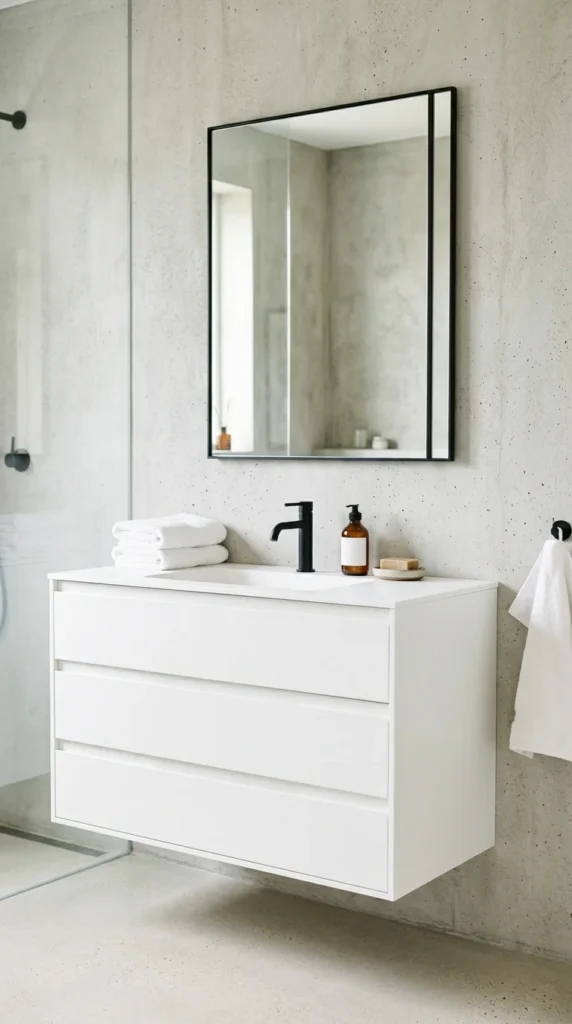
A monochromatic white floating vanity is the epitome of modern minimalism. This design choice works exceptionally well in smaller bathrooms, as the lack of visual weight allows the room to feel airy and expansive. By using a handle-less design or push-to-open drawers, you maintain a clean, architectural line that emphasizes the “floating” nature of the unit.
2. Natural Oak
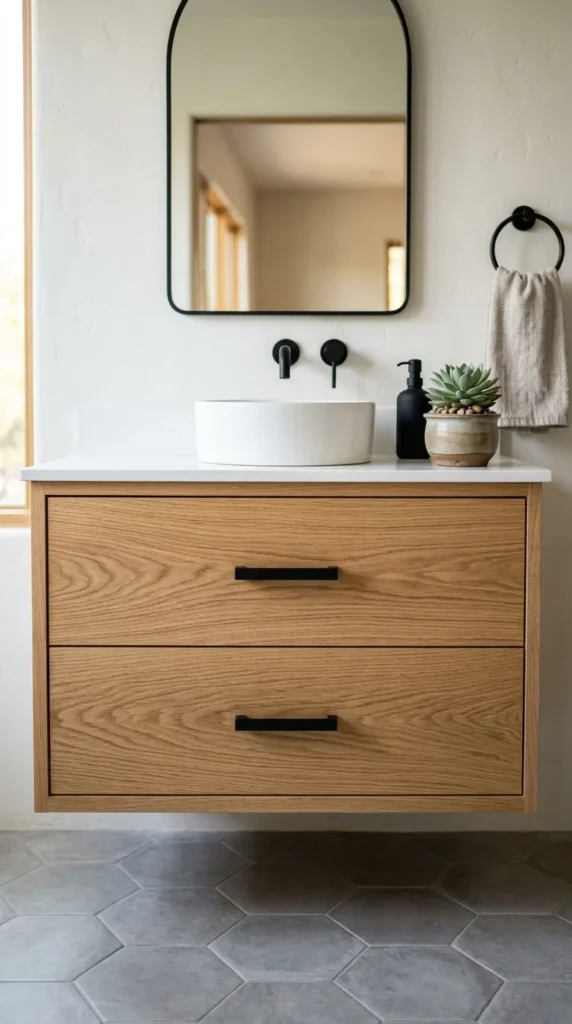
Natural oak brings warmth and organic texture to an otherwise sterile bathroom environment. The light wood tones pair beautifully with matte black hardware or white stone tops. This look bridges the gap between Scandinavian simplicity and modern luxury, offering a spa-like feel that is both welcoming and high-end.
3. Double Basin
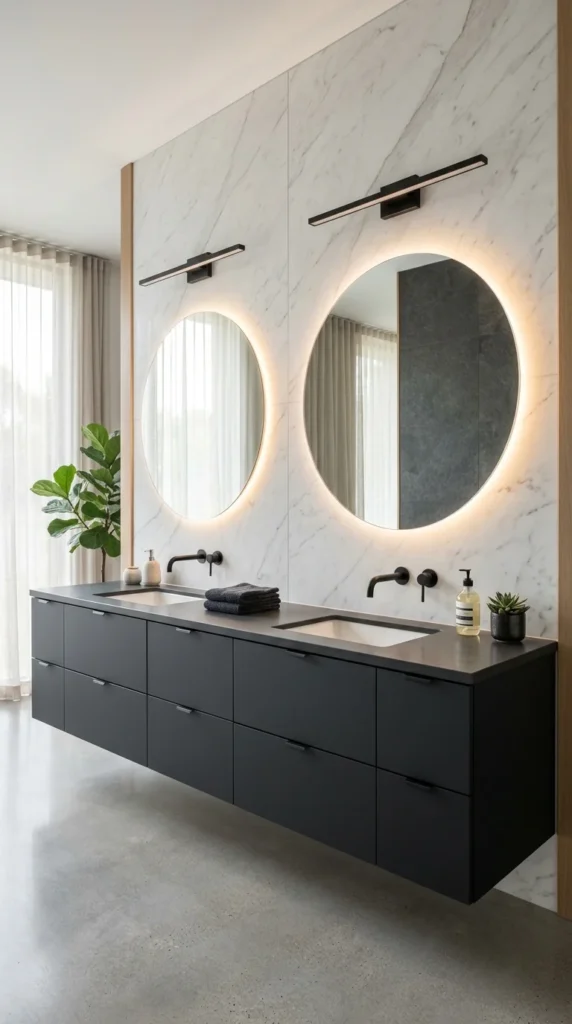
For master suites, a double basin floating vanity is a non-negotiable luxury. It provides personal space for couples while maintaining a unified, symmetrical look. Opting for a single, long floating unit rather than two separate cabinets creates a cohesive visual line that stretches the room, making it appear much larger than it is.
4. Industrial Concrete
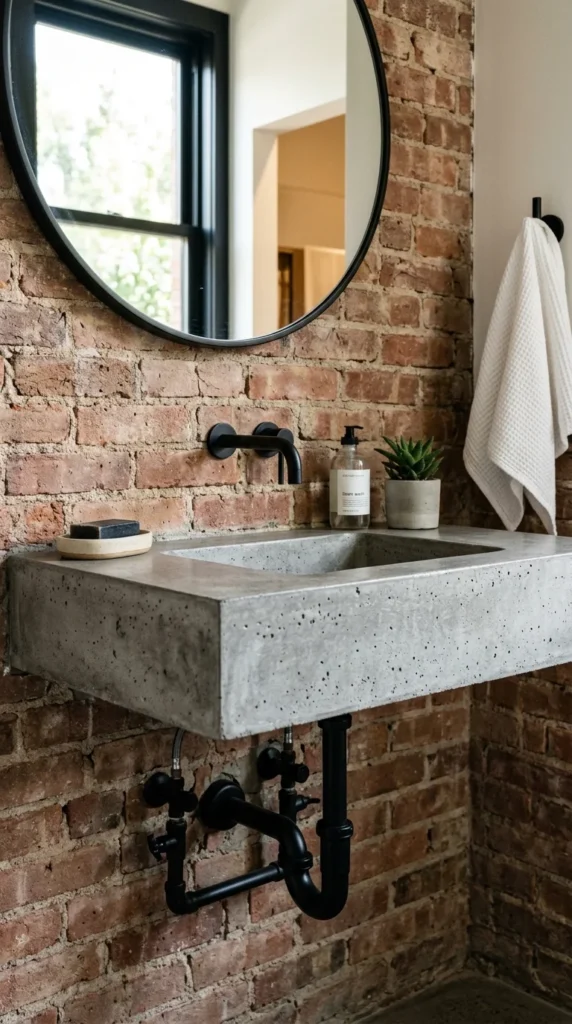
Concrete vanities offer an edgy, industrial-chic vibe. When cast as a floating unit, the heavy material appears to defy gravity, creating a striking visual paradox. This style pairs perfectly with exposed brick, matte black fixtures, and Edison-style lighting to create an urban loft aesthetic.
5. Integrated Sinks
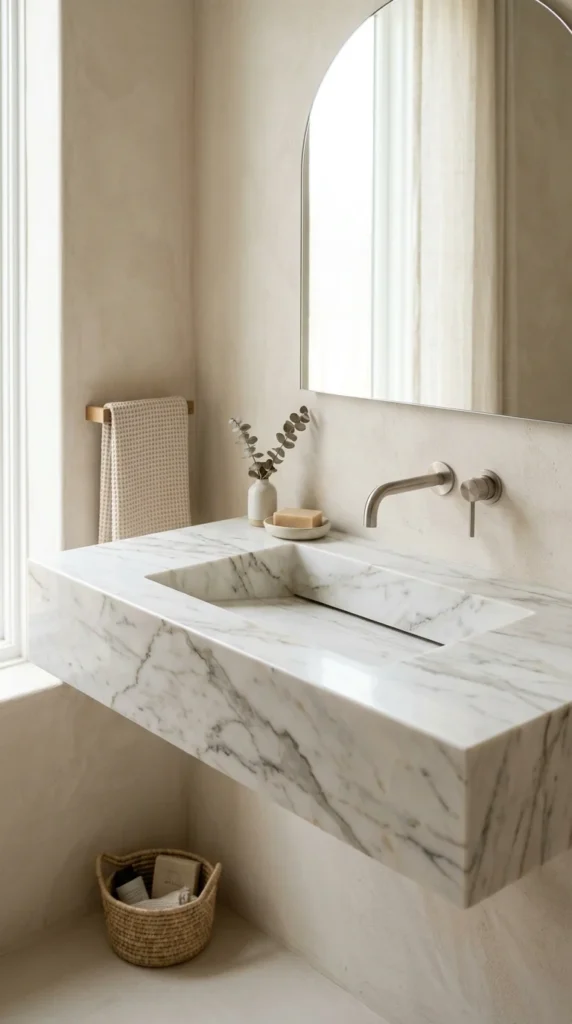
Integrated sinks are the hallmark of custom luxury. By using the same material for the countertop and the sink basin—often marble, quartz, or solid surface materials—you create a seamless transition that is visually stunning and incredibly easy to clean. This design eliminates the crevices where grime typically builds up.
6. Under-Vanity Lighting
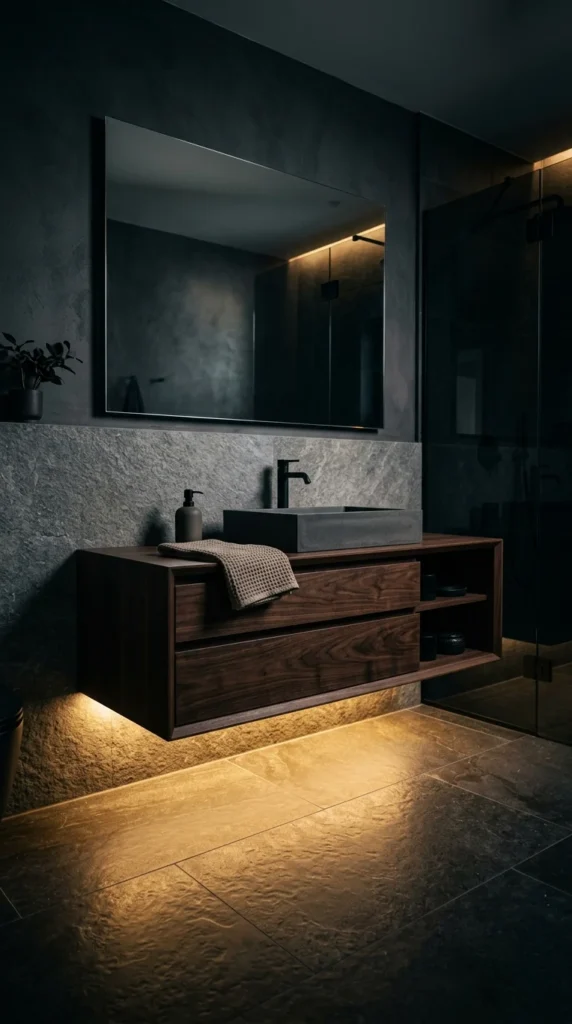
One of the most effective ways to enhance the “floating” effect is through the use of integrated LED strip lighting. Placing a motion-activated or dimmable light underneath the vanity provides a soft nightlight and highlights the floor space, making the unit appear as though it is levitating on a cloud of light.
7. Walnut Mid-Century
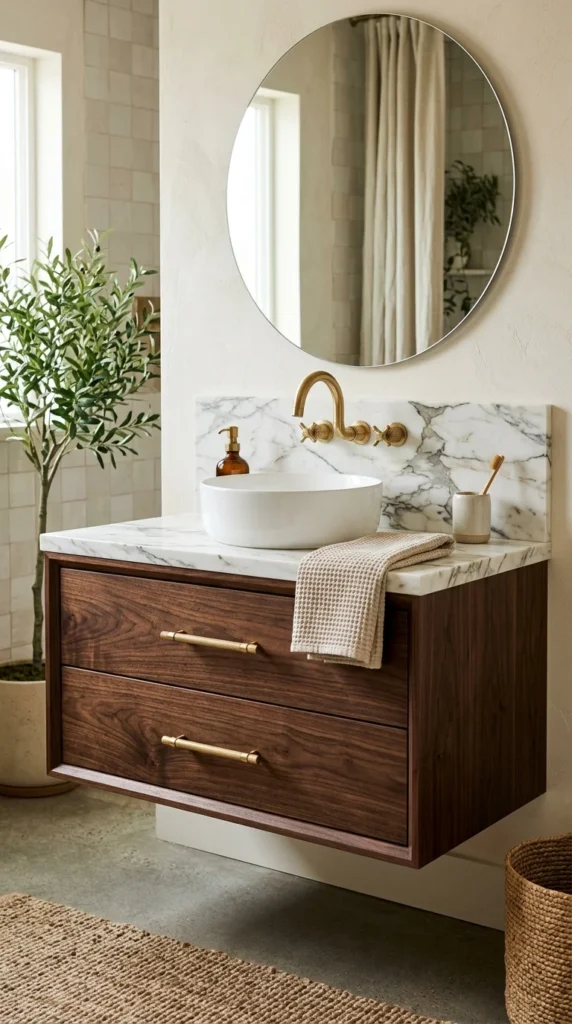
Walnut is a timeless wood choice that exudes sophistication. A floating vanity in walnut, especially when designed with clean lines and mid-century modern influences, adds a sense of history and “furniture-like” quality to the bathroom. Pair it with brass or gold accents to lean into a warmer, more opulent palette.
8. Marble Waterfall
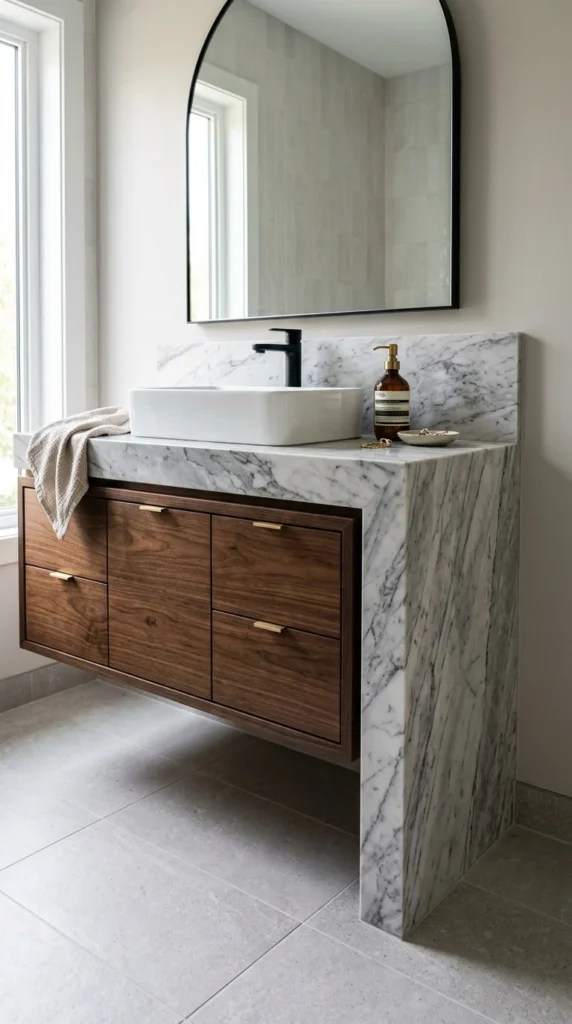
The waterfall edge is a popular kitchen island trend that translates beautifully to the bathroom. Having the stone countertop wrap around the side of the floating vanity adds structural drama and protects the cabinetry. It showcases the beauty of the natural stone from multiple angles, elevating the unit to a piece of functional art.
9. Matte Black
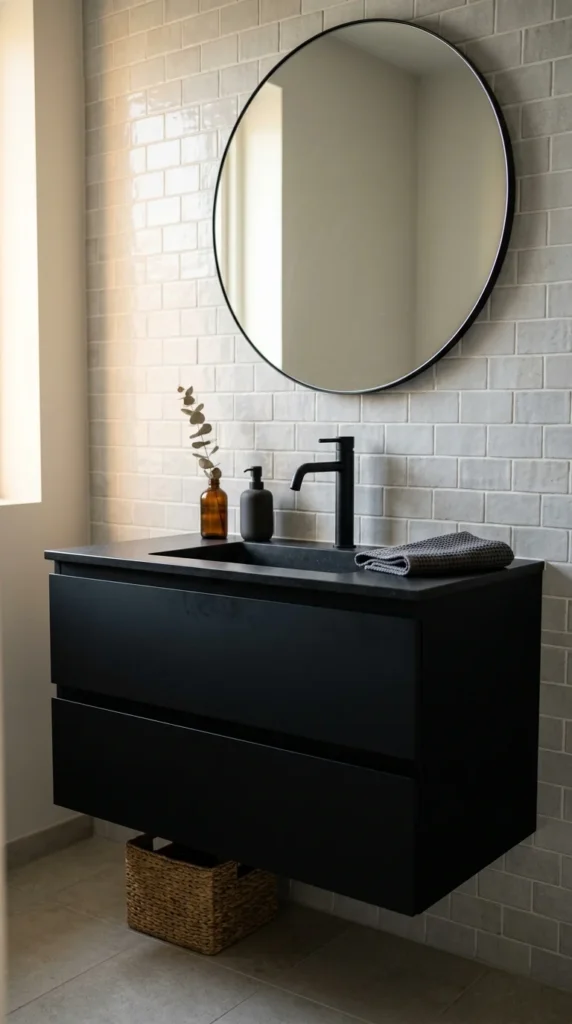
For a bold, masculine, or ultra-modern look, matte black is an excellent choice. It creates a sharp contrast against lighter walls and floors. While dark colors can sometimes shrink a space, the floating design keeps the floor visible, preventing the black vanity from feeling too heavy or overwhelming.
10. Navy Blue
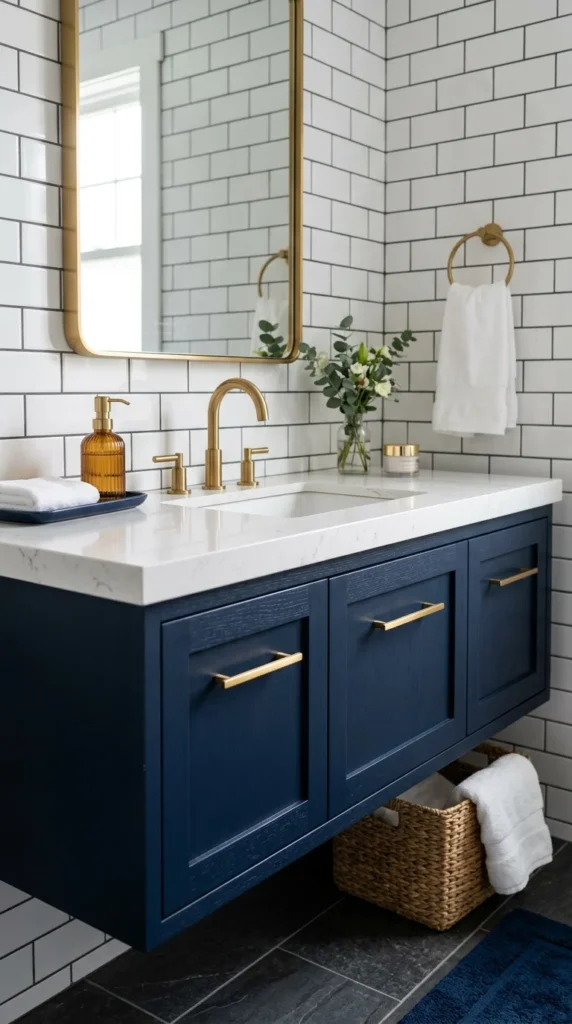
Navy blue has become the “new neutral” in luxury design. A navy floating vanity provides a pop of color that remains sophisticated and grounded. It pairs exceptionally well with nautical-themed brass fixtures or crisp white marble, offering a refined coastal or transitional look.
11. Reclaimed Wood
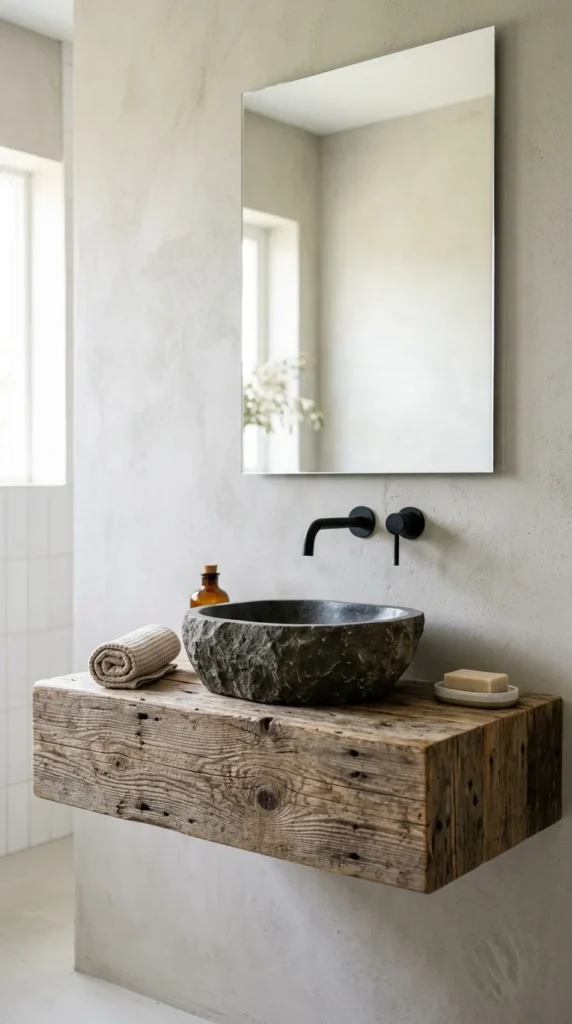
Incorporating reclaimed wood into a floating vanity design adds a rustic, soulful element to a modern space. The juxtaposition of “old” textured wood against “new” smooth tile or glass creates a compelling visual narrative. This approach is ideal for those who want a modern layout but desire the warmth of natural, storied materials.
12. Curved Edges
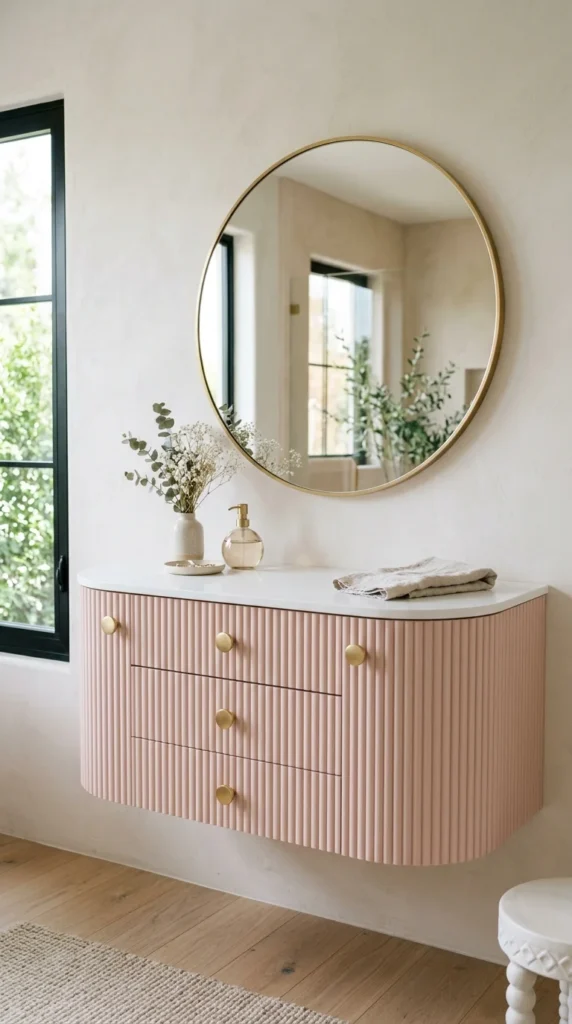
While sharp lines define modernism, curved vanities are trending for their ability to soften the hard surfaces of a bathroom. A floating vanity with rounded corners feels organic and high-end, often reminiscent of Art Deco or contemporary European design. It also improves “flow” in tighter spaces by removing sharp corners.
13. Mirrored Finish
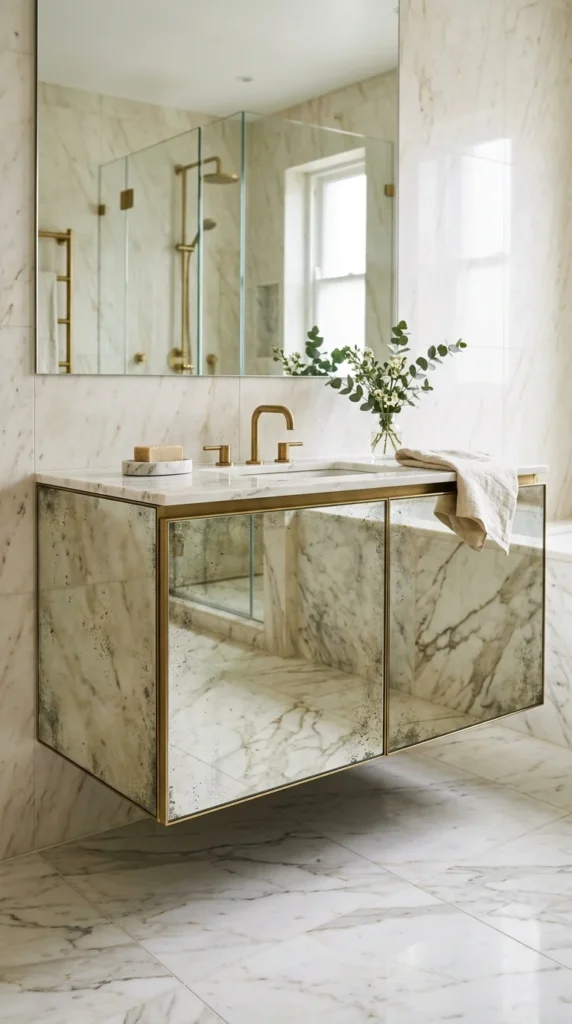
A mirrored floating vanity is the ultimate statement in glamour. By reflecting the floor and surrounding walls, a mirrored unit almost “disappears,” making the room feel twice as large. This is a bold choice that works best in high-end powder rooms or glam-style master baths.
14. Open Shelving
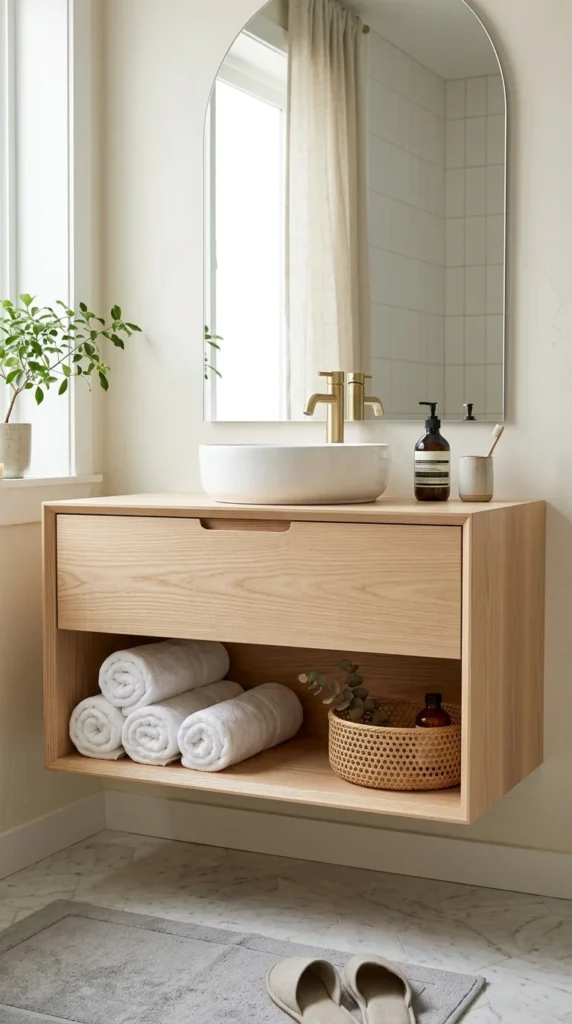
Combining closed storage with open shelving allows you to hide clutter while displaying beautiful linens or decorative items. This “hybrid” floating vanity feels lighter and more casual than a solid block of cabinetry, making it a favorite for guest bathrooms or spa-themed ensuites.
15. Terrazzo Top
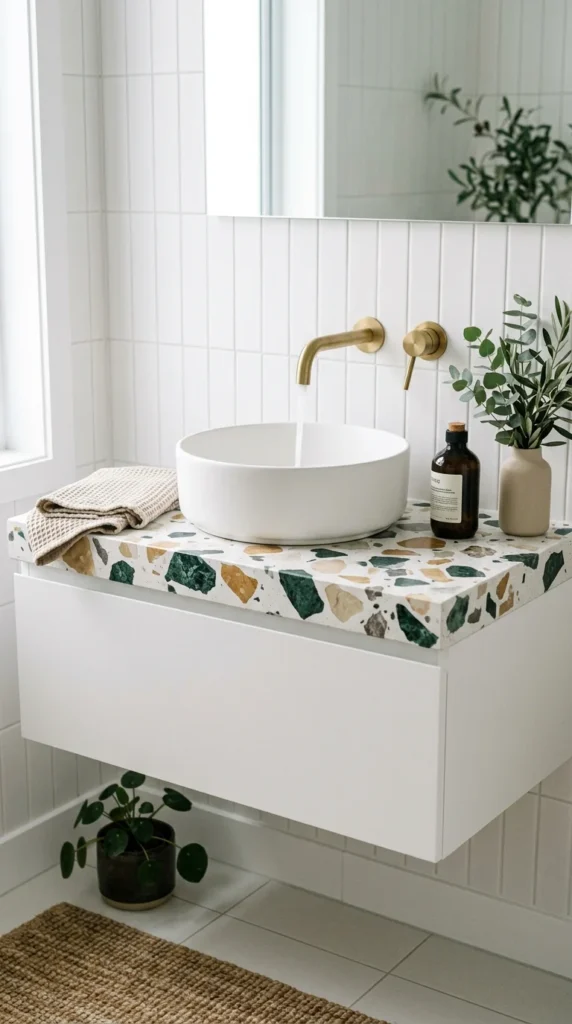
Terrazzo is making a massive comeback in luxury interiors. Using a terrazzo slab as the countertop for a simple floating vanity adds playfulness and visual interest. Because terrazzo contains various colored flecks, it allows you to pull different accent colors for your towels, rugs, and wall paint.
16. Fluted Panels
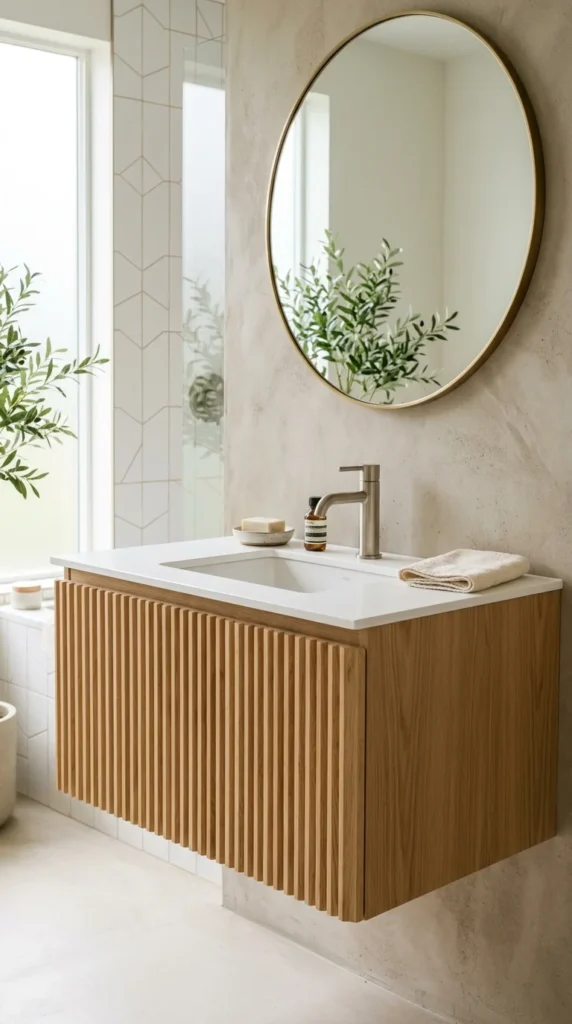
Texture is a key component of modern luxury. Fluted or ribbed panels on the front of a floating vanity add a tactile quality and a sophisticated rhythmic pattern. This design detail catches the light beautifully, especially when paired with side-lighting or sconces, adding depth to the cabinetry.
17. Floating Marble Slab
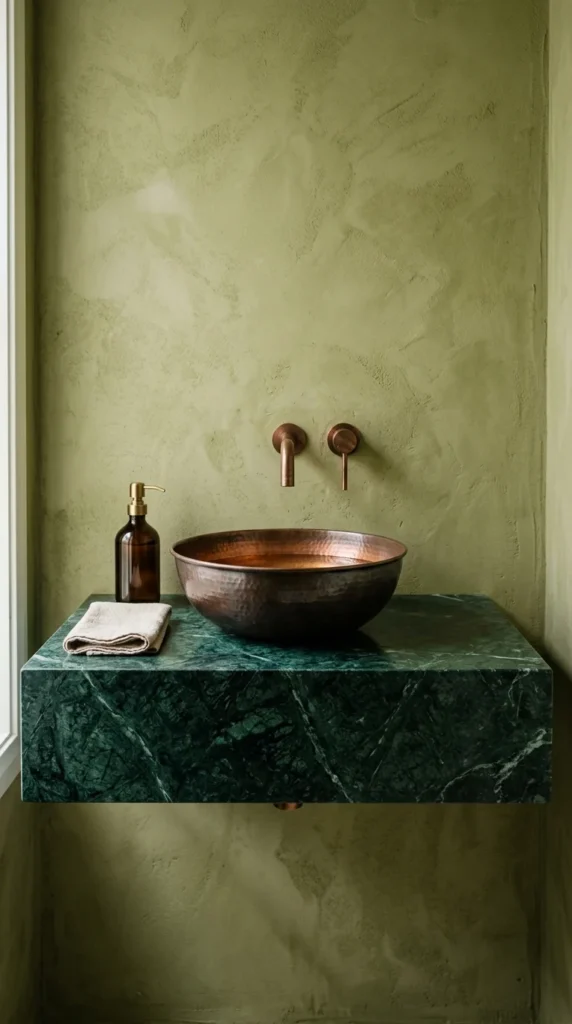
For a truly minimalist and architectural look, a single floating slab of stone can serve as the vanity. There are no drawers or cabinets; the focus is entirely on the beauty of the stone and the vessel sink. This “shelf” style vanity is popular in high-end restaurants and minimalist residential powder rooms.
18. High-Gloss Finish
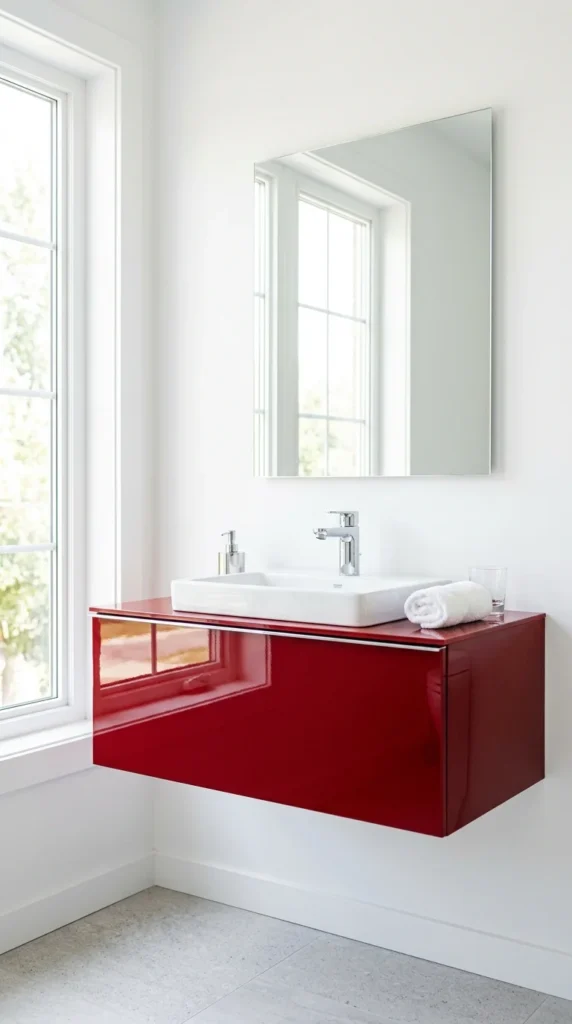
High-gloss lacquered finishes in bold colors—like deep red, forest green, or jet black—provide a sleek, “Italian-designed” look. The reflective surface bounces light around the room, contributing to a vibrant and energetic atmosphere. It is a durable, easy-to-clean option that screams contemporary luxury.
19. Asymmetrical Layout
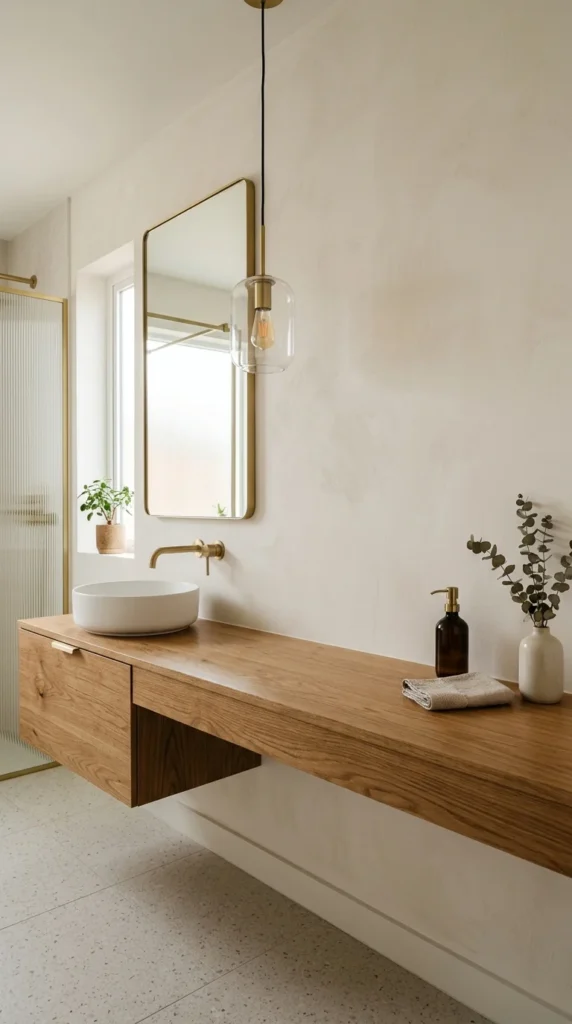
Breaking the rules of symmetry can lead to a very modern, custom-designed feel. An asymmetrical floating vanity often features an off-center sink, providing a large amount of usable counter space on one side. This is perfect for styling with decorative trays, perfumes, or a vase of fresh flowers.
20. Brass Accents
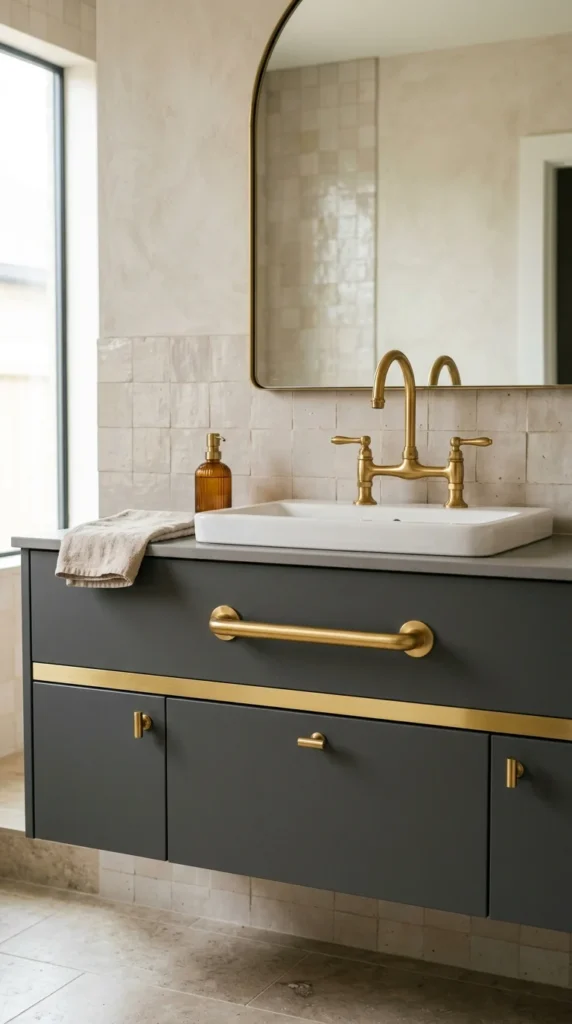
Metal inlays and oversized hardware can transform a simple floating box into a piece of luxury furniture. Brass, specifically, provides a warm contrast to cool-toned vanities like grey or blue. Using the same metal for the handles, faucet, and mirror frame creates a curated, professional designer look.
21. Trough Sink Design
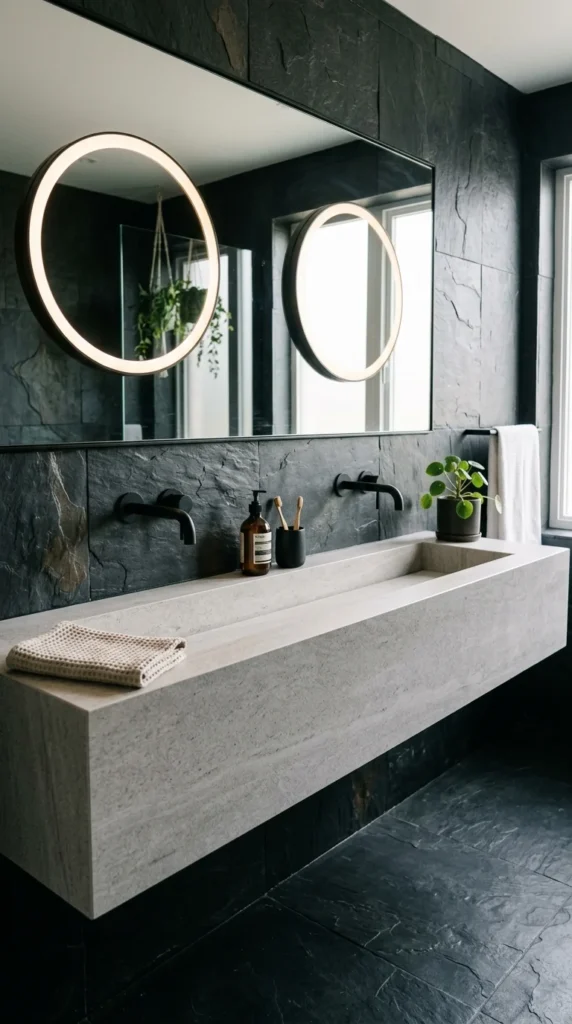
A trough sink is a modern alternative to the traditional double basin. It consists of one long, continuous basin served by two separate faucets. When paired with a floating vanity base, it creates a communal, “boutique hotel” vibe that is both functional and visually striking, perfect for high-traffic master bathrooms.