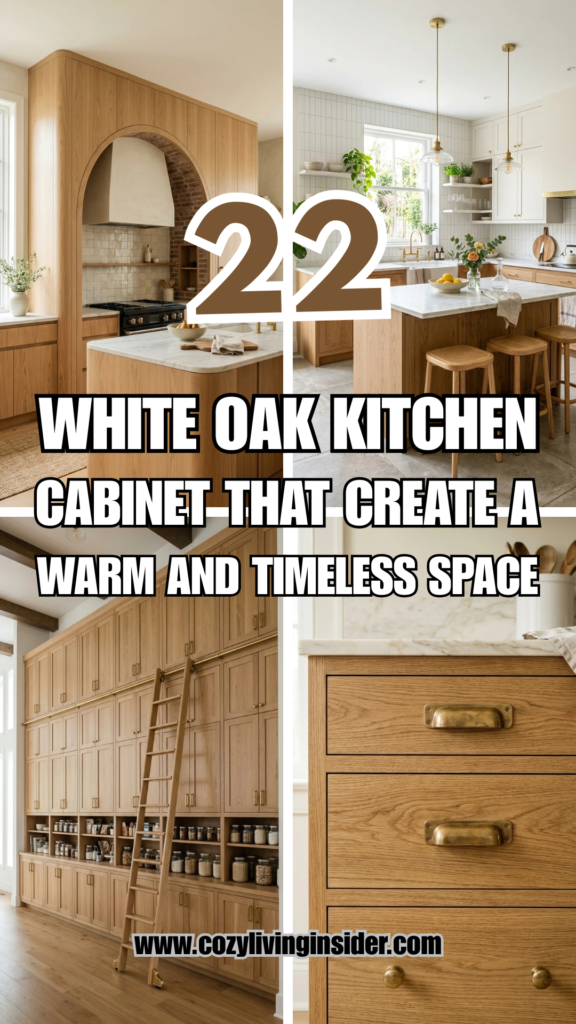

White oak has emerged as the definitive choice for homeowners and designers seeking a balance between modern minimalism and traditional warmth. Unlike the heavy, honey-toned oaks of the past, contemporary white oak cabinetry focuses on neutral undertones, straight grain patterns, and matte finishes. Its inherent durability and versatile color palette allow it to anchor a kitchen while providing a canvas for various hardware, countertops, and backsplashes. Whether you are aiming for a Scandinavian-inspired retreat or a rugged farmhouse aesthetic, white oak offers a timeless quality that ages gracefully.
1. Rift-Sawn
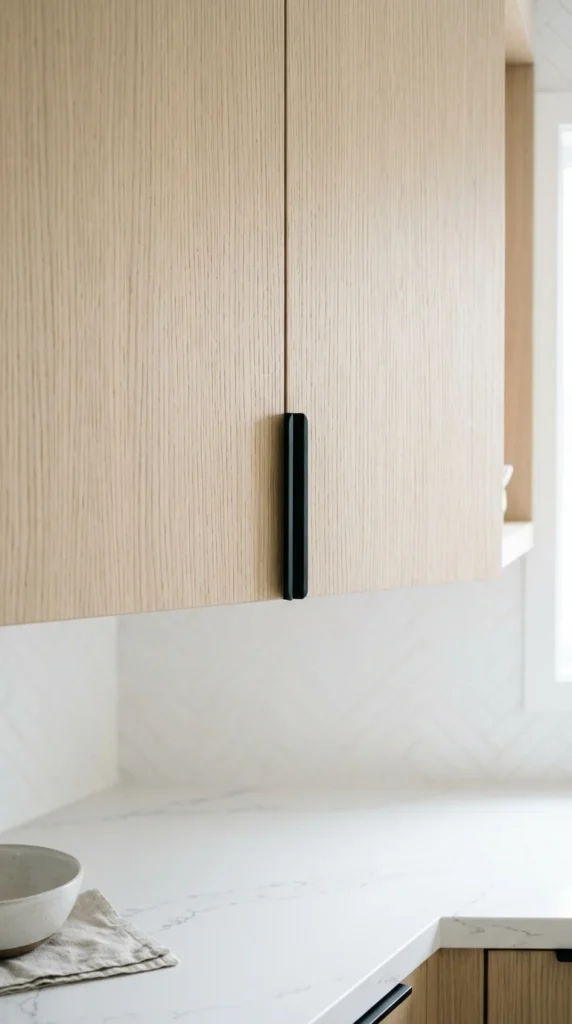
Rift-sawing is a specific milling technique that produces a linear, tight grain without the “cathedrals” or loops found in traditional plainsawn wood. This style is highly sought after for modern and transitional kitchens because it provides a consistent, architectural look. The verticality of the grain can make ceilings appear higher and the overall kitchen feel more structured and organized.
2. Flat-Panel
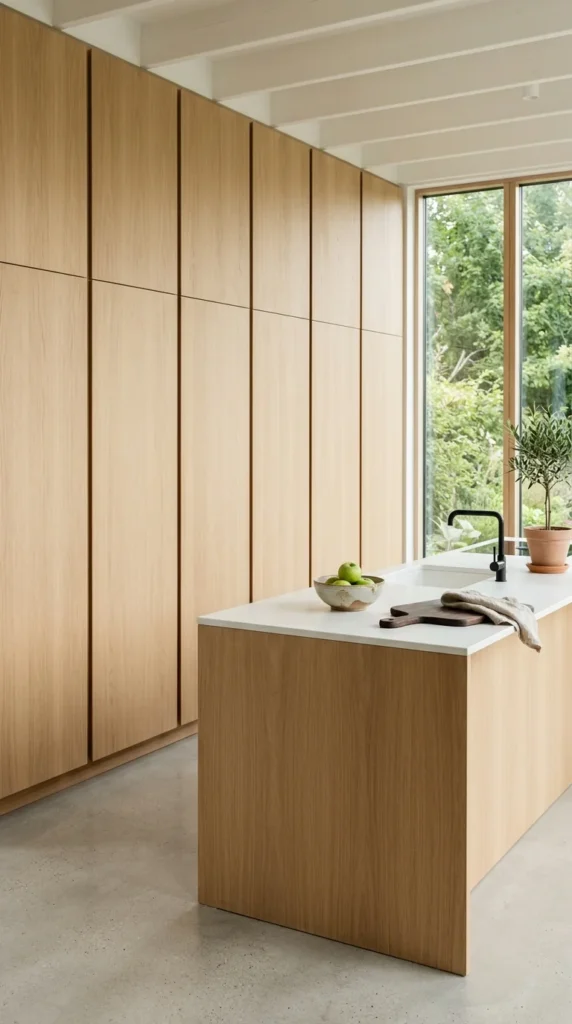
Flat-panel, or slab, white oak cabinets are the hallmark of European and minimalist design. By removing frames and decorative molding, the natural beauty of the wood grain becomes the primary focus. This style is exceptionally easy to clean and works beautifully in open-concept homes where the kitchen needs to blend into the living area like high-end furniture.
3. Shaker Style
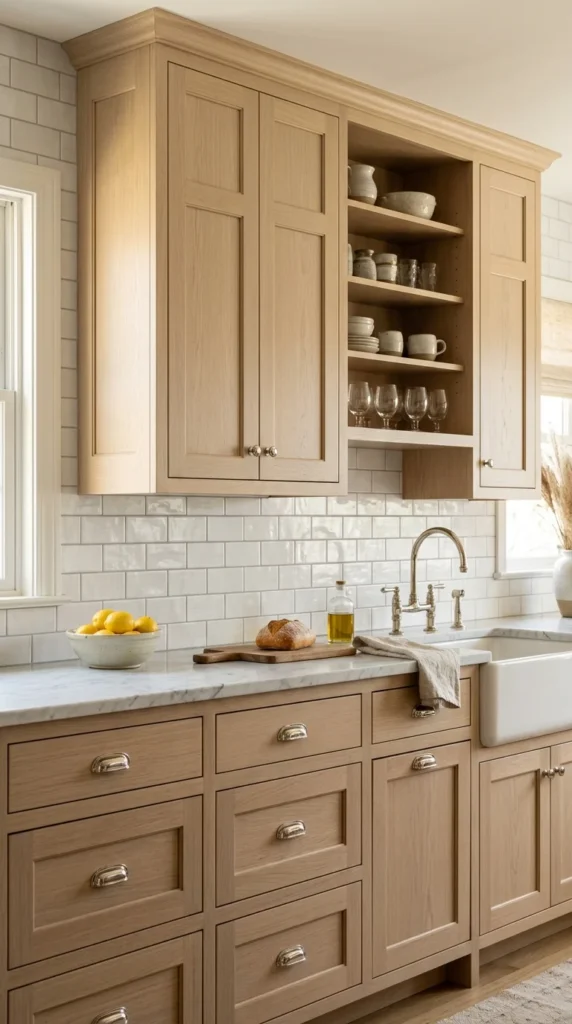
The Shaker style is a perennial favorite because of its clean lines and versatility. When executed in white oak, the traditional frame-and-panel construction gains a contemporary edge. It bridges the gap between old-world craftsmanship and modern material preferences, making it an ideal choice for those who want a kitchen that will never go out of style.
4. Natural Finish
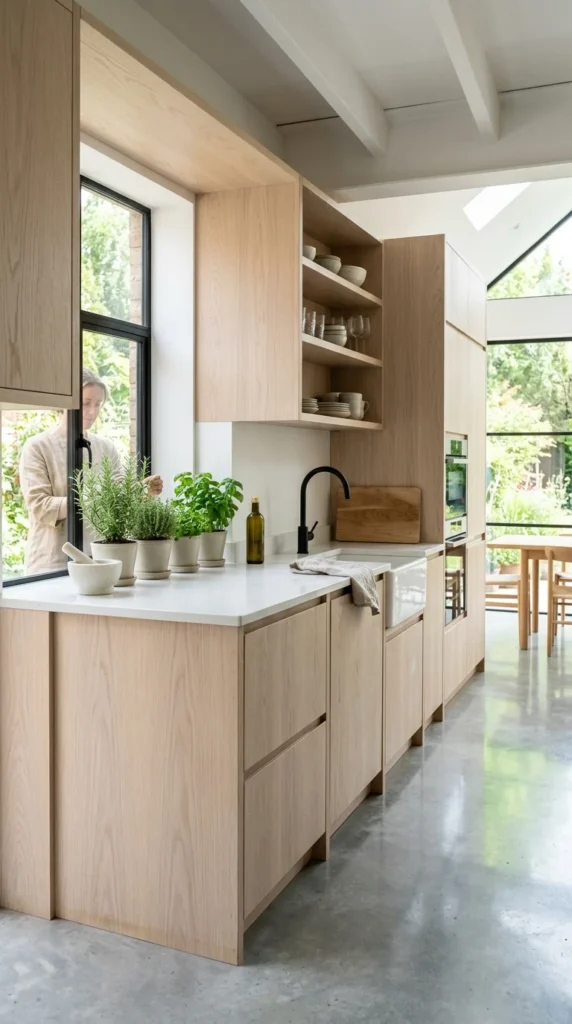
The key to a successful white oak kitchen is often the finish. A “natural” finish usually involves a clear coat with a hint of white or grey pigment to counteract the wood’s natural tendency to turn golden or amber over time. This keeps the space feeling fresh, raw, and organically connected to nature.
5. Black Accents
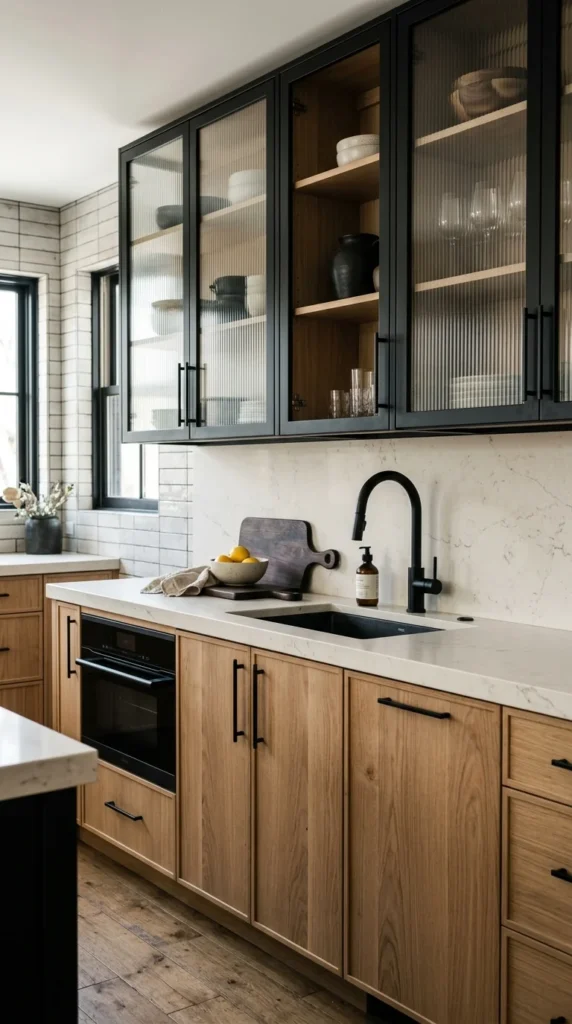
Pairing white oak with black accents provides a stunning visual contrast that prevents the wood from looking too monochromatic. The darkness of the hardware or plumbing fixtures pulls out the deeper flecks in the oak’s grain, adding a layer of maturity and “weight” to the kitchen design.
6. Floating Shelves
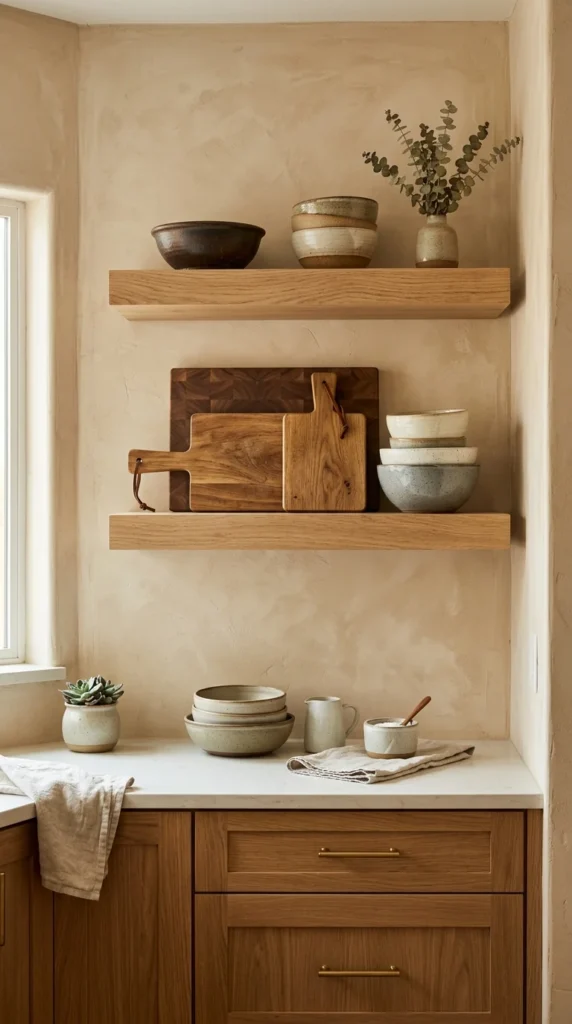
Incorporating white oak through open shelving is an excellent way to break up a heavy wall of cabinetry. Floating shelves made from the same species as the base cabinets create a cohesive look while allowing the kitchen to feel more open and airy. It also provides an opportunity to display heirloom pieces or daily essentials.
7. Floor-to-Ceiling
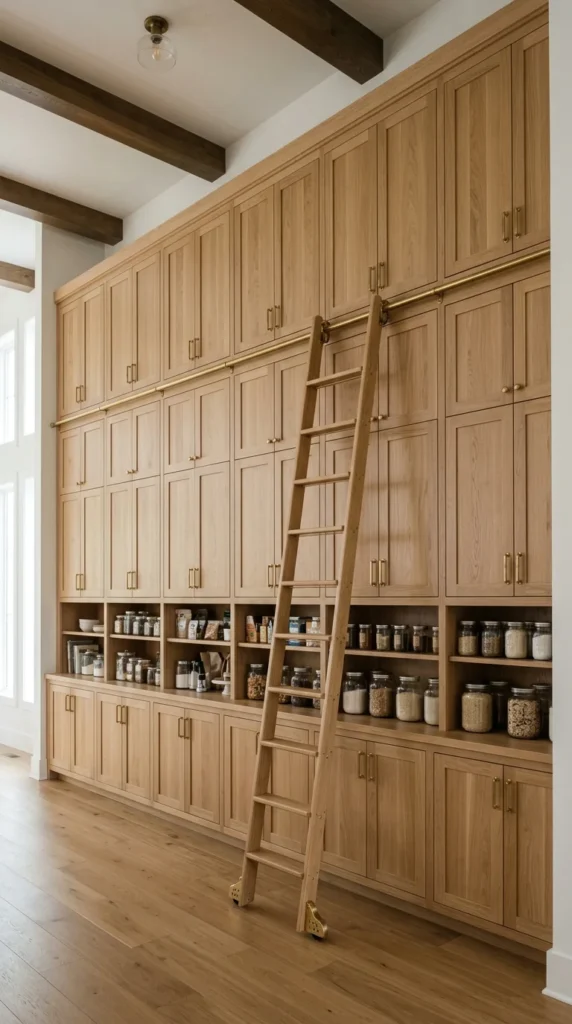
For maximum storage and visual impact, floor-to-ceiling white oak cabinetry creates a “wood wall” effect. This approach is particularly effective in large kitchens, as it hides appliances and pantry items behind a unified facade, maintaining a clean and uncluttered environment.
8. Brass Hardware
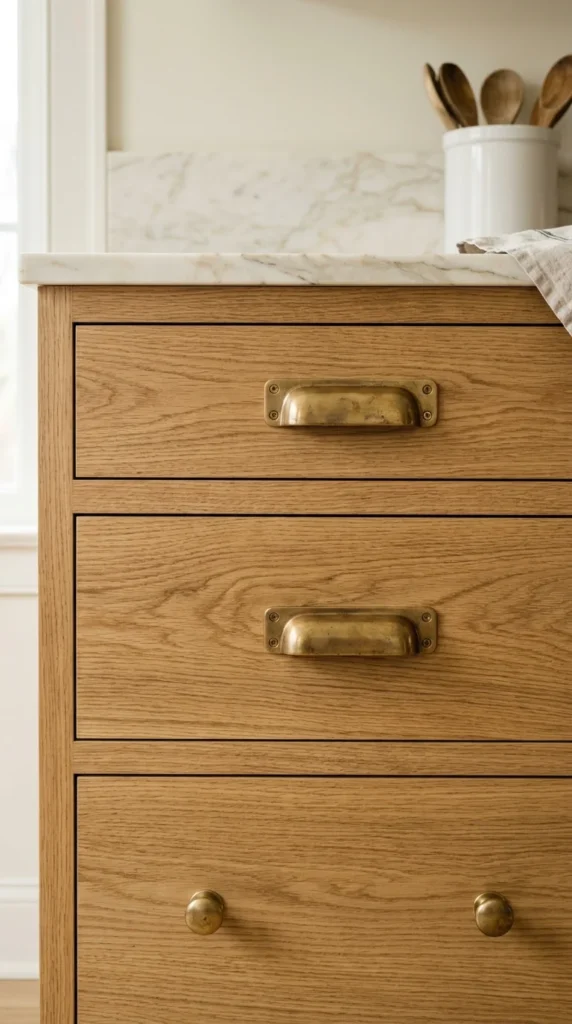
Brass and white oak are a match made in design heaven. The warmth of the metal enhances the warmth of the wood, creating a space that feels luxurious and inviting. Over time, unlacquered brass will develop a patina that matches the timeless, evolving nature of the oak itself.
9. Marble Pairings
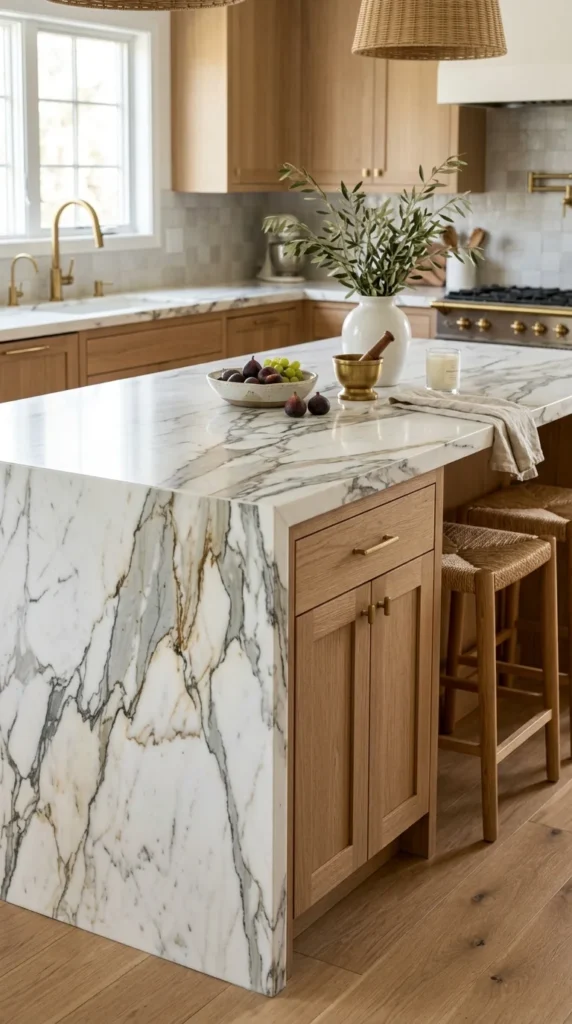
Nothing says “timeless” quite like the combination of wood and stone. White oak cabinets paired with white marble—specifically varieties with grey or gold veining—create a balanced aesthetic. The wood provides the warmth that stone often lacks, while the marble adds a touch of cool elegance.
10. Two-Tone
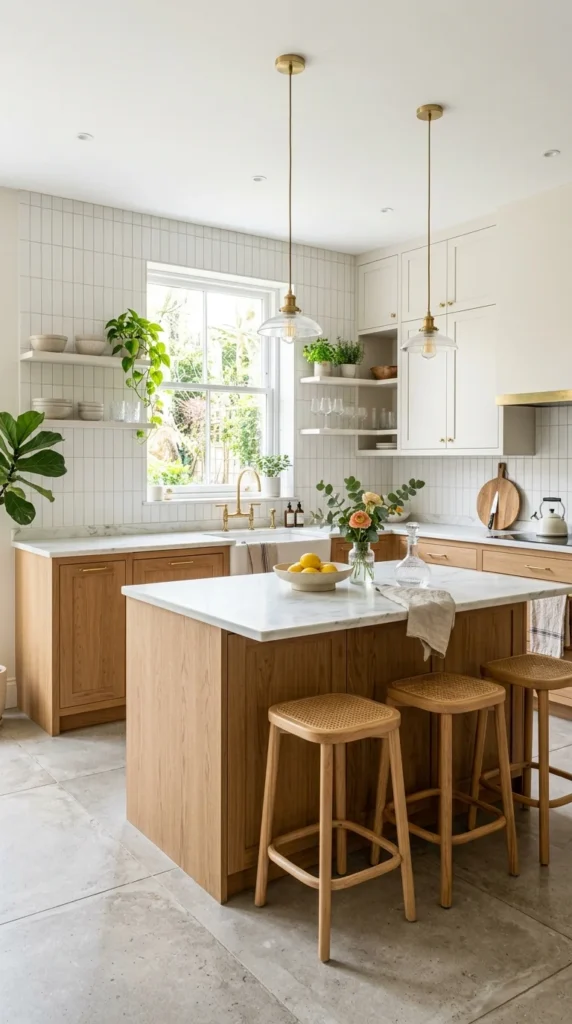
If a full wood kitchen feels overwhelming, a two-tone approach is the perfect solution. Using white oak for the lower cabinets or the island provides a grounded, organic base, while lighter painted uppers keep the eye moving upward and the space feeling expansive.
11. Arched Details
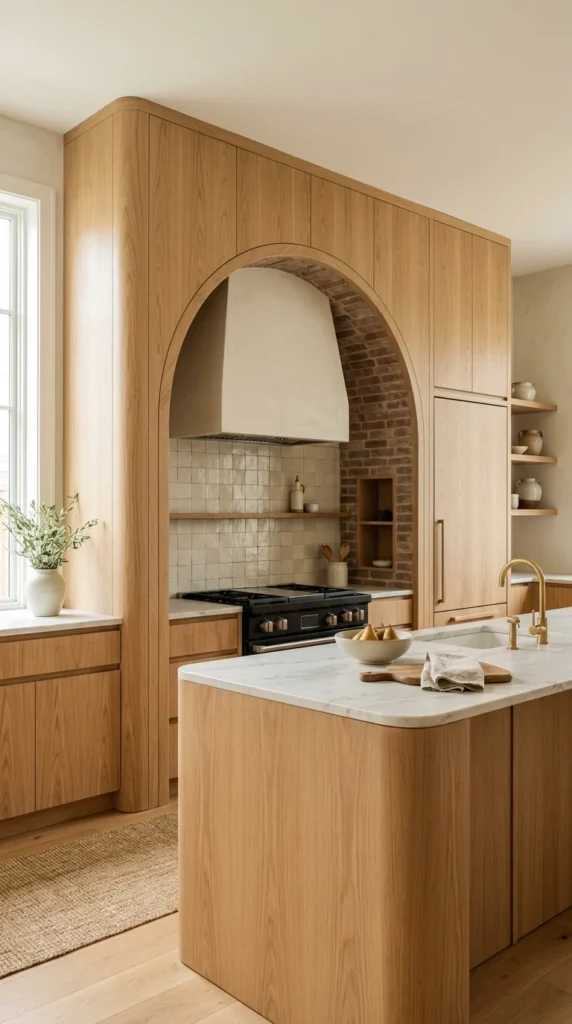
Incorporating curves and arches into white oak cabinetry softens the often-rigid lines of a kitchen. Whether it’s an arched glass-front cabinet or a curved range hood finished in oak, these details add a custom, artisanal feel that highlights the wood’s flexibility in design.
12. Integrated Appliances
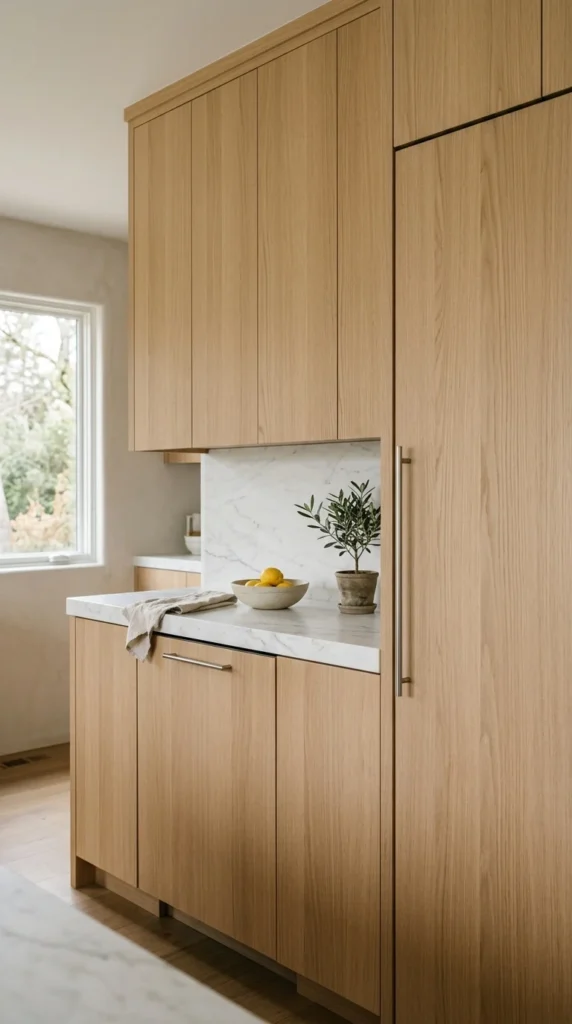
To achieve a truly high-end, furniture-like appearance, white oak panels can be used to integrate appliances. This removes the visual “noise” of stainless steel and allows the warmth of the wood to remain uninterrupted, which is essential for achieving a minimalist or “quiet luxury” look.
13. Vertical Slats
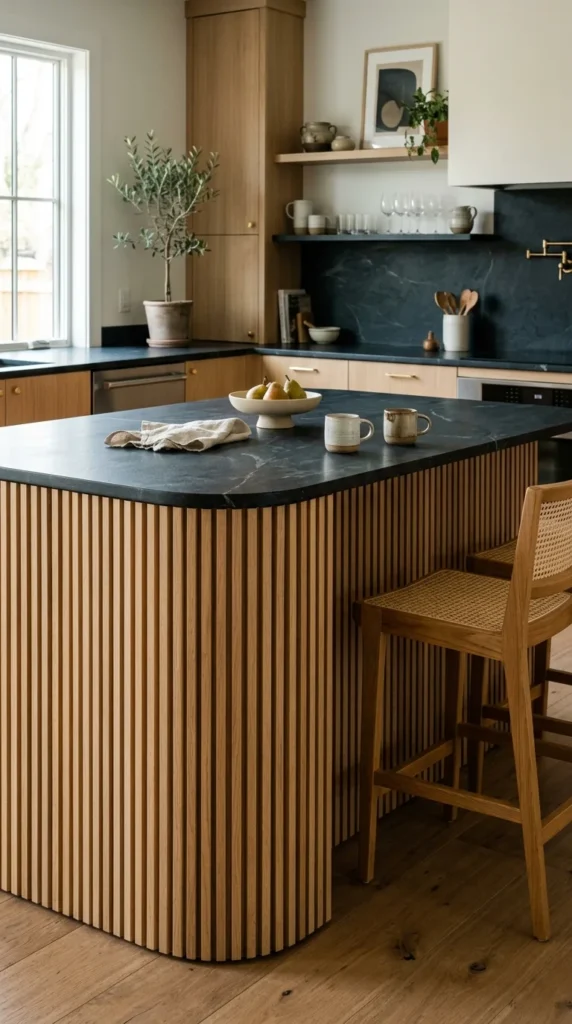
Texture is a vital element in a monochromatic or neutral kitchen. Vertical white oak slats (or tambours) add architectural interest and a tactile quality to islands or cabinet ends. This detail creates play between light and shadow, making the wood grain appear more dynamic.
14. Reclaimed Oak
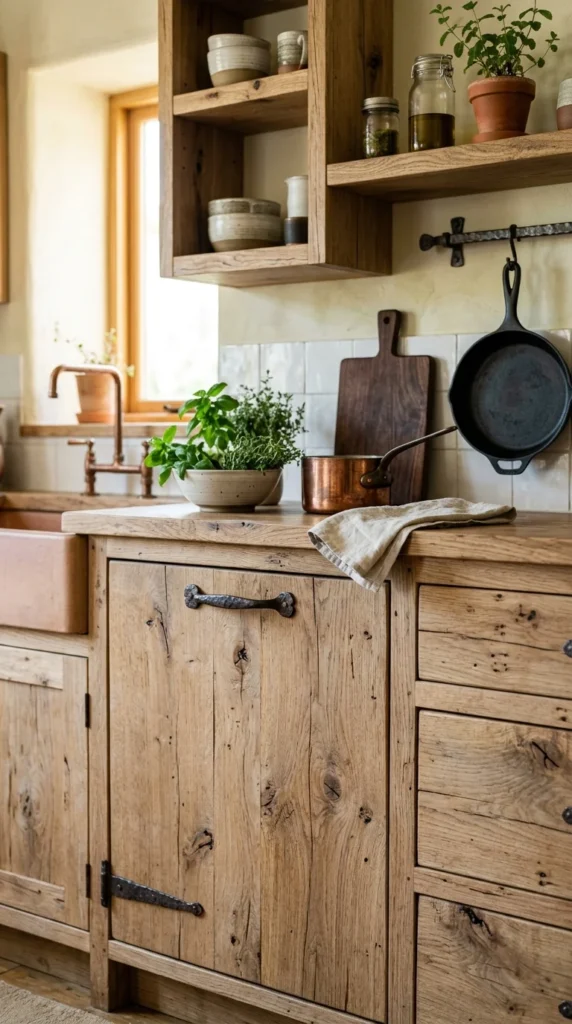
For those who prefer a “lived-in” feel, reclaimed white oak offers unparalleled character. Each piece tells a story through its imperfections. When used for cabinetry, it brings a sense of history and ruggedness that balances out the sleekness of modern appliances.
15. Cerused Finish
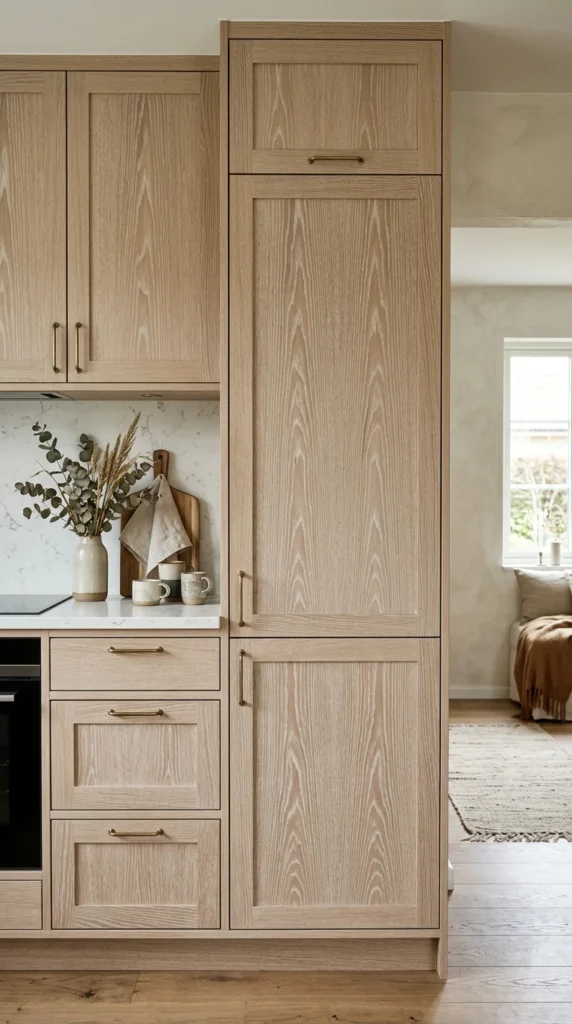
Cerusing (or liming) is a technique that accentuates the grain of the wood by filling it with a contrasting pigment. On white oak, this usually results in a sophisticated, multi-dimensional look that feels both coastal and upscale. It is an excellent way to add visual depth without changing the overall light color of the wood.
16. Matte Black
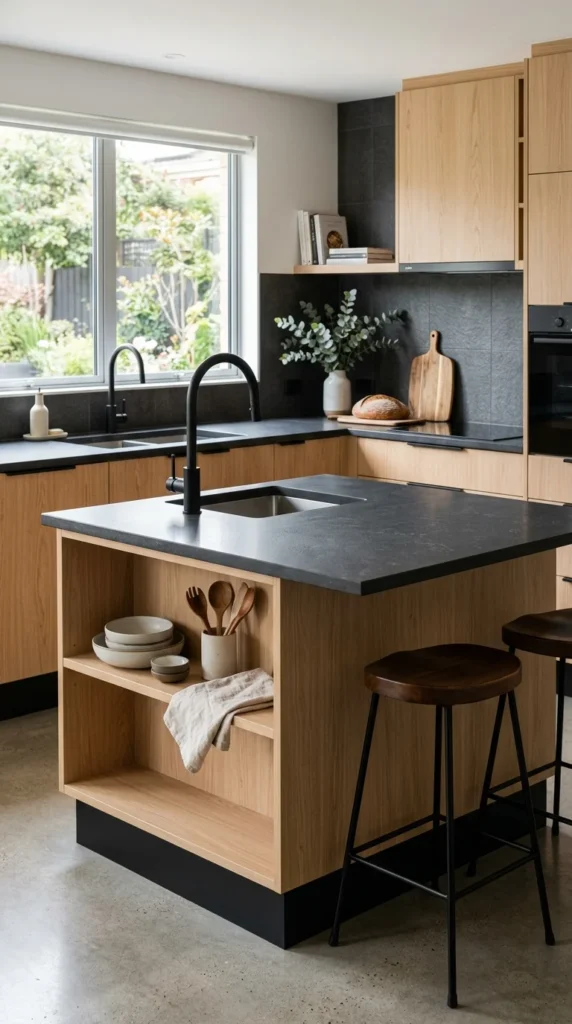
While brass adds warmth, matte black accents add “cool.” This combination is popular in contemporary urban designs. The flat, non-reflective black surfaces emphasize the organic texture of the oak, making the wood feel even softer and more inviting by comparison.
17. Waterfall Island
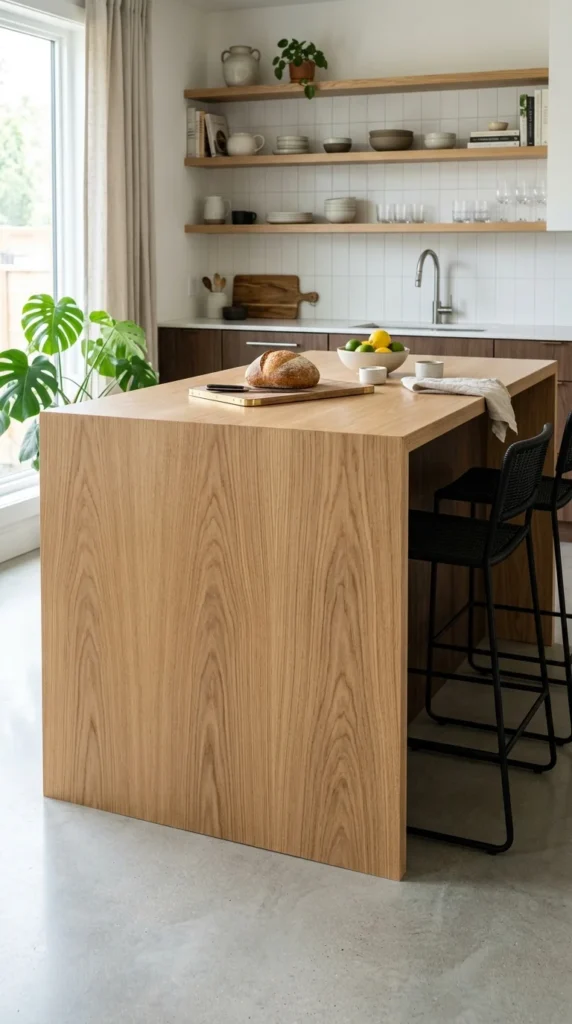
A waterfall island in white oak is a bold statement of craftsmanship. It treats the wood as a continuous piece of art, wrapping the center of the kitchen in warmth. This application works best with rift-sawn or straight-grain oak to ensure the lines remain clean and fluid.
18. Glass Fronts
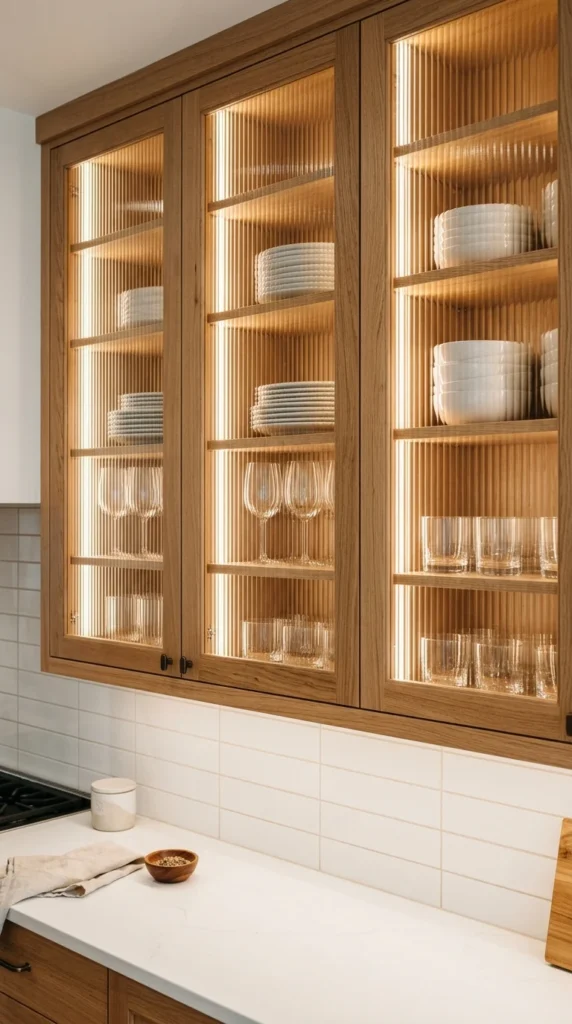
Glass-front cabinets framed in white oak offer a way to break up the solidity of the wood while maintaining the color palette. Using textured glass, like fluted or seeded varieties, adds an extra layer of visual interest and hides the “clutter” of everyday dishes while still feeling light and reflective.
19. Scandi-Minimalism
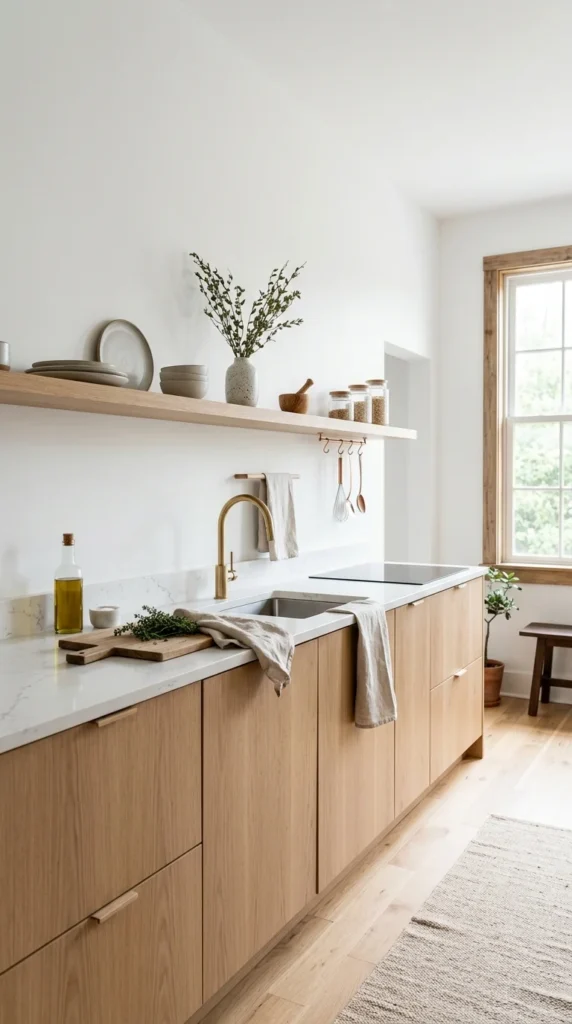
Scandinavian design relies heavily on light woods to combat long winters. White oak is the perfect candidate for this style, especially when paired with an all-white backdrop and plenty of natural light. The focus here is on simplicity, functionality, and a “hygge” atmosphere.
20. Farmhouse Twist
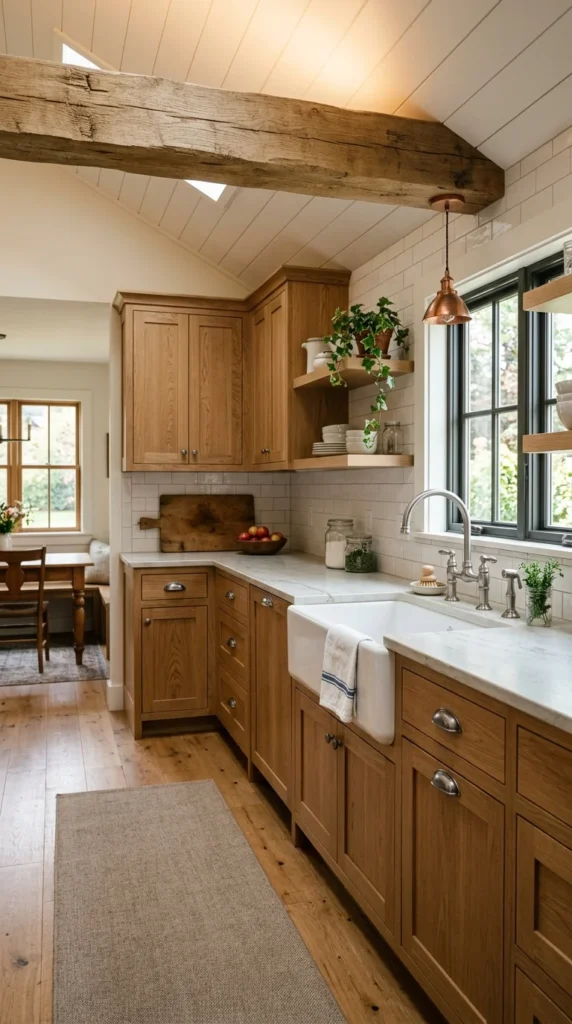
Move over, painted white farmhouse kitchens. White oak is the new standard for the modern farmhouse. It provides the rustic warmth of a country home but with a cleaner, more refined execution. It pairs beautifully with farmhouse sinks and exposed ceiling beams.
21. Darker Stains
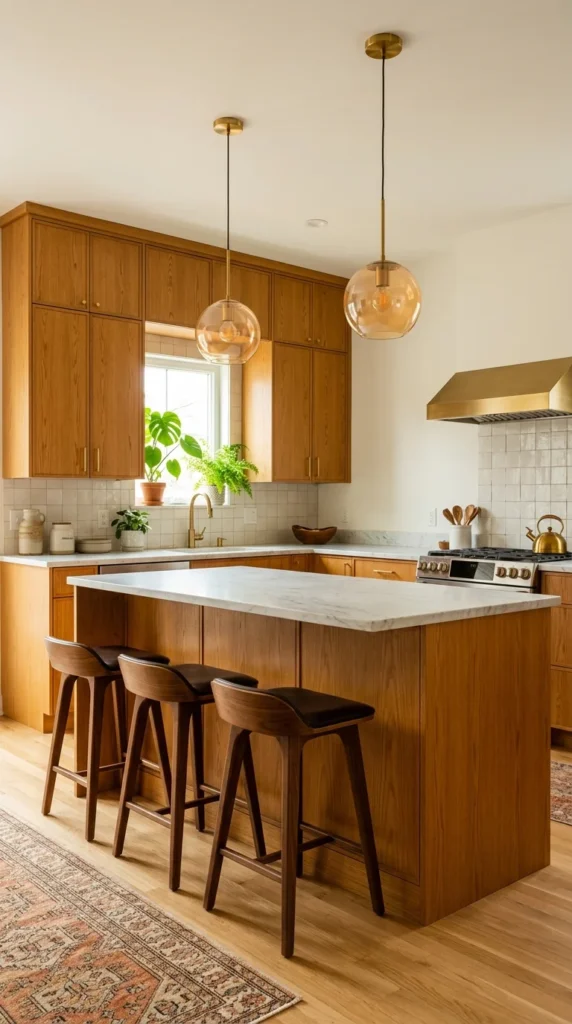
While pale oak is currently trending, white oak also takes stains beautifully. A slightly darker, mid-tone stain can give the wood a mid-century modern or “vintage” feel. Because white oak doesn’t have the red undertones of red oak, the stains remain true to color and don’t turn “muddy.”
22. Hidden Pantry
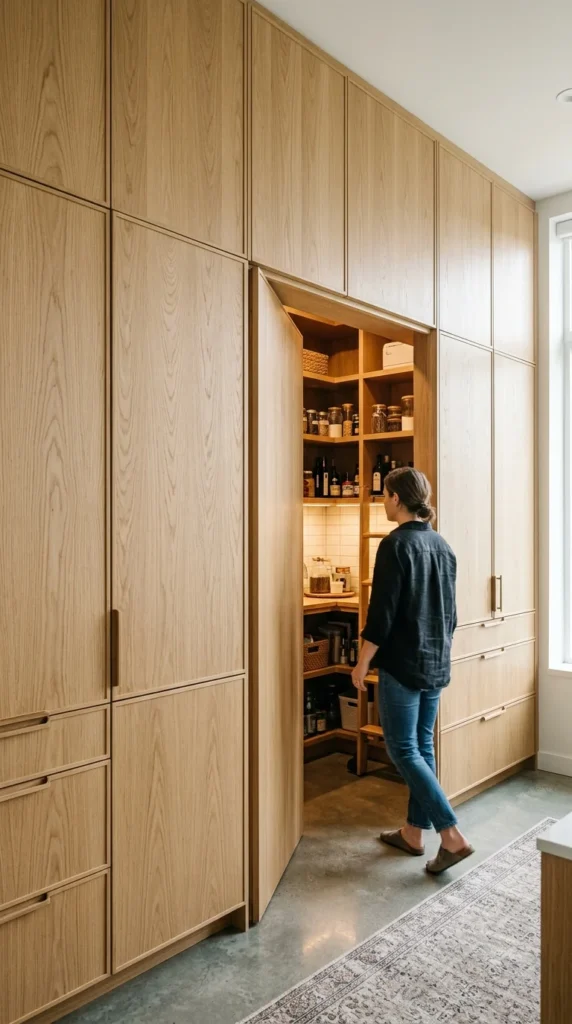
The “hidden pantry” is the ultimate luxury in kitchen design. By using white oak panels to disguise the entrance to a secondary storage space, you maintain the clean lines of the kitchen. This design choice highlights the versatility of white oak as a material that can function as both a structural element and a decorative finish.