
White oak has ascended to the pinnacle of interior design, becoming the gold standard for homeowners seeking a balance between organic warmth and high-end sophistication. Unlike the honey-colored oaks of the past, contemporary white oak cabinetry focuses on subtle grain patterns, muted undertones, and a versatile palette that complements everything from ultra-modern minimalism to classic transitional styles.
The allure of white oak lies in its physical properties and its aesthetic adaptability. As a dense hardwood, it offers exceptional durability and resistance to wear, making it an ideal choice for the high-traffic environment of a kitchen. From a design perspective, its neutral “wheat” color provides a perfect canvas that avoids the red or orange undertones found in red oak. When executed correctly, white oak cabinetry transforms a kitchen into a sanctuary of “quiet luxury”—an environment that feels expensive, curated, and timeless.
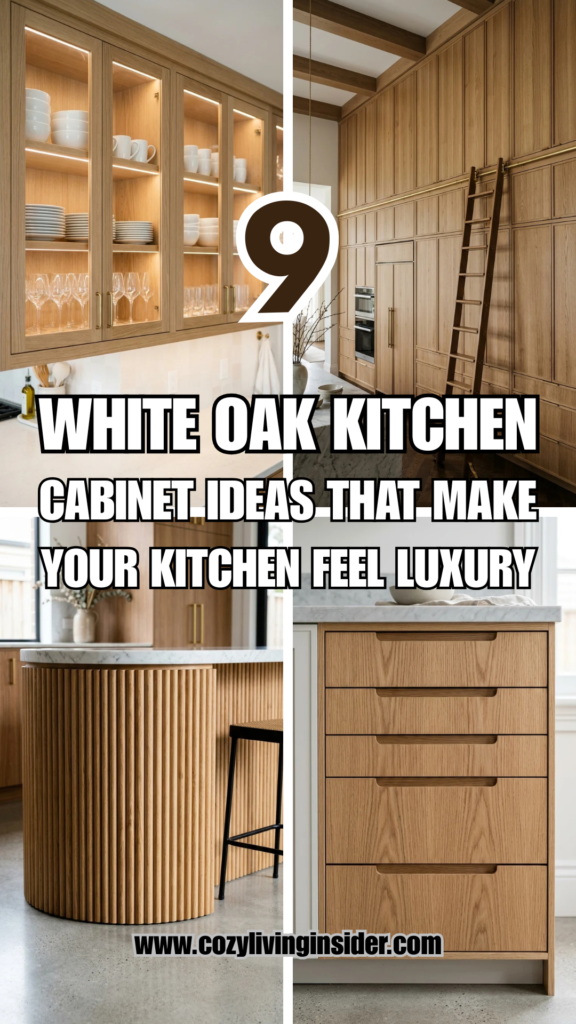
Here are nine white oak kitchen cabinet ideas to elevate your home into the realm of luxury.
1. Rift Sawn
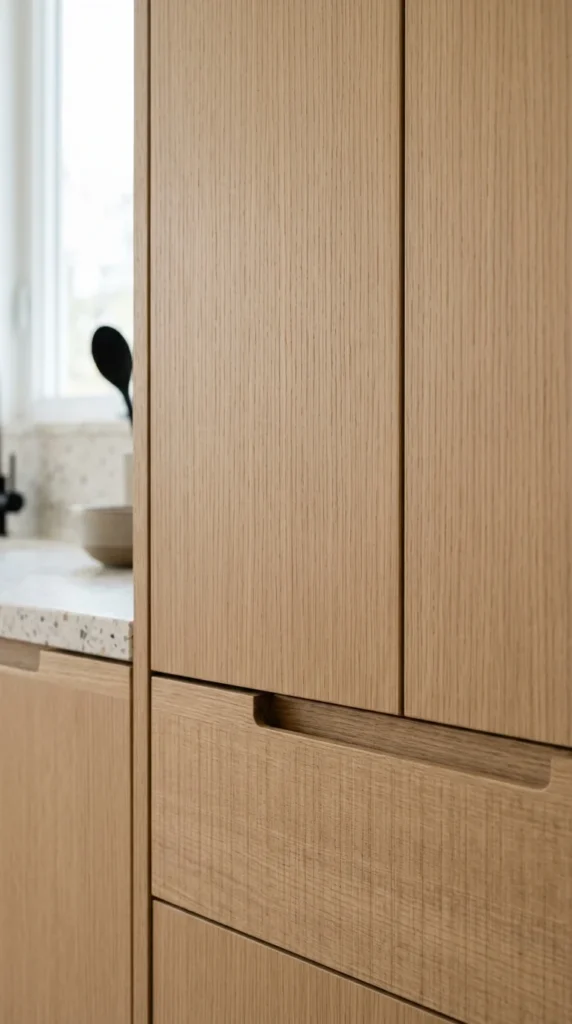
Rift-sawing is a specific milling technique that produces a linear, vertical grain pattern with minimal “flecking” or cathedral waves. This is the hallmark of luxury cabinetry. By cutting the log perpendicular to the grain, woodworkers create planks that are incredibly stable and visually consistent.
In a luxury kitchen, rift-sawn white oak provides a sense of architectural order. The vertical lines draw the eye upward, creating an illusion of height and a streamlined, custom-built appearance. This style is particularly effective in modern or “soft-minimalist” kitchens where the natural beauty of the wood grain is intended to be the primary decorative element.
2. Floor-to-Ceiling
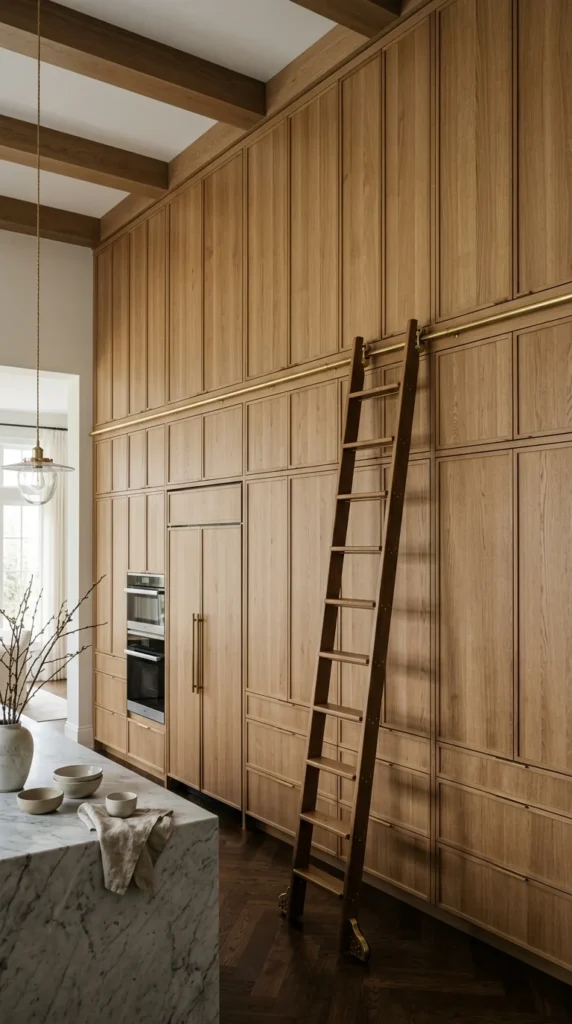
To achieve a truly high-end, monolithic look, consider floor-to-ceiling cabinetry. This approach eliminates visual clutter by hiding bulkheads and upper wall gaps, creating a “furniture-wall” effect. In a luxury setting, these cabinets often feature integrated “appliance garages” and hidden refrigerators (panel-ready) to maintain a continuous wood facade.
The sheer scale of floor-to-ceiling white oak brings a commanding presence to the room. It feels intentional and architectural rather than merely functional. When paired with touch-to-open technology, the lack of visible hardware further emphasizes the seamless, expensive nature of the wood.
3. Black Accents
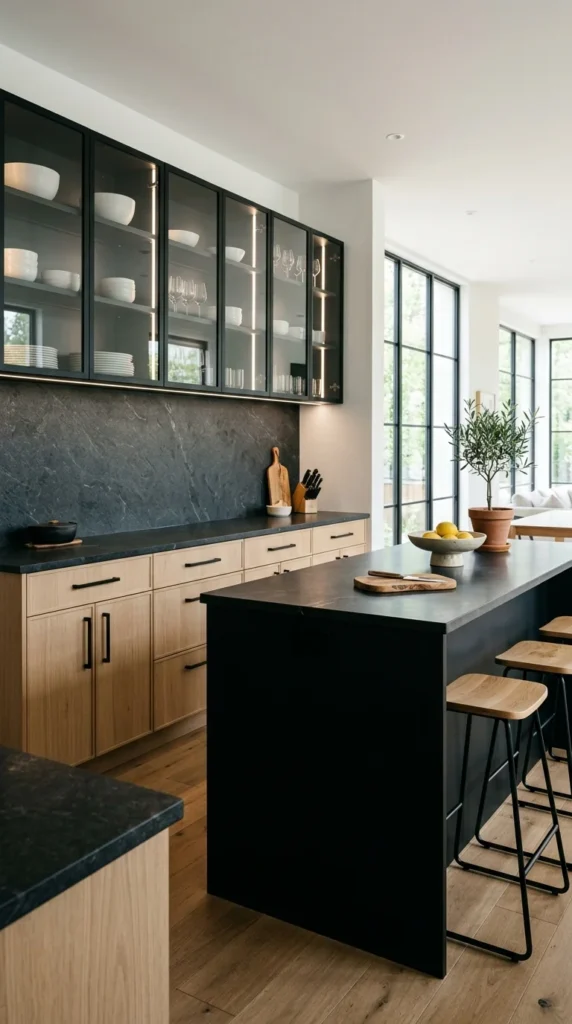
Nothing elevates the organic warmth of white oak quite like the sharp contrast of black accents. This combination is a staple of “Modern Organic” design. Using matte black hardware, faucets, or even black metal window frames against white oak cabinetry creates a sophisticated, grounded aesthetic.
The black elements act as an anchor, preventing the light wood from feeling too washed out or rustic. For a bolder luxury statement, consider a black marble countertop with white oak cabinets. The interplay between the dark, veined stone and the light, textured wood evokes a sense of high-end European bistro design.
4. Marble Pairings
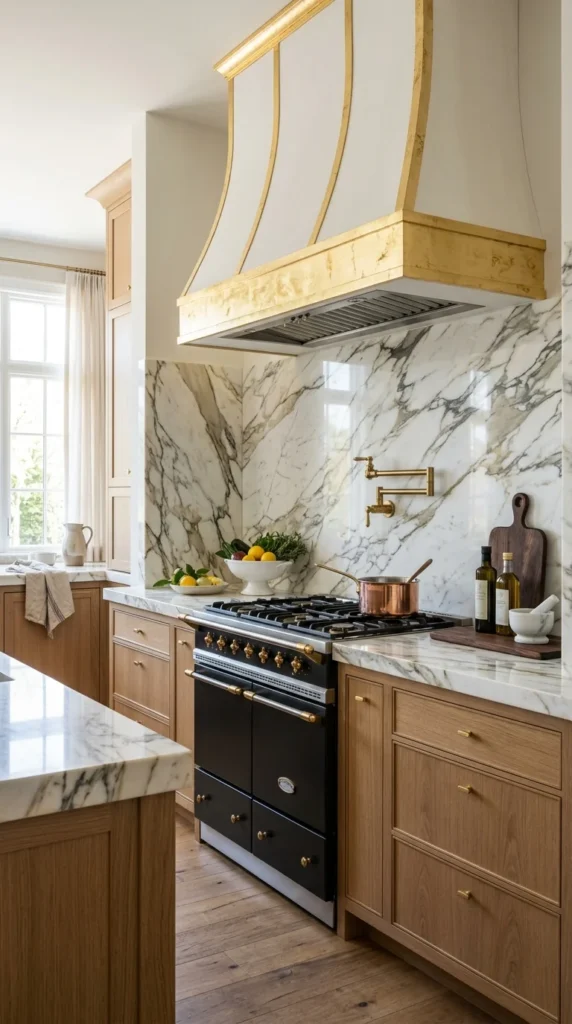
Marble and white oak are a match made in design heaven. For a luxury kitchen, pairing light oak with high-contrast marble—such as Calacatta Borghini or Breccia Capraia—adds a layer of opulence that is hard to replicate with quartz or other man-made materials.
The cool temperature and smooth texture of the stone provide a tactile contrast to the warmth of the wood grain. To maximize the luxury feel, use the marble for a full-height backsplash that extends behind the stove or all the way to the ceiling. This creates a cohesive, high-impact visual field that screams “custom design.”
5. Fluted Details
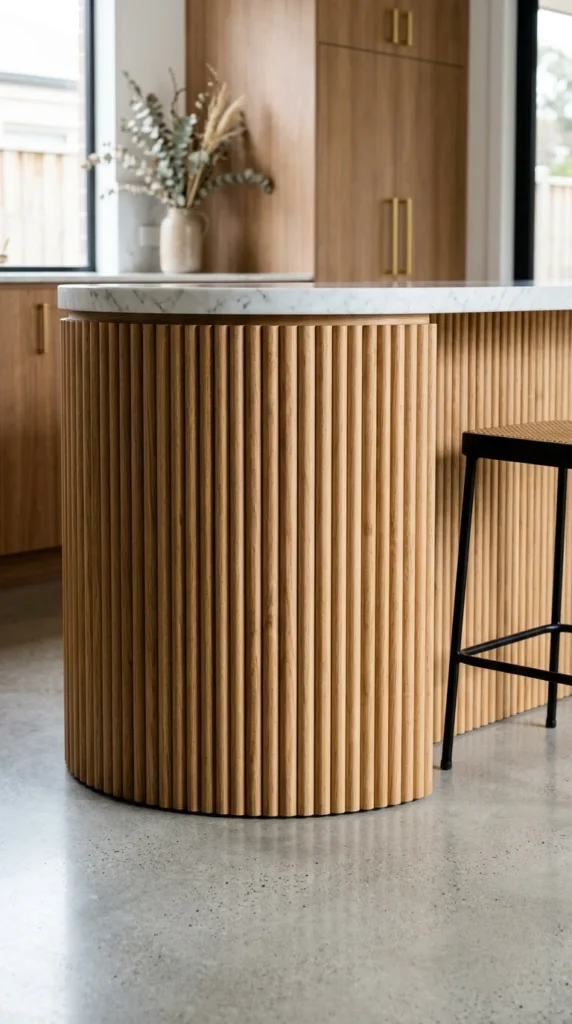
Texture is a key component of luxury, and fluted (or ribbed) white oak is currently one of the most sought-after features in high-end millwork. Adding fluted panels to a kitchen island or as a focal point on select cabinet doors introduces an architectural rhythm to the space.
Fluting catches the light differently throughout the day, creating a dynamic sense of movement. This technique is often used to soften the hard edges of a kitchen, particularly on rounded island ends. It moves the cabinetry away from “utility” and toward “fine furniture,” which is the essence of a luxury kitchen.
6. Minimalist Hardware
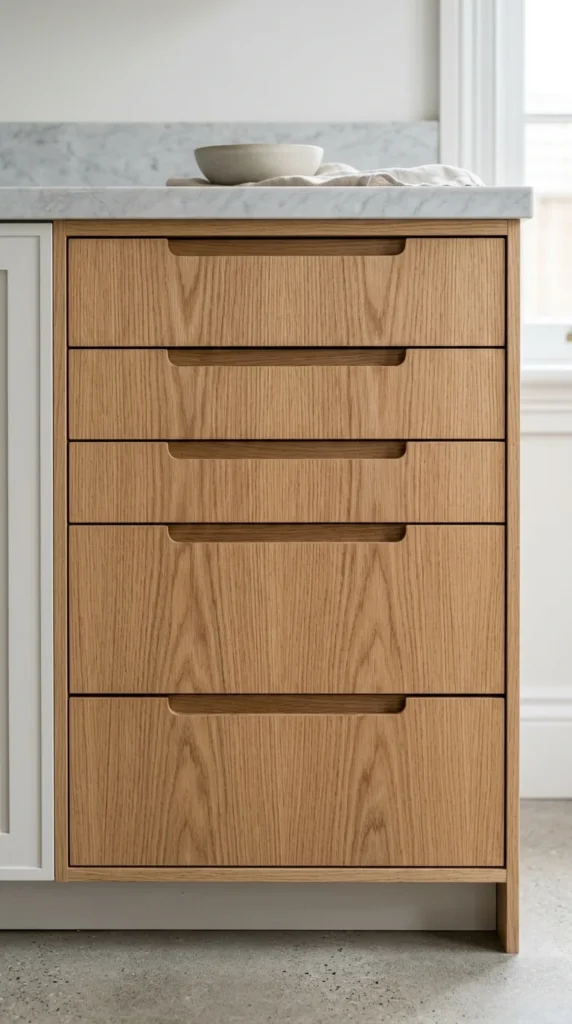
In luxury design, less is often more. Minimalist hardware—or the total absence of it—allows the quality of the white oak to speak for itself. Integrated pulls, finger grooves, or push-to-open mechanisms create a sleek, uninterrupted surface that feels modern and expensive.
If you do choose to use hardware, opt for oversized “appliance pulls” in high-end finishes like unlacquered brass, polished nickel, or oil-rubbed bronze. The key is to choose pieces that feel heavy and substantial, acting like jewelry for the cabinets.
7. Two-Tone Layouts
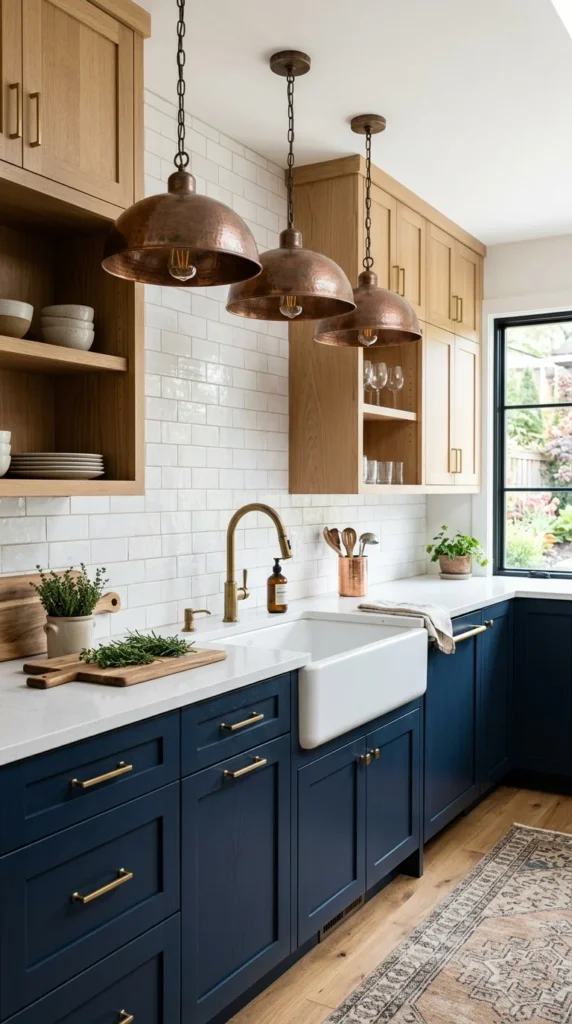
While an all-oak kitchen is beautiful, a two-tone approach can add depth and designer flair. Pairing white oak with a deep, saturated color—like charcoal grey, forest green, or navy blue—creates a sophisticated hierarchy in the kitchen.
Commonly, designers will use white oak for the island or the upper shelving to keep the eye level light and airy, while using a darker painted finish for the base cabinets to ground the room. This “mixed materials” look feels curated over time, rather than a “box set” kitchen, which is a hallmark of custom luxury homes.
8. Natural Stains
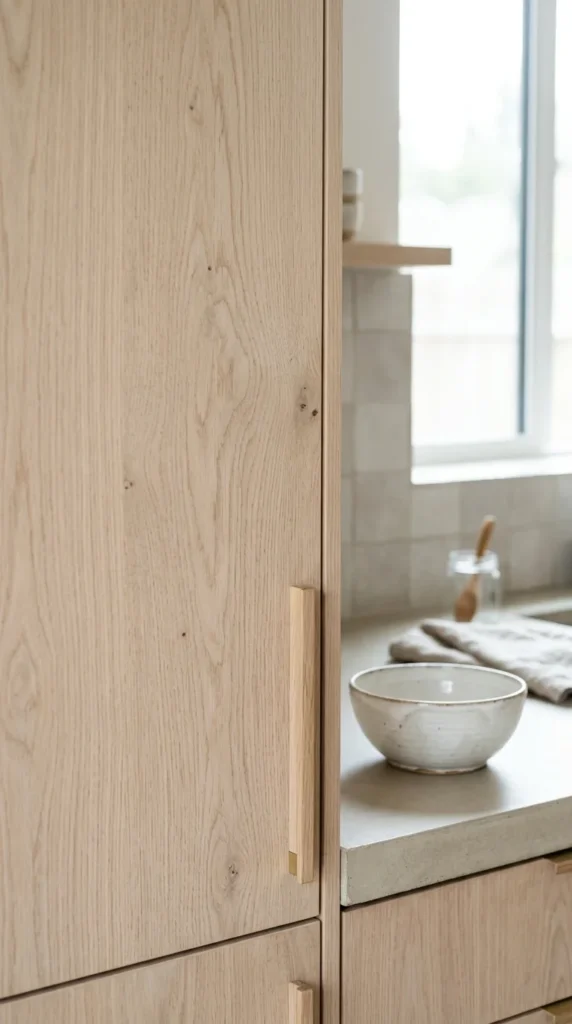
The goal of a luxury white oak finish is often to make the wood look like it hasn’t been finished at all. Professional-grade “dead flat” or “invisible” topcoats protect the wood from grease and water while maintaining the raw, pale aesthetic of the timber.
Bleached or “cerused” finishes are also popular in luxury settings. Cerusing involves rubbing a white pigment into the open grain of the oak to highlight its texture, giving the wood a weathered yet sophisticated “driftwood” appearance. This look is particularly effective in coastal luxury homes or mountain retreats.
9. Glass Fronts
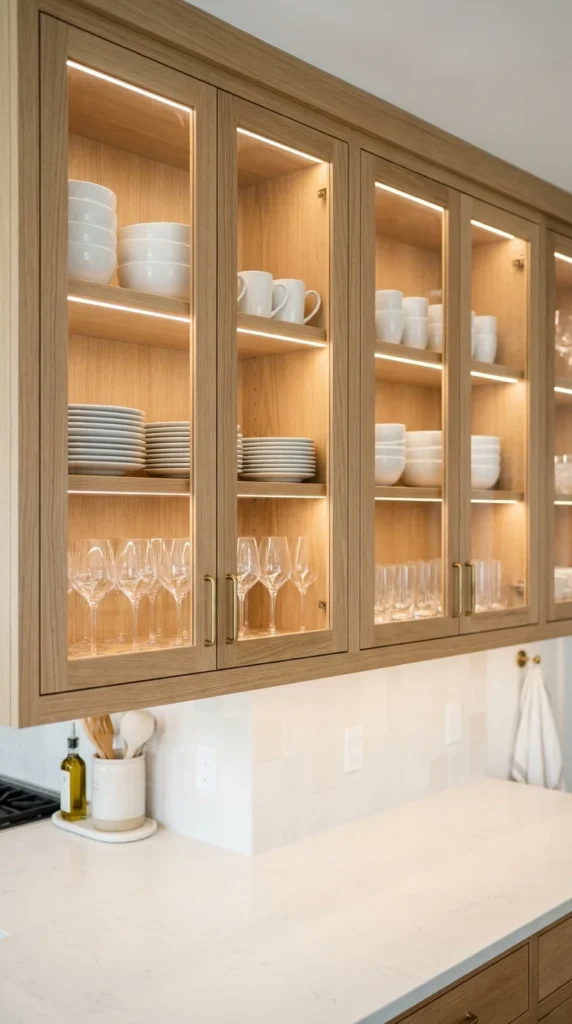
Incorporate glass-front cabinets with internal lighting to showcase high-end dinnerware or collectibles. In a white oak kitchen, using the same wood for the interior of the cabinet ensures that the luxury finish continues even behind closed doors.
For an extra touch of sophistication, consider fluted glass or “seeded” glass. These textures provide a veiled view of the contents, adding a layer of mystery and preventing the cabinets from looking cluttered. When paired with integrated LED strip lighting hidden behind the face frames, these cabinets glow at night, serving as both storage and ambient art.
The Longevity of White Oak
Choosing white oak for your kitchen is more than just a trend; it is an investment in a material that ages gracefully. Unlike painted cabinets that may chip or go out of style, white oak can be refinished, stained, or simply left to develop a natural patina over the decades. Its ability to bridge the gap between “natural” and “formal” ensures that your kitchen will feel like a luxury space for years to come. By focusing on high-quality milling like rift-sawing, pairing the wood with premium stones like marble, and paying attention to textural details like fluting, you create a culinary environment that is as enduring as it is beautiful.