
The kitchen is the heart of the home, and finding the perfect color palette is essential for creating a space that feels both inviting and stylish. In recent years, the combination of green and wood has emerged as a premier choice for interior designers and homeowners alike. This organic pairing draws inspiration from nature, blending the calming, restorative qualities of green with the warmth and texture of natural timber.
Whether you are aiming for a moody, sophisticated atmosphere or a bright, Scandinavian-inspired aesthetic, the versatility of green and wood allows for endless customization. Green serves as a “neutral” in many ways, bridging the gap between bold color and timeless serenity. When paired with the right wood grain—be it light oak, rich walnut, or rustic reclaimed timber—the result is a kitchen that feels grounded, cozy, and perpetually in style.
1. Sage Cabinets
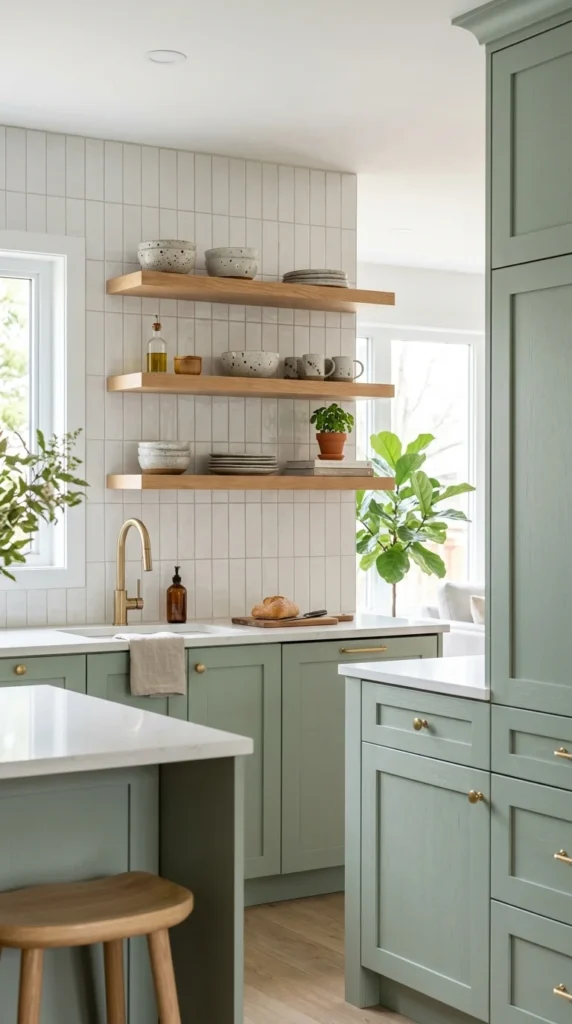
Sage green is a perennial favorite for kitchens because of its muted, earthy undertones. It acts as a soft backdrop that doesn’t overwhelm the senses. When paired with light wood accents, such as honey oak or birch, sage green creates a serene, spa-like environment. This combination is particularly effective in smaller kitchens, as the lightness of the sage keeps the space feeling open and airy.
- Best Wood Pairing: Light oak, ash, or maple.
- Hardware Tip: Use brass or gold to lean into the warmth of the wood.
- Vibe: Calming, organic, and contemporary.
2. Walnut Accents
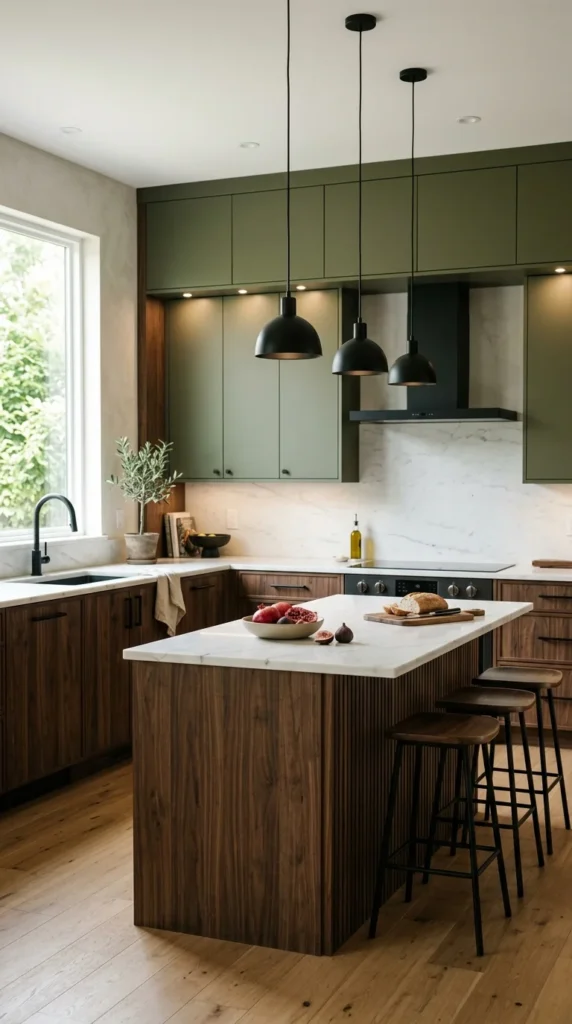
For those who prefer a more sophisticated and dramatic look, walnut is the ideal partner for green. The deep, rich tones of walnut wood provide a luxurious contrast to mid-to-dark shades of green. This combination feels architectural and deliberate, making it perfect for modern or mid-century modern homes. The natural oils in walnut give it a slight sheen that complements matte green finishes beautifully.
- Best Green Pairing: Olive, forest green, or hunter green.
- Design Note: Use walnut for the island or lower cabinets to ground the room.
- Vibe: Sophisticated, mid-century modern, and luxurious.
3. Forest Green
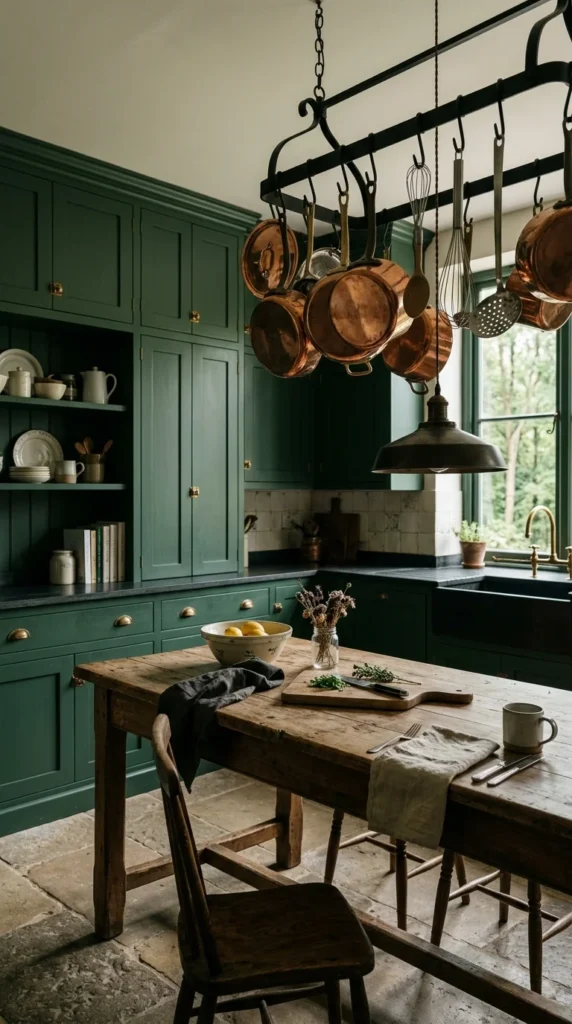
Forest green is a bold choice that brings the depth of the outdoors inside. It is a powerful color that demands attention but remains classic. To prevent a forest green kitchen from feeling too dark or “heavy,” introduce substantial wood elements. A rustic wood table or thick ceiling beams can break up the saturated color and add a layer of cozy, lodge-like charm.
- Best Wood Pairing: Reclaimed timber, dark oak, or cherry.
- Lighting: Ensure plenty of natural light or warm under-cabinet lighting to highlight the green’s depth.
- Vibe: Bold, moody, and traditional.
4. Oak Flooring
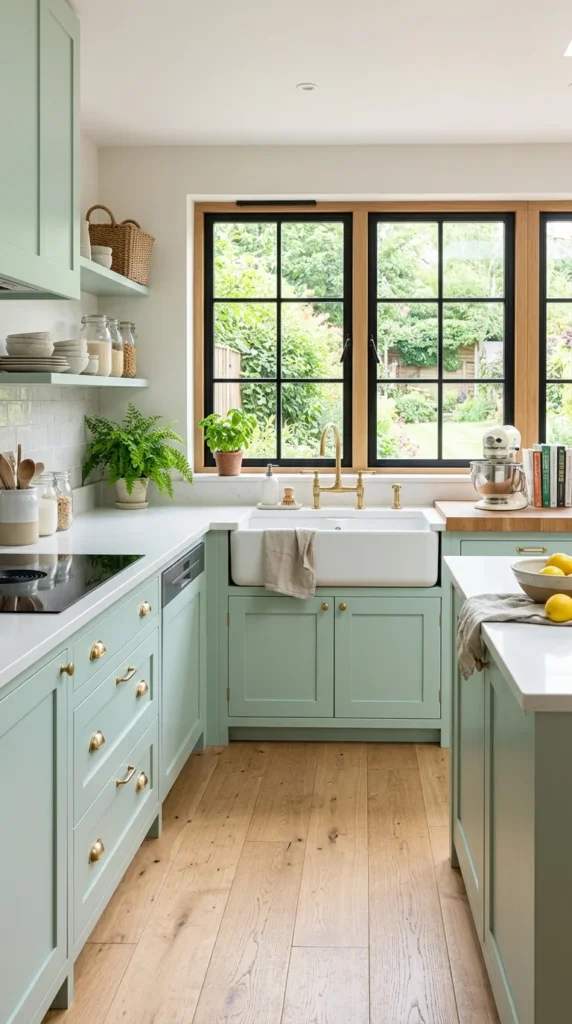
Sometimes the best way to incorporate wood is through the foundation of the room. Wide-plank oak flooring provides a warm, durable base that complements almost any shade of green. Light oak floors specifically help to bounce light around the room, making it an excellent choice for kitchens with darker green cabinets. This approach creates a “layered” look where the green pops against the neutral warmth of the floor.
- Best Green Pairing: Mint, sage, or emerald.
- Maintenance: Use a matte finish on the oak to keep the look natural and modern.
- Vibe: Bright, airy, and timeless.
5. Olive Tones
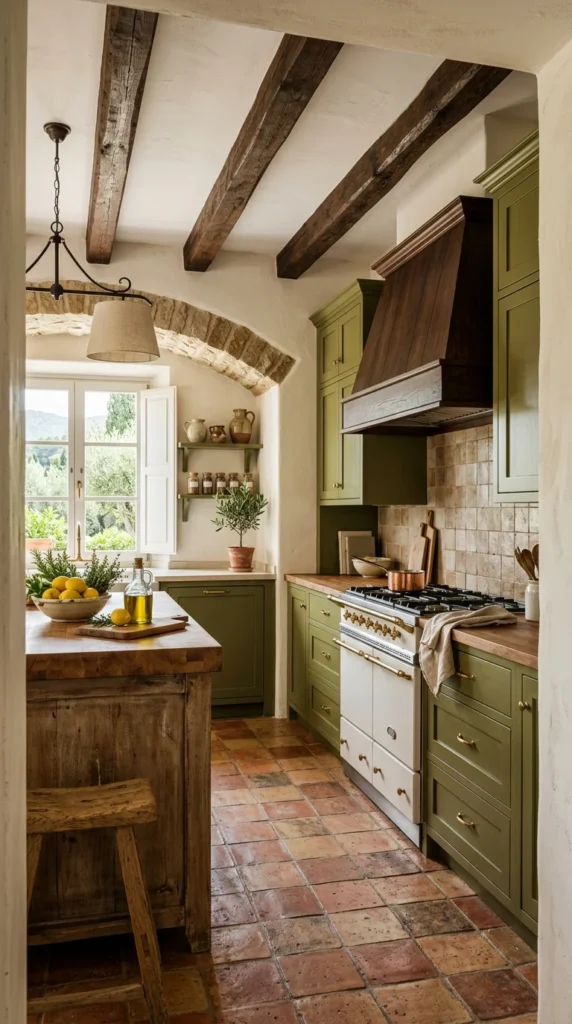
Olive green is a complex color with yellow and brown undertones, making it a natural fit for wooden elements. This pairing often evokes a Mediterranean or Tuscan feel, especially when used with darker, distressed woods. Olive green is incredibly versatile; it can look traditional in a farmhouse setting or incredibly sleek in a minimalist modern kitchen.
- Best Wood Pairing: Walnut, mahogany, or distressed pine.
- Accent Materials: Terracotta, copper, and stone.
- Vibe: Warm, earthy, and cultured.
6. Reclaimed Wood
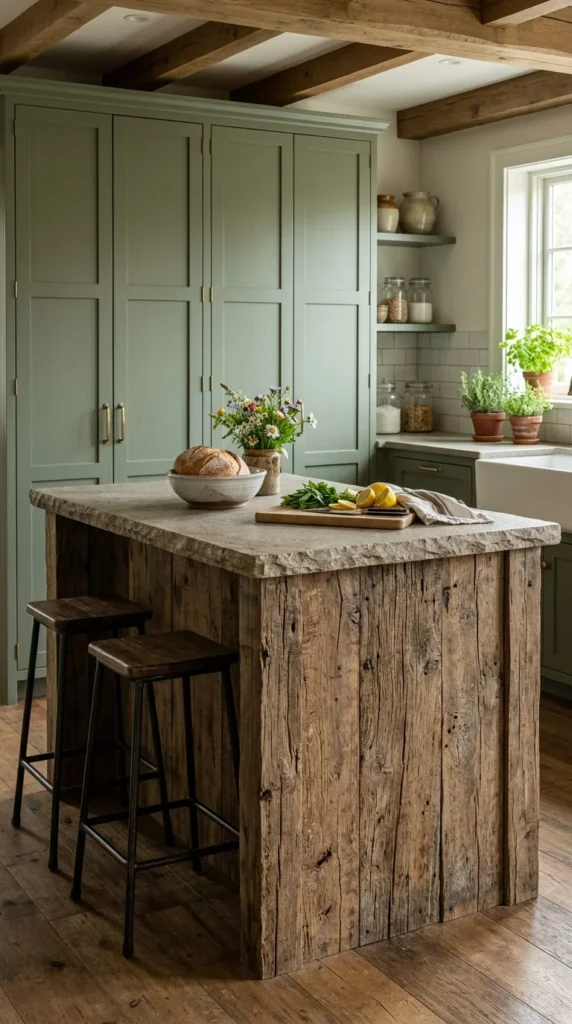
Sustainability meets style in the combination of green cabinetry and reclaimed wood. The imperfections in reclaimed wood—nail holes, knots, and variations in color—add a sense of history and character that new wood cannot replicate. When placed alongside a soft green, the wood’s texture becomes the focal point, creating a kitchen that feels “lived-in” and authentic from day one.
- Best Green Pairing: Moss green, sage, or eucalyptus.
- Application: Use reclaimed wood for the island, open shelving, or a vent hood cover.
- Vibe: Rustic, eco-friendly, and soulful.
7. Mint Green
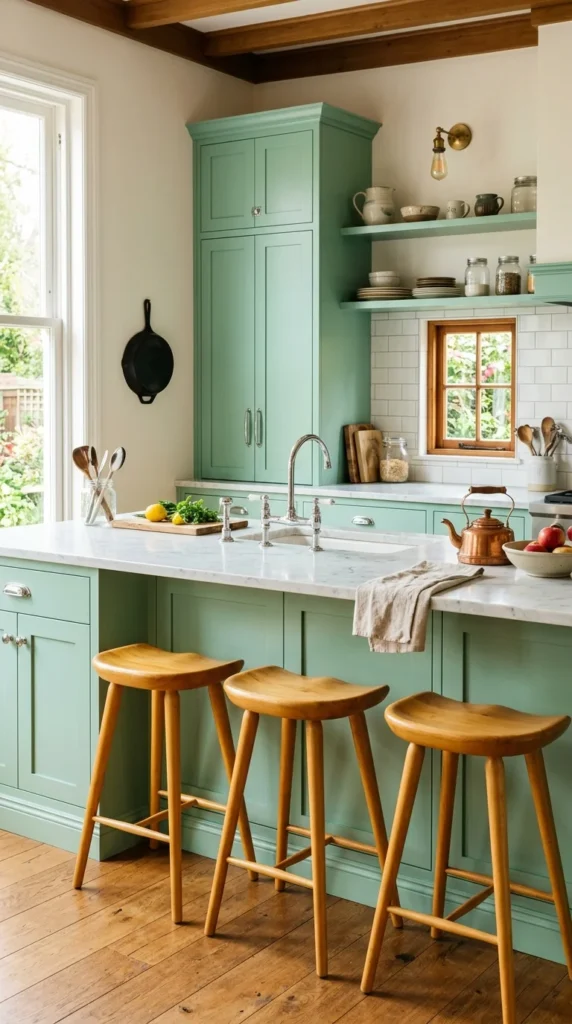
Mint green offers a playful, retro vibe that is perfect for light-filled kitchens. It is a refreshing color that pairs exceptionally well with lighter wood tones like pine or maple. This combination is often found in “Cottagecore” or coastal-inspired designs, where the goal is to create a cheerful and breezy atmosphere.
- Best Wood Pairing: Light pine, birch, or bleached oak.
- Hardware Tip: Polished nickel or chrome adds to the clean, retro feel.
- Vibe: Fresh, cheerful, and vintage.
8. Butcher Block
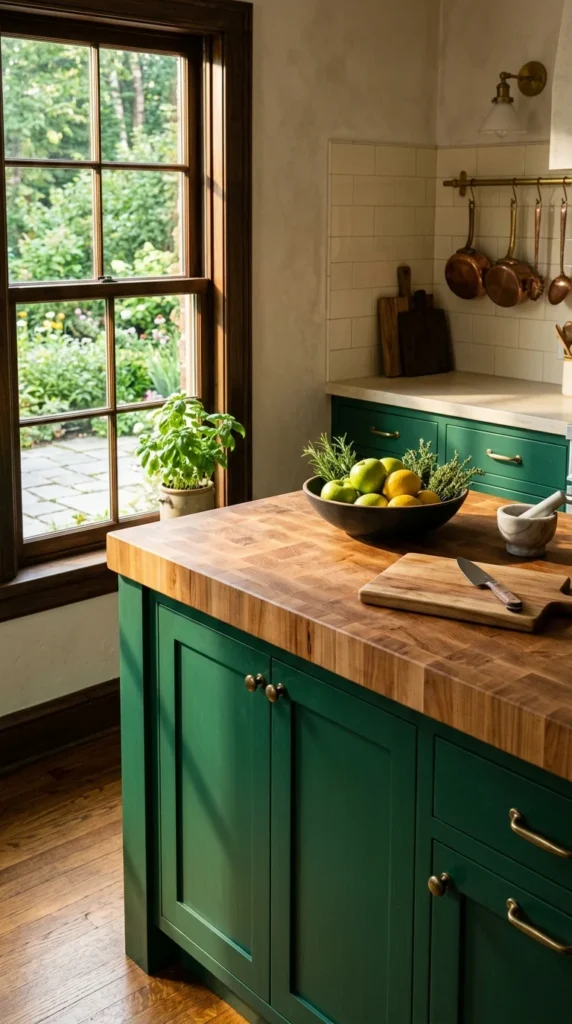
If you have green cabinets and want to introduce wood without changing the floors or furniture, butcher block countertops are the perfect solution. Wood countertops add an immediate sense of warmth to the touch, unlike stone or quartz. Against a deep emerald or forest green cabinet, the golden tones of a maple or cherry butcher block create a striking and functional contrast.
- Best Green Pairing: Emerald, navy-green, or deep teal.
- Functional Tip: Ensure the wood is properly sealed to handle kitchen moisture.
- Vibe: Functional, farmhouse-chic, and cozy.
9. Emerald High-Gloss
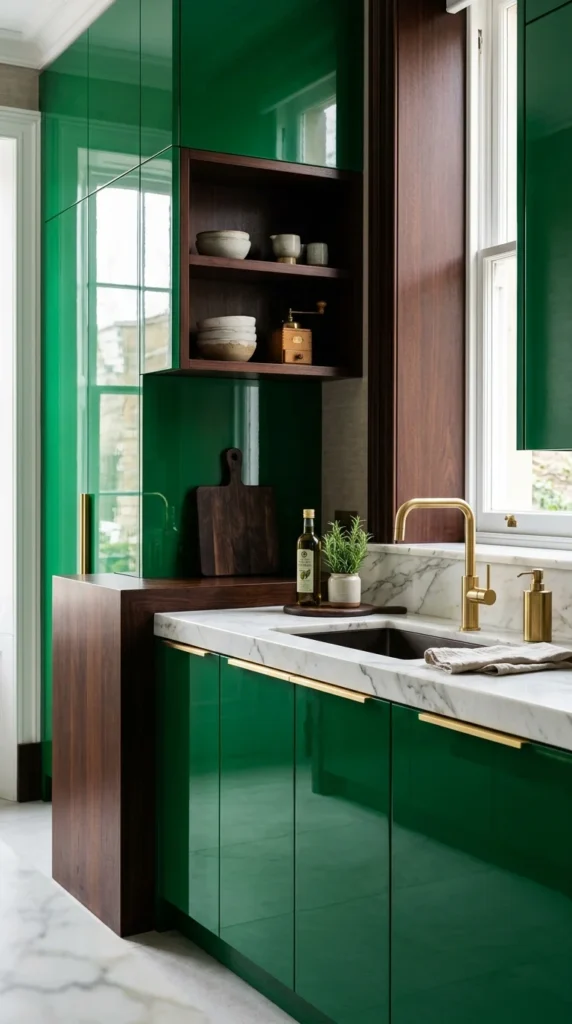
For a high-glamour look, consider high-gloss emerald green. The reflective surface adds depth and a sense of movement to the kitchen. To ground such a vibrant and shiny finish, incorporate dark, matte wood elements. The contrast between the sleek green lacquer and the organic grain of the wood creates a sophisticated, high-end aesthetic.
- Best Wood Pairing: Mahogany, ebony, or dark-stained walnut.
- Design Note: Keep the wood finish matte to balance the gloss of the cabinets.
- Vibe: Glamorous, bold, and modern.
10. Exposed Beams
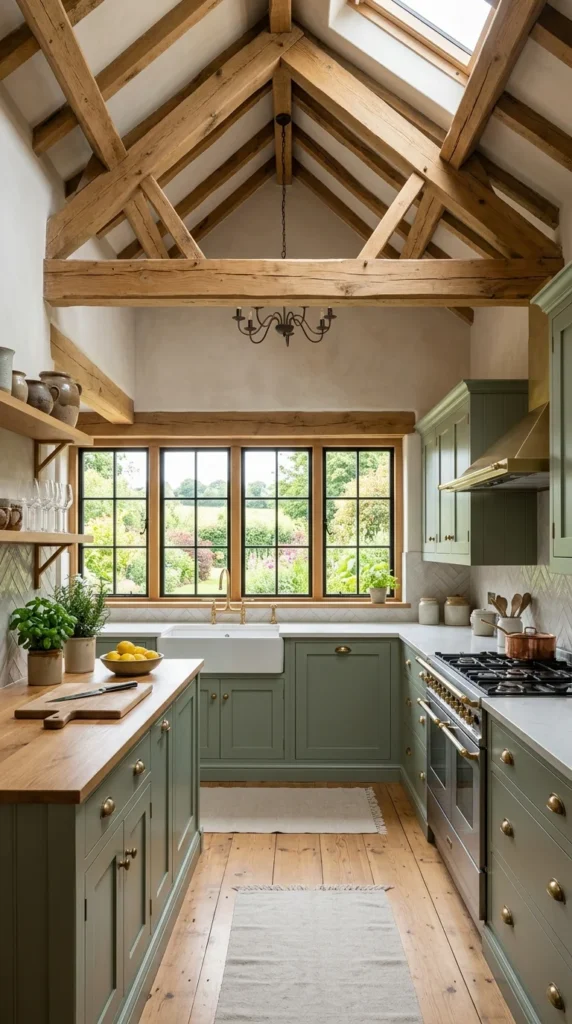
Architectural wood elements like exposed ceiling beams can transform the feel of a green kitchen. Beams draw the eye upward, making the room feel larger and more structured. In a kitchen with sage or olive green cabinetry, natural wood beams provide a “frame” for the space, reinforcing the connection to nature and traditional craftsmanship.
- Best Green Pairing: Sage, olive, or moss.
- Style Tip: Match the beam wood to the kitchen island for a cohesive look.
- Vibe: Architectural, rustic, and grand.
11. Eucalyptus Palette
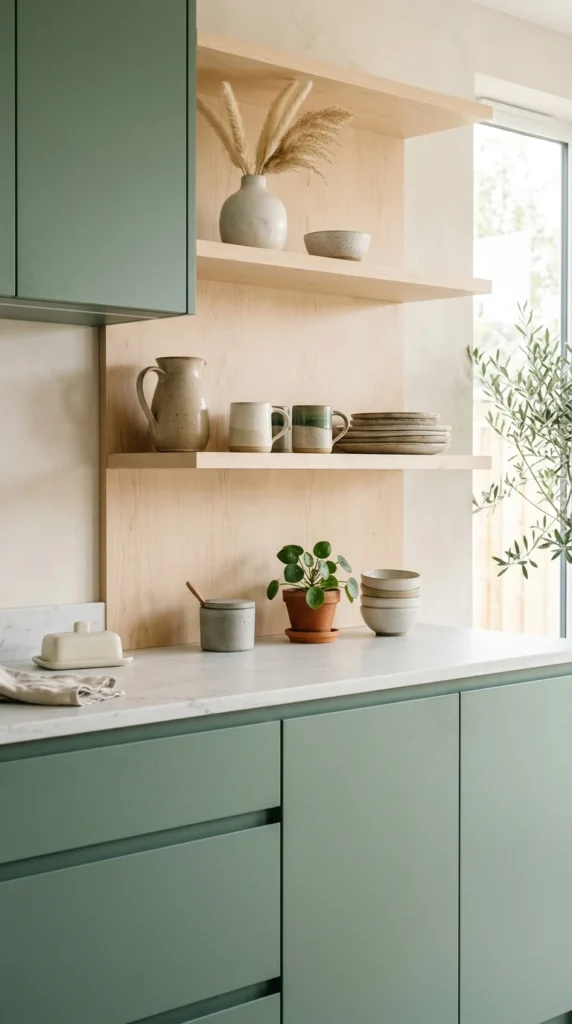
Eucalyptus is a silver-toned green that feels modern and sophisticated. It is less “earthy” than sage and more “cool” than olive. This shade works perfectly with very light woods like birch or plywood, which share its clean, minimalist aesthetic. This is a go-to palette for contemporary designs that prioritize simplicity and light.
- Best Wood Pairing: Birch, plywood, or light ash.
- Hardware Tip: Matte black hardware provides a sharp, modern contrast.
- Vibe: Minimalist, cool, and contemporary.
12. Pine Paneling
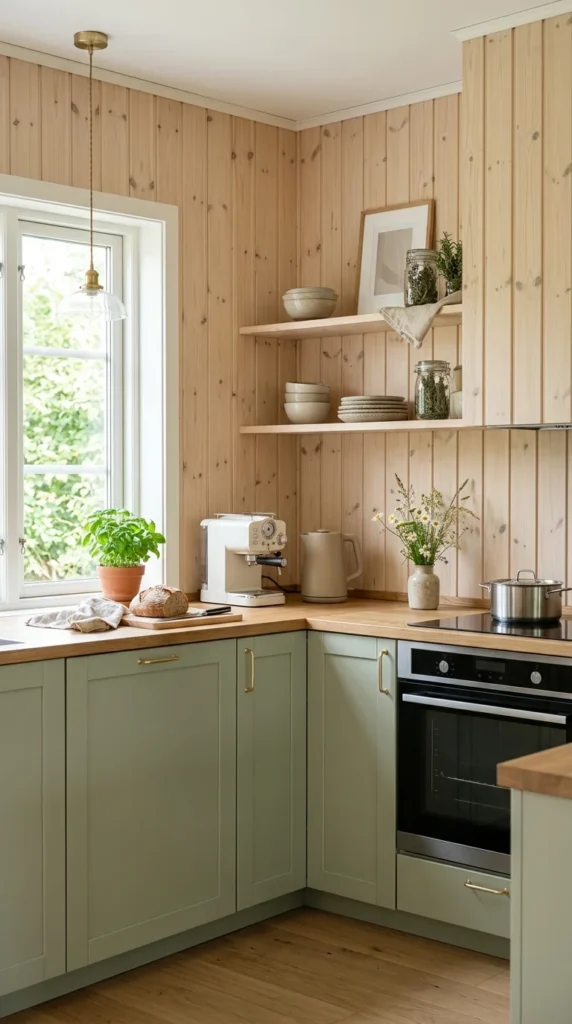
Nodding to Scandinavian design, pine paneling adds vertical texture and a light, woody scent to the kitchen. When paired with soft green cabinetry, it creates a “cabin in the woods” feel that is surprisingly modern when kept clean and uncluttered. Vertical planks can also help make low ceilings feel higher.
- Best Green Pairing: Pale sage, seafoam, or mint.
- Design Tip: Use a clear matte sealant on the pine to prevent it from yellowing over time.
- Vibe: Scandi-chic, cozy, and textured.
13. Hunter Green
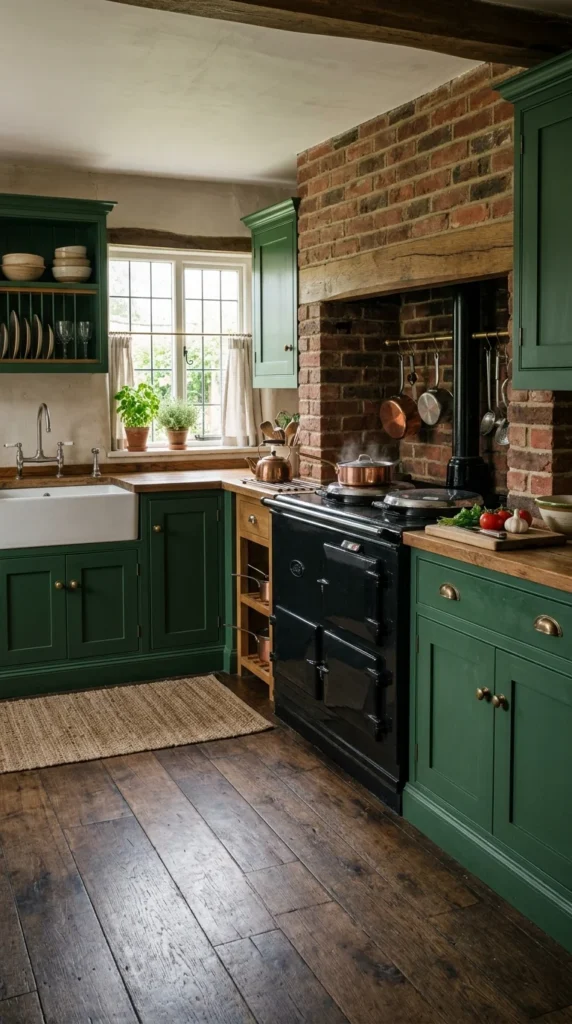
Hunter green is a classic, “heritage” color that evokes a sense of permanence and tradition. It is best paired with traditional wood choices like dark oak or cherry. This combination is ideal for older homes or those looking to create a “gentleman’s library” feel in the kitchen. It is a formal yet incredibly cozy palette.
- Best Wood Pairing: Dark oak, cherry, or walnut.
- Accent Materials: Leather stools and heavy stone countertops.
- Vibe: Traditional, stately, and warm.
14. Teak Furniture
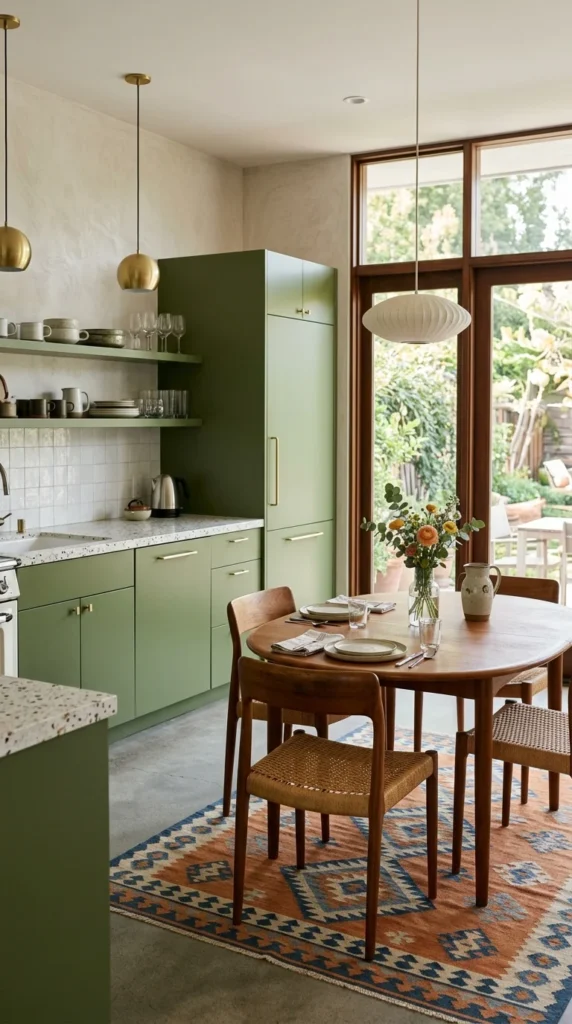
If your kitchen includes a dining nook or island seating, teak wood is a fantastic way to bring in warm, reddish-brown tones. Teak is a hallmark of mid-century modern design and pairs beautifully with flat-panel green cabinetry. The tight grain of teak offers a refined look that complements the clean lines of modern kitchen design.
- Best Green Pairing: Teal-green, olive, or avocado.
- Style Tip: Look for vintage teak pieces to add a sense of history.
- Vibe: Mid-century modern, sleek, and warm.
15. Pastel Green
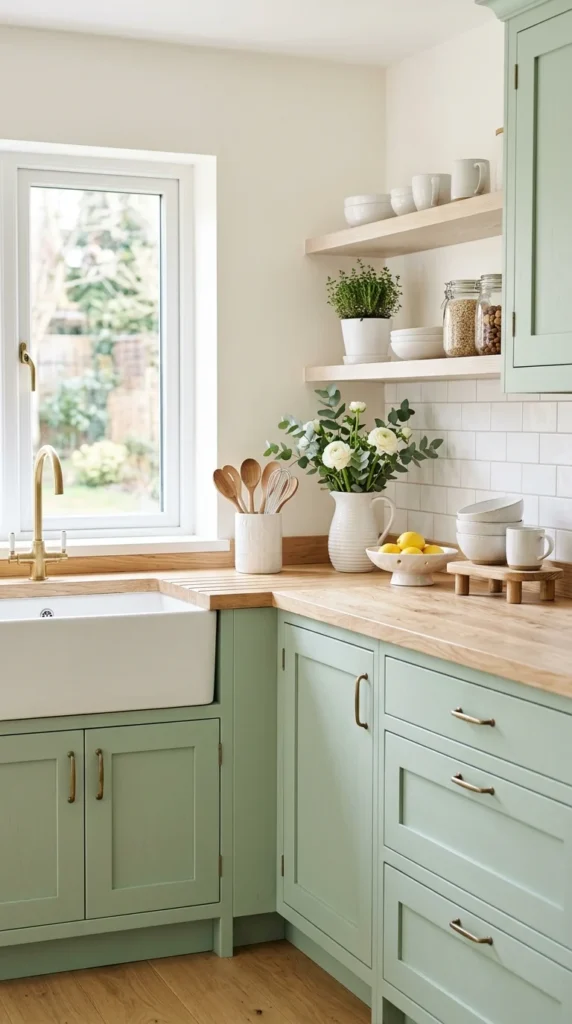
Pastel green is soft, feminine, and incredibly welcoming. It works best in kitchens with plenty of natural light and light-colored woods. This combination avoids the “nursery” look by using high-quality wood grains like ash or white oak, which elevate the pastel color and give it a sophisticated edge.
- Best Wood Pairing: Ash, white oak, or bleached maple.
- Design Note: Use white marble or quartz to keep the palette light.
- Vibe: Soft, airy, and inviting.
16. Plywood Minimalist
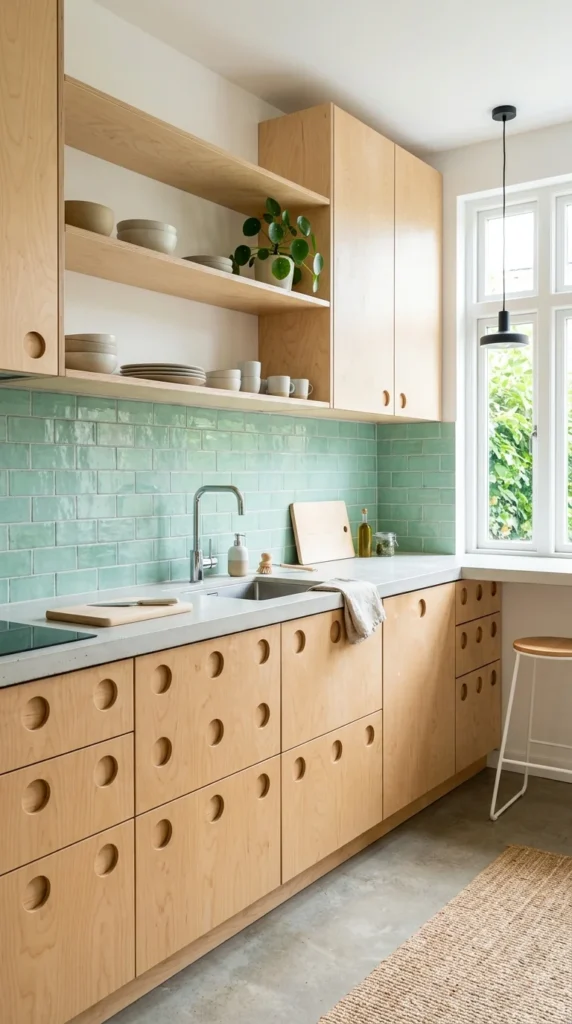
For the ultimate contemporary look, consider using high-grade birch plywood for your cabinetry and pairing it with green tile or accents. Plywood’s visible layers and light color offer a raw, industrial-cool aesthetic. A seafoam or mint green tiled backsplash provides a pop of color that keeps the wood from looking too monochromatic.
- Best Green Pairing: Seafoam, mint, or forest green.
- Design Tip: Use “finger pulls” or cut-outs instead of traditional hardware.
- Vibe: Industrial, modern, and creative.
17. Moss Green
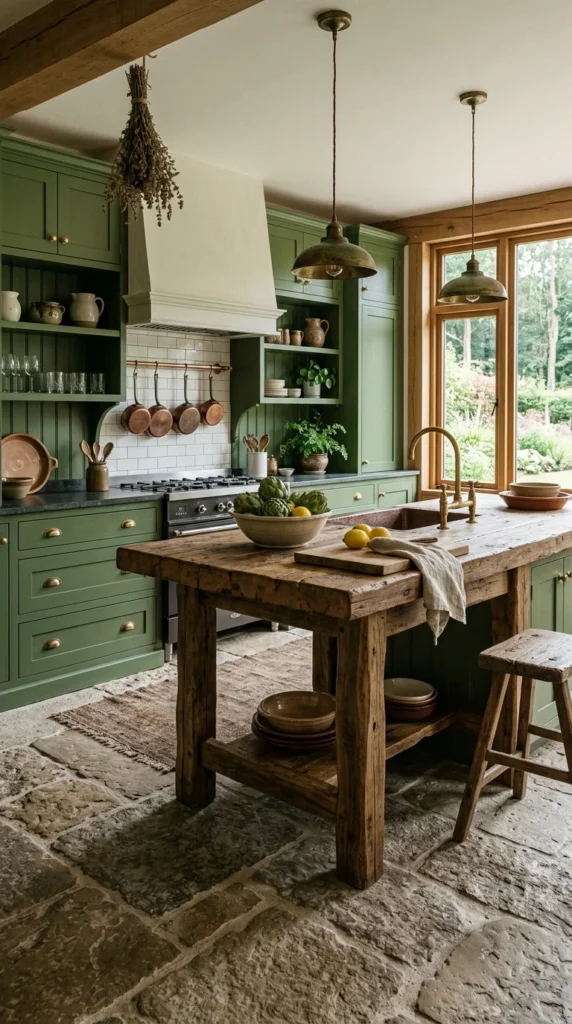
Moss green is a deep, yellow-based green that feels incredibly organic and grounded. It is the color of the forest floor, and it pairs naturally with heavy, textured woods. Think thick timber islands, chunky wooden floating shelves, or even wood-framed windows. This is a palette for those who want their kitchen to feel like an extension of the garden.
- Best Wood Pairing: Rough-sawn oak, cedar, or hickory.
- Accent Materials: Slate, wrought iron, and clay.
- Vibe: Earthy, rustic, and grounded.
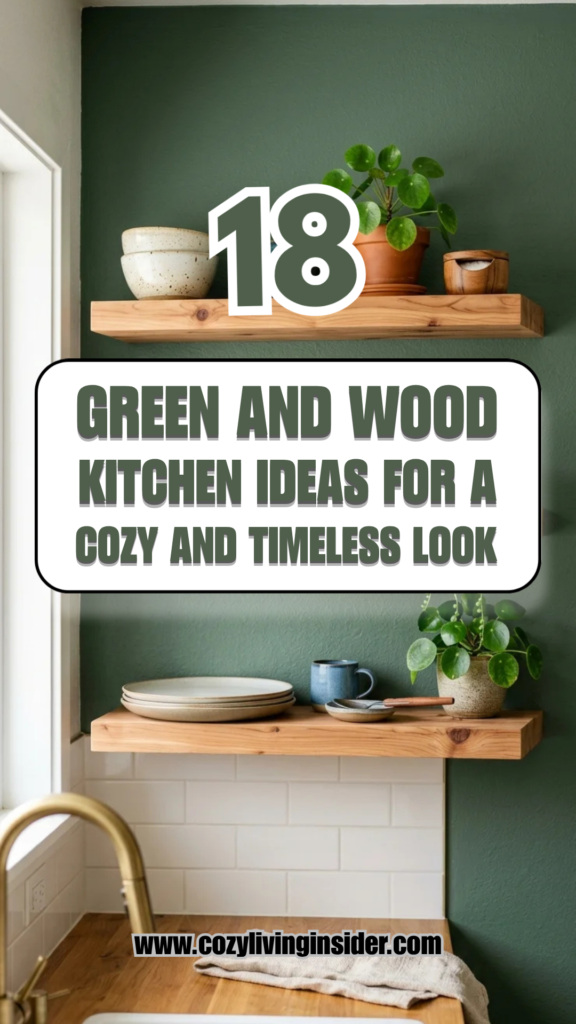
18. Cedar Shelving
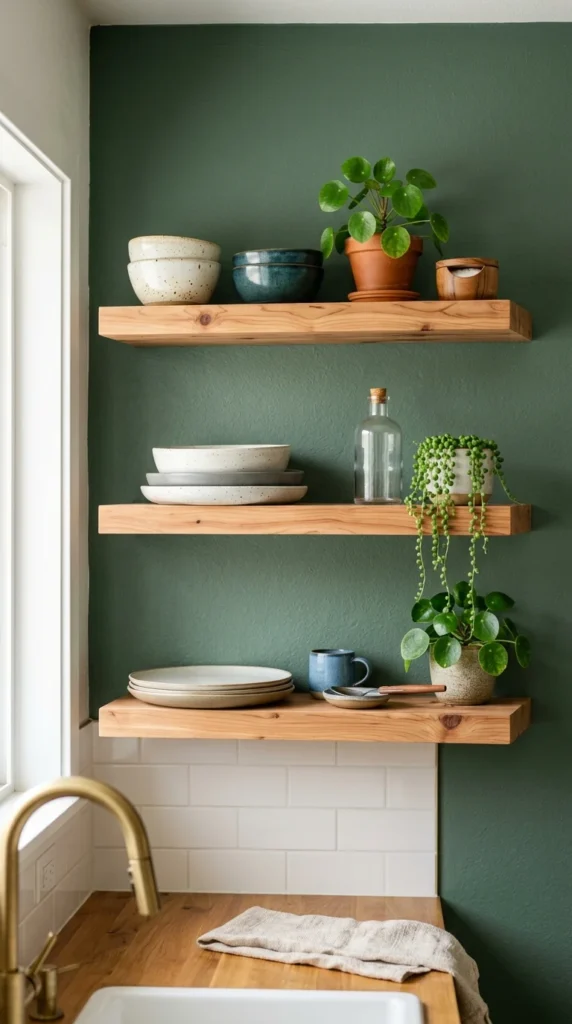
Cedar has a distinctively warm, reddish hue and a wonderful natural aroma. Using cedar for open shelving against a green wall—whether it’s paint or tile—creates a beautiful color contrast. The warmth of the cedar “pops” against the coolness of the green, making your dishware and kitchen accessories look like a curated display.
- Best Green Pairing: Deep sage, hunter green, or charcoal-green.
- Functional Tip: Cedar is naturally moisture-resistant, making it great for kitchen environments.
- Vibe: Handcrafted, cozy, and aromatic.