

The organic modern aesthetic has redefined contemporary interior design by bridging the gap between sleek, clinical minimalism and the raw, unrefined beauty of nature. In the kitchen—often the heart of the home—this style manifests as an inviting sanctuary that prioritizes tactile materials, soft palettes, and architectural simplicity. To achieve an organic modern kitchen that feels both warm and luxurious, one must balance clean lines with the “imperfections” of natural elements like stone, wood, and clay.
Below are 17 sophisticated ideas to help you master the organic modern look, ensuring your kitchen remains a functional masterpiece that exudes quiet luxury.
1. White Oak
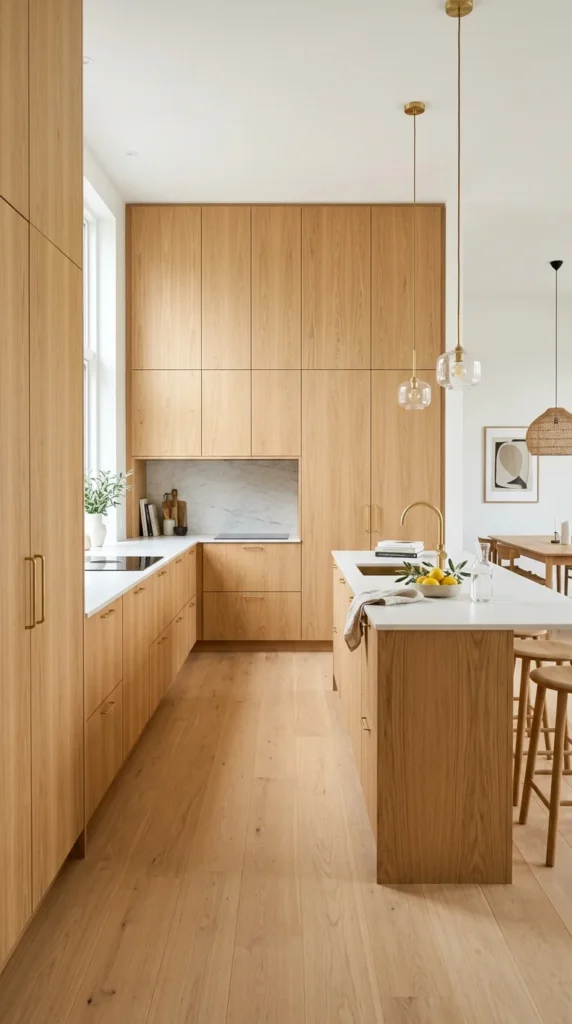
White oak is the undisputed foundation of the organic modern kitchen. Unlike the heavy, dark stains of the past, white oak offers a pale, neutral warmth that makes a space feel airy yet grounded. Use it for full-height cabinetry to create a seamless, furniture-like appearance. The beauty lies in the subtle grain patterns, which provide enough visual interest to eliminate the need for decorative ornamentation. When paired with matte finishes, white oak transforms the kitchen into a serene, woodland-inspired retreat.
2. Marble Veining
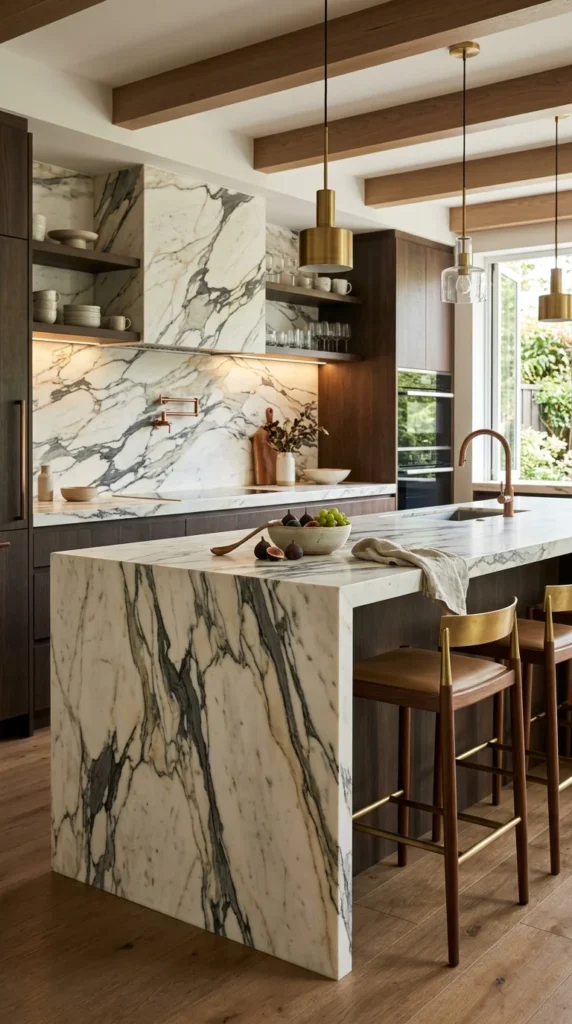
Luxury in an organic modern kitchen is often synonymous with natural stone. Moving away from polished, uniform surfaces, designers are opting for honed marble with dramatic, high-contrast veining. Whether it is Calacatta, Arabescato, or Paonazzo, the fluid movements of the stone serve as functional art. The “organic” element comes from the unique, non-repeating patterns formed over millennia, while the “modern” element is found in the sharp, clean edges of the countertop fabrication.
3. Zellige Tile
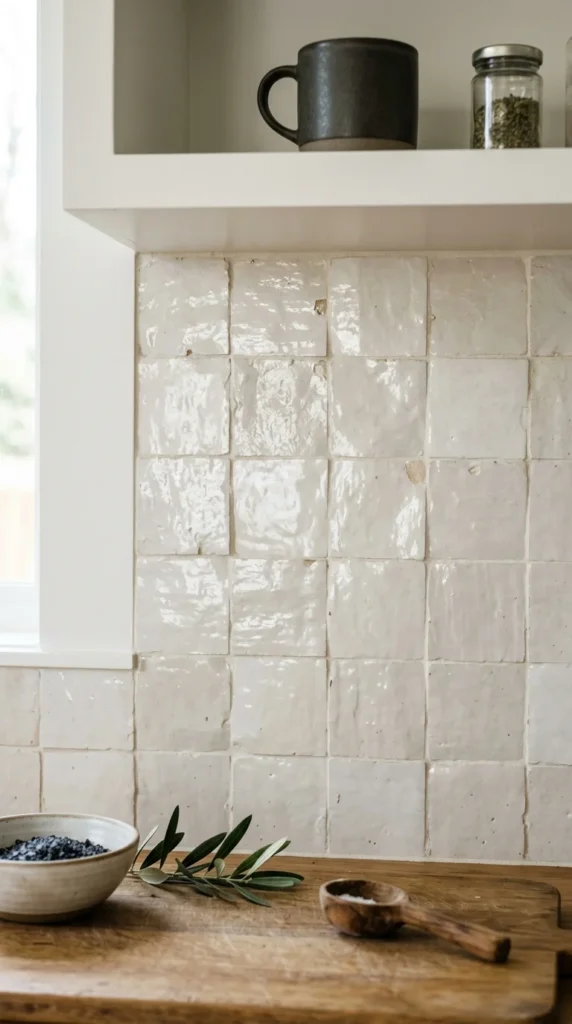
Zellige tiles are handcrafted terracotta tiles from Morocco, known for their tonal variations and irregular surfaces. In an organic modern kitchen, they provide a necessary “wabi-sabi” element—the beauty of imperfection. Because each tile is unique, the backsplash catches light in different ways, adding depth and a sense of history to a brand-new kitchen. Stick to neutral tones like pearl, slate, or sage to maintain a sophisticated atmosphere.
4. Curved Islands
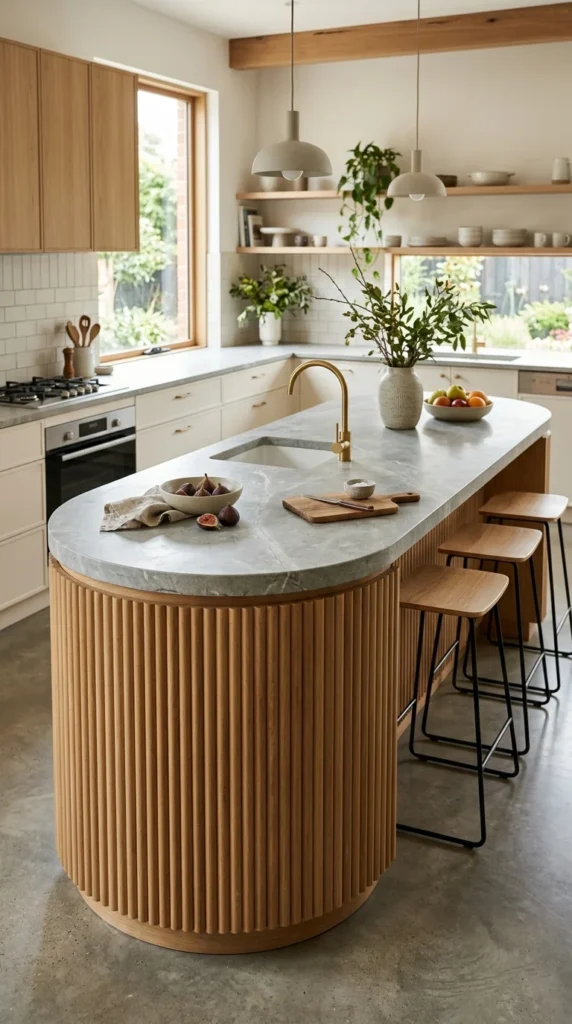
While modernism is often associated with rigid rectangles, the “organic” side of the trend embraces curves. A rounded or pill-shaped kitchen island softens the flow of the room, making it feel more approachable and fluid. This architectural choice encourages movement and conversation, breaking up the straight lines of the surrounding cabinetry and appliances. It’s a subtle way to introduce a bespoke, high-end feel.
5. Earthy Palettes
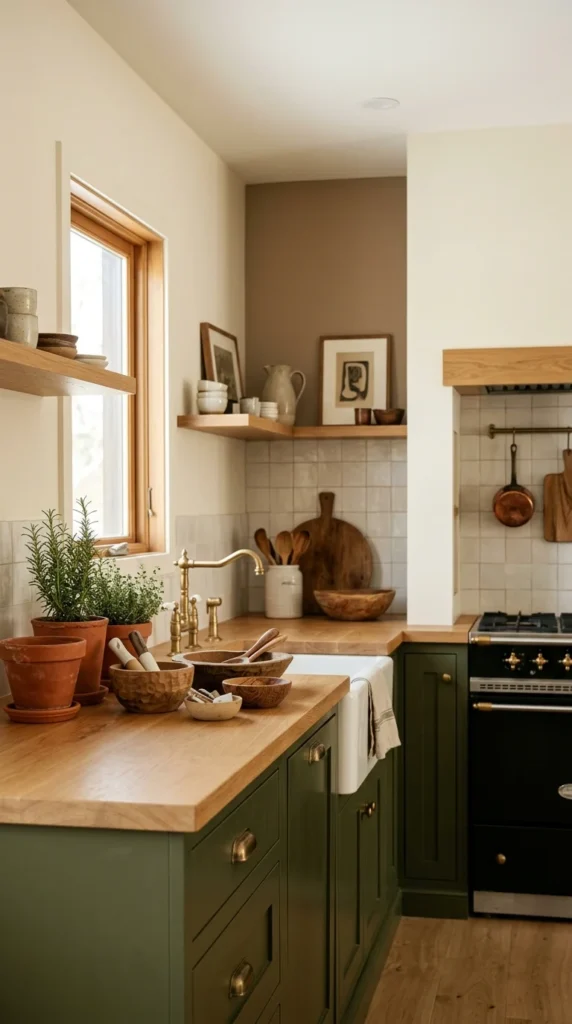
The color story of an organic modern kitchen moves away from stark, cold whites. Instead, it leans into “new neutrals”—think mushroom, taupe, sage green, and warm terracotta. These colors mimic the earth’s natural landscape, creating a sense of calm. By layering different shades of the same earthy family, you create a sophisticated, tonal look that feels expensive and intentionally curated.
6. Plaster Hoods
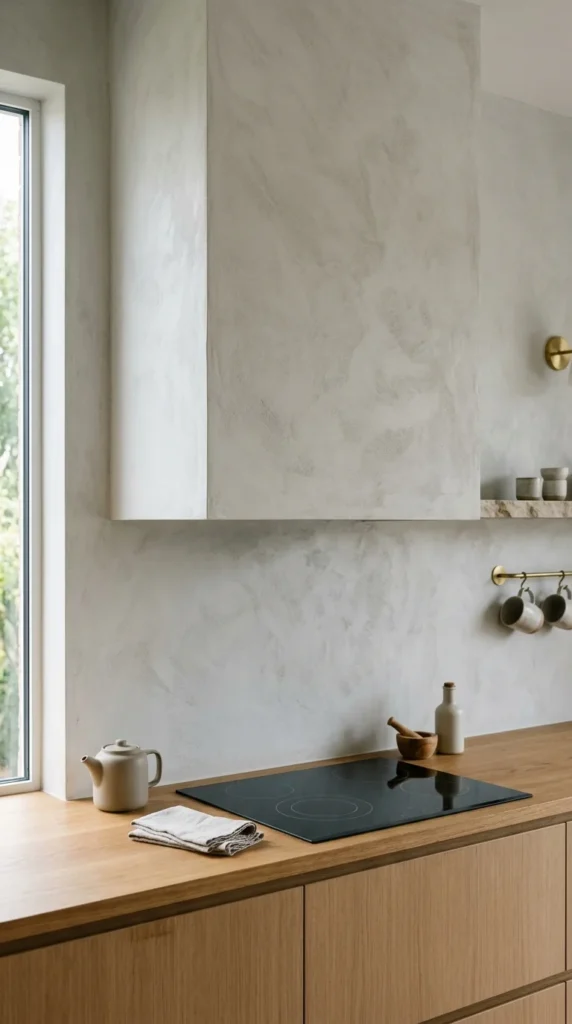
The heavy, stainless steel range hood is being replaced by the sculptural plaster hood. By wrapping the vent hood in plaster or limewash, it becomes an extension of the wall rather than a clunky appliance. The matte, slightly chalky texture of the plaster adds a tactile quality that feels ancient and artisanal, providing a beautiful contrast to the sleek induction cooktops or professional-grade ranges below.
7. Reclaimed Wood
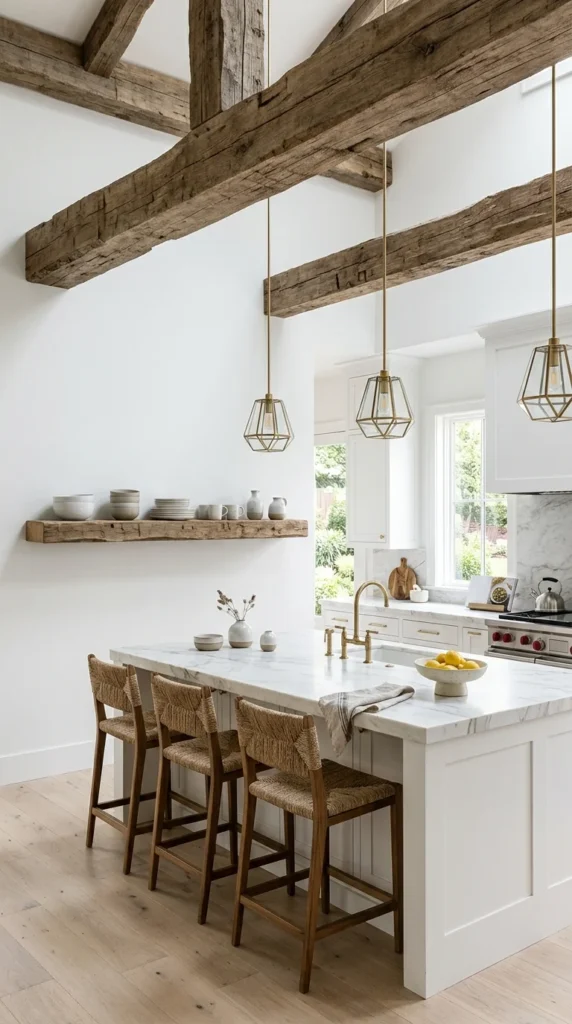
Integrating reclaimed wood is a sustainable way to inject soul into a modern space. Whether it’s through exposed ceiling beams, a thick floating shelf, or a custom-built breakfast nook, the weathered texture of old wood provides a “lived-in” warmth. The contrast between a 100-year-old piece of timber and a high-tech smart refrigerator is the essence of the organic modern juxtaposition.
8. Woven Textures
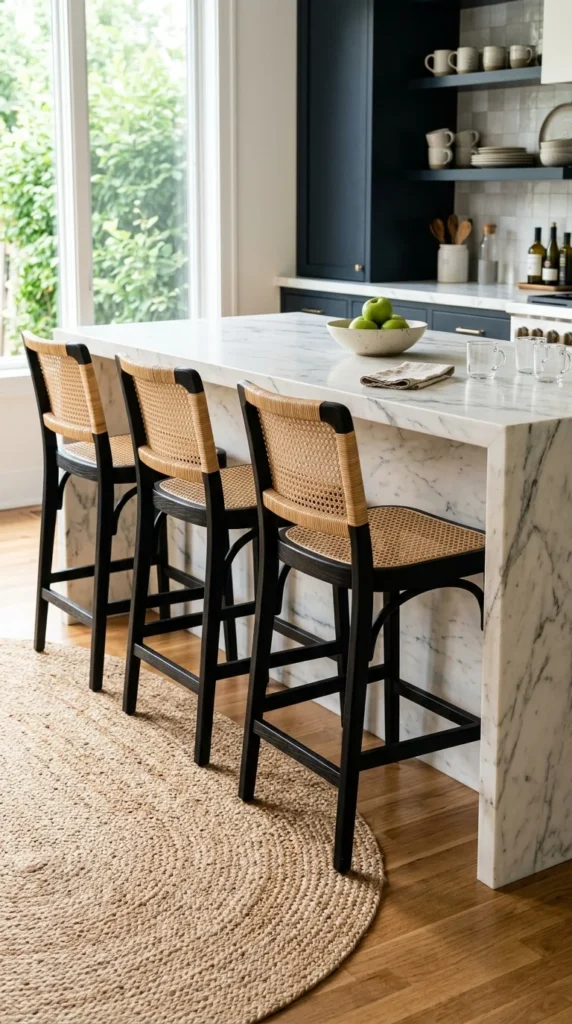
To prevent a modern kitchen from feeling too “hard,” interior designers look to woven materials like rattan, jute, and wicker. Woven bar stools or oversized pendant lights add a layer of organic craftsmanship. These materials introduce a different scale of texture that complements smooth stone and flat-panel wood, bringing a touch of coastal or bohemian luxury to the design.
9. Matte Black
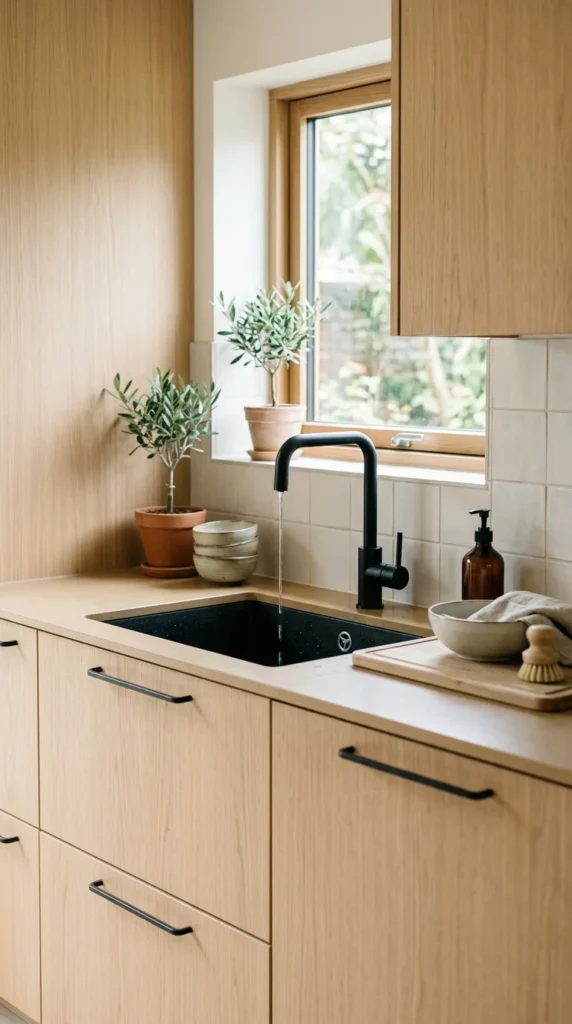
While the organic modern look is generally light and airy, matte black accents provide the “modern” edge needed to ground the space. Black hardware, faucets, or window frames act like mascara for the room—they define the lines and add a sense of high-fashion contrast. Using a matte finish instead of glossy black keeps the look sophisticated and prevents it from feeling overly industrial.
10. Fluted Details
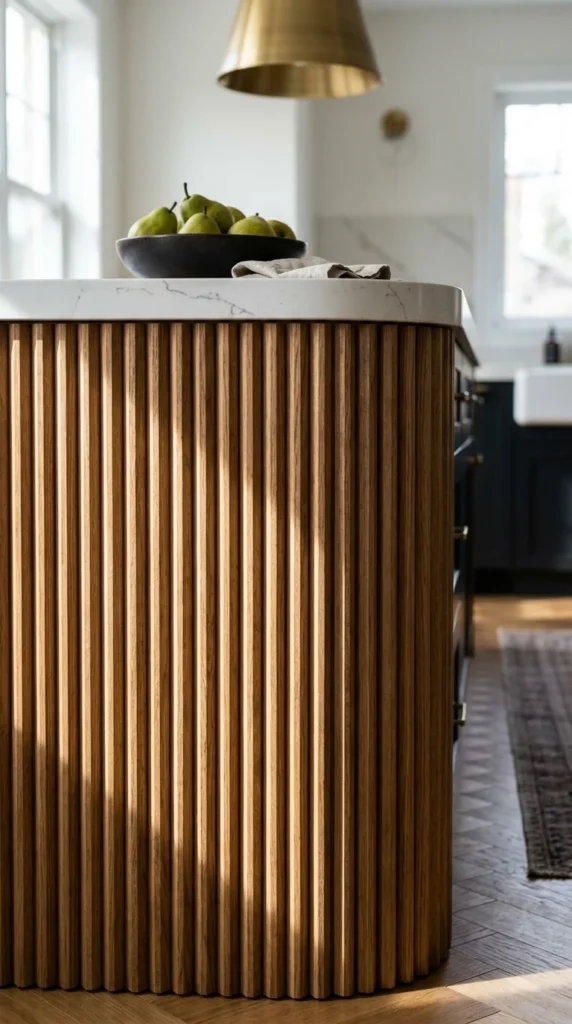
Fluting is a rhythmic design detail that adds incredible architectural interest without clutter. Whether applied to the island base, the cabinet doors, or even the glass in the pantry, these vertical grooves create a play of light and shadow. It’s a subtle nod to classical architecture, reimagined through a minimalist, organic lens.
11. Indoor Greenery
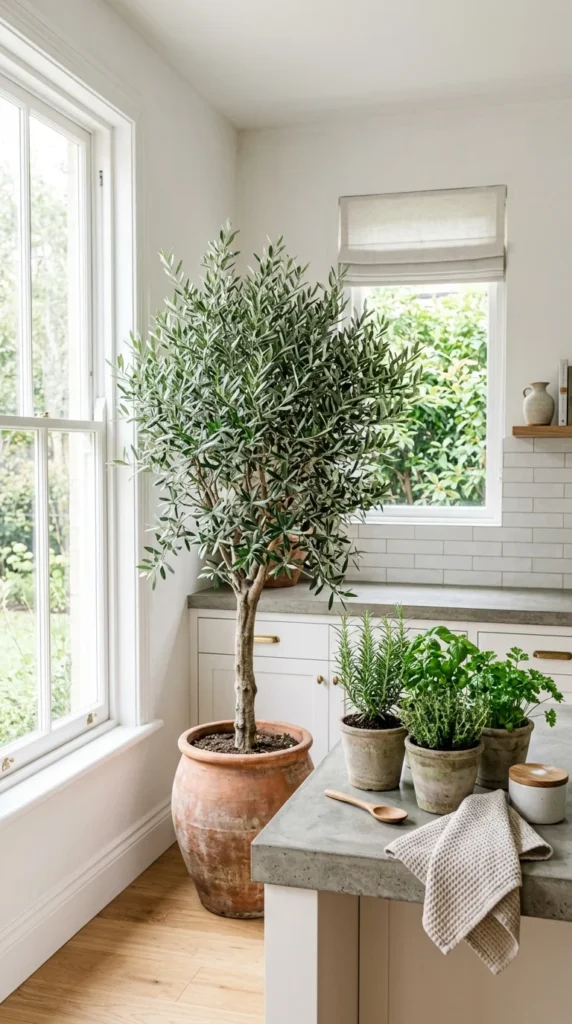
No organic space is complete without actual organic life. A large, potted olive tree or a fiddle leaf fig can soften the corners of a kitchen and bring the outdoors in. Beyond aesthetics, plants improve air quality and provide a vibrant pop of natural color that no paint can truly replicate. For a more functional approach, a dedicated herb station with stone planters can offer both beauty and utility.
12. Aged Brass
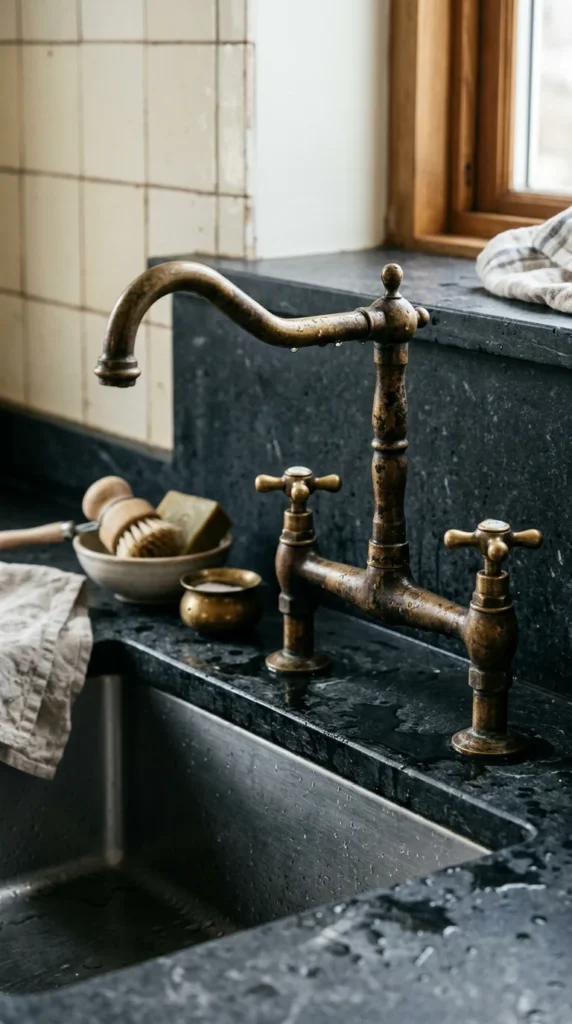
In a luxurious kitchen, the choice of metal is critical. Unlacquered or “living” brass is the gold standard for organic modern design. Unlike polished gold, which can feel flashy, aged brass develops a unique patina over time. It reacts to the oils in your hands and the moisture in the air, evolving and darkening, which adds a sense of timelessness and authentic luxury to the space.
13. Integrated Appliances
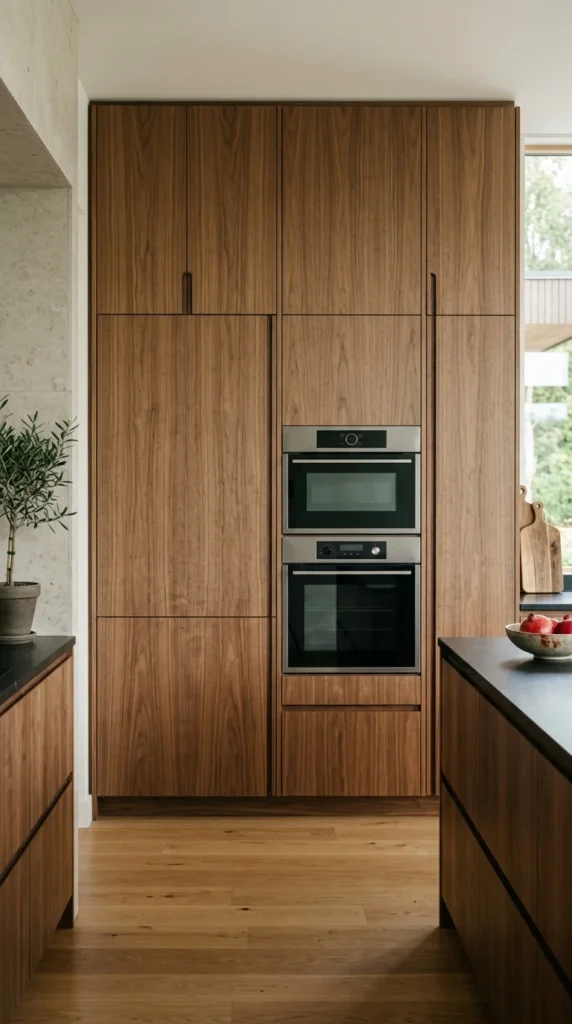
To maintain the clean, serene lines of a modern kitchen, “hiding” the appliances is key. Integrated panels that match the cabinetry allow the eye to travel across the room without being interrupted by the glare of stainless steel. This creates a cohesive, furniture-like look that emphasizes the materials—like the wood or the plaster—rather than the machinery.
14. Terracotta Accents
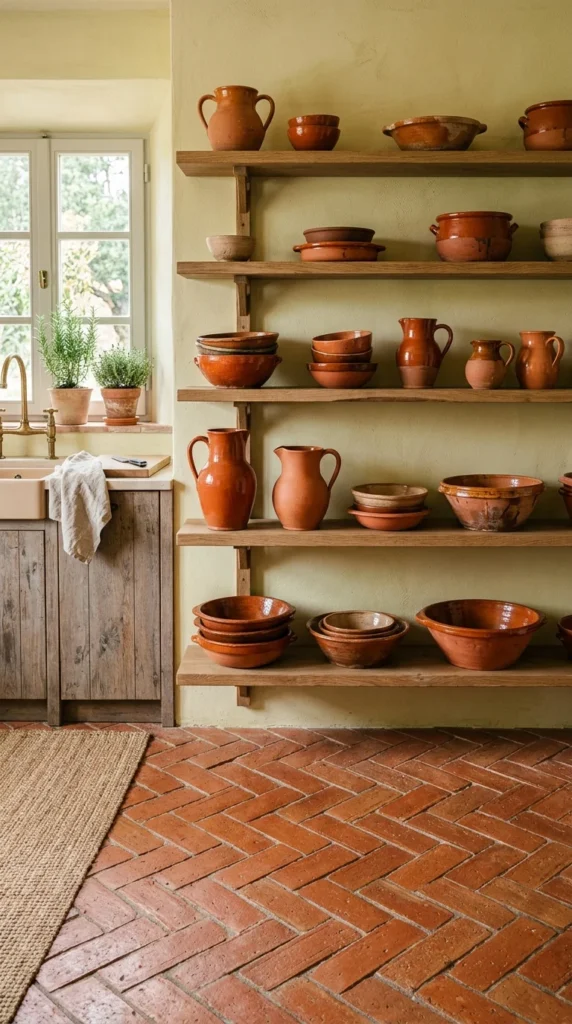
Terracotta brings an undeniable warmth and “from-the-earth” feeling to the kitchen. While it can be used for flooring, it’s also effective in smaller doses through artisanal pottery, pendant lights, or even a tiled backsplash. The burnt-orange and brownish hues of terracotta perfectly complement the greens and woods of an organic palette, adding a Mediterranean or Southwestern warmth.
15. Soft Seating
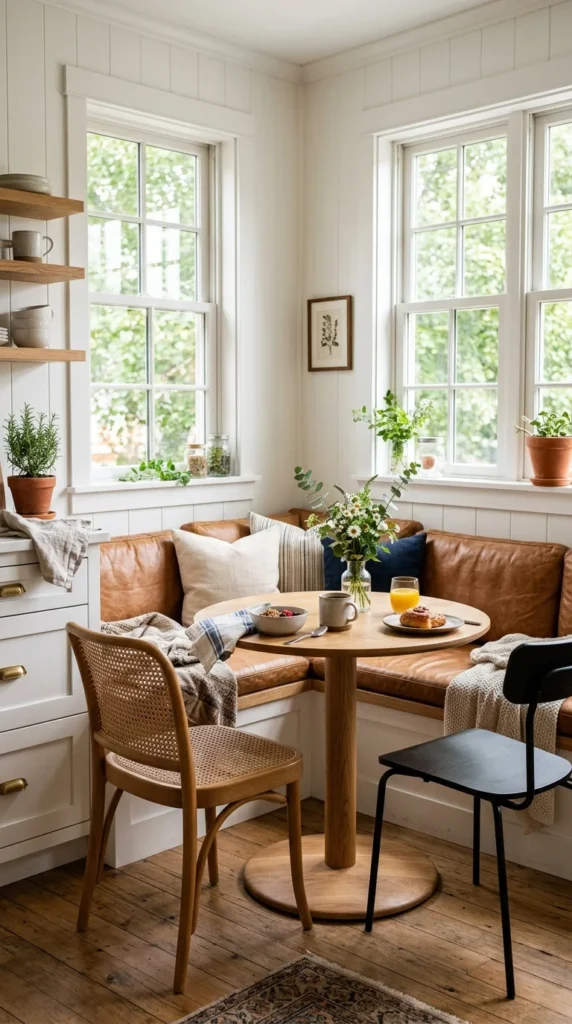
Luxury isn’t just about how a room looks; it’s about how it feels to live in it. Adding soft seating—like a built-in banquette with leather cushions or upholstered counter stools—invites people to stay longer. Leather, in particular, is a favorite in organic modern design because it is a natural material that wears beautifully and adds a sophisticated, tactile warmth.
16. Oversized Pendants
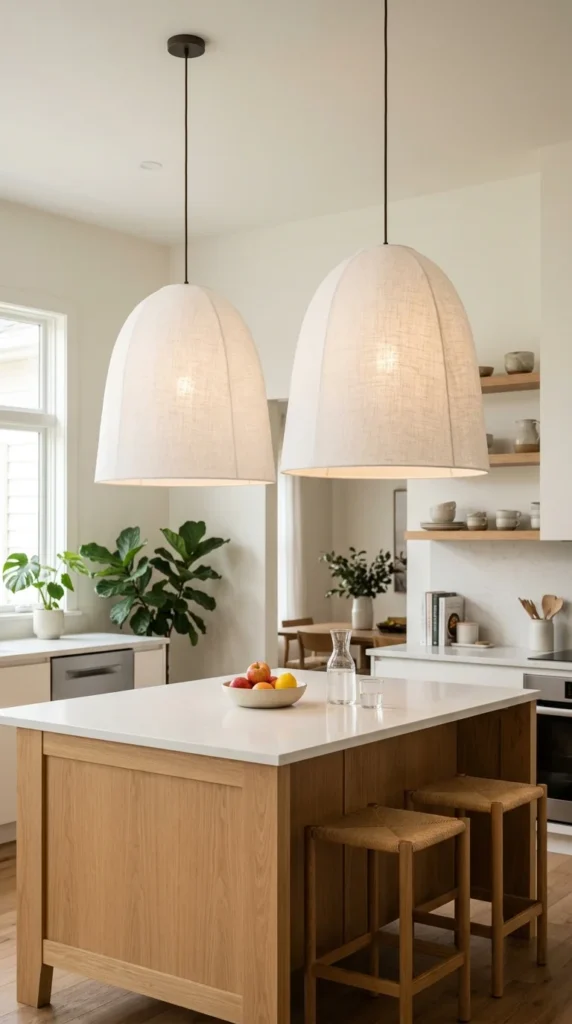
Lighting serves as the “jewelry” of the kitchen. In an organic modern space, designers often choose oversized fixtures made from natural materials like linen, paper, or woven grasses. These large-scale pieces create a focal point and help to “lower the ceiling” over an island, making a large, open-concept kitchen feel more intimate and cozy.
17. Minimalist Hardware
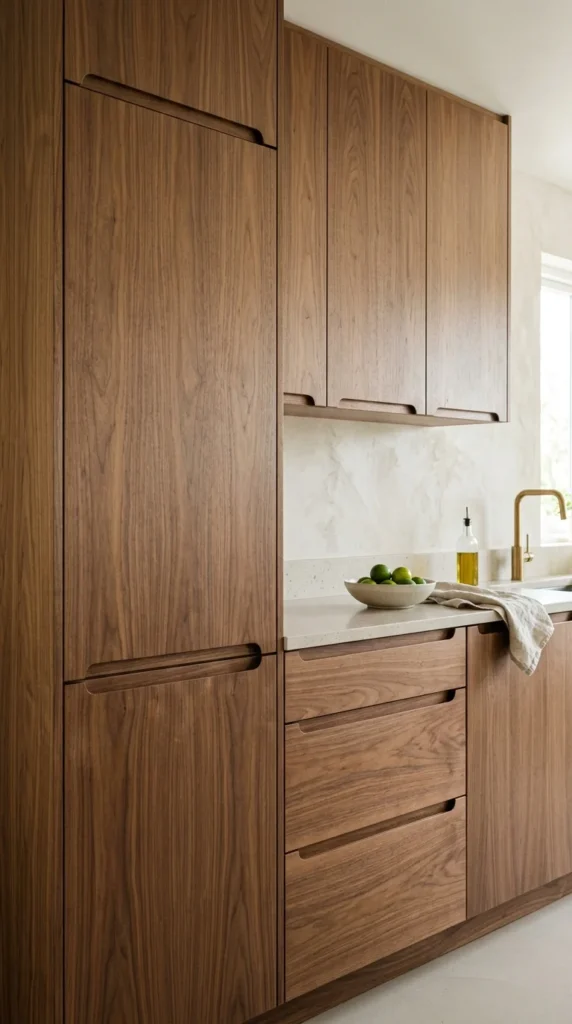
The final touch in an organic modern kitchen is the reduction of visual noise. Minimalist hardware—or the complete absence of it—allows the beauty of the cabinetry wood grain to take center stage. “J-pull” handles, integrated finger grooves, or very slim, low-profile tabs provide the necessary functionality without the clutter of traditional knobs and pulls. This commitment to simplicity is what ultimately gives the kitchen its high-end, gallery-like feel.