
The organic modern aesthetic has redefined contemporary interior design by successfully bridging the gap between clinical minimalism and rustic warmth. Nowhere is this balance more critical than in the kitchen, the undisputed heart of the home. By combining clean lines and functional layouts with raw, natural materials and soft, earthy palettes, the organic modern kitchen creates a sanctuary that feels both sophisticated and lived-in. This design movement focuses on “quiet luxury”—the idea that high-quality, natural materials should speak for themselves without the need for excessive ornamentation.
From the tactile appeal of limewash walls to the structural elegance of white oak cabinetry, here are 24 organic modern kitchens that exemplify this timeless trend.
1. White Oak
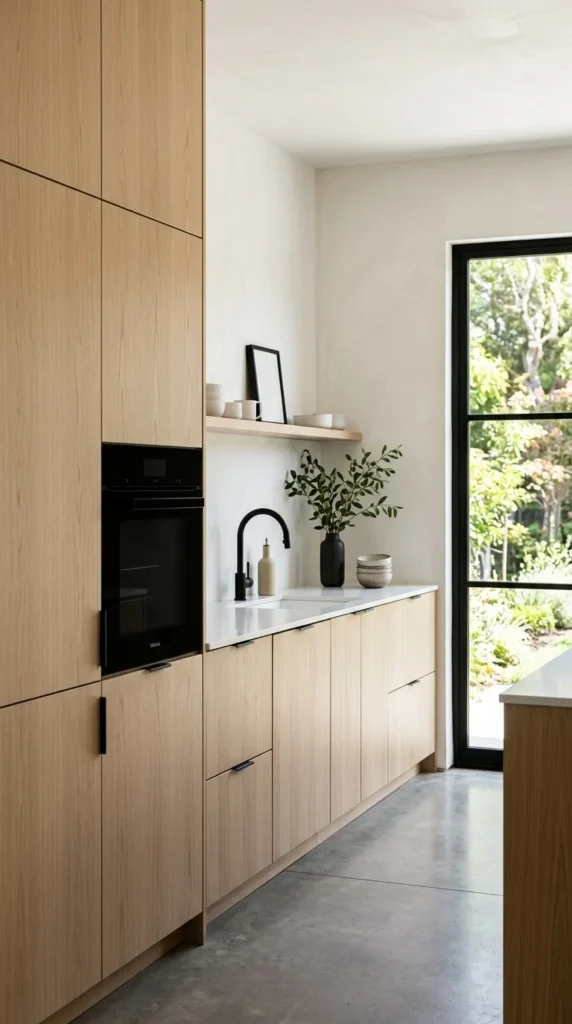
White oak is the foundation of the organic modern kitchen. Its light, neutral undertones provide warmth without the yellow or red hues found in traditional oak. In this design, the wood is often left with a matte or oiled finish to celebrate its natural grain. Using vertical grain patterns can help elongate the room, making even smaller kitchens feel airy and expansive.
2. Marble Backsplashes
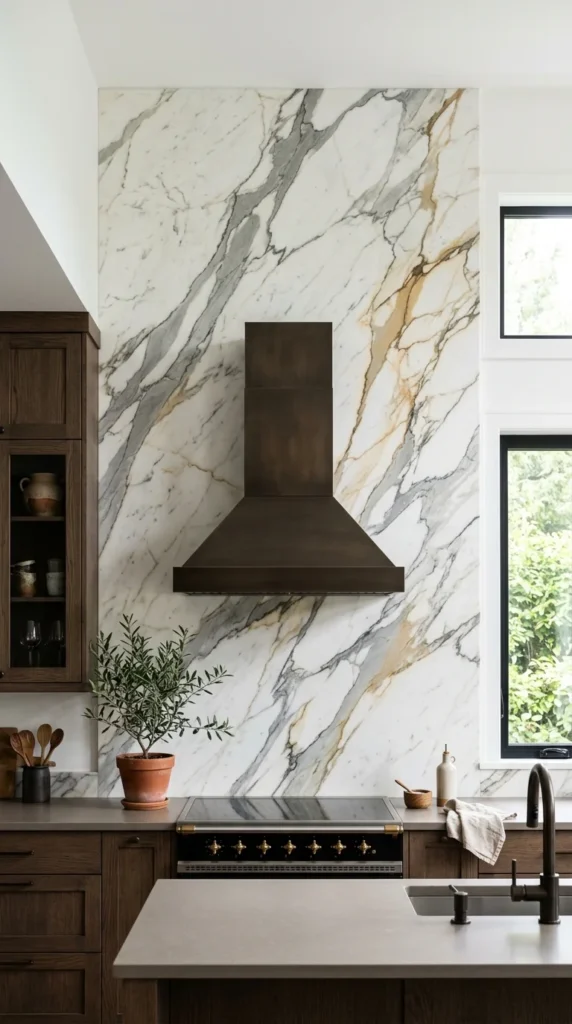
While subway tile remains a classic, the organic modern look leans heavily into stone slabs. A marble backsplash, especially one that extends to the ceiling or wraps around a range hood, introduces a sense of movement and artistry. The natural “imperfections” and veining of the stone act as a focal point, grounding the sleek cabinetry in something ancient and raw.
3. Plaster Hoods
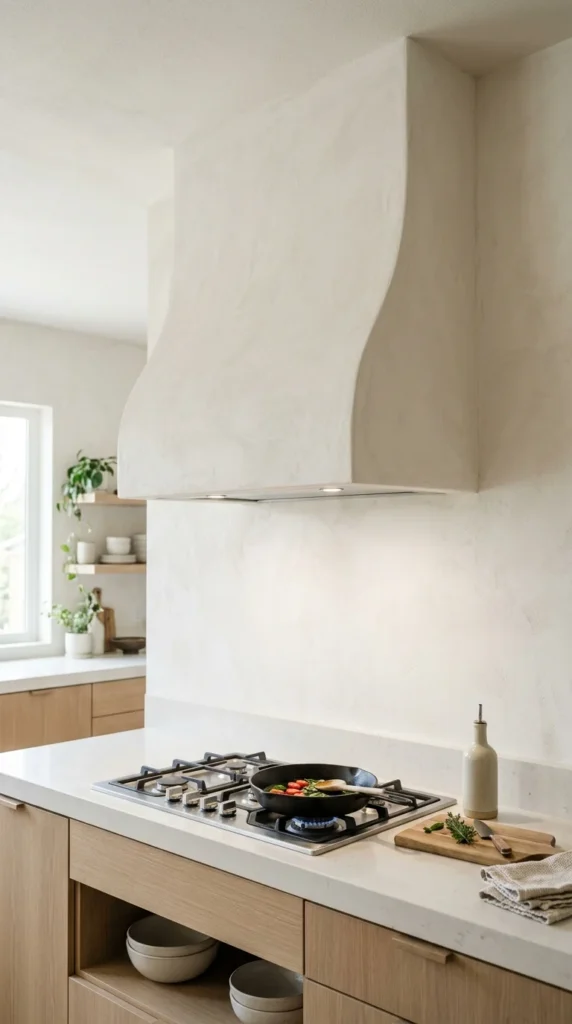
The range hood is no longer just an appliance; it is a sculptural element. Replacing stainless steel with hand-applied plaster or micro-cement gives the kitchen a Mediterranean, artisanal feel. The soft, matte texture of the plaster diffuses light beautifully, softening the hard angles typically found in cooking zones.
4. Fluted Panels
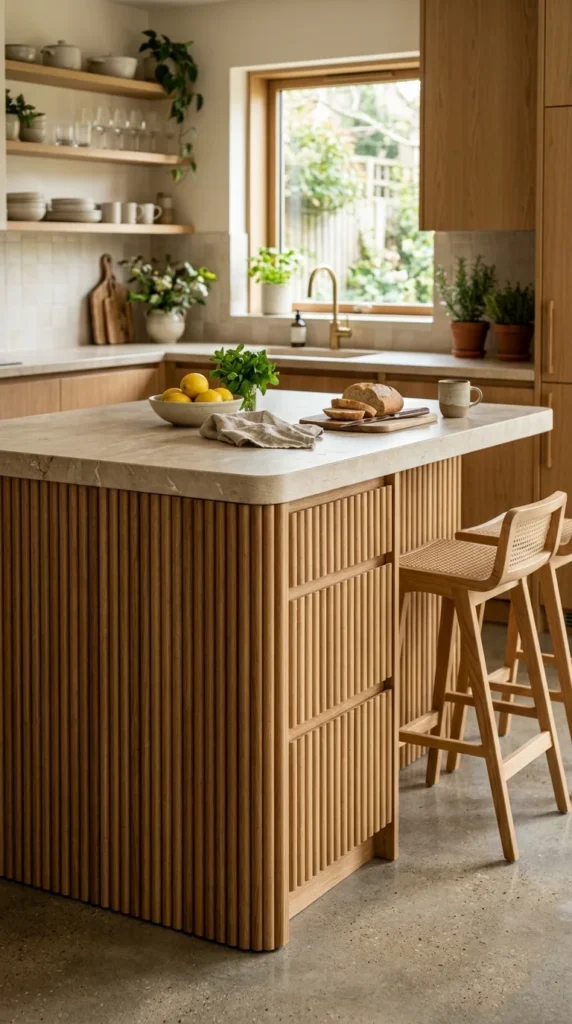
Texture is the secret weapon of organic modernism. Fluted or “tambour” details on island bases or cabinet doors add rhythmic visual interest. This tactile element breaks up large surfaces of wood or stone, providing a sophisticated layer of detail that feels handcrafted rather than mass-produced.
5. Arched Doorways
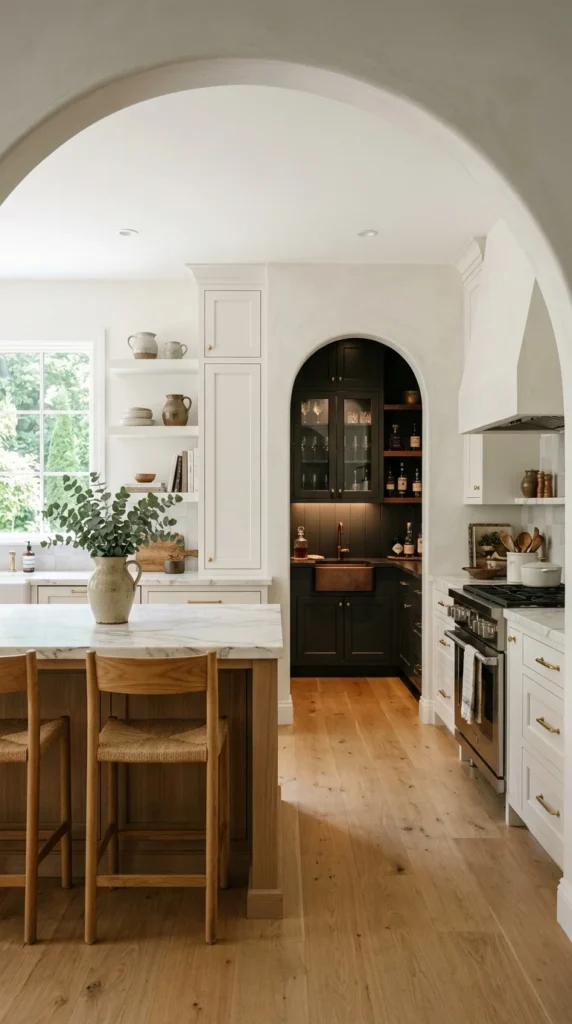
Curves soften the “boxiness” of modern architecture. Incorporating arches—whether in doorways, recessed shelving, or window frames—mimics shapes found in nature. This architectural choice guides the eye through the space more fluidly and adds a sense of historical character to a new build.
6. Limestone Flooring
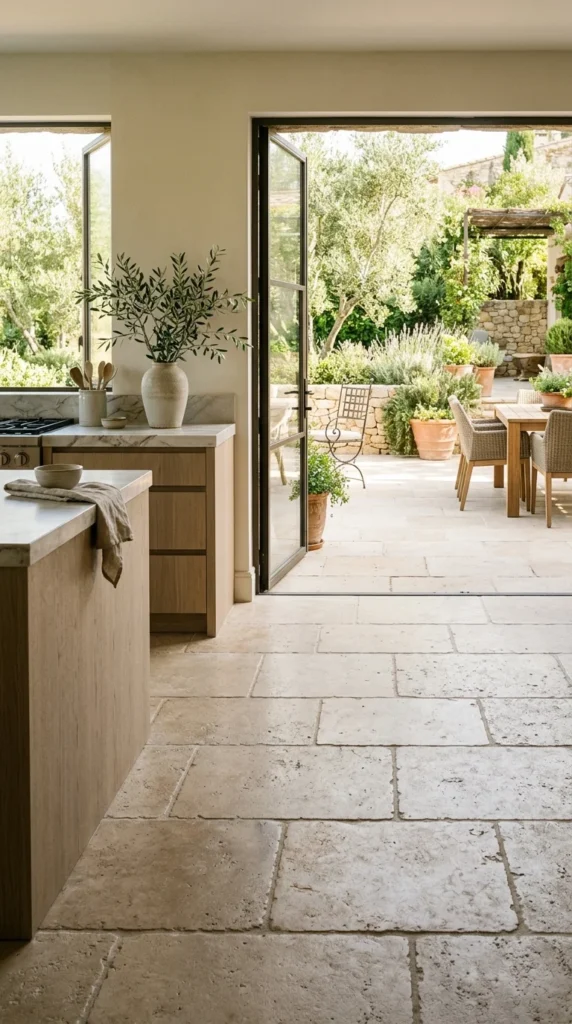
Limestone offers a matte, chalky finish that is far more “organic” than polished porcelain or ceramic. Its muted tones provide a neutral base that complements wood cabinetry perfectly. Choosing a tumbled edge or a honed finish ensures the floor feels soft underfoot and hides everyday wear and tear with ease.
7. Integrated Greenery
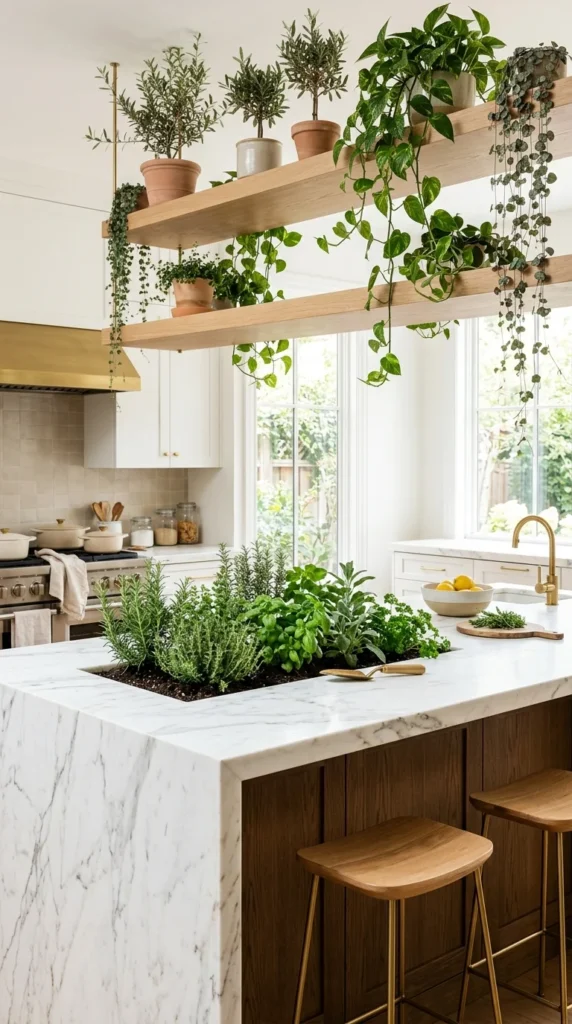
Biophilic design is a core tenet of the organic modern style. Rather than just a single plant on the counter, these kitchens integrate nature into the architecture. Think built-in planters, indoor herb gardens, or large-scale potted trees like the Fiddle Leaf Fig or Olive tree, which bring life and vibrant color to a neutral palette.
8. Woven Pendants
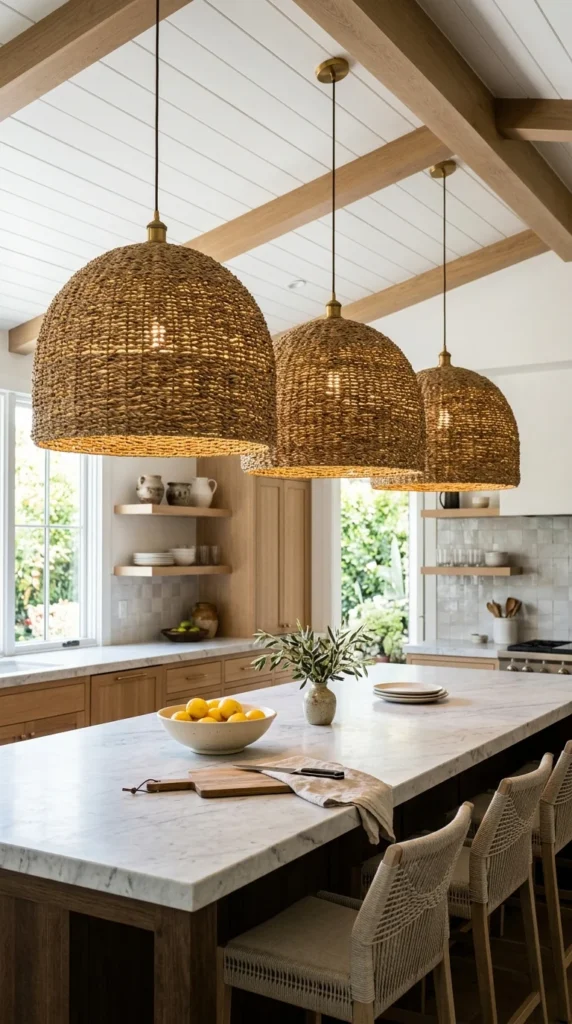
To prevent a modern kitchen from feeling too cold, designers often turn to natural fibers. Woven pendants made of rattan, seagrass, or jute introduce an element of coastal or bohemian warmth. The scale is key here; oversized fixtures act as a statement piece that anchors the dining or prep area.
9. Hidden Appliances
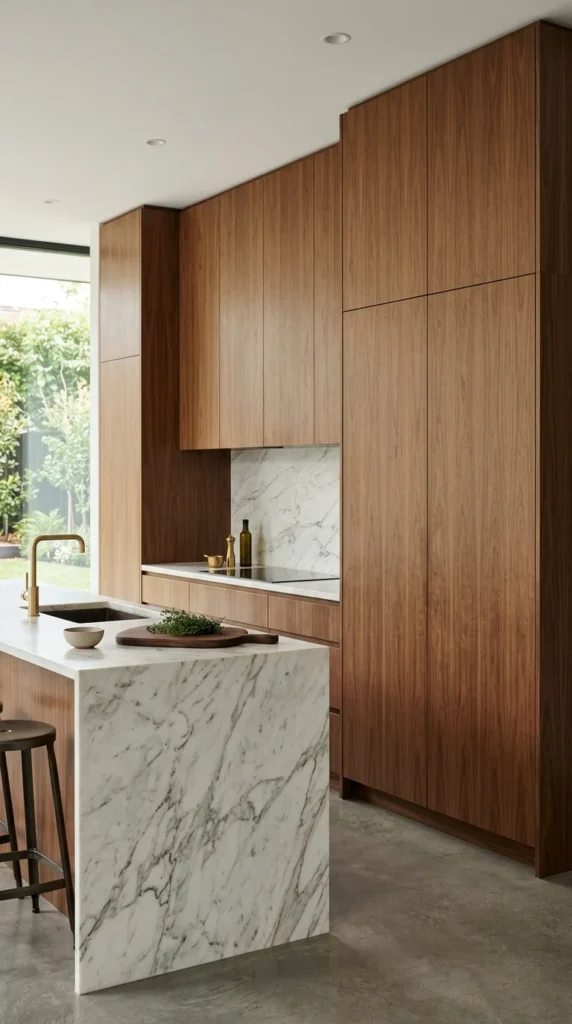
The goal of organic modern design is a “calm” visual field. By using integrated cabinetry panels for refrigerators and dishwashers, the visual clutter of stainless steel is removed. This allows the beauty of the cabinetry and the stone to take center stage, making the kitchen feel more like a living room.
10. Raw Stone
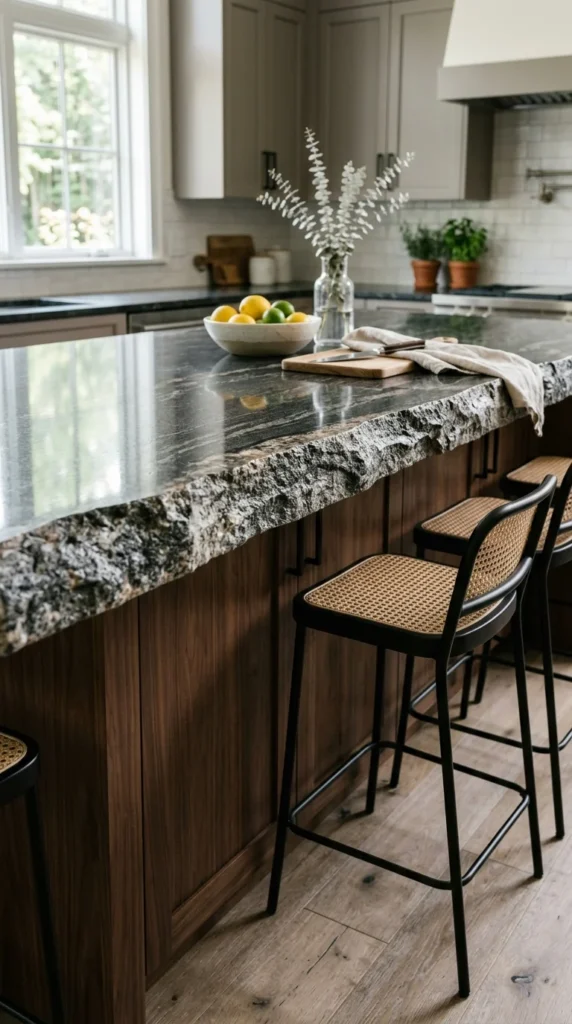
Embracing the “wabi-sabi” philosophy—finding beauty in imperfection—is a hallmark of this style. A kitchen island with a raw, chiseled edge instead of a perfectly polished one celebrates the geological origins of the material. It creates a tactile, grounding presence in the center of the room.
11. Earthy Palettes
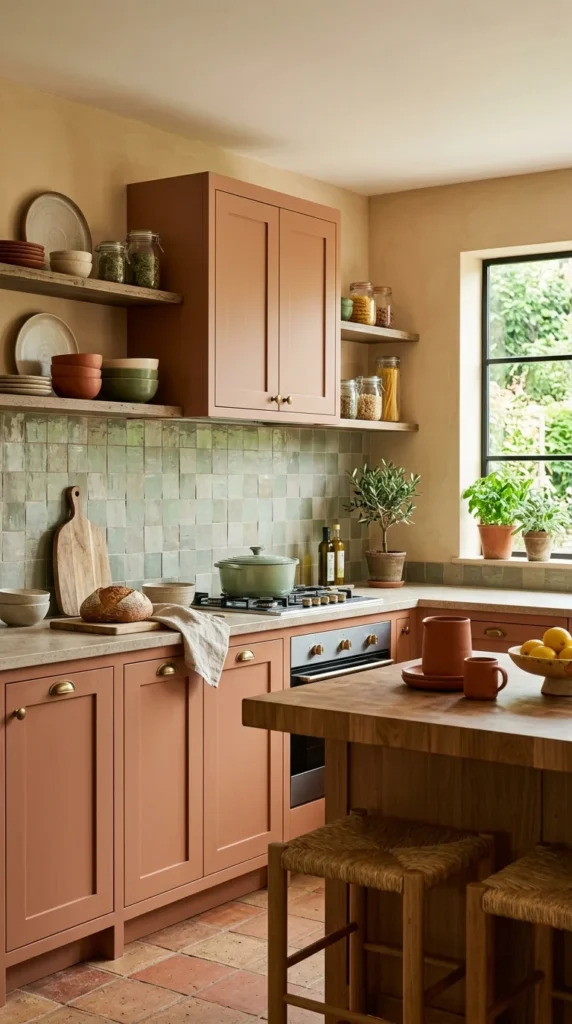
Organic modernism moves away from stark whites and cool greys. Instead, it favors “new neutrals”—colors derived from the earth. Warm beiges, sandy tans, muted terracotta, and mossy greens create a cocoon-like environment that feels cozy and sophisticated.
12. Open Shelving
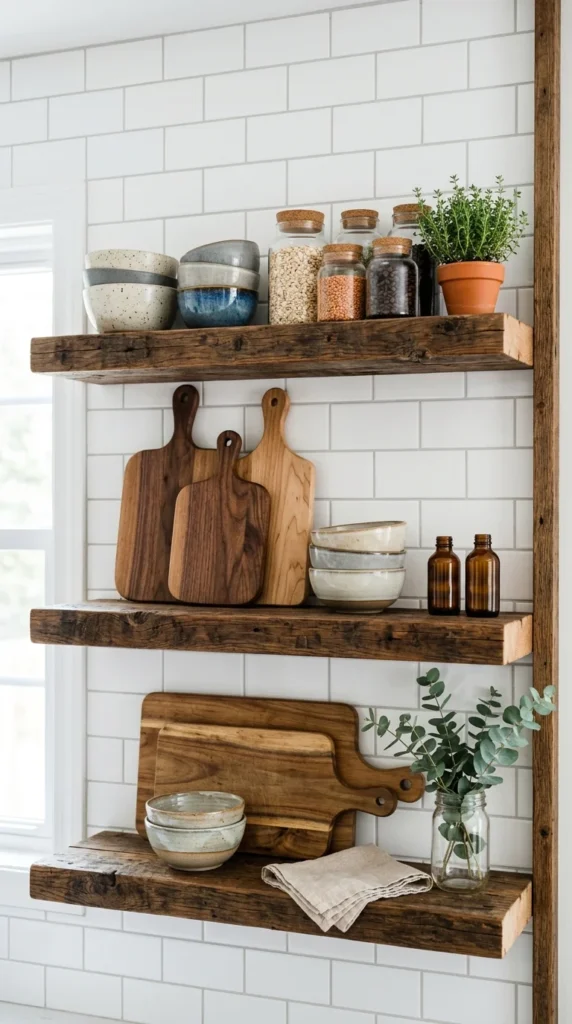
Open shelving allows for a curated display of functional art. In an organic modern kitchen, these shelves are often thick, rustic wood or the same stone as the backsplash. It encourages a minimalist lifestyle, showcasing only the most beautiful and frequently used items.
13. Brass Accents
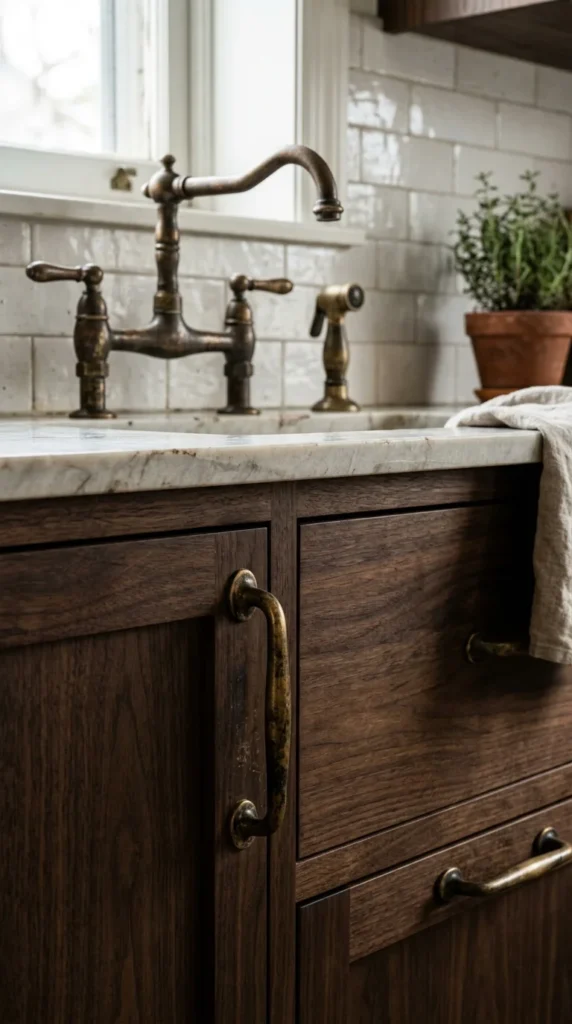
While chrome can feel industrial, unlacquered brass adds a living finish that evolves with use. As the metal oxidizes, it develops a deep, rich patina that feels antique and organic. This warmth perfectly complements the cool tones of marble and the natural grain of wood.
14. Concrete Surfaces
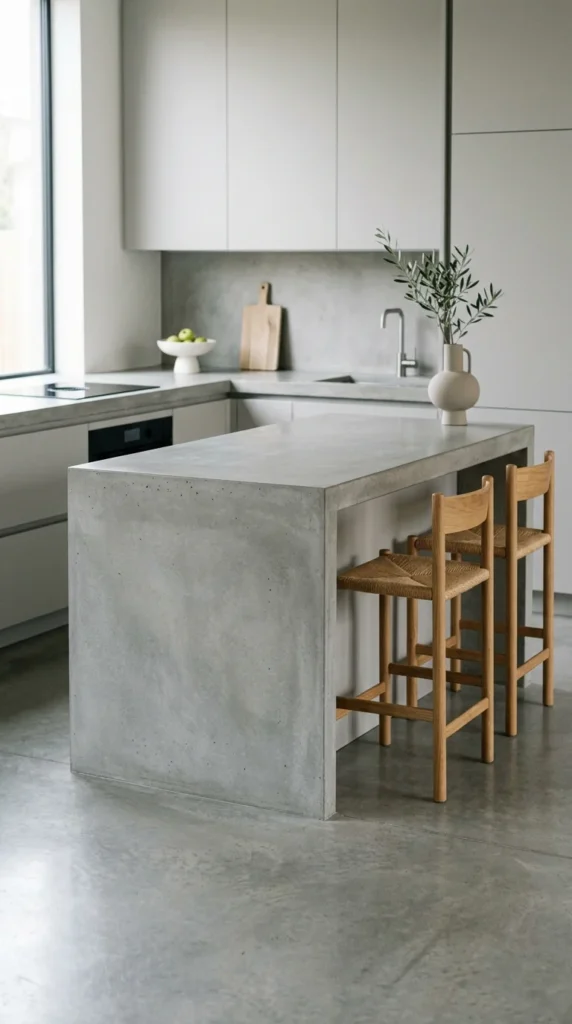
Concrete provides an architectural, grounded feel. When finished with a smooth, matte sealant, it offers a velvety texture that is incredibly durable. It works best when paired with “warm” elements like wood or woven textures to prevent the space from feeling too “brutalist.”
15. Skylight Views

Natural light is the most important “material” in an organic modern kitchen. Skylights or clerestory windows connect the indoors with the sky, changing the mood of the room throughout the day. The shifting shadows and natural brightness enhance the textures of the stone and wood.
16. Vintage Rugs
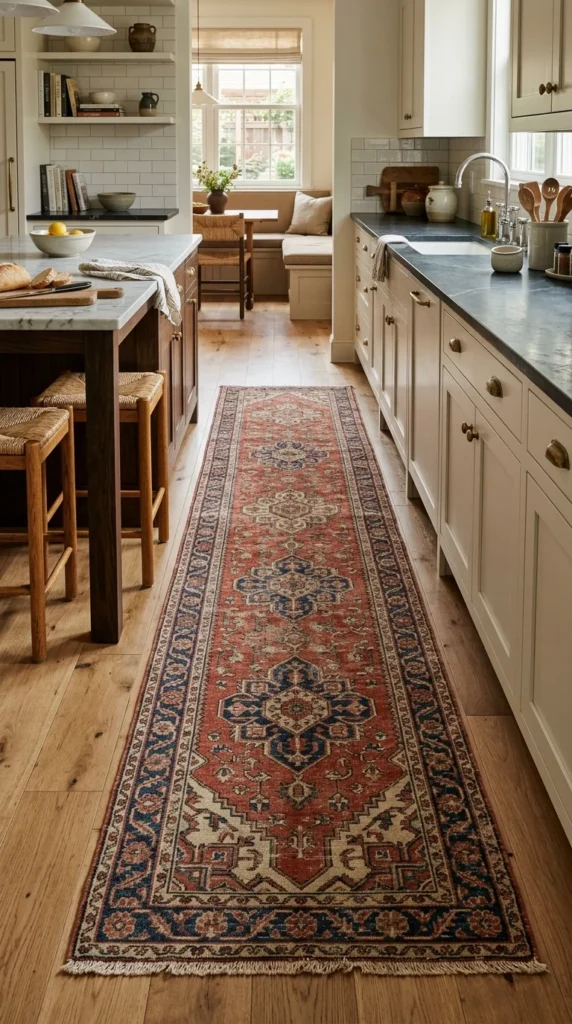
A vintage rug or a handmade “Oushak” runner adds a layer of history and softness to a kitchen. The intricate patterns and faded colors contrast beautifully with the clean lines of modern cabinetry, providing a “soulful” element that makes the room feel personalized.
17. Statement Stools
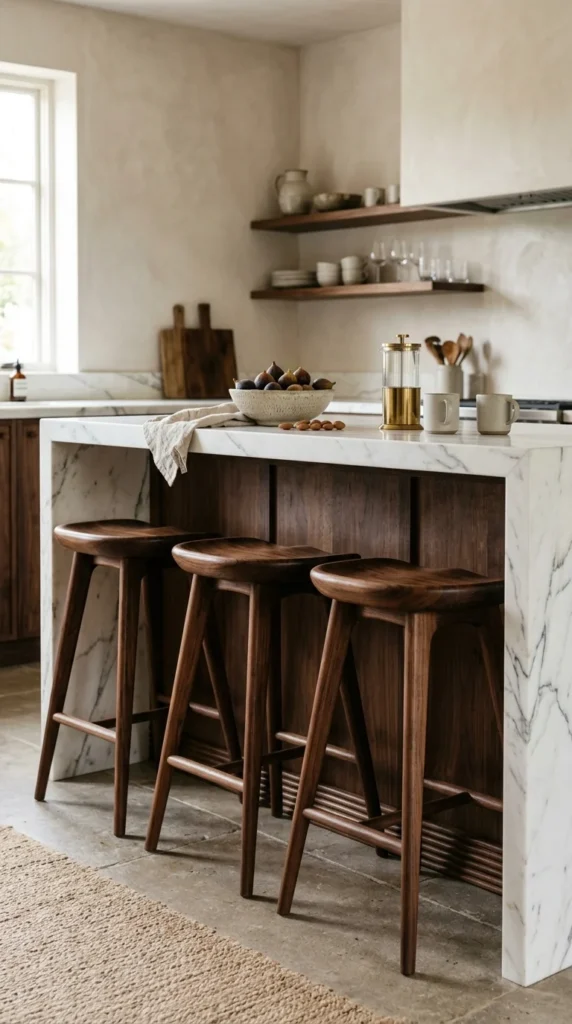
The furniture in an organic modern kitchen should be as carefully selected as the finishes. Sculptural stools made of solid wood, leather, or woven cord act as functional art. They provide an opportunity to introduce a different wood species or a pop of organic texture at eye level.
18. Mixed Metals
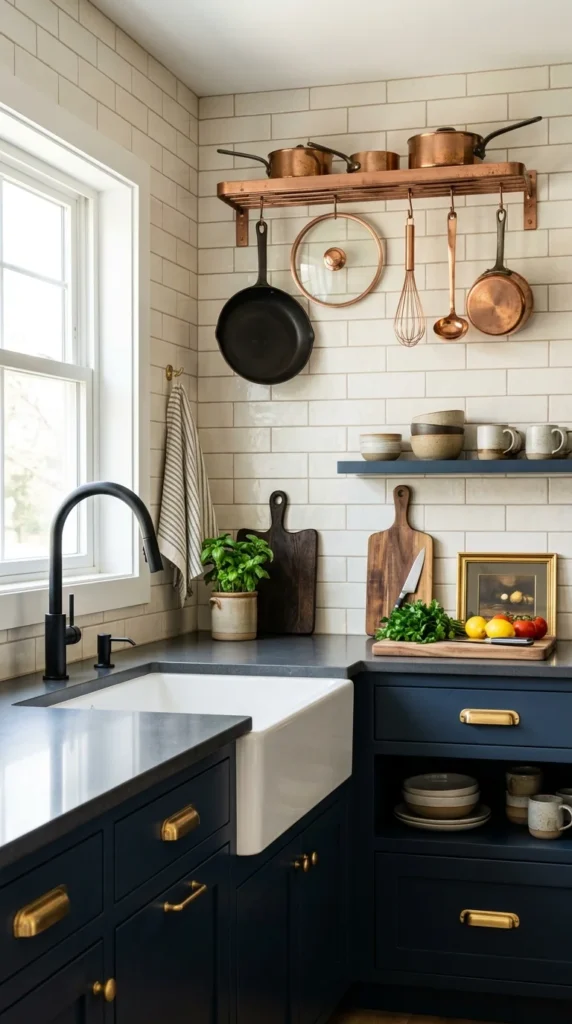
Gone are the days of matching every finish. Mixing metals—such as pairing a matte black faucet with brass handles—creates a more “collected over time” look. The key is to keep the finishes matte or brushed rather than high-shine to maintain the organic feel.
19. Terracotta Tiles
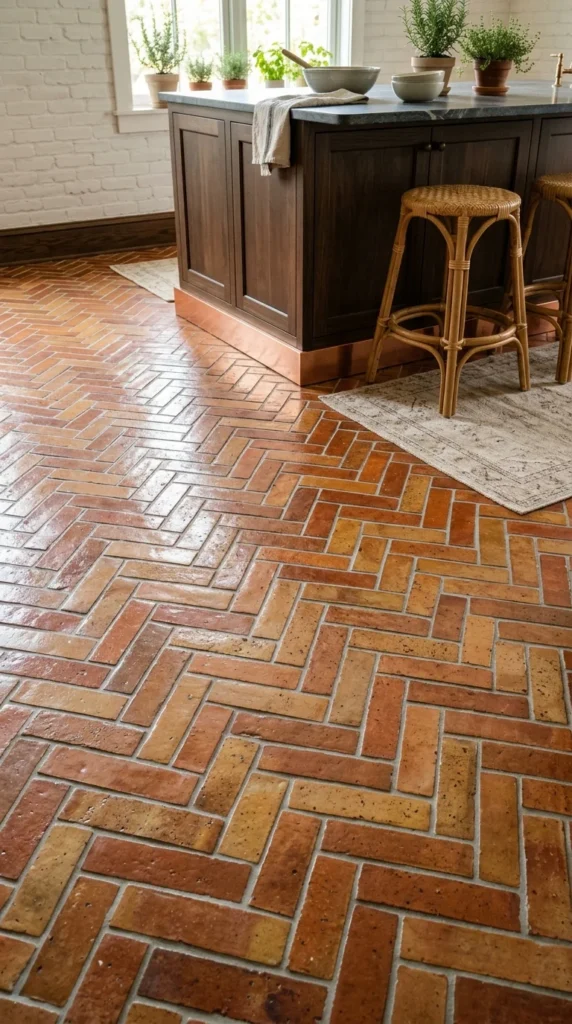
Terracotta brings an instant sense of warmth and earthiness. Whether used on the floor or as a backsplash, the slight variations in color and texture found in handmade tiles prevent the kitchen from feeling too “perfect” or sterile.
20. Soft Minimalism
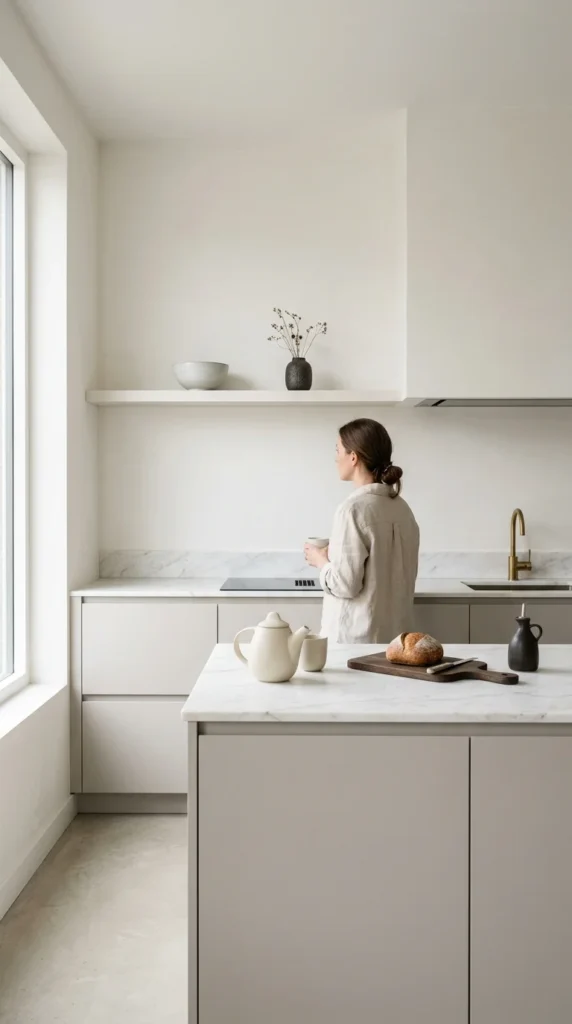
Soft minimalism is about removing the unnecessary while keeping the “human” elements. It avoids the harshness of traditional minimalism by using soft textures, rounded corners, and warm lighting. It’s a clutter-free space that still feels welcoming and comfortable.
21. Waterfall Edges
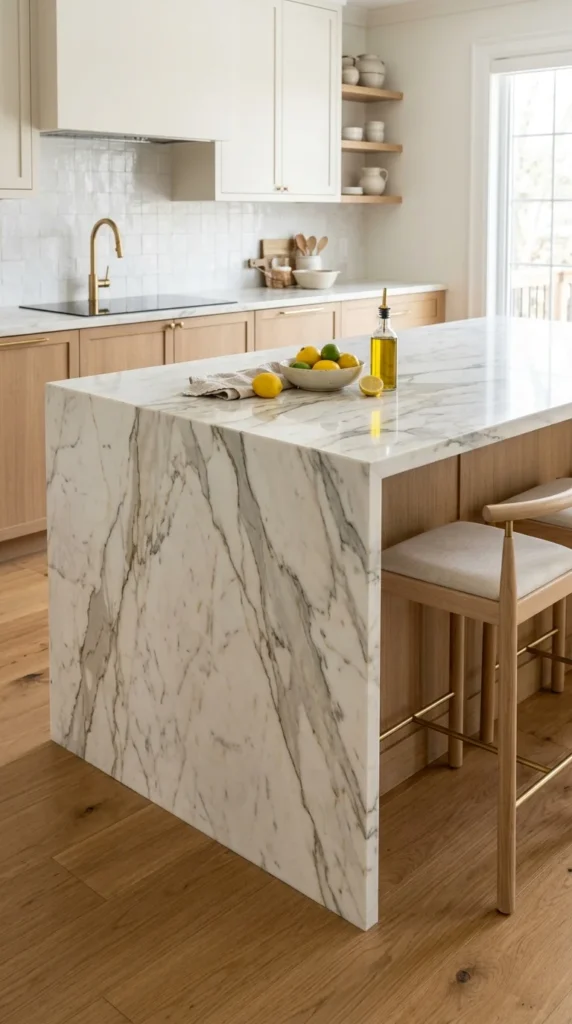
A waterfall edge on an island highlights the beauty of the stone’s veining from multiple angles. It creates a strong architectural statement and provides a clean, modern look that hides the cabinetry underneath, making the island look like a solid block of stone.
22. Matte Black
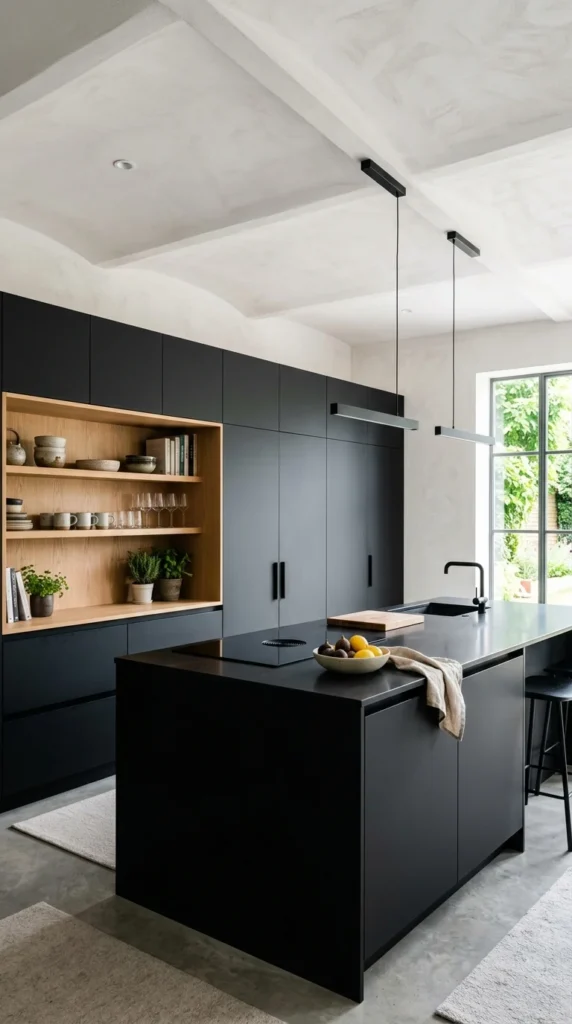
While the palette is generally light, matte black can be used to provide “grounding” points of contrast. Black cabinets or window frames act as a frame for the more organic elements, giving the space a modern, edgy definition without being overwhelming.
23. Curved Islands
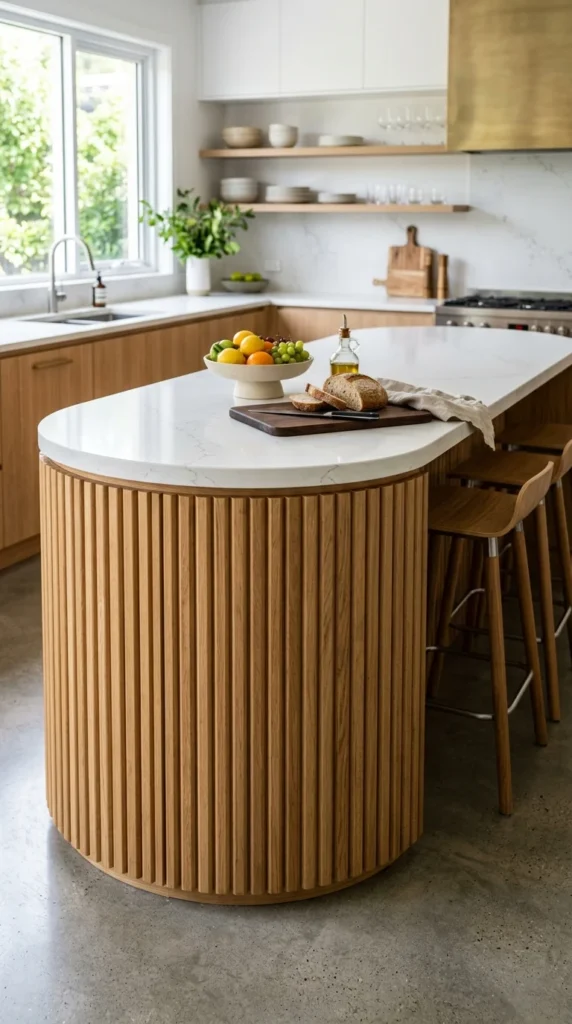
The shift away from sharp corners toward rounded, organic shapes is a major trend. A curved island is more ergonomic for movement and encourages conversation. It breaks the “grid” of the kitchen, making the layout feel more natural and intuitive.
24. Indoor-Outdoor Flow
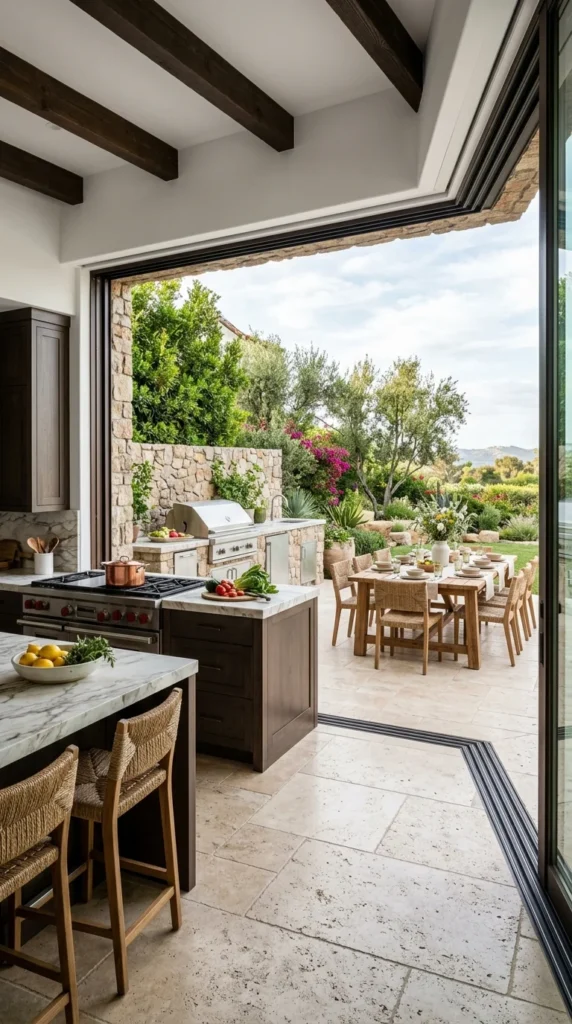
The ultimate organic modern kitchen dissolves the barrier between the interior and the exterior. By using the same flooring materials and large glass doors, the kitchen expands into the landscape. This connection to the outside world—to the air, the light, and the greenery—is the pinnacle of organic design