


The concept of minimalism has often been misunderstood as a cold, sterile, or clinical aesthetic. However, the rise of “Warm Minimalism” has redefined the movement, proving that “less is more” can also be incredibly cozy and inviting. This design philosophy prioritizes high-quality materials, organic textures, and a palette of earth-toned neutrals to create a sanctuary that feels both curated and comfortable.
In a world that is increasingly loud and chaotic, the bedroom serves as the ultimate retreat. By stripping away visual clutter and focusing on tactile warmth, you can transform your sleeping quarters into a restorative escape. Below are 23 warm minimalist bedroom ideas that perfectly balance modern simplicity with homey comfort.
1. Terracotta Tones
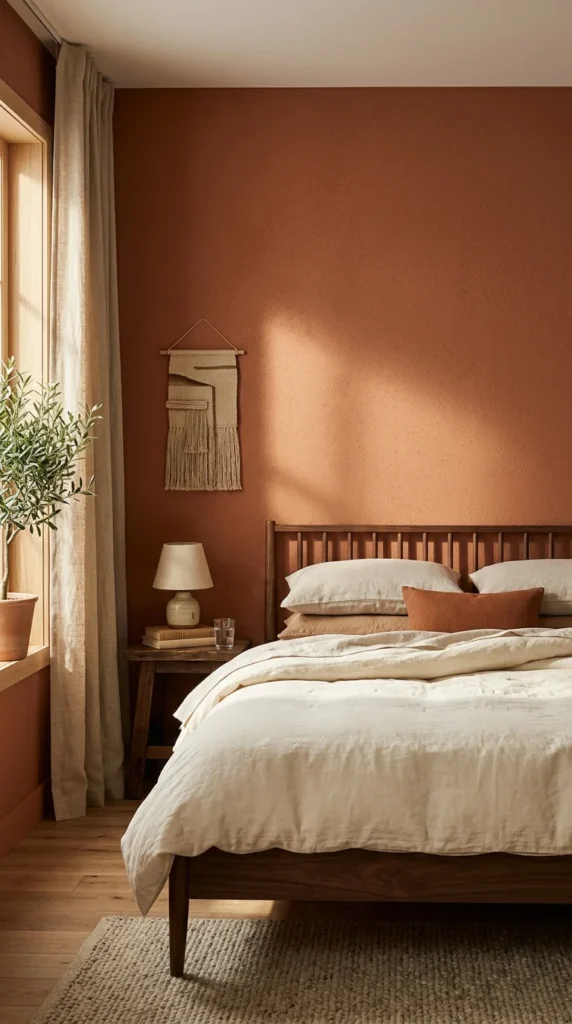
Terracotta provides an instant sense of earthiness and heat without overwhelming the senses. In a minimalist setting, using this clay-inspired hue on the walls or through large-scale textiles adds a grounded, Mediterranean feel. It pairs beautifully with light wood and off-white linens, creating a sunset-like glow that makes the room feel perpetually warm.
2. Limewash Walls
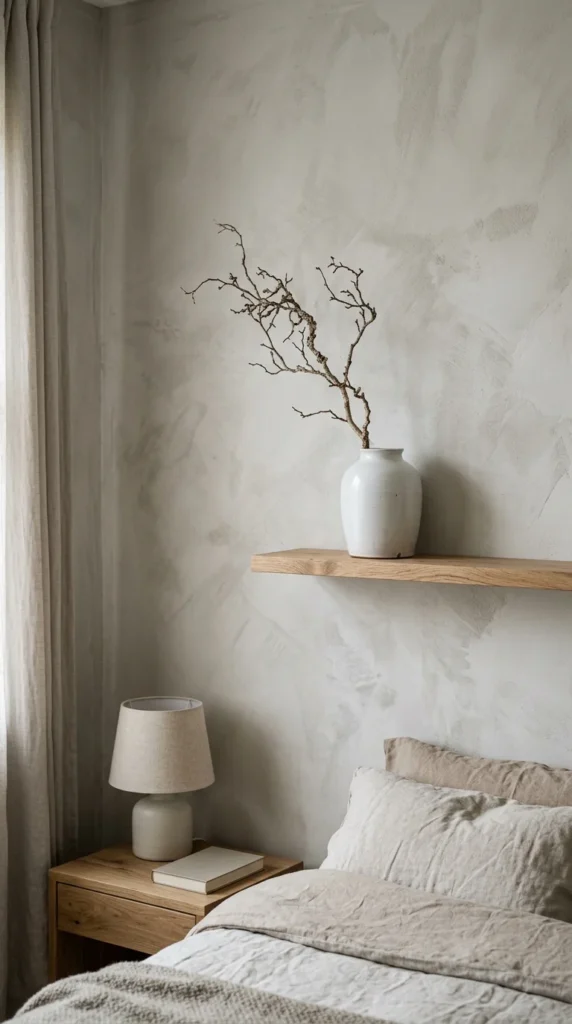
Unlike flat paint, limewash adds a multidimensional, velvety texture to the walls. This depth is essential in minimalism to prevent a space from looking “flat.” The subtle variations in tone catch the light beautifully, providing a sense of history and craftsmanship that feels far more personal than a standard white box.
3. Layered Textiles
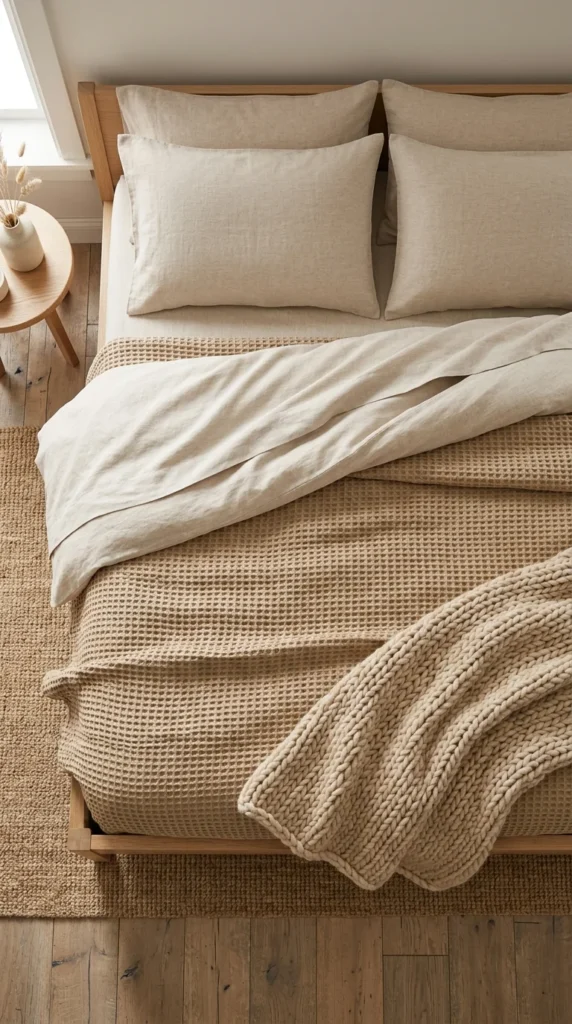
Warmth in minimalism is largely achieved through touch. By layering different fabrics—linen, wool, cotton, and silk—all within the same color family, you create visual interest and physical coziness. This approach allows you to maintain a clean look while ensuring the bed remains the soft, inviting focal point of the room.
4. Natural Oak
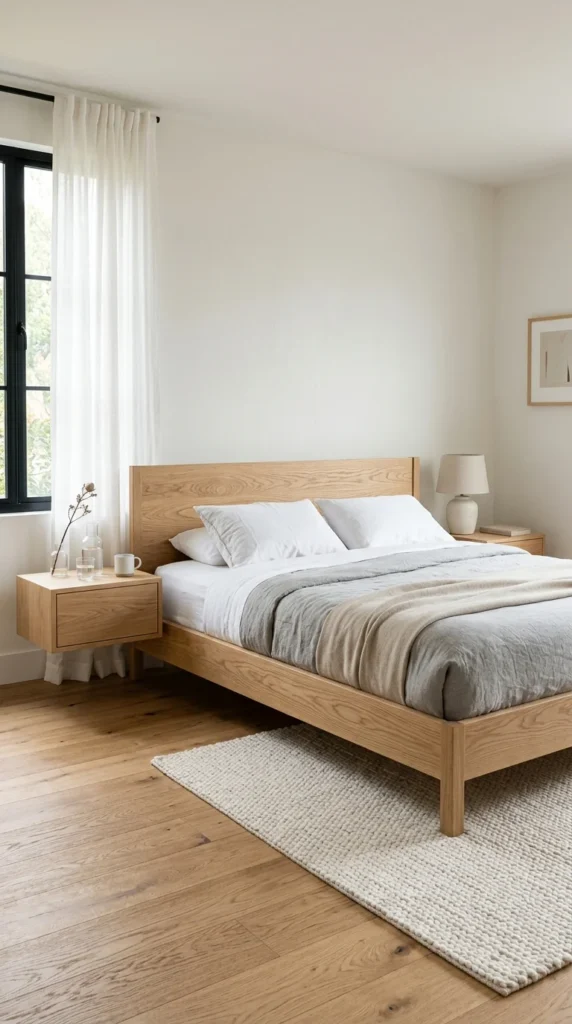
Natural oak is the backbone of many warm minimalist designs. Its light, golden undertones provide a sense of organic luxury. To keep the look modern, opt for furniture with clean lines and “invisible” joinery, allowing the beauty of the wood grain to speak for itself.
5. Oversized Art
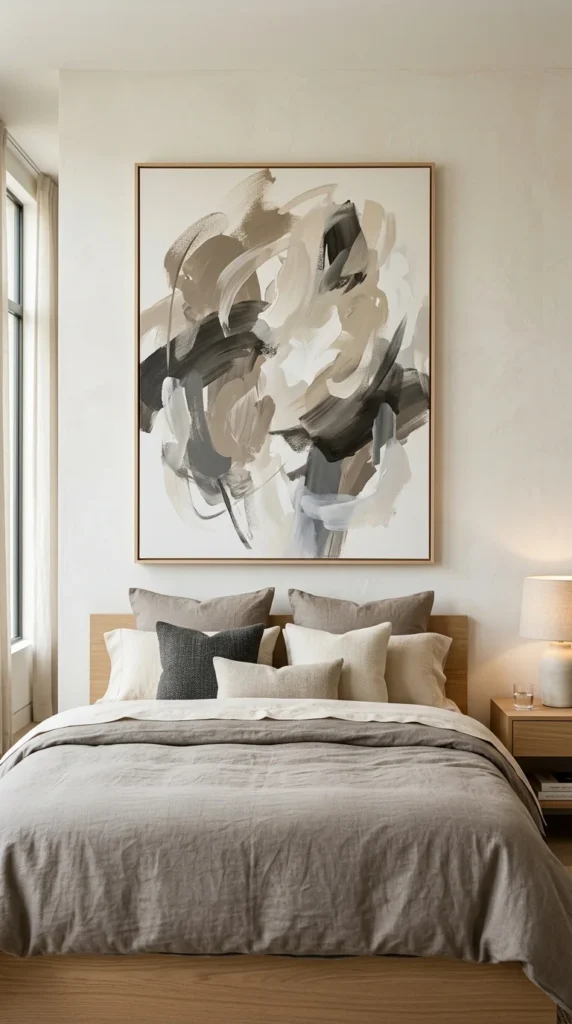
Instead of a gallery wall, choose one large-scale piece of art. This maintains a sense of order and reduces visual noise. Look for abstract pieces or landscape photography with a muted palette that complements the room’s overall color scheme, serving as a sophisticated anchor for the space.
6. Jute Rugs
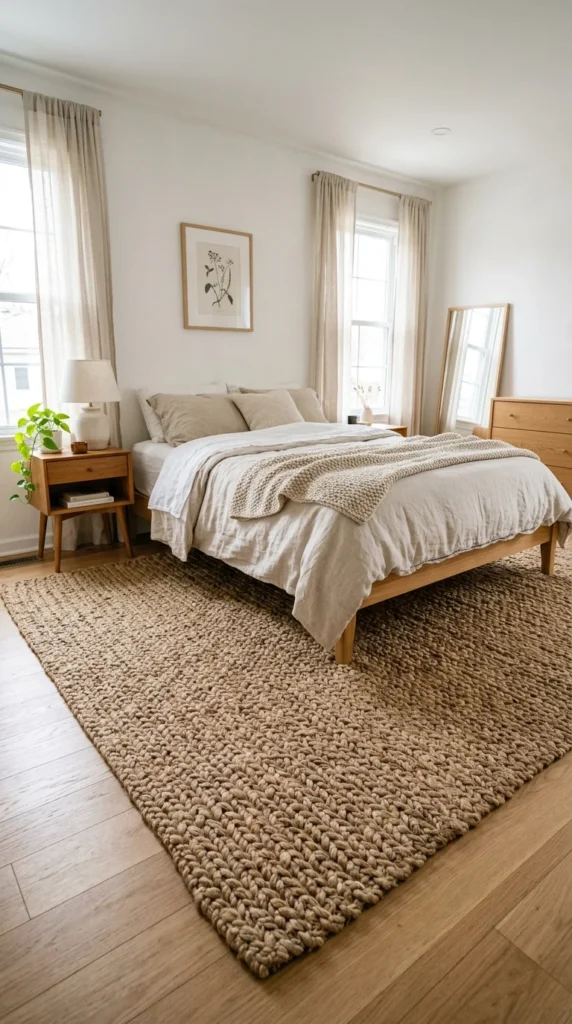
A jute or sisal rug introduces a raw, natural element to the floor. The coarse texture provides a tactile contrast to soft bedding, while the golden-brown tones of the fiber reinforce the “warm” aspect of the aesthetic. It is a durable, eco-friendly way to ground the room.
7. Bouclé Accents
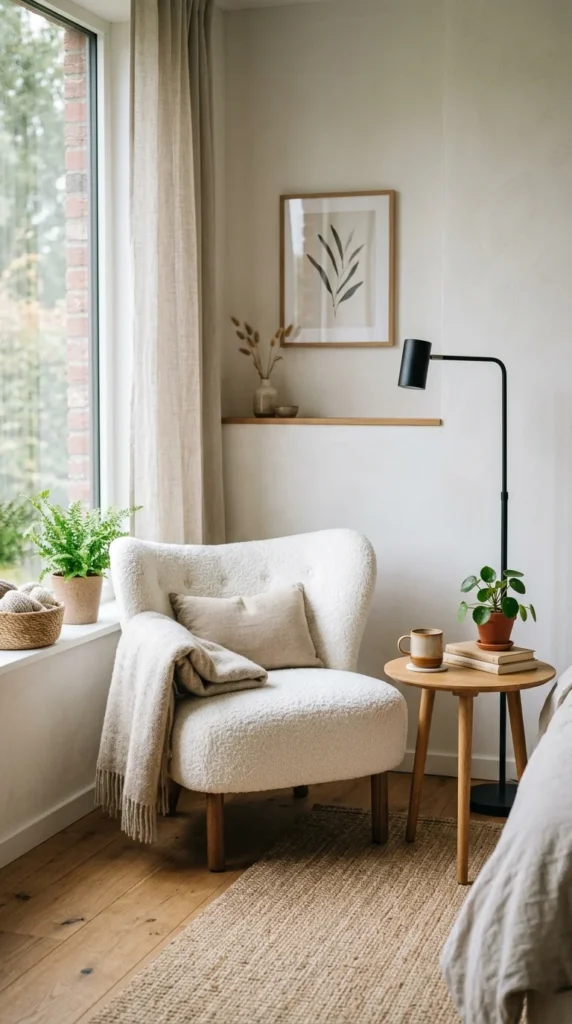
Bouclé is the ultimate “warm minimalist” fabric. Its nubby, looped texture is incredibly soft to the eye and the touch. Incorporating a bouclé accent chair or a few throw pillows adds a modern, sculptural element that feels both trendy and timelessly comfortable.
8. Hidden Lighting
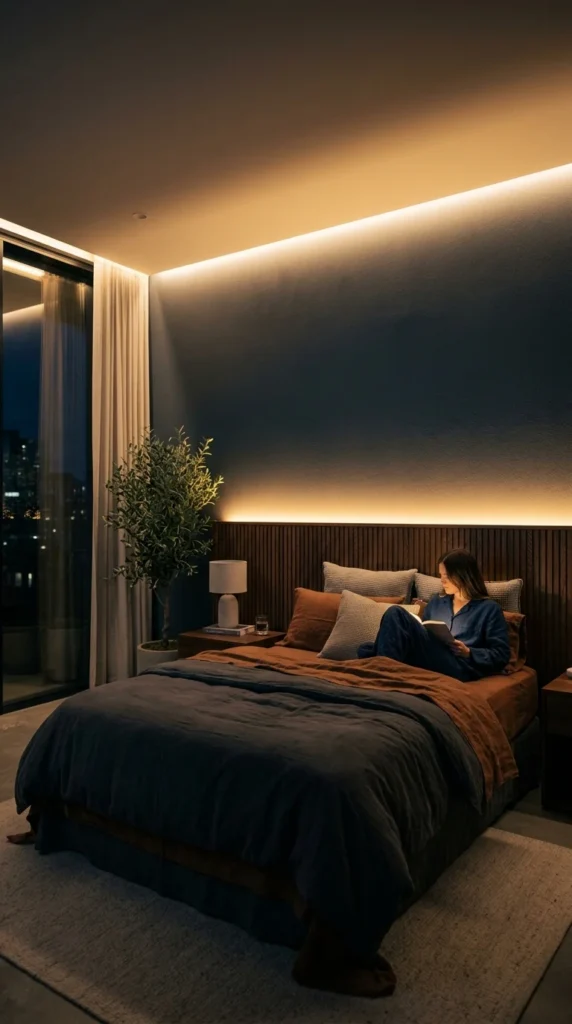
Lighting is crucial for mood. Avoid harsh overhead fixtures and instead opt for integrated LED strips or sconces that wash the walls in soft light. This indirect illumination mimics the feel of candlelight and creates a tranquil atmosphere perfect for winding down.
9. Stone Side-tables
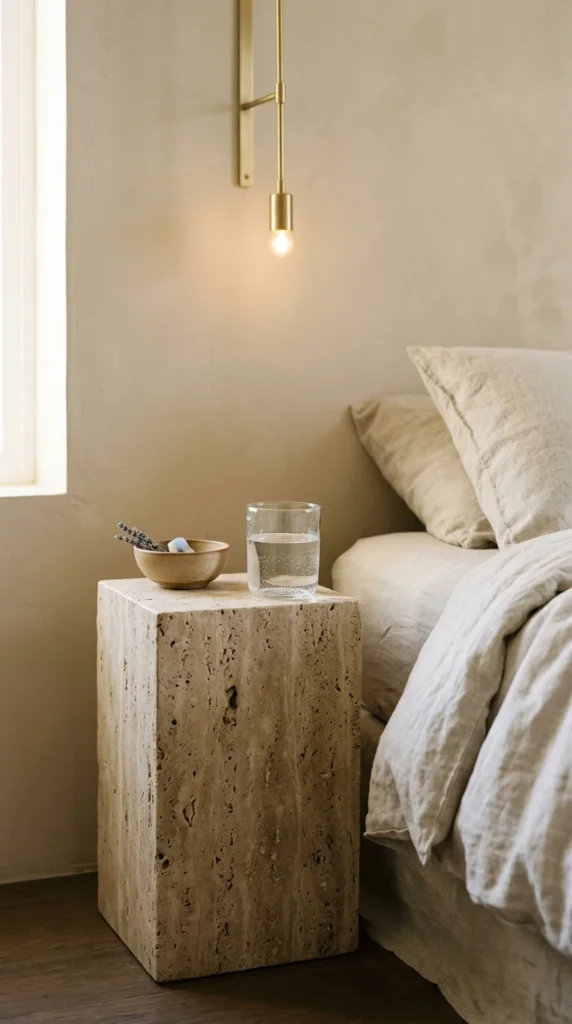
Introducing stone—like travertine, marble, or limestone—adds a sense of permanence and weight. A stone side table provides a cool, smooth contrast to the warmth of wood and fabric, emphasizing the “organic” nature of the design.
10. Linen Bedding
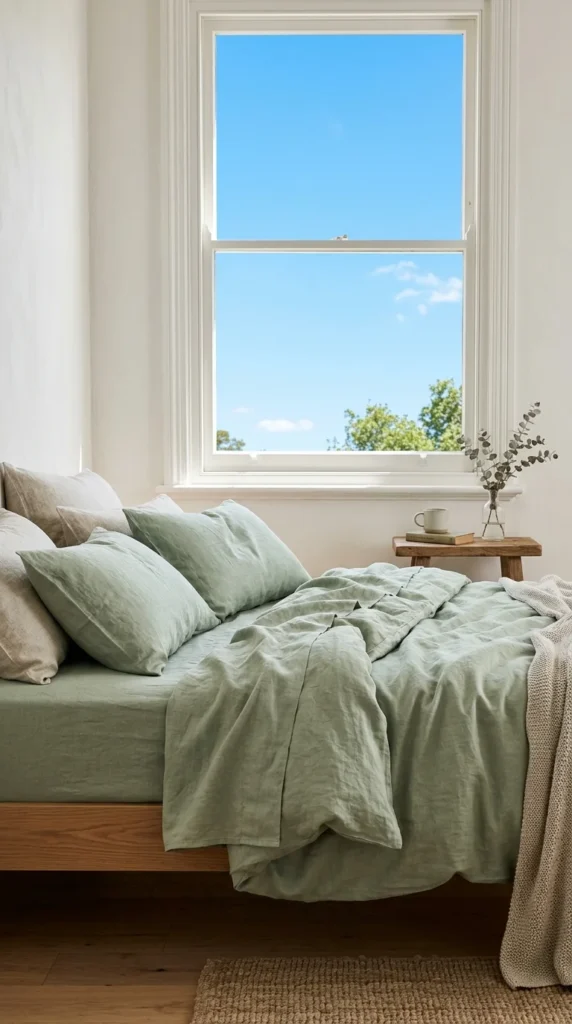
Linen is the gold standard for minimalist bedding. Its natural wrinkles and breathability give the bed a relaxed, “lived-in” feel that avoids the stiffness of traditional high-thread-count cotton. It looks best in muted, desaturated tones like stone, olive, or sand.
11. Indoor Greenery
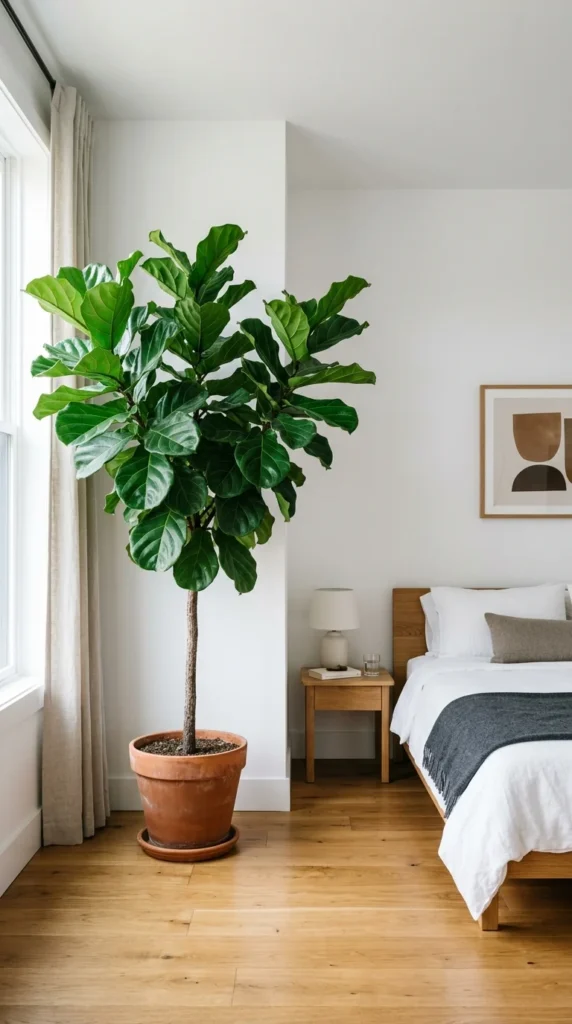
A single, well-placed plant brings life into a minimalist room. The organic shapes of the leaves break up the straight lines of the furniture. Choose a species with architectural interest, such as an Olive tree or a Monstera, to keep the look sophisticated.
12. Woven Pendants
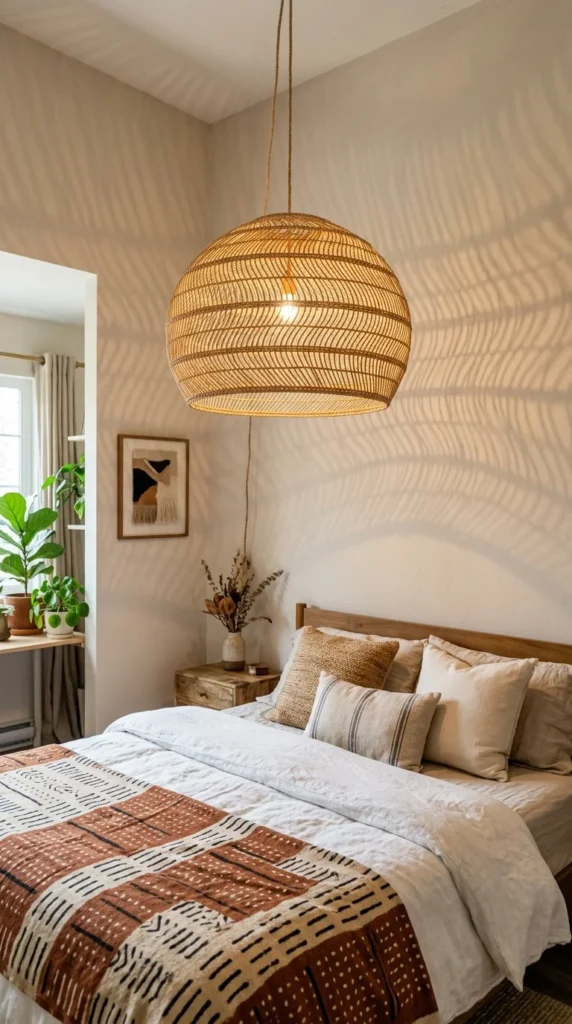
Woven light fixtures act as functional art. When turned on, the weave creates a dappled lighting effect that adds texture to the entire room. These fixtures help draw the eye upward and add a touch of artisanal warmth to the ceiling.
13. Arched Architecture
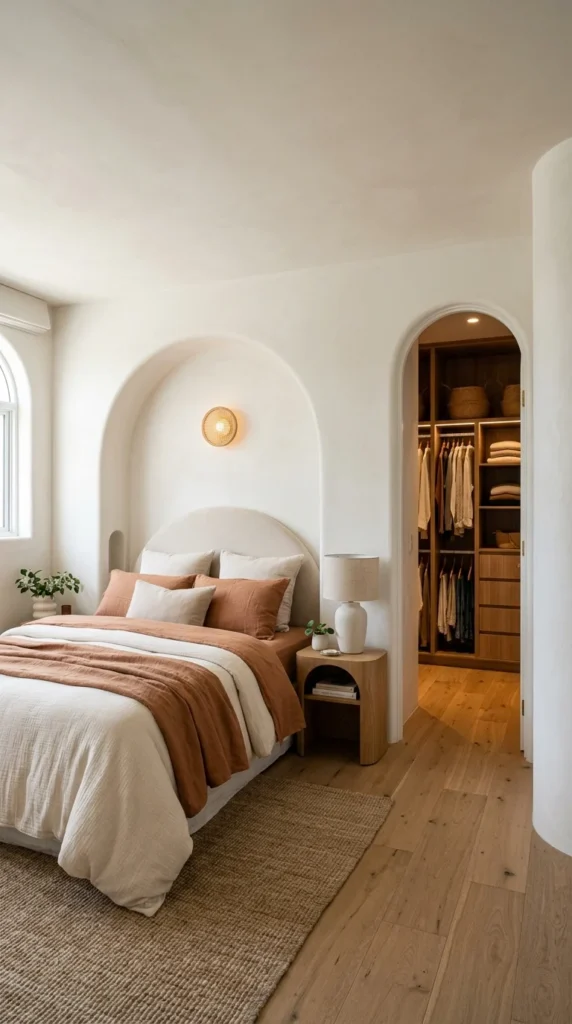
Minimalism doesn’t have to be all sharp angles. Incorporating arches—whether through doorways, alcoves, or mirrors—softens the room’s silhouette. These curves feel more natural and protective, enhancing the feeling of the bedroom as a “niche” or “cocoon.”
14. Low-Profile Beds
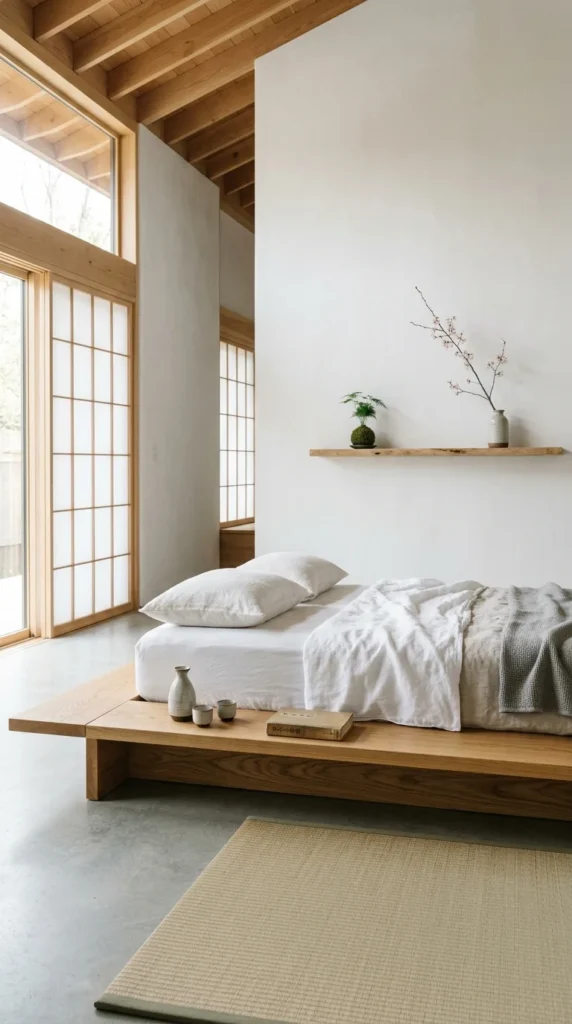
A low-profile bed creates a sense of groundedness and makes the ceilings feel higher, which contributes to an airy, minimalist vibe. Inspired by Japanese design, these beds prioritize simplicity and help clear the visual field, making the room feel more spacious.
15. Earthy Ochre
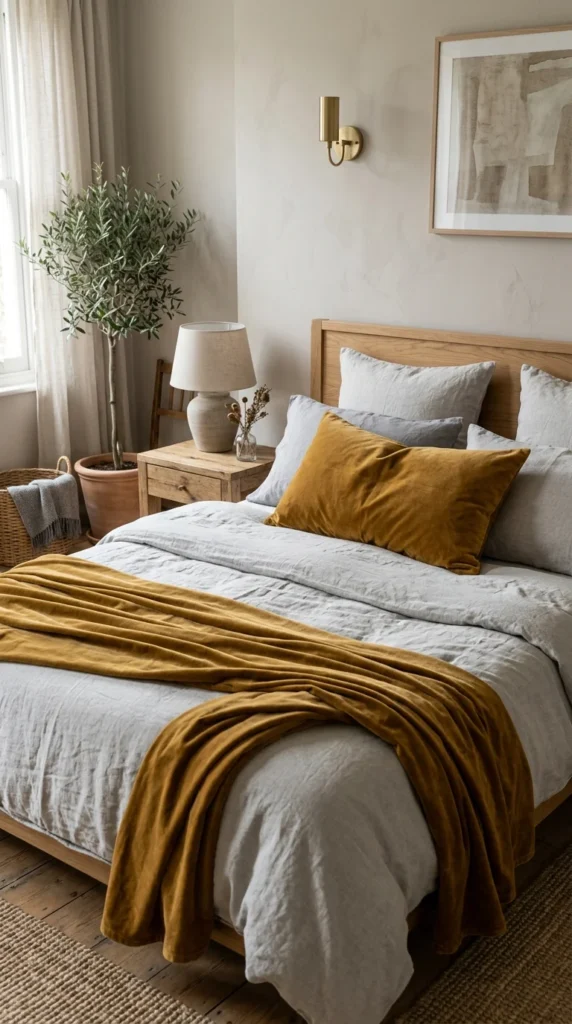
Ochre is a fantastic “pop” color for a minimalist room because it remains within the earthy, natural spectrum. It provides a sunny, optimistic warmth that pairs perfectly with charcoal greys or deep walnuts, adding personality without being loud.
16. Fluted Panels
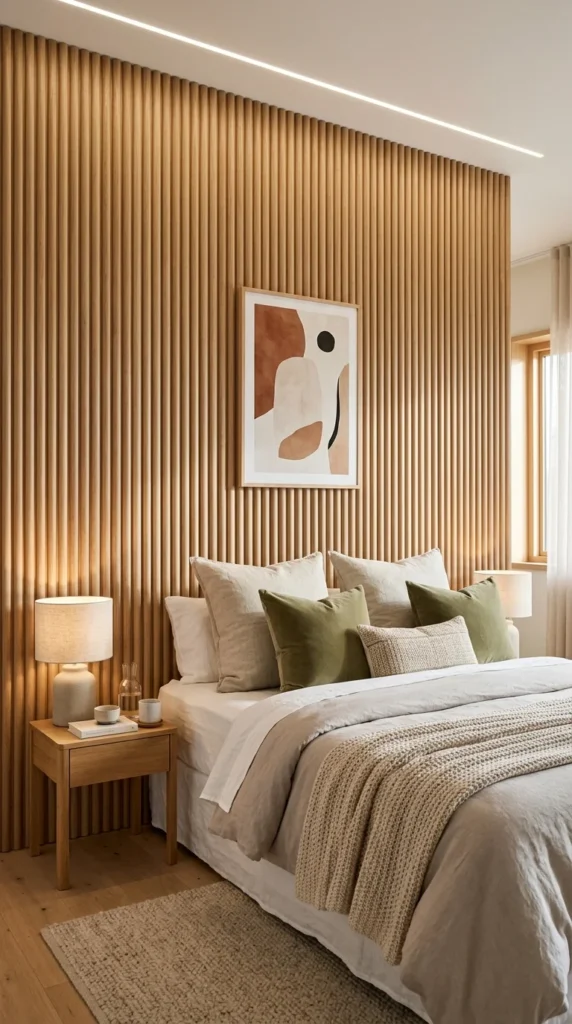
Fluted or slatted wood panels add architectural interest and acoustic warmth. This texture provides a sophisticated backdrop that eliminates the need for wall decor, as the shadows and highlights created by the wood become the “art.”
17. Sheer Curtains
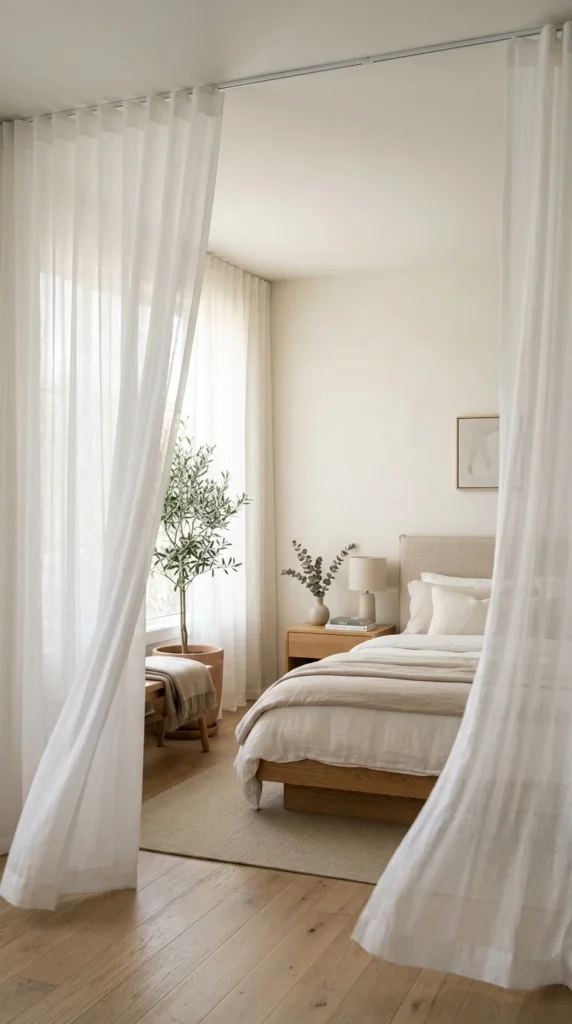
Heavy drapes can feel suffocating in a minimalist space. Sheer linen or cotton curtains allow natural light to fill the room while providing privacy. The way they catch the air and move adds a sense of lightness and ethereal beauty to the bedroom.
18. Sculptural Seating
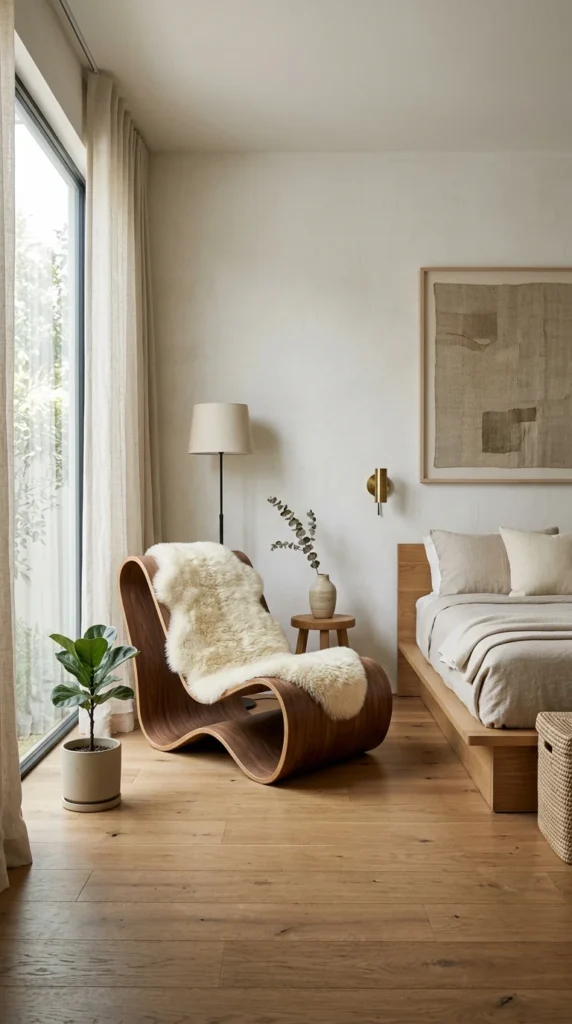
In a minimalist room, every piece of furniture must “earn” its place. A sculptural chair serves as both a functional spot to sit and a visual statement piece. Look for organic shapes and natural materials like bentwood or leather.
19. Monochromatic Creams
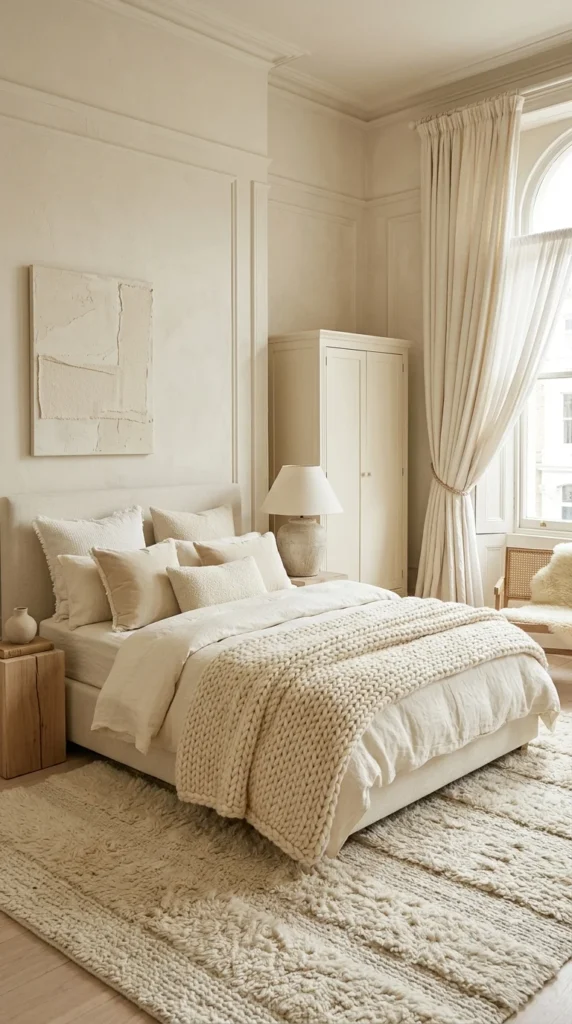
A monochromatic palette of creams and ivories is the epitome of serenity. By removing color contrast, you allow the eye to rest. The key to making this work is varying the textures—think a shaggy rug, a smooth plastered wall, and a linen duvet.
20. Rattan Headboards
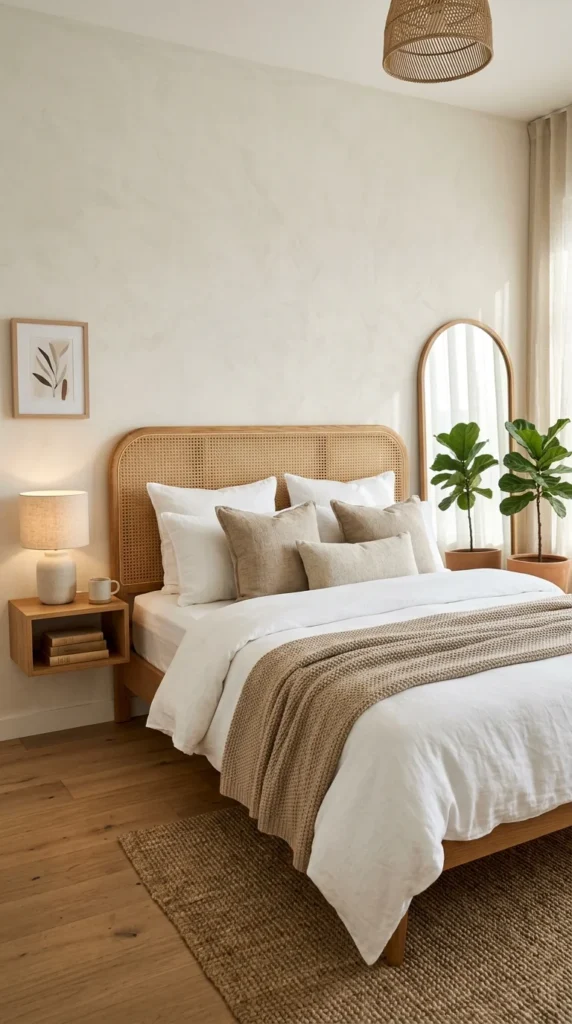
Rattan adds a vintage, artisanal touch to a modern room. Its light weight and warm color make it an ideal material for a headboard. It introduces a “vacation” feel, reminding one of breezy, coastal escapes and tropical luxury.
21. Raw Concrete
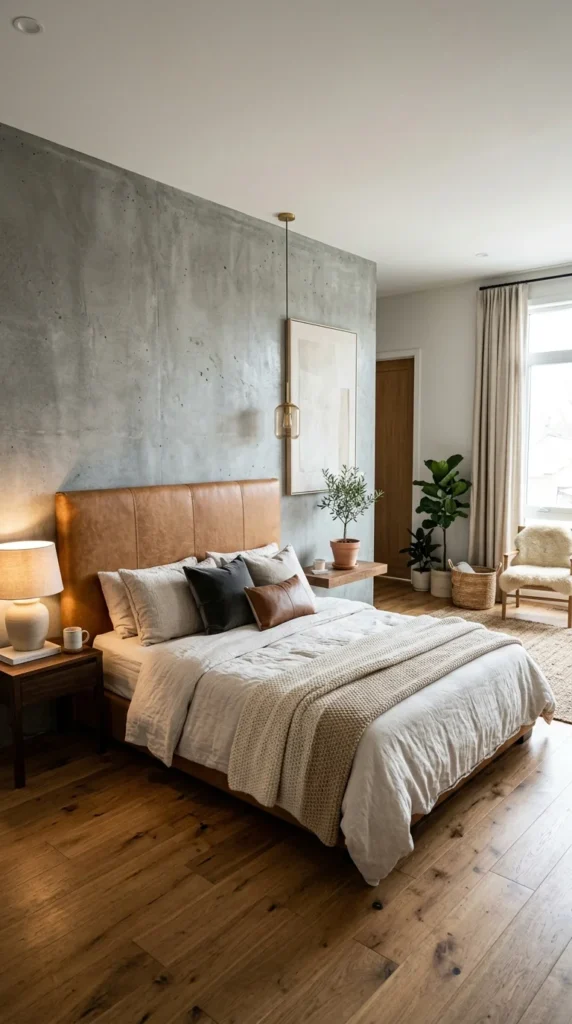
Concrete might seem “cold,” but when polished and paired with the right elements, it becomes a stunning neutral. The key is to balance its industrial edge with “warm” materials like leather, wood, and thick-pile wool rugs.
22. Soft Sage
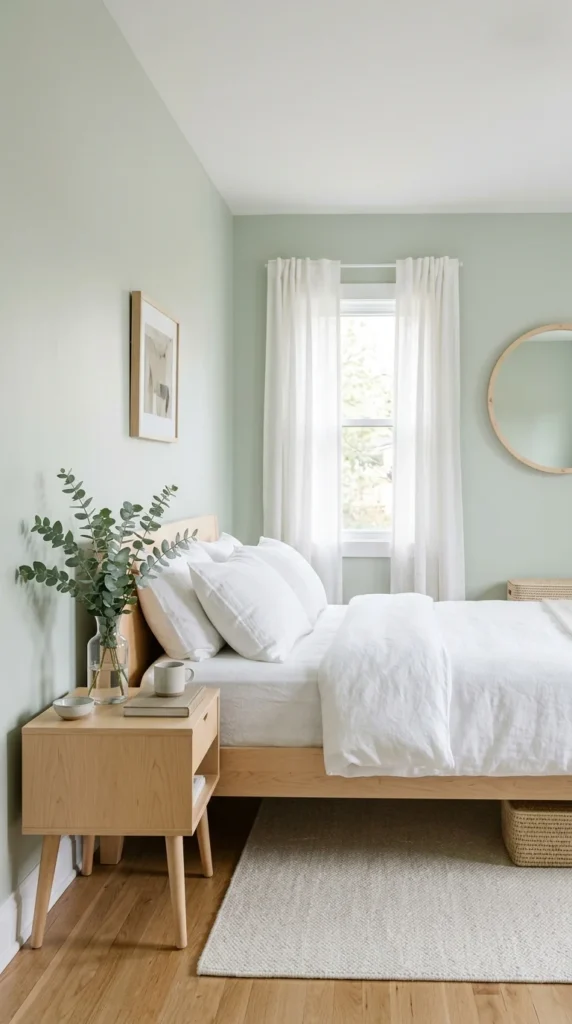
Sage green is often called “the new neutral.” It is a calming, nature-inspired hue that brings the outdoors in. It works exceptionally well in minimalist bedrooms because it feels fresh and clean while providing more visual warmth than a standard grey or white.
23. Walnut Finishes
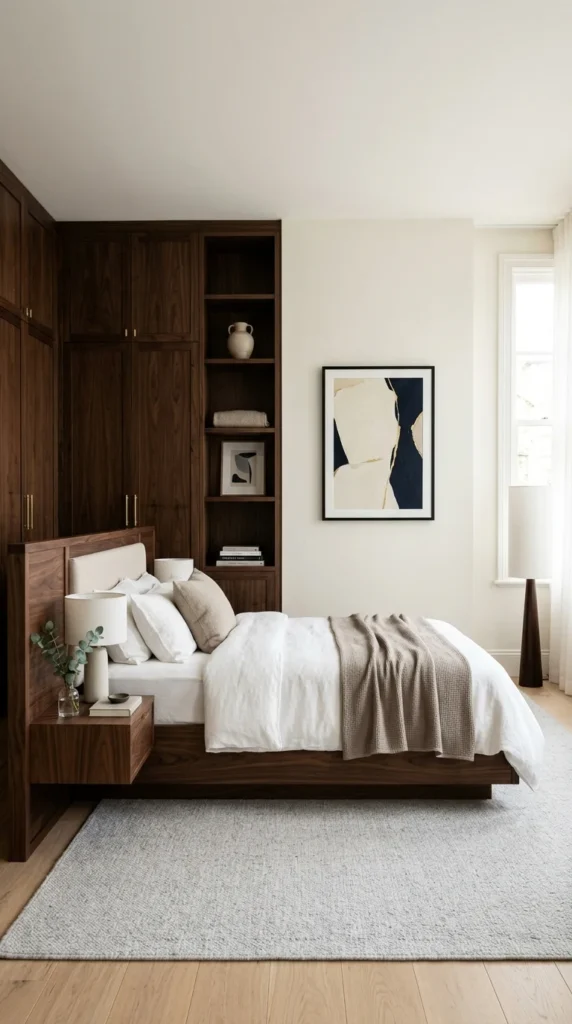
For those who find light oak too pale, walnut is the perfect alternative. Its deep, chocolatey tones provide a sense of luxury and maturity. In a warm minimalist setting, walnut furniture acts as a bold anchor, providing enough visual weight that very little other decoration is needed.