
The philosophy of “more is more” finds its most sophisticated expression in vintage maximalism. Unlike the sterile lines of modern minimalism, vintage maximalism celebrates history, texture, and personal narrative. It is the art of curating a space that feels lived-in, storied, and unapologetically bold. By blending eras—from Victorian opulence to Mid-Century quirk—this design style allows homeowners to break traditional rules and create a sanctuary that is entirely their own.
1. Gallery Walls
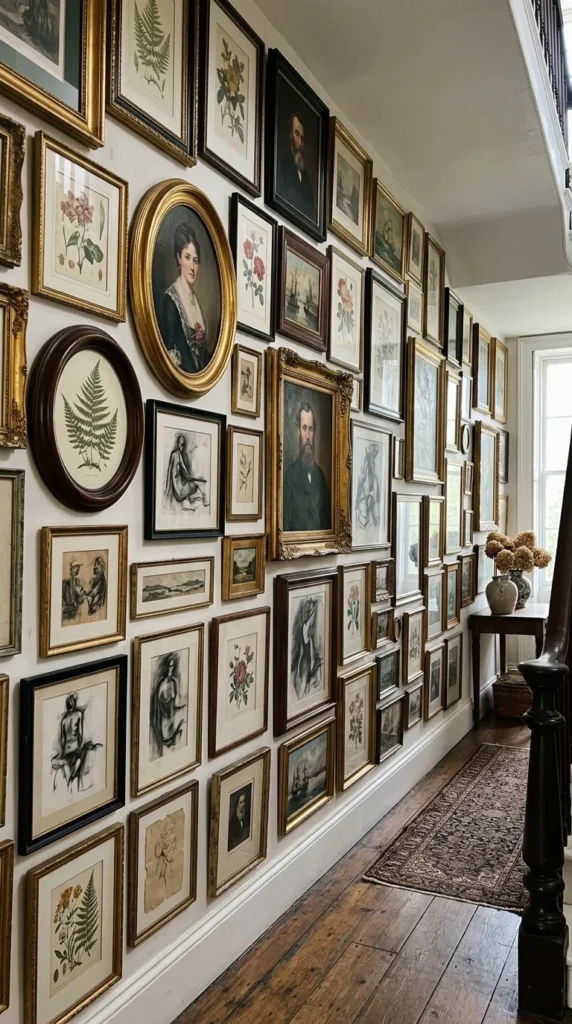
The quintessential hallmark of a maximalist home is the floor-to-ceiling gallery wall. Instead of a single “statement” piece, a vintage maximalist uses the entire wall as a canvas. The secret to making this feel curated rather than chaotic lies in the frames. Mixing ornate gold baroque frames with simple wooden Victorian frames creates a sense of history. Don’t limit yourself to paintings; integrate vintage mirrors, empty frames, and even antique plates to add three-dimensional depth to the arrangement.
2. Velvet Seating
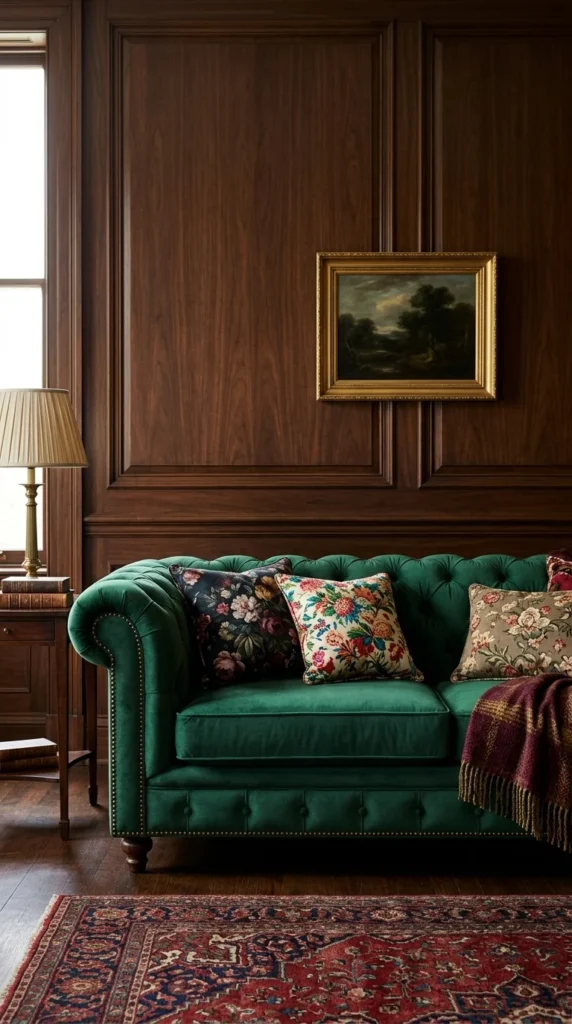
Velvet is the fabric of choice for vintage maximalism because of its heavy weight and light-reflecting properties. A tufted velvet sofa in a rich jewel tone—like ruby, sapphire, or emerald—serves as an anchor for the room. The tactile nature of velvet adds an immediate sense of luxury and comfort. To lean into the vintage aesthetic, look for pieces with traditional details like rolled arms, brass nailhead trim, or turned wooden legs with casters.
3. Ornate Mirrors
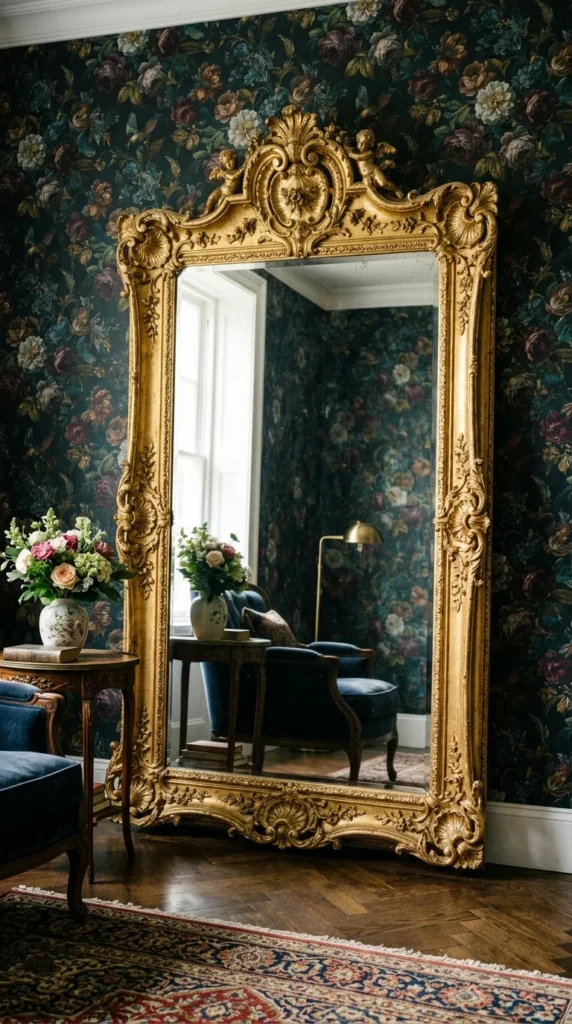
Mirrors are more than just functional items; in a maximalist space, they are architectural elements. An oversized, ornate mirror can make a cluttered room feel more spacious while adding a touch of old-world glamour. Look for mirrors with intricate plasterwork, gilded finishes, or “aged” glass that features beautiful oxidization. Placing a large mirror opposite a window or a colorful wall helps bounce light and color throughout the space, intensifying the maximalist effect.
4. Patterned Wallpaper
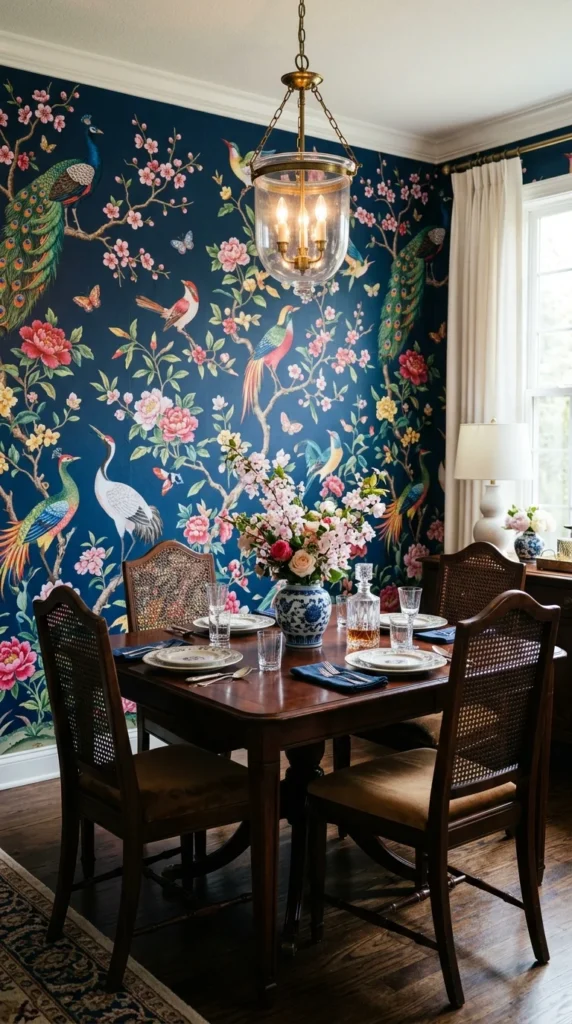
Wallpaper provides a backdrop that informs the rest of the room’s color palette. Vintage maximalism often favors busy, intricate patterns such as Chinoiserie, botanical illustrations, or classic damask. For a truly unique look, consider “wallpapering” the ceiling—often called the fifth wall—to create an immersive experience. When the walls are loud, the furniture can be even louder, as the patterns serve to knit the various elements of the room together.
5. Jewel Tones
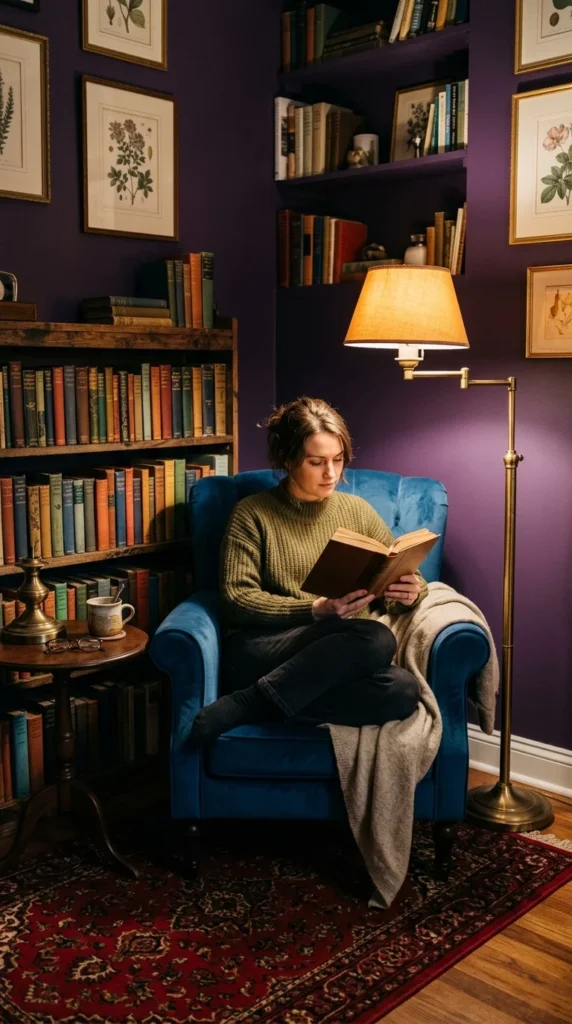
While minimalism often retreats into neutrals, vintage maximalism leans into the drama of saturated jewel tones. Colors like burnt orange, deep plum, and peacock blue provide a moody, sophisticated foundation. These colors evoke the feeling of a historic manor or a bohemian parlor. Using these hues on both the walls and large furniture pieces creates a “color-drenched” look that makes the room feel cohesive despite the abundance of decorative objects.
6. Brass Accents
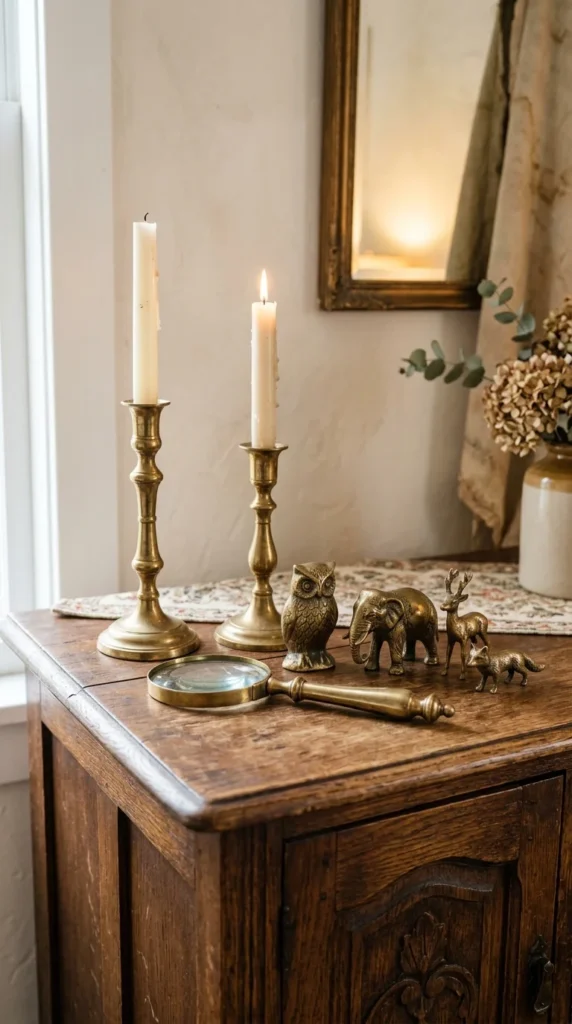
Metals play a crucial role in vintage decor, and brass is the undisputed king of the maximalist aesthetic. Unlike the cold, sterile feel of chrome, brass has a warmth that evolves over time as it develops a patina. Incorporate brass through hardware, floor lamps, picture frames, and small trinkets. The golden hue of brass complements jewel-toned walls perfectly, adding a glimmer of light to the moodier corners of the room.
7. Antique Rugs
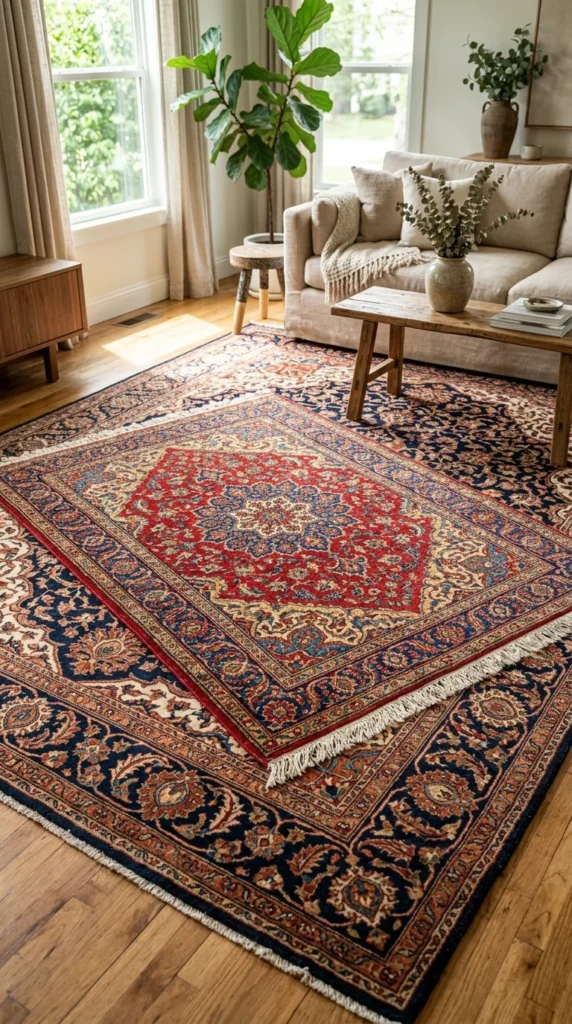
Floor coverings in a maximalist home should be as detailed as the walls. Antique Persian, Turkish, or Kilim rugs bring a sense of grounded history to a space. A common maximalist trick is to layer rugs; place a smaller, more vibrant antique rug over a larger, neutral jute or sisal rug—or even over another patterned rug. This adds layers of texture and color, making the floor an integral part of the room’s design rather than an afterthought.
8. Lush Greenery
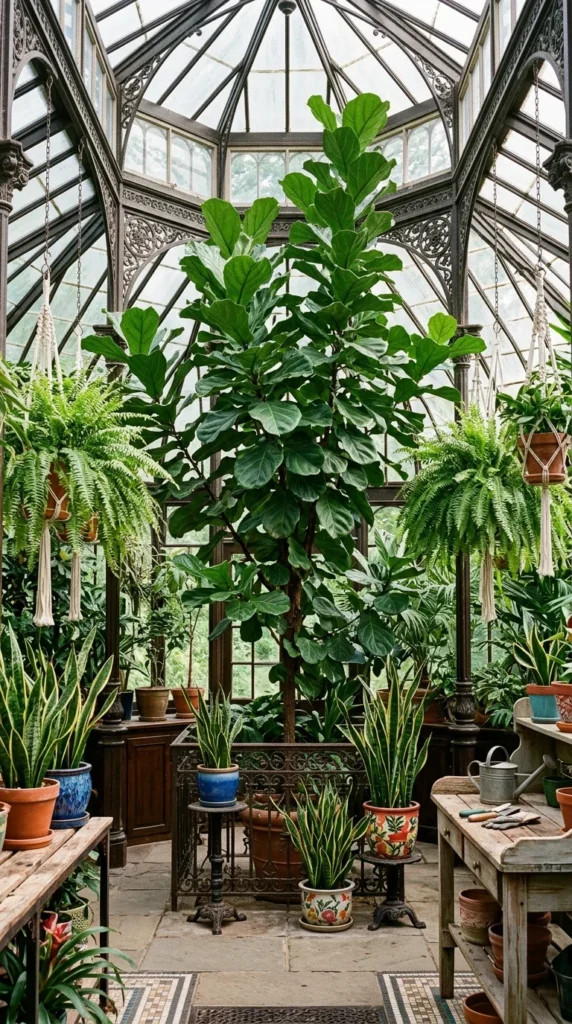
No vintage maximalist room is complete without the life and movement of indoor plants. In the 19th century, “Wardian cases” (the precursors to terrariums) and indoor palms were signs of high status. Today, large-scale plants like Monstera Deliciosa or Bird of Paradise add an organic, wild element to a room filled with structured antiques. The deep greens of the foliage act as a natural neutral, harmonizing with almost any color scheme while adding height and volume.
9. Curated Bookshelves
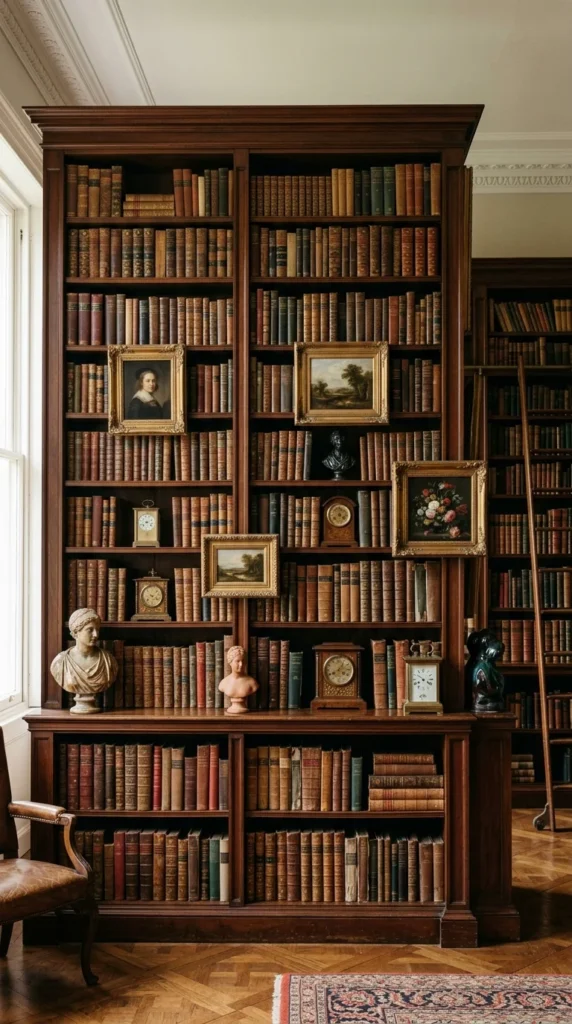
The “maximalist” bookshelf is not just for books; it is a display case for a lifetime of collecting. Instead of organizing books by color or hiding them away, showcase their spines, heights, and varied textures. Integrate “curiosities” between the stacks—think antique globes, porcelain figurines, or vintage cameras. The goal is to create a “cabinet of wonders” effect where every shelf offers a new discovery.
10. Chandelier Lighting
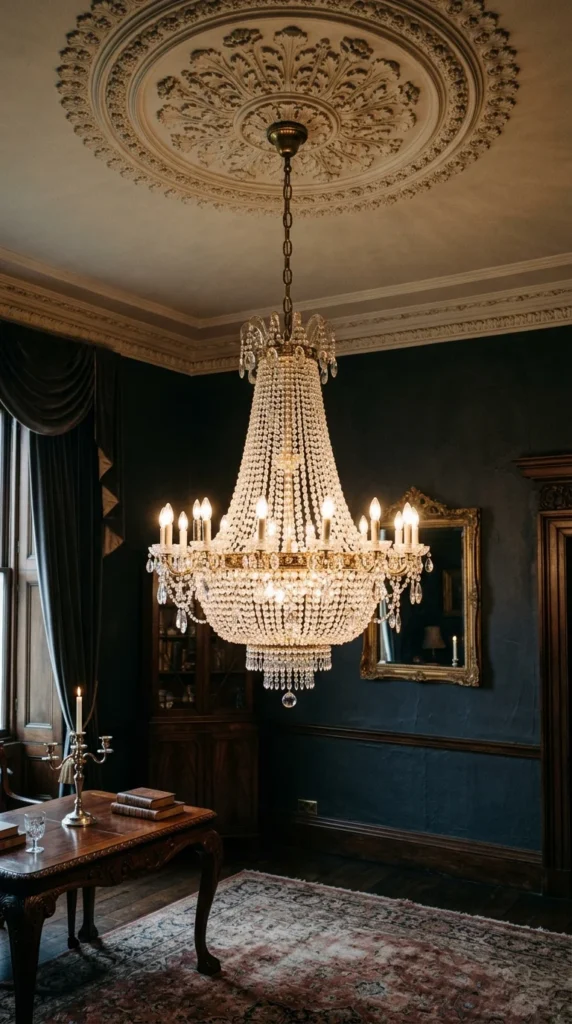
Lighting in a vintage maximalist space should be a statement piece. A crystal chandelier, whether it’s a classic French empire style or a more mid-century Murano glass design, adds drama and elegance. The way the light refracts through the crystals creates a shimmering effect on the walls, enhancing the colors and textures of the room. Don’t save chandeliers just for the dining room; they work beautifully in bedrooms, bathrooms, and even kitchens to elevate the space.
11. Mismatched Dining
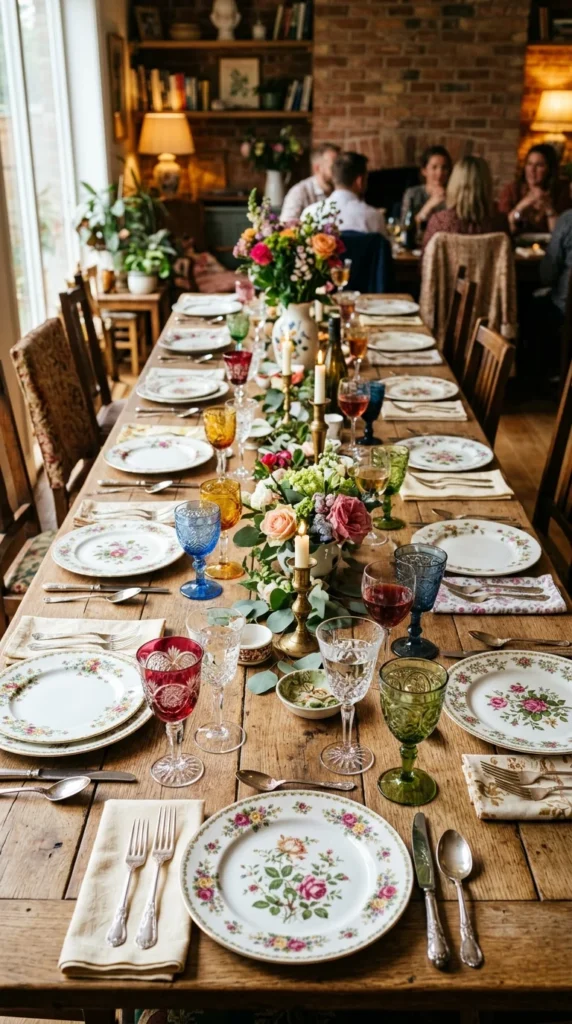
Uniformity is the enemy of vintage maximalism. In the dining room, this manifests as an eclectic collection of chairs and table settings. You might pair a heavy oak Victorian table with Mid-Century modern chairs or use a collection of mismatched vintage china found at thrift stores. This approach feels intentional and artistic rather than haphazard, provided there is a common thread, such as a consistent color palette or a shared era of design.
12. Tasseled Textiles
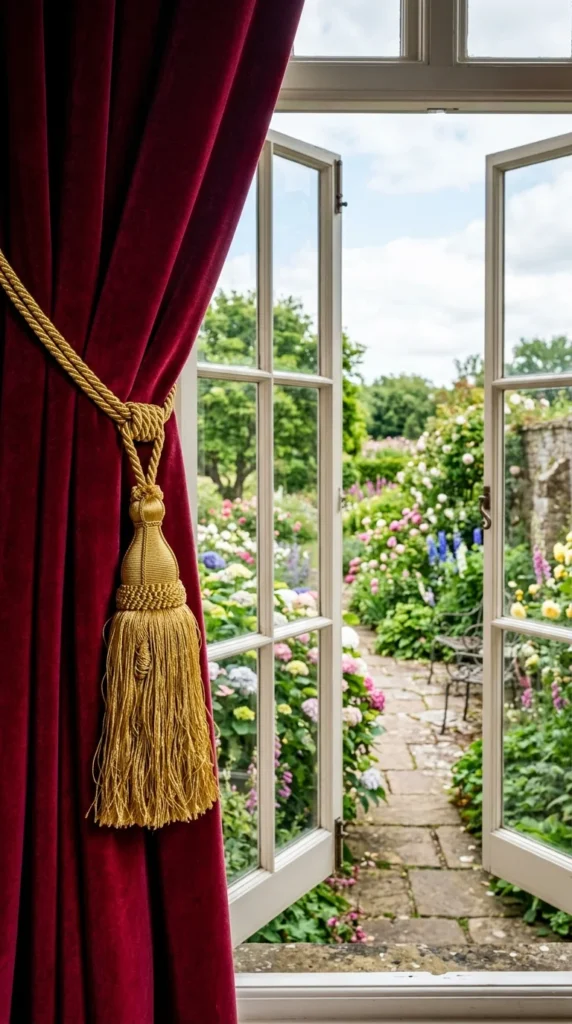
Details like fringe, tassels, and pom-poms add a Victorian flair that is central to the vintage maximalist look. These “passementerie” details can be added to throw pillows, the bottom of armchairs, or heavy drapes. They add a sense of weight and importance to textiles, reinforcing the idea that every item in the room has been thoughtfully embellished.
13. Sculptural Busts
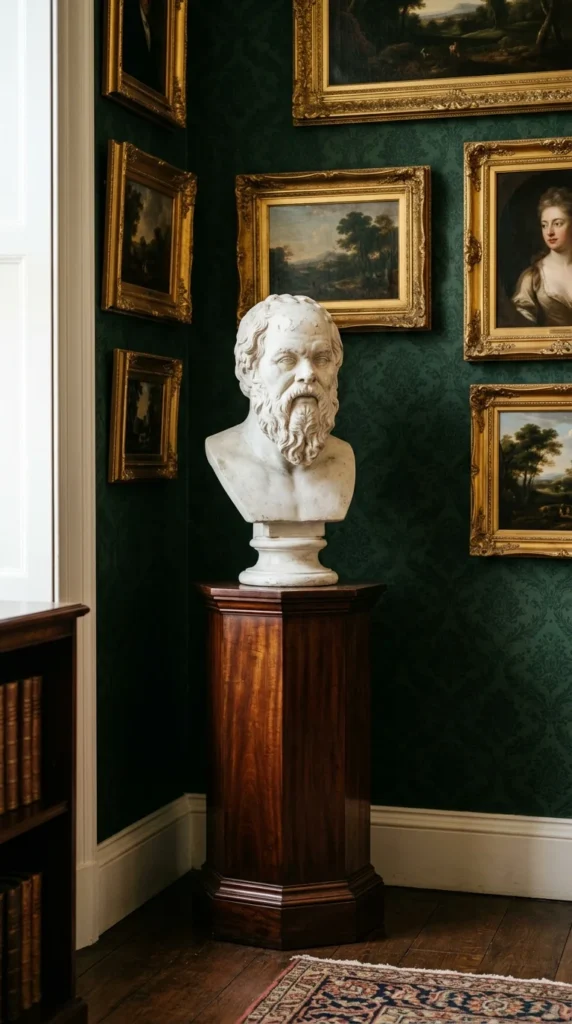
Neoclassical elements bring a sense of timelessness to maximalist decor. Plaster or stone busts—whether they represent historical figures or anonymous Greek deities—provide a sophisticated, sculptural element. Placing a bust on a mantelpiece, a bookshelf, or a dedicated pedestal creates a focal point that draws the eye and adds a layer of intellectual curiosity to the room’s atmosphere.
14. Woven Tapestries
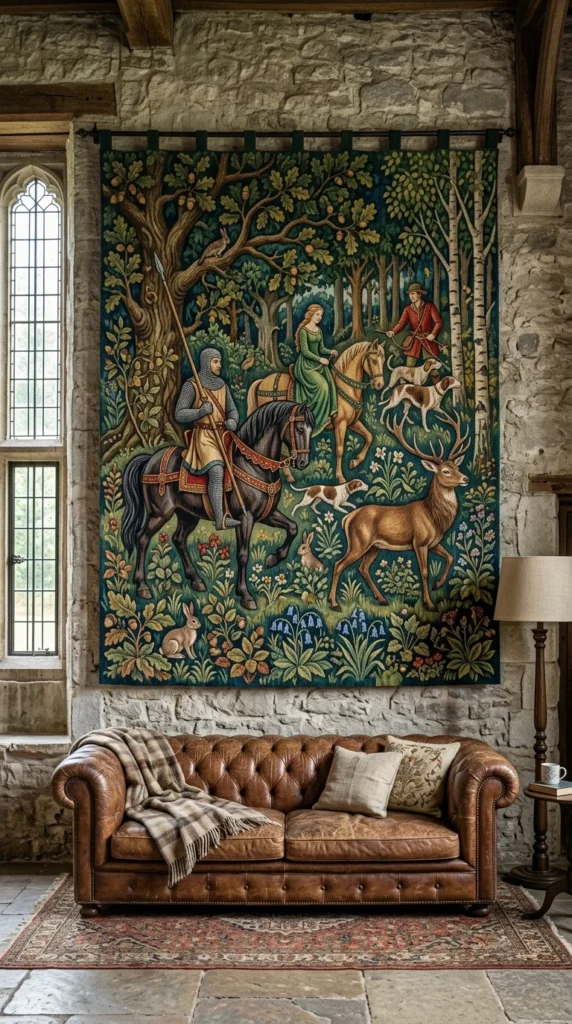
Before the advent of modern insulation, tapestries were used to keep manor houses warm. Today, they serve as a unique alternative to traditional framed art. A large-scale woven tapestry adds softness to a room, dampening sound and providing a rich, tactile focal point. Whether it’s a reproduction of a Renaissance forest scene or a 1970s macramé piece, wall textiles contribute to the layered, “collected” feel of a maximalist home.
15. Statement Screens
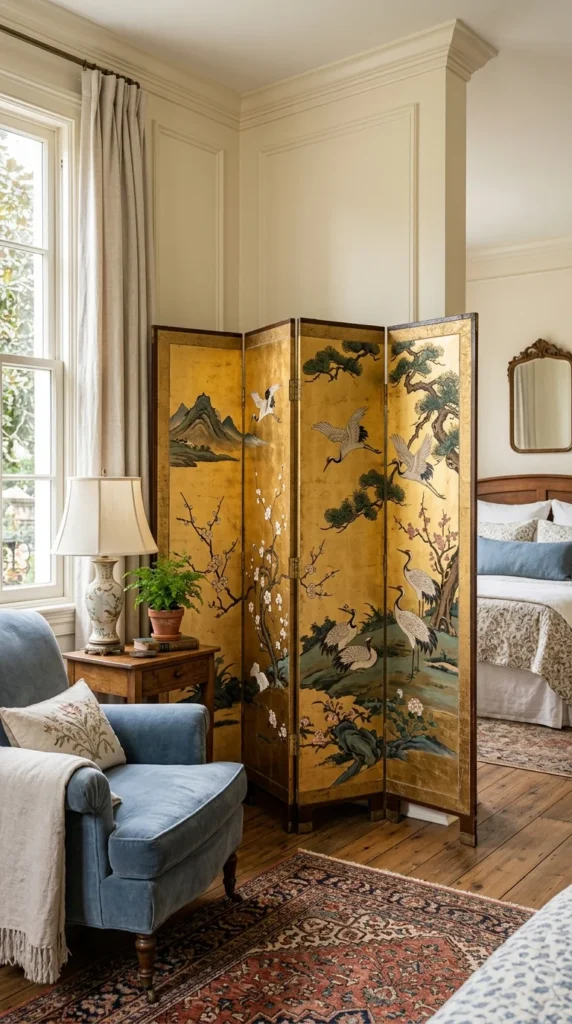
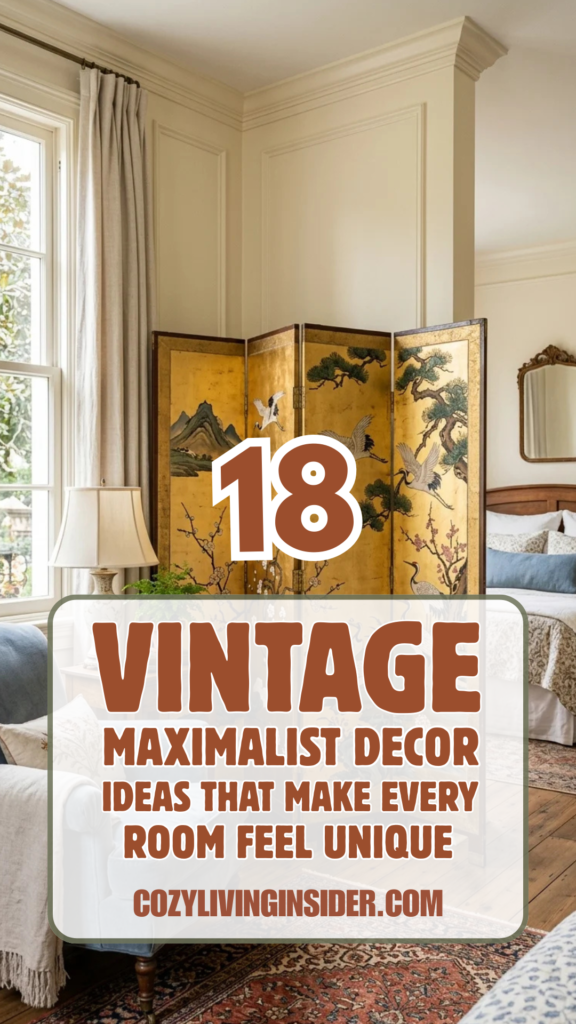
Folding screens or room dividers are versatile vintage pieces that add height and architectural interest. A lacquered Coromandel screen or a silk-paneled divider can act as a piece of art while also zoning a room. In a maximalist space, a screen can be tucked into a corner to add depth or placed behind a sofa to act as a pseudo-headboard or backdrop, providing an extra layer of pattern and texture.
16. Cloche Displays
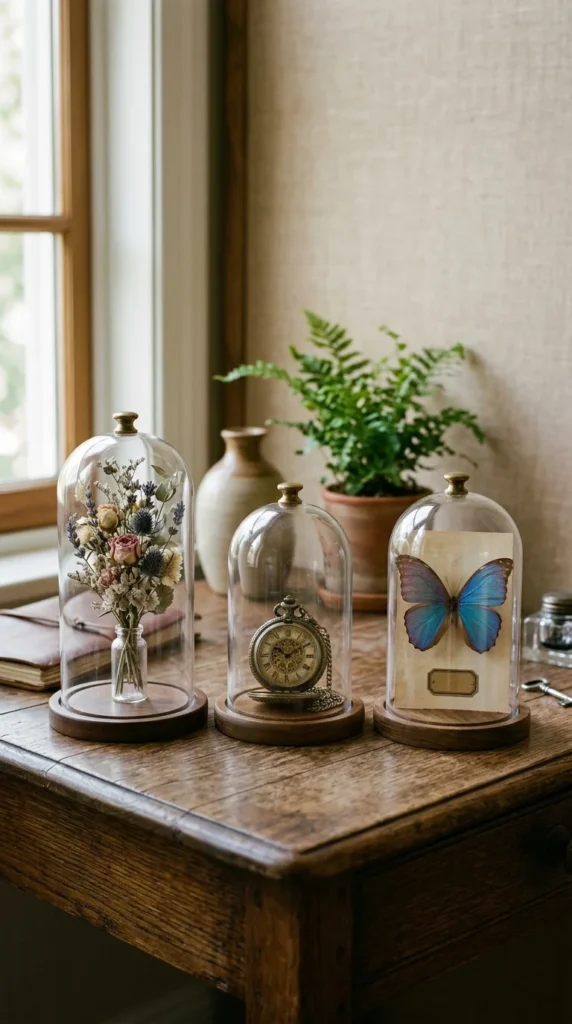
Maximalism is often about the “little things.” Using glass cloches (or bell jars) allows you to turn everyday vintage objects into museum-like displays. These glass domes protect delicate items while giving them a sense of importance. Displaying dried botanicals, antique shells, or vintage pocket watches under glass adds a Victorian “collector’s” vibe that is both charming and highly personal.
17. Skirted Furniture
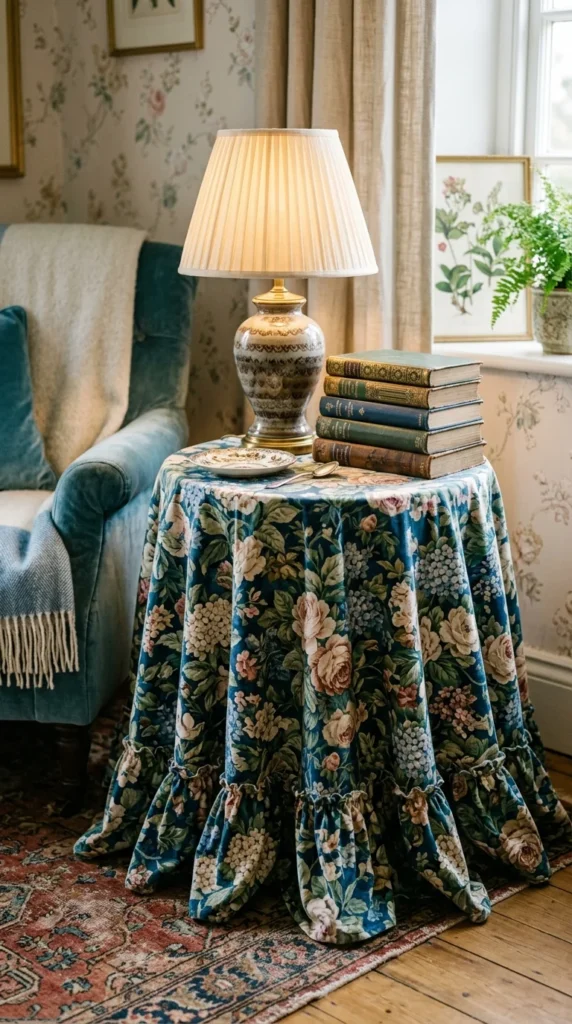
Skirted tables and chairs bring a sense of softness and traditional femininity to a room. A floor-length table cloth on a side table or a “skirted” armchair hides the legs of the furniture, creating a solid block of pattern or color. This technique is excellent for introducing more fabric into a room and can also be used to hide storage under tables, keeping the “maximalism” focused on decor rather than clutter.
18. Dark Academia
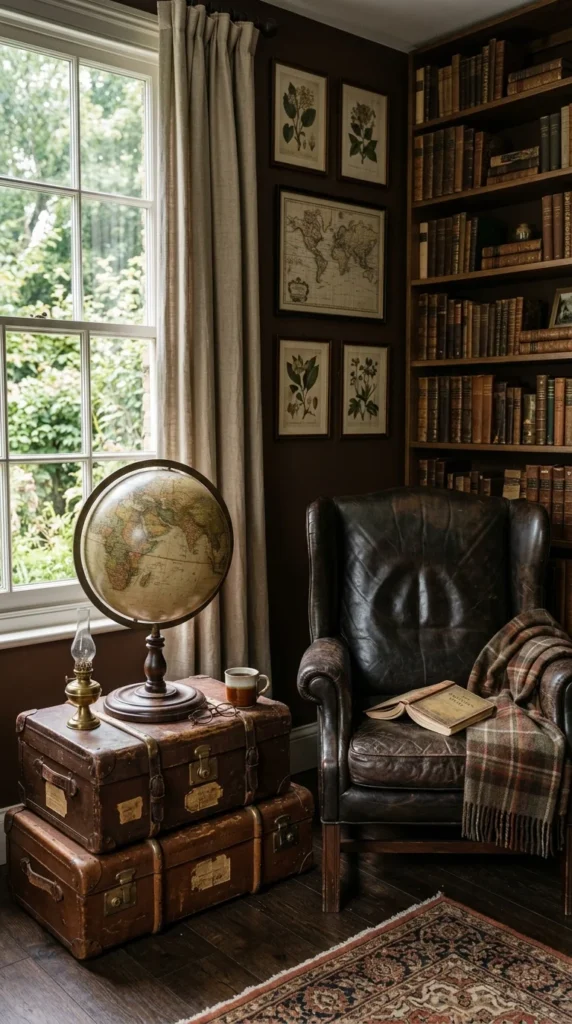
The “Dark Academia” aesthetic is a subset of vintage maximalism that focuses on the moody, scholarly side of decor. Think dark wood, leather-bound books, old maps, and anatomical sketches. By incorporating elements that feel like they belong in an old university library or a scientist’s study, you create a room that feels both cozy and intellectually stimulating. It’s about creating a space that feels like it has a secret to tell, which is the ultimate goal of any unique, maximalist home.