


The evolution of interior design has moved away from the clinical, cold minimalism of the early 2000s toward a more inviting philosophy known as “Warm Minimalism.” This aesthetic prioritizes the “less is more” mantra while infusing the space with organic textures, soft tones, and a sense of soul. In a bedroom, this balance is essential; you want a space that feels uncluttered for mental clarity, yet physically soft and luxurious for restorative sleep.
Here are 17 curated ideas to help you transform your bedroom into a warm, minimalist sanctuary.
1. Earthy Palettes
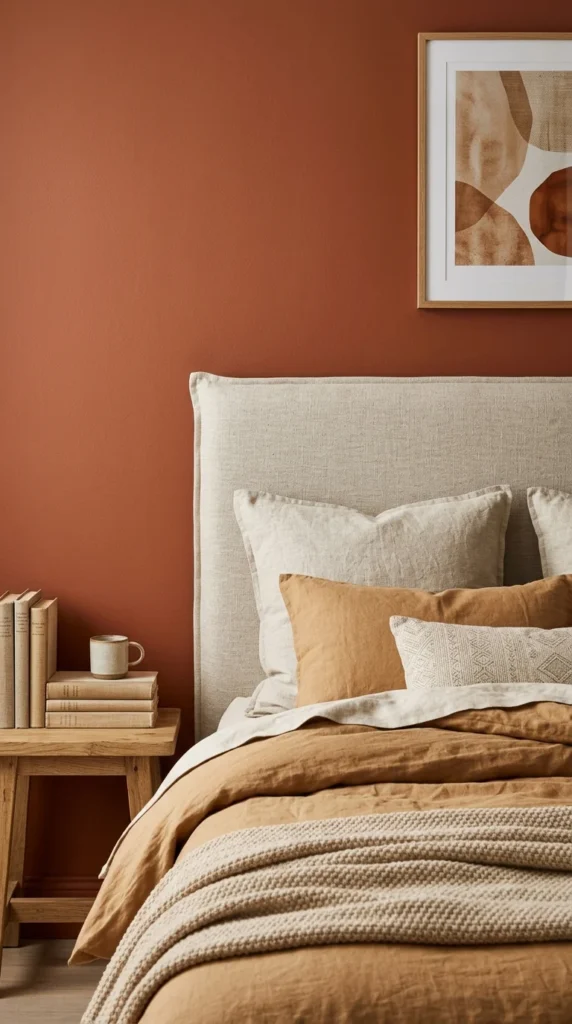
The foundation of warm minimalism lies in its color story. Instead of stark whites and cool greys, pivot toward a palette of “new neutrals.” Think shades of mushroom, sand, terracotta, and soft clay. These colors have yellow or red undertones that capture light differently throughout the day, creating a cocoon-like effect. By keeping the colors within the same tonal family, you maintain the minimalist requirement for visual cohesion while avoiding the sterile feel of a traditional white-box room.
2. Natural Wood
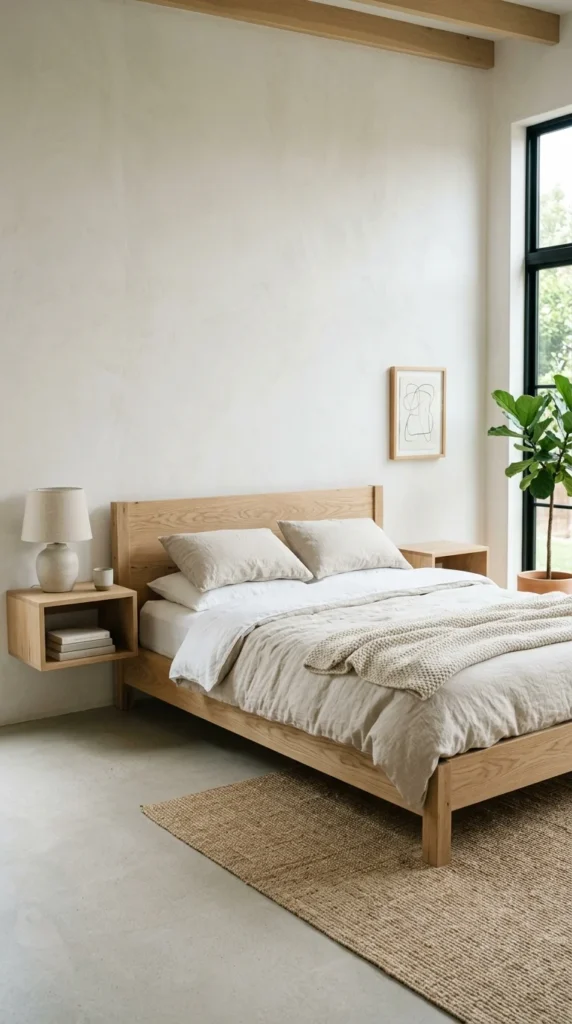
Wood is the ultimate bridge between minimalism and warmth. To achieve a luxurious look, opt for high-quality timbers like white oak, walnut, or ash. The key is in the finish—matte or oiled finishes look more sophisticated and modern than high-gloss varnishes. Use wood for large-scale pieces like the bed frame or a set of floating shelves to introduce a sense of “biophilia,” the human connection to nature, which inherently makes a space feel more grounded.
3. Tactile Textiles
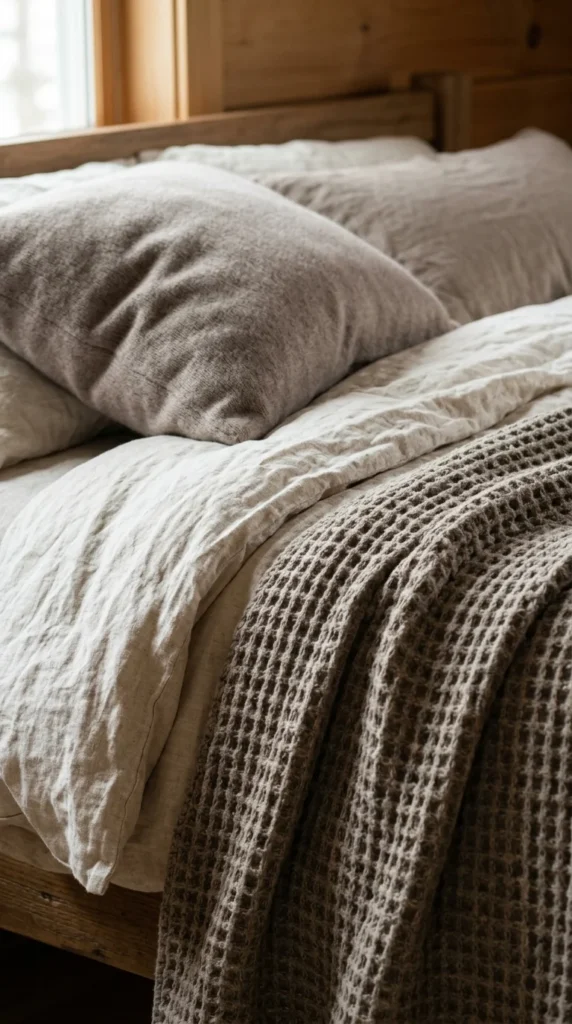
In a room with very little “clutter,” the quality of your fabrics becomes the focal point. Luxury is felt through the skin. Layering different textures in the same color prevents a minimalist bed from looking flat. Mix a stone-washed linen duvet with a chunky wool knit throw and velvet accent pillows. These layers provide the visual “weight” needed to make a large room feel cozy without requiring extra furniture or decor.
4. Curved Silhouettes
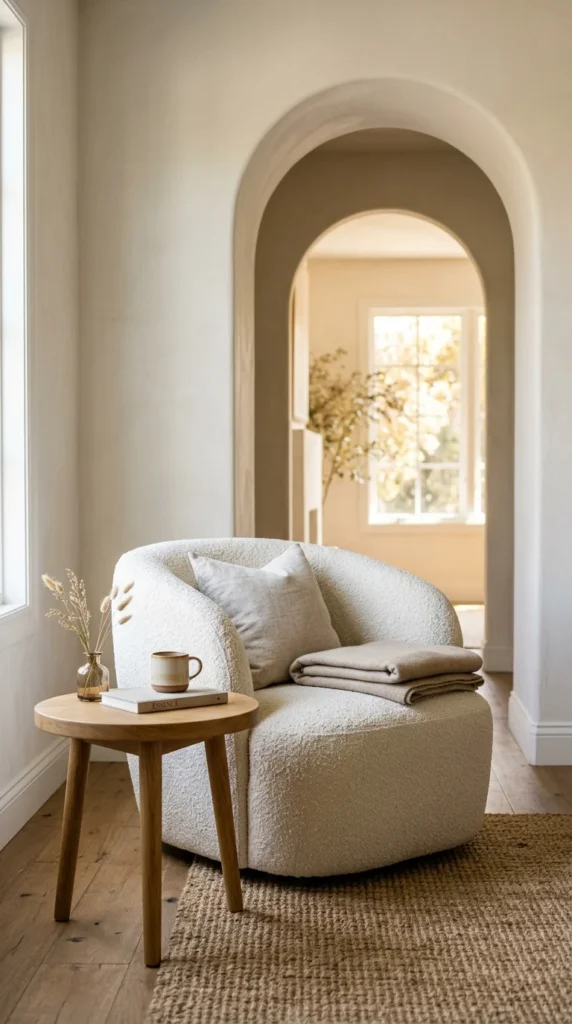
Strict minimalism often relies on sharp angles and straight lines, which can feel aggressive. Warm minimalism introduces softness through curves. Look for furniture with rounded edges—circular nightstands, an arched headboard, or a curved “marshmallow” style accent chair. These shapes mimic the organic forms found in nature, which the brain perceives as more relaxing and inviting.
5. Layered Lighting
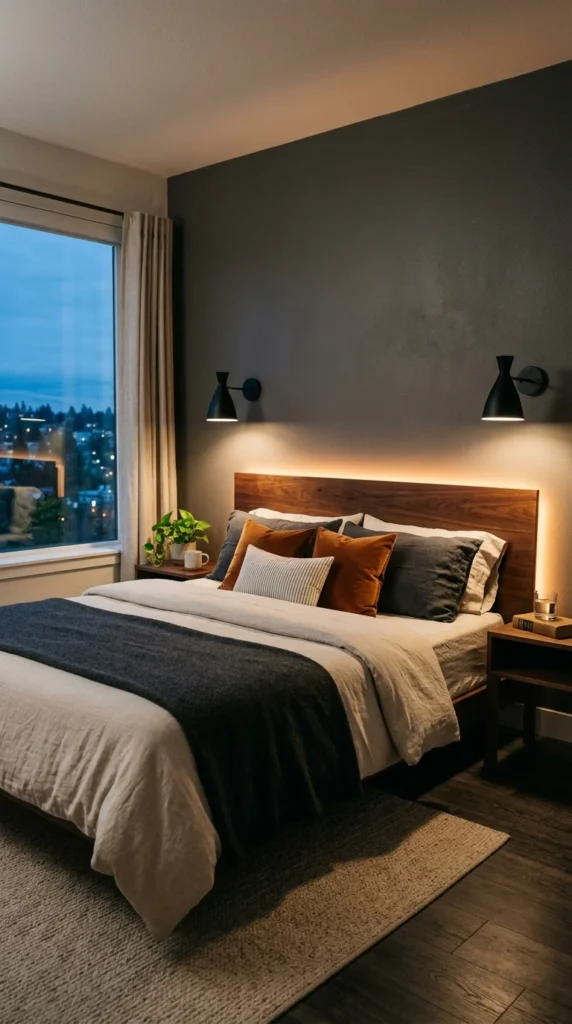
A single overhead light is the enemy of coziness. To create a luxurious atmosphere, treat your lighting like a landscape. Combine functional task lighting (like sleek reading lamps) with ambient lighting. Use warm-toned bulbs (2700K to 3000K) to mimic the glow of a sunset. Integration is key; hidden LED strips under a bed frame or behind a dresser can create a “halo” effect that feels incredibly high-end.
6. Statement Headboards
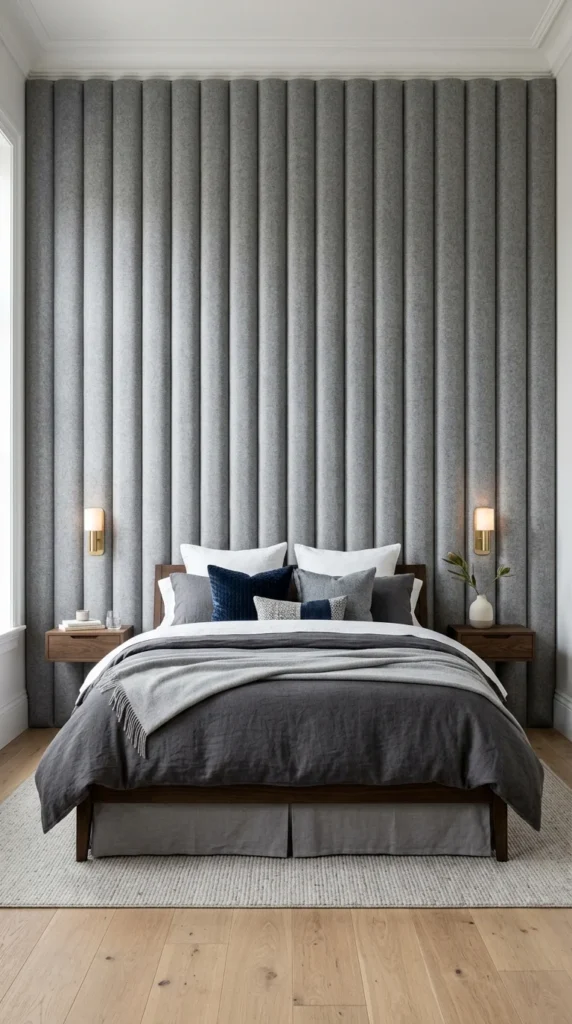
In a minimalist room, the bed is the protagonist. A statement headboard can serve as the primary “art piece” of the room. Oversized, floor-to-ceiling, or wall-to-wall upholstered headboards add acoustic dampening and a sense of grandeur. Choosing a fabric with a slight grain or weave, such as bouclé or tweed, adds a layer of sophistication that fills the visual space without adding physical clutter.
7. Large-Scale Art
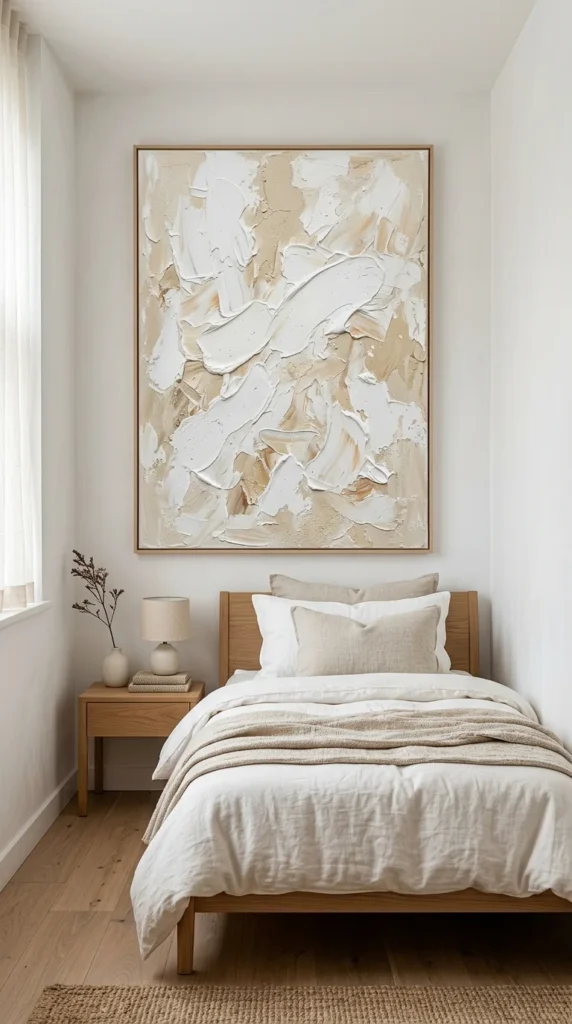
Instead of a gallery wall with many small frames, which can look busy, choose one singular piece of large-scale art. This creates a focal point and anchors the room. Look for abstract pieces that emphasize texture over detail—line drawings, plaster art, or textile hangings. The goal is to provide a place for the eye to rest, rather than a puzzle for it to solve.
8. Indoor Greenery
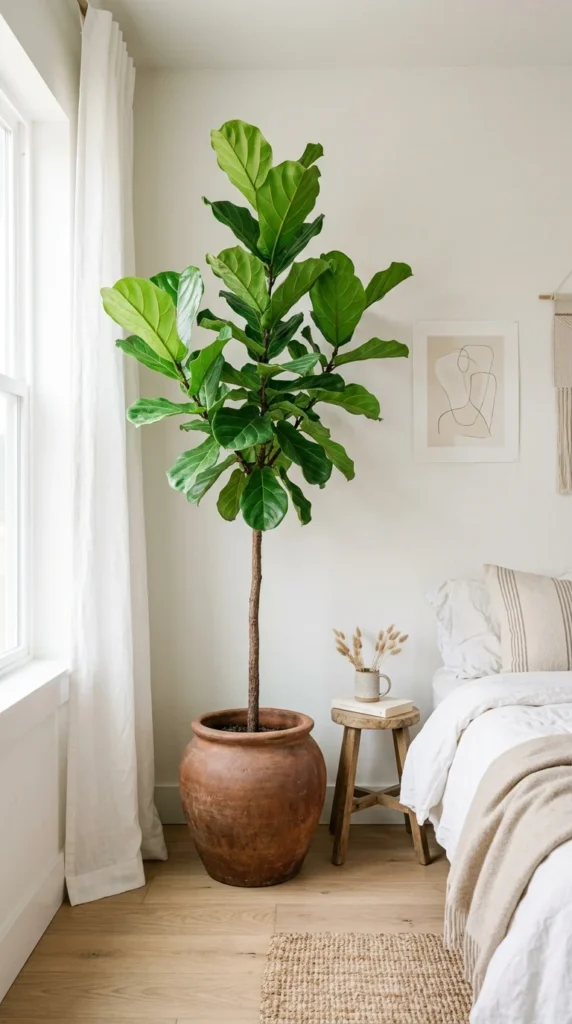
A touch of life is necessary to prevent a minimalist space from feeling stagnant. However, avoid a collection of small pots on every surface. Instead, choose one “hero” plant, such as a tall olive tree or a Fiddle Leaf Fig. Place it in a high-quality planter made of stone, concrete, or terracotta. The organic shape of the plant breaks up the architectural lines of the room and improves air quality.
9. Hidden Storage
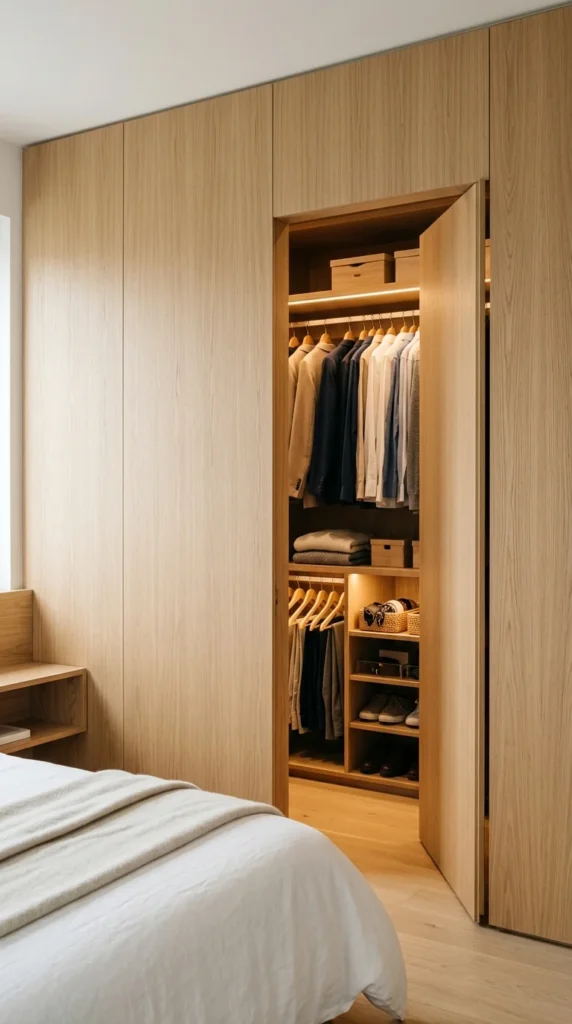
The secret to a successful minimalist bedroom is having a place for everything. Luxury is often found in what you don’t see. Bespoke, floor-to-ceiling cabinetry that blends into the walls allows you to hide clothes, electronics, and daily clutter. When the surfaces are clear, the mind can relax, and the architectural beauty of the room can shine.
10. Woven Accents
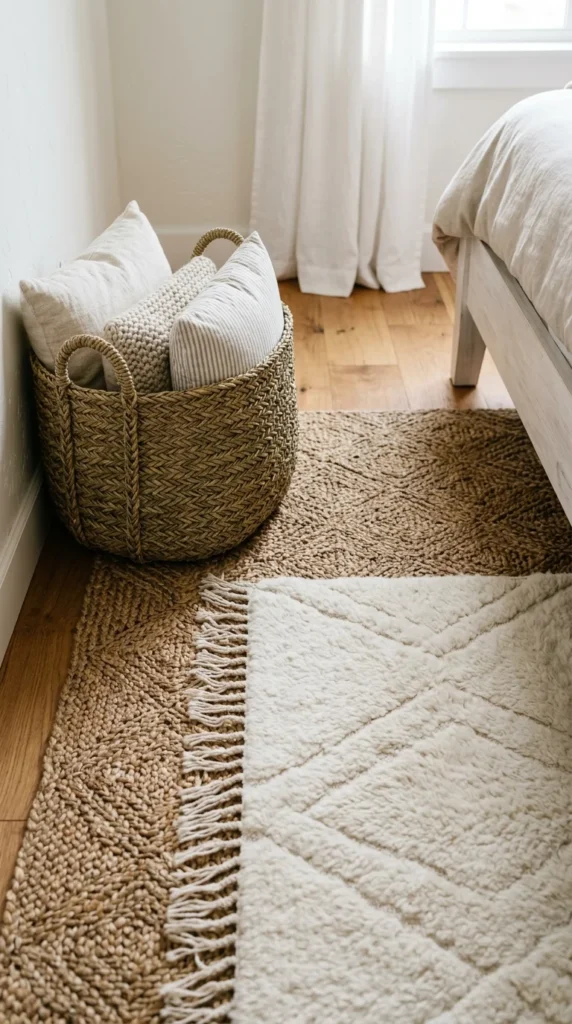
Woven materials like jute, rattan, and seagrass add an artisanal, handcrafted feel to a bedroom. These materials introduce a slight “roughness” that contrasts beautifully against smooth bed sheets or polished floors. A woven bench at the foot of the bed or a set of baskets for storage provides a tactile warmth that is essential for the “cozy” aspect of this design style.
11. Limewash Walls
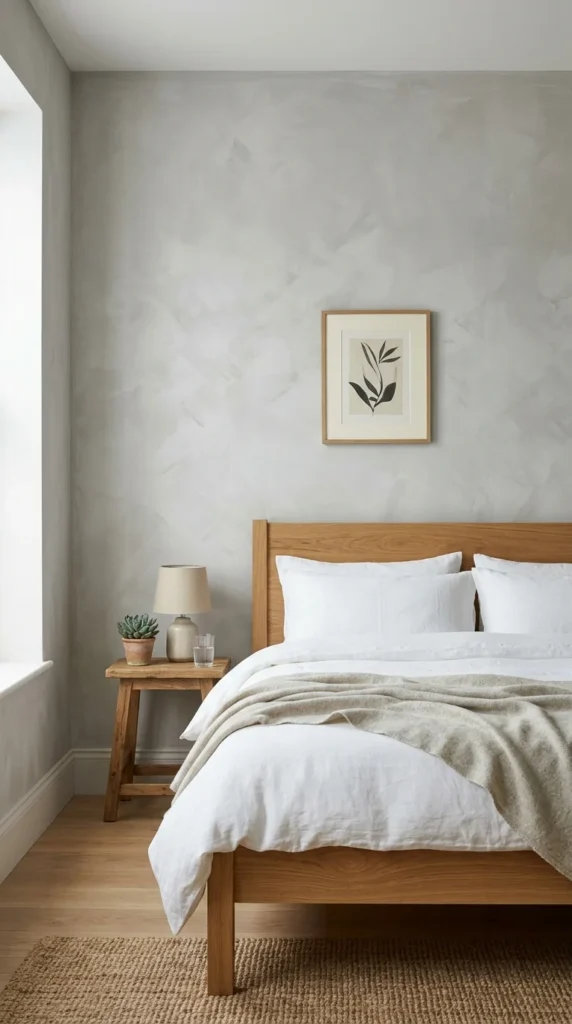
Flat paint can sometimes feel two-dimensional and cold. Limewash or Roman clay finishes add depth and movement to the walls without the need for wallpaper. These finishes create a soft, mottled effect that catches the light beautifully, giving the room a timeless, Old-World Mediterranean feel that remains strictly minimalist.
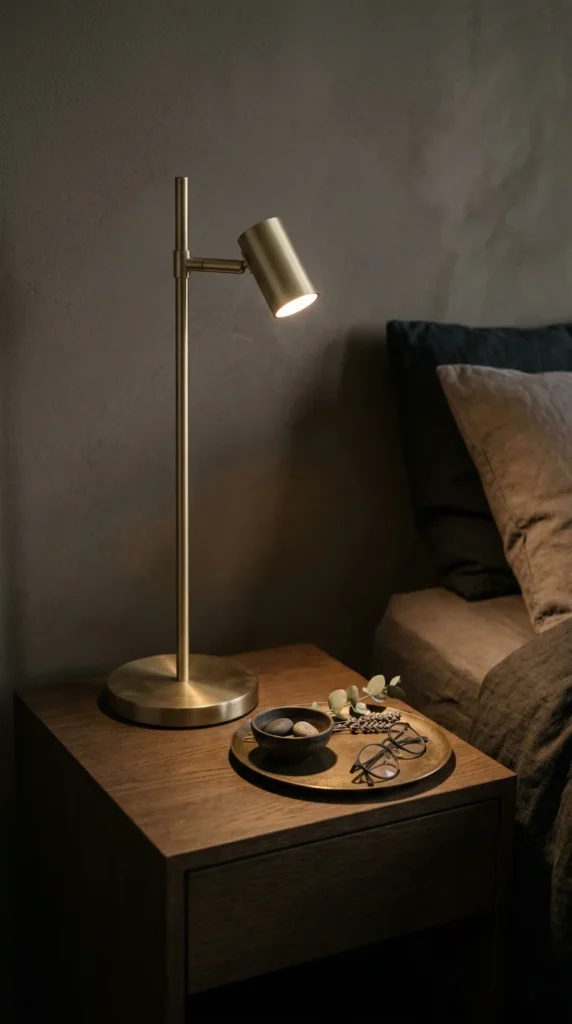
12. Metallic Details
Window treatments are often an afterthought, but in warm minimalism, they are vital for softening the hard lines of a room. Floor-to-ceiling drapes in a heavy linen or a light wool blend add vertical height and a sense of drama. Choose a color that matches your walls for a seamless, “color-drenched” look that makes the room feel expansive yet enclosed.
13. Floor-to-Ceiling Drapes
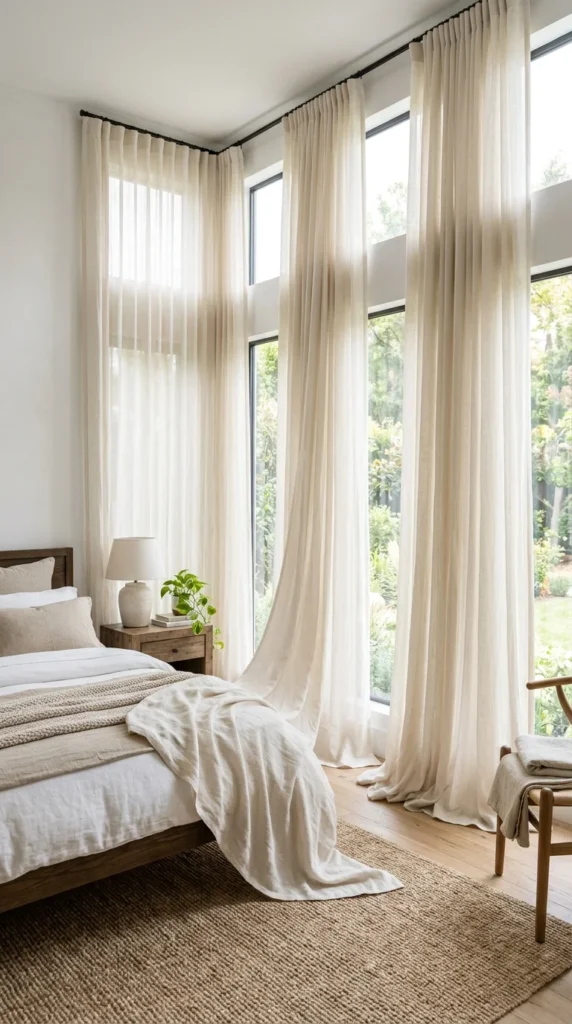
Window treatments are often an afterthought, but in warm minimalism, they are vital for softening the hard lines of a room. Floor-to-ceiling drapes in a heavy linen or a light wool blend add vertical height and a sense of drama. Choose a color that matches your walls for a seamless, “color-drenched” look that makes the room feel expansive yet enclosed.
14. Low-Profile Furniture
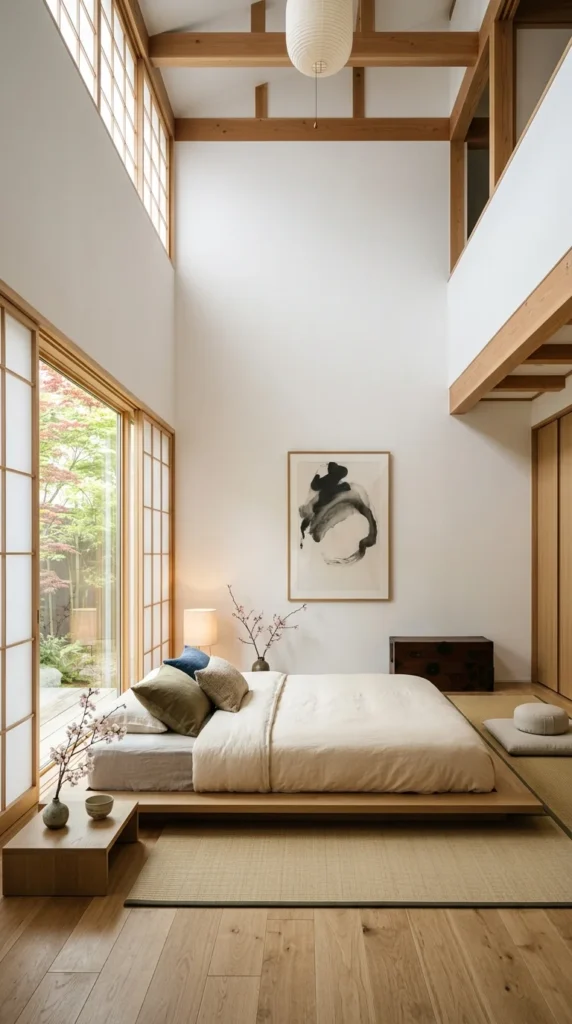
Low-profile furniture creates a grounded, Zen-like atmosphere. When the bed and seating are closer to the floor, it creates more “white space” above, which makes the ceilings feel higher and the room feel more breathable. This approach is common in Japandi design, which blends Japanese minimalism with Scandinavian comfort.
15. Sensory Rugs
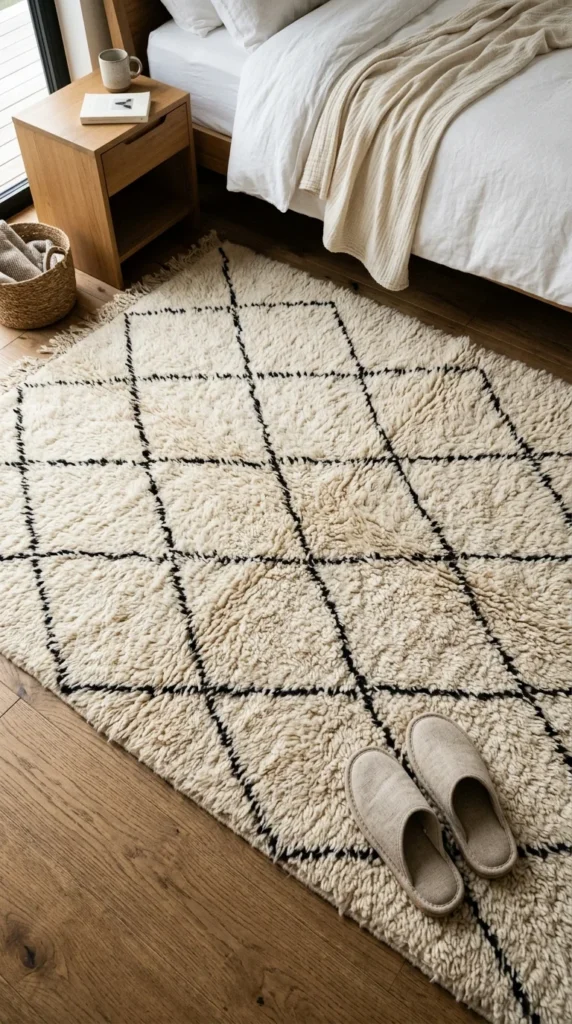
In a minimalist room, the floor is a large surface area that shouldn’t be ignored. A high-quality, plush rug is an investment in comfort. Choose a high-pile wool rug or a hand-knotted silk blend. The feeling of a soft rug underfoot the moment you step out of bed is a daily luxury that reinforces the “warmth” of the design.
16. Scented Ambiance
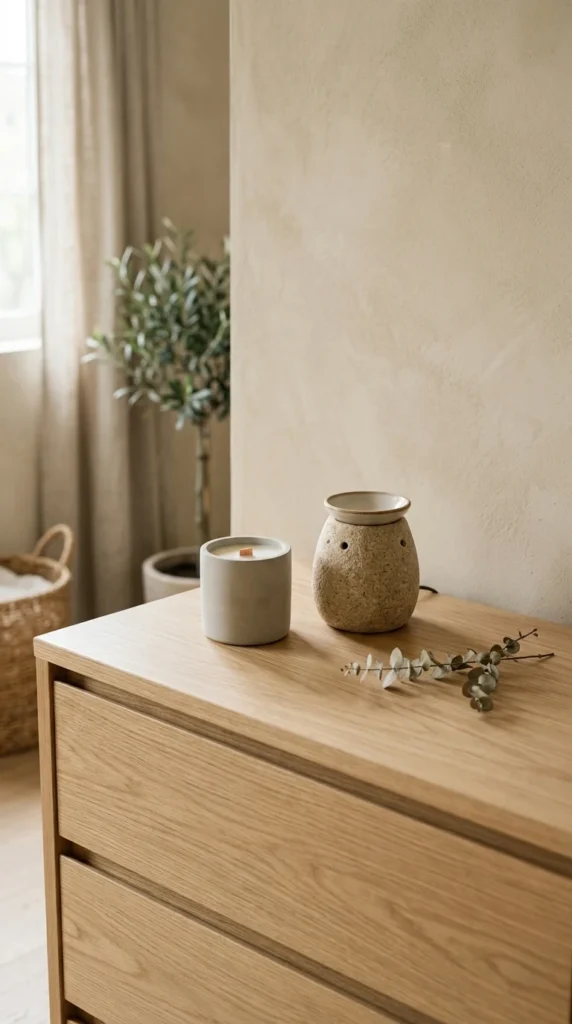
Minimalism is not just a visual experience; it’s a sensory one. A luxurious bedroom should have a “signature scent.” Choose sophisticated, earthy fragrances like sandalwood, amber, cedar, or vetiver. Using a minimalist stone diffuser or a heavy glass candle adds a decorative element while ensuring the room always feels curated and fresh.
17. Negative Space
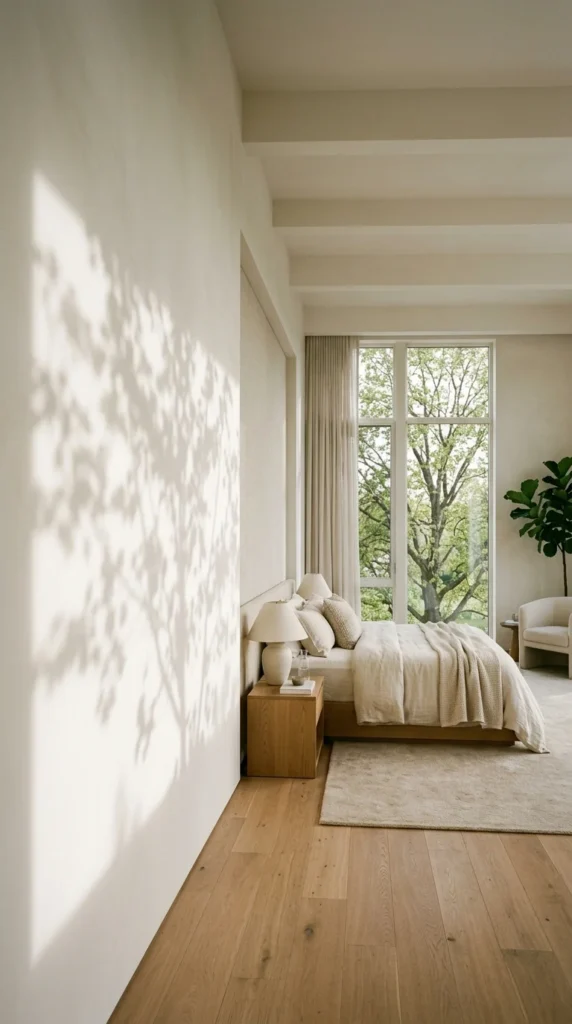
The most important “item” in a minimalist bedroom is the space you leave empty. Negative space allows the other elements to breathe. Don’t feel the need to fill every corner with a chair or a plant. An empty corner or a bare wall isn’t a “gap” to be fixed; it is a design choice that promotes a sense of luxury, peace, and intentionality.