
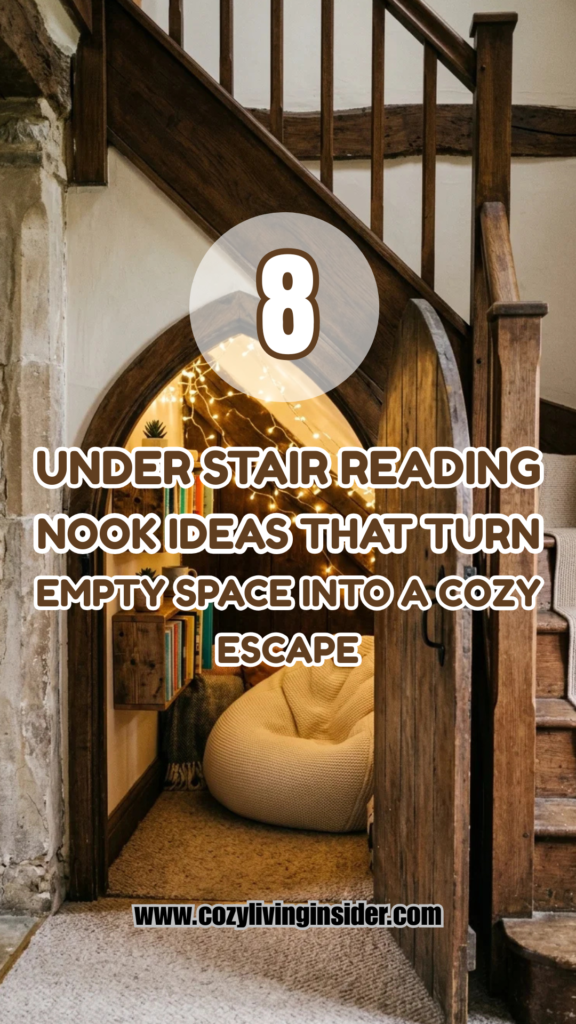

The space beneath a staircase, often referred to in architectural terms as a “spandrel,” is one of the most frequently underutilized areas in a home. Frequently relegated to a cluttered coat closet or left entirely hollow behind drywall, this unique triangular footprint possesses immense potential for transformation. For bibliophiles and interior design enthusiasts alike, there is no better use for this architectural quirk than the creation of a dedicated reading nook.
A well-executed under-stair retreat does more than just add square footage; it provides a sanctuary. In an era of open-concept living where privacy can be hard to find, these “liminal spaces” offer a sense of enclosure and “prospect-refuge”—a psychological concept where humans feel most relaxed when they have a clear view of their surroundings while being tucked away in a protected spot.
Whether you are working with a grand foyer staircase or a narrow set of steps in a modest cottage, here are eight sophisticated ideas to turn that empty void into your favorite room in the house.
1. Classic Built-ins
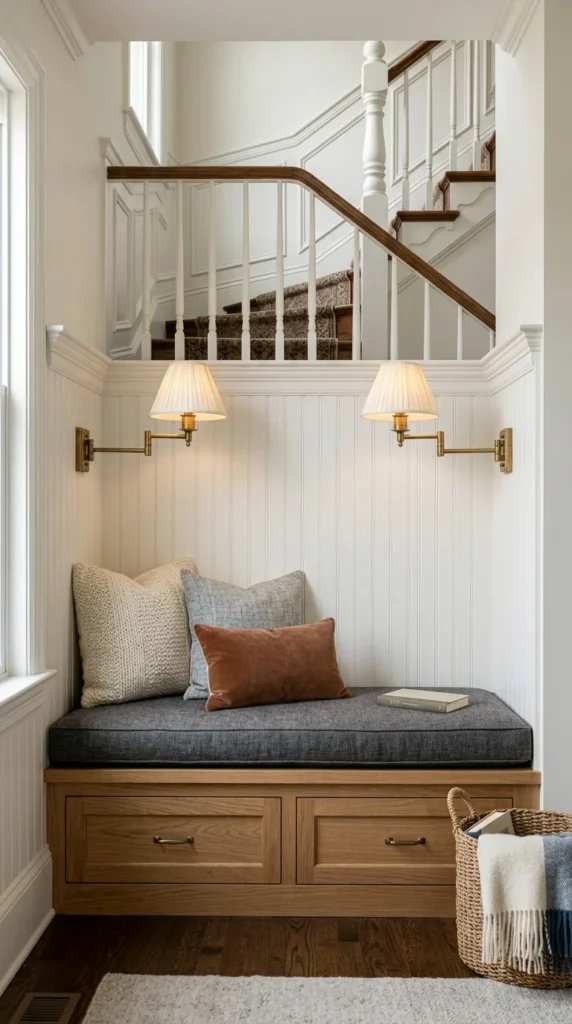
The gold standard of under-stair design is the custom built-in bench. This approach utilizes every available inch by tailoring the cabinetry to the specific angle of the stairs. By installing a deep bench—ideally at least 24 to 30 inches deep—you create a surface that is wide enough for lounging comfortably with a book.
To achieve a professional look, match the trim and molding of the bench to the existing woodwork of your staircase. This creates a seamless transition that makes the nook look like an original part of the home’s architecture. Storage can be integrated beneath the seat in the form of deep drawers or “cubbies,” providing a discreet place to tuck away extra blankets or pillows when they are not in use.
2. Minimalist Floor
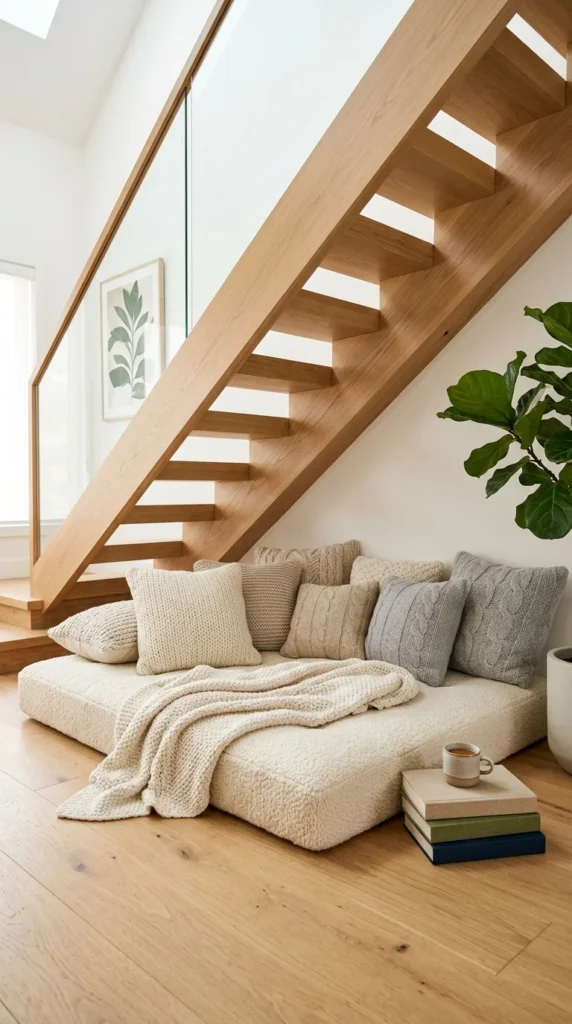
Not every reading nook requires complex carpentry. For homes with a more modern or Scandinavian aesthetic, a minimalist floor-based approach can be incredibly effective. This design relies on low-profile comfort, utilizing a high-quality floor mattress or a “tufted French mattress” placed directly on the floor.
This style is particularly effective under stairs with open treads, where light can filter down from above. By keeping the seating low, you maximize the vertical head clearance, making the space feel larger and less claustrophobic. Enhance the area with a low-profile side table and a high-quality rug to define the zone without the need for structural changes.
3. Library Shelving
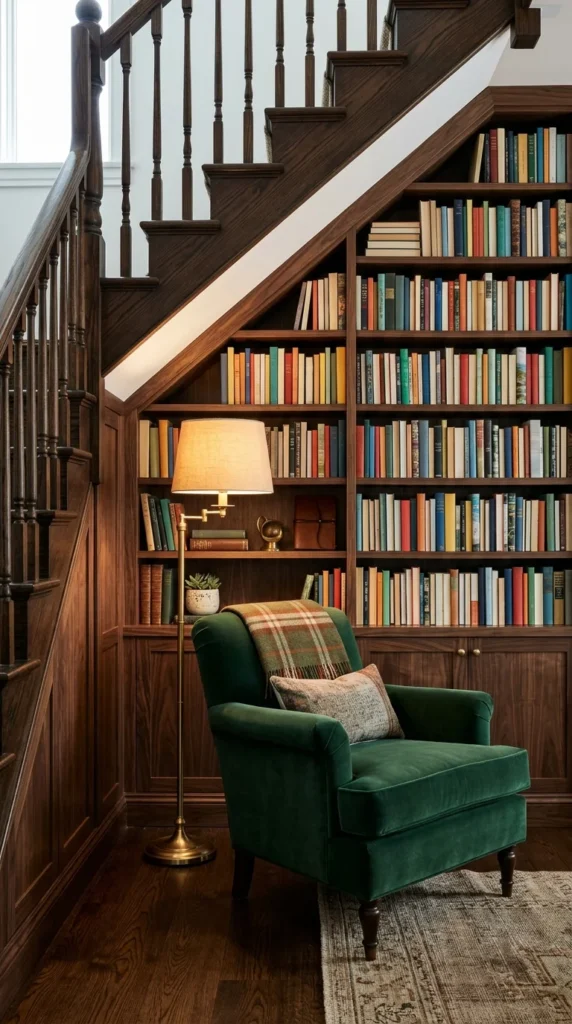
If your primary goal is to display a growing collection of literature, prioritize vertical shelving. By lining the back wall of the under-stair cavity with custom-fitted shelves, you create a visual “wall of books” that acts as a stunning backdrop for a small armchair or chaise longue.
When designing library shelving for this space, consider varying the shelf heights. Taller shelves at the bottom can accommodate heavy art books or magazines, while narrower shelves at the top (where the staircase angle descends) are perfect for mass-market paperbacks. Integrating “puck lighting” or LED strips into the underside of the shelves can illuminate the titles and add a warm, inviting glow to the entire room.
4. Hidden Retreat
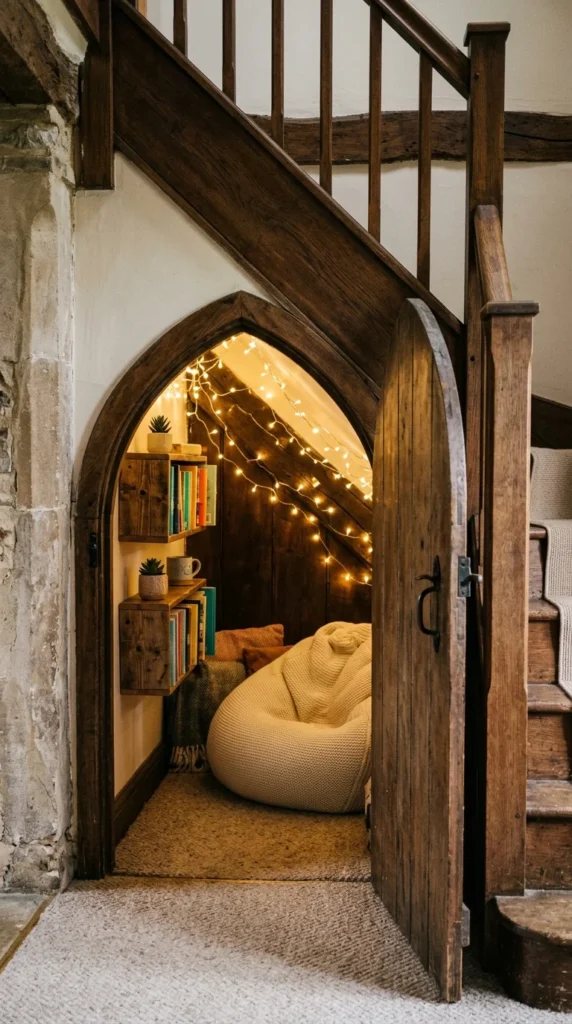
For those who crave absolute solitude, the “hidden retreat” concept involves enclosing the space. Rather than leaving the nook open to the hallway or living room, this design uses a small door, a sliding barn door, or even a heavy velvet curtain to create a secret room.
This is a particularly popular choice for families with children, as it creates a magical “secret passage” vibe, but it is equally functional for adults seeking a sound-dampened environment for deep concentration. Inside, the walls can be upholstered in fabric or wallpapered in bold patterns that might feel overwhelming in a larger room, turning the tiny space into a jewel-box of design.
5. Modern Industrial
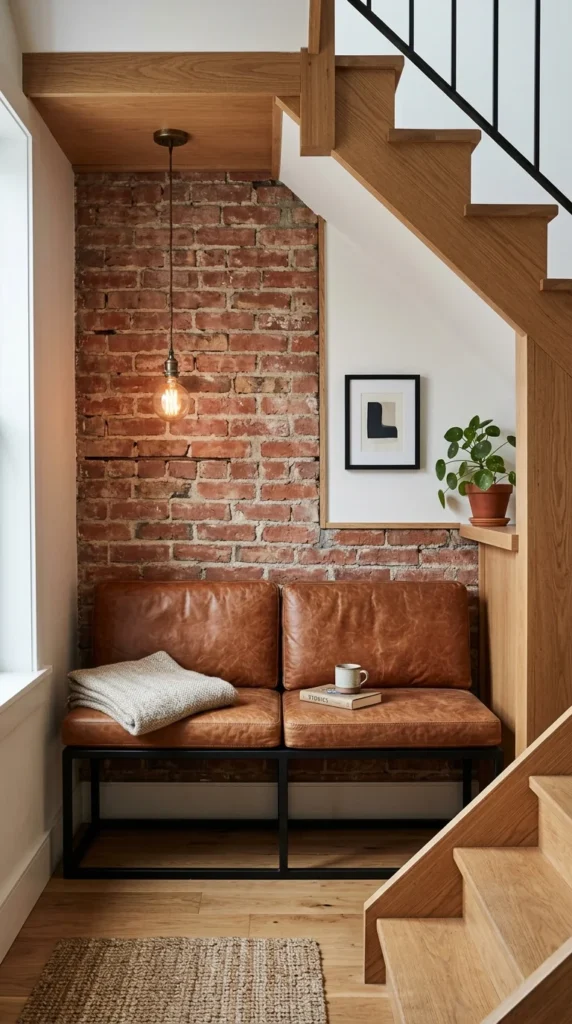
Industrial design thrives on the honest expression of materials, making the under-stair area—often where structural elements like steel beams or raw wood are visible—a perfect candidate for this style. Use a palette of matte black metal, reclaimed wood, and leather to create a reading nook that feels edgy and sophisticated.
Instead of a traditional built-in, consider a floating bench made from a thick slab of live-edge timber supported by heavy-duty steel brackets. This maintains an “airy” feel while providing a sturdy place to sit. Accent the space with a swing-arm lamp in a blackened finish and perhaps a piece of abstract metal art to complete the look.
6. Bohemian Style
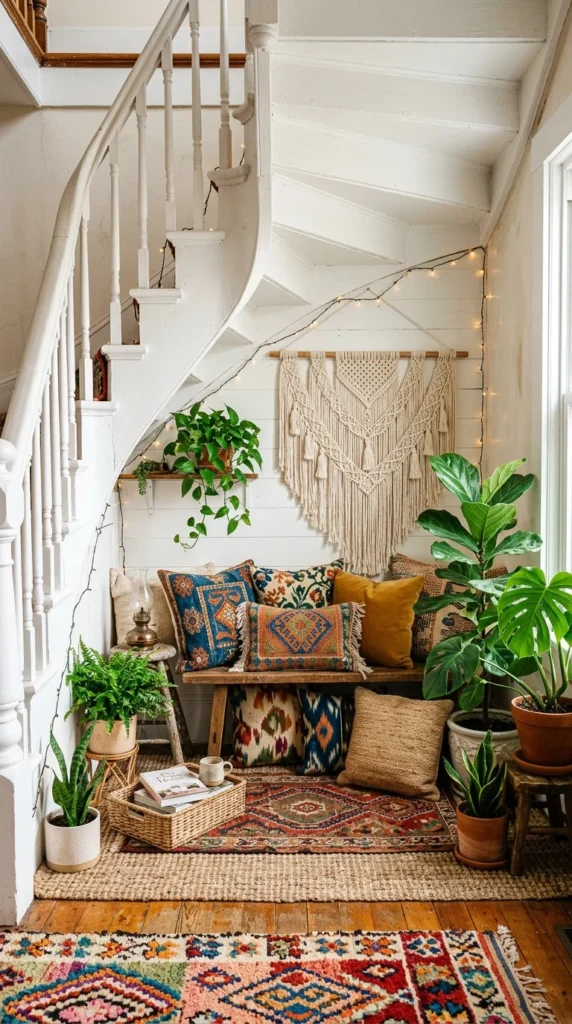
The Bohemian (Boho) approach to an under-stair nook is all about texture, warmth, and “maximalist comfort.” This style is forgiving of awkward angles and can be assembled using an eclectic mix of furniture and textiles.
A rattan chair or a low-slung papasan chair fits beautifully into the curved or angled corners of a staircase. To master this look, layer different materials: a sheepskin rug over a jute base, embroidered silk pillows next to chunky wool throws, and plenty of greenery. Since under-stair areas can sometimes be dim, choose “low-light” indoor plants like Pothos or Snake Plants to bring life to the corner.
7. High-Tech Hub
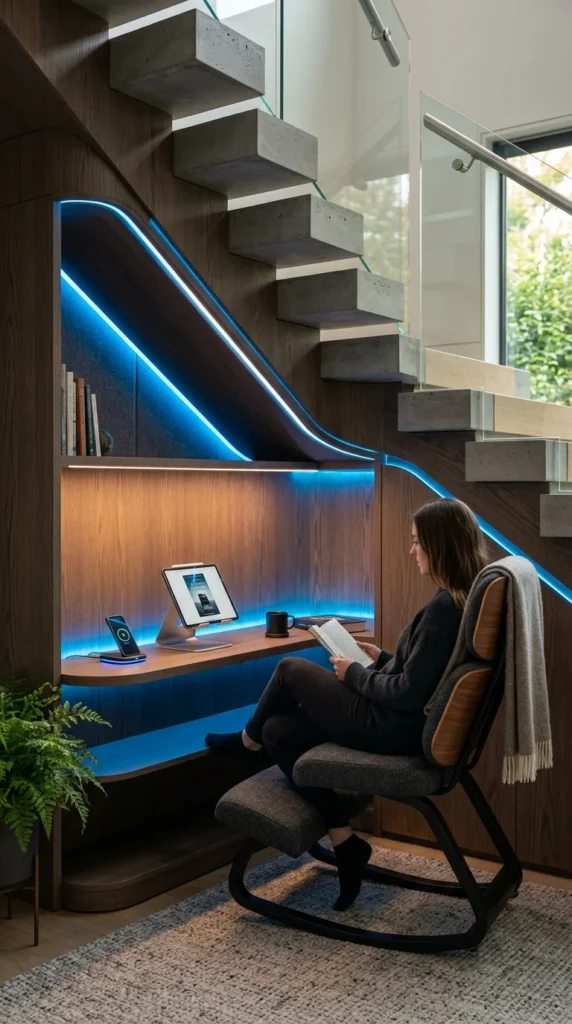
A reading nook doesn’t have to be strictly analog. In the age of e-readers and audiobooks, a “High-Tech Hub” incorporates modern convenience into the cozy escape. This design features integrated technology such as built-in USB charging ports, a recessed tablet mount, and smart lighting that can be adjusted from a phone to match the “color temperature” of the time of day.
Soundproofing is a key element here. By lining the interior walls with acoustic panels—which now come in beautiful geometric designs—you can create a silent pod perfect for listening to immersive audiobooks or podcasts without being disturbed by the rest of the household.
8. Scandinavian Hygge
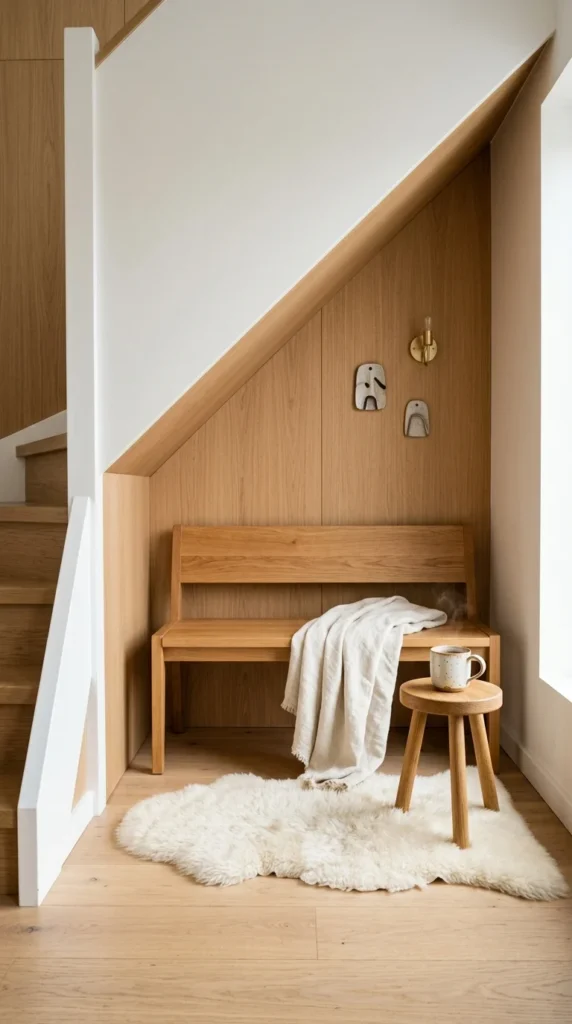
The Danish concept of Hygge (pronounced hoo-gah) focuses on a quality of coziness and comfortable conviviality that engenders a feeling of contentment. To bring this to your under-stair space, keep the color palette neutral—think soft whites, warm greys, and light woods.
Focus on the “sensory” experience of the space. Use dimmable, warm-toned lighting to mimic the flicker of a candle. Incorporate high-quality natural fibers like linen and wool. The goal is a clutter-free environment that allows the mind to rest, making it the ultimate destination for a quiet afternoon of reading with a hot cup of tea.
Key Considerations for Your Under-Stair Nook
Before you begin your renovation, consider these practical elements to ensure the space is as functional as it is beautiful:
- Lighting: This is the most critical factor. Since these spaces are often dark, you will need a combination of “ambient” lighting (to fill the space) and “task” lighting (specifically for reading). Always opt for warm-spectrum bulbs (2700K to 3000K) to maintain a cozy atmosphere.
- Ergonomics: Ensure the ceiling height is sufficient for your intended use. If the angle is very low, it may be better suited for a “laying down” nook rather than one with a chair.
- Ventilation: If you choose to enclose the space with a door, ensure there is adequate airflow to prevent the nook from becoming stuffy or overheated.
- Electrical Access: If you plan on including lamps or charging ports, check if there is an existing electrical circuit behind the wall. It is much easier to run wiring before the finish work is completed.
By viewing the space under your stairs not as a challenge, but as an opportunity, you can create a unique architectural feature that adds both value and joy to your home.


