
In the era of urban densification and the rise of the “tiny house” movement, the challenge of maintaining an organized, clutter-free home has never been more prevalent. When square footage is at a premium, traditional storage solutions—like bulky wardrobes and oversized bookshelves—often consume more space than they save. The secret to successful small-space living lies not in having less, but in hiding more.
By identifying underutilized “dead zones” within a floor plan, homeowners can reclaim valuable real estate. The following seven hidden storage strategies are designed to maximize every cubic inch of your home, blending functionality with high-end interior design.
1. Under-Bed Storage
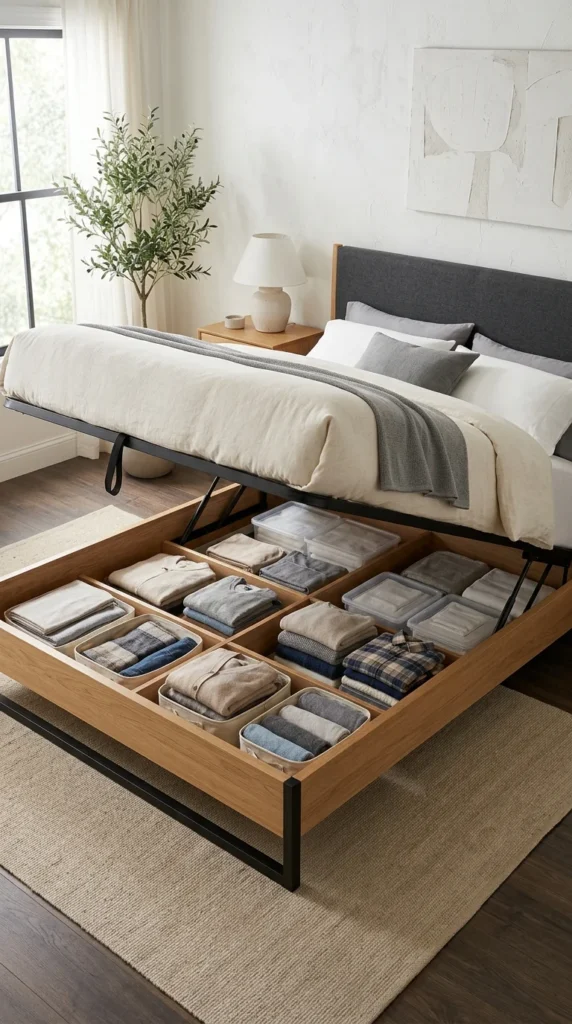
The footprint of a queen-sized bed occupies approximately 33 square feet of floor space. In a small bedroom, this is often the single largest piece of furniture, making the area beneath it the most valuable storage real estate in the house. While plastic bins are a common solution, they are often unsightly and difficult to access.
To truly maximize this space, consider a hydraulic lift bed or integrated deep-set drawers. Hydraulic systems allow the entire mattress platform to rise effortlessly, providing a “trunk-like” storage area perfect for bulky items such as winter coats, extra bedding, or sports equipment. For a more accessible daily solution, custom cabinetry drawers built into the bed frame can house shoes or linens, ensuring that everything has a designated place without requiring additional furniture.
2. Staircase Drawers
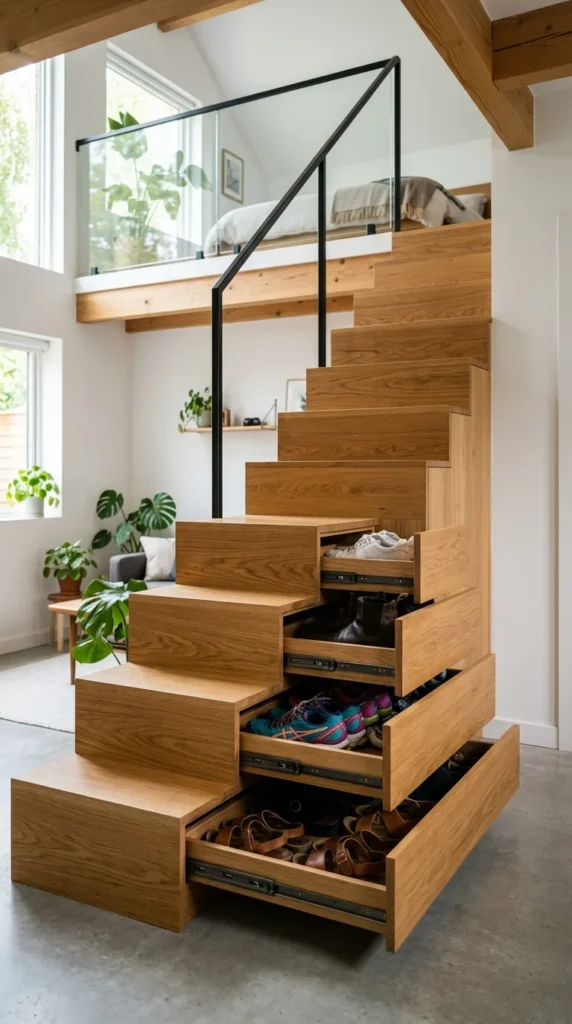
In multi-level small homes or lofts, the triangular void beneath the staircase is frequently walled off and wasted. Professional designers are increasingly turning these architectural features into “stair-drawers.” Each riser or the side profile of the staircase can be converted into a pull-out unit.
This strategy is particularly effective in entryways. By converting the bottom three steps into drawers, you create a hidden mudroom that stores shoes, umbrellas, and pet leashes. Because the storage is integrated into the structure of the house, it maintains a clean, architectural aesthetic while eliminating the need for a cluttered coat rack or shoe bench.
3. Toe-Kick Drawers
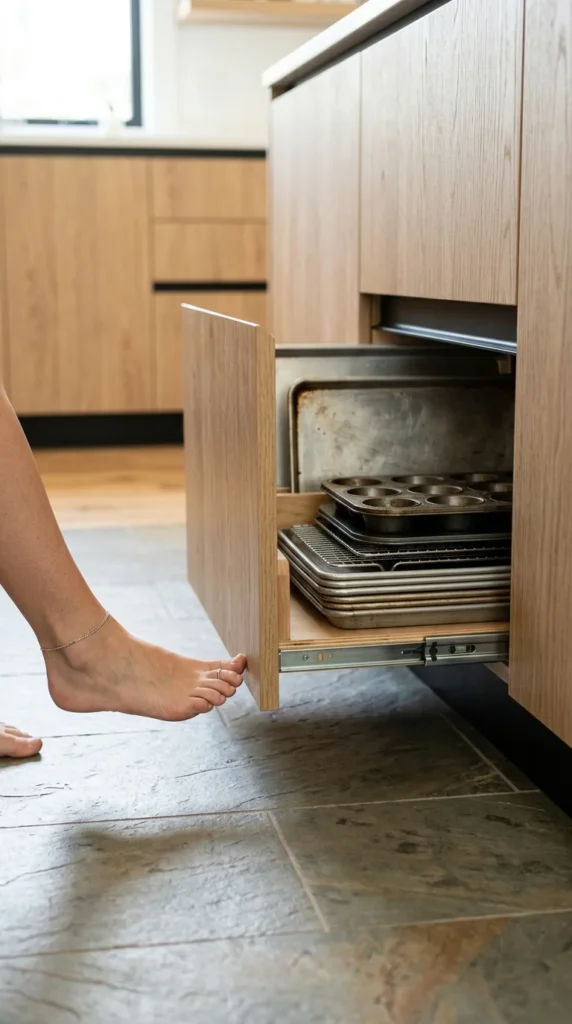
The “toe-kick” is the recessed space between the bottom of your kitchen cabinets and the floor. Usually four inches high, this area is almost always hollow and serves no functional purpose. Installing toe-kick drawers is one of the most sophisticated ways to utilize “found” space in a kitchen.
These shallow drawers are the perfect dimensions for flat items that are difficult to stack in traditional cabinets. Think baking sheets, cooling racks, serving platters, or even a hidden step stool for reaching higher shelves. Equipped with “push-to-open” hardware, these drawers can be operated with a gentle tap of the foot, keeping the kitchen profile sleek and hardware-free.
4. Secret Shelves
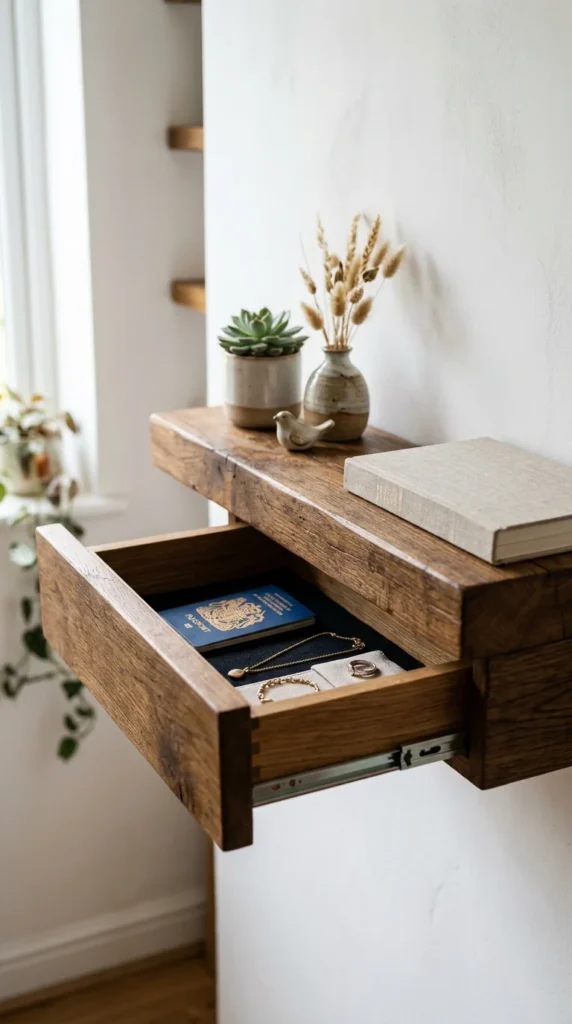
Floating shelves are a staple of minimalist design, but they can also serve as high-security hidden vaults. “Mantle-style” floating shelves are built with a hollow core and a sliding or hinged bottom panel.
This hidden storage idea is ideal for items you want to keep accessible but out of sight, such as jewelry, passports, or emergency cash. Because the shelf appears to be a solid piece of timber or marble, it does not draw the eye as a storage unit, allowing your wall decor to remain the focal point while providing a “secret” utility that maximizes the vertical plane of your walls.
5. Fold-Down Desks
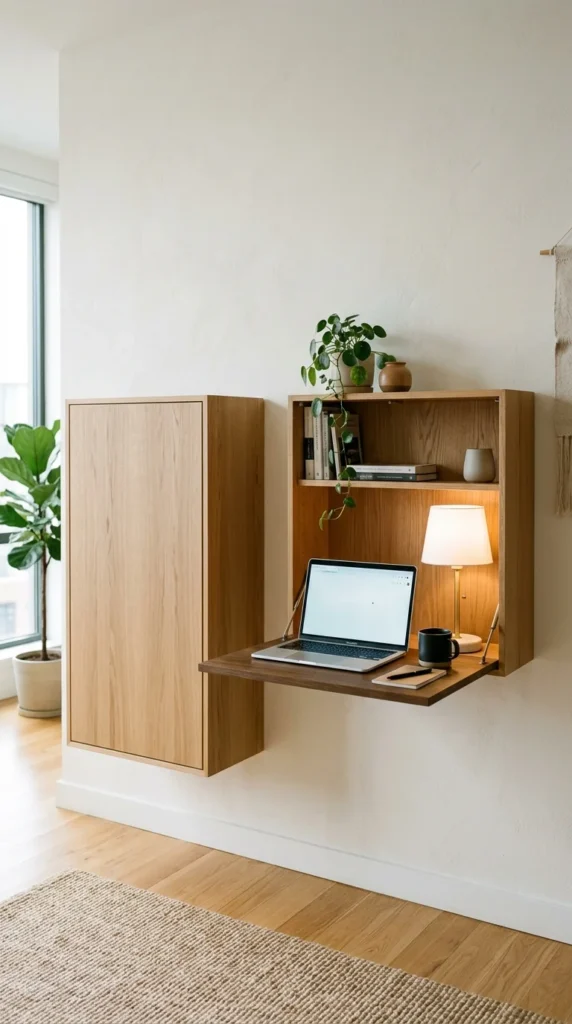
As remote work becomes the norm, finding space for a home office in a small apartment can be a significant hurdle. A wall-mounted drop-leaf table or “murphy desk” provides a full workspace that completely disappears when the workday ends.
When closed, these units look like thin wall cabinets or even pieces of art. When lowered, the door becomes the desktop, revealing organized cubbies for stationery, chargers, and documents. This prevents the “visual clutter” of a permanent desk from dominating a living room or bedroom, effectively allowing one room to serve two distinct purposes without compromising on style or floor space.
6. Recessed Niches
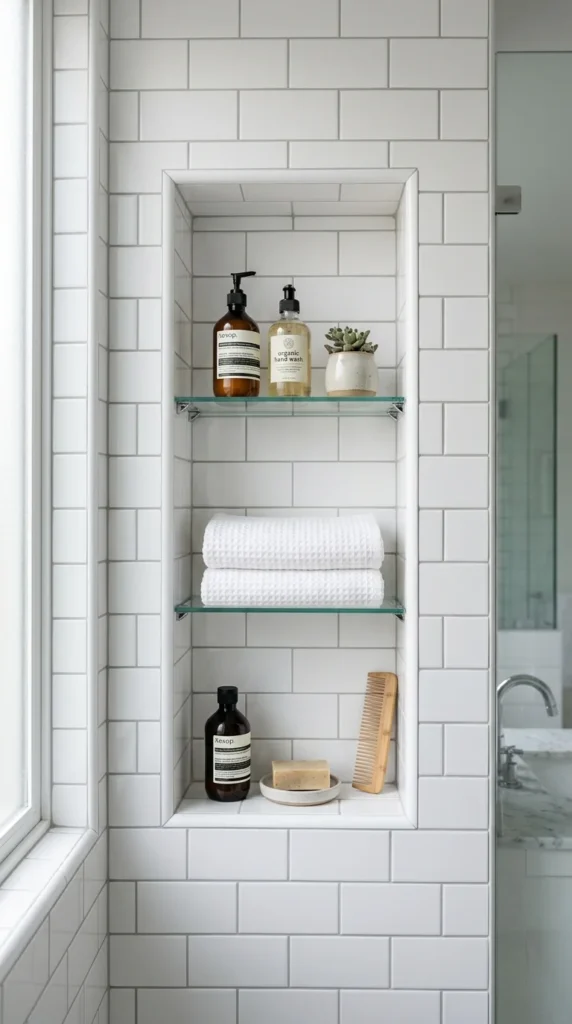
Most interior walls are constructed with 2×4 studs spaced 16 inches apart, leaving a hollow cavity that is roughly 3.5 inches deep. In a small home, these cavities are a goldmine for “invisible” storage. By cutting into the drywall and framing a recessed niche, you can create shelving that doesn’t protrude into the room.
This is exceptionally effective in bathrooms for toiletries or in hallways for books and keys. In a small bedroom, a recessed niche at headboard height can replace a bulky nightstand, providing a surface for a phone, water glass, and book without taking up a single inch of floor space.
7. Storage Ottomans
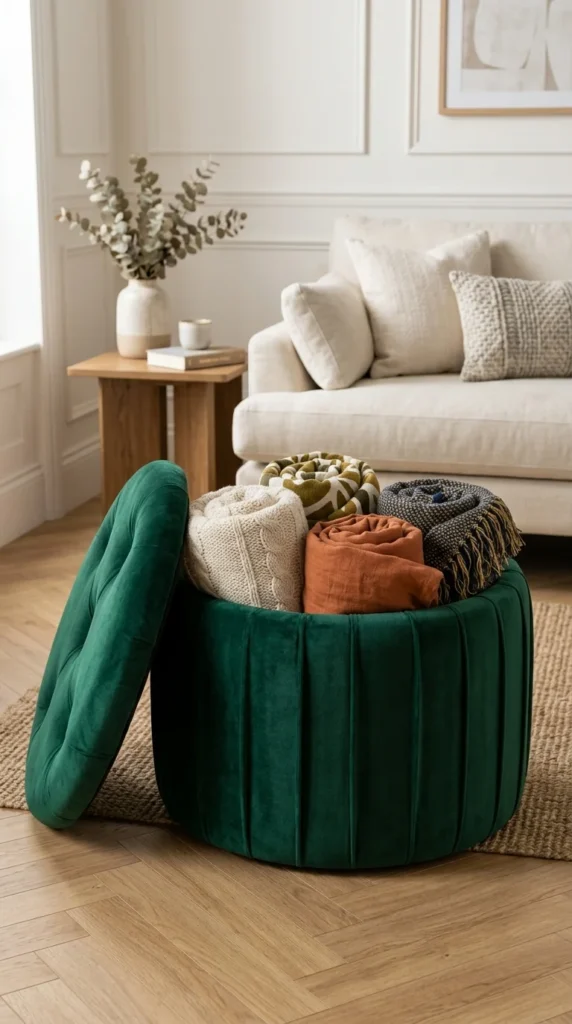
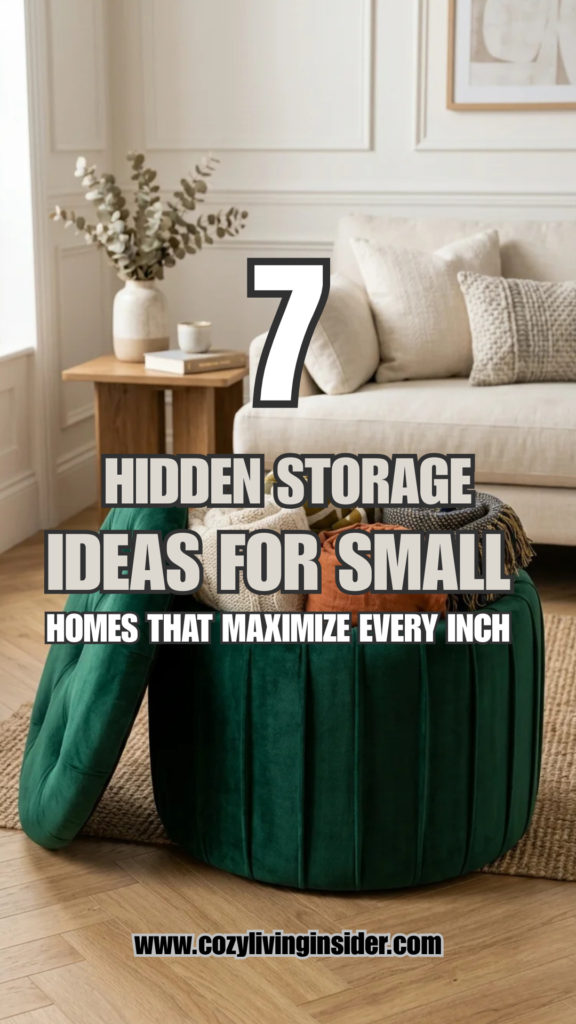
Multi-functional furniture is the cornerstone of small-space efficiency. An ottoman that serves as a coffee table, extra seating, and a storage chest is a triple threat in the living room.
Unlike traditional trunks, modern storage ottomans are designed to look like high-end furniture pieces. They are perfect for stowing away items that cause visual chaos, such as remote controls, children’s toys, or extra throw blankets. By choosing furniture that works overtime, you reduce the total number of pieces required in a room, creating an airy, expansive feel in even the tightest quarters.