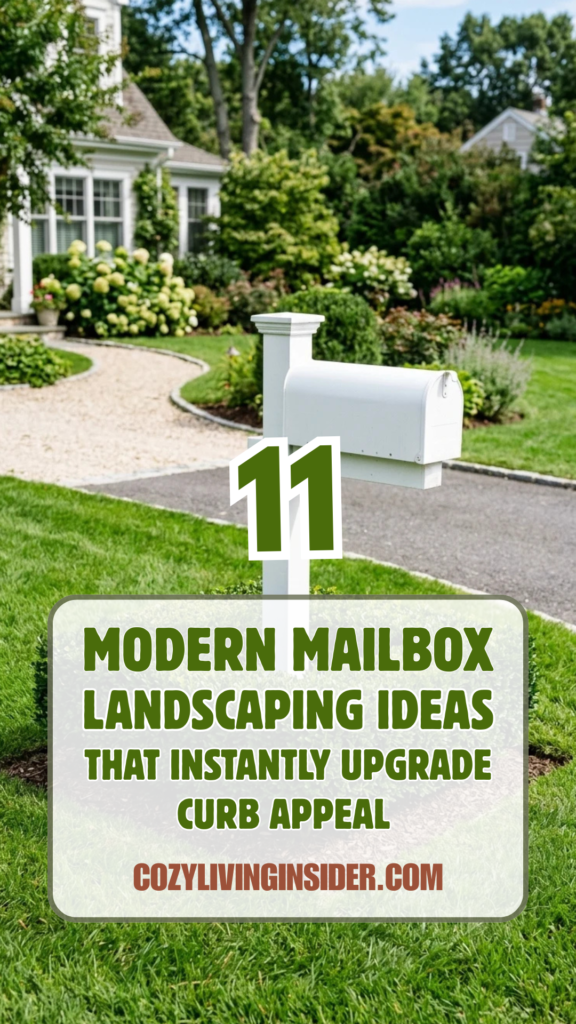

The mailbox is often the first point of contact between a home and the outside world. While it serves a purely functional purpose, its surrounding environment plays a pivotal role in a property’s overall curb appeal. Modern landscaping isn’t just about planting flowers; it’s about creating a cohesive, architectural statement that reflects the interior style of the home. By utilizing clean lines, varied textures, and sustainable plantings, homeowners can transform a standard utility post into a stunning focal point.
In this guide, we explore eleven modern mailbox landscaping ideas designed to provide an immediate aesthetic upgrade while remaining manageable for the average gardener.
1. Ornamental Grasses
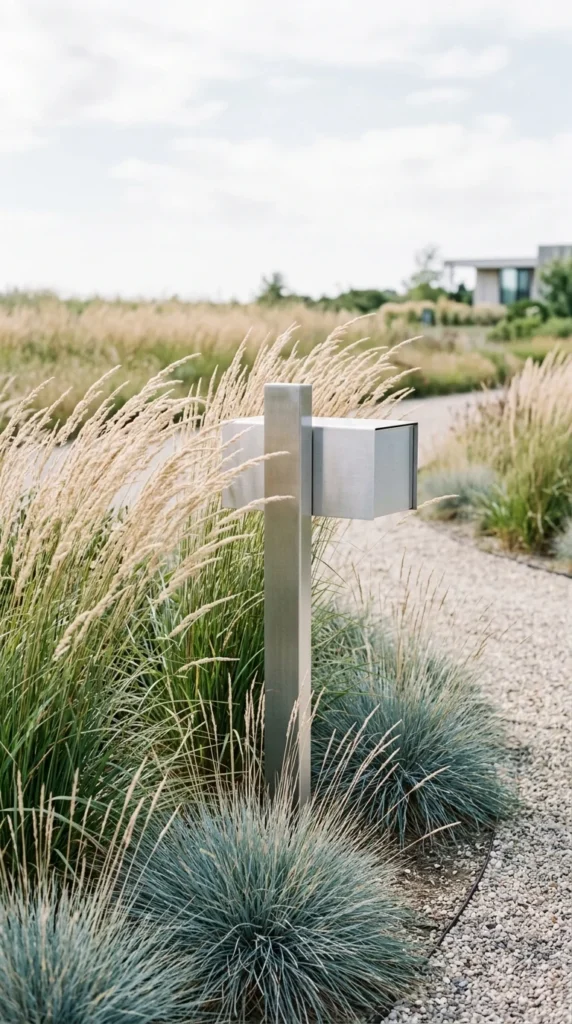
Ornamental grasses are a staple of modern landscape design due to their architectural form and low-maintenance nature. Unlike traditional flowering beds, grasses provide year-round interest with their shifting colors and textures. Species like Karl Foerster Feather Reed Grass offer verticality, while Blue Fescue provides a mounded, steel-blue pop of color at the base. These plants are particularly effective because they add movement to the landscape, catching the breeze and softening the hard lines of a metal or wooden mailbox post.
2. River Rocks
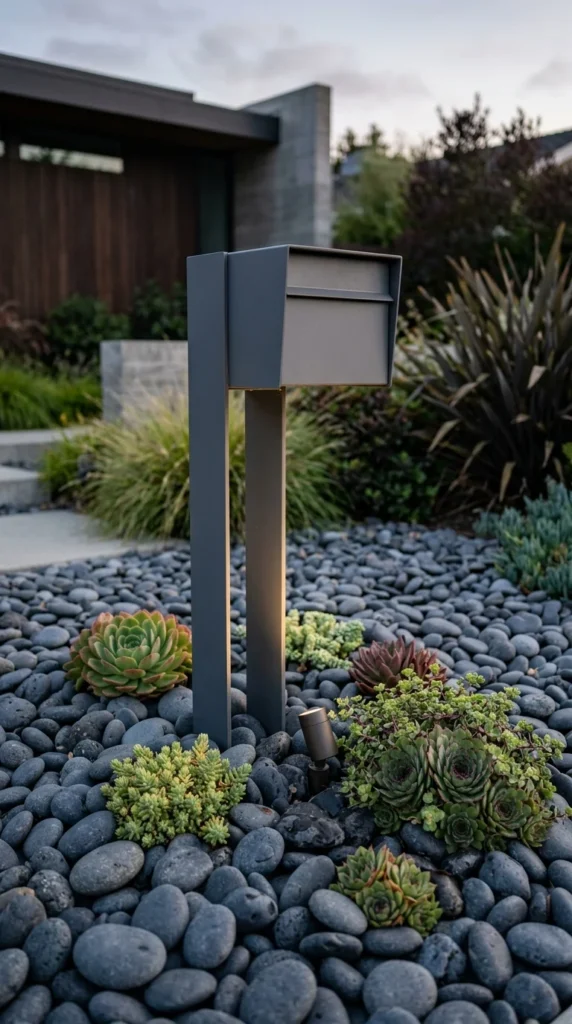
For a clean, minimalist look, replacing mulch with river rocks or Mexican beach pebbles is an excellent choice. Stones provide a permanent ground cover that doesn’t need to be replaced annually, and they offer a high-contrast backdrop for the mailbox post. Using a variety of sizes—from small pebbles to larger accent boulders—creates a natural yet structured appearance. This approach is ideal for homeowners looking for a “set it and forget it” solution that still looks polished and high-end.
3. Custom Planters
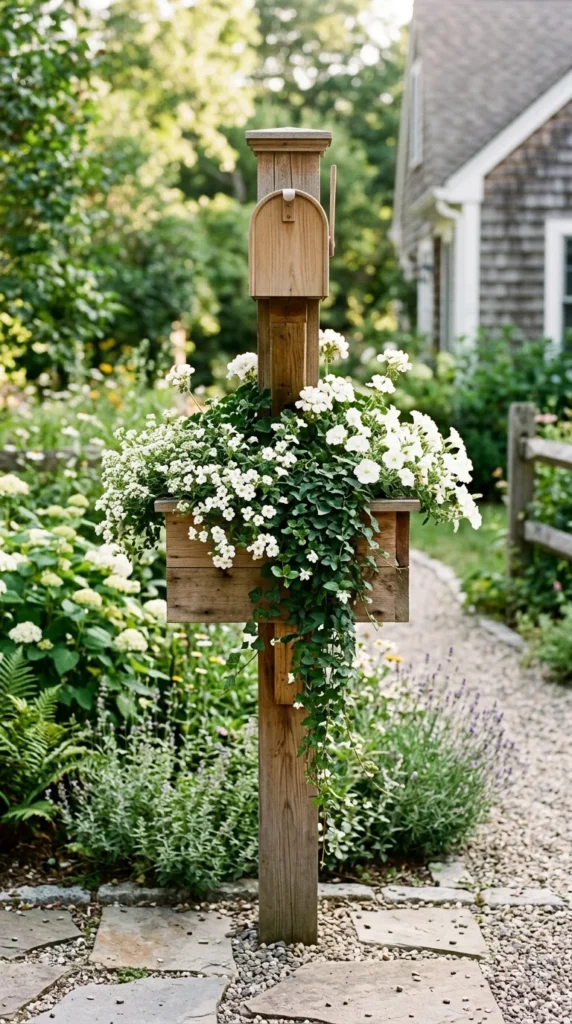
Integrating a planter directly into the mailbox structure is a growing trend in modern exterior design. Whether it is a built-in wooden box at the base or a custom metal container welded to the side of the post, this idea allows for seasonal versatility. You can rotate bright annuals in the summer, ornamental cabbages in the fall, and evergreen boughs in the winter. This method keeps the plantings contained and tidy, preventing them from sprawling onto the sidewalk or street.
4. Native Perennials
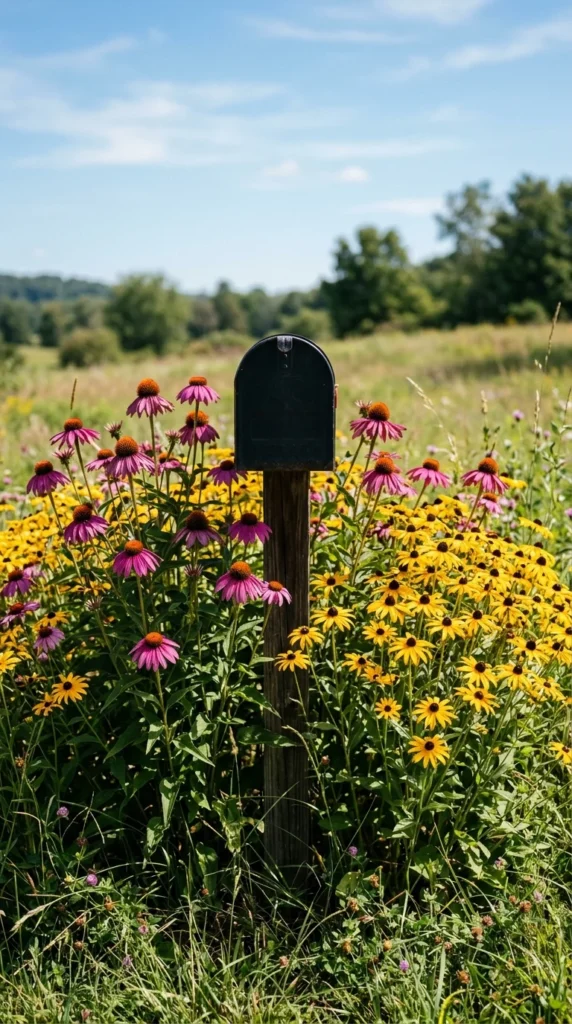
Sustainability is at the heart of modern landscaping. Using native perennials ensures that the plants around your mailbox are well-adapted to the local climate, requiring less water and fewer fertilizers. Plants like Purple Coneflower, Milkweed, and Salvia attract pollinators like bees and butterflies, adding life to your front yard. To keep it looking “modern,” group the same species together in large drifts rather than mixing individual plants randomly; this creates a bold, monochromatic impact.
5. Stone Edging
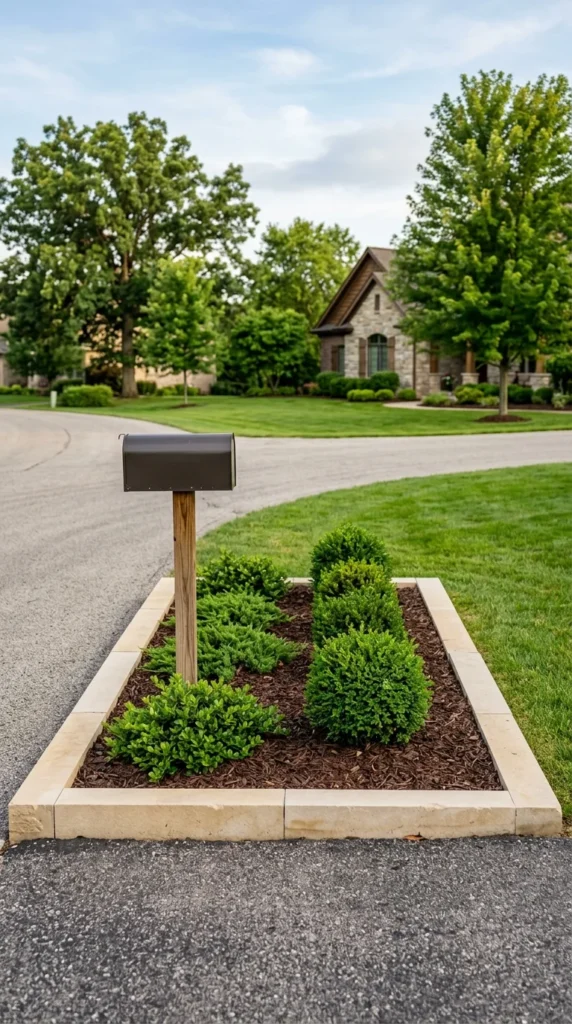
Definition is key to a modern aesthetic. Using stone edging—such as slate, limestone, or granite—creates a clear boundary between the lawn and the mailbox garden. Straight lines and right angles lend a contemporary feel, while tumbled stones offer a more transitional look. Stone edging also serves a functional purpose by preventing grass from creeping into the garden bed and keeping mulch or gravel from washing away during heavy rain.
6. Paver Paths
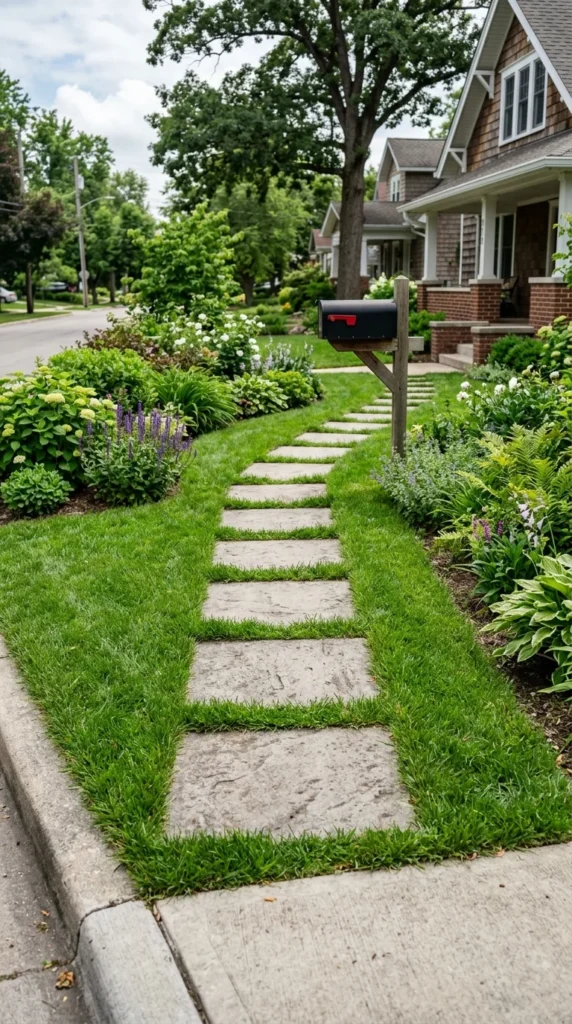
A mailbox is a high-traffic area, often visited daily. Integrating a small paver path leading from the driveway or sidewalk to the mailbox adds both utility and style. Modern paths often use oversized geometric pavers with grass, moss, or small pebbles in the gaps. This “stepping stone” look reduces soil compaction around the post and ensures that the mail carrier (and the homeowner) can reach the box easily without getting their shoes muddy.
7. Boxwood Hedges
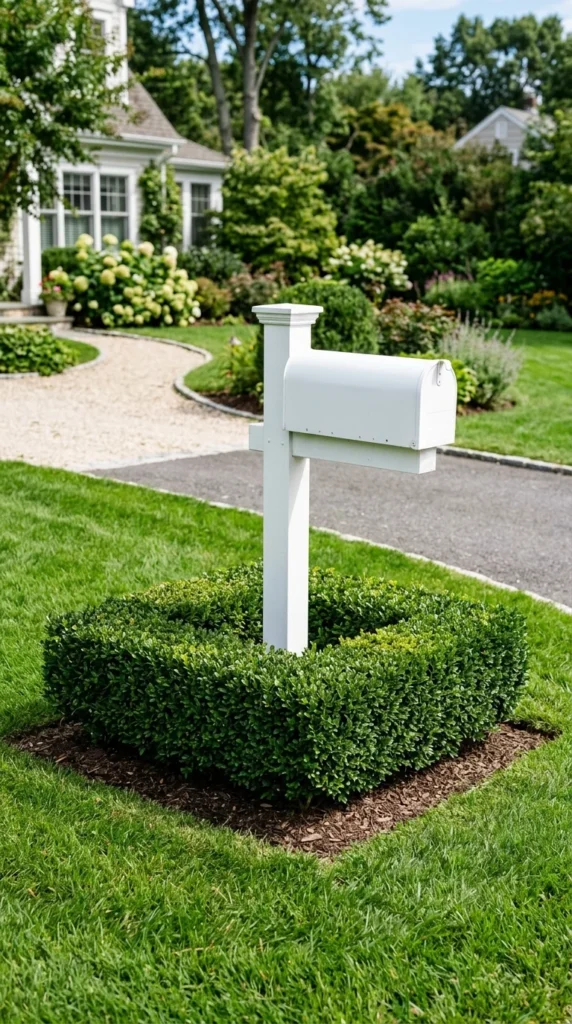
For those who prefer a formal, structured look, boxwood hedges are the gold standard. A low, tightly clipped hedge around the base of the mailbox provides a classic green frame that looks good in every season. This style works exceptionally well with traditional or transitional architecture. To keep it modern, maintain the hedge in a strict geometric shape, such as a cube or a rectangle, which echoes the lines of the mailbox itself.
8. Trellis Accents
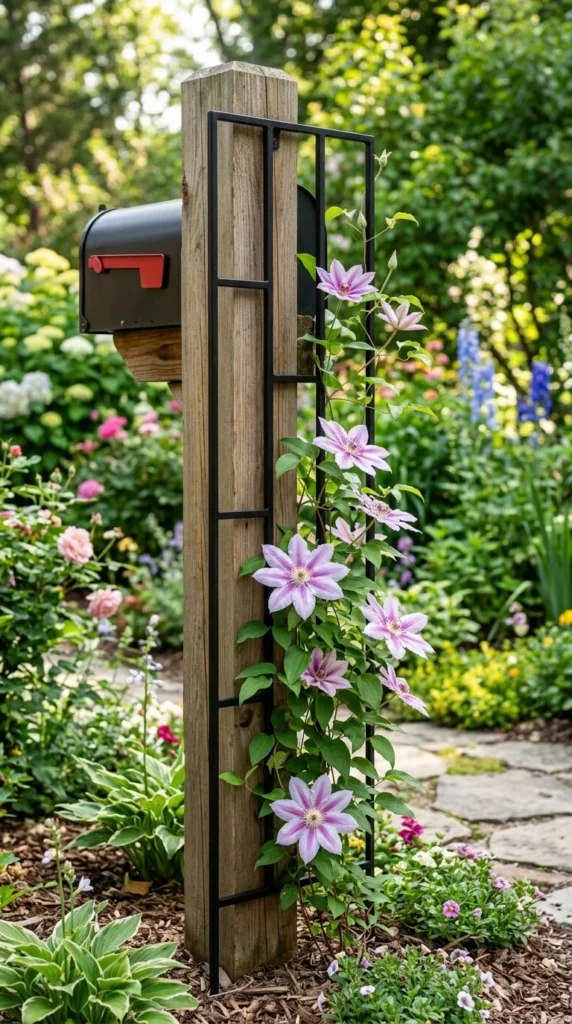
Vertical interest is often overlooked in mailbox landscaping. Adding a small trellis or choosing a mailbox post with built-in lattice allows you to incorporate climbing plants. Clematis, Mandevilla, or even a climbing rose can turn a plain post into a vertical garden. In modern designs, keep the trellis material consistent with the mailbox—if you have a black metal box, use a black metal trellis for a seamless, architectural appearance.
9. Solar Lighting
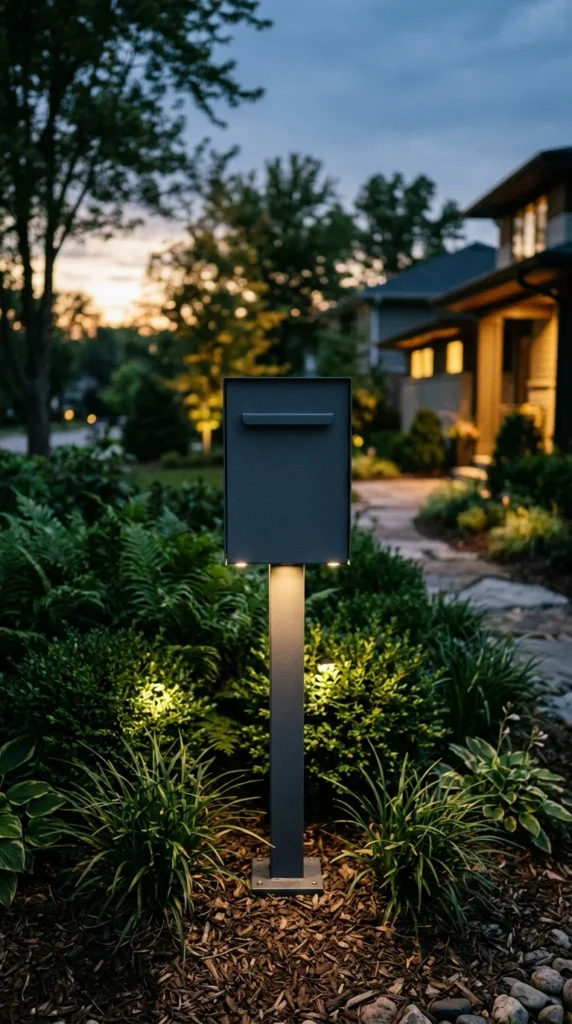
Visibility is both a safety feature and a design element. Modern solar lighting has evolved significantly, offering sleek, low-profile fixtures that can be easily tucked into a mailbox bed. Uplighting the post or the surrounding plants creates a dramatic effect at night and ensures that house numbers are clearly visible for visitors or emergency services. Using “warm white” LEDs provides a sophisticated glow that enhances the home’s nighttime curb appeal.
10. Succulent Beds
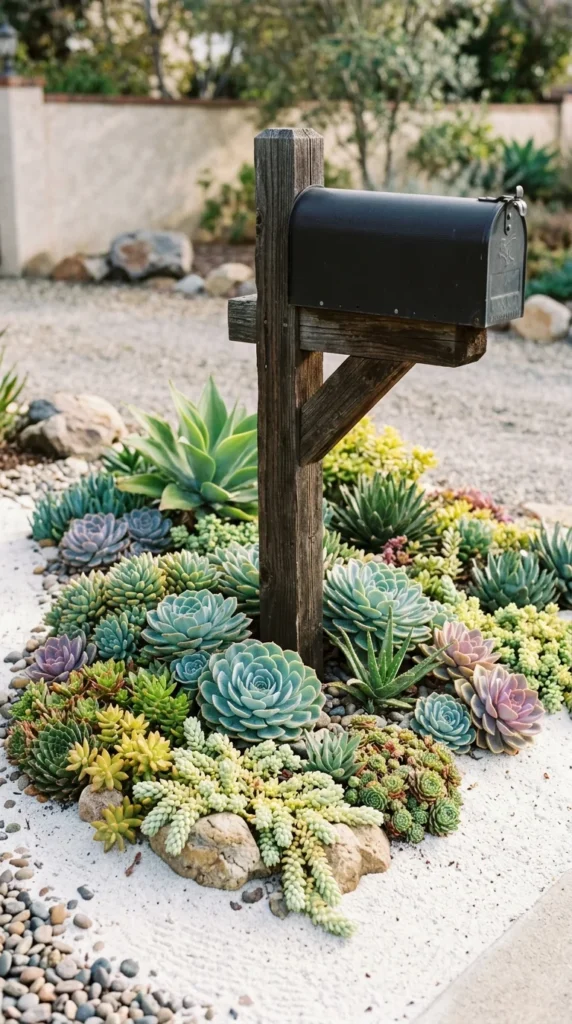
In warmer climates or for those looking to conserve water, a succulent garden is a top-tier modern choice. The varied shapes, colors, and textures of succulents—ranging from the rosette-shaped Echeveria to the trailing String of Pearls—create an intricate, tapestry-like effect. Because succulents grow slowly and require very little water, the bed remains looking pristine with minimal effort. Pair them with light-colored gravel to make their unique colors pop.
11. Metal Borders
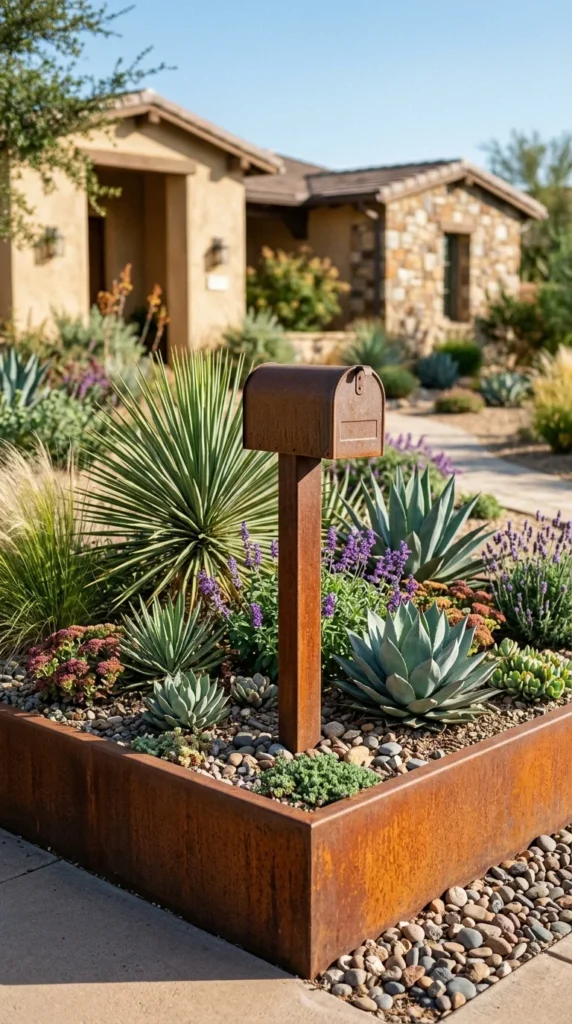
Metal edging, particularly Corten steel (which develops a beautiful rust-colored patina over time), is a hallmark of industrial modern landscaping. A metal border provides a thin, sharp profile that is much more subtle than stone or wood. It is incredibly durable and creates a high-end, designer look that pairs perfectly with modern home materials like glass, concrete, and dark wood. This approach works best when paired with bold, architectural plants like Agave or Yucca.