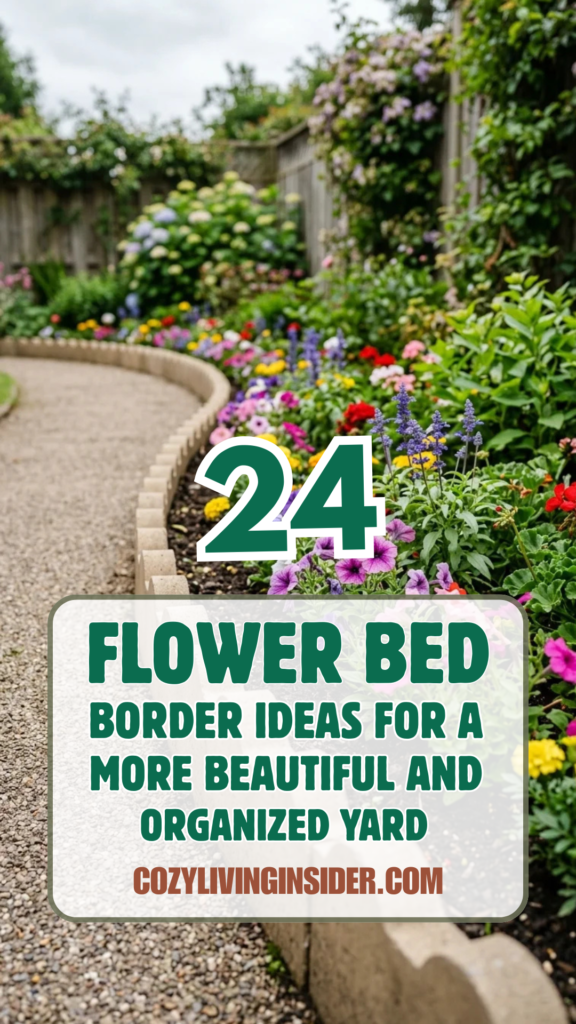

Creating a defined boundary for your flower beds is more than just an aesthetic choice; it is a fundamental element of professional landscaping. A well-executed border serves several functional purposes: it prevents grass from encroaching into your garden, keeps mulch from washing away during heavy rains, and provides a clear path for lawnmowers. Beyond utility, the right edging material can elevate the architectural style of your home, whether you prefer a rustic cottage feel, a sleek modern look, or a timeless formal garden.
The following 24 ideas offer a diverse range of materials and styles to help you organize your outdoor space and highlight your favorite botanical specimens.
1. Natural Stone
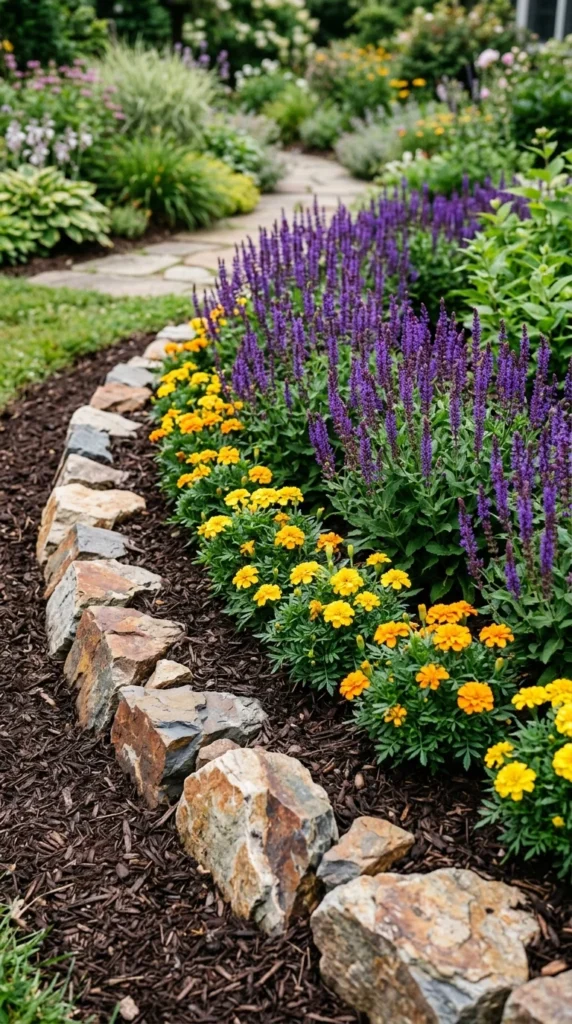
Natural stone is perhaps the most versatile edging material available. Because stones come in various shapes, sizes, and colors—from cool greys to warm ochres—they can match almost any architectural style. Laying large, flat stones in a shallow trench creates a sturdy barrier that looks as though it has been part of the landscape for decades. This “dry-stack” method requires no mortar, allowing for natural drainage and a relaxed, organic appearance.
2. Classic Brick
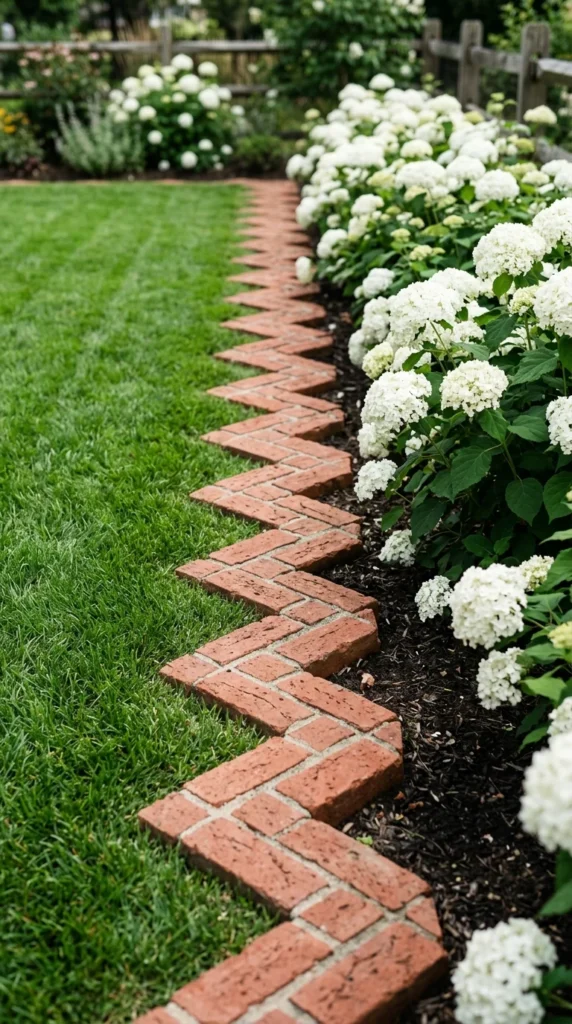
For a timeless and traditional look, red clay bricks are an excellent choice. They can be laid flush with the ground to create a “mowing strip,” or angled in a “sawtooth” or diagonal pattern for added visual interest. Bricks are particularly effective for formal gardens and colonial-style homes, providing a clean, geometric line that contrasts beautifully with soft, flowing foliage.
3. Steel Edging
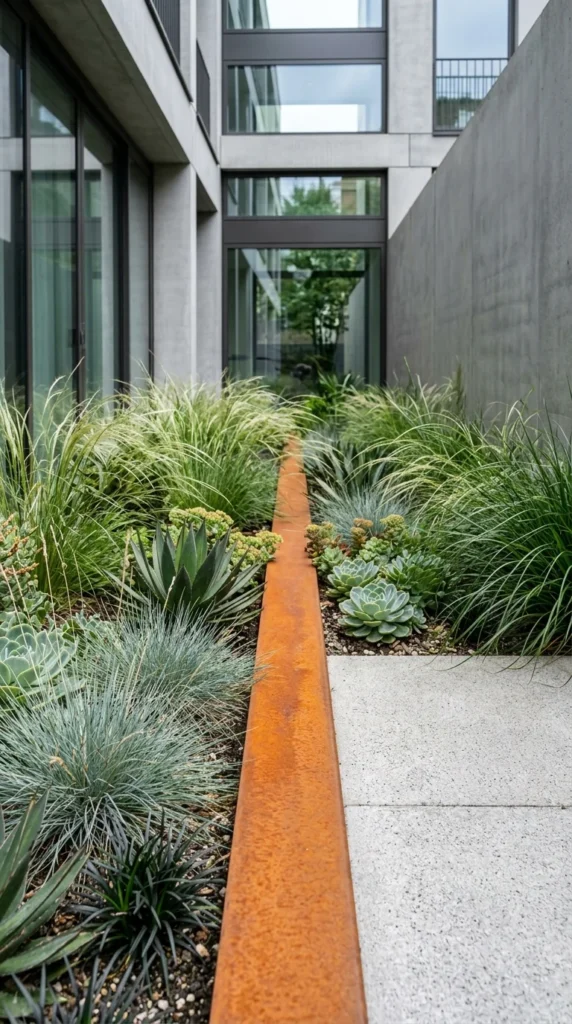
Steel edging is the go-to choice for modern and contemporary landscapes. It provides a razor-thin profile that creates a crisp, almost invisible line between the lawn and the garden. Many homeowners opt for Corten steel, which develops a protective layer of rust over time, offering a rich, earthy patina that complements green foliage and architectural concrete.
4. Wood Logs
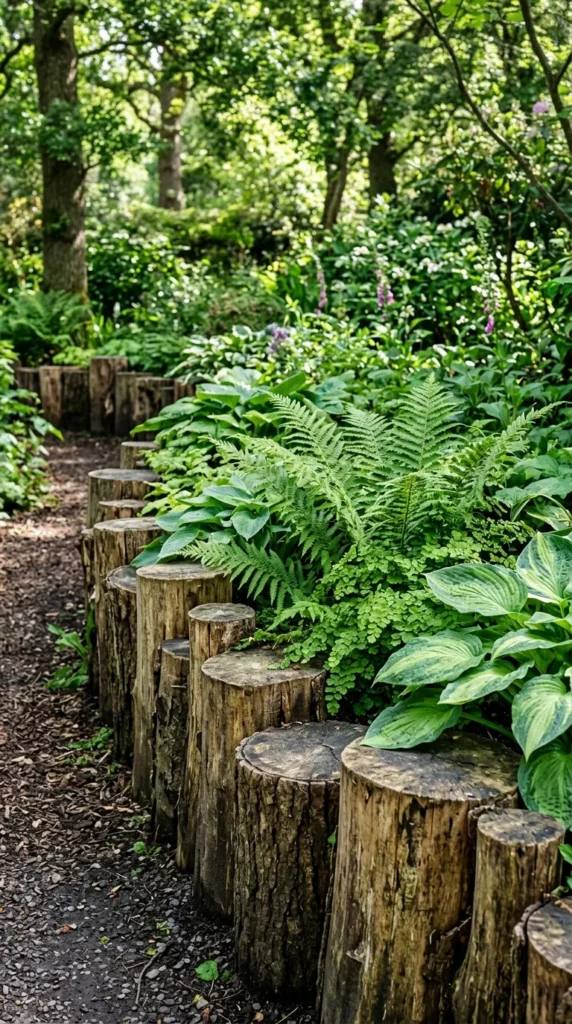
For a rustic or woodland-themed yard, vertical log sections offer a charming, hand-crafted feel. By using pressure-treated timber or rot-resistant species like cedar or black locust, you can ensure longevity. Varying the heights of the logs adds a sense of rhythm and texture, making the border itself a sculptural element of the garden.
5. Woven Wattle
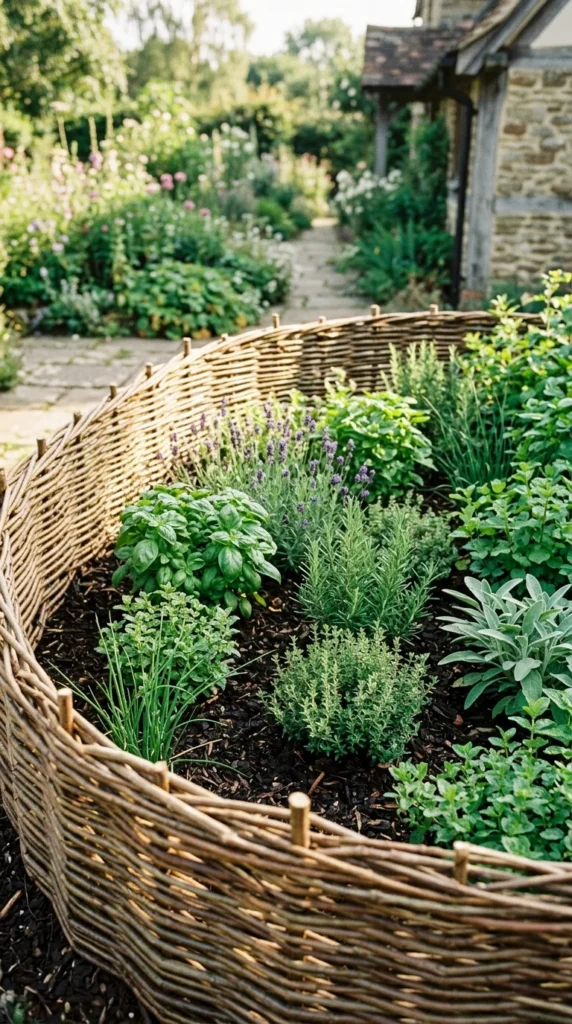
Wattle edging is an ancient technique involving the weaving of flexible branches—usually willow or hazel—around upright stakes. This eco-friendly option is perfect for English cottage gardens or vegetable patches. It adds a handmade, artisanal quality to the yard and is an excellent way to use pruned branches from your own property.
6. Concrete Pavers
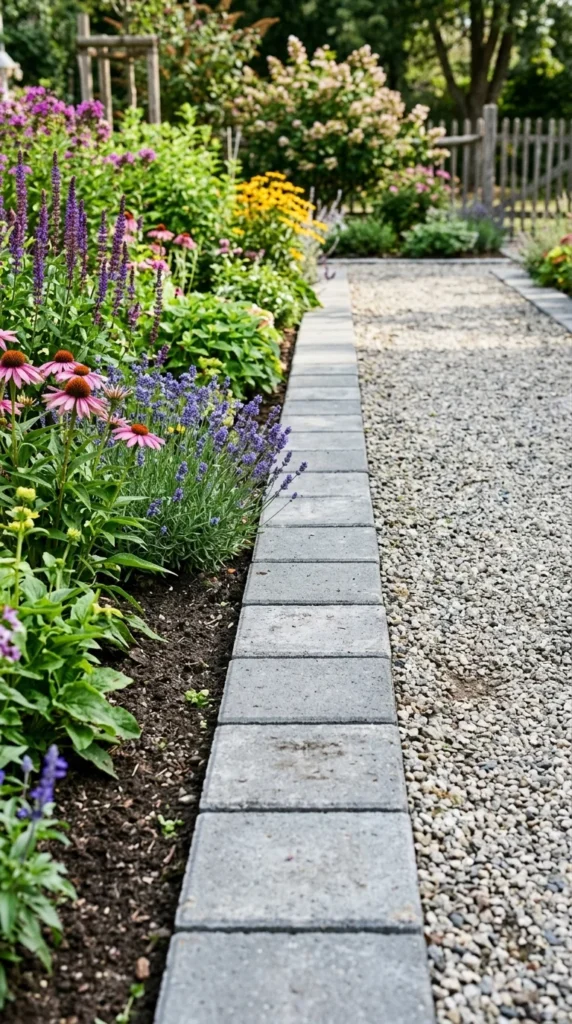
If durability is your primary concern, concrete pavers are a reliable solution. Available in a massive array of shapes, colors, and textures, they can mimic the look of natural stone at a fraction of the cost. Because they are uniform in size, they are remarkably easy to install and create a very stable edge that withstands the pressure of foot traffic or lawn equipment.
7. River Rocks
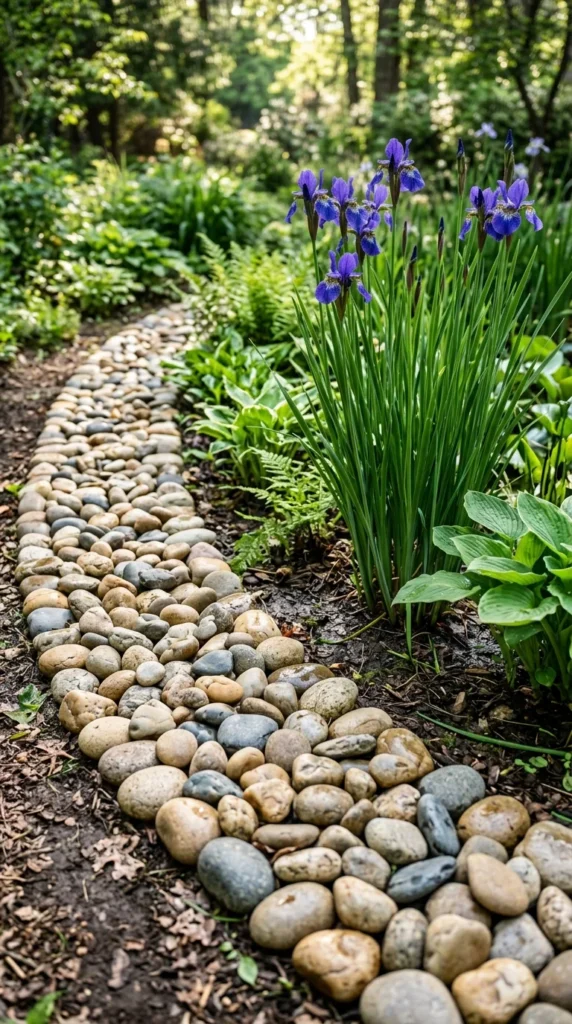
River rocks bring a cooling, water-inspired element to the landscape. Their smooth, rounded surfaces provide a soft transition between the hardscape and the plantings. These are particularly effective in xeriscapes or dry creek bed designs where the goal is to create a low-maintenance, drought-tolerant environment.
8. Terracotta Tiles
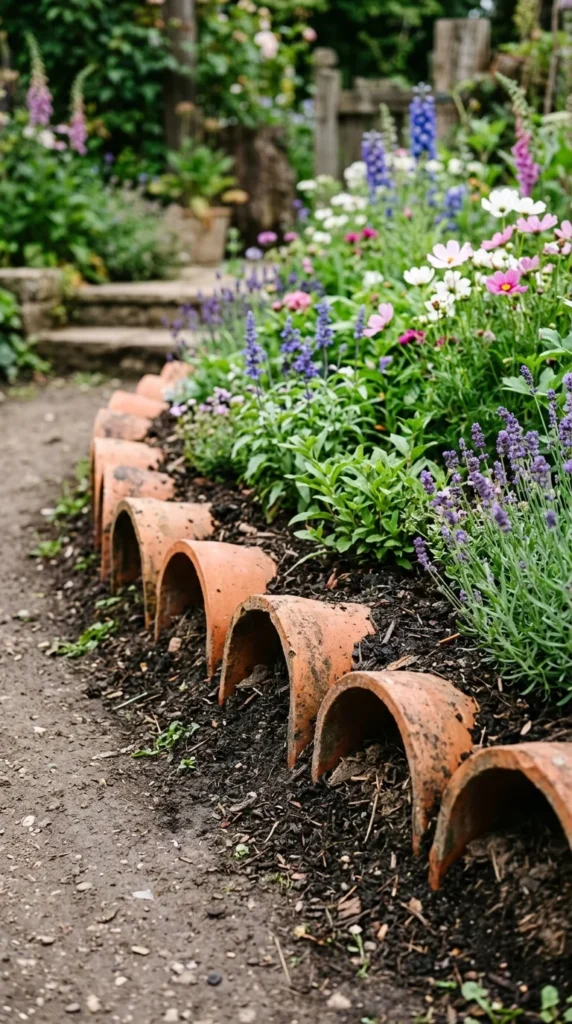
Repurposing terracotta roof tiles or specialized garden tiles adds a Mediterranean flair to the yard. The warm, baked-earth tones of the clay provide a stunning contrast to deep green leaves and bright flowers. These borders work exceptionally well in sunny climates and add an old-world charm to any garden path.
9. Cedar Planks
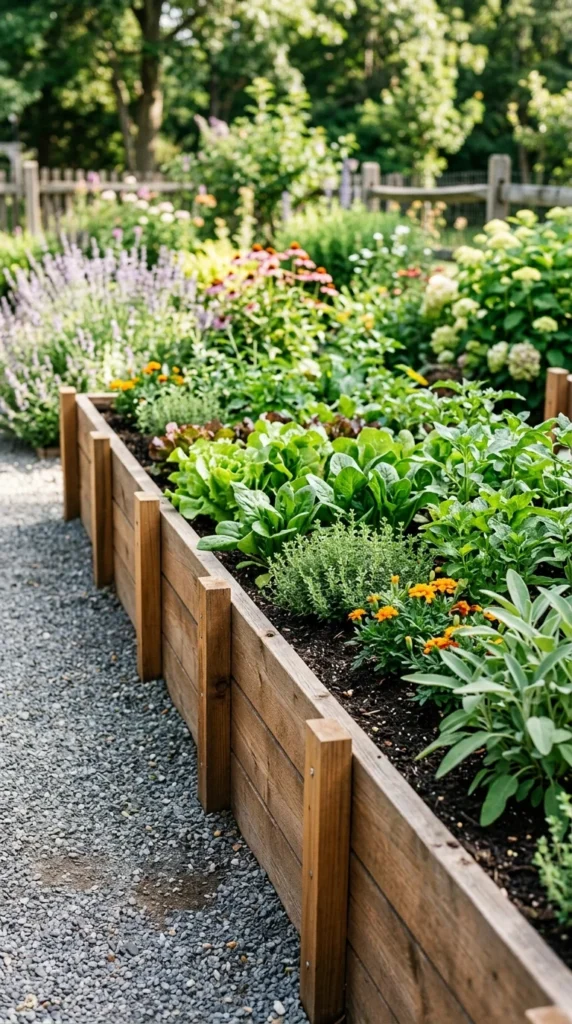
Cedar is naturally resistant to rot and insects, making it an ideal choice for wooden borders. Using horizontal cedar planks creates a clean, linear look that is perfect for rectangular flower beds or vegetable gardens. Over time, the wood will silver beautifully, or it can be stained to maintain its original warm glow.
10. Cobblestones

Cobblestones offer a sense of history and permanence. Their irregular, rounded tops and heavy weight make for a very sturdy border that stays in place without the need for deep foundations. They are perfect for framing traditional flower beds and lend an air of European elegance to the property.
11. Wine Bottles
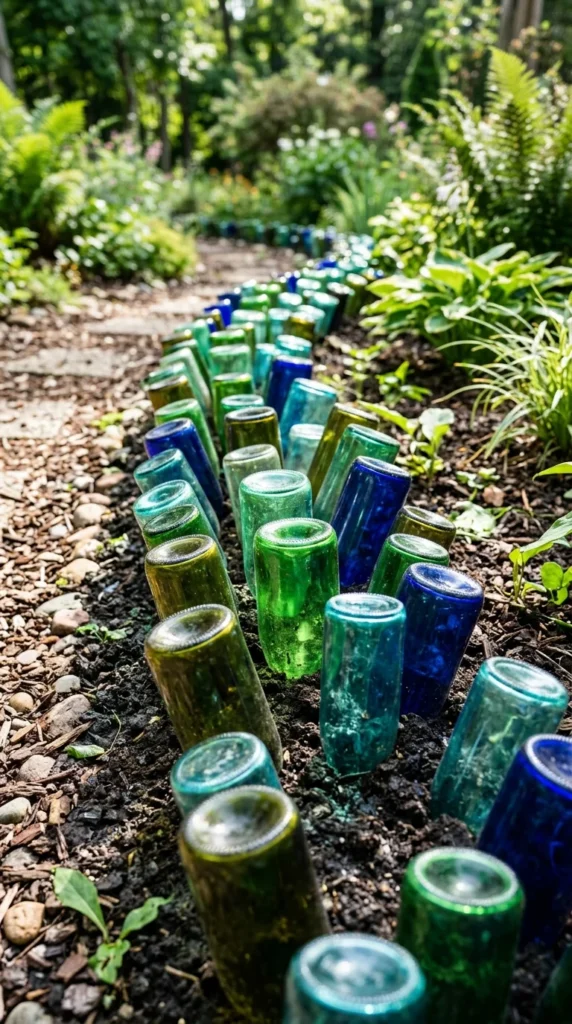
For a whimsical and eco-friendly approach, consider using recycled wine bottles. By burying them neck-down, the glass bottoms create a colorful, glowing perimeter. This is a popular choice for “shabby chic” gardens or artistic spaces where a splash of color and personality is desired.
12. Boxwood Hedges
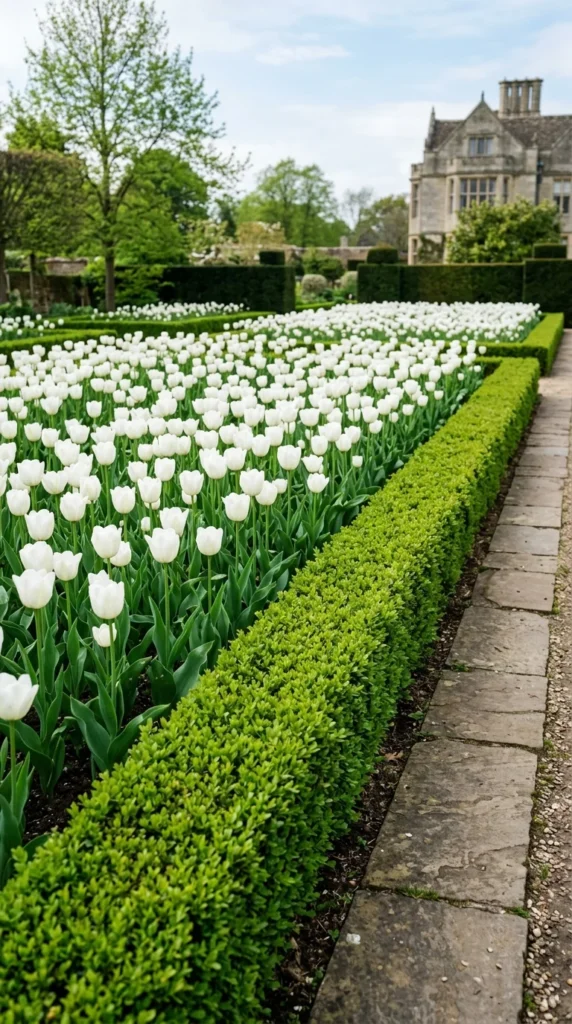
Sometimes the best border is a living one. A low-growing, tightly clipped boxwood hedge (Buxus) provides a “frame” for the garden that stays green year-round. This is the hallmark of formal French and Italian gardens, providing structure and a sense of architectural order.
13. Scalloped Concrete
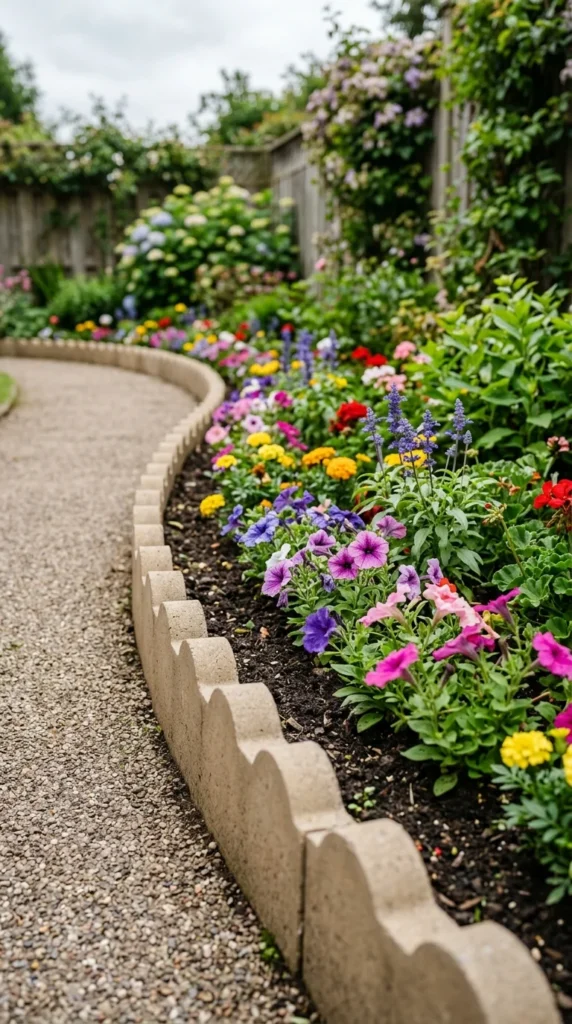
Scalloped concrete edging is a classic DIY-friendly option. These pre-cast segments are easy to install and provide a decorative, finished look to the garden. The curved tops add a touch of softness to the landscape, making them ideal for traditional suburban yards.
14. Fieldstone Walls
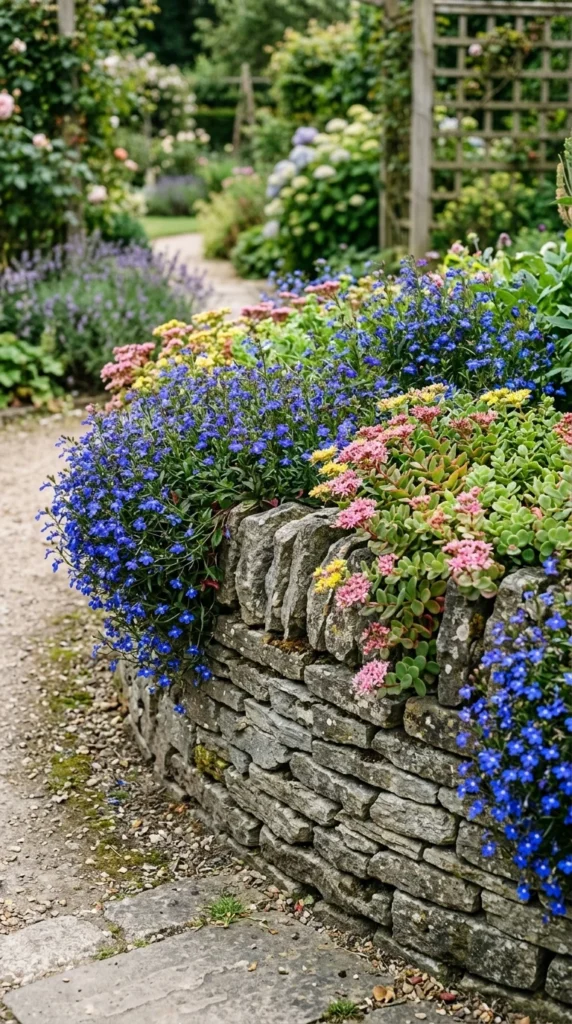
When your garden requires a bit of height, a low fieldstone wall acts as both a border and a retaining structure. This allows you to create a slightly raised bed, which improves drainage and brings the flowers closer to eye level. The stacked look is timeless and highly durable.
15. Bamboo Poles

Bamboo borders are perfect for Zen gardens or tropical-themed landscapes. You can use horizontal poles held by stakes or short vertical sections for a “picket” effect. Bamboo adds a unique texture and a sense of tranquility to the outdoor space.
16. Slate Shards
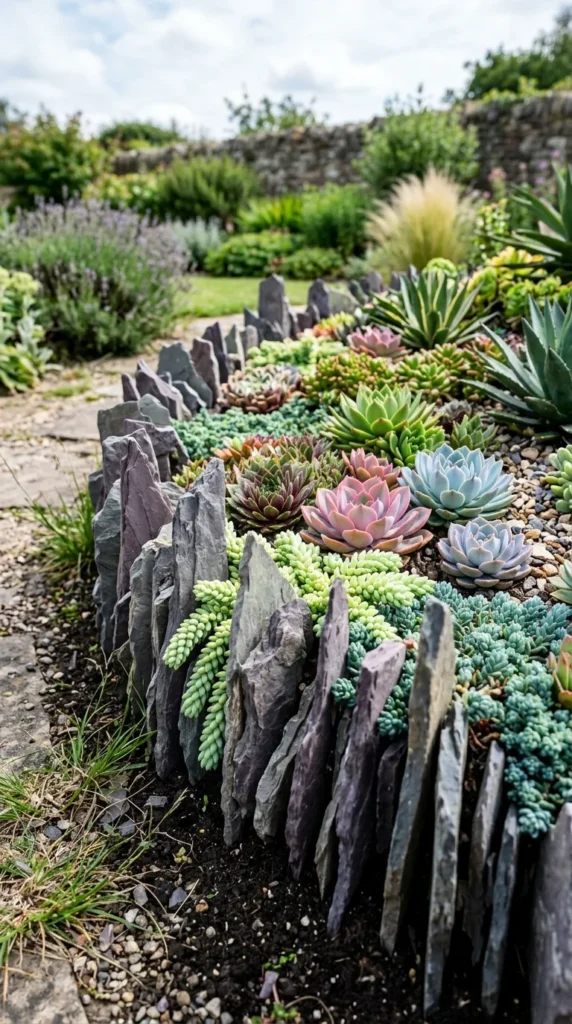
Slate provides a sophisticated, dark-toned border that looks especially striking against light-colored mulch or bright green foliage. Using thin shards of slate driven vertically into the ground creates a modern, layered appearance that is both artistic and functional.
17. Cinder Blocks
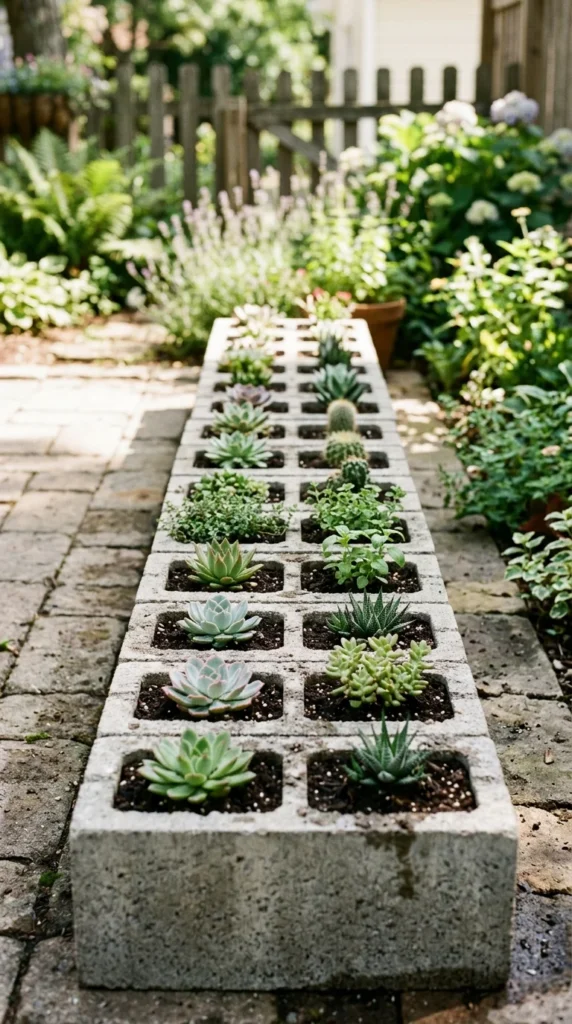
Cinder blocks are an affordable and highly functional edging choice. One of the best ways to use them is to turn them on their side so the open holes face upward. This allows you to plant small herbs or succulents directly into the border, creating a secondary “mini-garden” along the edge.
18. Seashells
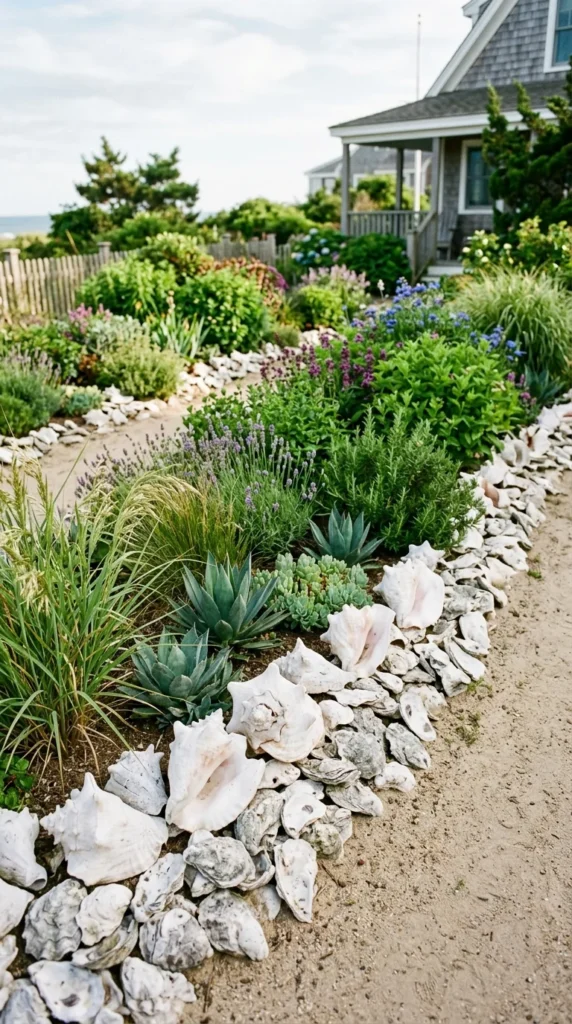
In coastal areas, using large seashells as a border is a beautiful way to tie the garden into its natural environment. Large conch or whelk shells provide a sculptural element, while smaller shells can be used as a heavy mulch-like border that suppresses weeds while adding a bright, reflective quality.
19. Corrugated Metal
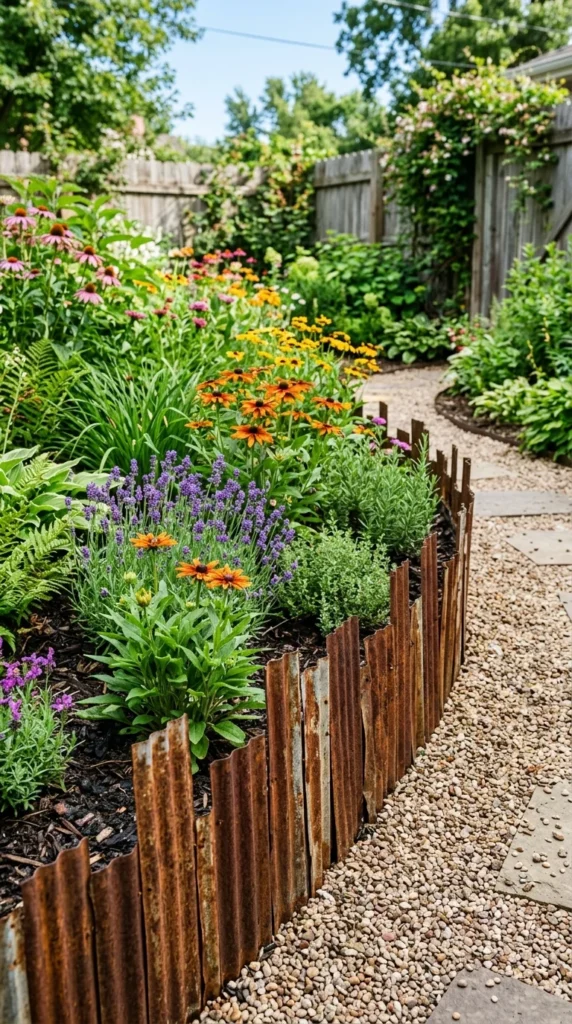
Corrugated metal is an excellent choice for industrial or “modern farmhouse” styles. The ribbed texture provides visual interest, and the metal can be left shiny for a contemporary look or allowed to rust for an aged, weathered appearance. It is incredibly durable and holds back soil effectively.
20. Railroad Ties
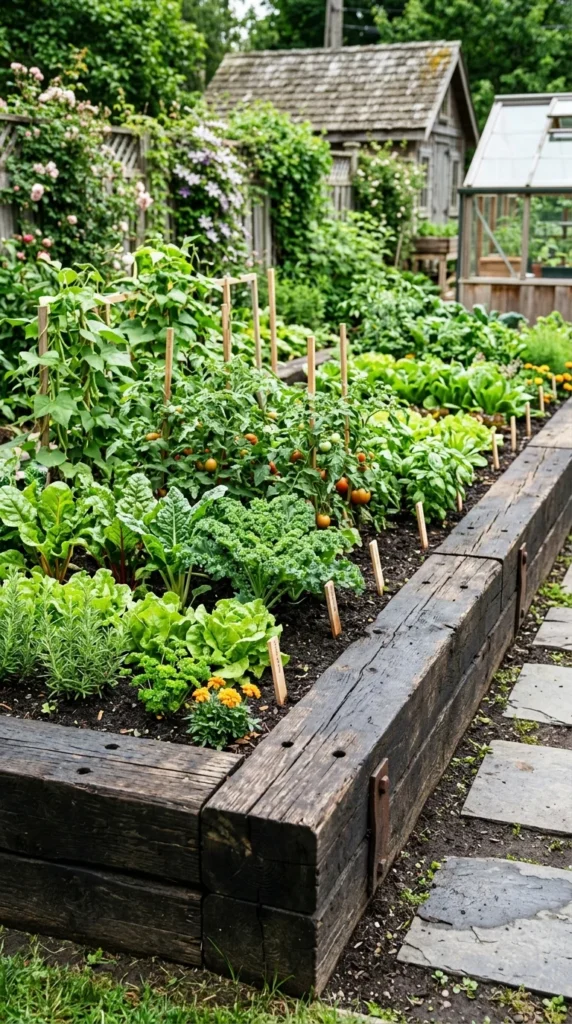
For a heavy-duty border, railroad ties (or large landscape timbers) are unbeatable. Their massive scale makes them perfect for large properties or gardens with significant slopes. They provide a strong, masculine look that works well with rustic or traditional ranch-style homes.
21. Flagstone
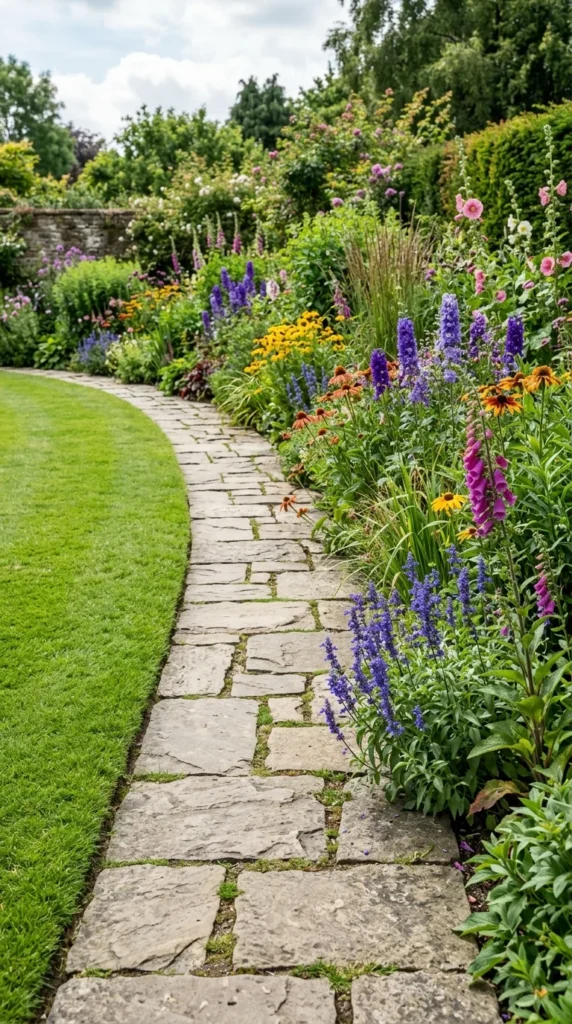
Flagstone is often used for patios, but it makes an exceptional garden border as well. By laying large, flat pieces of flagstone around the perimeter of a bed, you create a “mowing strip” that allows the wheels of a lawnmower to pass over easily, ensuring a clean cut every time without the need for a string trimmer.
22. Decorative Gravel
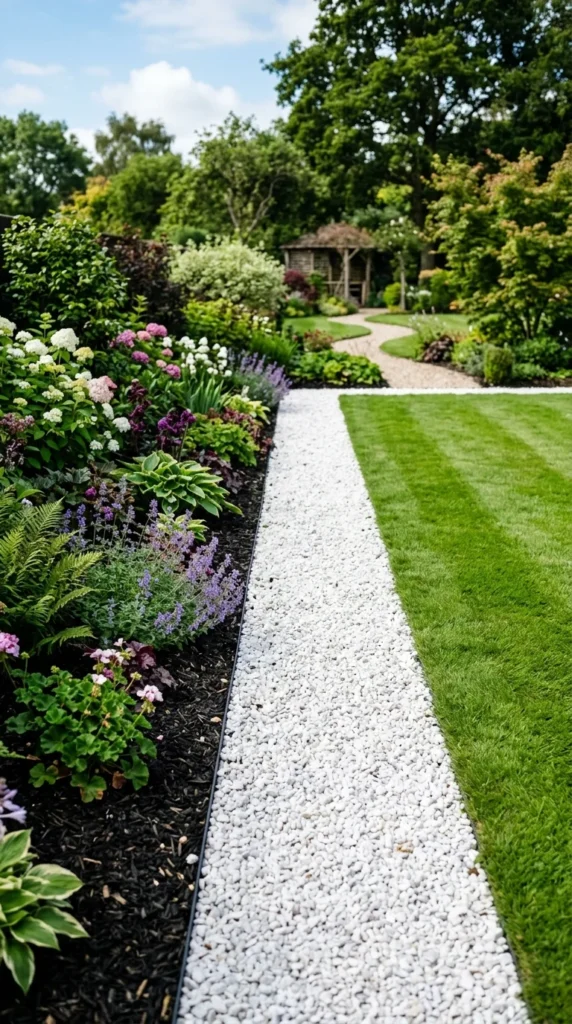
While gravel is often a filler, it can be used as a border if a trench is dug and lined properly. A border of contrasting gravel—such as white quartz against dark soil—creates a clean, high-contrast look that is very effective in minimalist and contemporary designs.
23. Plastic Edging
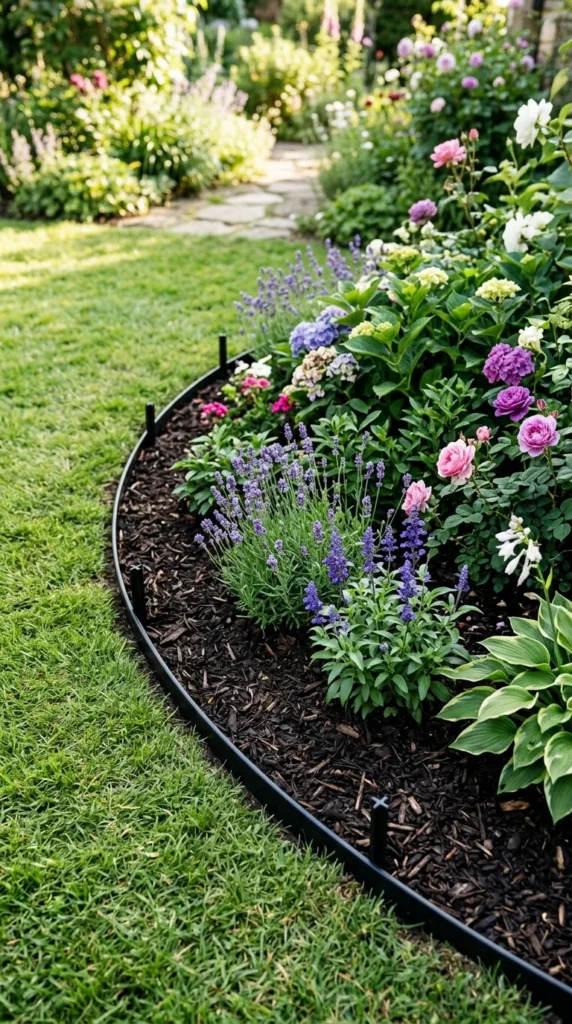
For those on a budget or looking for a quick DIY project, modern plastic edging has come a long way. High-quality, heavy-duty plastic strips can be hammered into the ground to create smooth, flowing curves. When installed correctly, only the very top edge is visible, providing a professional-looking separation without the high cost of stone.
24. Lavender Rows
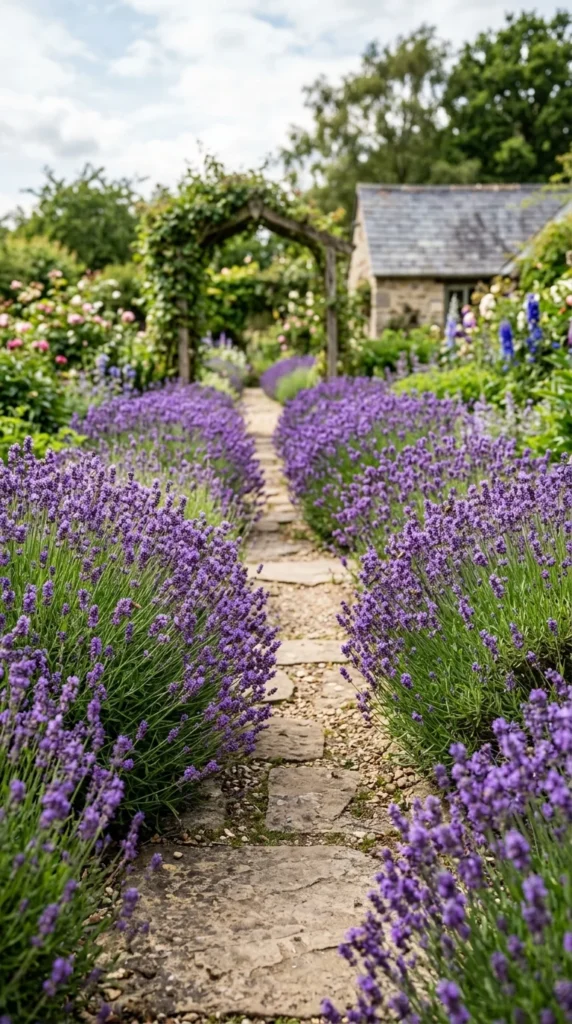
Using fragrant perennials like lavender as a border adds a sensory dimension to your yard. As you walk past, the scent is released, and the soft, mounded shape of the plants provides a gentle transition between the path and the inner garden. This “soft edging” is perfect for romantic, sensory-focused landscapes.