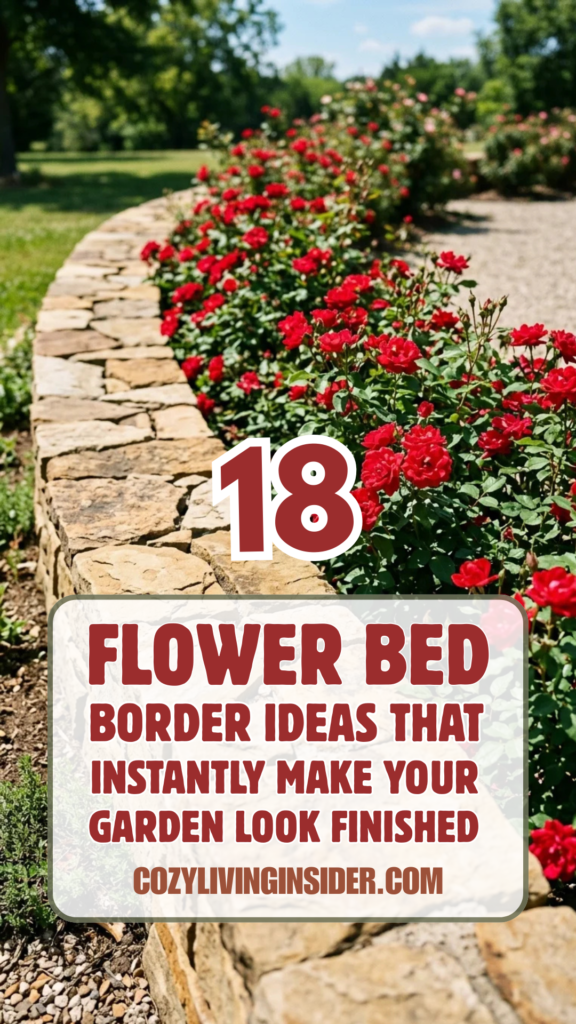

A garden without a border often feels like a painting without a frame. While the flowers and foliage are undoubtedly the stars of the show, the edging provides the structural integrity and visual clarity that distinguishes a collection of plants from a professional landscape. Beyond mere aesthetics, flower bed borders serve critical functional purposes: they prevent grass from encroaching on your blooms, keep mulch from washing away during heavy rains, and provide a clear path for lawnmowers.
Whether you prefer the rustic charm of natural materials or the sleek lines of modern industrial design, choosing the right border can instantly elevate your outdoor space. Here are 18 flower bed border ideas to help you achieve a polished, finished look in your garden.
1. Natural Trench
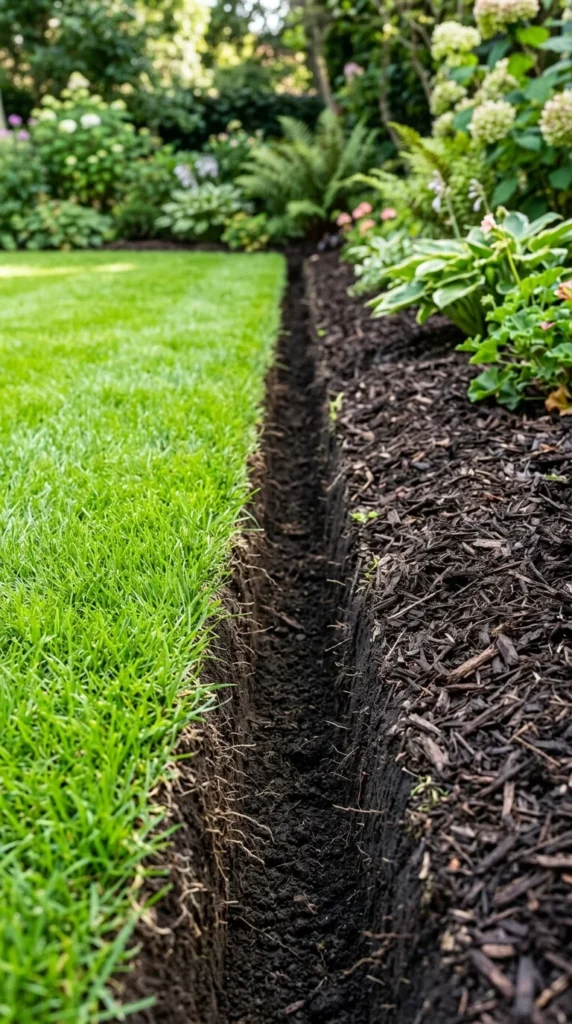
The natural trench, often called the “English edge,” is perhaps the most cost-effective and timeless way to finish a garden. By digging a V-shaped trench roughly four to six inches deep between the lawn and the bed, you create a physical barrier that grass roots find difficult to cross. This method requires no materials other than a sharp spade or an edger, making it ideal for those who prefer an organic, minimalist aesthetic. To maintain its crispness, you simply need to re-cut the edge once or twice a season.
2. Red Brick
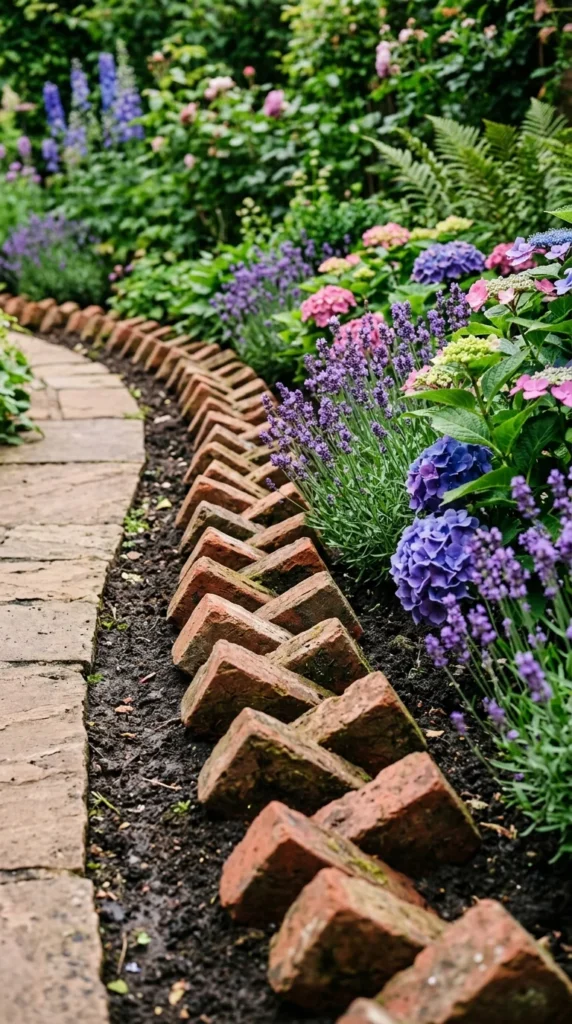
Classic red bricks offer a traditional look that complements colonial, cottage, and craftsman-style homes. They are incredibly versatile; you can lay them flat, stand them vertically, or bury them at an angle for a “sawtooth” effect. Because bricks are heavy and durable, they stay in place well over time. To ensure a professional finish, it is best to dig a shallow trench and lay a thin layer of sand before placing the bricks to prevent shifting and sinking.
3. Cobblestone
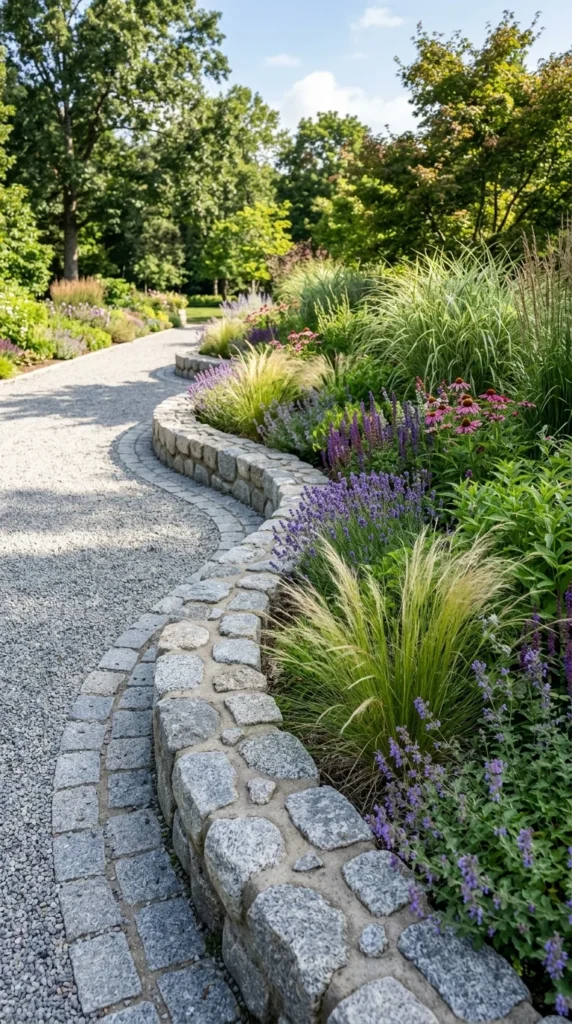
For an old-world, European feel, cobblestones are an excellent choice. Their irregular shapes and natural grey tones add a sense of history and permanence to the landscape. Cobblestones are particularly effective for curved garden beds because their small size allows them to follow tight radiuses more easily than long timber or large stones. They are also heavy enough to withstand the pressure of soil and roots without shifting.
4. Woven Willow
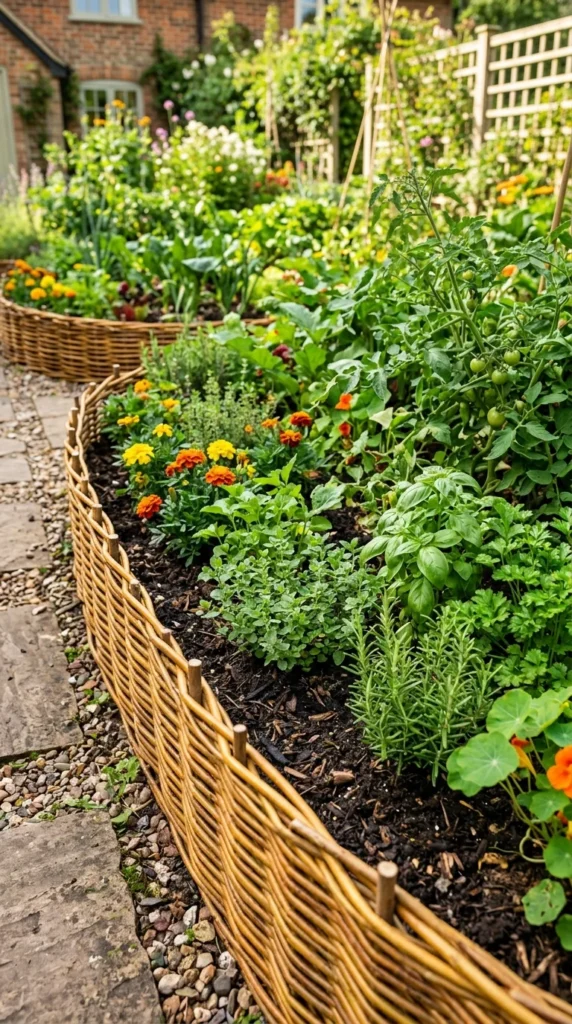
Woven willow, or wattle, is the ultimate choice for a rustic, cottage-style garden. These borders are made by weaving flexible willow or hazel branches around upright stakes. They are eco-friendly, biodegradable, and provide a charming, handmade look. While they may not last as long as stone or metal—typically requiring replacement every five to seven years—they add a vertical element and a texture that is hard to replicate with manufactured materials.
5. Steel Edging
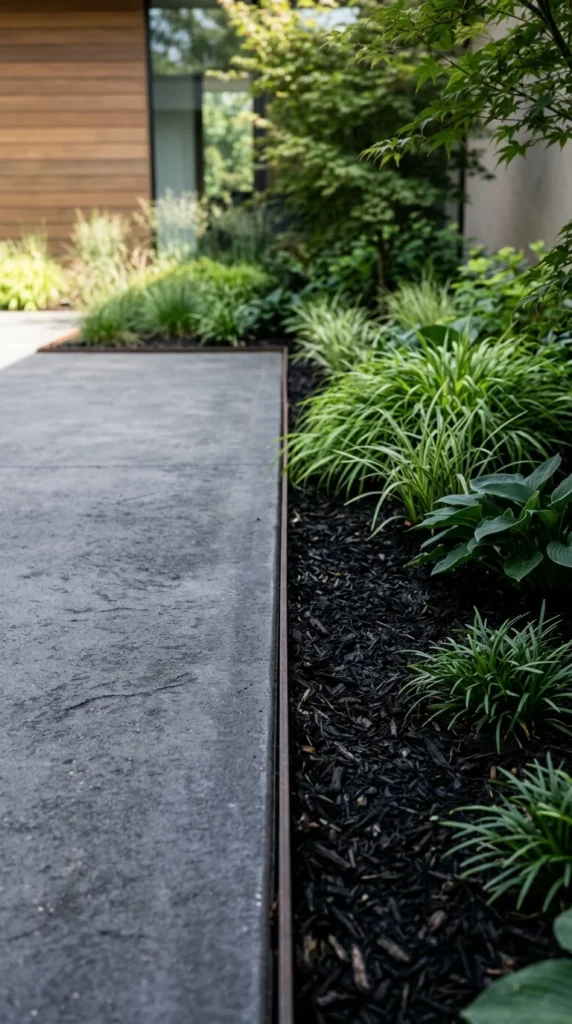
If your home has a modern or contemporary design, steel edging is a premier choice. Thin strips of galvanized or Corten steel create a nearly invisible line that provides maximum definition with minimum visual bulk. Corten steel is especially popular because it develops a protective layer of rust over time, resulting in a beautiful burnt-orange patina that contrasts beautifully with green foliage. It is also incredibly durable and flexible enough to create perfect circles or long, sweeping curves.
6. Plastic Composite
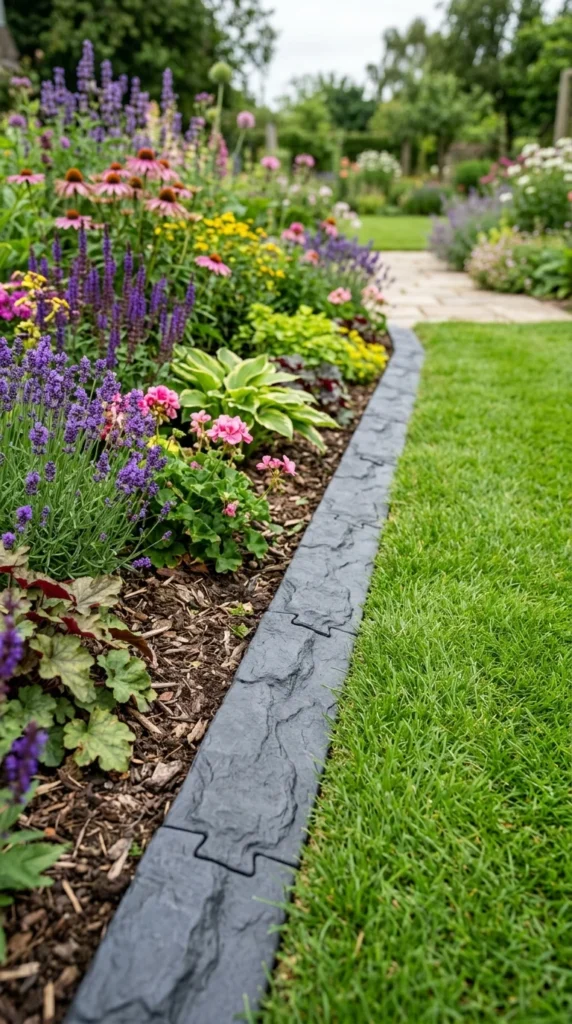
Modern plastic and composite materials have come a long way from the flimsy green rolls of the past. Today’s high-end composite edging is often made from recycled materials and is designed to look like stone or wood. It is lightweight, easy to install with stakes, and impervious to rot, pests, and UV damage. This is a practical solution for gardeners who want a “set it and forget it” border that will look the same ten years from now as it does today.
7. Wood Logs
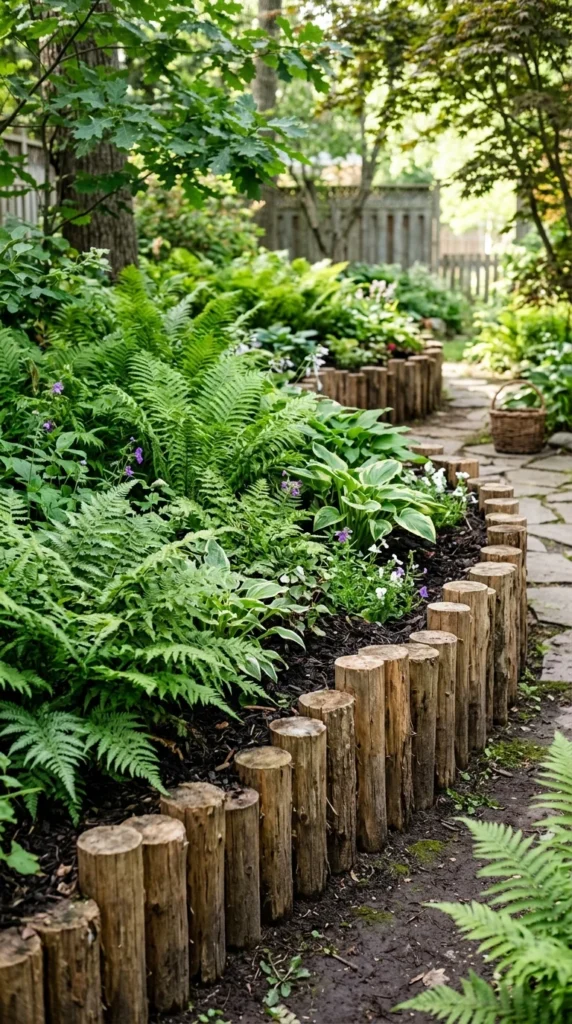
Using small logs or timber offcuts creates a rugged, woodland aesthetic. By varying the heights of the logs, you can create a playful, undulating line that adds visual interest. Cedar and redwood are the best choices for this style because they contain natural oils that resist rot. This type of border works exceptionally well in shade gardens or properties located near wooded areas, as it helps the garden blend into its natural surroundings.
8. River Rocks
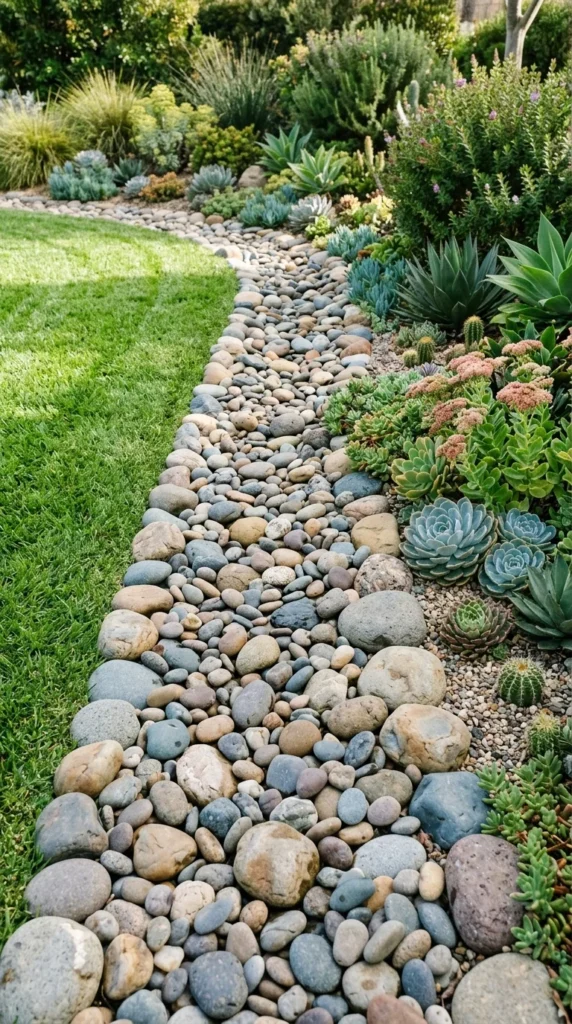
River rocks provide a serene, Zen-like quality to garden beds. Using a mix of sizes and colors—from pale greys to deep blues and tans—creates a naturalistic look that mimics a dry riverbed. To prevent weeds from growing through the rocks, it is essential to lay down a high-quality landscape fabric before placing the stones. This border style is particularly effective in drought-tolerant landscapes or xeriscapes.
9. Flagstone
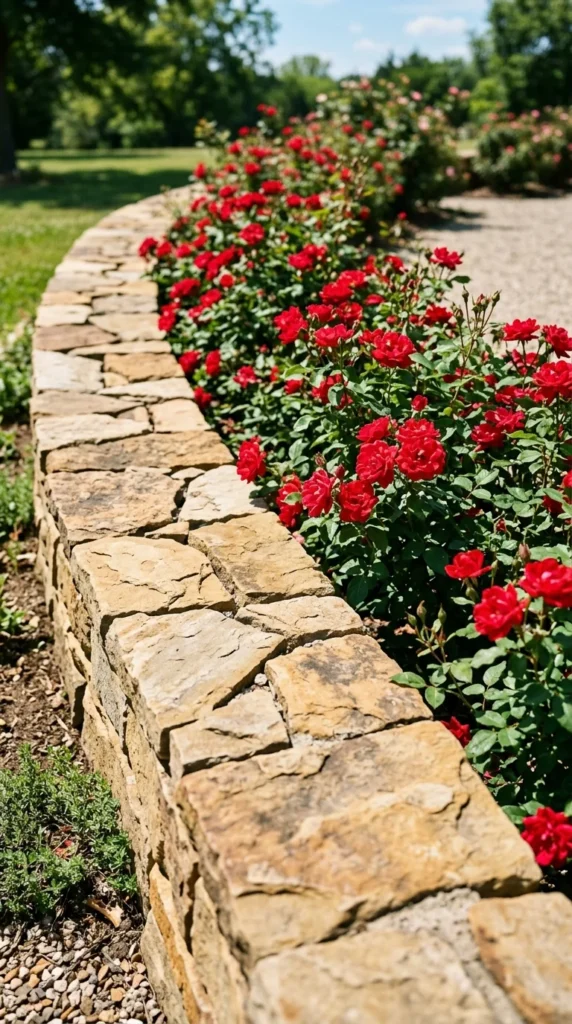
Flagstone is a premium material that offers a high-end, architectural finish. Because flagstones are flat, they can be stacked to create low walls or laid flat to create a wide, mowable border. When laid flat, they allow the wheels of a lawnmower to run directly over the stone, eliminating the need for string trimming. The natural variations in the stone’s surface add depth and character to the garden’s perimeter.
10. Terracotta Tiles
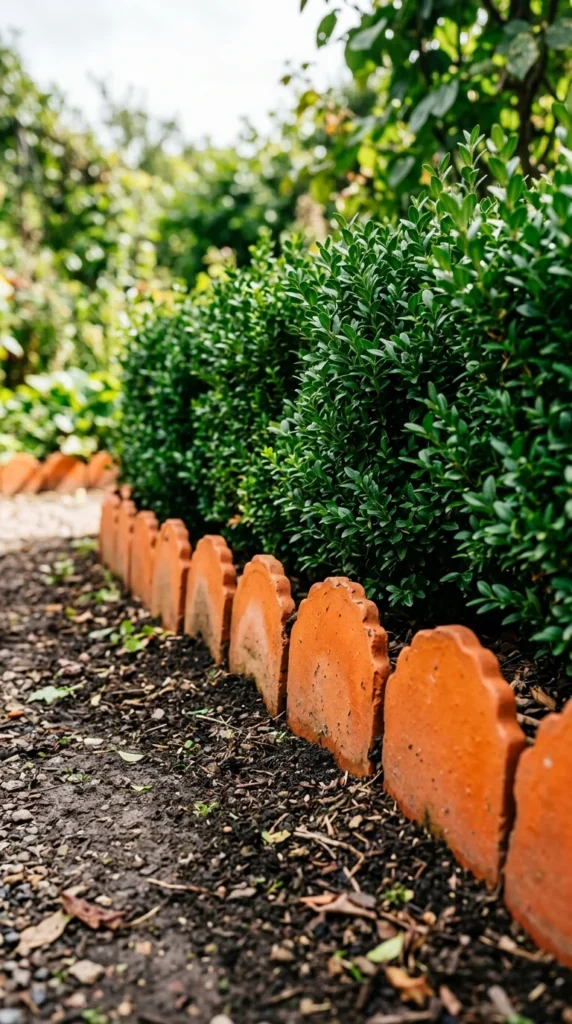
Terracotta tiles or “rope-top” edgings are a classic feature of Victorian gardens. These fired clay pieces are often ornate, featuring scalloped edges, scrolls, or rope designs. They are perfect for adding a touch of vintage elegance to formal flower beds. While terracotta is durable, it can be brittle; therefore, these borders are best suited for areas where they won’t be accidentally struck by heavy garden machinery.
11. Concrete Pavers
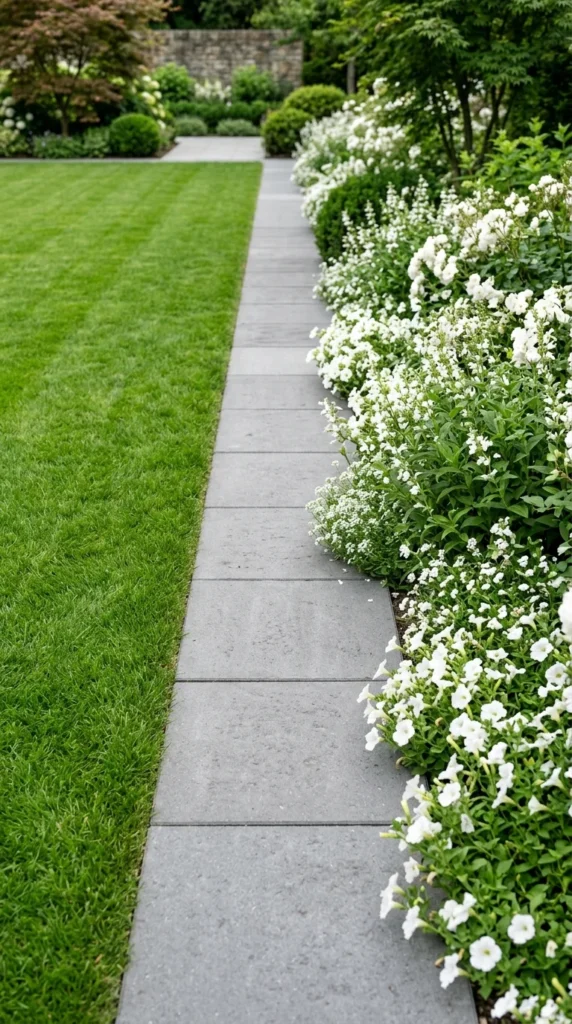
Concrete pavers are the workhorse of garden edging. They are readily available, uniform in size, and extremely durable. For a modern look, choose large, rectangular pavers in a charcoal grey. For a more traditional look, choose tumbled pavers that mimic the appearance of weathered stone. Because they are heavy, they provide excellent containment for mulch and soil, even on sloped terrain.
12. Living Edging
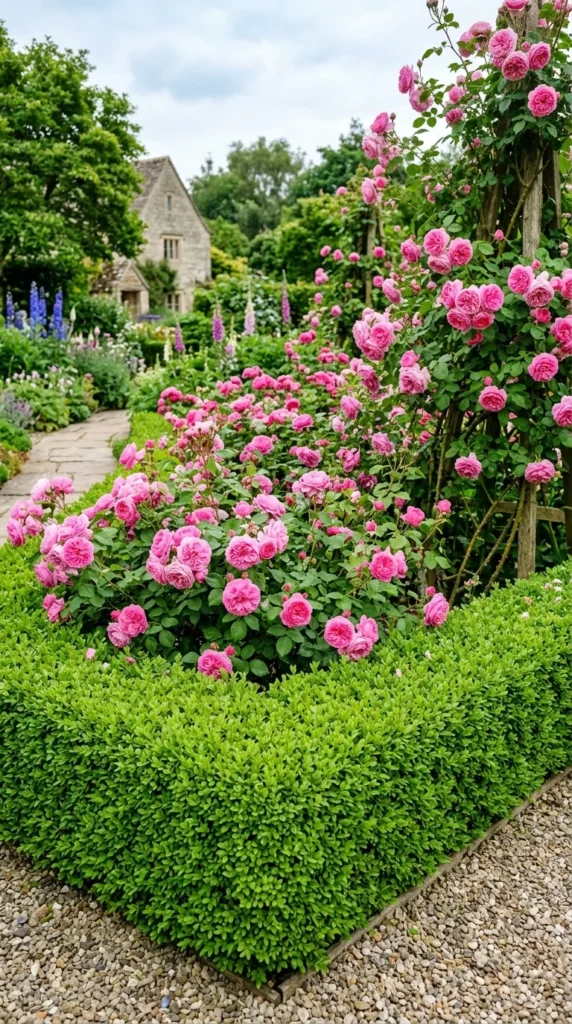
Who says a border has to be made of inanimate objects? A “living border” uses low-growing, dense plants to define the space. Dwarf boxwood, Liriope (monkey grass), or even culinary herbs like chives and thyme can be used to create a soft, green boundary. This approach softens the transition between the lawn and the bed, creating a lush, layered look. However, living borders do require more maintenance in the form of pruning and thinning to keep them looking tidy.
13. Seashells
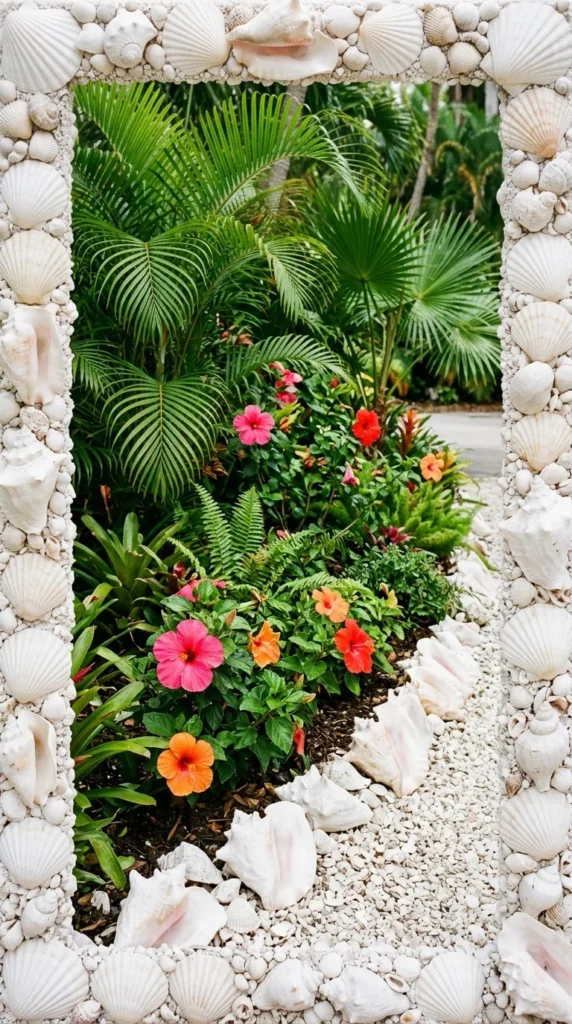
In coastal regions or for gardens with a nautical theme, seashells make for a unique and eye-catching border. Large conch or whelk shells can be placed individually, or crushed oyster shells can be used to create a textured, white path-like border. Beyond their beauty, seashells provide a slow-release source of calcium to the soil as they break down over many years.
14. Reclaimed Glass Bottles
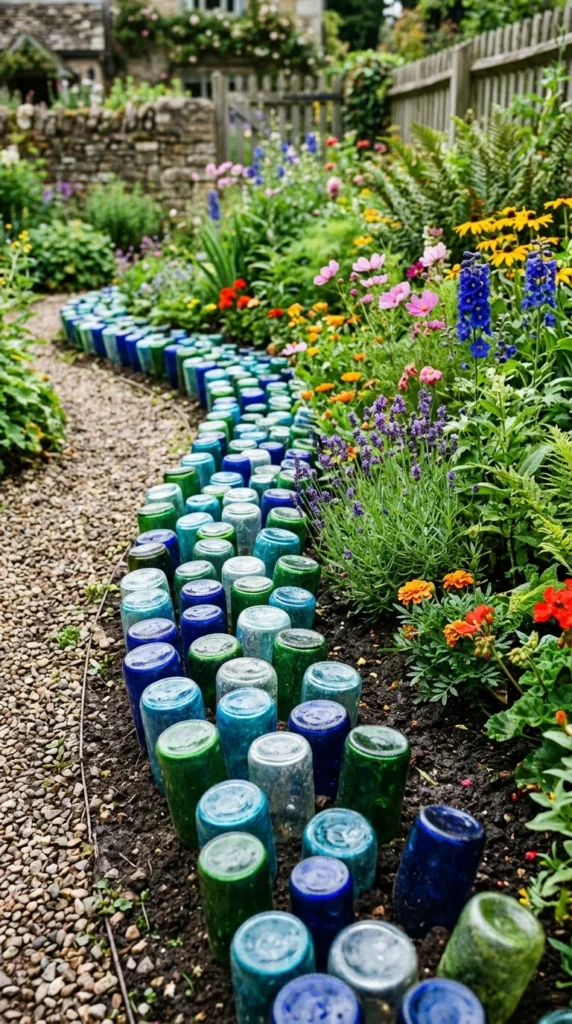
For the eclectic or eco-conscious gardener, reclaimed glass bottles offer a whimsical way to edge a bed. By burying bottles neck-down, you create a colorful, translucent border that catches the light. Using bottles of the same color (such as all cobalt blue or all forest green) creates a more unified, sophisticated look, while a mix of colors results in a playful, folk-art aesthetic.
15. Slate Shingles
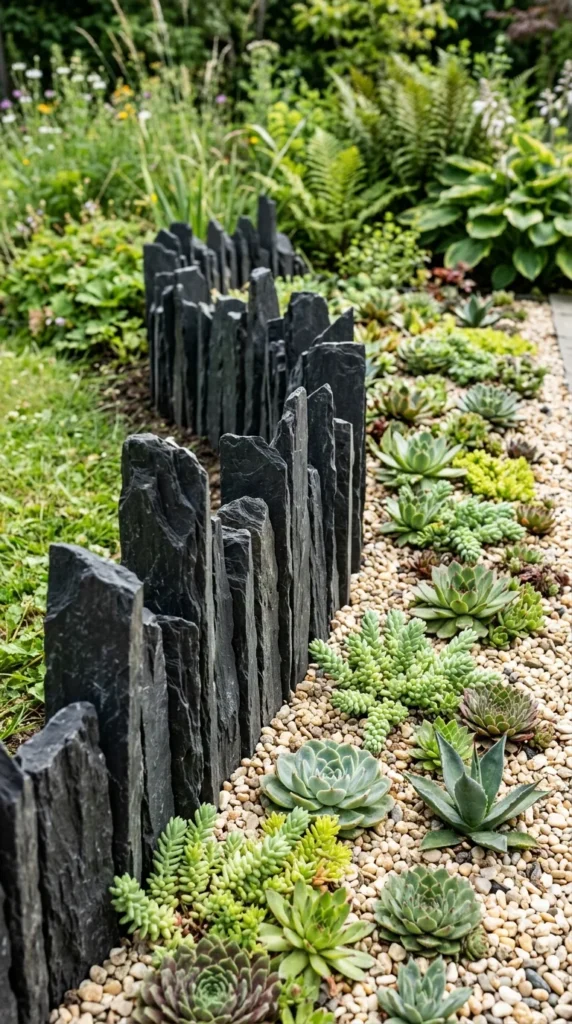
Repurposing old slate roofing shingles is a clever way to create a thin, sharp border. Because slate is a natural stone that splits into thin layers, it provides a very slim profile similar to metal edging but with much more natural texture. When driven vertically into the ground, the jagged tops create a striking, architectural line that works well in both modern and rustic settings.
16. Bamboo
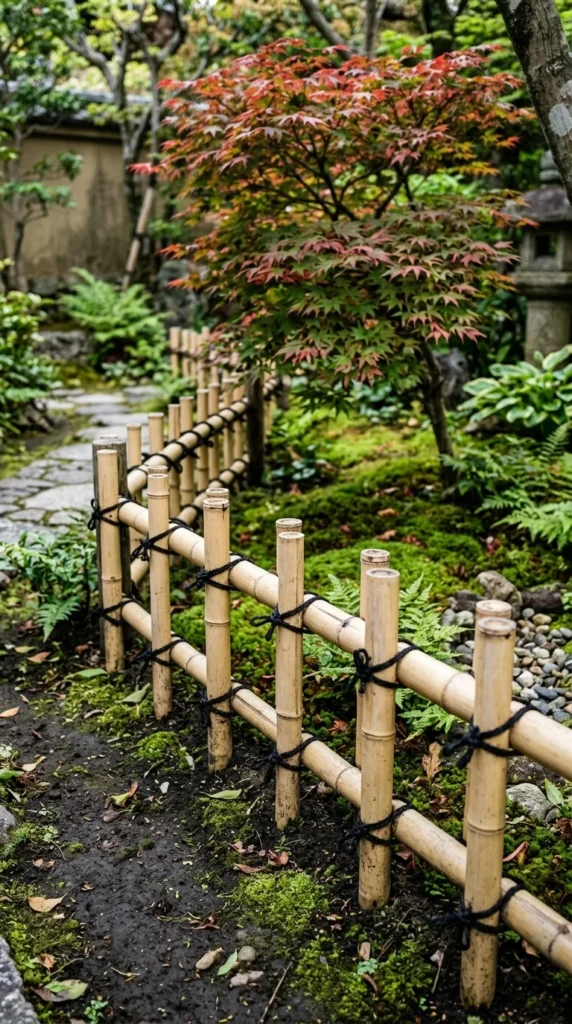
Bamboo edging is perfect for Zen gardens or tropical-themed landscapes. You can find pre-made rolls of bamboo “fencing” specifically designed for edging, which are easy to install and can follow curves. Bamboo is a sustainable material that adds an element of height and texture. It is important to look for pressure-treated or sealed bamboo to ensure it lasts several seasons in moist soil.
17. Gabion Walls
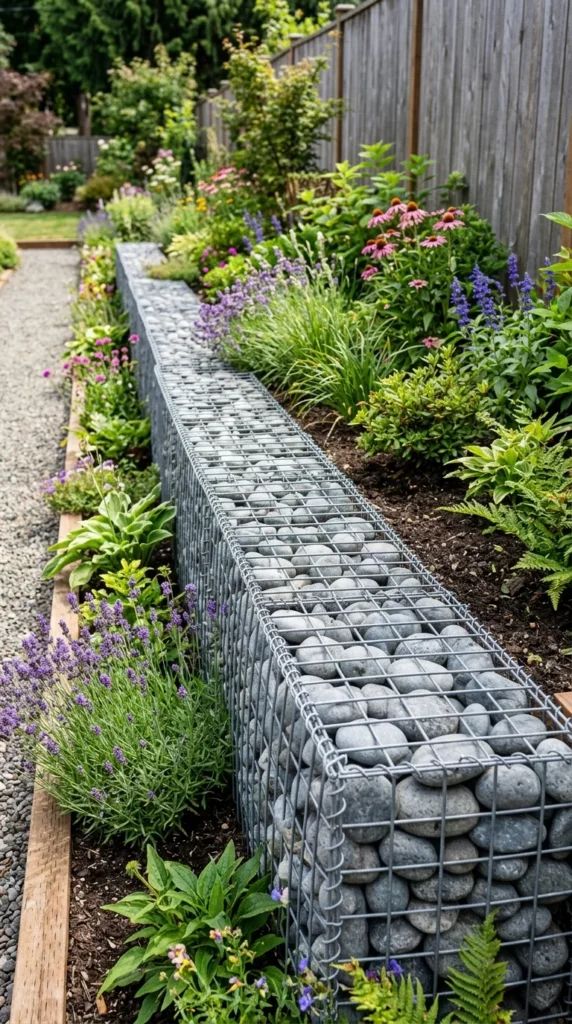
A gabion border consists of a wire mesh cage filled with rocks, stones, or even recycled concrete. While typically used for larger retaining walls, “mini” gabion baskets make for a striking, industrial-chic garden border. They are exceptionally stable and provide excellent drainage. You can customize the look by choosing different types of stone fill, from white marble chips to dark basalt.
18. Rope and Stakes
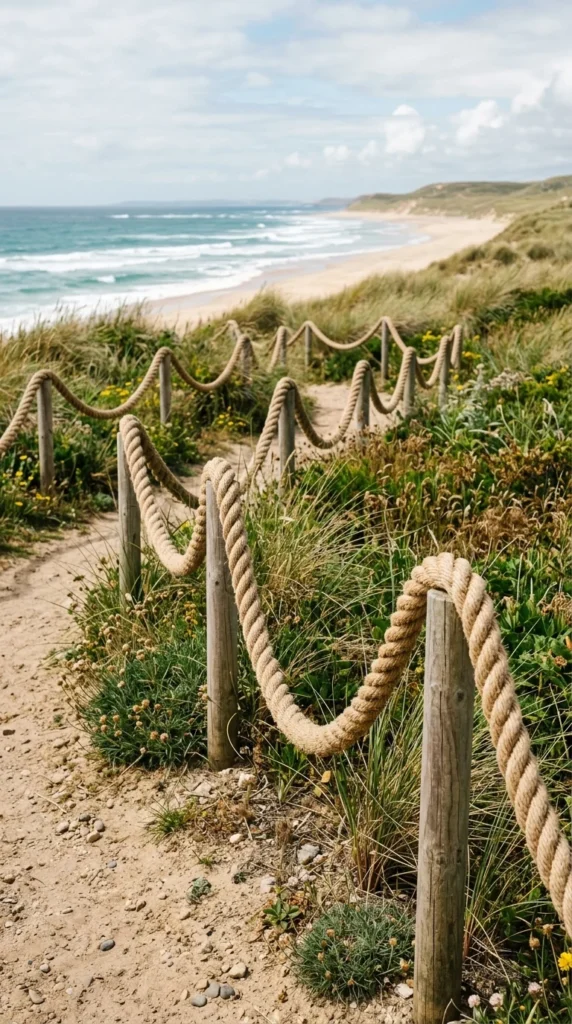
For a soft, decorative touch that doesn’t involve digging, a rope and stake border is a charming option. Heavy nautical rope is draped between short wooden or metal stakes, creating a visual boundary rather than a physical one. While it won’t stop grass from growing into the bed, it is an excellent way to define a path or protect delicate plants from being stepped on. This style is particularly effective in coastal gardens or large, expansive landscapes.