

For years, beige was unfairly maligned as the “safe” or “boring” choice in interior design. However, the rise of the “quiet luxury” aesthetic and the “warm minimalism” movement has sparked a massive renaissance for this versatile neutral. In the context of a bathroom, beige is anything but basic. When executed with intention, it transforms a functional space into a high-end sanctuary that feels both grounded and incredibly sophisticated.
The secret to a beige bathroom that looks expensive lies in the interplay of textures, the depth of tones, and the quality of materials. By moving away from flat, clinical whites and embracing the warmth of oatmeal, sand, and biscuit, you create an environment that promotes relaxation and timeless elegance. Here are nine expert-approved ideas to elevate your bathroom using the power of beige.
1. Travertine Stone
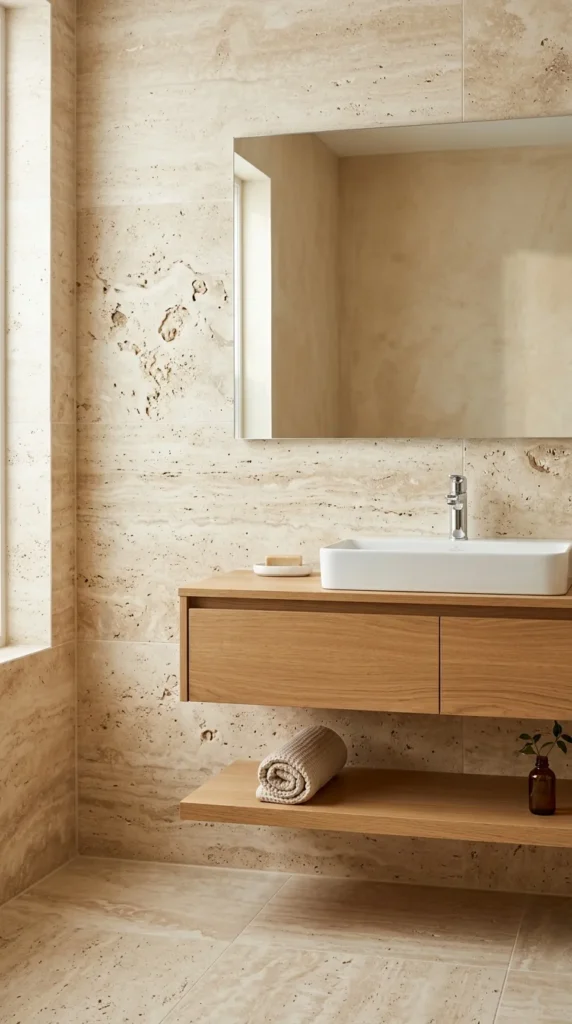
Travertine is the undisputed king of the elevated beige bathroom. This natural limestone, characterized by its unique pitted texture and soft, earthy hues, instantly signals luxury. Unlike polished marble which can sometimes feel cold, travertine offers a tactile warmth that feels ancient yet modern.
To achieve an expensive look, opt for large-format travertine tiles with minimal grout lines. This creates a seamless, monolithic appearance that mimics the feel of a high-end spa in the Mediterranean. You can use travertine for the flooring, the shower walls, or even a custom-carved integrated sink. The natural variations in the stone ensure that the space never feels “flat,” providing a built-in visual interest that requires very little additional decor.
2. Wood Vanities
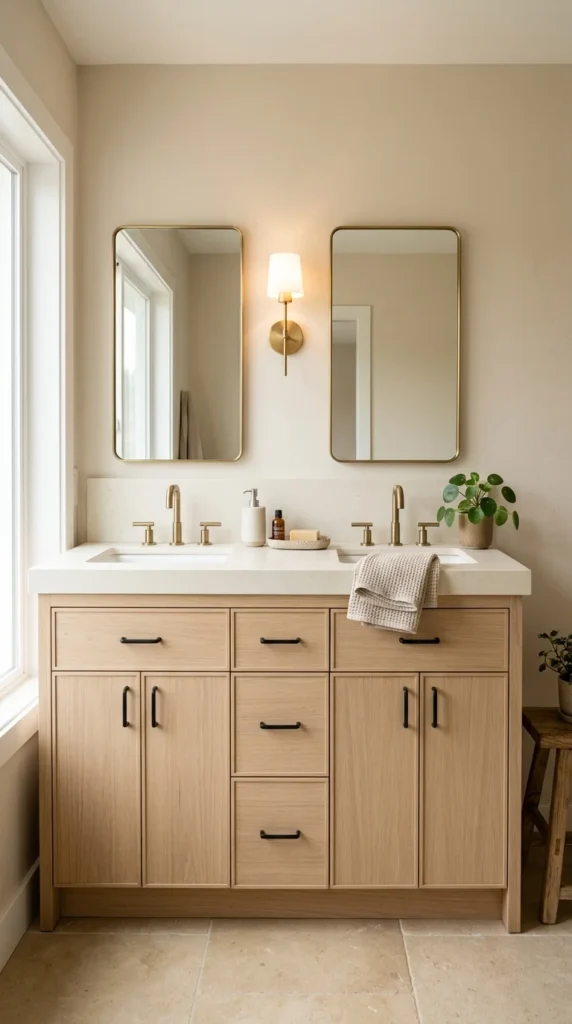
To prevent a beige bathroom from feeling too monochromatic or “washy,” you need to introduce organic elements. A natural wood vanity—specifically in light oak, walnut, or ash—provides the perfect structural anchor. The warmth of the wood grain complements beige tones beautifully, adding a layer of “coziness” that is essential for a relaxing atmosphere.
When selecting wood for a beige bathroom, look for matte or satin finishes rather than high-gloss stains. A “raw” or wire-brushed look enhances the organic feel. Pairing a light wood vanity with beige stone countertops creates a sophisticated, tonal contrast that feels curated and custom-built.
3. Brushed Brass
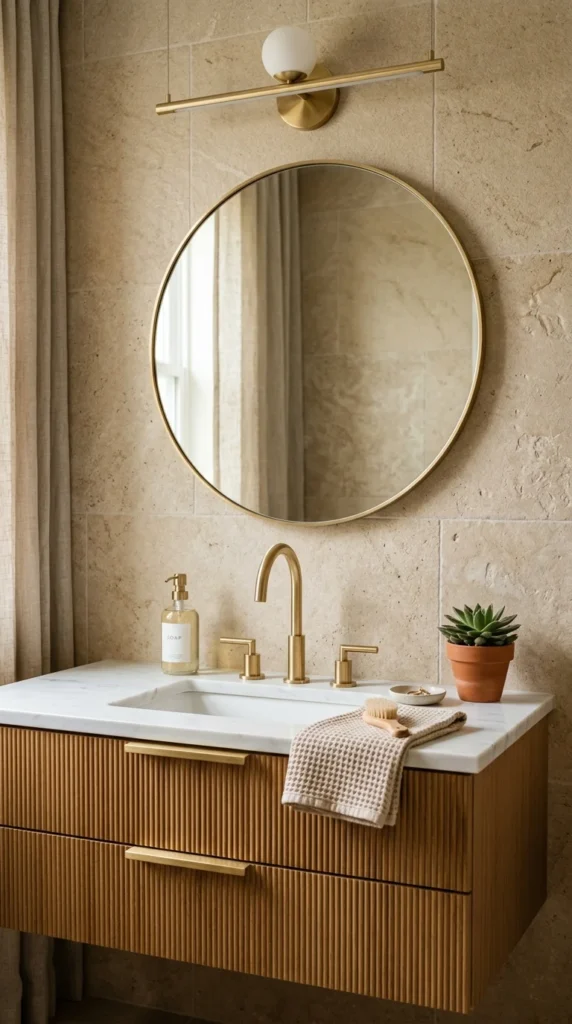
While chrome is a standard choice, it can often feel clinical against warm beige tones. To make a beige bathroom feel truly expensive, turn to brushed brass or champagne gold hardware. The golden undertones of the metal harmonize with the warmth of the beige, creating a glow that feels incredibly upscale.
Brushed finishes are preferable to polished ones, as they offer a more muted, sophisticated sheen that hides fingerprints and aligns with a calm aesthetic. Consider replacing everything from the shower head to the toilet lever with matching brass components to create a cohesive, designer-level finish.
4. Textured Limewash
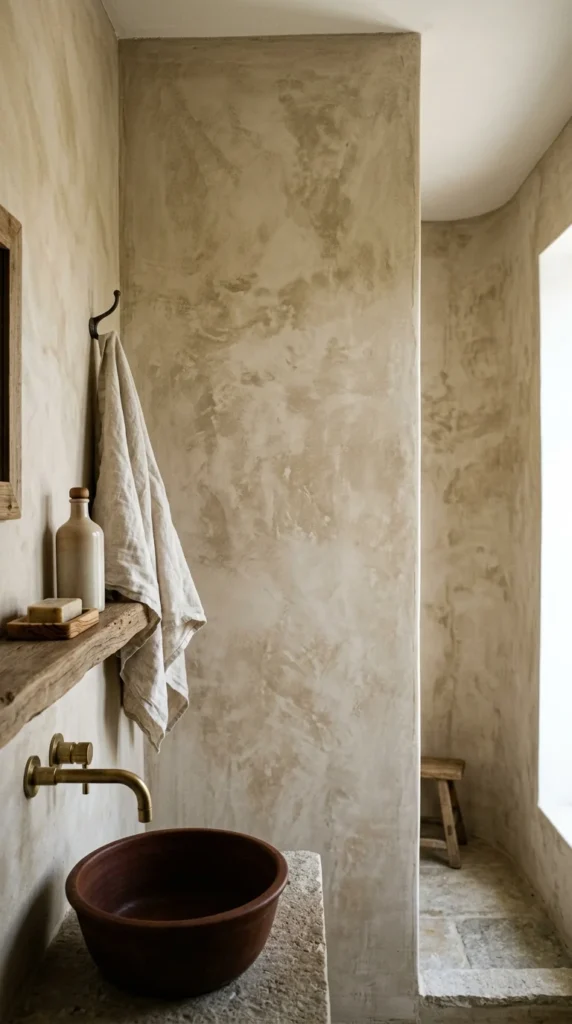
If you want to avoid a “flat” paint look, limewash is the ultimate solution. Limewash is a breathable, mineral-based finish that creates a soft, mottled effect on the walls. In a beige palette, it adds an incredible amount of depth and movement, making the walls look like they belong in a historic villa or a high-end boutique hotel.
The beauty of limewash is its ability to catch the light. As the sun moves throughout the day, the shadows and highlights on the textured surface change, keeping the room dynamic. It’s an excellent way to introduce a sense of “old-world” craftsmanship into a modern home, making the space feel lived-in and expensive.
5. Monochromatic Layering
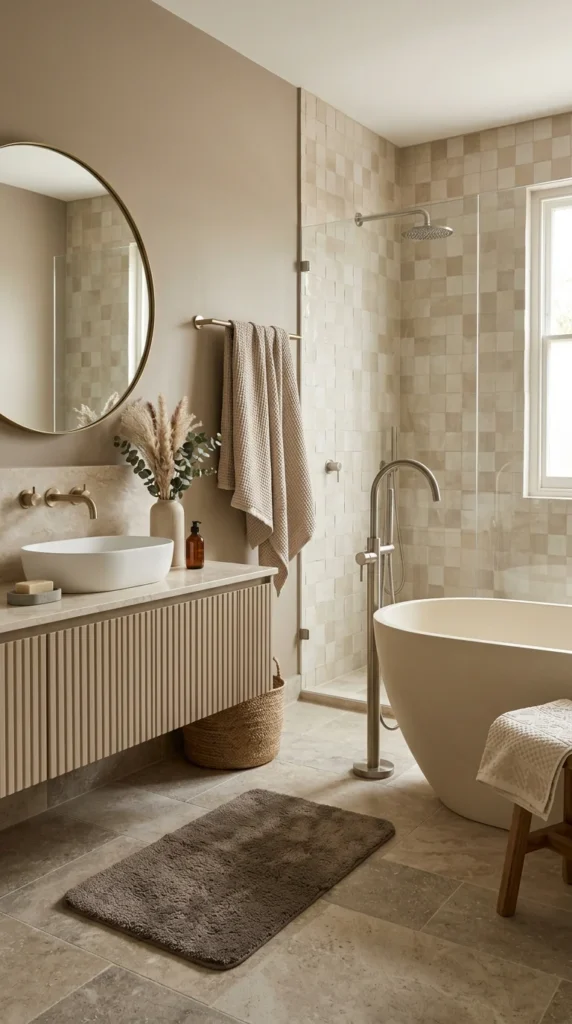
The most common mistake in neutral design is using only one shade of beige. To make the room feel “designed,” you must layer multiple tones from the same color family. Think of it as a gradient: use a pale cream for the ceiling, a sandy beige for the walls, and a deeper taupe or “greige” for the floor or cabinetry.
This tonal approach creates a “cocooning” effect. When you walk into a room where every element is a slightly different variation of the same warm hue, the eye doesn’t get stuck on one focal point. Instead, it glides over the space, perceiving it as a unified, serene whole. This level of intentionality is a hallmark of professional interior design.
6. Fluted Finishes
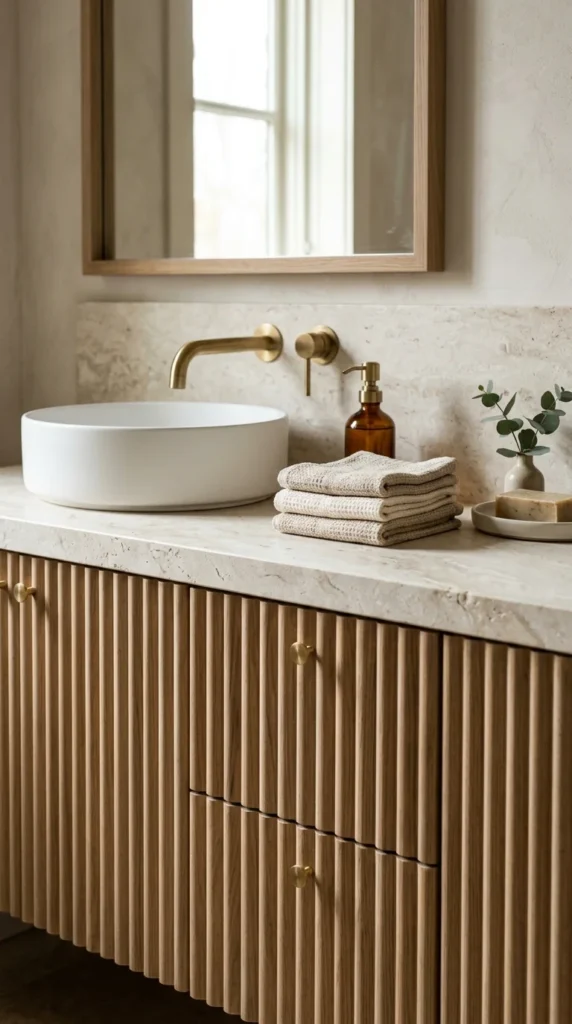
Texture is the antidote to boredom in a neutral palette. Fluted (or ribbed) details have become a staple in high-end bathroom design because they add architectural interest without the need for loud colors. Whether it’s a fluted wooden vanity, a ribbed glass shower screen, or even fluted tiles, these vertical lines create a sense of height and rhythm.
In a beige bathroom, fluted surfaces create a beautiful play of light and shadow. The grooves catch the light differently than a flat surface, adding a sophisticated “3D” quality to the room. It’s a subtle way to incorporate a trend that feels timeless rather than fleeting.
7. Statement Bathtubs
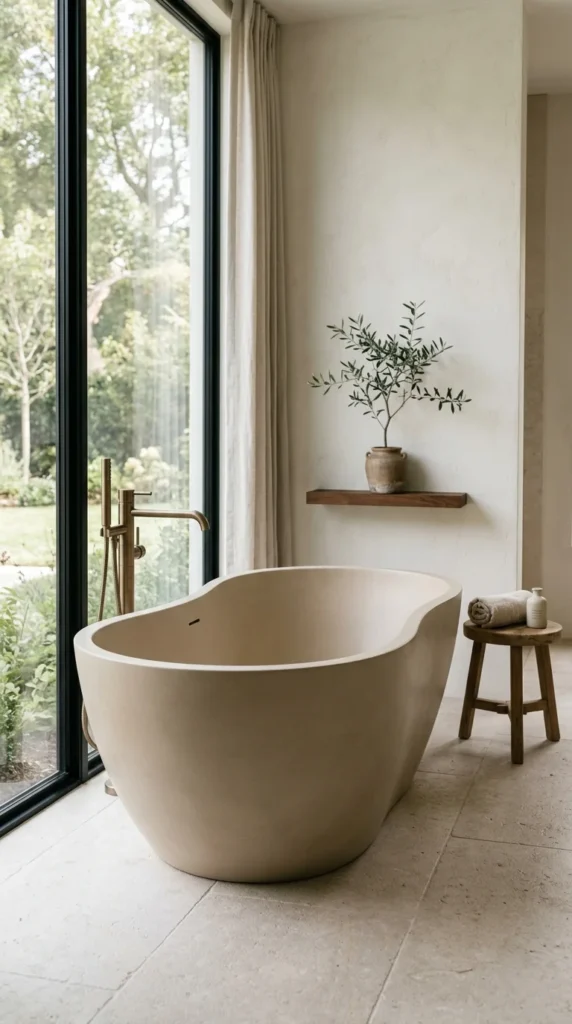
Nothing says “expensive” like a dedicated space for relaxation. A freestanding bathtub serves as the functional and visual centerpiece of a luxury bathroom. To maintain the calm, beige aesthetic, consider a tub made from solid surface resin or stone composite in a matte off-white or almond tone.
Unlike standard shiny acrylic tubs, matte stone tubs have a weight and a presence that feels much more premium. When placed against a backdrop of beige tiles or limewash walls, the tub becomes a piece of sculpture. Pair it with a floor-mounted brass filler to complete the high-end look.
8. Natural Linens
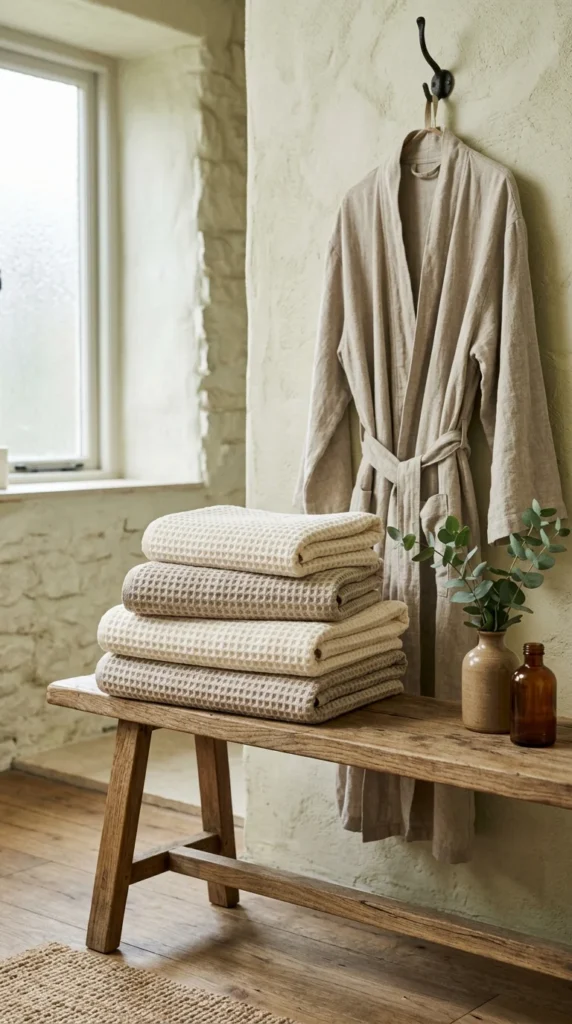
The “cozy” element of a beige bathroom is largely determined by the textiles. To lean into the expensive, spa-like feel, skip the brightly colored or bleached-white towels. Instead, opt for high-quality linens and cottons in shades of oatmeal, sand, and biscuit.
Waffle-weave textures and fringed edges add a tactile quality that feels much more sophisticated than standard terry cloth. Don’t forget a high-quality jute or high-pile wool rug in a neutral tone to provide softness underfoot. These small details are what make a bathroom feel like a curated living space rather than just a utility room.
9. Soft Glow
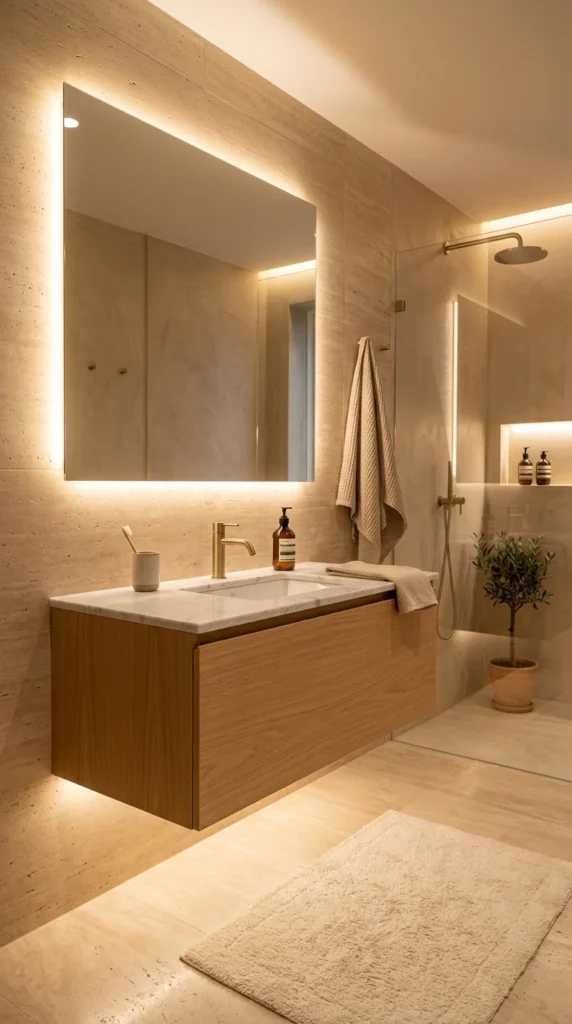
Lighting can make or break a neutral bathroom. In a beige space, you want to avoid cool-toned, blueish light at all costs, as it will make the beige look muddy or yellow. Instead, opt for warm-spectrum bulbs (2700K to 3000K) that enhance the golden and pink undertones of the beige.
Layered lighting is key to an “expensive” feel. Incorporate a mix of overhead recessed lighting, eye-level sconces by the mirror, and indirect LED strips under vanities or inside shower niches. This creates a soft, ambient glow that highlights the textures of your stone and wood, making the entire room feel like a warm, inviting sanctuary.