
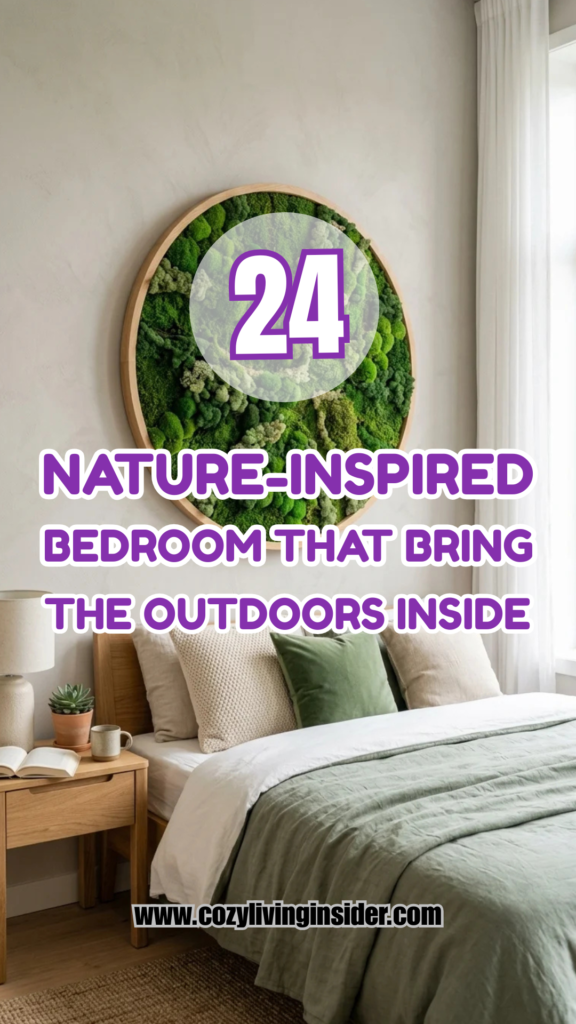

The concept of biophilic design—the practice of connecting a built environment to the natural world—has evolved from a luxury trend into a fundamental philosophy of modern interior design. As our lives become increasingly digitized and urban-centric, the bedroom remains our ultimate sanctuary for rest and restoration. Integrating nature-inspired elements into this private space does more than just enhance aesthetics; it lowers cortisol levels, improves air quality, and fosters a sense of profound tranquility.
From the tactile warmth of raw timber to the vibrant vitality of indoor greenery, there are countless ways to blur the lines between the indoors and the world outside. Here are 24 nature-inspired bedroom concepts that transform a simple sleeping area into a breathtaking ecological retreat.
1. Living Walls
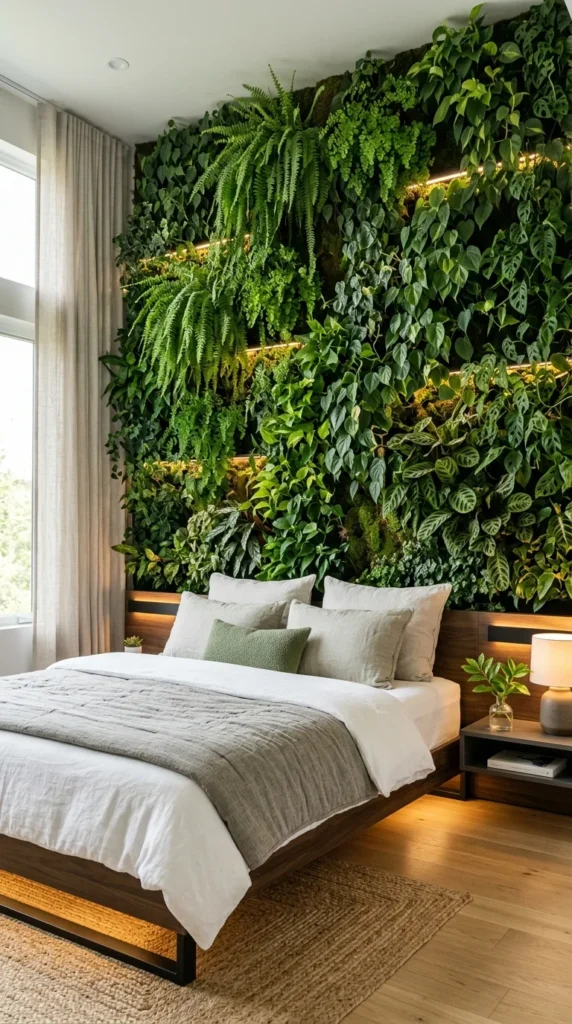
A living wall, or vertical garden, serves as a literal breath of fresh air. By mounting a hydroponic or modular planting system directly onto the wall, you create a vibrant, oxygen-rich backdrop. This feature acts as a natural air purifier and a stunning visual centerpiece, replacing traditional wallpaper with the organic textures of various fern species and trailing vines.
2. Reclaimed Wood
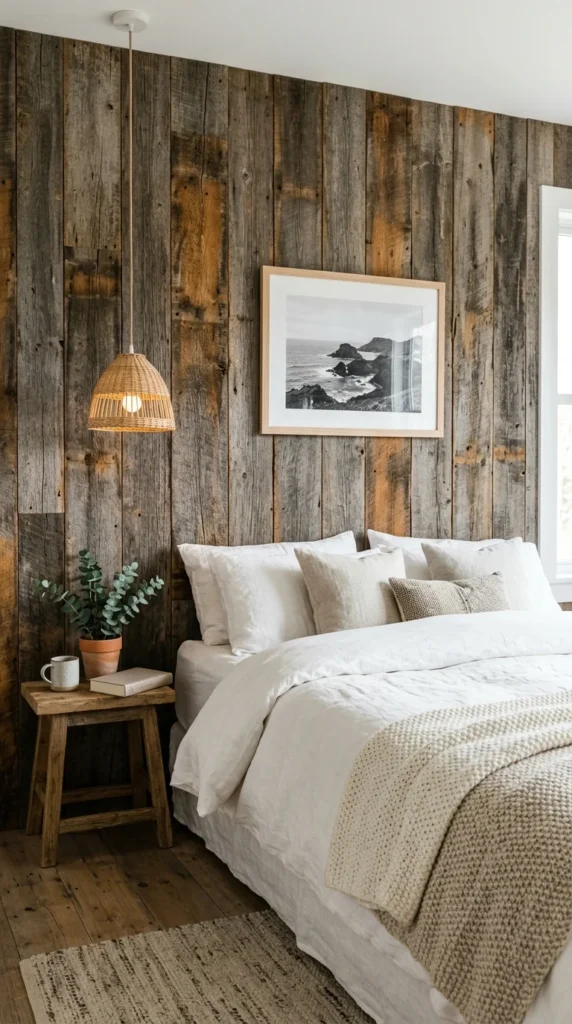
Reclaimed wood brings a sense of history and groundedness to a bedroom. Whether it is used for a statement headboard, ceiling beams, or an accent wall, the imperfections—knots, grain patterns, and weathered patinas—tell a story of the outdoors. The warmth of the timber balances the coolness of modern finishes, creating a cozy, cocoon-like atmosphere.
3. Botanical Prints
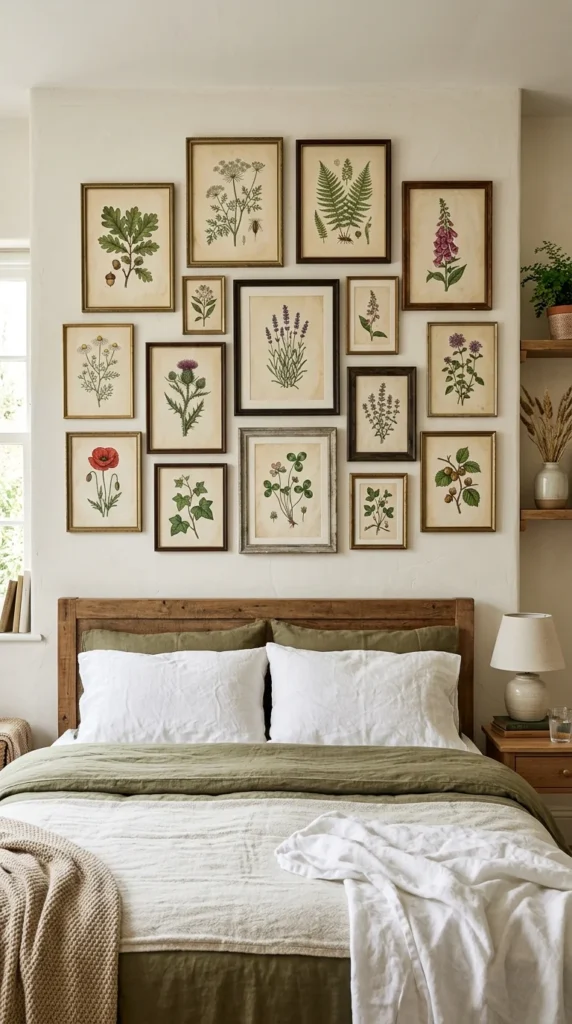
For those who prefer a more curated look, botanical prints offer a sophisticated nod to the natural sciences. Oversized framed illustrations of monstera leaves, delicate wildflowers, or ancient ferns can establish a theme without the maintenance of live plants. When arranged in a gallery style, they create a rhythmic, calming visual interest that draws the eye upward.
4. Stone Accents
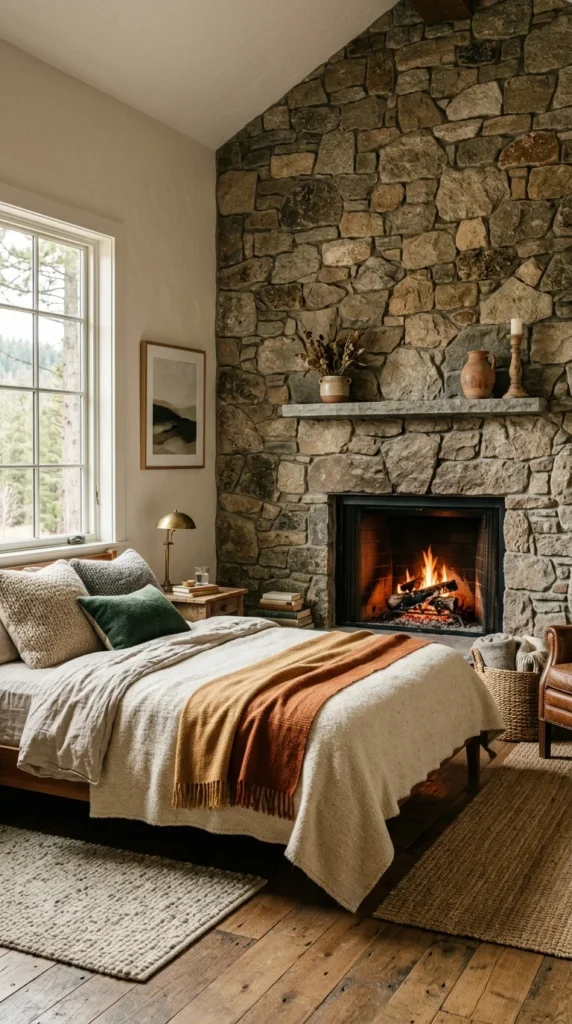
Incorporating stone into the bedroom introduces an element of rugged permanence. A stacked stone wall or a fireplace hearth made of river rock provides a tactile contrast to soft bedding. Stone naturally regulates temperature and provides an acoustic buffer, making the room feel like a secluded mountain lodge or a hidden cave sanctuary.
5. Natural Linens
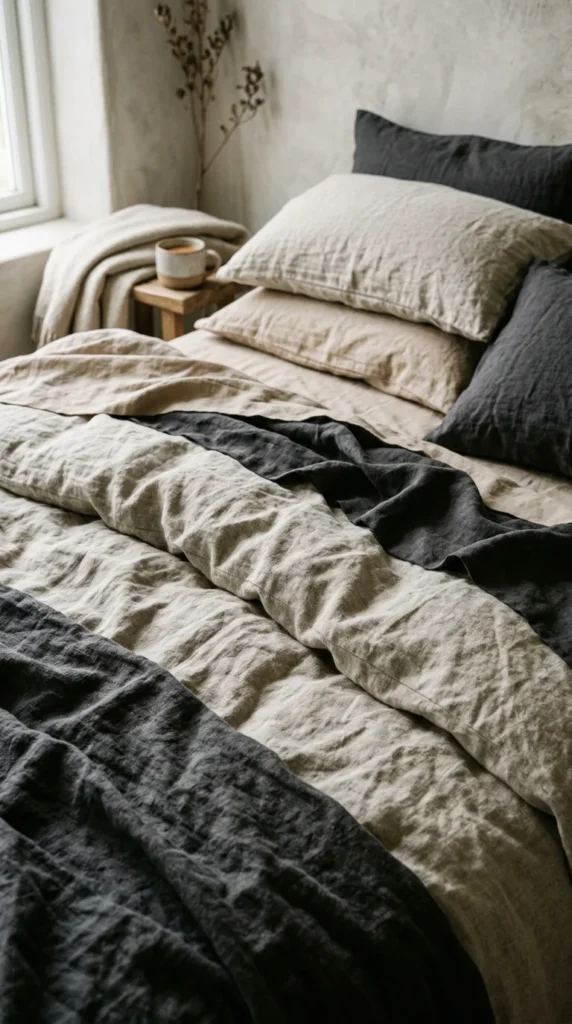
Nature is felt as much as it is seen. Switching to 100% organic flax linen or hemp bedding brings a raw, tactile quality to the sleep experience. These materials are highly breathable, moisture-wicking, and possess a natural “rumpled” look that eschews the stiffness of synthetic fabrics, inviting a more relaxed and organic way of living.
6. Earth Tones
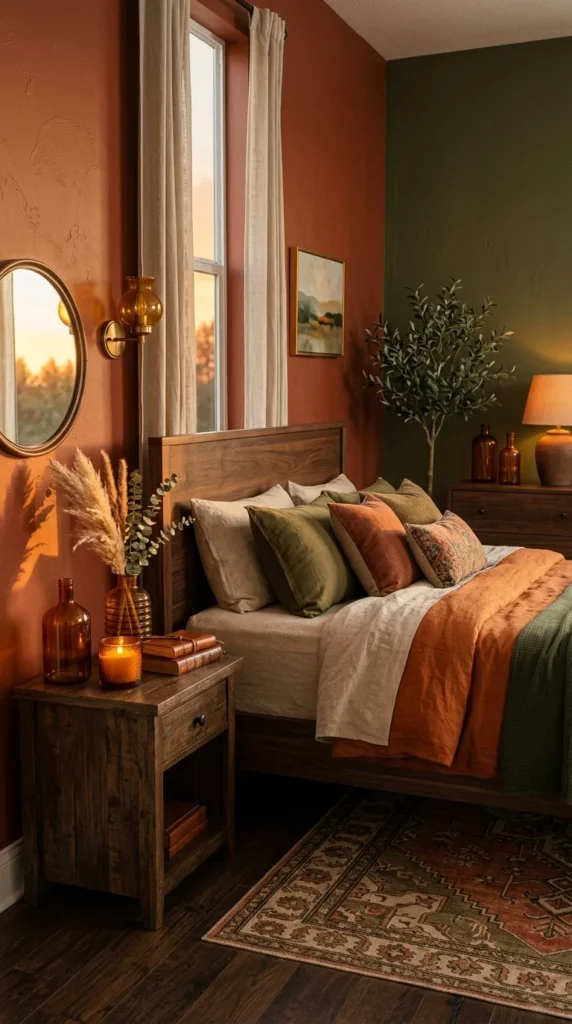
Color is one of the most powerful tools in nature-inspired design. Moving away from stark whites and grays toward a palette of ochre, terracotta, moss green, and sky blue can transform the mood of a room. These earth tones mimic the colors of the forest floor, the desert at dusk, or the canopy above, grounding the space in a familiar, natural spectrum.
7. Floor-to-Ceiling Windows
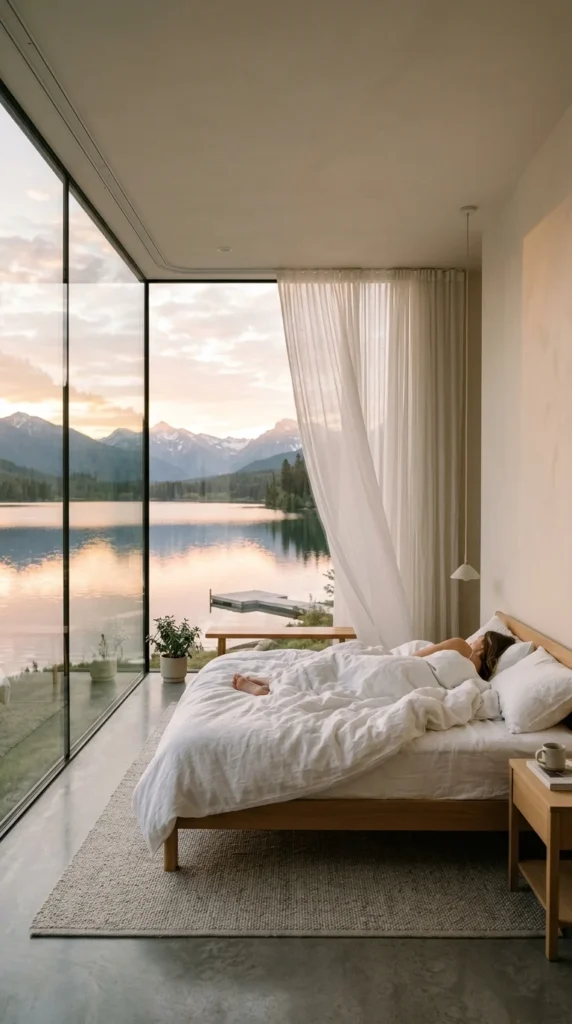
The most direct way to bring the outdoors in is to remove the visual barriers between them. Floor-to-ceiling windows act as “living paintings,” where the view changes with the seasons and the time of day. This abundance of natural light regulates the circadian rhythm, helping the body wake up naturally with the sun.
8. Rattan Furniture
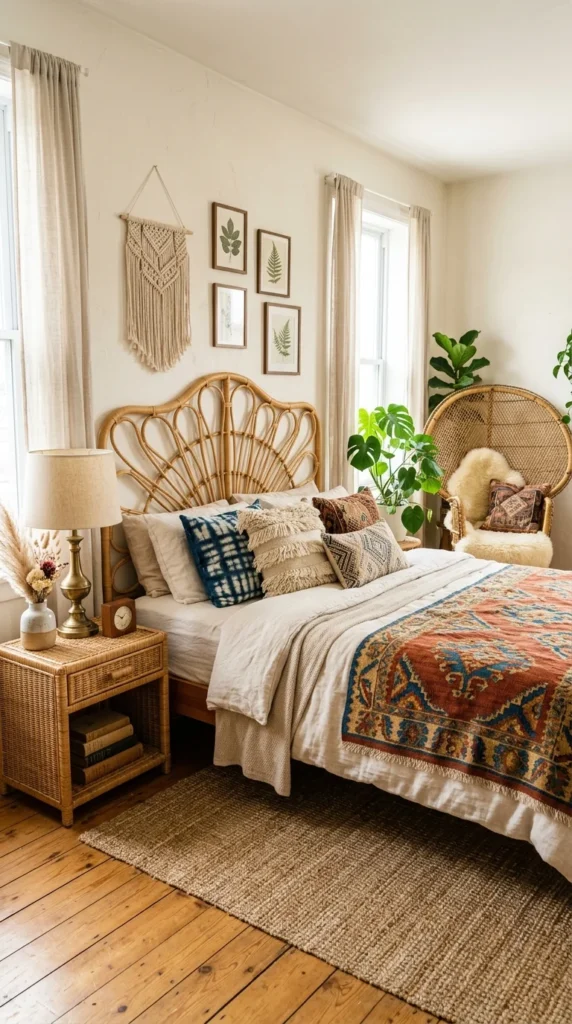
Rattan, wicker, and cane furniture introduce a lightweight, organic aesthetic that feels airy and coastal. These materials are derived from climbing palms and provide a hand-crafted, artisanal feel. The intricate weaving patterns cast beautiful, dappled shadows when hit by sunlight, reminiscent of light filtering through a tropical canopy.
9. Indoor Trees
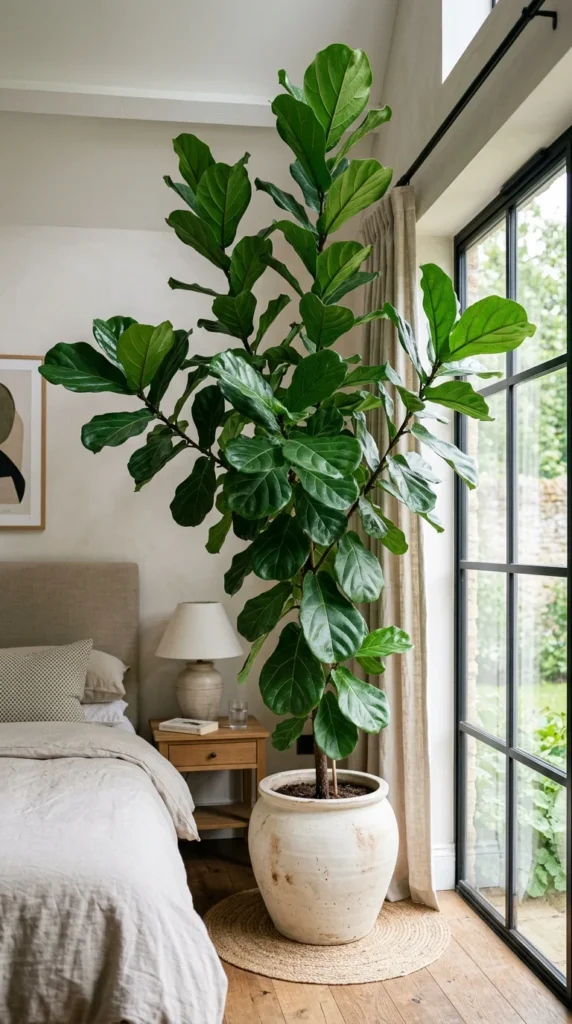
While small potted plants are common, a statement indoor tree—like a Fiddle Leaf Fig, an Olive tree, or a Dragon tree—scales the greenery to the room’s architecture. Placing a tree in a corner or beside the bed adds height and a sense of grandeur, making the occupant feel as though they are sleeping under a protective forest canopy.
10. Sky Blue Ceilings
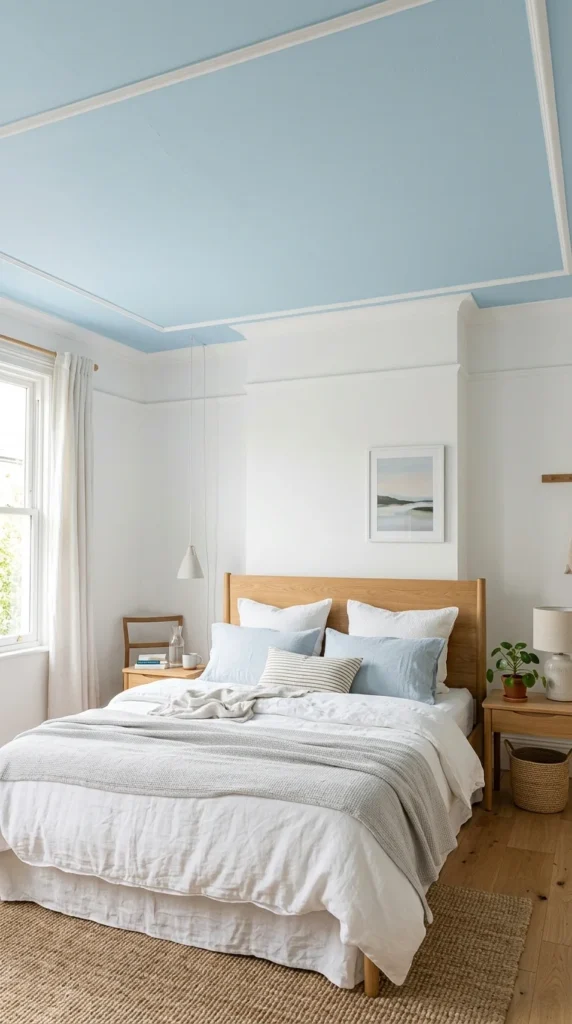
Often overlooked, the “fifth wall” offers a unique opportunity for nature-inspired design. Painting the ceiling a soft, ethereal blue can mimic the vastness of the sky. This technique, often used in traditional Southern “haint blue” porches, makes the room feel taller and more open, reducing the feeling of being enclosed.
11. Terracotta Tiles
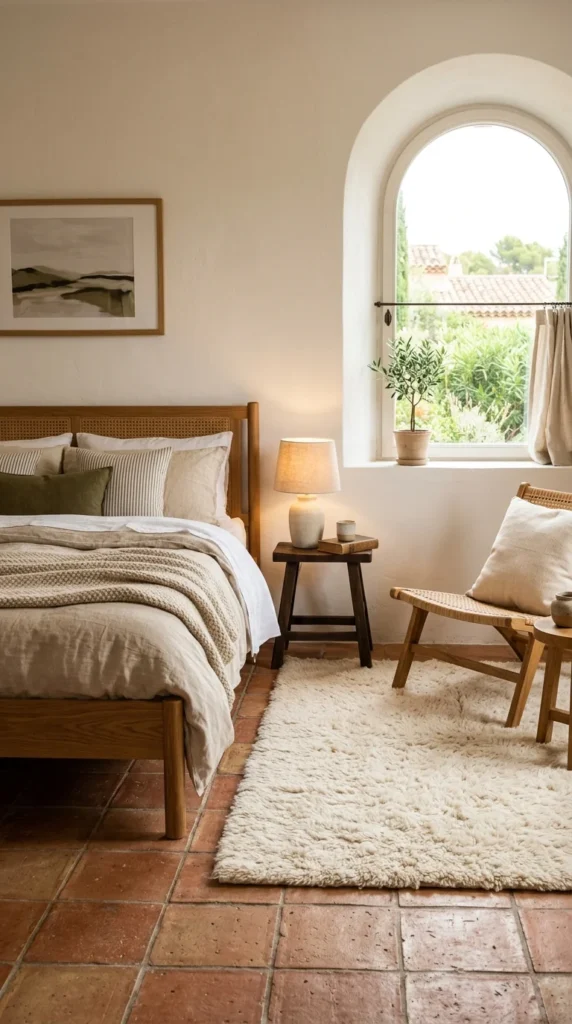
Terracotta tiles bring the warmth of the earth directly underfoot. Their natural reddish-brown hue and matte finish feel Mediterranean and grounded. Because they retain heat well, they are perfect for rooms with plenty of sun, radiating a gentle warmth long after the sun has set.
12. Moss Art
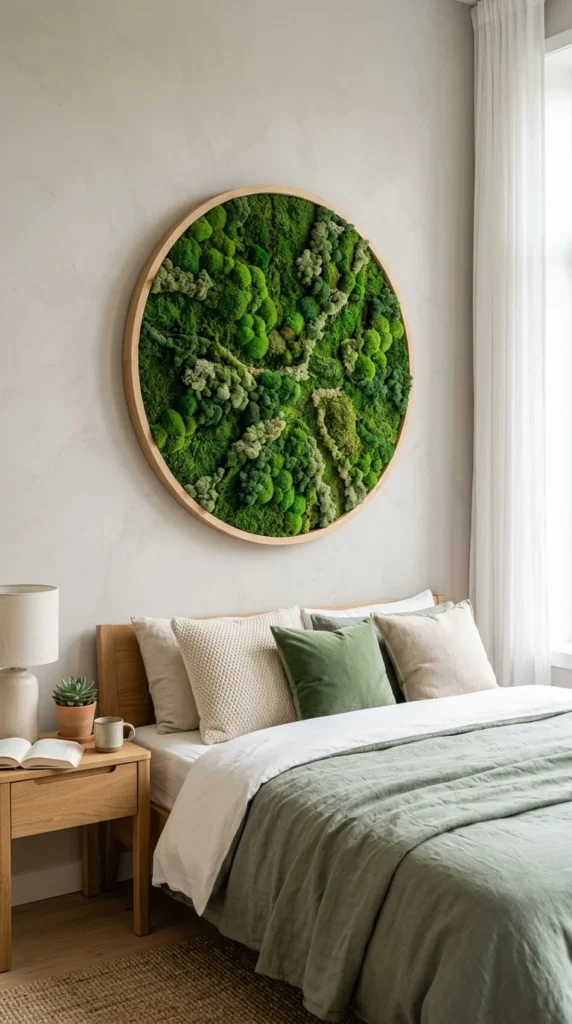
Preserved moss art is a maintenance-free way to enjoy the textures of the forest. These installations require no water or sunlight, yet they retain their vibrant green color and soft, sponge-like appearance for years. They act as acoustic dampeners and provide a unique, 3D tactile element to the wall decor.
13. Woven Textures
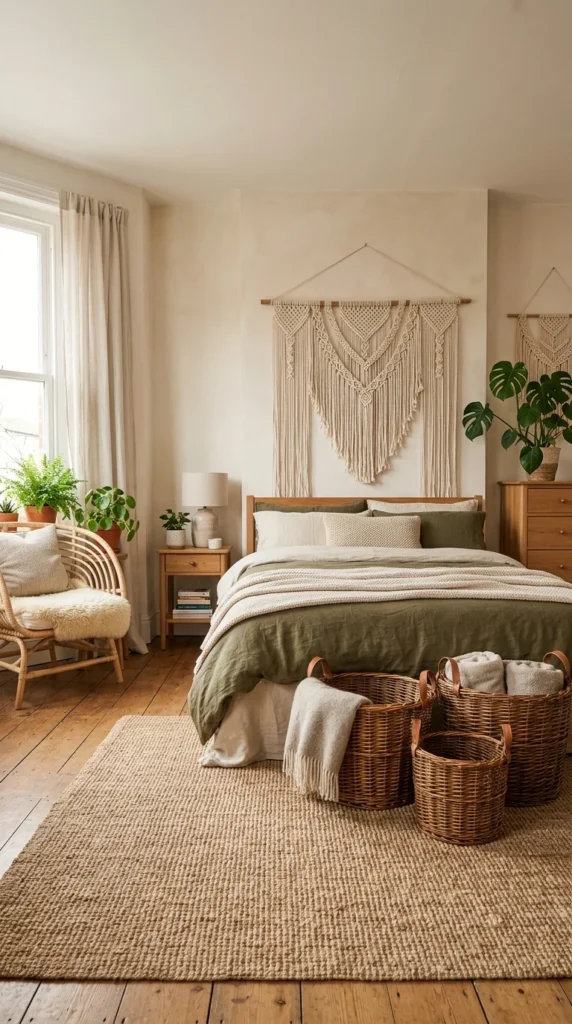
Integrating various weaves—such as jute, seagrass, and sisal—adds layers of complexity to a room’s design. A large jute rug provides a coarse, natural foundation, while macramé wall hangings add a softer, textile-based organic feel. These textures stimulate the senses and break up the flat surfaces of modern furniture.
14. Water Features
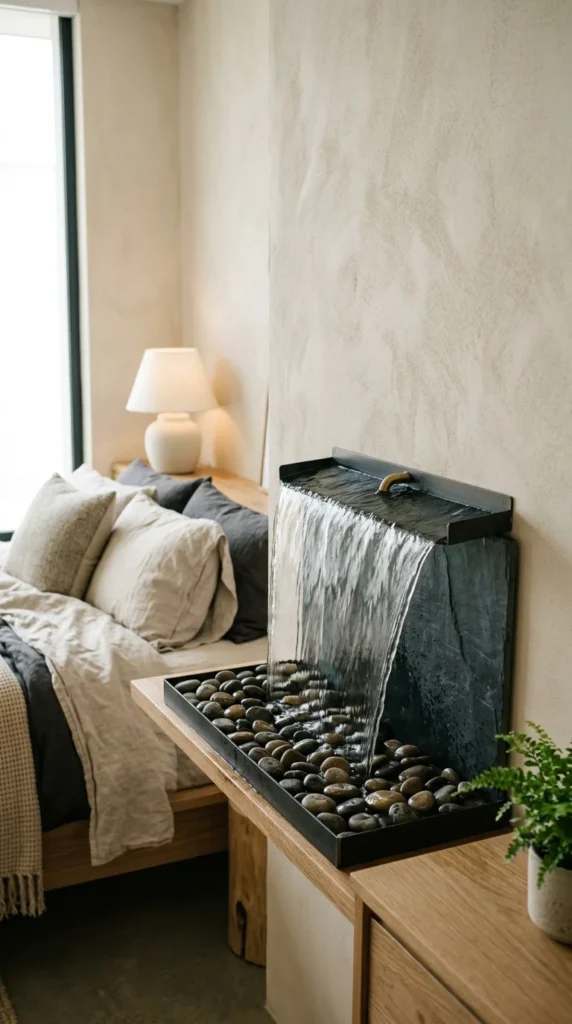
The sound of water is universally recognized as one of the most soothing natural elements. A small, sleek indoor fountain or a wall-mounted water feature introduces the gentle white noise of a stream. This auditory layer masks urban noise and creates a meditative environment conducive to deep sleep.
15. Skylights
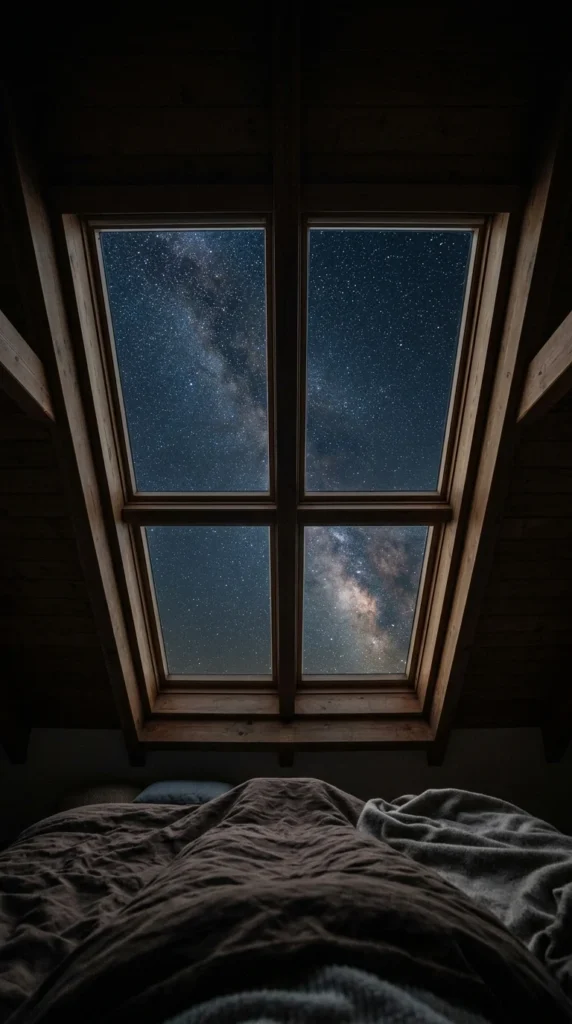
Positioning a skylight directly above the bed allows for “stargazing” from the comfort of your duvet. It provides a direct connection to the celestial cycles, allowing the moon and stars to be the last things you see before drifting off, and the morning light to be your natural alarm clock.
16. Bamboo Elements
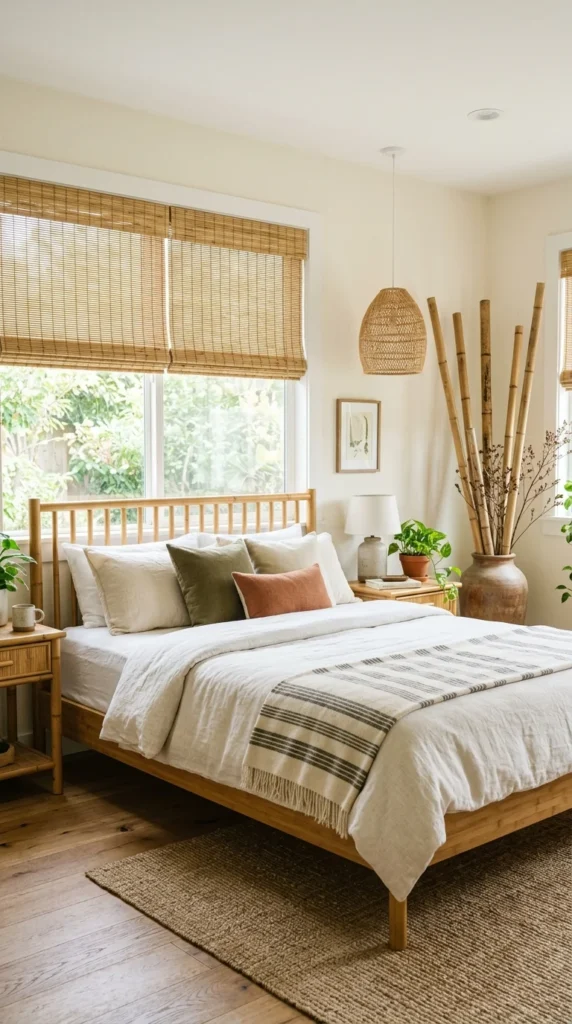
Bamboo is a highly sustainable material that exudes a sense of Zen. Whether used in flooring, window treatments, or as structural accents, its light color and vertical grain lines create a sense of order and peace. It is particularly effective in creating an Eastern-inspired, minimalist aesthetic.
17. Jute Rugs
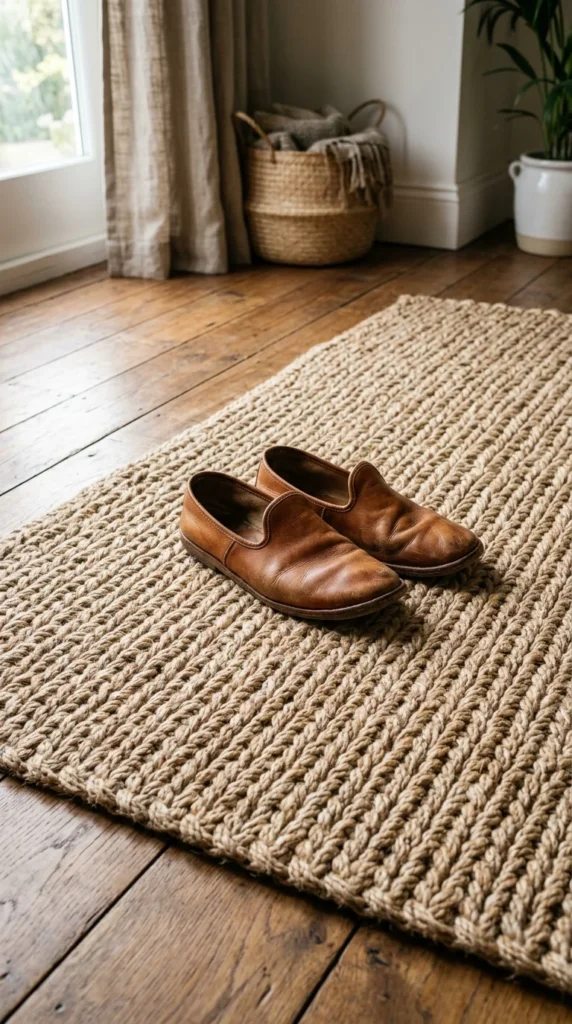
Jute is a vegetable fiber that is both durable and incredibly earthy. A large jute rug anchors the room, providing a neutral, textured base that complements almost any color scheme. Its slightly coarse texture is a reminder of the raw materials found in nature, bringing an unrefined beauty to the space.
18. Leafy Patterns
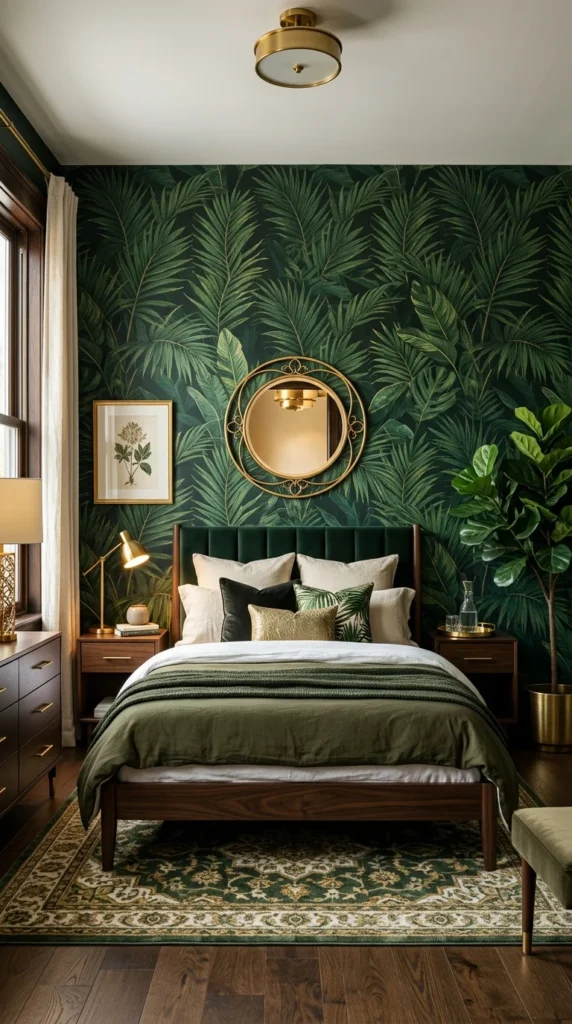
If live plants aren’t an option, high-quality wallpaper with leafy motifs can provide a similar psychological boost. Bold banana leaf patterns or subtle eucalyptus prints can wrap the room in a “jungle” or “woodland” feel. Using these patterns on a single accent wall prevents the space from feeling overwhelmed while still making a strong natural statement.
19. Raw Edges
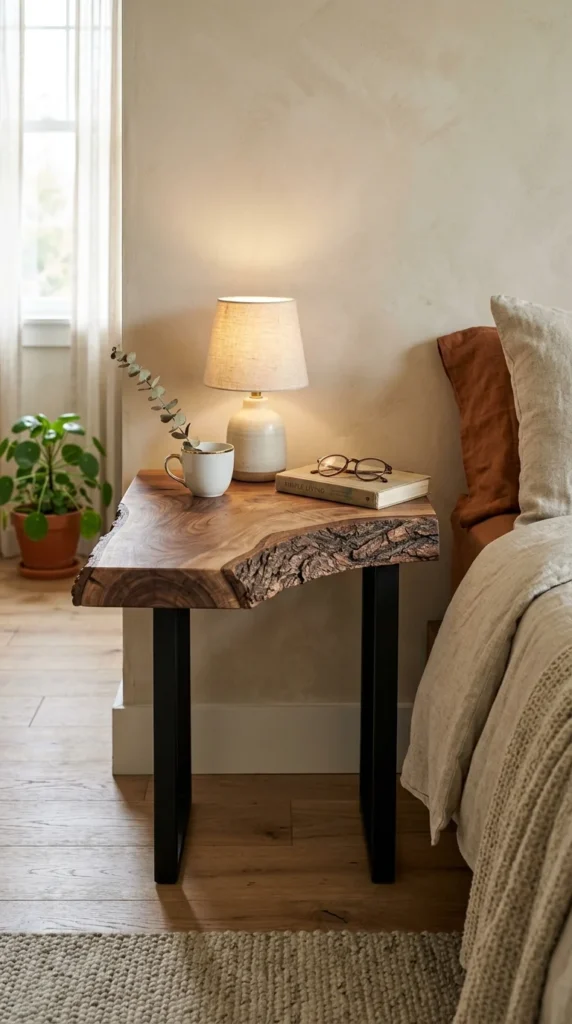
Furniture that retains the “live edge” of the tree celebrates the unique geometry of nature. A live-edge vanity, nightstand, or shelving unit ensures that no two pieces are exactly alike. These items serve as functional sculptures, reminding the inhabitant of the tree’s original form and the beauty of imperfection.
20. Forest Murals
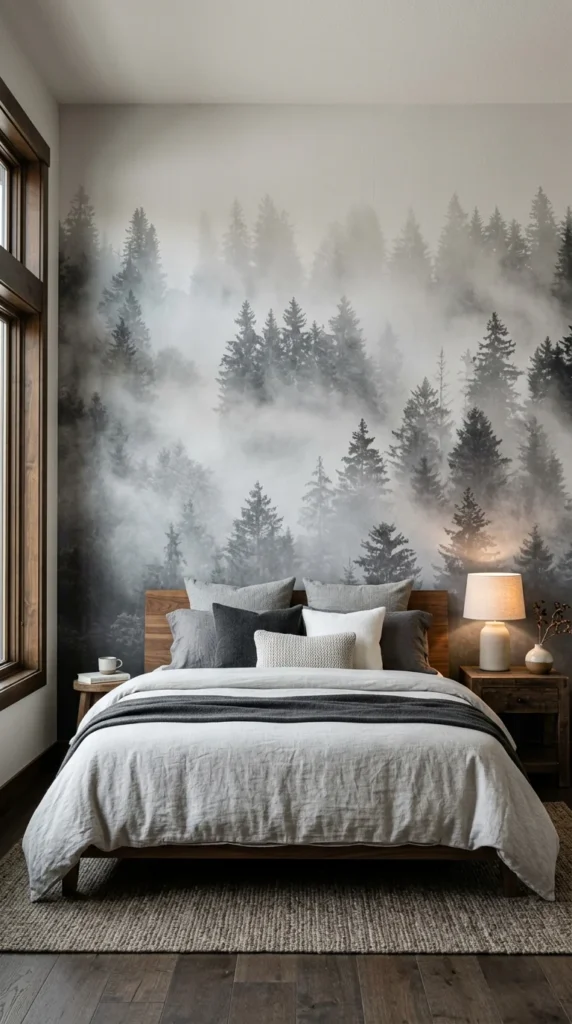
A large-scale wall mural can visually transport the bedroom to another geographical location. A misty redwood forest, a sun-dappled glade, or a distant mountain range can create a sense of “prospect and refuge”—a psychological concept where humans feel safest when they have a wide view of their surroundings from a protected spot.
21. Clay Finishes
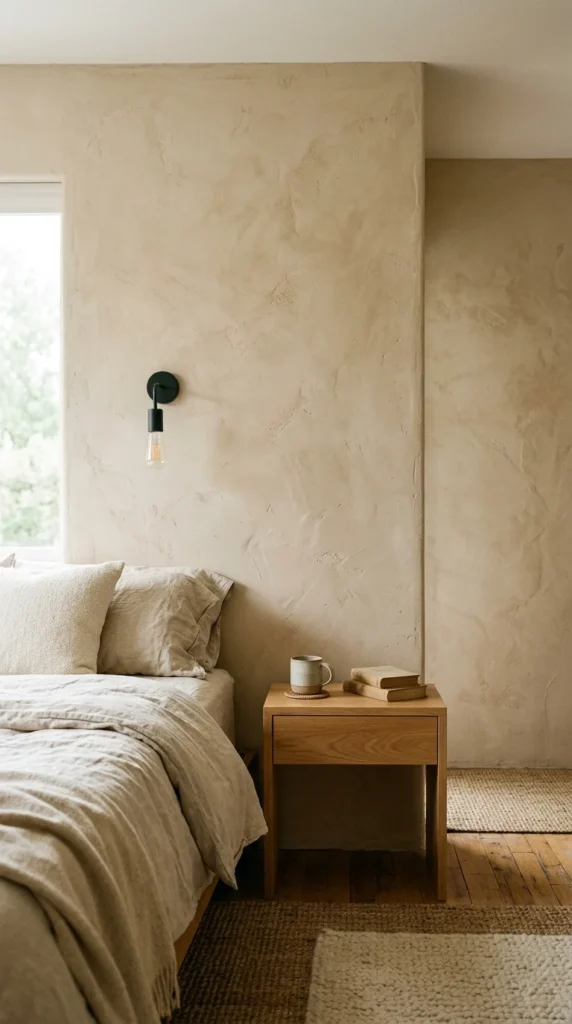
Moving away from standard latex paint, clay and lime plasters offer a breathable, non-toxic wall finish. These materials have an inherent depth and luminosity, changing character as the light shifts throughout the day. The hand-applied texture brings a human touch that mimics the uneven beauty of natural earth walls.
22. Potted Ferns
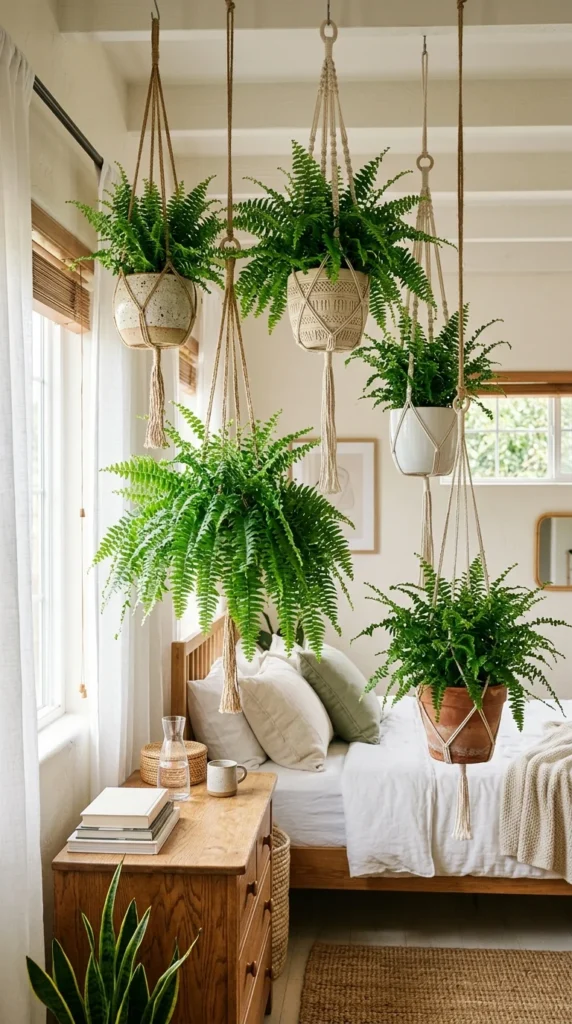
Ferns are among the oldest plant species on Earth and thrive in the indirect light often found in bedrooms. Hanging them at different heights creates a cascading effect of green “lace.” Their feathery fronds soften the sharp corners of a room and introduce a sense of ancient, primordial nature.
23. Sunlight Infiltration
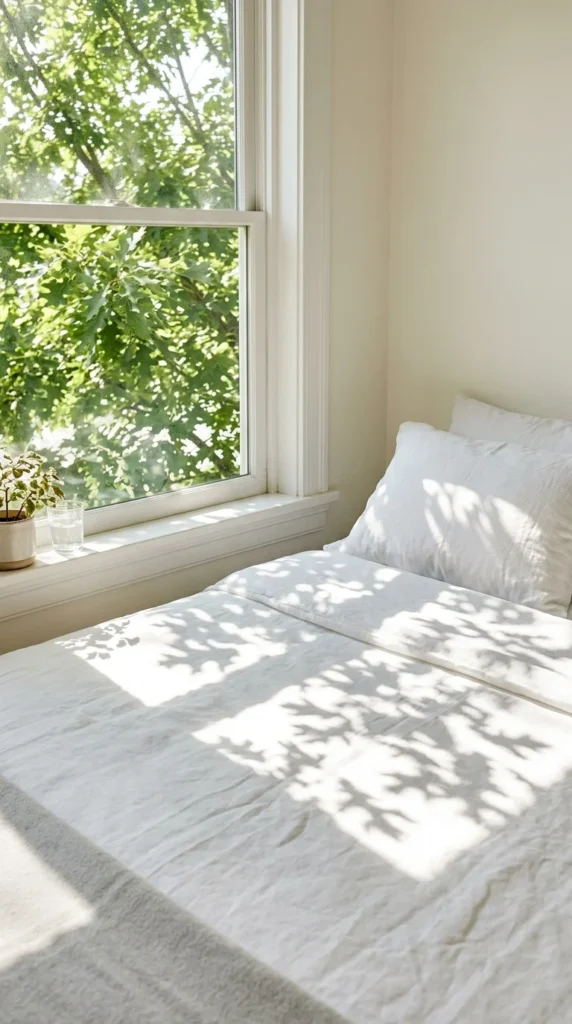
Nature-inspired design isn’t just about what you put in the room; it’s about how you manage what’s outside. Strategically planting trees outside the bedroom window allows for “dappled light” to enter the room. This moving interplay of light and shadow creates a dynamic environment that feels alive and connected to the outdoor breeze.
24. Driftwood Decor
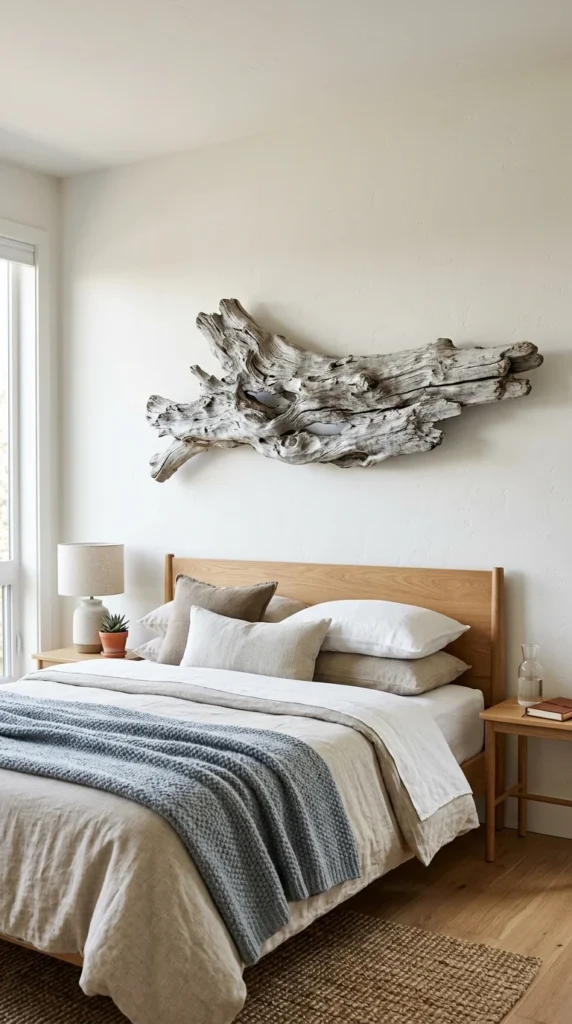
Found objects from nature, such as driftwood collected from a beach or a unique fallen branch from a forest, serve as perfect, low-cost decor. The sun-bleached, water-worn texture of driftwood brings a coastal, elemental feel to the room, serving as a tactile memento of the vastness of the sea.
By thoughtfully integrating these 24 elements, a bedroom transcends its role as a mere place to sleep. It becomes a holistic environment that honors the beauty of the natural world, fostering a deeper sense of peace, health, and connection every time you cross the threshold.