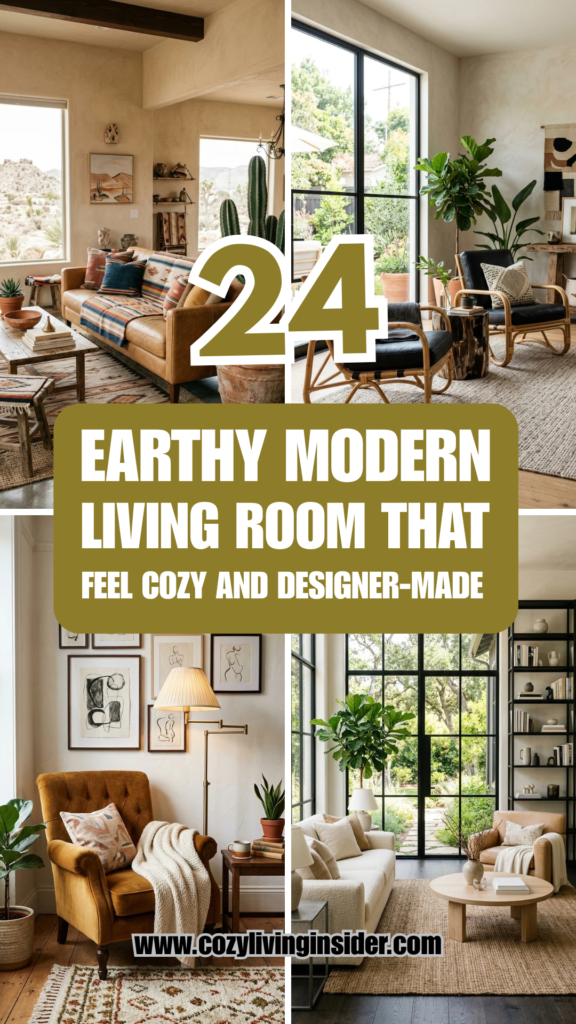

The “Earthy Modern” aesthetic has emerged as a definitive interior design movement, successfully bridging the gap between clinical minimalism and cluttered bohemian styles. It is a philosophy that prioritizes natural materials, organic shapes, and a palette inspired by the raw landscape—terracotta, sage, slate, and sand. The goal is to create a space that feels curated by a professional designer but remains profoundly lived-in and comfortable. By focusing on tactile textures and biophilic elements, these living rooms provide a sanctuary from the digital world.
Here are 24 earthy modern living room concepts that exemplify this sophisticated yet cozy balance.
1. Terracotta Accents
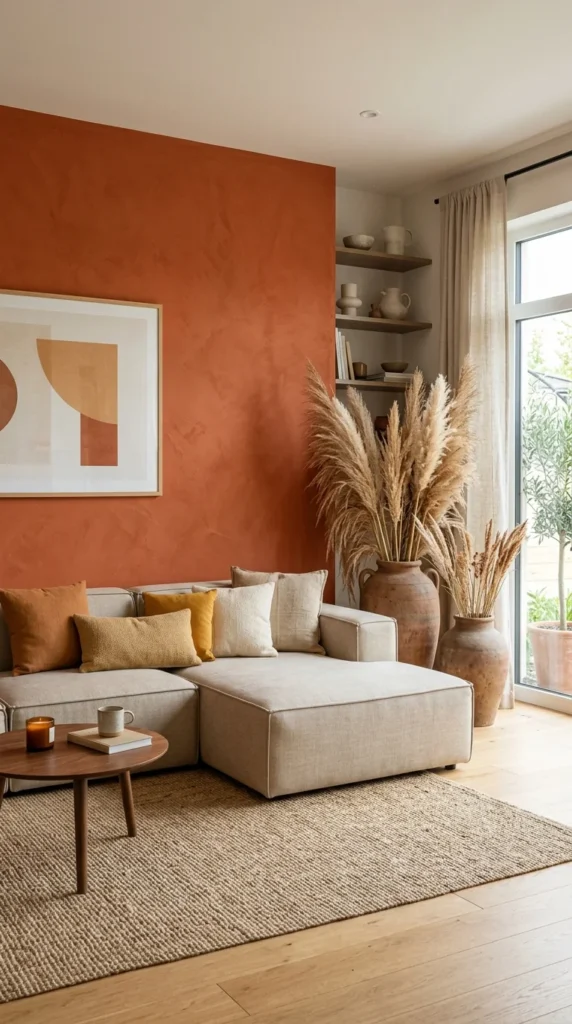
Terracotta brings an instant warmth to a modern space without the harshness of bright red. In an earthy modern living room, this can be achieved through a lime-washed accent wall or a collection of oversized clay vessels. The key is to pair these fired-earth tones with neutral upholstery—think oatmeal or sand—to ensure the space remains airy and grounded.
2. Sage Serenity

Sage green acts as a “new neutral.” It provides a subtle hint of color that mirrors the natural world, promoting a sense of calm. When combined with light-toned woods like white oak or ash, sage creates a botanical atmosphere that feels fresh and contemporary. It works exceptionally well in rooms with high ceilings, drawing the eye upward.
3. Raw Timber

Incorporating raw, unfinished timber adds a structural honesty to the home. Whether it’s exposed ceiling beams, a live-edge coffee table, or a reclaimed wood feature wall, the visible grain and natural imperfections provide a tactile contrast to smooth, modern surfaces. This juxtaposition is the hallmark of designer-made earthy spaces.
4. Layered Jute
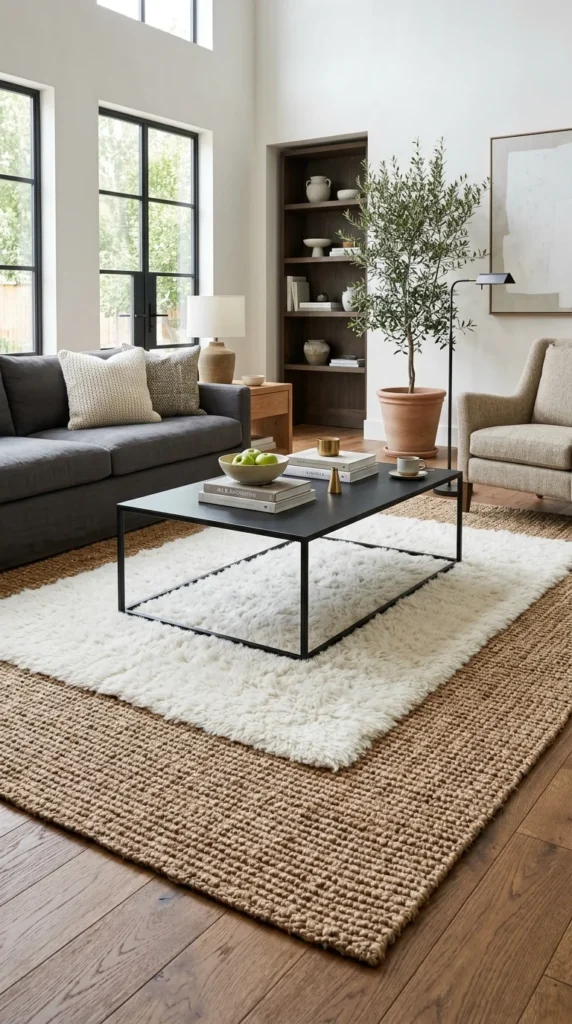
Texture is the secret ingredient of coziness. Jute and sisal rugs offer a rugged, organic foundation that grounds a room. To prevent the space from feeling too “outdoor-focused,” designers often layer a softer, high-pile rug on top. This adds depth to the floor and creates a multi-dimensional look that invites bare feet.
5. Stone Fireplaces

A stone fireplace serves as a monumental focal point. Moving away from traditional brick, earthy modern designs favor natural stone like limestone, slate, or fieldstone. The irregular shapes of the stones break up the rigid lines of modern furniture, providing a sense of permanence and history within a new build.
6. Ochre Warmth

Ochre provides a golden, sun-kissed glow that feels more sophisticated than standard yellow. It’s a color that transitions perfectly through the seasons. In an earthy modern living room, use ochre in textiles like velvet cushions, wool throws, or even heavy linen drapes to introduce a “designer” pop of color that still feels rooted in nature.
7. Linen Upholstery

There is an effortless elegance to linen. Its natural tendency to wrinkle adds a relaxed, lived-in feel that softens the sharp corners of modern architecture. Opting for a linen-upholstered sofa in a stone or putty shade ensures that the largest piece of furniture in the room feels light and breathable.
8. Indoor Trees

Biophilic design is a pillar of the earthy modern movement. A large indoor tree, such as a Black Olive or a Fiddle Leaf Fig, brings life and verticality to the room. The organic silhouette of branches and leaves contrasts beautifully with the straight lines of shelving and cabinetry, creating a dynamic, breathing environment.
9. Matte Black

While the palette is primarily earthy, matte black accents provide the “modern” edge. Black metal window frames, light fixtures, or hardware act as an anchor, preventing the soft earthy tones from feeling too washed out. It provides a crisp, graphic quality that feels expensive and intentional.
10. Clay Plaster
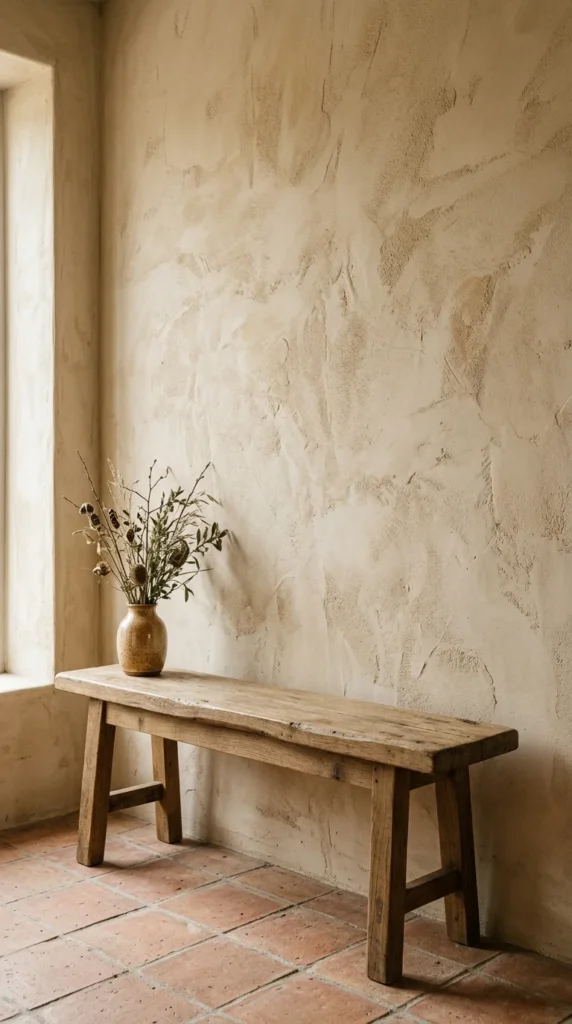
Instead of flat paint, designers are turning to clay plaster or Roman clay finishes. These materials have a soft, velvety texture that reacts beautifully to light. The subtle movement in the finish adds a sense of artisanal craftsmanship to the walls, making the room feel like a sculpted sanctuary.
11. Woven Rattan
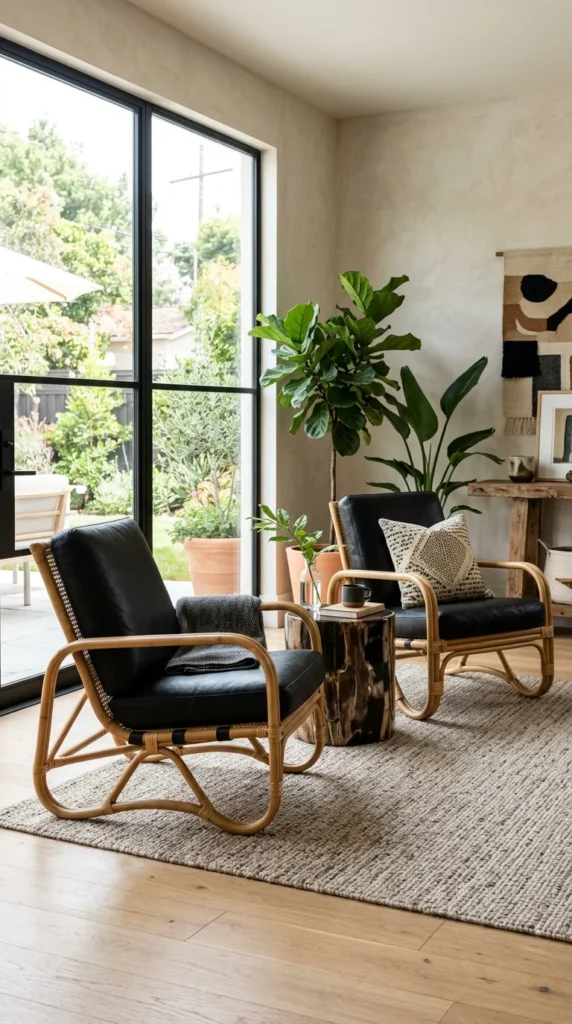
Rattan isn’t just for coastal homes. In an earthy modern context, rattan furniture with clean, mid-century silhouettes adds a light, airy texture. It introduces a “woven” element that feels handcrafted, bridging the gap between vintage charm and contemporary minimalism.
12. Desert Neutral
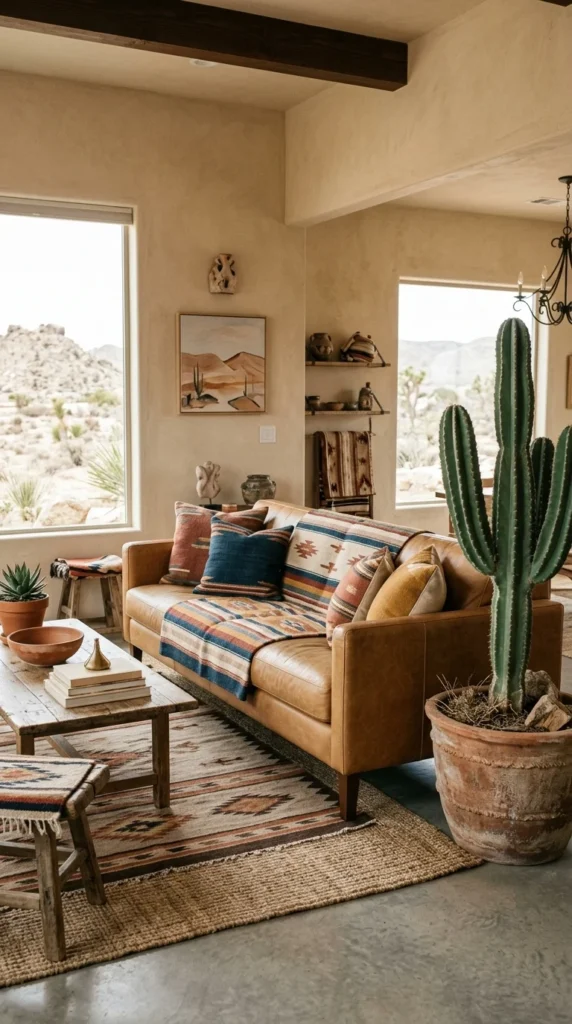
The desert aesthetic focuses on a monochromatic palette of sands, tans, and beiges. By using varying shades of the same color, you create a sophisticated, layered look that feels expansive. Incorporate materials like bleached wood and sun-faded textiles to capture that parched, high-desert luxury.
13. Velvet Moss
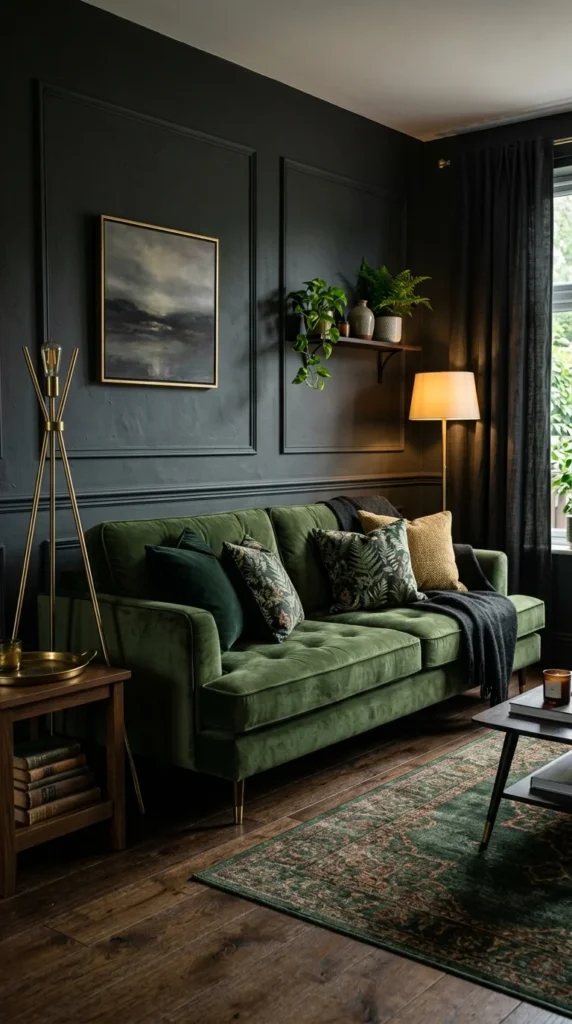
For those who prefer a moodier “earthy” look, moss green velvet is the ultimate choice. It evokes the feeling of a forest floor. When paired with dark wood and dim, warm lighting, it creates a “snug” or “den” feel that is both incredibly cozy and high-end.
14. Reclaimed Timber
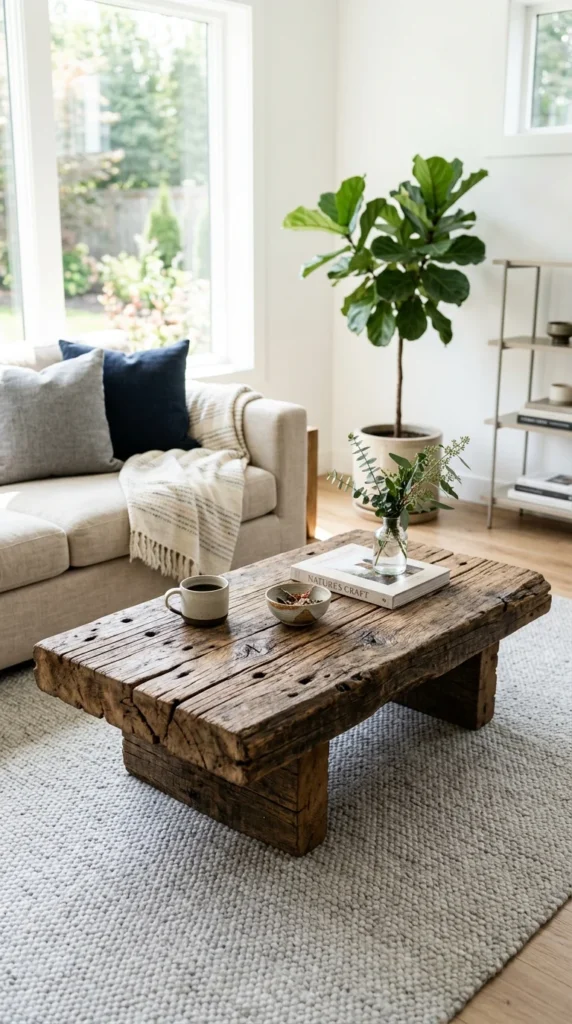
Reclaimed timber brings a story into the home. Using wood that has a history—weathered by time and the elements—adds a layer of soul that new furniture simply cannot replicate. It’s a sustainable choice that reinforces the “earthy” connection to the environment.
15. Concrete Layers
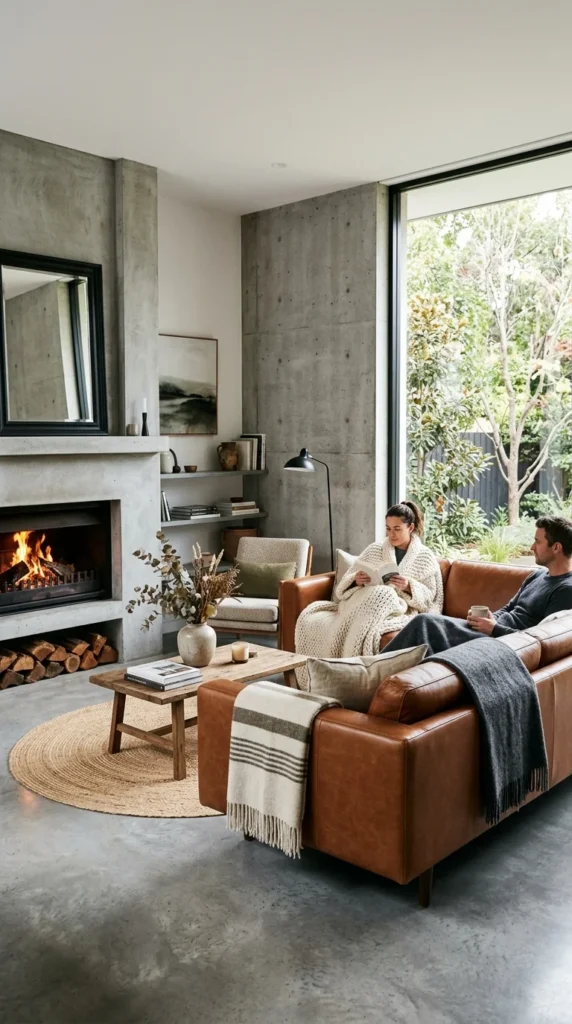
Concrete provides a cool, industrial foundation that, when paired with the right elements, feels surprisingly earthy. The key is balance: if you have concrete floors, you must introduce “warm” textures like sheepskin, leather, and wood to prevent the space from feeling cold or sterile.
16. Woolen Rugs
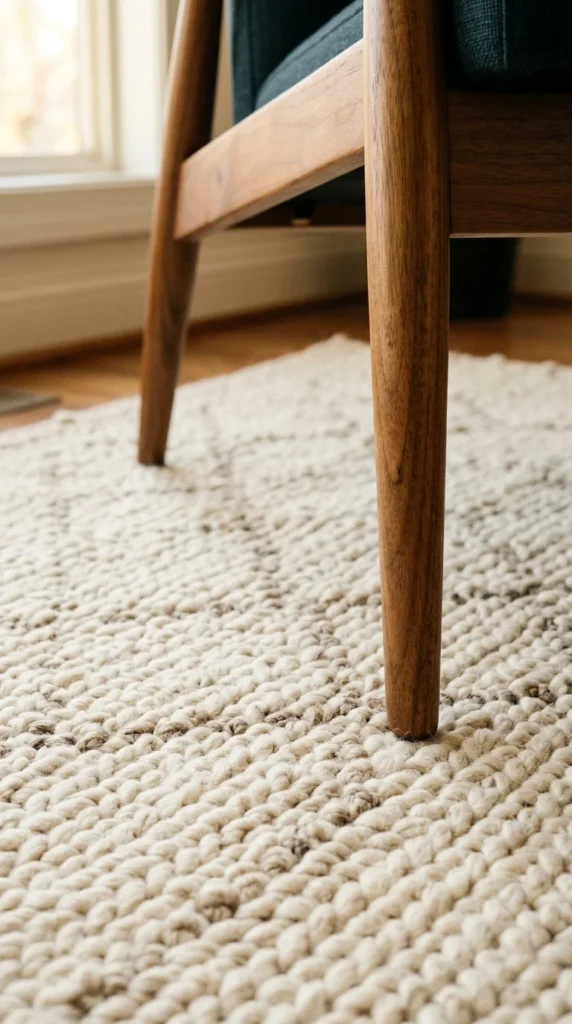
A high-quality wool rug is an investment in comfort. In an earthy modern room, look for undyed wool that retains its natural color variations. The chunky, hand-knotted textures provide a visual “weight” to the room, making it feel grounded and intentionally designed.
17. Bronze Finishes
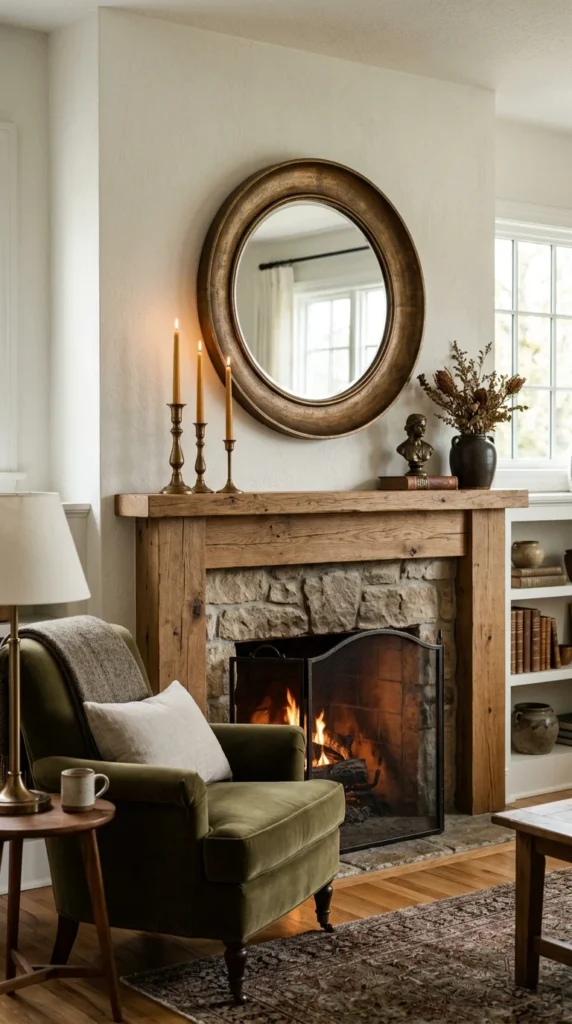
Moving away from shiny chrome or gold, “earthy” spaces favor “living finishes” like oil-rubbed bronze or unlacquered brass. These metals develop a patina over time, echoing the natural process of aging found in the wild. They offer a muted, sophisticated shimmer.
18. Leather Seating
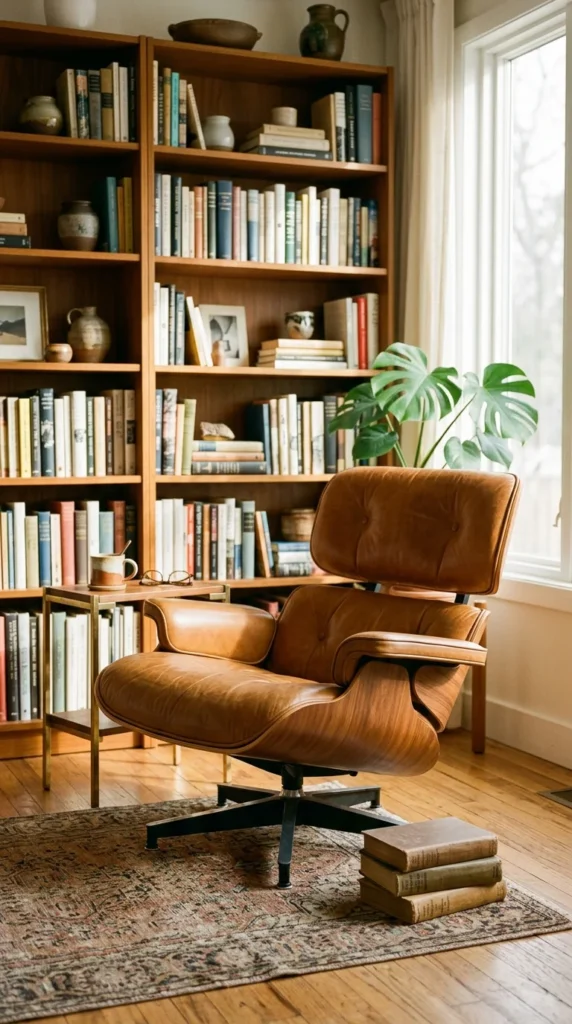
Leather is the ultimate earthy material for seating. It is durable, improves with age, and has a natural aroma. In a modern living room, a cognac or caramel leather chair provides a focal point of rich color and smooth texture that complements both wood and stone.
19. Layered Lighting
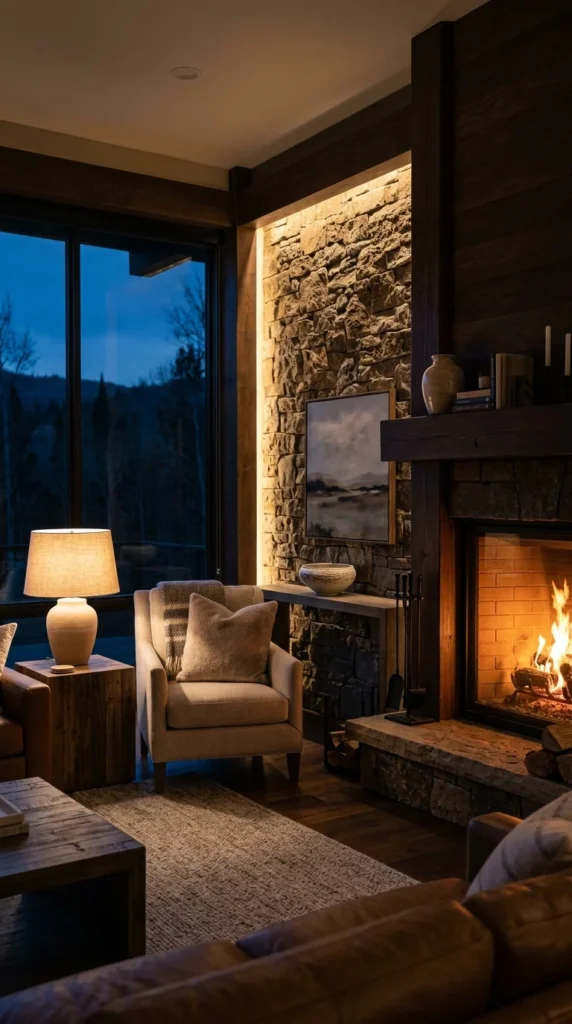
To achieve a “designer” feel, lighting must be layered. Avoid harsh overhead lights. Instead, use a mix of floor lamps, table lamps, and sconces with warm-toned bulbs. This creates pockets of light and shadow, emphasizing the textures of the room and creating an intimate evening atmosphere.
20. Cork Details
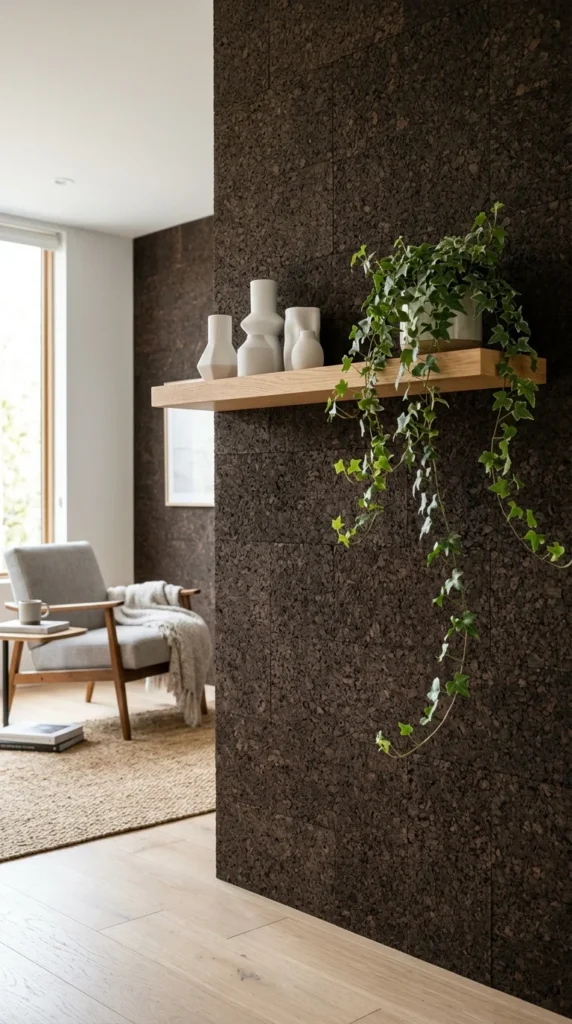
Cork is an underrated earthy material. It is sustainable, provides excellent acoustics, and has a unique, cellular texture. Using cork as a wall treatment or in furniture accents introduces a soft, organic warmth that is both functional and visually intriguing.
21. Mudroom Integration
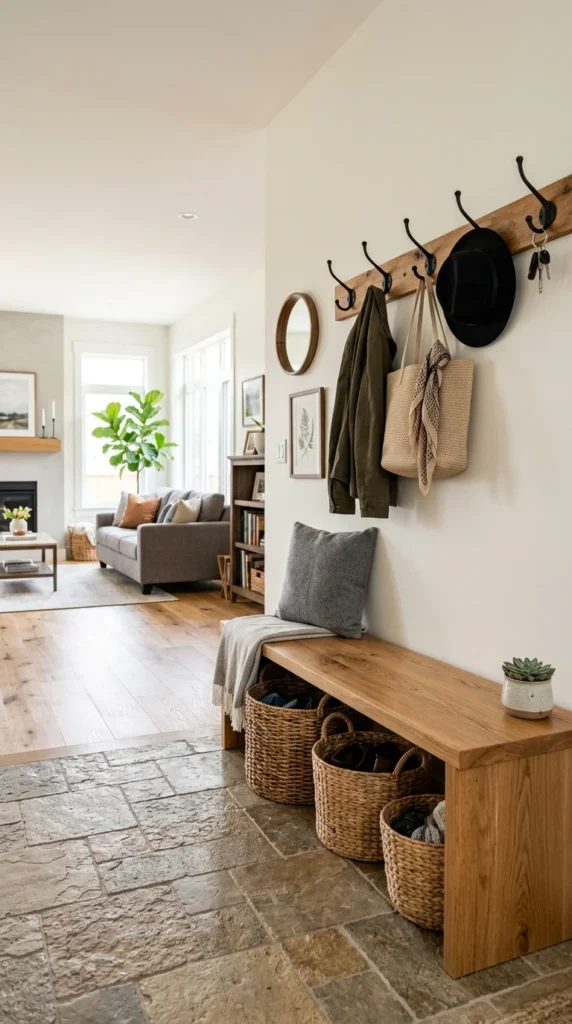
In many modern homes, the living room flows directly from the entry. Designing a “mudroom” corner with earthy materials—like a custom oak bench and woven seagrass baskets—ensures that the functional parts of the home feel as considered and beautiful as the lounge area.
22. Arched Architecture
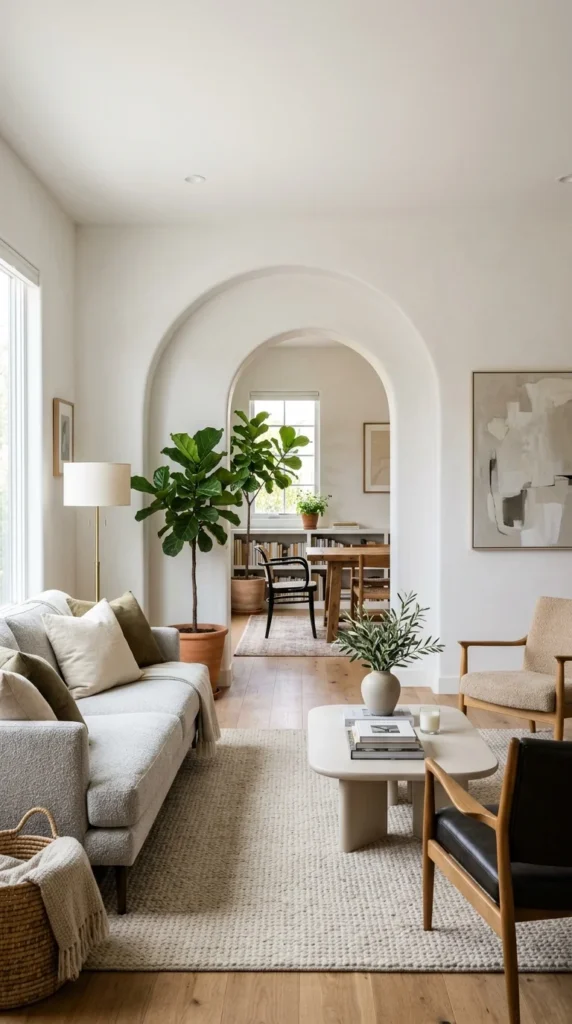
Curves and arches soften the “boxiness” of modern architecture. An arched doorway, a curved sofa, or even a circular mirror mimics the rounded shapes found in nature (like caves or river stones). This architectural choice makes a space feel more fluid and welcoming.
23. Gallery Walls
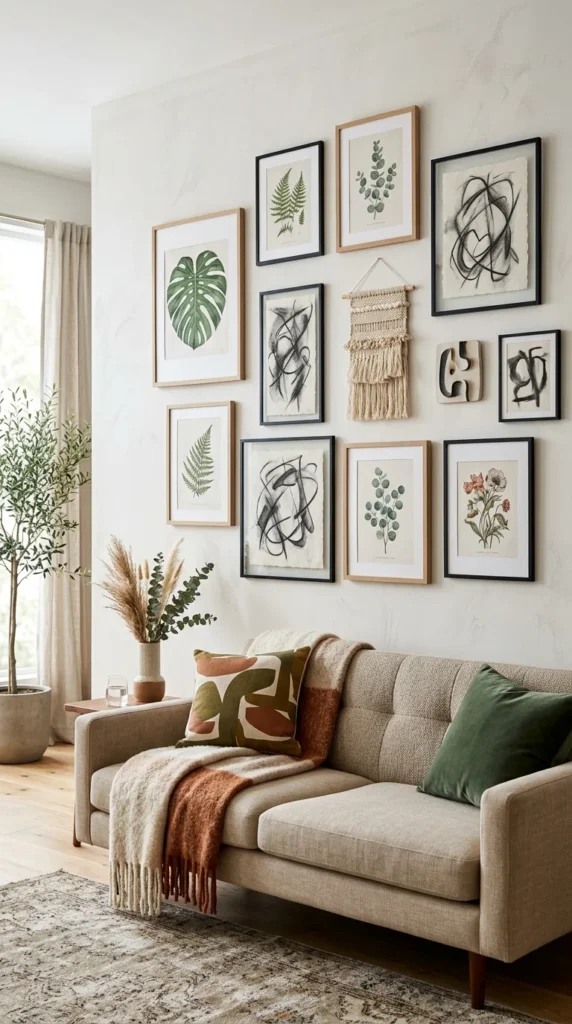
An earthy gallery wall focuses on organic subject matter. Think vintage botanical sketches, abstract landscapes in sepia tones, or textile art. Using a mix of frame materials—wood, metal, and even frameless canvas—adds to the curated, designer-made aesthetic.
24. Minimalist Zen
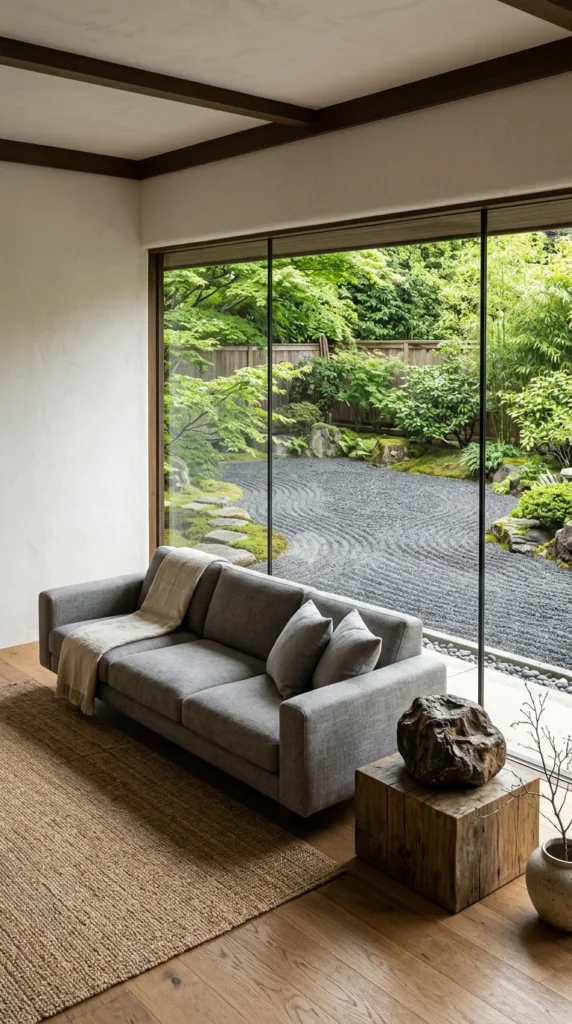
Sometimes, the most “earthy” approach is the most minimal. By reducing the number of objects in the room, you allow the materials—the grain of the wood, the texture of the stone, the quality of the light—to speak for themselves. This Zen-inspired approach creates a clutter-free environment that is profoundly peaceful.