

Brick has remained a cornerstone of landscape architecture for centuries, favored for its durability, natural warmth, and remarkable versatility. Whether you are aiming for the structured elegance of a formal English garden or the weathered charm of a rustic cottage retreat, brick provides a foundational element that only improves with age. Beyond its aesthetic appeal, brick is a sustainable, permeable, and long-lasting material that can withstand heavy foot traffic and varying climates.
Designing the perfect garden path requires a balance of form and function. The following 23 ideas explore the diverse ways brick can be utilized to transform your outdoor space into a structured masterpiece.
1. Running Bond
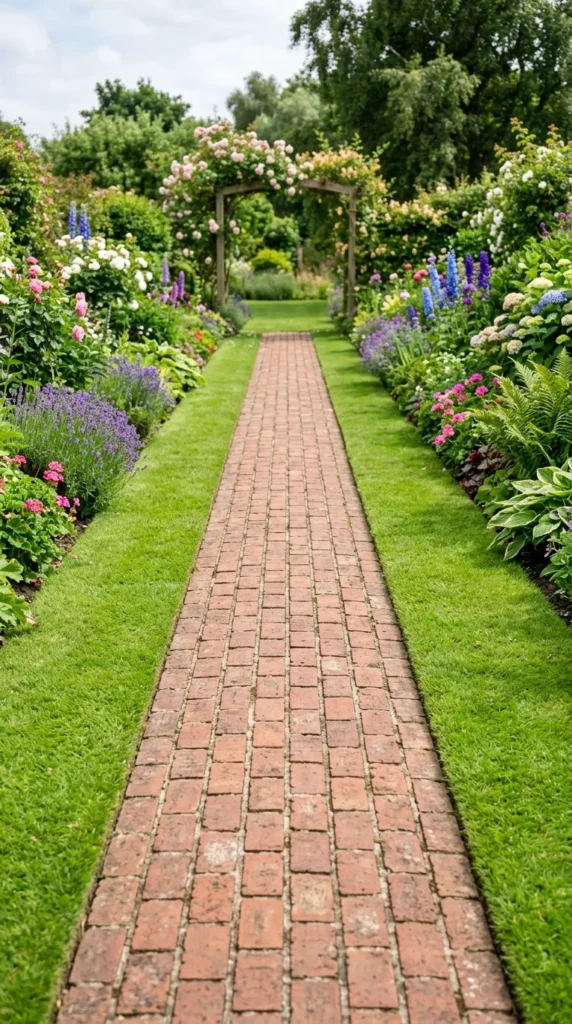
The running bond is the most common and recognizable brick pattern. By offsetting the joints in each row, this layout provides excellent structural integrity and a clean, linear look. It is an ideal choice for narrowing long spaces or creating a sense of direction that draws the eye toward a focal point, such as a fountain or a bench.
2. Herringbone Pattern
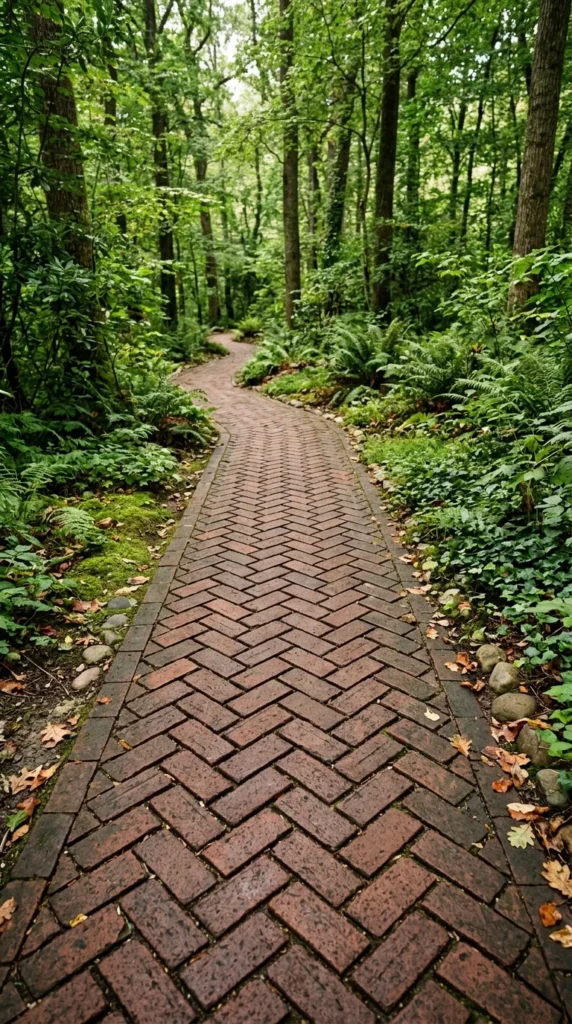
The herringbone pattern is celebrated for its strength and visual energy. Because the bricks are laid at a 45-degree or 90-degree angle to one another, they create an interlocking grid that is highly resistant to shifting. This makes it a preferred choice for high-traffic areas or driveways where stability is paramount.
3. Basket Weave
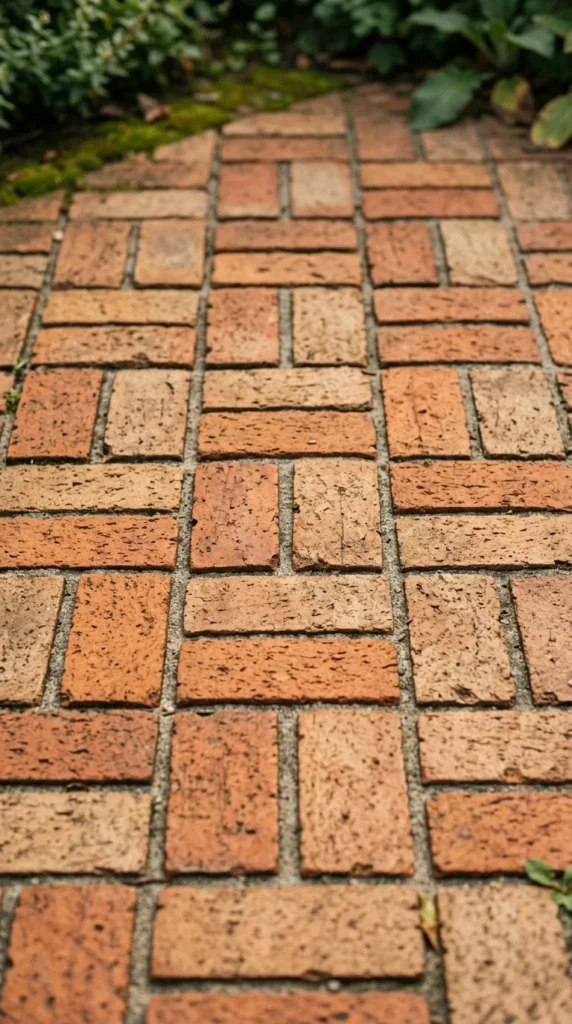
For those seeking a vintage or “Old World” feel, the basket weave pattern is a decorative classic. By alternating pairs of bricks in vertical and horizontal orientations, you create a checkered effect that adds texture and rhythm to the garden. It is particularly effective in flat, expansive areas like patios or wide garden entries.
4. Stack Bond
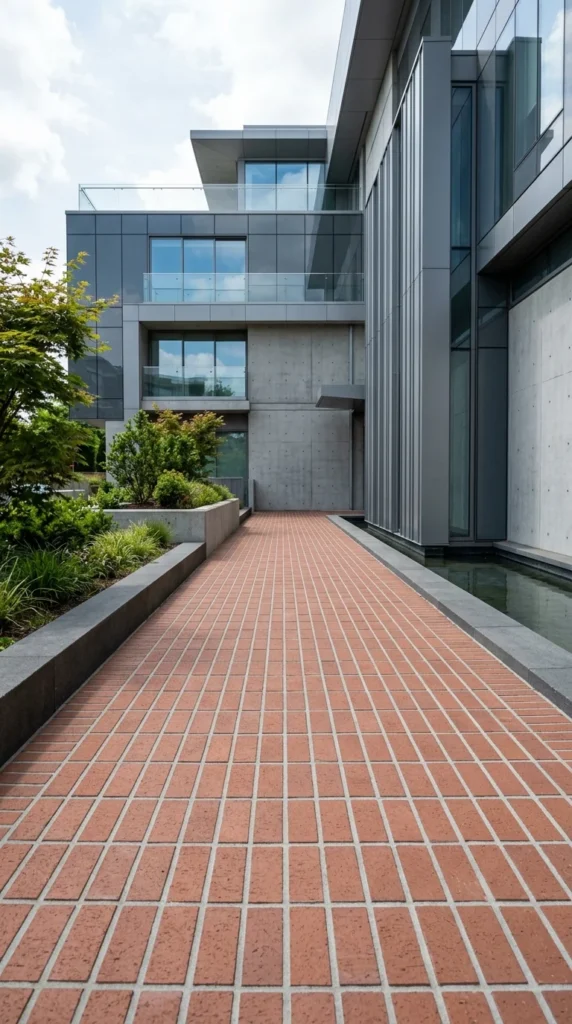
The stack bond is the hallmark of modern landscape design. Unlike the running bond, the joints are perfectly aligned both horizontally and vertically. While it lacks the structural “locking” of other patterns, it offers a clean, geometric aesthetic that complements contemporary homes and minimalist plantings.
5. Curved Path
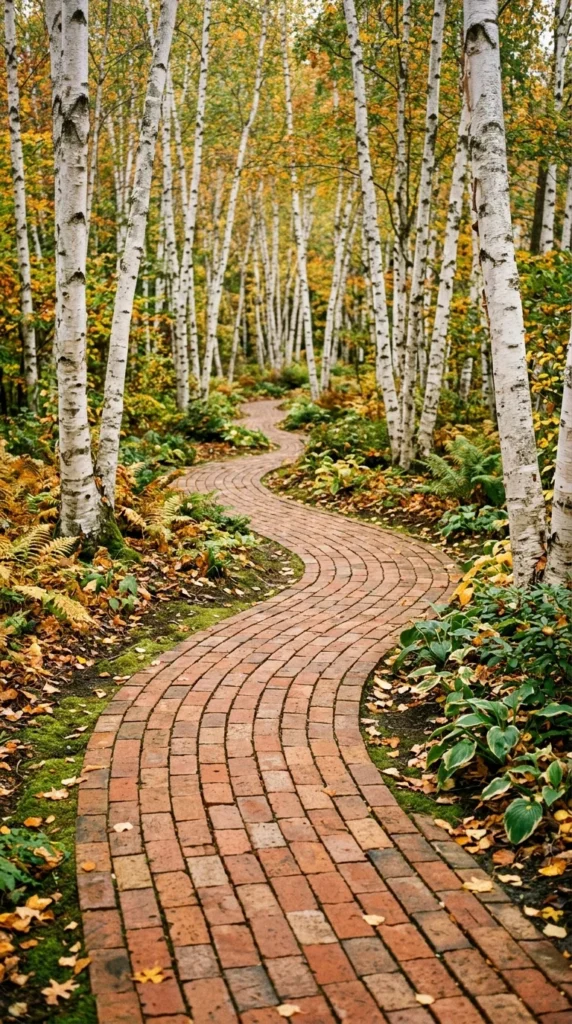
A curved brick path breaks up the rigid lines of a property, creating a sense of mystery and organic flow. Achieving a curve with rectangular bricks requires precision and often involves “fanning” the joints or cutting the bricks into wedges. The result is a soft, inviting trail that encourages a slower pace of travel.
6. Reclaimed Bricks
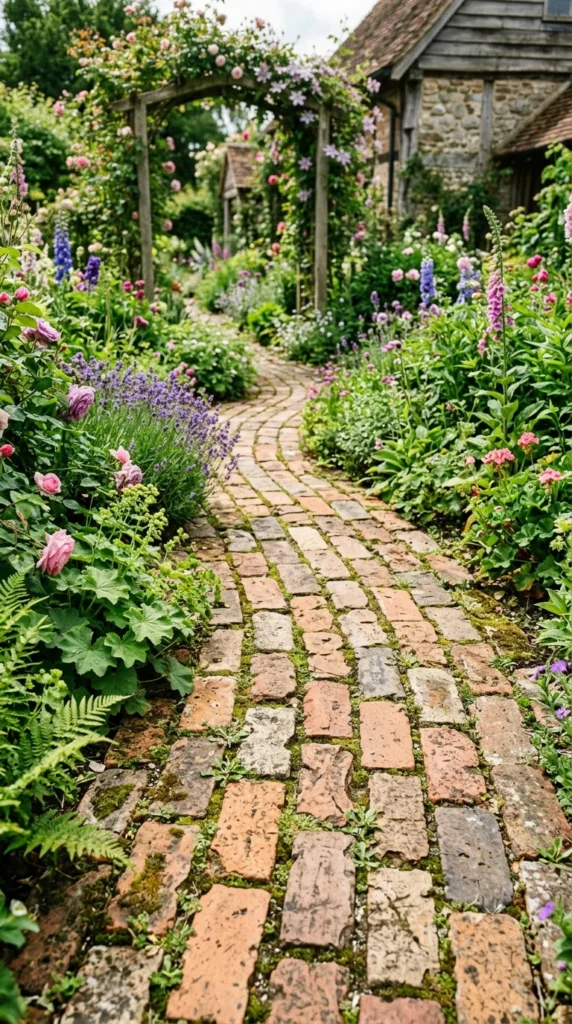
Using reclaimed or salvaged bricks is an excellent way to imbue a new garden with instant history. These bricks often feature unique stamps, varied textures, and a weathered patina that cannot be replicated by modern manufacturing. They are perfect for historic renovations or eco-conscious landscape designs.
7. Cobblestone Accents
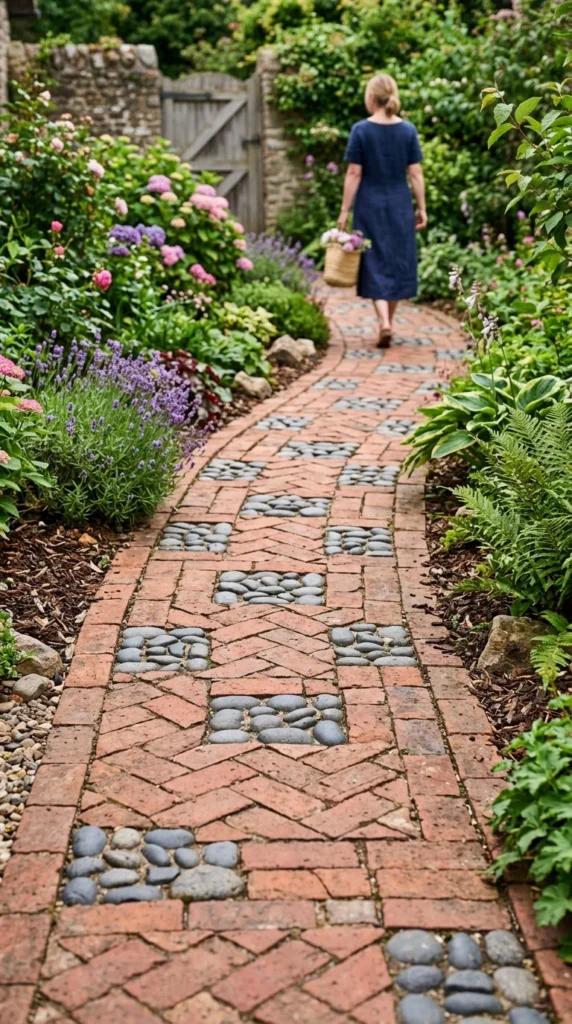
Integrating cobblestones into a brick layout adds a rugged, tactile quality to the path. You can use cobblestones to frame the edges or place them in decorative clusters within the brickwork. This combination of smooth brick and rough stone creates a sophisticated “European village” aesthetic.
8. Grass Joints
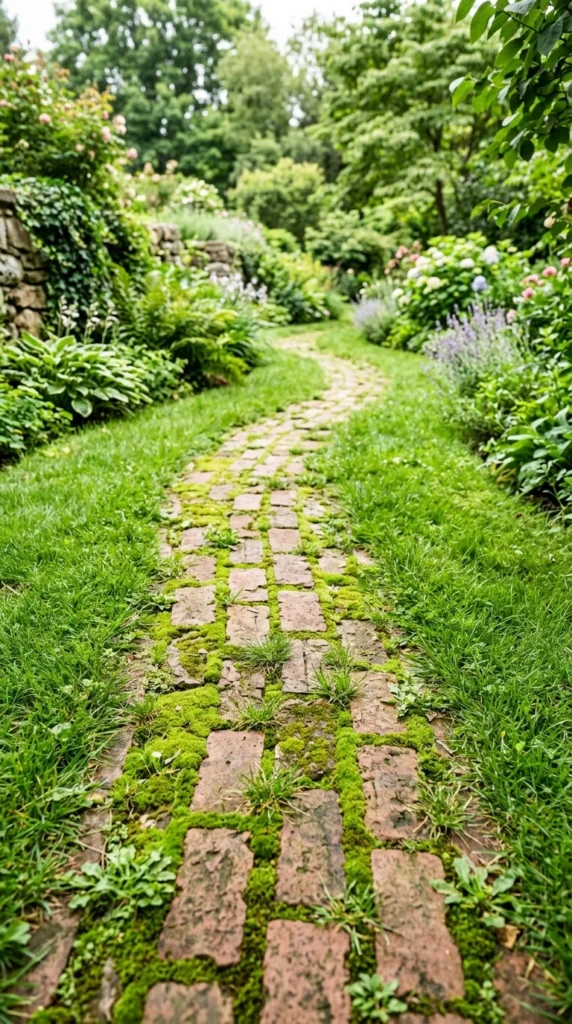
Instead of filling the joints with sand or mortar, allow nature to take over. Filling the spaces between bricks with soil and planting low-growing groundcovers like Irish Moss or Creeping Thyme creates a soft, integrated look. This method also improves drainage by allowing rainwater to permeate directly into the ground.
9. Gravel Borders
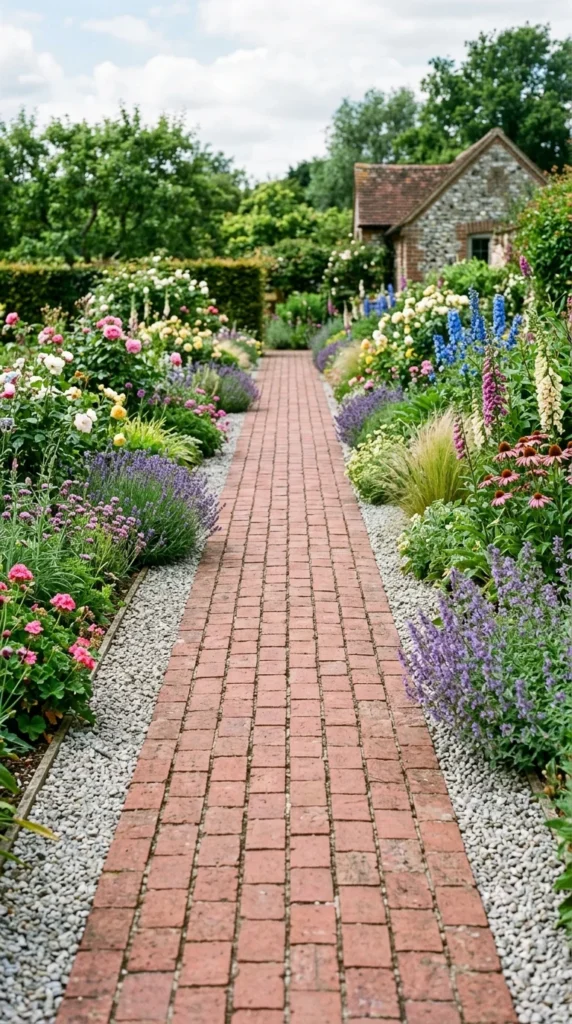
Flanking a brick path with a border of gravel or river rock provides a clean transition between the hardscape and the garden beds. This design serves two purposes: it prevents soil from washing onto the bricks during rain and adds a contrasting color and texture that makes the red of the brick pop.
10. Circular Medallions
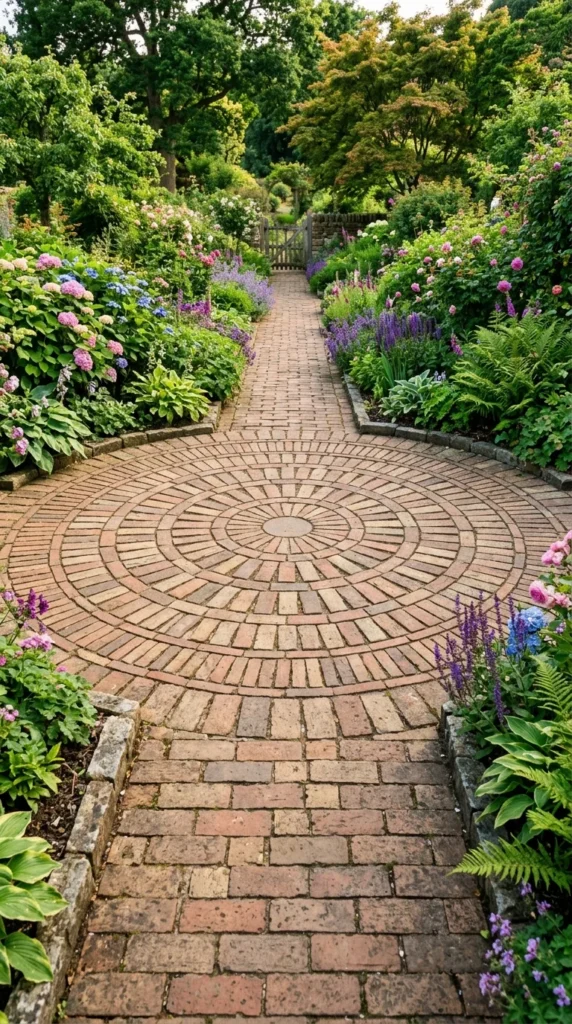
To create a stunning focal point, incorporate a circular medallion or “rose” into the center of your walkway. This involves laying bricks in concentric circles or a radiating sunburst pattern. It is an excellent way to mark a junction where two paths meet or to highlight a specific area of the garden.
11. Inset Lighting
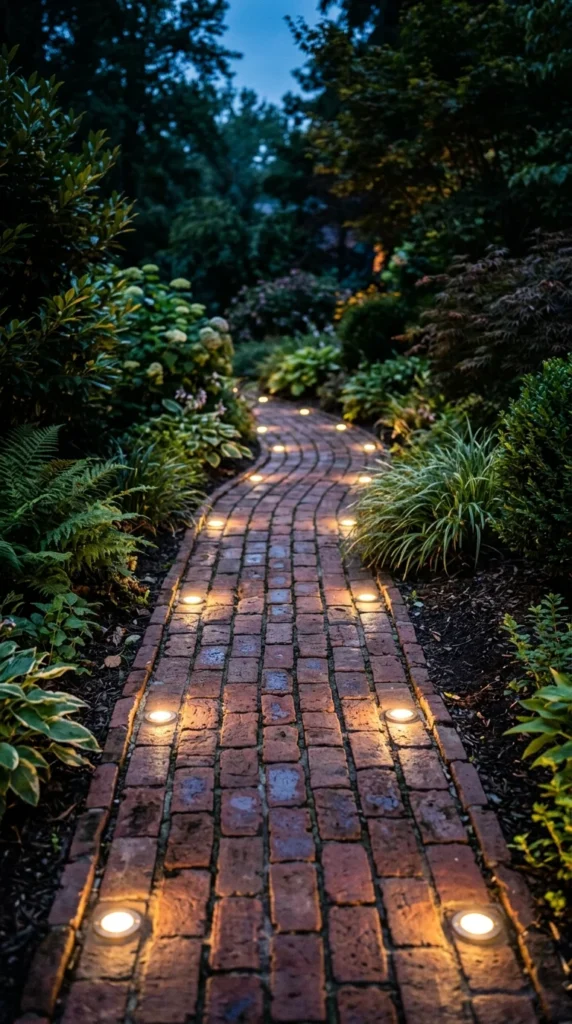
Modern landscape design often incorporates technology for both safety and ambiance. Low-voltage LED “brick lights” can be installed flush with the surface of the walkway. This ensures the path is safely navigable at night while highlighting the texture and color of the masonry.
12. Steps and Terraces
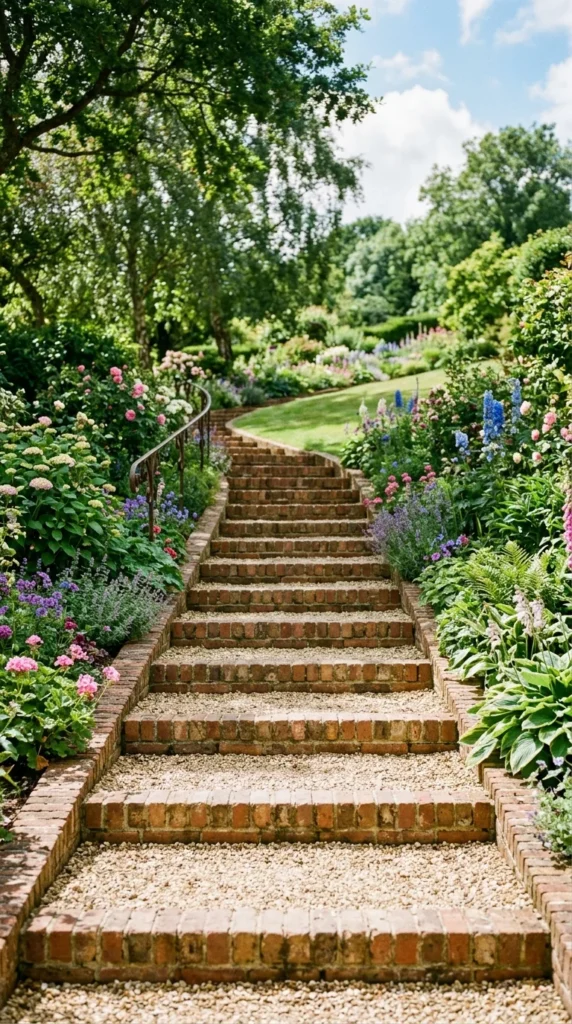
If your garden has varying elevations, brick is the perfect material for creating sturdy, beautiful stairs. You can use bricks for the “risers” and “treads,” or combine them with large stone slabs for a more dramatic look. Terraced brick steps provide a formal, architectural feel to a sloping backyard.
13. Multi-Colored Bricks
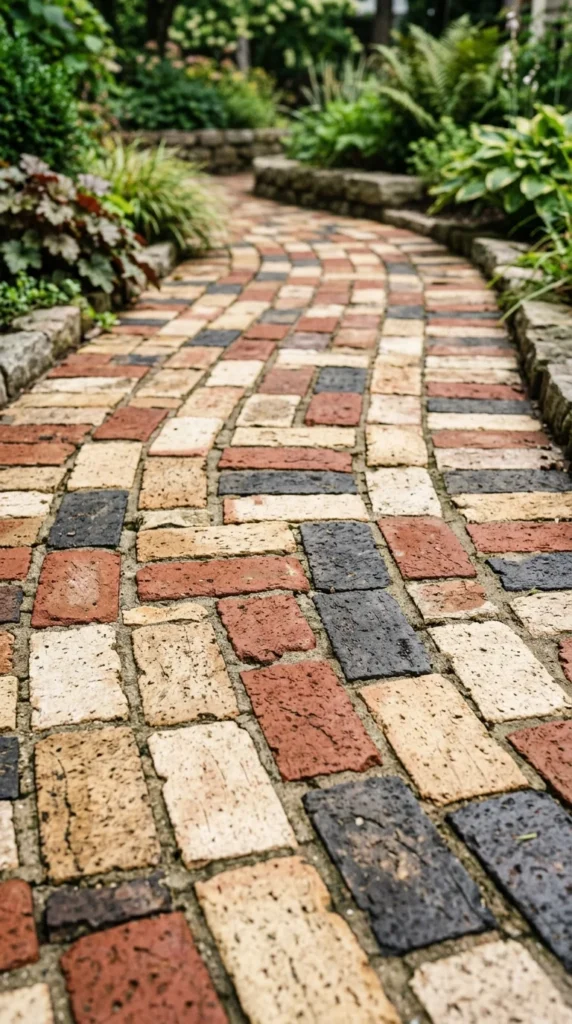
Rather than sticking to a single shade of red, consider a multi-colored blend. Using a mix of “flashed” bricks (those with varying heat marks from the kiln) creates a vibrant, mottled appearance that hides dirt and wear better than a uniform color. This look works exceptionally well in large, open spaces.
14. Mossy Finishes
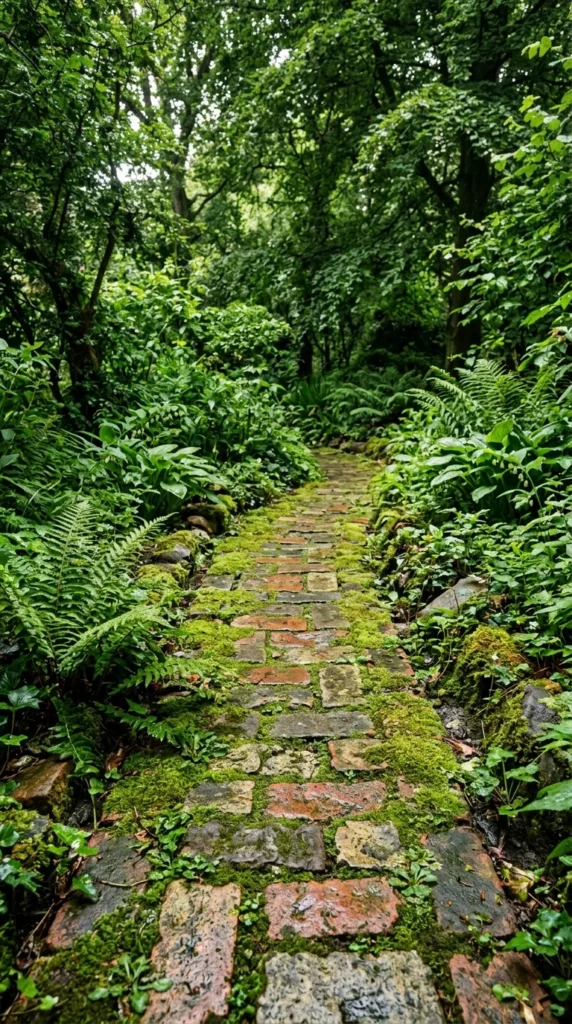
In shaded, damp areas, moss naturally congregates on brick. Rather than fighting it, embrace the “enchanted forest” look. The soft green of the moss provides a beautiful color contrast to the deep earthy tones of the brick, giving the path a sense of timelessness and peace.
15. Soldier Course Edging
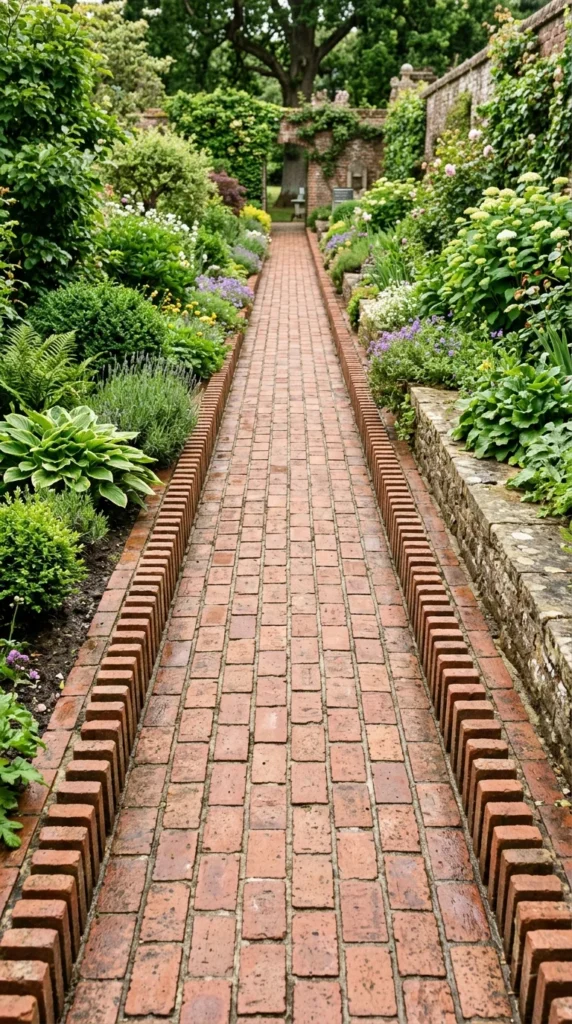
A soldier course refers to bricks laid standing up on their ends, side-by-side. Using this technique as an edging for your walkway provides a strong visual “frame” and helps hold the interior bricks in place. It adds a professional, finished look to any pattern, from herringbone to basket weave.
16. Diagonal Layout
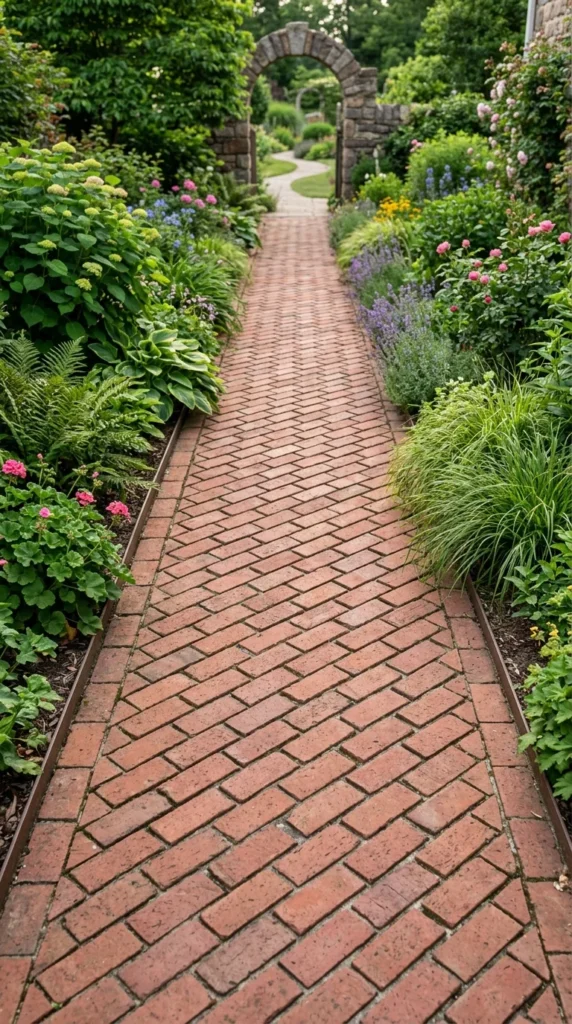
Laying a standard pattern, like running bond or stack bond, at a 45-degree diagonal can make a narrow garden feel much wider. The diagonal lines trick the eye into perceiving more space, making it a clever design hack for small urban gardens or side yards.
17. Wide Entryways
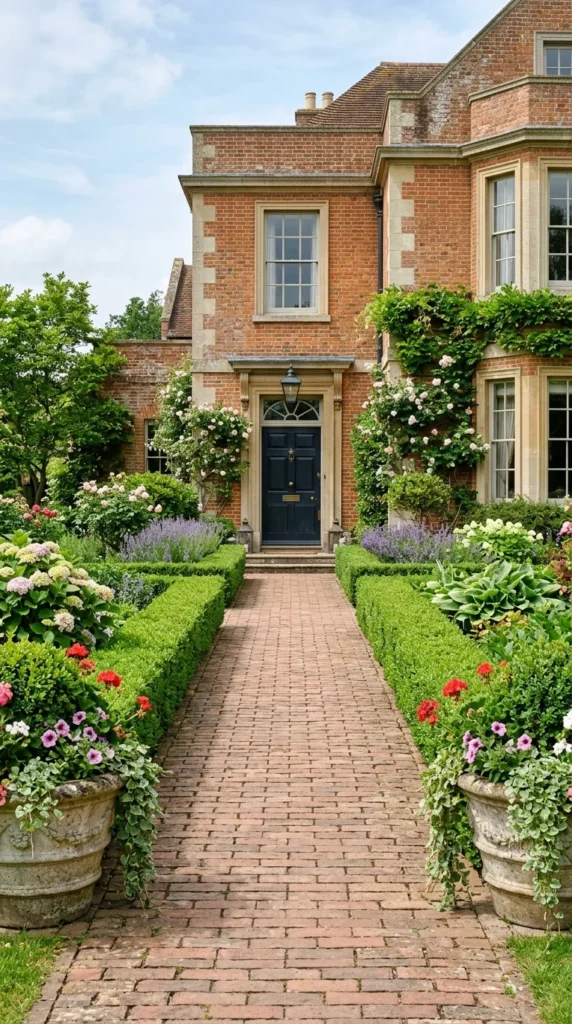
A garden path doesn’t have to be narrow. A wide brick entryway creates a sense of grandeur and hospitality. This is particularly effective for the path leading from the sidewalk to the front door, as it allows two people to walk side-by-side comfortably, establishing a welcoming atmosphere.
18. Integrated Flower Beds
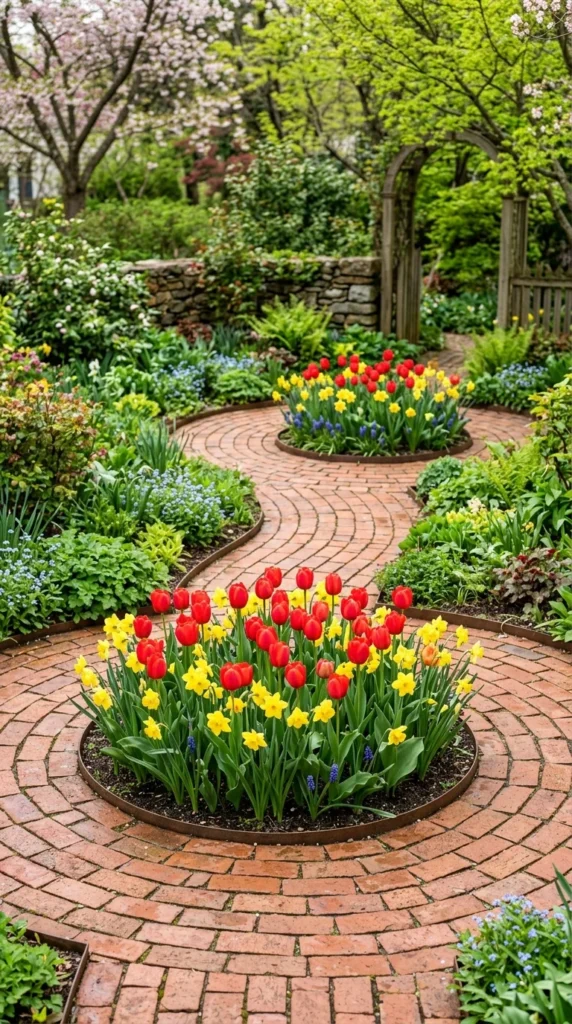
Break up the monotony of a long path by designing it to “pocket” around small planting areas. By leaving gaps in the brickwork for flowers or small shrubs, you weave the hardscape and softscape together. This creates a more immersive experience as you walk through the garden.
19. Modern Linear Design
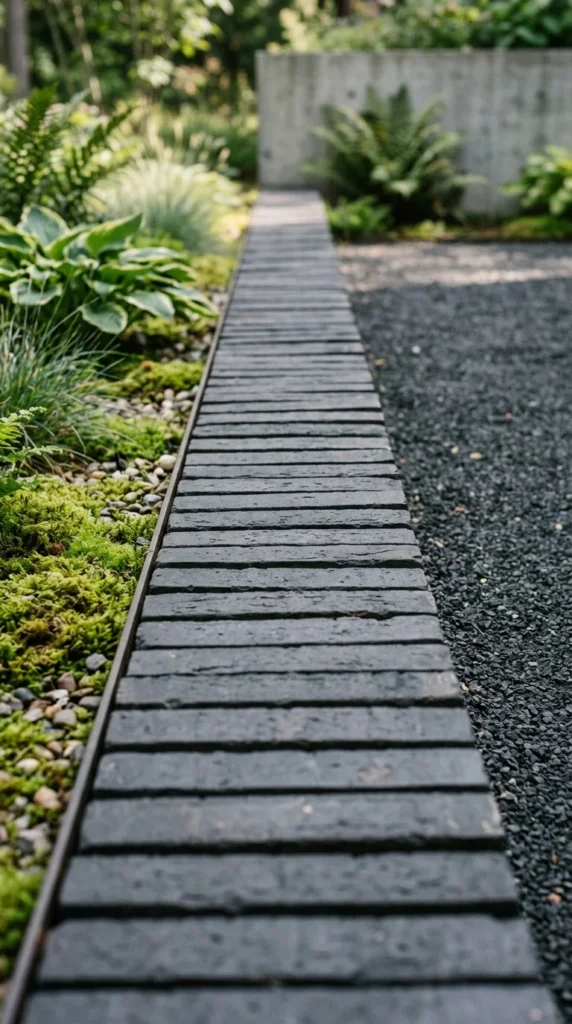
For a sleek, contemporary look, choose long-format bricks (sometimes called “linear pavers”) in dark grays or blacks. These bricks mimic the look of stone but retain the warmth and ease of installation associated with brick. They are perfect for matching modern architectural styles and minimalist landscapes.
20. Victorian Style

Victorian-era walkways often featured highly decorative patterns and contrasting colors. You can recreate this look by using dark blue or black “paviors” alongside traditional red bricks to create geometric borders or diamond shapes within the path. This style pairs beautifully with wrought iron fencing and rose gardens.
21. Rustic Weathered Look
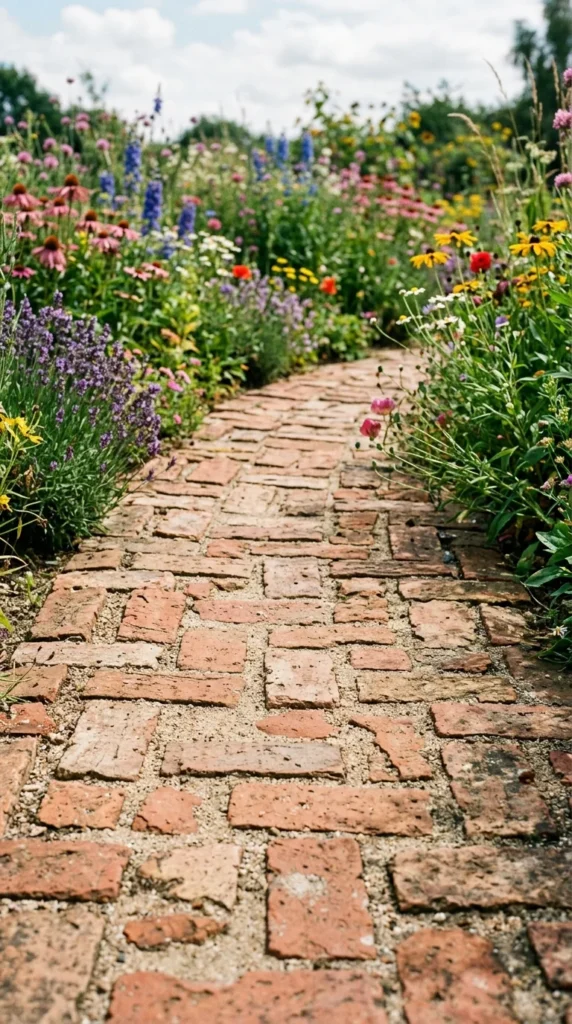
Not every path needs to be perfectly level and aligned. A rustic, “tumbled” brick look uses bricks with softened edges and intentional imperfections. This style is ideal for informal cottage gardens where a polished, perfect look would feel out of place.
22. Permeable Pavers
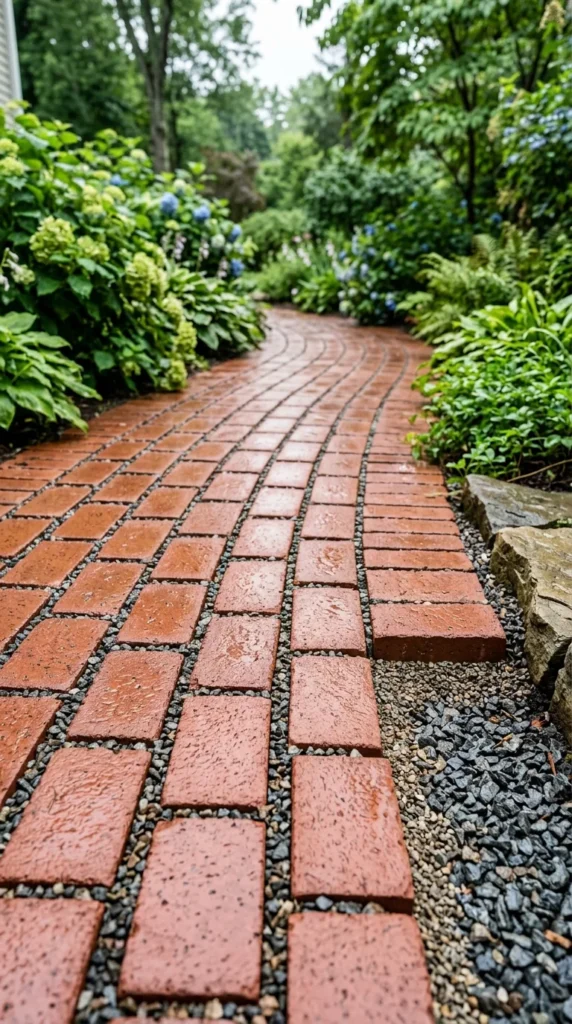
Environmentally conscious homeowners should consider permeable brick installations. These systems use specialized bricks and base materials that allow rainwater to filter through the path rather than running off into storm drains. It is a practical and beautiful solution for managing groundwater on your property.
23. Mixed Materials (Brick and Stone)
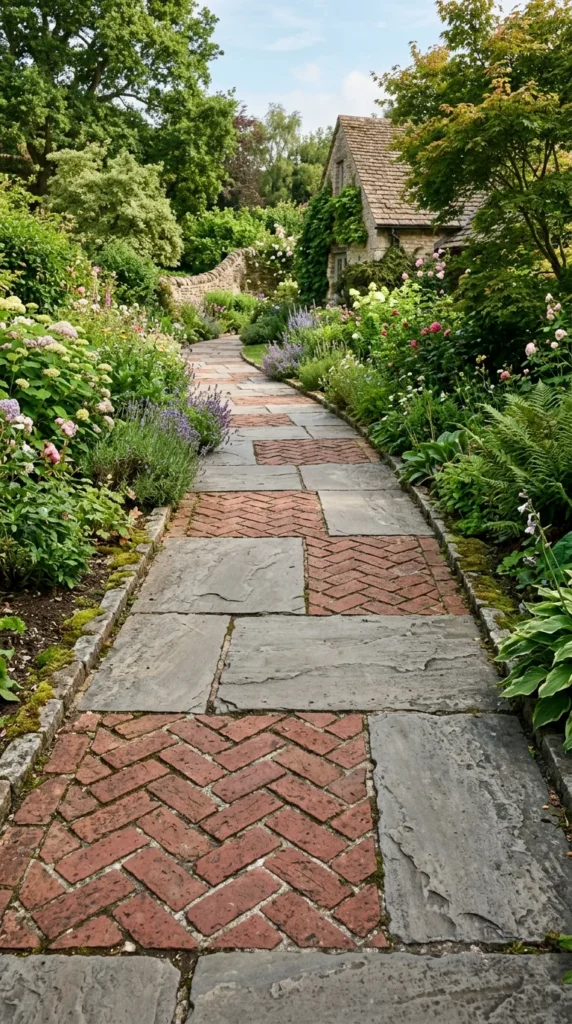
Combining brick with other materials like flagstone, slate, or concrete creates a custom, high-end look. You might use flagstones for the main walking surface and brick for the borders, or vice versa. This “mixed media” approach allows you to tie together different elements of your home’s exterior and landscape.
Maintaining Your Brick Walkway
To ensure your brick path remains beautiful for decades, a small amount of maintenance is required. Periodically sweep the surface to remove debris that can trap moisture and lead to moss or algae growth. If you have “sand-set” bricks (without mortar), you may need to replenish the polymeric sand in the joints every few years to prevent weeds and keep the bricks from shifting. For a fresh look, a gentle power wash can remove years of grime, though care should be taken not to dislodge the jointing material.
Conclusion
A brick walkway is more than just a means of getting from point A to point B; it is a design statement that adds value and character to your home. Whether you choose the complex geometry of a herringbone pattern or the simple charm of a weathered, moss-covered trail, brick offers a timeless appeal that adapts to any garden style. By selecting the right pattern, color, and border, you can create a garden path that feels as though it has always been part of the landscape.