
Dry river rock landscaping, often referred to as a dry creek bed, is one of the most versatile and functional design elements a homeowner can introduce to their outdoor space. Beyond its immediate aesthetic appeal, a dry river bed serves a vital purpose: managing drainage and preventing erosion while mimicking the natural beauty of a seasonal stream. By carefully selecting stone sizes, incorporating diverse plant life, and focusing on naturalistic curves, you can transform a mundane yard into a designer-made sanctuary.
Whether you are dealing with a soggy low spot in your lawn or simply want to reduce your water consumption with xeriscaping, these 18 ideas will provide the inspiration needed to elevate your landscape.
1. Meandering Pathway
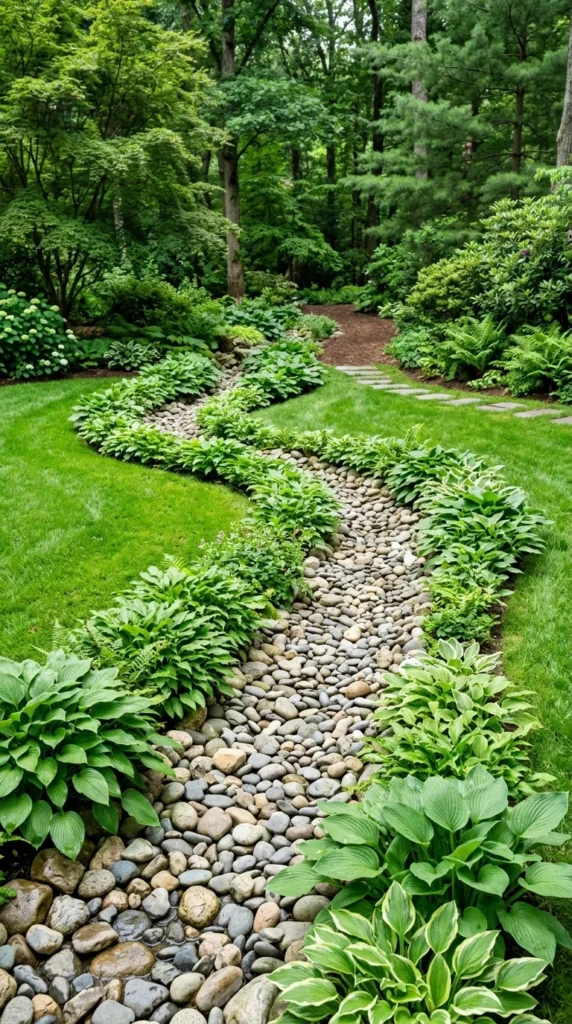
The hallmark of a designer-made dry river bed is the “S” curve. Nature rarely moves in a straight line, and neither should your landscaping. By creating a meandering path that snakes through your garden beds or across your lawn, you create visual interest and a sense of movement. Start with a wider “head” where the water would theoretically originate and gradually narrow or widen the path to mimic the natural ebb and flow of a mountain stream.
2. Focal Bridge
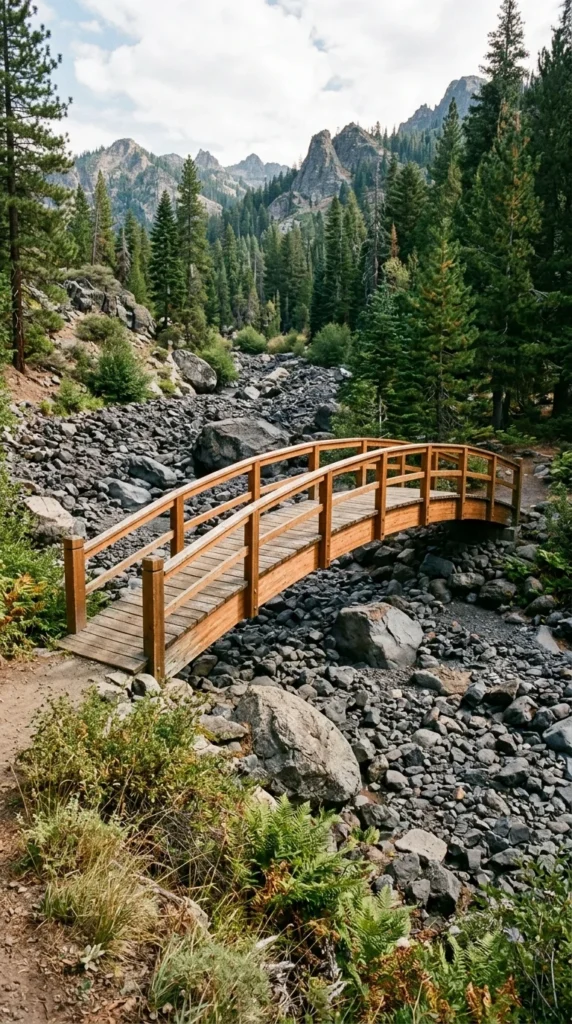
Nothing elevates a dry river bed quite like a structural element. A small wooden or stone footbridge acts as a powerful focal point, suggesting that the “river” is a significant feature of the landscape. Even if the creek bed is small, a bridge adds a sense of whimsy and destination to the yard. Position the bridge at a narrow point in the rock path for the most realistic appearance.
3. Native Grasses
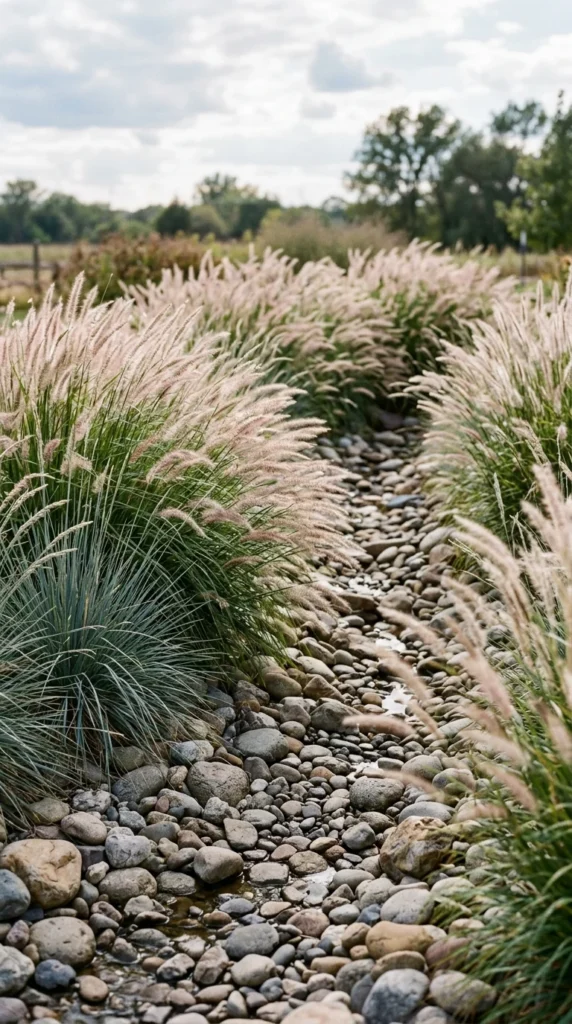
Texture is the secret ingredient in high-end landscaping. Soft, billowy ornamental grasses provide a stunning contrast to the hard, cold surface of the river rocks. Varieties like Muhly grass, Blue Fescue, or Fountain grass add movement and height. When planted in clusters along the “banks” of your dry river, they mimic the riparian vegetation found in nature, softening the edges of the stones.
4. Succulent Borders
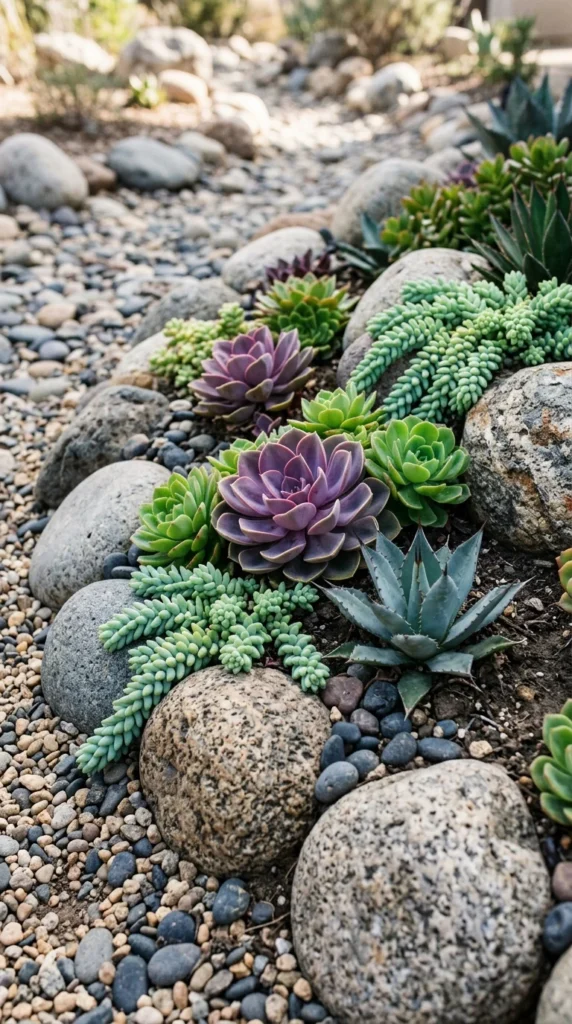
For those in more arid climates, succulents are the perfect companion for river rocks. The low-water requirements of both elements make them a sustainable duo. Use larger succulents like Agave or Yucca to provide structural “anchor” points, and fill in the gaps with trailing stonecrop or colorful Echeveria. The juicy, geometric shapes of the succulents pop beautifully against the muted tones of smooth river rock.
5. Slate Accents
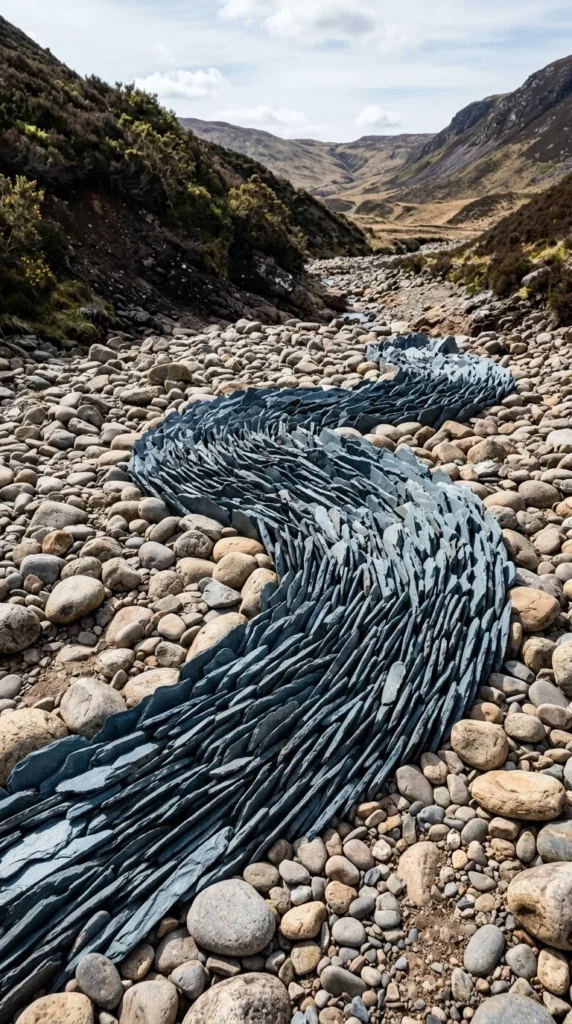
To add depth and a sense of motion, incorporate flat slate or flagstone. Instead of laying every stone flat, try “pitching” some of the slate on its edge. This technique, often used in professional rock gardens, mimics the way water pushes and stacks stones in a high-velocity stream. The dark, often blue-grey hues of slate provide a sophisticated color palette that looks particularly striking after a rainstorm.
6. Boulder Anchors
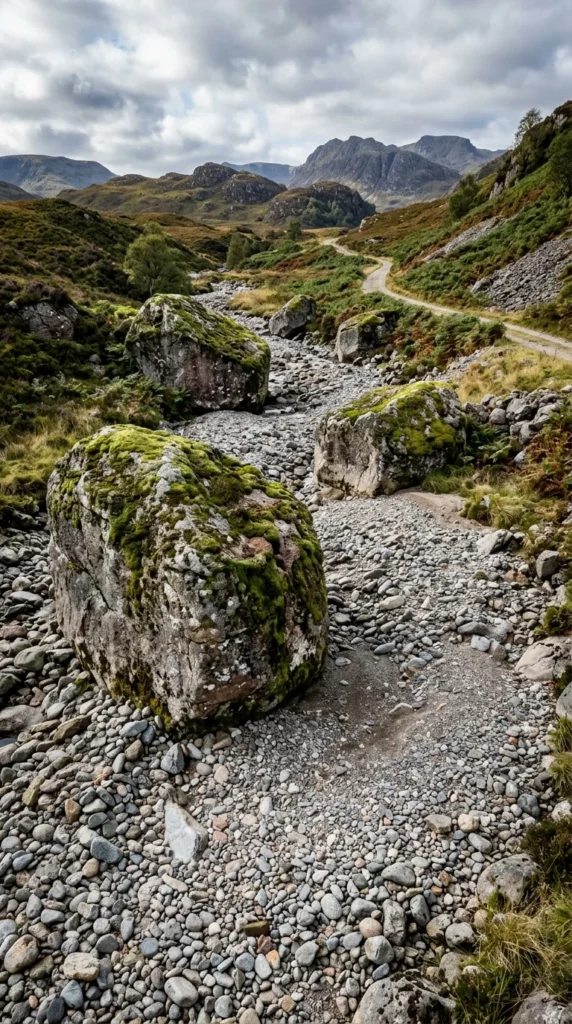
A common mistake in DIY dry creek beds is using stones that are all the same size. To achieve a designer look, you must vary the scale. Large “anchor” boulders should be placed at the bends of the river or where the “current” would naturally hit. Bury the bottom third of these boulders to make them look as though they have been there for centuries, rather than just dropped on top of the soil.
7. Cascading Falls
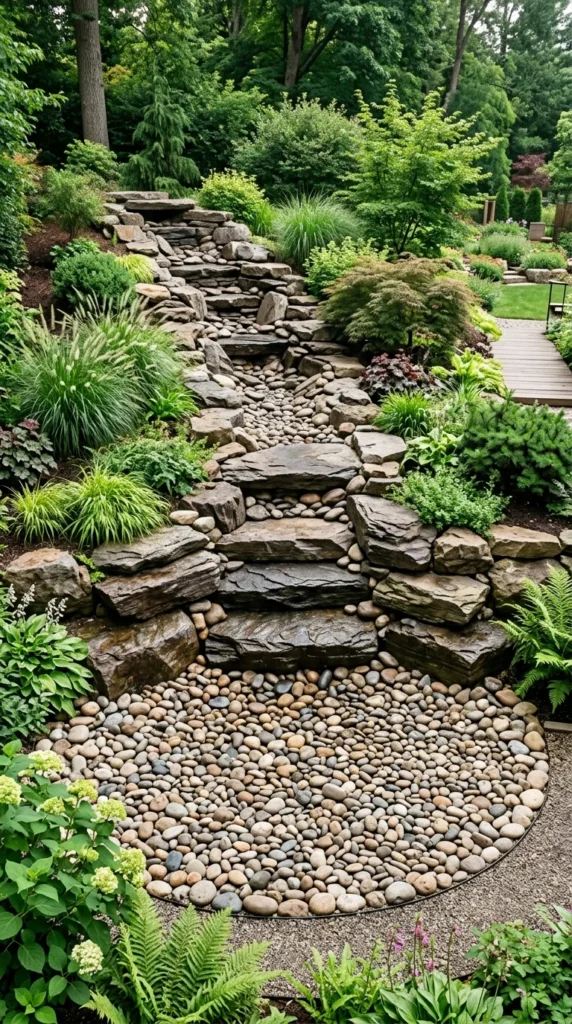
If your yard has a slope, take advantage of it by creating a dry waterfall. Layer large, flat stones to create “steps” or “drops.” This adds vertical interest to your landscaping and provides a logical “source” for your dry river bed. Surround the fall area with ferns or weeping shrubs to enhance the lush, hidden-spring aesthetic.
8. Culvert Camouflage
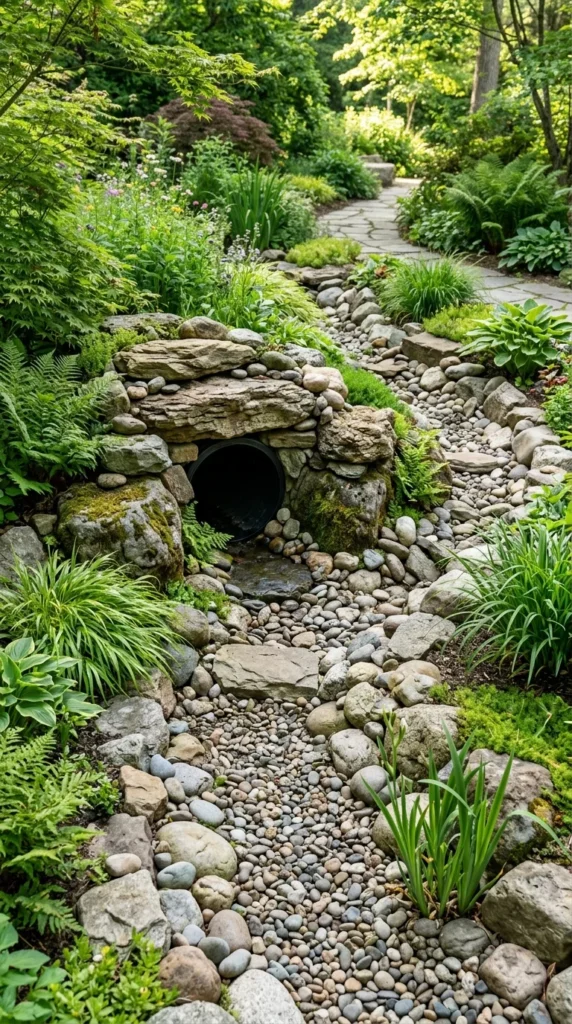
Many homeowners install dry river beds to solve practical drainage issues from downspouts or culverts. Instead of leaving a plastic pipe exposed, use river rocks to create a “natural” outlet. Use larger stones around the mouth of the pipe to break up the flow of water and prevent mulch from washing away, turning a utility necessity into a beautiful landscape feature.
9. Japanese Zen
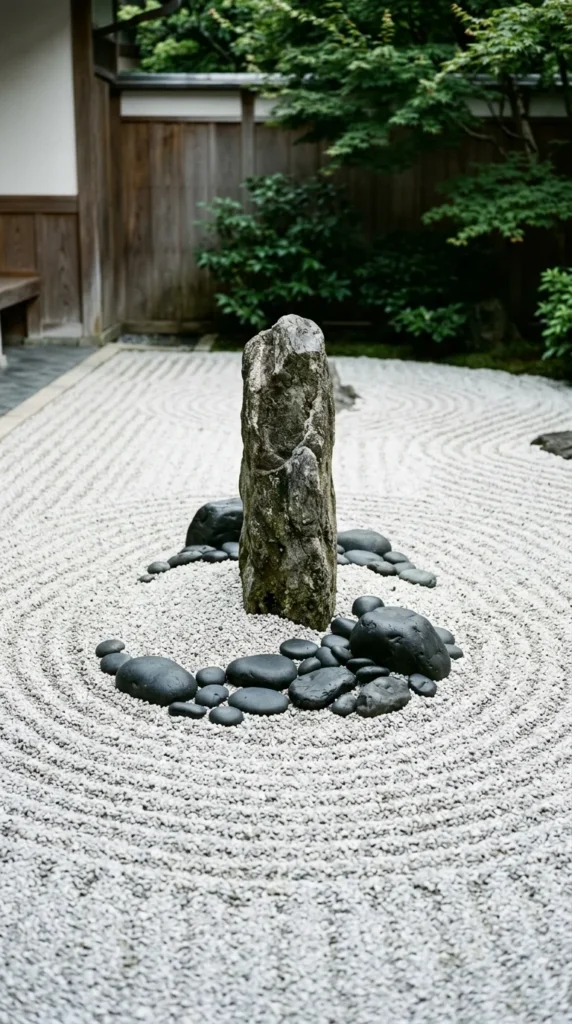
Dry river beds are a staple of Japanese Zen gardens, where they represent the essence of water through stone. For this look, keep the palette limited and the lines clean. Use fine gravel or crushed granite as the “water” and larger, smooth stones as “islands.” This style works exceptionally well in small courtyard gardens or side yards where a sense of calm is desired.
10. Lighting Effects
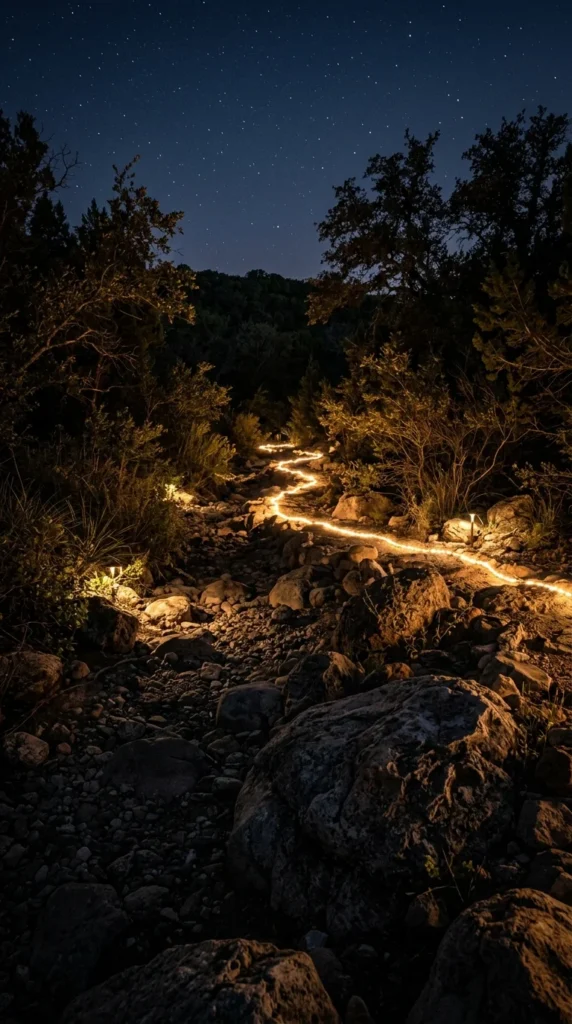
To enjoy your landscaping after dark, incorporate low-voltage lighting. Path lights can line the “banks” to define the shape of the river, while small spotlights can be hidden behind boulders to create dramatic shadows. Using “cool” toned lights can even mimic the blueish shimmer of water under moonlight, enhancing the “river” illusion at night.
11. Mixed Textures
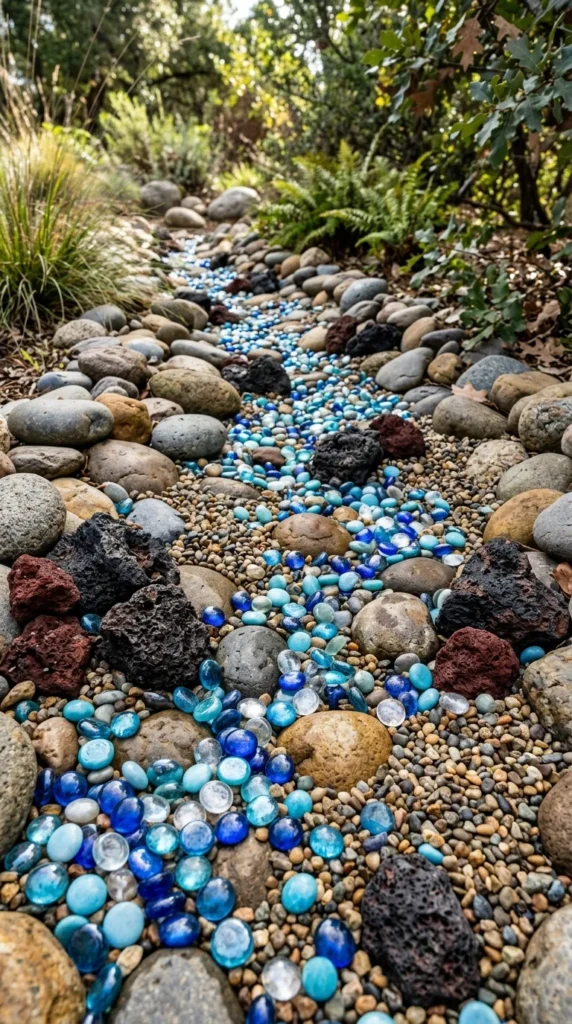
Professional designers often layer different types of stone to create a rich tapestry. Combine smooth, rounded “river rounds” with more angular “crushed stone” or even recycled glass pebbles for a touch of shimmer. By mixing sizes—from tiny pea gravel to large cobbles—you create a more realistic and visually complex landscape that holds the eye’s attention.
12. Erosion Control
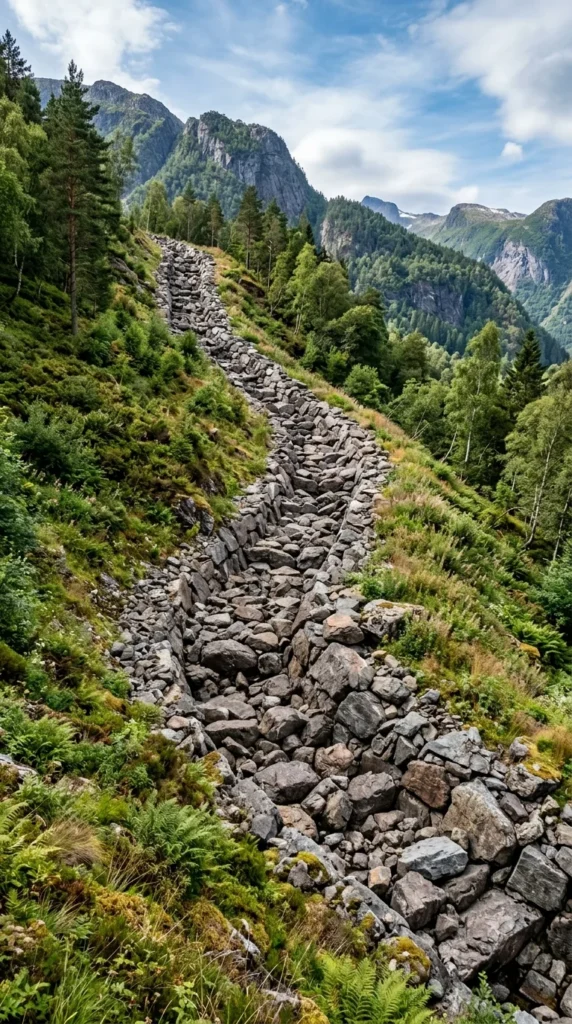
Function meets form in this application. On steep banks where grass refuses to grow and soil washes away, a dry river bed acts as a functional “swale.” By using larger, heavier rocks (often called rip-rap), you can slow down the velocity of rainwater, allowing it to soak into the ground rather than stripping your topsoil. It’s a rugged, industrial-meets-natural look that is incredibly effective.
13. Modern Minimalist
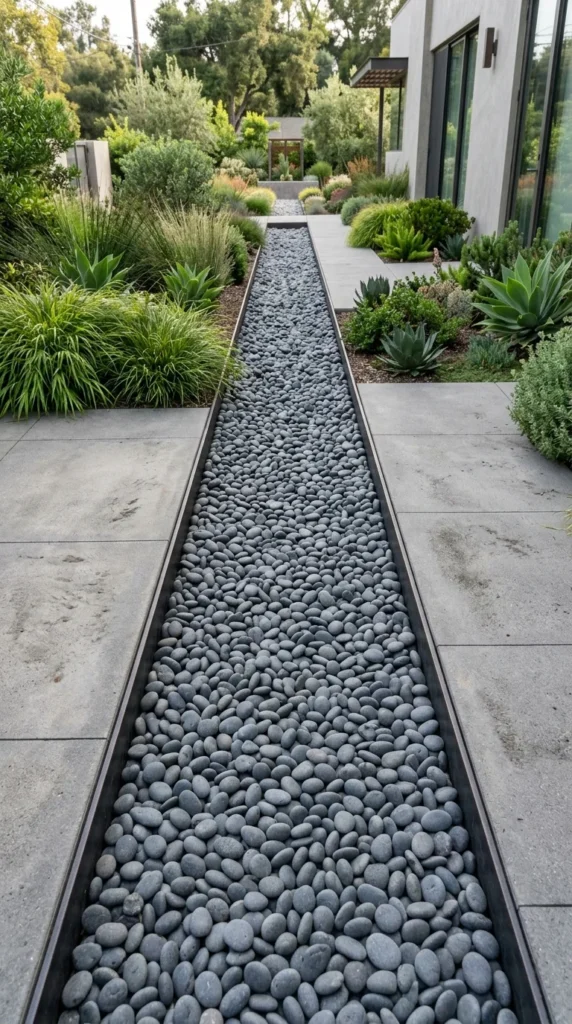
Dry river beds don’t always have to be rustic. In a modern landscape, clean lines and uniform materials reign supreme. Use dark, polished pebbles like Mexican Beach Pebbles and contain them within a sharp metal or concrete border. This creates a high-contrast, sophisticated look that complements contemporary architecture and “less is more” garden designs.
14. Woodland Trail
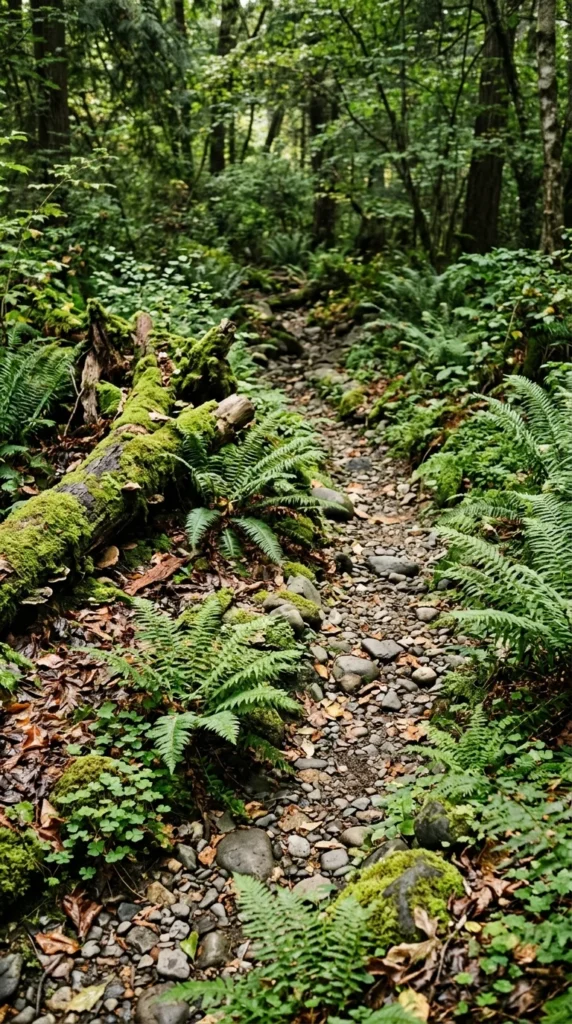
If your yard has a lot of shade and mature trees, a woodland-style dry river bed is the way to go. Use weathered, mossy rocks and allow leaf litter to naturally gather in the crevices. Plant shade-loving species like Japanese Forest Grass, Hostas, and Heuchera along the edges. This approach makes the river bed look like a long-forgotten stream discovered deep in the woods.
15. Dry Creek Island
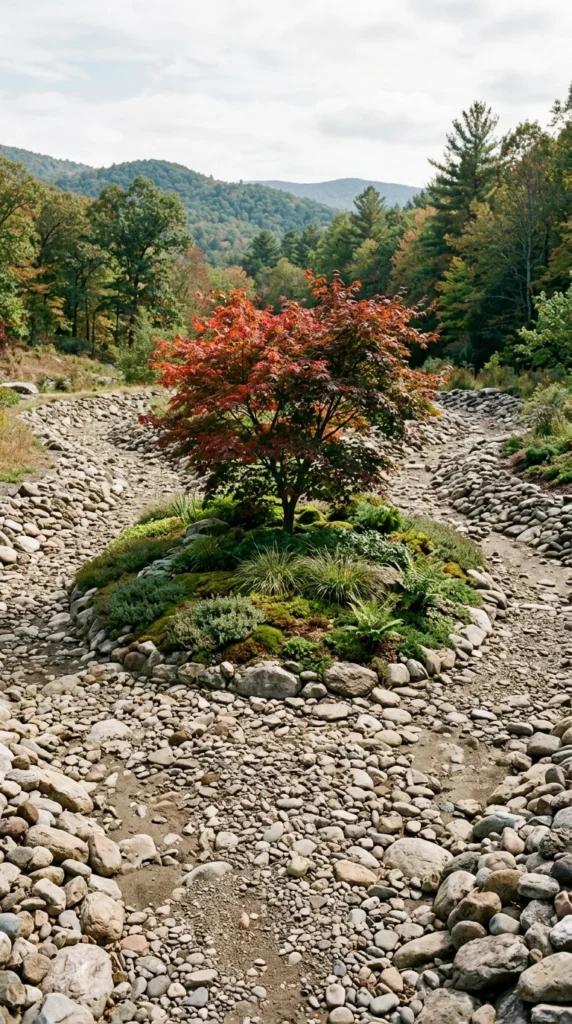
Break up a wide expanse of stone by creating an “island.” This is simply a planting pocket in the middle of your dry river bed. A single ornamental tree, like a Japanese Maple or a Crepe Myrtle, placed in the center of the stone path adds height and a point of refuge for the eye. It breaks the monotony of the rock and adds a professional “layered” feel to the yard.
16. Flowering Perennials
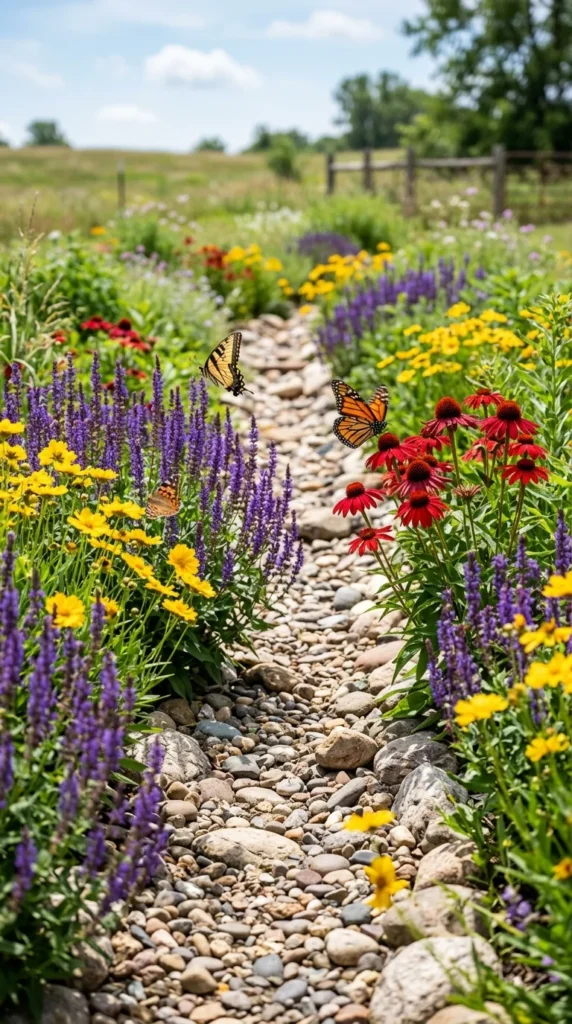
While grasses and succulents are common, don’t shy away from flowering perennials. The heat-retaining properties of the rocks can actually help certain sun-loving flowers thrive. Blue and purple flowers, such as Catmint or Russian Sage, provide a “cool” color palette that reinforces the idea of water, while bright yellows and reds provide a striking “hot” contrast against grey stones.
17. Mossy Rocks
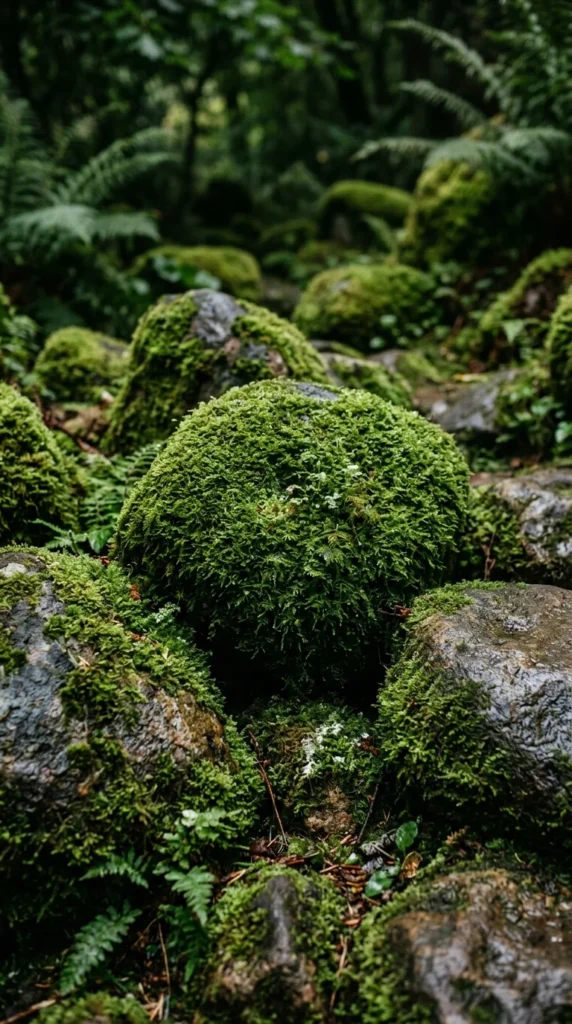
For a look that exudes age and permanence, encourage moss to grow on your larger stones. This works best in shaded, damp areas. You can even “paint” a mixture of buttermilk and moss spores onto the rocks to jumpstart the process. The soft, velvet texture of the moss against the hard stone creates an enchanting, fairy-tale aesthetic that looks completely organic.
18. Tiered Terraces
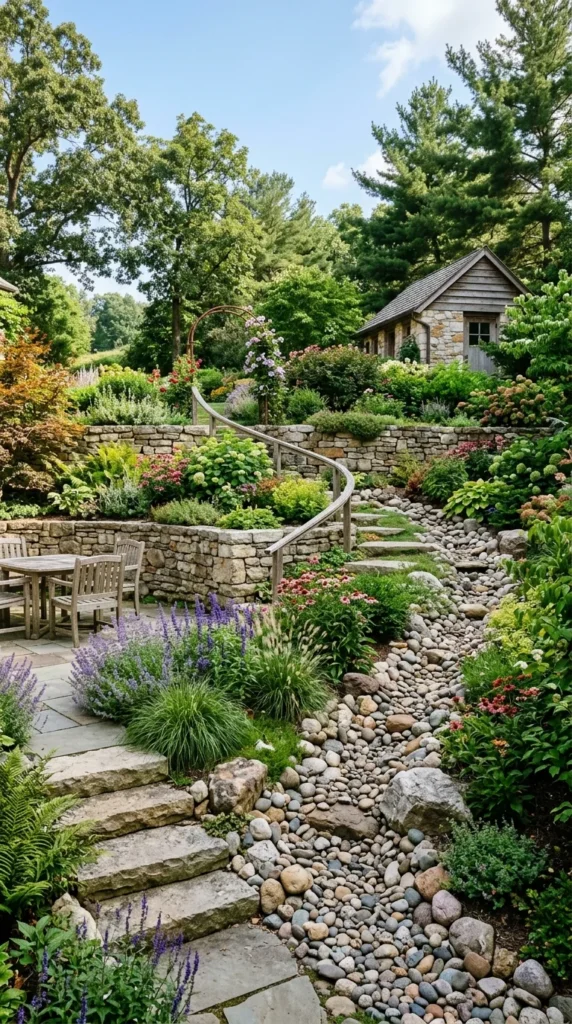
If you are dealing with a multi-level yard, use dry river beds to connect the different tiers. Instead of traditional stairs, a cascading “river” of stone can draw the eye from the highest point of the yard down to the lowest. This integrates the different levels of your landscape into one cohesive story, making the entire yard feel like a singular, designer-planned environment.