
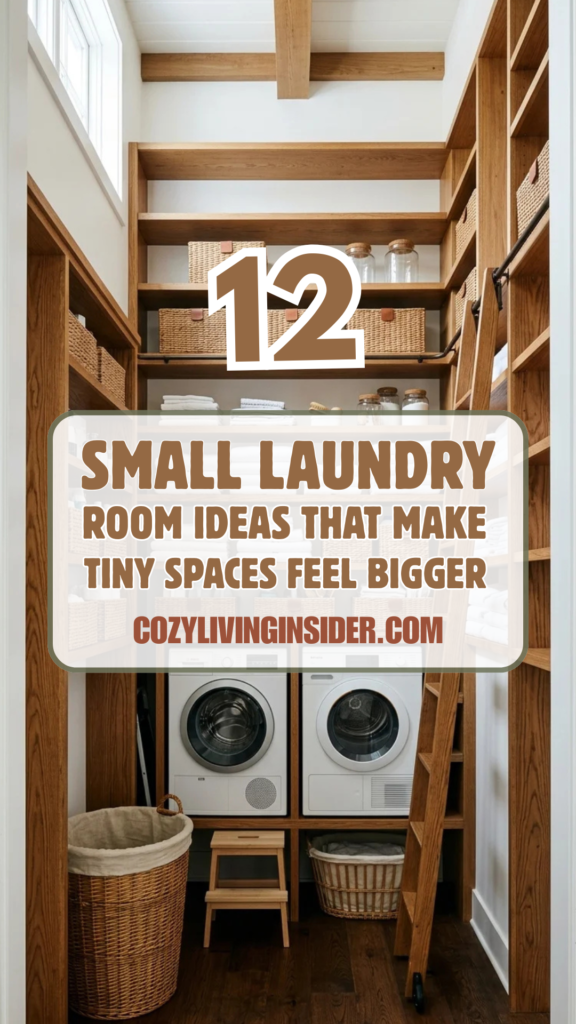

Maximizing a small laundry room requires a strategic blend of interior design principles and clever organizational hacks. When square footage is at a premium, every inch must serve a purpose without overwhelming the visual field. Transforming a cramped utility closet or a narrow mudroom into an efficient, expansive-feeling sanctuary is not just about aesthetics—it is about improving the workflow of one of the most high-traffic zones in the home.
The following twelve strategies focus on decluttering the floor, utilizing vertical real estate, and employing visual tricks to expand the perceived boundaries of your laundry space.
1. Vertical Shelving
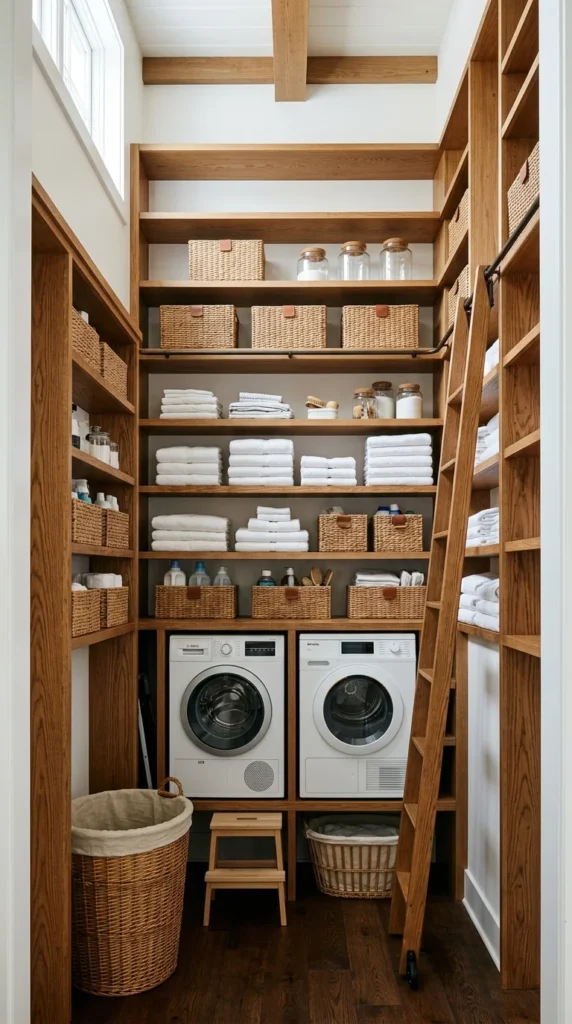
The most common mistake in small room design is failing to utilize the “dead space” above eye level. By installing floor-to-ceiling shelving, you draw the gaze upward, which creates an illusion of height. Open shelving, in particular, prevents the room from feeling “boxed in” by heavy cabinetry. Use uniform baskets to hide unsightly detergent bottles and loose items, maintaining a clean line that suggests order and space.
2. Stackable Units
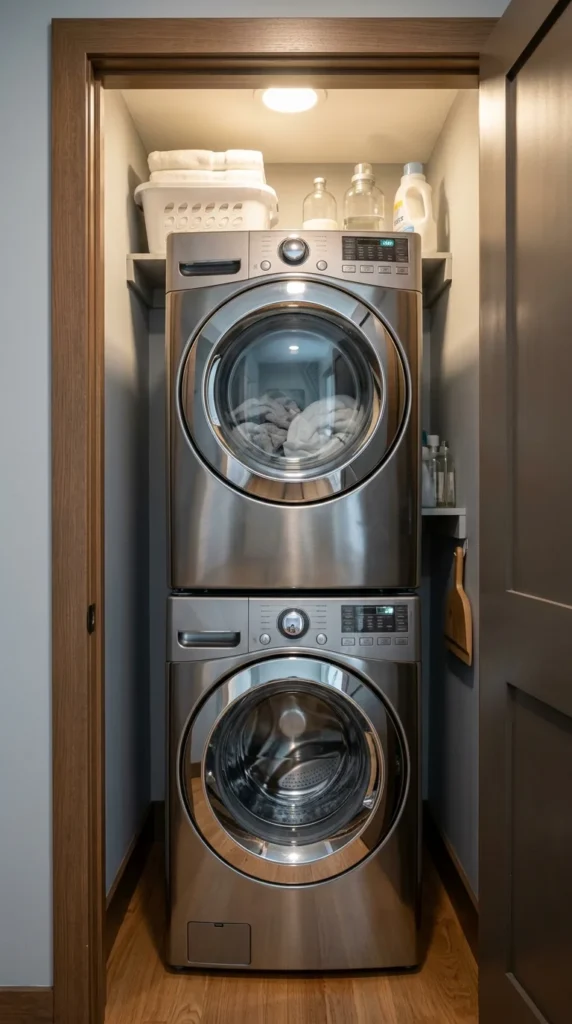
Floor space is the most valuable commodity in a tiny laundry room. By opting for a stackable washer and dryer unit, you effectively cut the appliance footprint in half. This reclaimed floor space can then be used for a tall utility cabinet, a slim drying rack, or simply left open to improve movement within the room. Modern front-loading units are designed for high-performance stacking without sacrificing capacity.
3. Sliding Doors
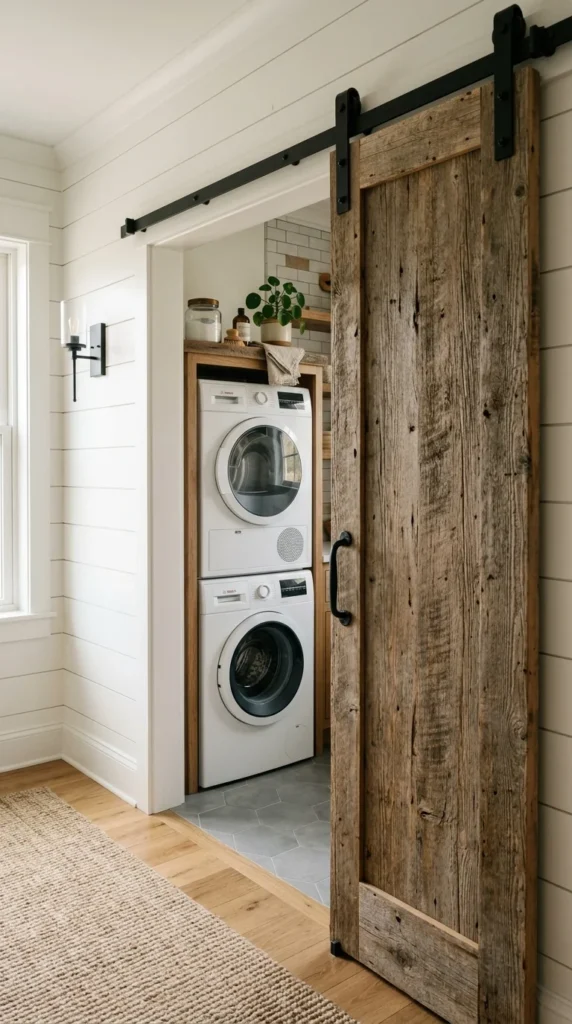
Traditional swing doors require a significant “clearance zone” to open and close, often hitting appliances or blocking walkways. Replacing a standard door with a sliding barn door or a pocket door eliminates this issue entirely. This adjustment allows you to utilize the space immediately in front of the laundry area, making the transition between rooms seamless and less claustrophobic.
4. Fold-Down Tables
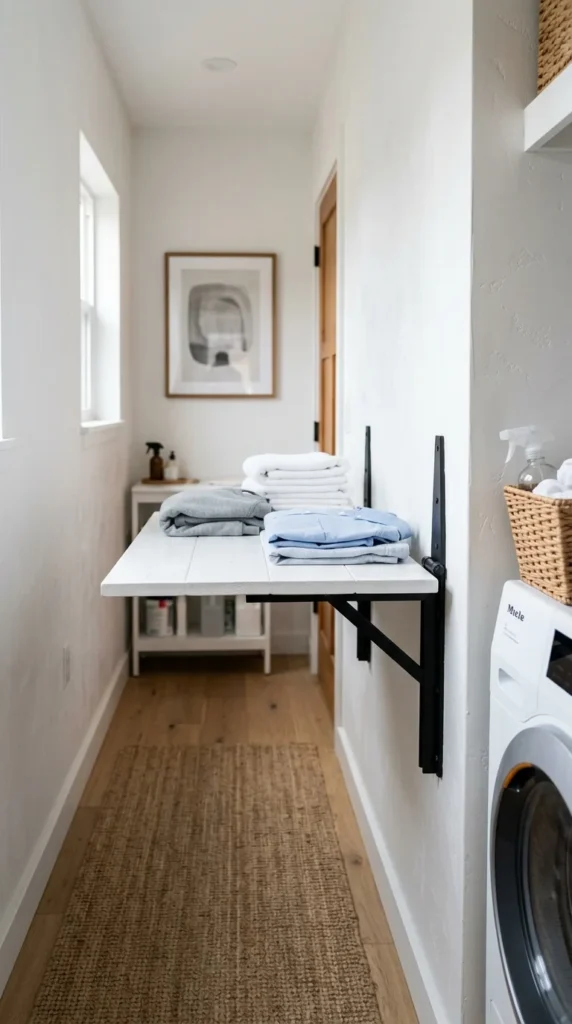
Folding laundry requires a flat surface, but a permanent table can choke a small room. A wall-mounted, fold-down table provides a sturdy workspace when you need it and disappears against the wall when you don’t. This “convertible” approach to furniture is a hallmark of smart small-space design, ensuring that the room remains adaptable to different stages of the laundry process.
5. Bright Palettes
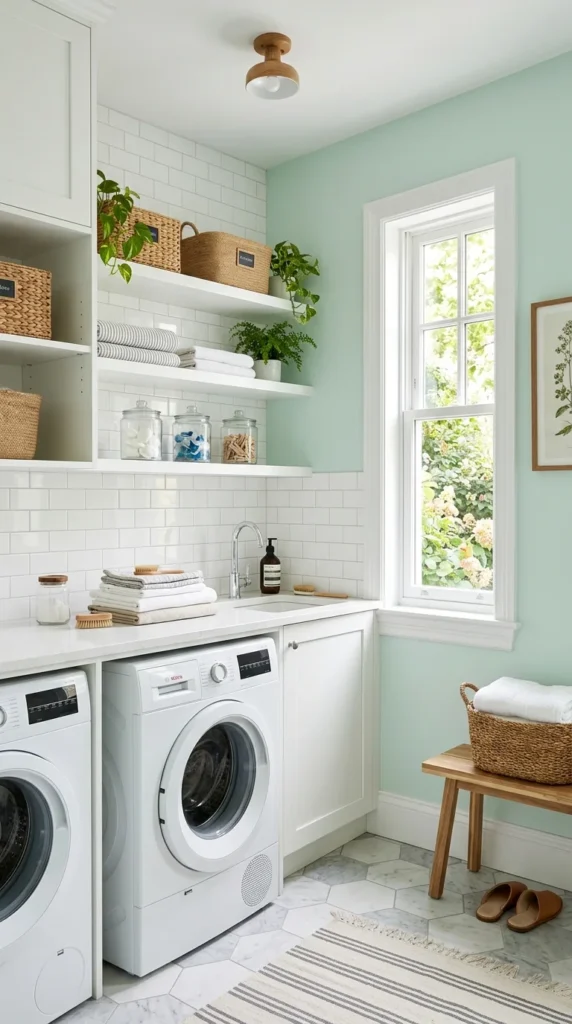
Dark colors absorb light, making walls feel like they are closing in. To make a tiny space feel expansive, lean toward a light and bright color palette. High-gloss whites, soft pastels, or light neutrals reflect both natural and artificial light. Consider using a semi-gloss or satin finish on the walls; the slight sheen helps bounce light around the corners, erasing shadows that define the room’s small boundaries.
6. Hidden Appliances
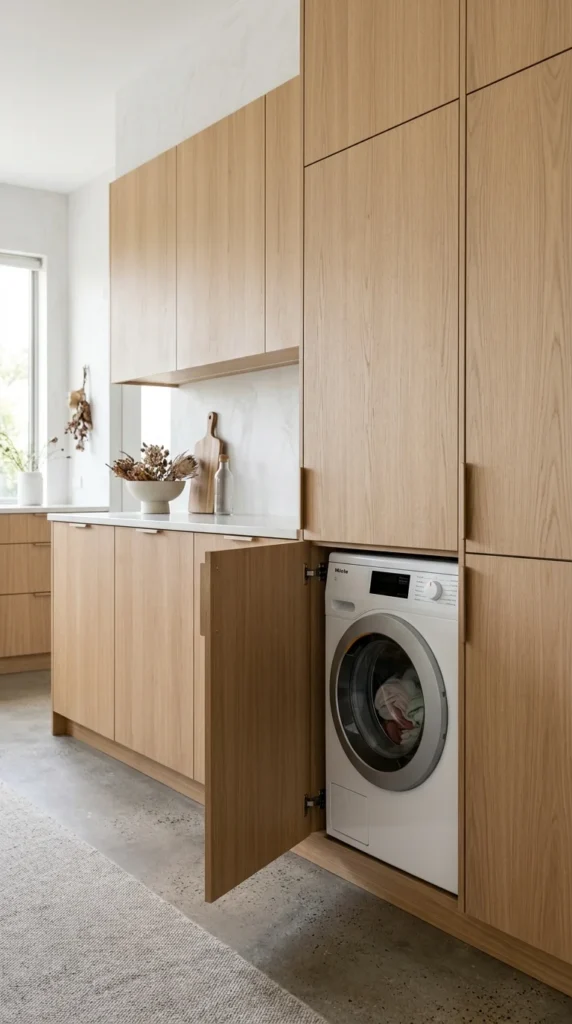
Visual clutter is the enemy of perceived space. When appliances, hoses, and cords are exposed, the room feels busy and cramped. Integrating your washer and dryer behind custom cabinetry panels creates a continuous visual line. When the machines are not in use, the room looks like a clean, streamlined hallway or storage area, which significantly reduces the “utility” feel of the space.
7. Over-the-Door Racks
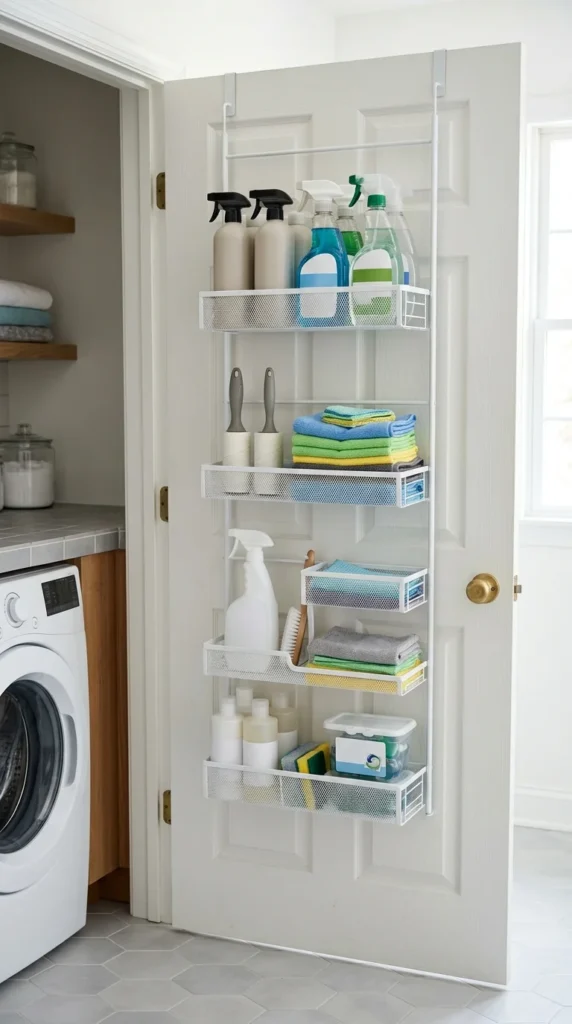
The back of the door is often-overlooked real estate. Over-the-door shelving units are perfect for storing frequently used items like stain removers, spray starch, and dryer sheets. By moving these small items off the countertops and into a dedicated door rack, you clear the primary visual surfaces, which immediately makes the room feel more organized and spacious.
8. Pull-Out Bins
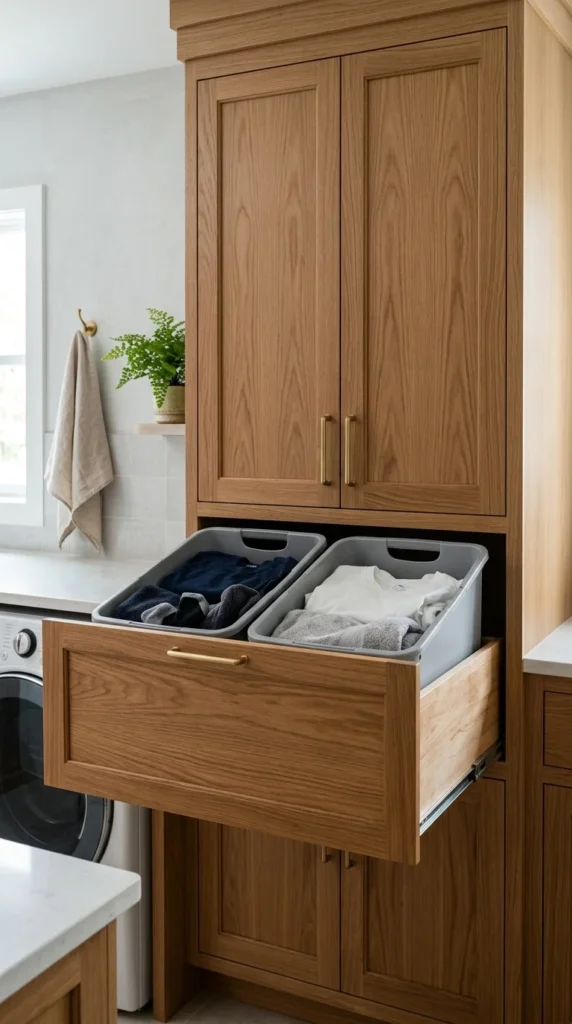
Traditional laundry baskets are bulky and difficult to store. Built-in pull-out hampers allow you to sort lights and darks out of sight. By integrating these bins into your lower cabinetry, you remove the need for plastic baskets sitting on the floor, which opens up the walking path and creates a more “built-in” and intentional aesthetic.
9. Continuous Countertops
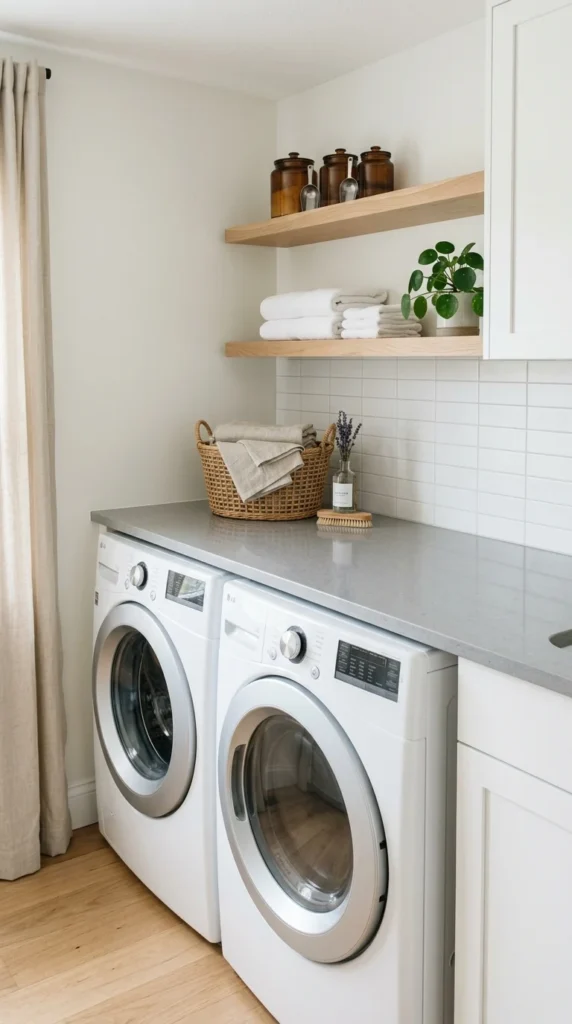
If you have side-by-side machines, installing a single, continuous countertop over the top of both units is a game-changer. This creates a large, uninterrupted horizontal plane. In design, long horizontal lines make a room feel wider. Beyond the visual benefit, it provides a massive amount of functional space for sorting, folding, and treating garments without the need for additional furniture.
10. Ambient Lighting
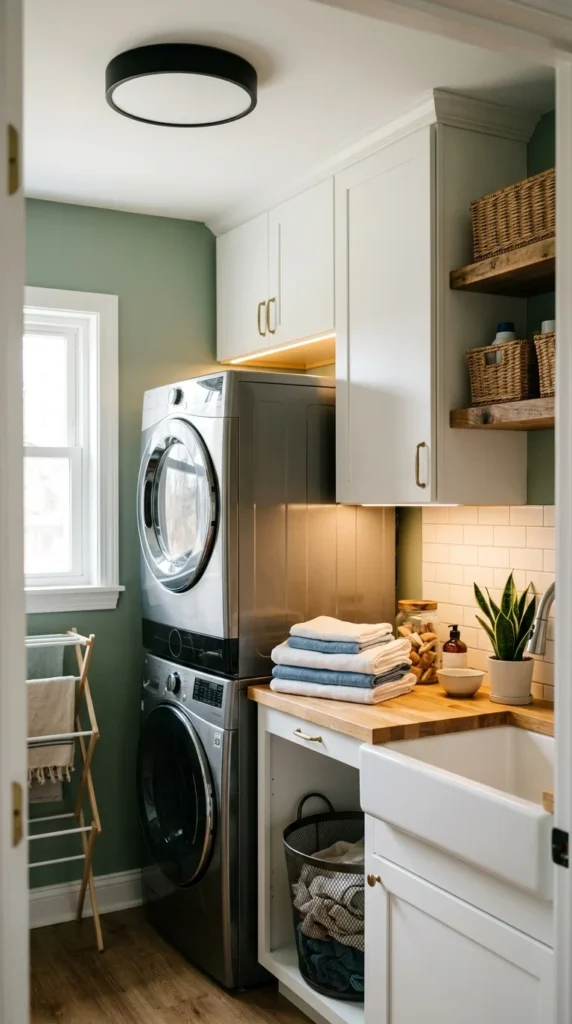
A dim room always feels smaller than it is. Most laundry rooms suffer from a single, weak overhead bulb that creates harsh shadows. Upgrade your lighting by adding under-cabinet LED strips and a bright, daylight-toned ceiling fixture. Well-lit corners eliminate the “cave” effect, making the walls feel further apart and the entire environment more inviting.
11. Wall Racks
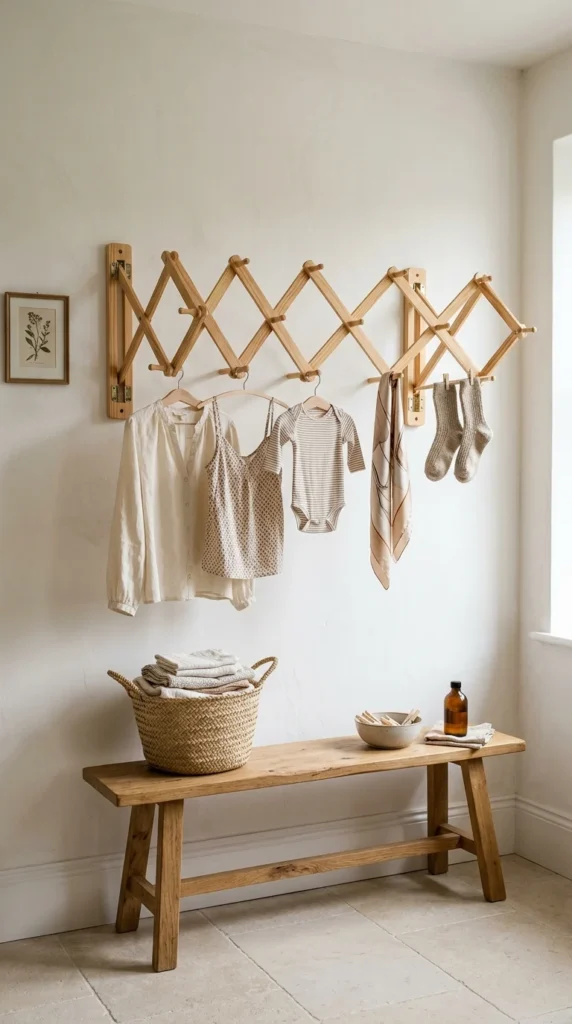
Floor-standing drying racks are notorious for blocking traffic and being difficult to store. Wall-mounted drying racks can be pulled out when needed and folded completely flat against the wall when finished. Choosing a model that matches your wall color helps it “disappear” when not in use, maintaining the room’s clean lines while providing essential functionality for air-drying delicates.
12. Uniform Containers
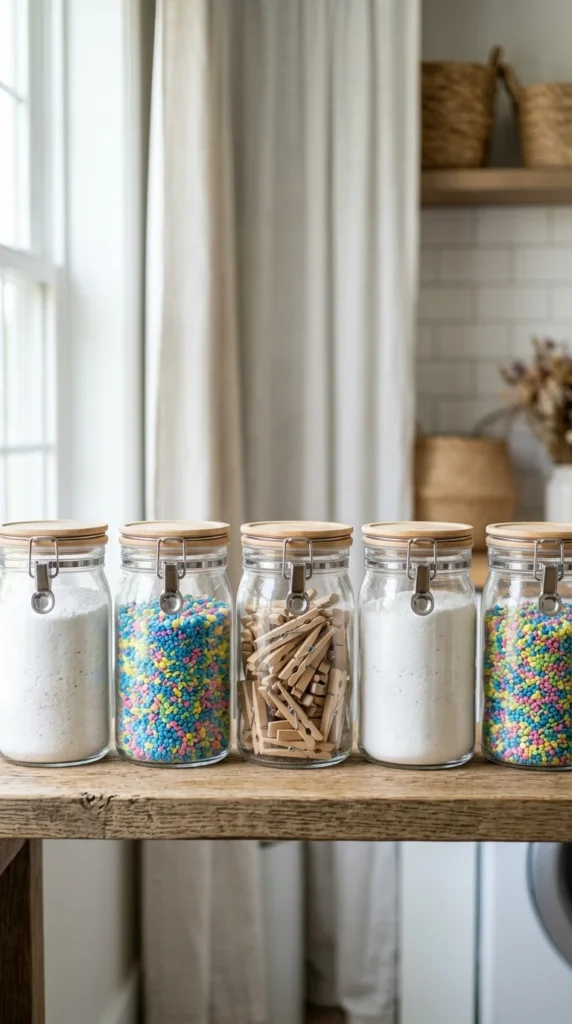
Visual harmony creates a sense of calm and space. Replacing mismatched, brightly colored plastic detergent packaging with uniform glass or ceramic jars reduces “visual noise.” When the eye doesn’t have to jump between different shapes and loud labels, the room feels more cohesive and less cluttered. This simple aesthetic choice can make even the smallest utility closet feel like a curated boutique space.