
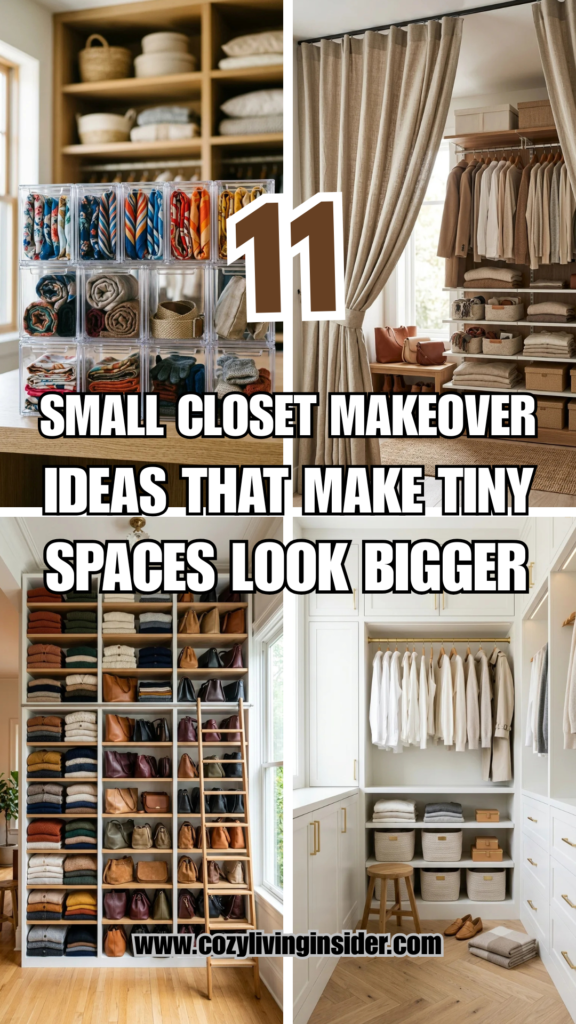

Maximizing a small closet is one of the most rewarding home improvement projects a homeowner can undertake. While a cramped, cluttered closet can induce daily stress, a well-organized, visually expanded space creates a sense of calm and efficiency. The secret to making a tiny closet look significantly larger lies in a combination of clever spatial engineering, light manipulation, and the removal of visual “noise.”
By focusing on both functional upgrades and aesthetic enhancements, you can transform a dark alcove into a high-end dressing nook. Here are 11 professional makeover ideas to double your perceived square footage.
1. Slim Hangers
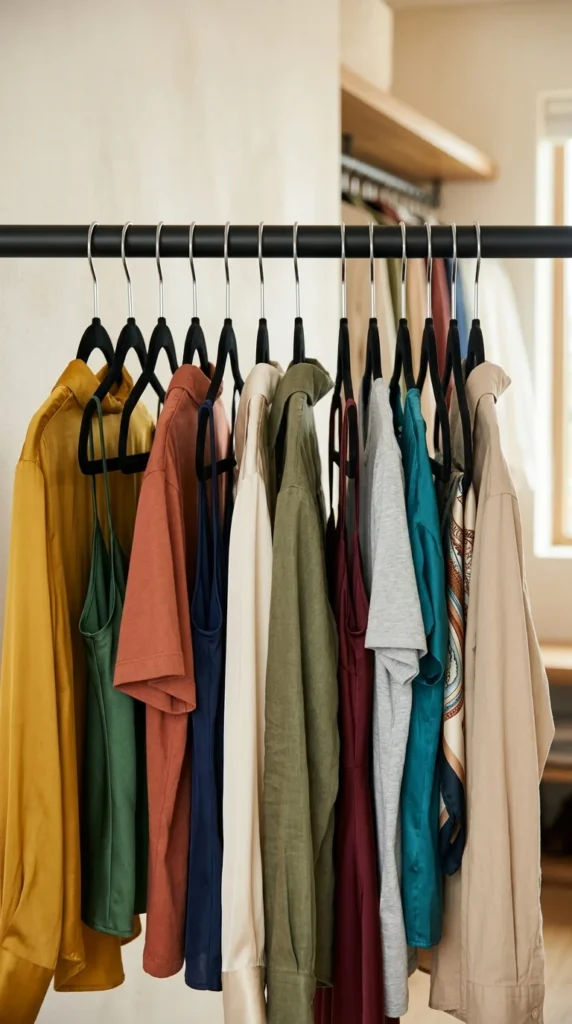
The quickest way to reclaim up to 30% of your hanging space is to replace bulky plastic or wooden hangers with ultra-slim velvet versions. Beyond the physical space saved, uniform hangers provide a “visual reset.” When every hanger is the same height and profile, the eye focuses on the clothes rather than the cluttered hardware. This creates a streamlined look that makes the closet appear wider and more organized.
2. Vertical Shelving
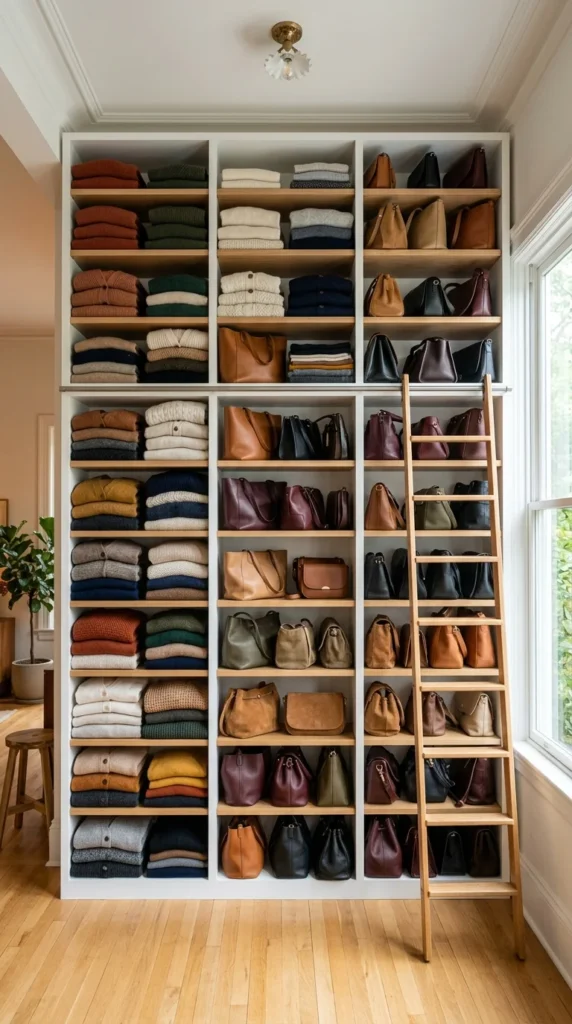
Most standard closets waste the top two to three feet of vertical space. By installing shelving that reaches all the way to the ceiling, you draw the eye upward, which creates the illusion of height. Use the highest shelves for seasonal items or things you rarely reach for, such as luggage or heavy winter quilts. This “sky-high” storage clears out the middle zone, making the primary reachable area feel less congested.
3. LED Lighting
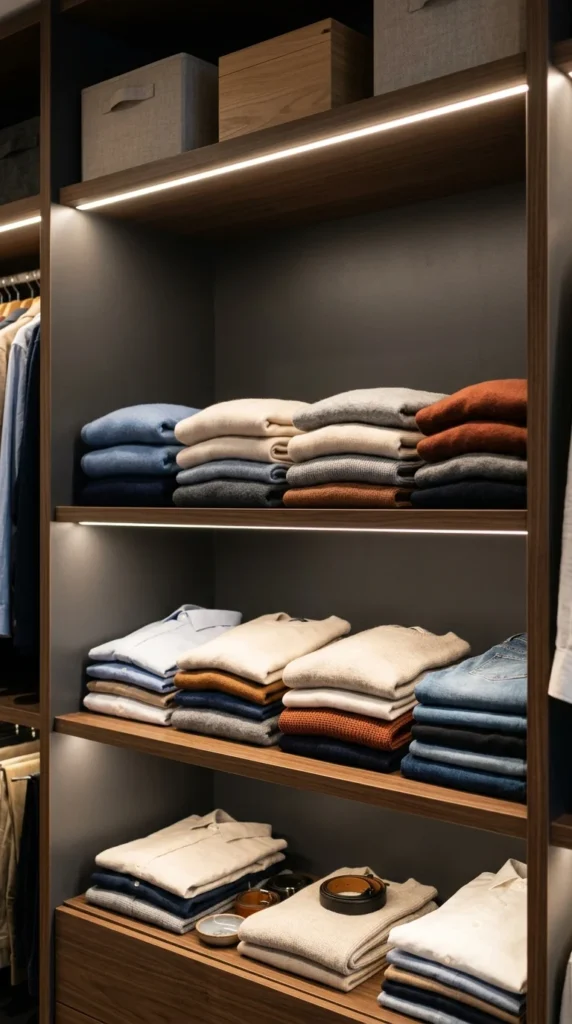
Shadows are the enemy of small spaces; they make corners disappear and the walls feel like they are closing in. Adding high-CRI (Color Rendering Index) LED lighting can transform the ambiance instantly. Battery-powered motion-sensor lights or sleek plug-in LED strips under shelves illuminate every nook. A bright closet feels open and inviting, allowing you to see the full depth of the space, which immediately makes it feel larger.
4. Mirrored Doors
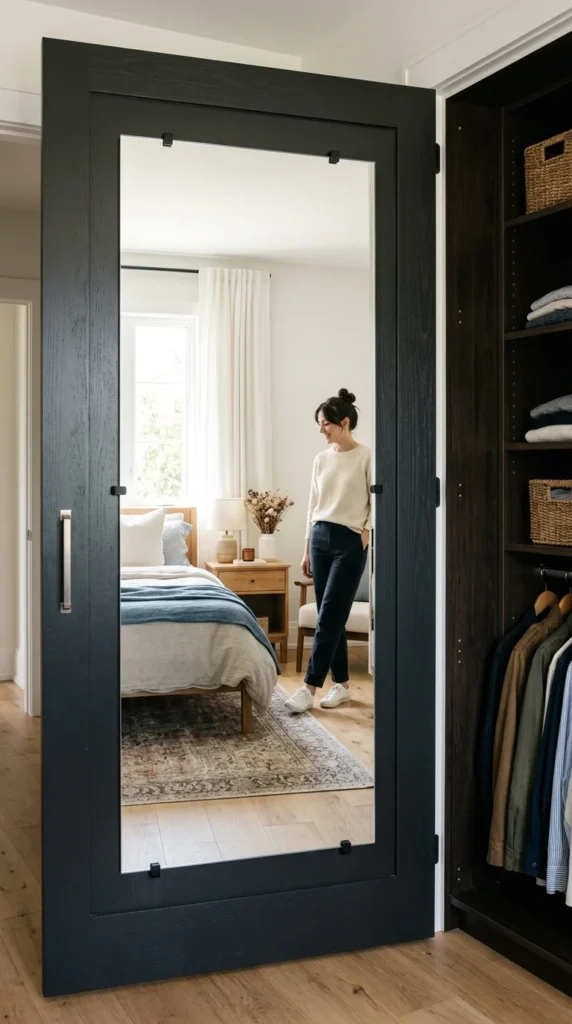
It is an old interior design trick for a reason: mirrors create the illusion of more space. In a closet, a full-length mirror on the back of the door or a mirrored back panel on a shelf reflects light and doubles the visual depth. Instead of your eye hitting a solid wall, it perceives a continuation of the room. This simple addition breaks the “box” feel of a small reach-in closet.
5. Light Paint
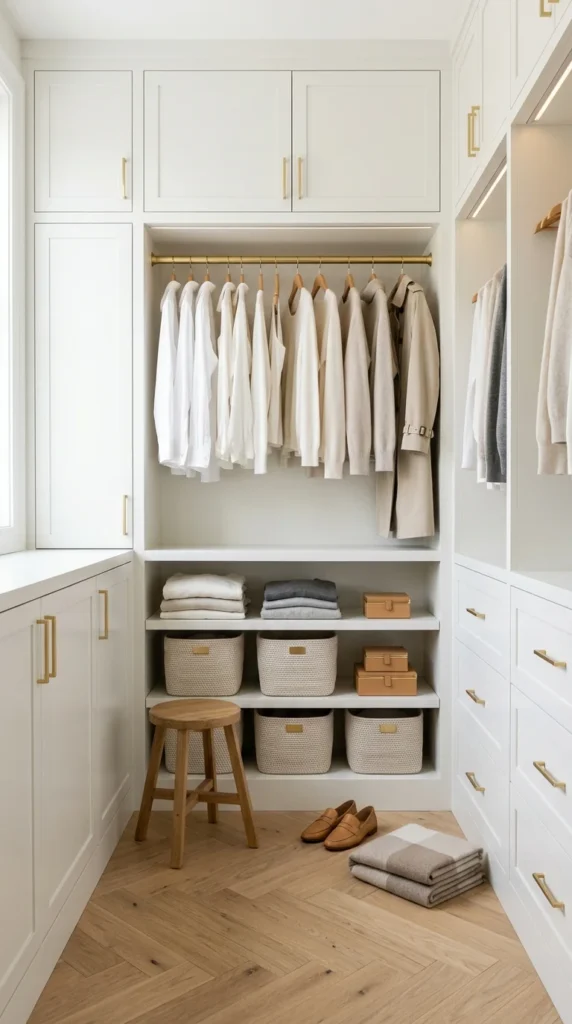
Dark colors absorb light and make walls feel closer. To open up a tiny closet, opt for a palette of whites, creams, or very light grays. A semi-gloss or eggshell finish is particularly effective because it has a slight sheen that bounces light around the interior. When the interior of the closet is lighter than the surrounding room, it creates a “gallery” effect that feels spacious and premium.
6. Door Alternatives
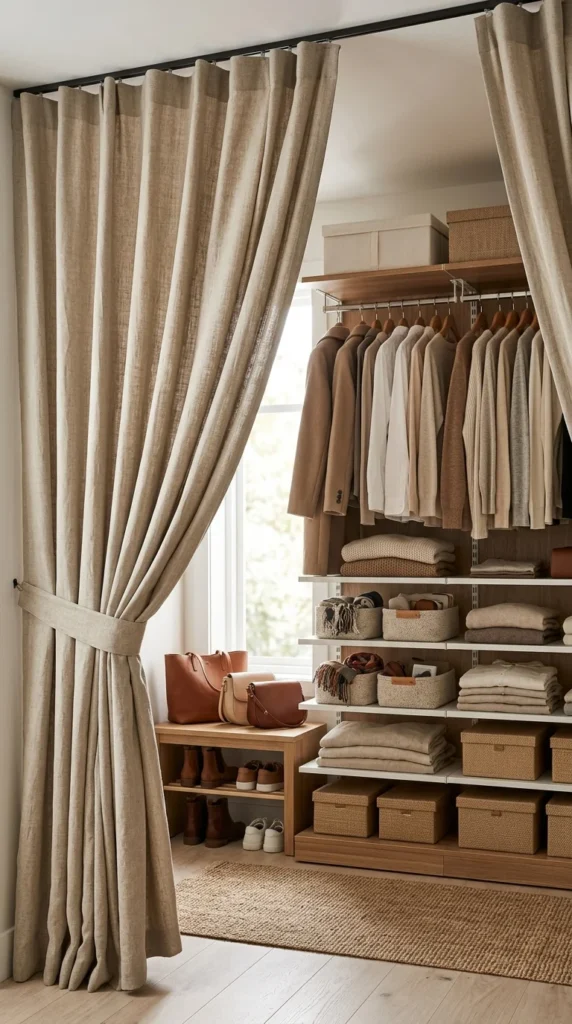
Traditional swinging doors require “swing space,” which can make a small room feel even more cramped. Replacing heavy doors with bifold doors, sliding barn doors, or even high-quality fabric curtains can save floor space. Curtains, in particular, add a soft texture to the room and can be pushed completely aside, allowing full access to the closet and making the transition between the room and the storage feel seamless.
7. Elevated Racks
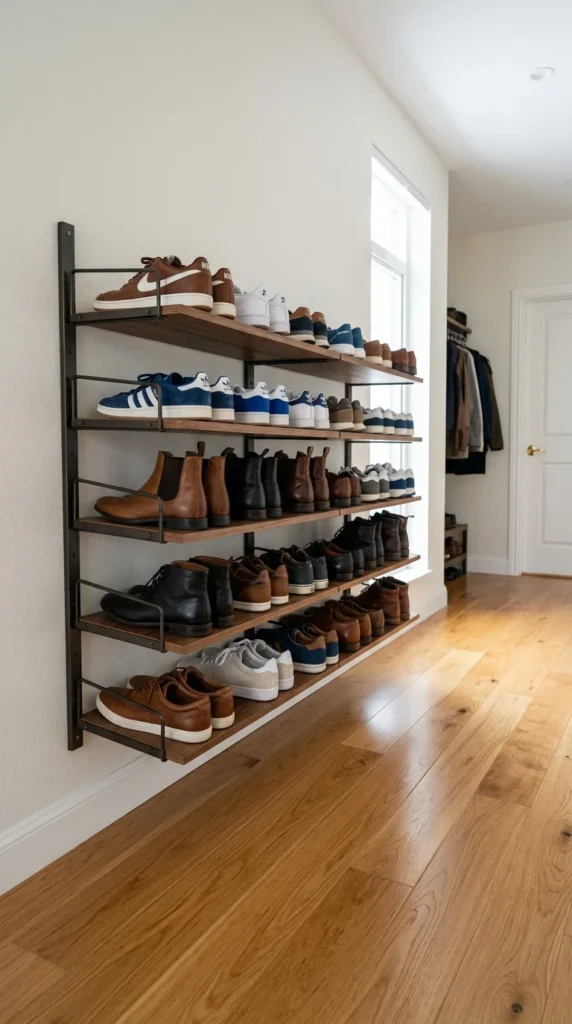
Keeping the floor clear is essential for spatial perception. When you can see the floorboards extending all the way to the back wall, the room feels larger. Instead of using floor-based shoe racks, use wall-mounted floating shelves or over-the-door organizers. By elevating your belongings, you create “negative space” at the base of the closet, which tricks the brain into perceiving more square footage.
8. Modular Dividers
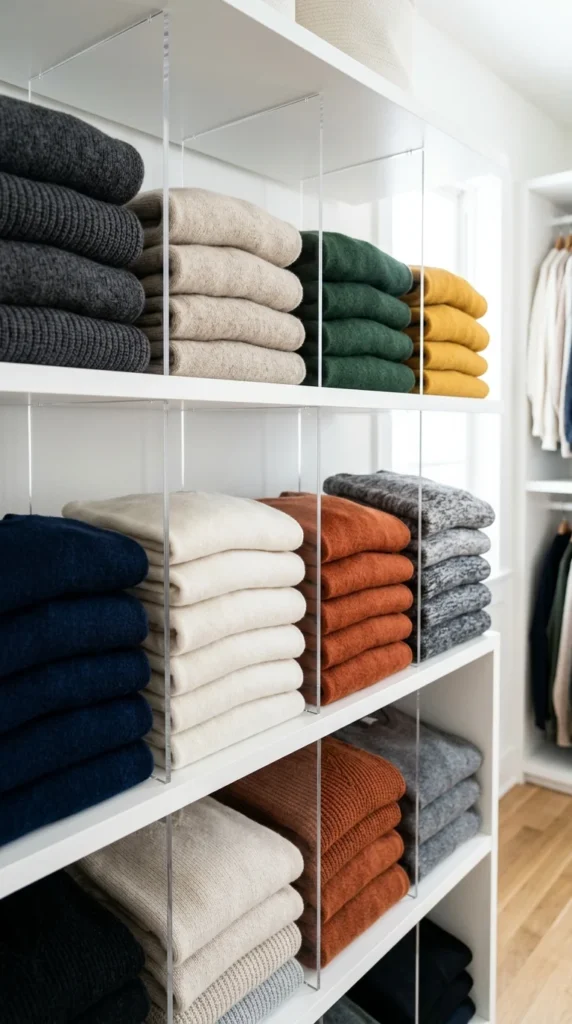
Clutter expands to fill the space available. Modular shelf dividers prevent stacks of clothes from toppling over and merging into a messy heap. Using clear acrylic dividers is especially effective because they provide structure without adding visual bulk. They keep your items contained in neat, vertical columns, which emphasizes the height of the shelving rather than the width of the clutter.
9. Wall Hooks
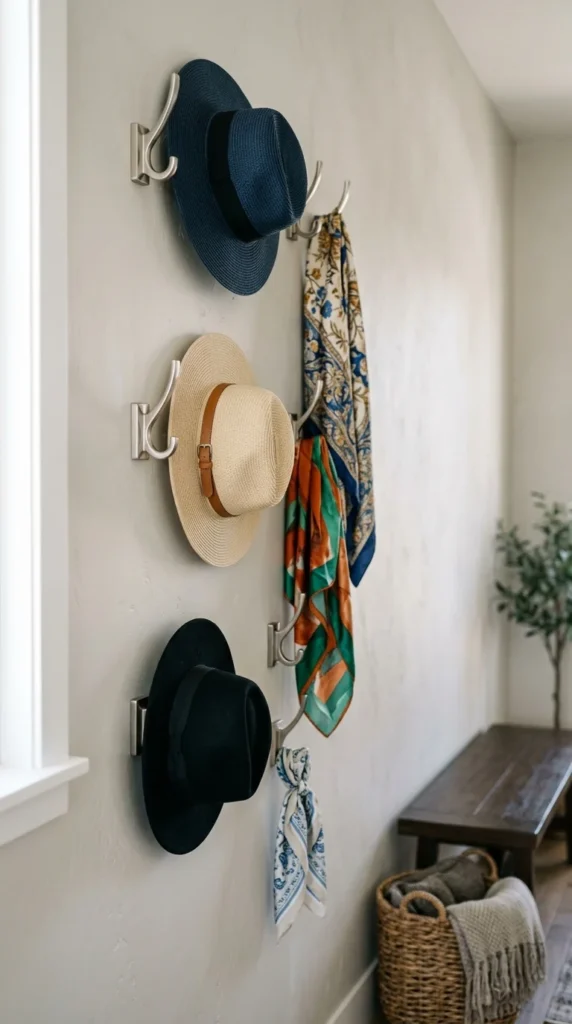
Don’t ignore the “dead space” on the side walls or the back of the door. Installing a series of aesthetic hooks allows you to display accessories like handbags, hats, or belts. This removes these items from the main shelves and hanging rods, reducing the “density” of the closet. When items are spread out and given their own dedicated spot on the wall, the closet looks curated rather than stuffed.
10. Transparent Bins
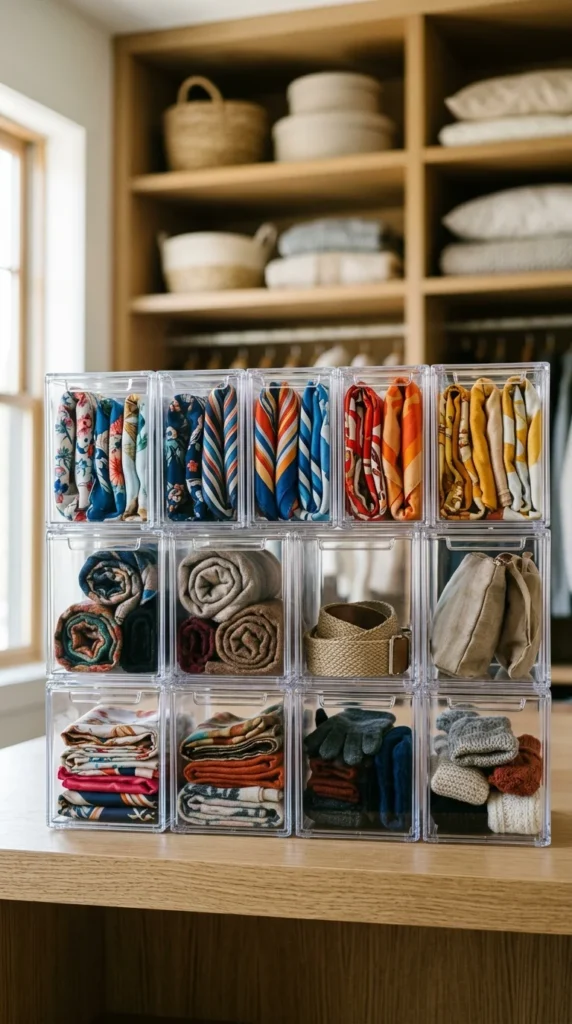
Opaque bins and baskets create visual “blocks” that can make a closet feel heavy and closed-off. Switching to transparent acrylic or mesh containers allows you to see through the storage. This transparency maintains the sightline to the back of the shelf, which helps the space feel more open. Additionally, it makes finding items easier, preventing the frantic digging that leads to disarray.
11. Seasonal Rotation
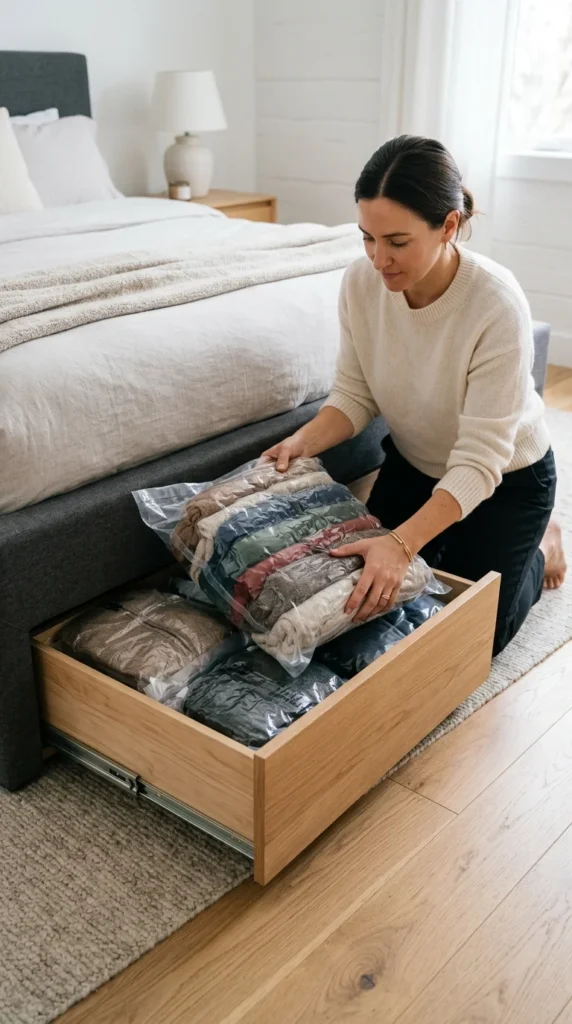
The most effective way to make a closet look bigger is to have less in it. A tiny closet should only hold what you are currently wearing. By adopting a seasonal rotation—storing winter coats in vacuum bags or under-bed bins during the summer—you give your current wardrobe “room to breathe.” When there is physical space between the hangers on the rod, the closet immediately looks more luxurious and significantly more spacious.