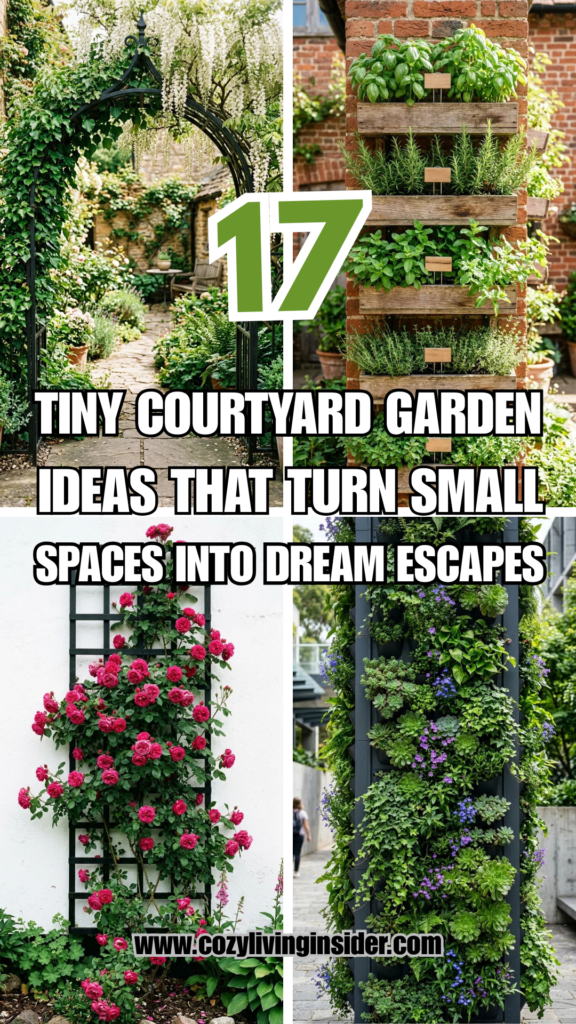

The challenge of a small outdoor space is often viewed as a limitation, but in the world of landscape design, a tiny courtyard is a canvas for intimacy, detail, and profound creativity. Unlike sprawling lawns, a courtyard offers a controlled environment where every plant, stone, and furniture piece contributes to a cohesive atmosphere. Transforming these compact areas into “dream escapes” requires a strategic blend of verticality, sensory appeal, and multi-functional design.
Whether your courtyard is a concrete rectangle behind a townhouse or a narrow sliver between brick walls, the goal is to create a sense of enclosure that feels like a sanctuary rather than a cage. By employing clever optical illusions, lush layering, and purposeful zoning, you can turn a neglected corner into the most coveted “room” in your home.
1. Vertical Planters
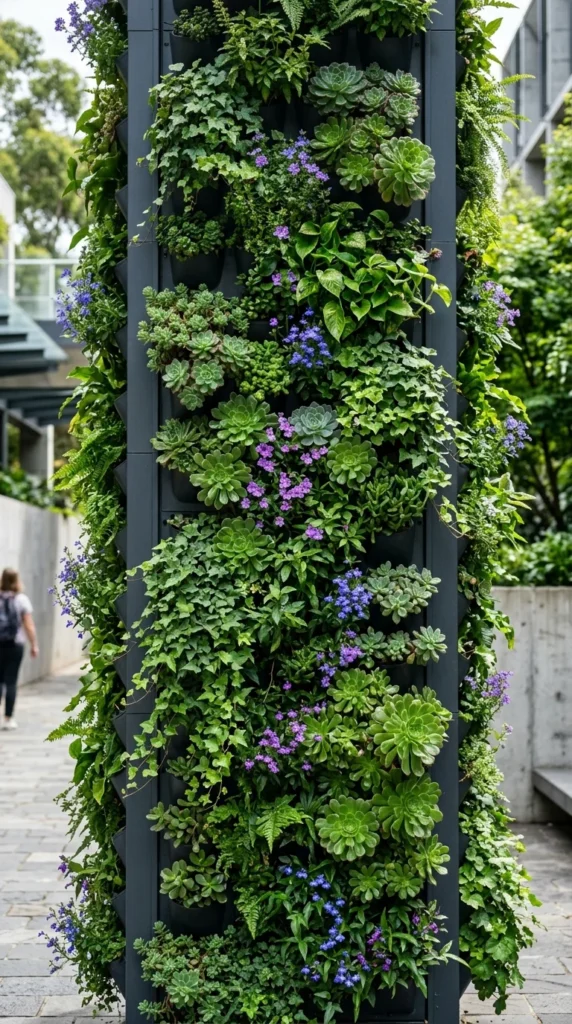
In a tiny courtyard, floor space is your most precious commodity. Vertical planters allow you to introduce significant amounts of greenery without encroaching on the walking area. By utilizing the walls as a living tapestry, you draw the eye upward, which creates an illusion of greater height and volume. Modular systems or felt pockets can host everything from ferns to kitchen herbs, providing a lush backdrop that softens hard architectural lines and improves air quality.
2. Mirror Illusions
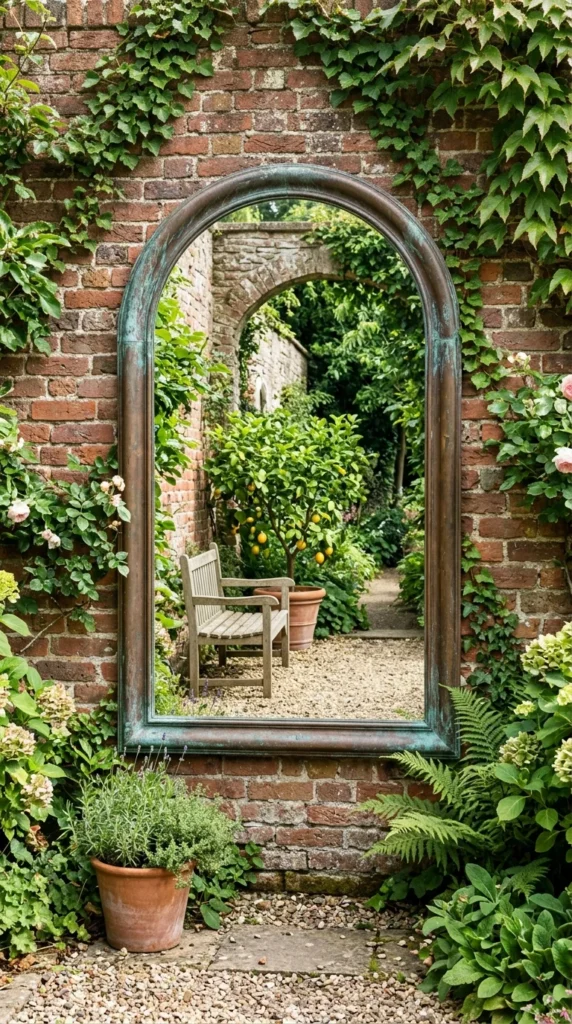
Mirrors are a classic interior design trick that works wonders outdoors. A strategically placed garden mirror—often designed to look like a window or a gate—can visually double the size of a courtyard. When positioned to reflect foliage or a light source, it breaks up the permanence of solid walls and adds a sense of mystery. Ensure the mirror is weather-resistant and placed where it won’t pose a flight risk to local birds.
3. Bistro Sets
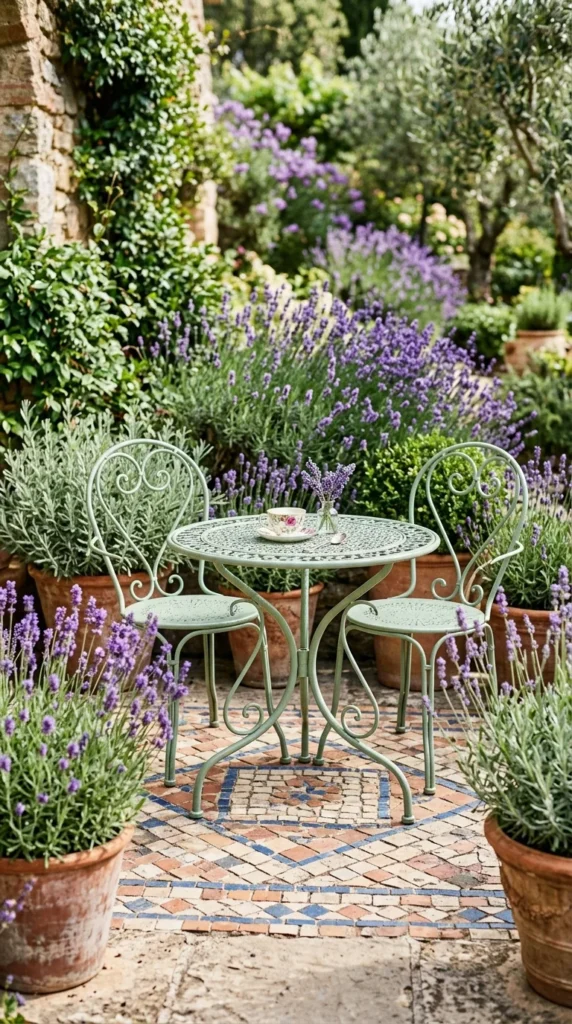
Massive patio furniture can overwhelm a small courtyard, making it feel cramped and unusable. A classic bistro set offers a European elegance that is perfectly scaled for tight quarters. Because these sets are typically lightweight and foldable, they provide flexibility; you can easily move them to follow the sun or clear the space for a different activity. Choosing a set with open, slender lines prevents the furniture from blocking the visual flow of the ground.
4. Water Features
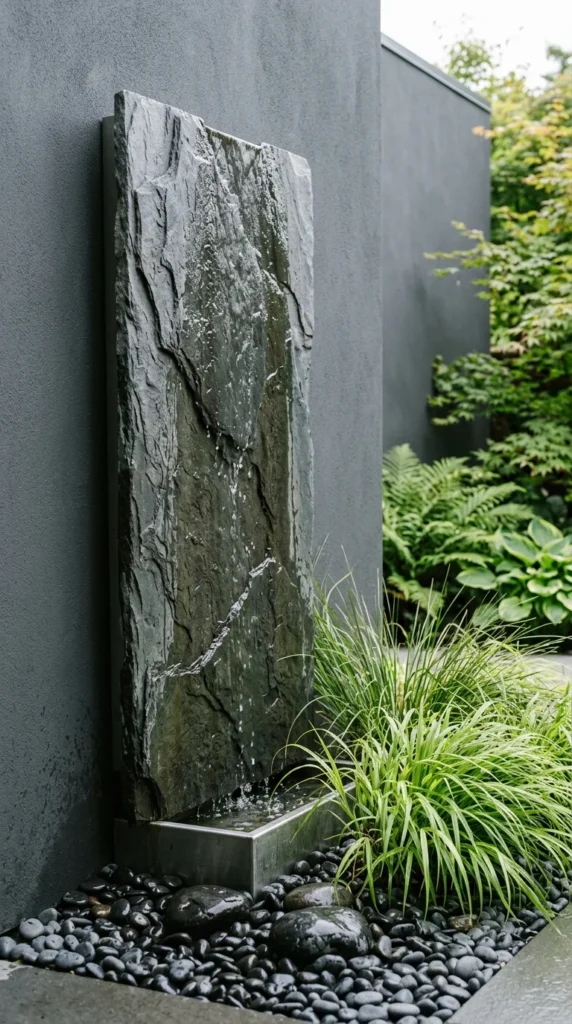
The sound of trickling water is one of the most effective ways to transform a space into a “dream escape.” In an urban environment, a small fountain or water wall provides white noise that masks the sounds of traffic or neighbors. Wall-mounted features or “plug-and-play” stone basins occupy very little footprint but add a dynamic, sensory element that makes the courtyard feel alive and tranquil.
5. Built-in Seating
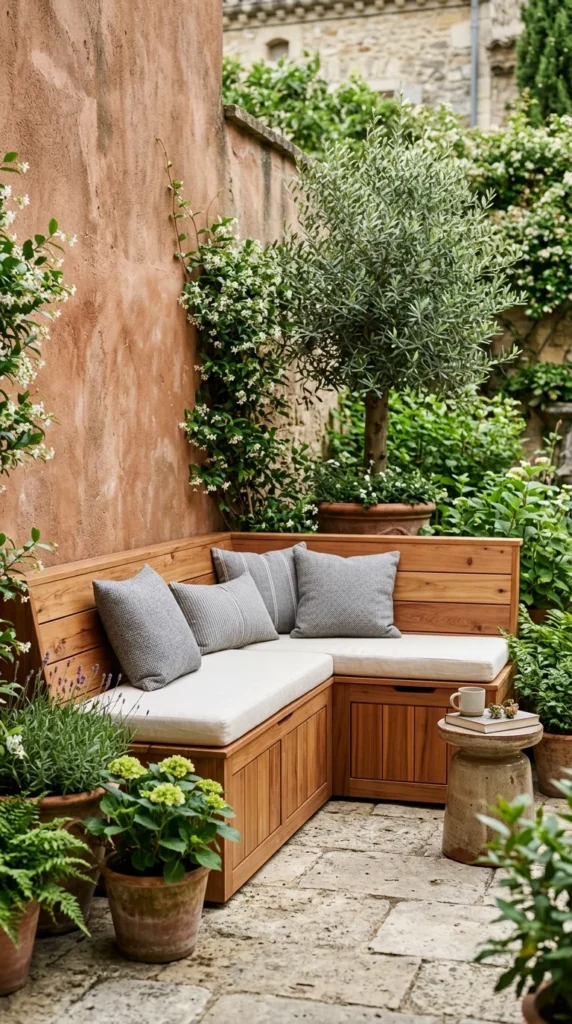
When every inch counts, furniture that doubles as architecture is a game-changer. Built-in perimeter seating—such as a bench integrated into a retaining wall—eliminates the “leg clutter” of traditional chairs and frees up the center of the courtyard. This approach provides ample seating for guests while maintaining a clean, streamlined look. Adding hinged lids to these benches also provides valuable hidden storage for gardening tools or outdoor cushions.
6. Layered Lighting
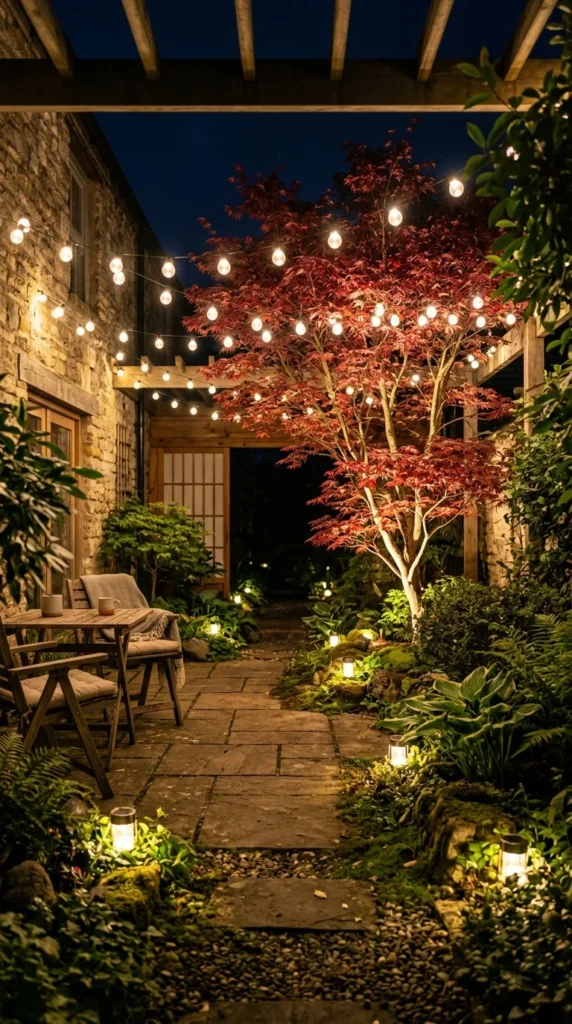
Lighting is the key to extending the usability of your courtyard into the evening hours. Rather than one bright overhead light, use a “layered” approach to create depth. Up-lighting trees or architectural features adds a sense of drama, while string lights provide a whimsical, festive glow. Low-level path lights or lanterns create a safe and inviting ambiance, making the small space feel like a high-end lounge once the sun sets.
7. Checkerboard Paving
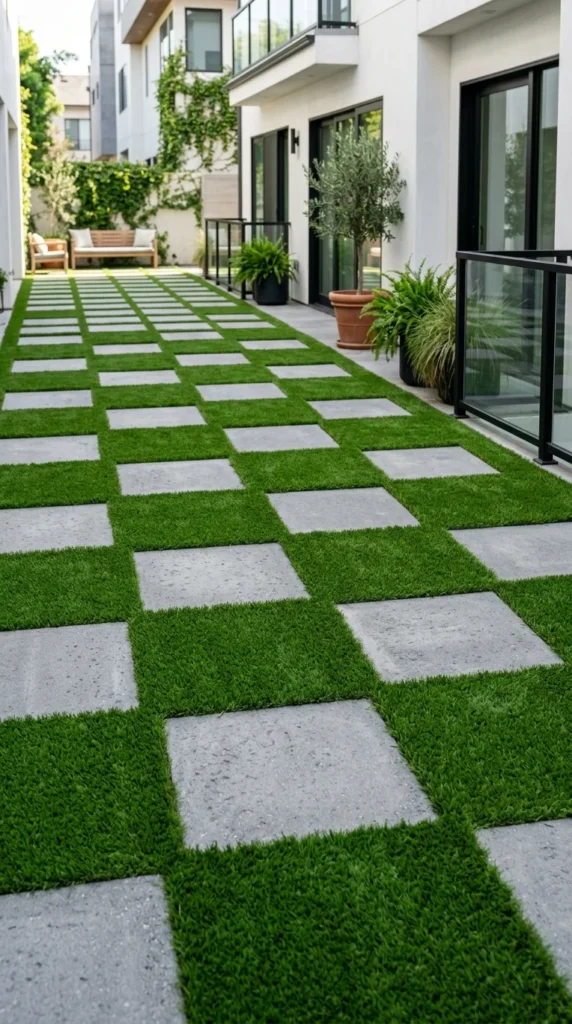
Visual patterns can influence how we perceive the dimensions of a space. A checkerboard pattern using stone pavers and grass (or moss) creates a rhythmic, expansive feel. The contrast between the hard stone and soft greenery adds texture and interest to the ground plane, preventing the courtyard from looking like a flat, boring slab of concrete. This technique also helps with drainage, as the green “cells” allow water to permeate the soil.
8. Potted Trees
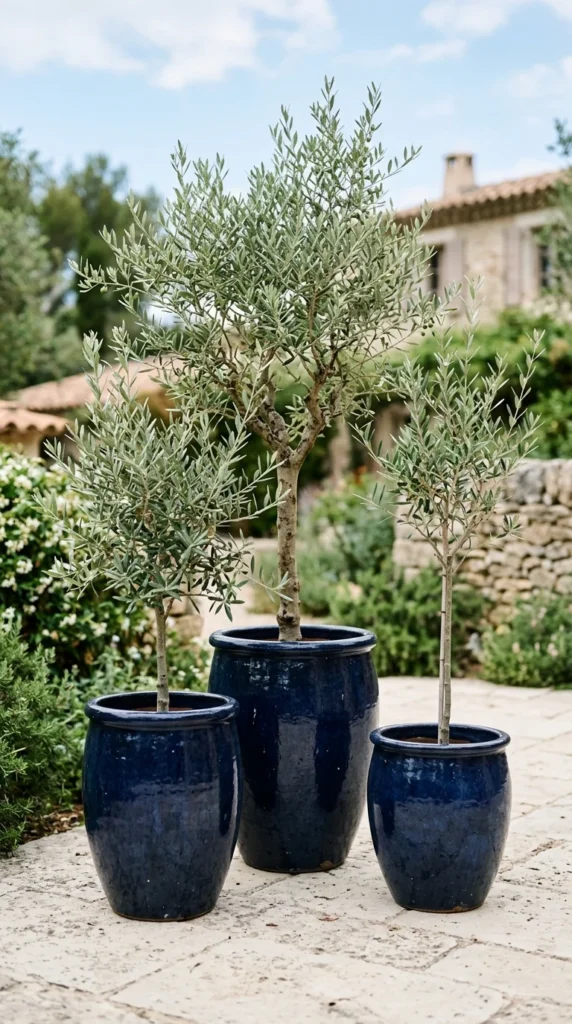
You don’t need a deep flower bed to grow trees. Large, decorative containers can host small tree varieties like Japanese Maples, Olive trees, or Dwarf Citrus. These “anchor plants” provide height and structure, giving the courtyard a sense of maturity. Using pots also allows you to move the trees to optimize their sun exposure throughout the year, and they can be taken with you if you ever move house.
9. Trellis Screens
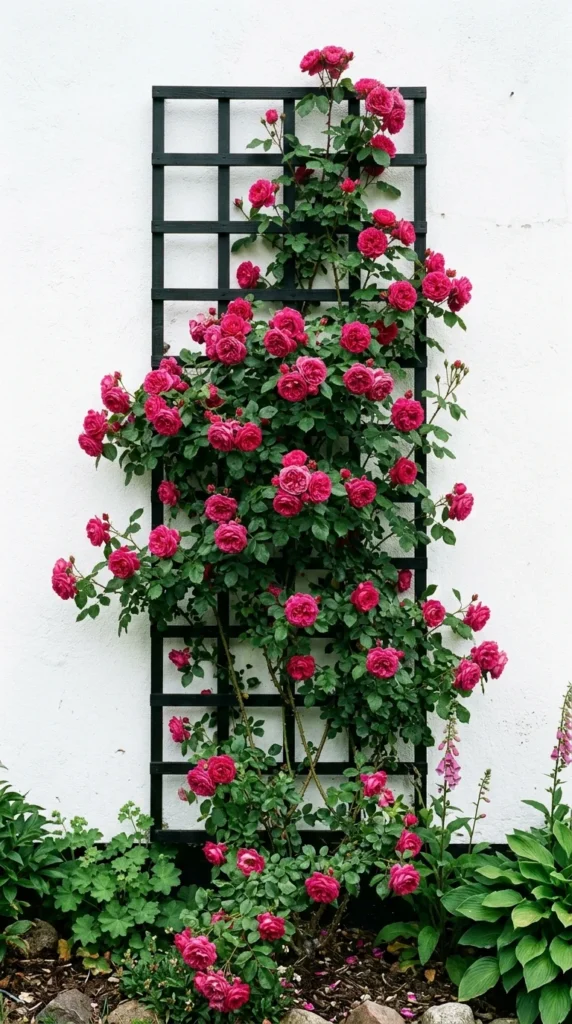
Trellises serve a dual purpose: they provide privacy from overlooking neighbors and create more room for climbing plants. Jasmine, clematis, or climbing roses can be trained to grow flat against the trellis, providing a wall of fragrance and color without taking up floor space. In a tiny courtyard, a trellis can also act as a decorative “outdoor wallpaper,” breaking up the monotony of plain brick or siding.
10. Outdoor Rugs
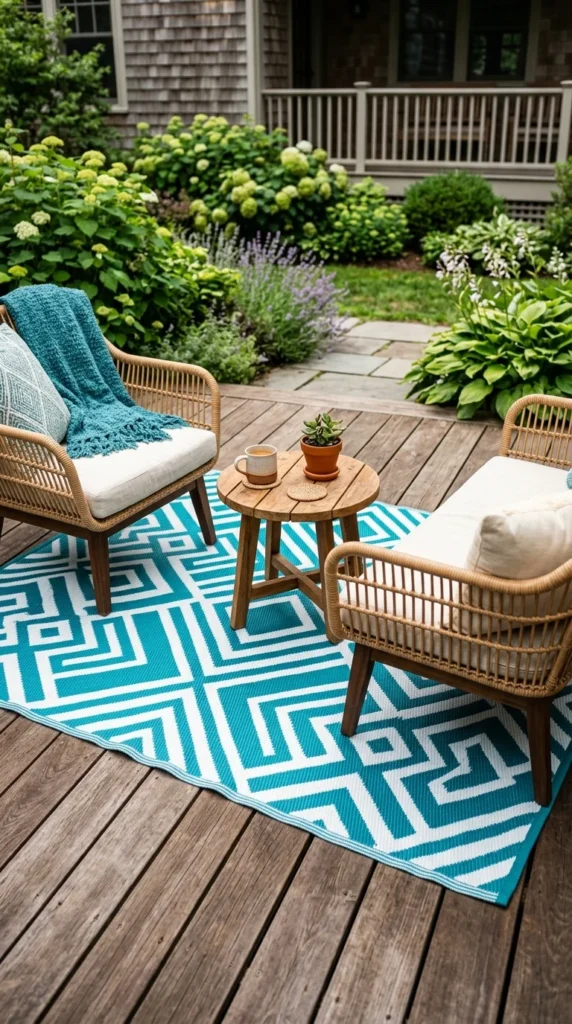
An outdoor rug acts as a visual anchor, defining a specific “zone” within the courtyard. By placing a rug under a seating or dining area, you create the feeling of an outdoor room. This helps to organize the space and adds a layer of comfort and color. Choose a polypropylene or recycled plastic rug that is easy to clean and resistant to mold and UV fading.
11. Minimalist Zen
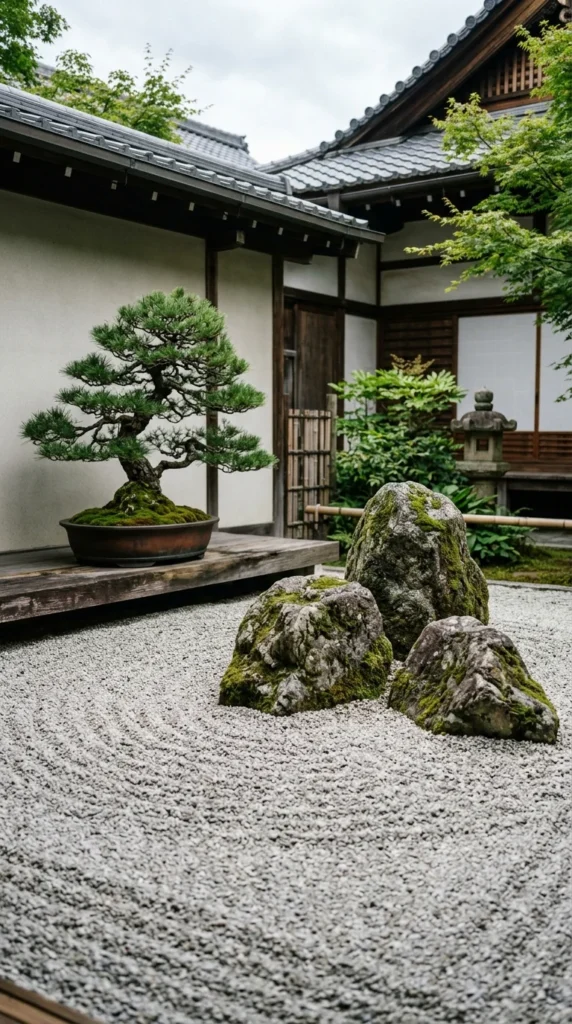
Sometimes, less is more. A Zen-inspired courtyard focuses on minimalism, using gravel, stone, and a few select plants to create a meditative environment. This style is particularly effective for very small spaces because it avoids clutter and emphasizes “negative space.” The simplicity of the design creates a calming effect, making the courtyard feel like a sophisticated retreat from the chaotic world.
12. Monochromatic Palette
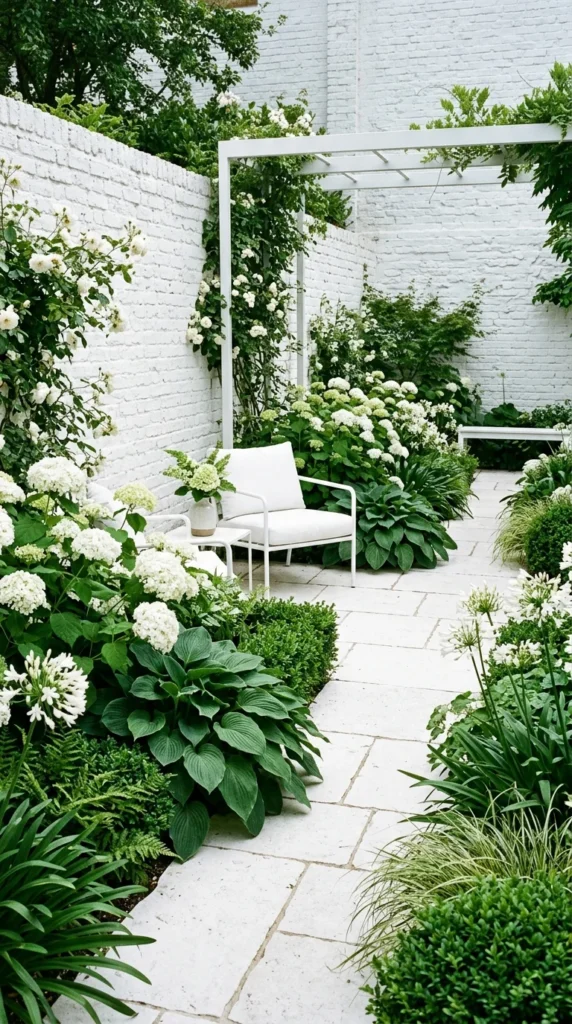
Using a limited color palette makes a small space feel more organized and expansive. A monochromatic scheme—such as various shades of green or a white-and-green garden—reduces visual noise. White flowers and light-colored paving reflect more light, brightening up shaded courtyards and making the boundaries feel less restrictive.
13. Hanging Chairs
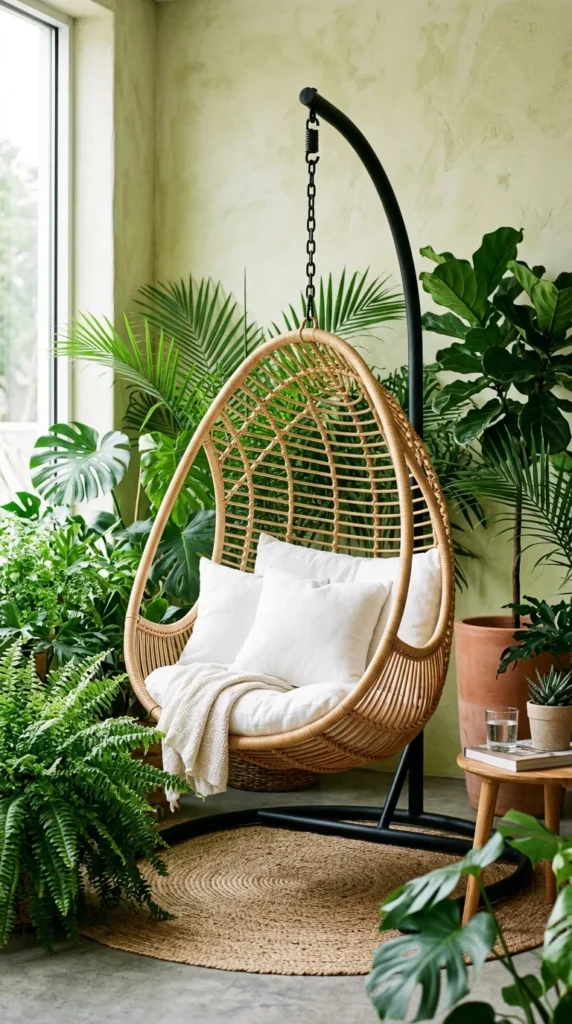
If you have a sturdy overhead beam or a dedicated stand, a hanging chair is the ultimate relaxation piece for a tiny courtyard. Unlike a traditional armchair, a hanging chair has a small footprint and creates a sense of airiness because it floats off the ground. It encourages a slower pace of life, perfect for reading a book or sipping coffee in your private escape.
14. Herb Walls
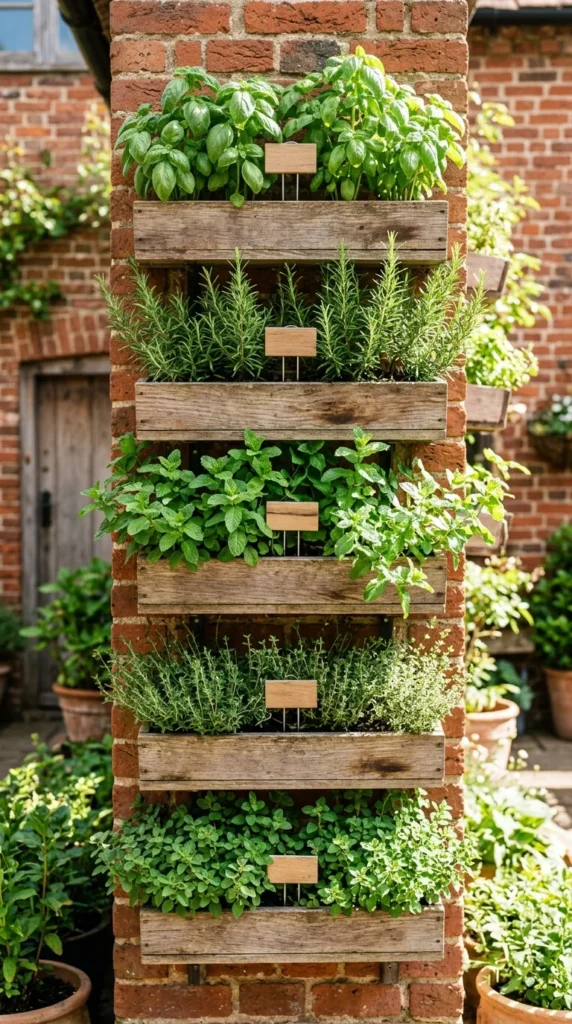
A tiny courtyard can be productive as well as beautiful. A vertical herb garden turns a functional wall into a fragrant, edible feature. Planting herbs like rosemary, thyme, and mint near your seating area adds a wonderful olfactory dimension to the garden. It also keeps the “mess” of a vegetable patch contained and organized, making it easy to harvest fresh ingredients for cooking.
15. Sunken Pits
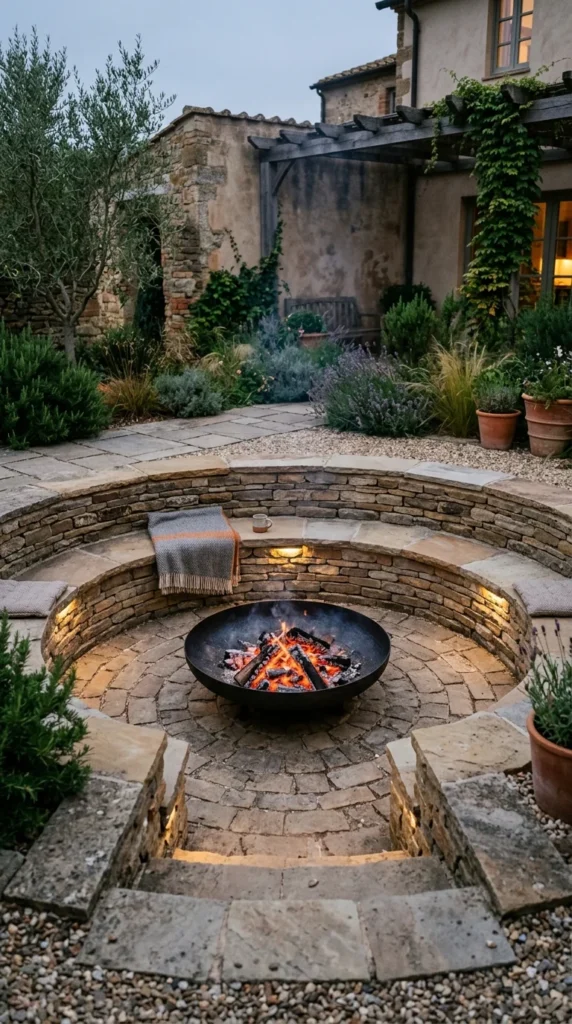
Changing the elevation within a small space can make it feel much larger. A sunken seating area or fire pit creates a distinct “destination” within the courtyard. This physical shift downward provides a feeling of being enveloped and cozy. It adds an architectural element that makes the courtyard feel custom-designed and high-end, even if the total square footage is minimal.
16. Statement Arches
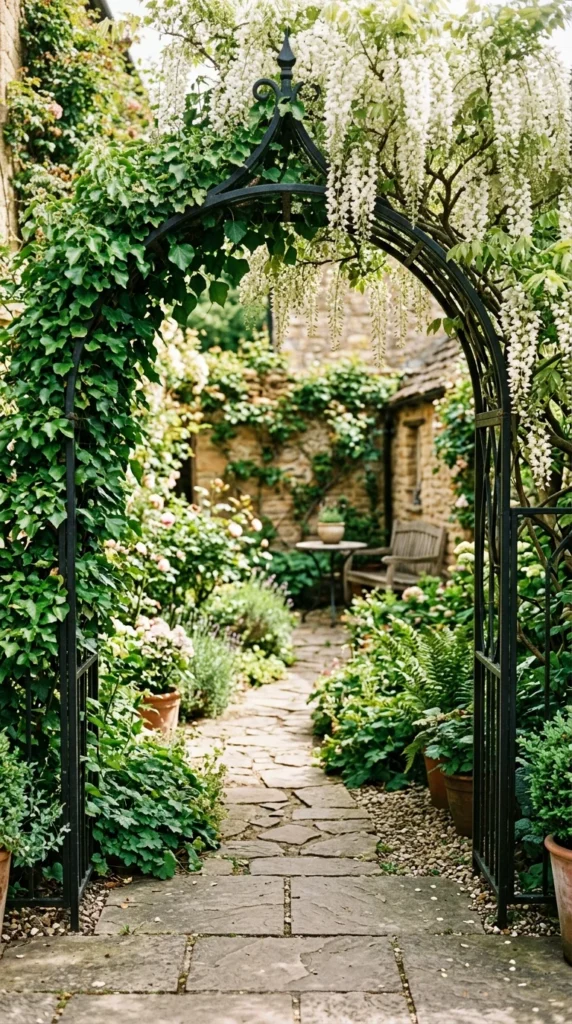
An archway creates a sense of transition and “entry,” which is vital for making a small space feel like a significant location. Placing an arch at the entrance of a courtyard—or even against a wall to frame a piece of art or a fountain—adds a classic structural element. It provides a frame for the view, guiding the eye to the best parts of the garden and adding a romantic, secret-garden aesthetic.
17. Tropical Layers
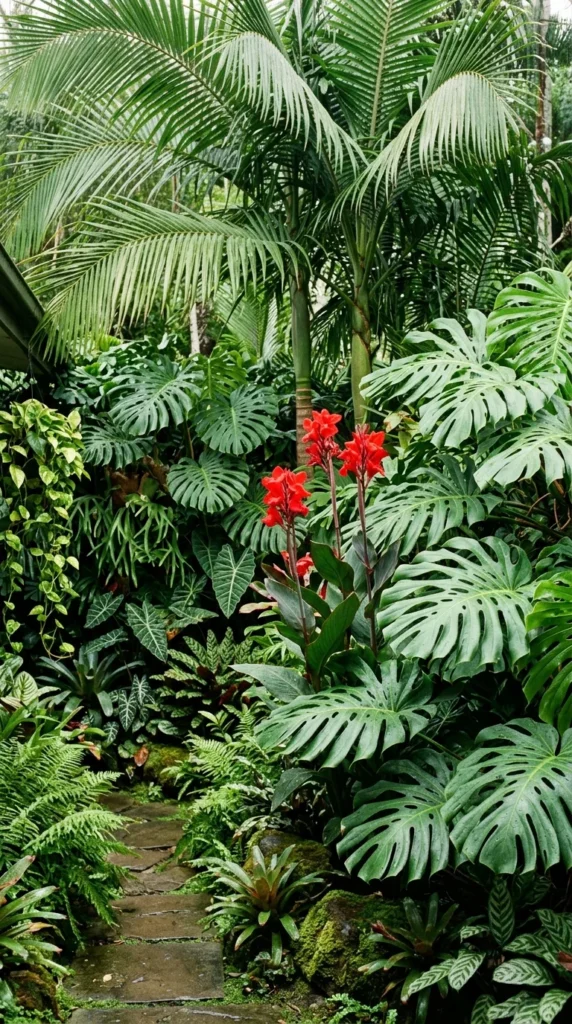
To create a true “escape,” consider the “jungle look.” Using plants with oversized leaves, like Fatsia Japonica or Hostas, creates a sense of lushness that can actually make a space feel bigger by obscuring its boundaries. When you can’t see where the walls end because of the thick foliage, the space feels limitless. Layering plants of different heights and textures creates a rich, immersive environment that feels worlds away from the city.