


The combination of black and beige in kitchen design has emerged as a premier choice for homeowners seeking a balance between high-contrast drama and inviting warmth. While all-white kitchens can feel clinical and all-black kitchens can feel cavernous, the marriage of these two tones creates a sophisticated “middle ground” that feels both timeless and contemporary. Black provides the structural “anchor” and visual weight, while beige—ranging from sandy oats to creamy mushroom—softens the aesthetic, ensuring the space remains welcoming.
In this guide, we explore 23 curated ideas to help you implement this color palette, focusing on textures, materials, and architectural details that elevate the heart of the home.
1. Matte Cabinetry
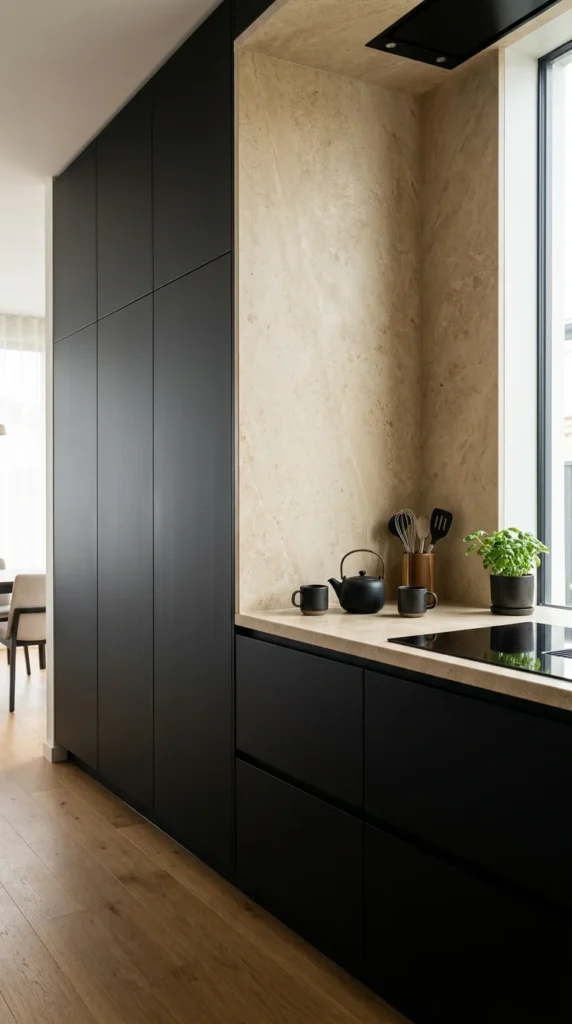
Matte finishes are essential for a modern black and beige kitchen because they absorb light rather than reflecting it, creating a velvety texture. Matte black cabinetry serves as a bold backdrop that makes beige stone or wood accents pop. This finish is also practical for hiding fingerprints compared to high-gloss alternatives, making it a favorite for high-traffic areas.
2. Marble Veining
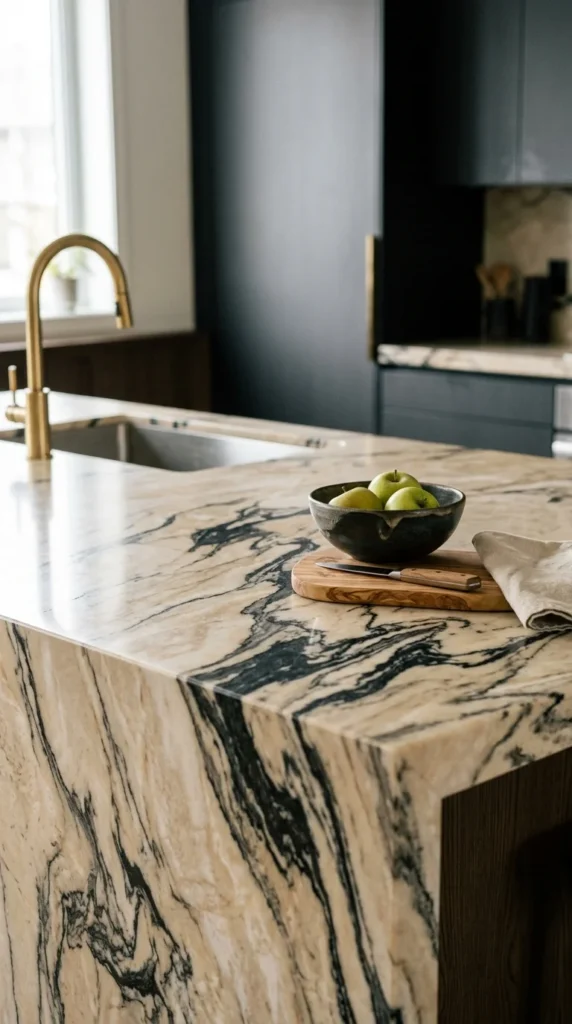
If you want to tie both colors together organically, look for natural stone with specific veining. Beige marble or quartzite with black or deep charcoal veins acts as a bridge between the two colors. Using this stone for a waterfall island or a full-height backsplash creates a focal point that feels like a piece of art.
3. Two-Tone Layout
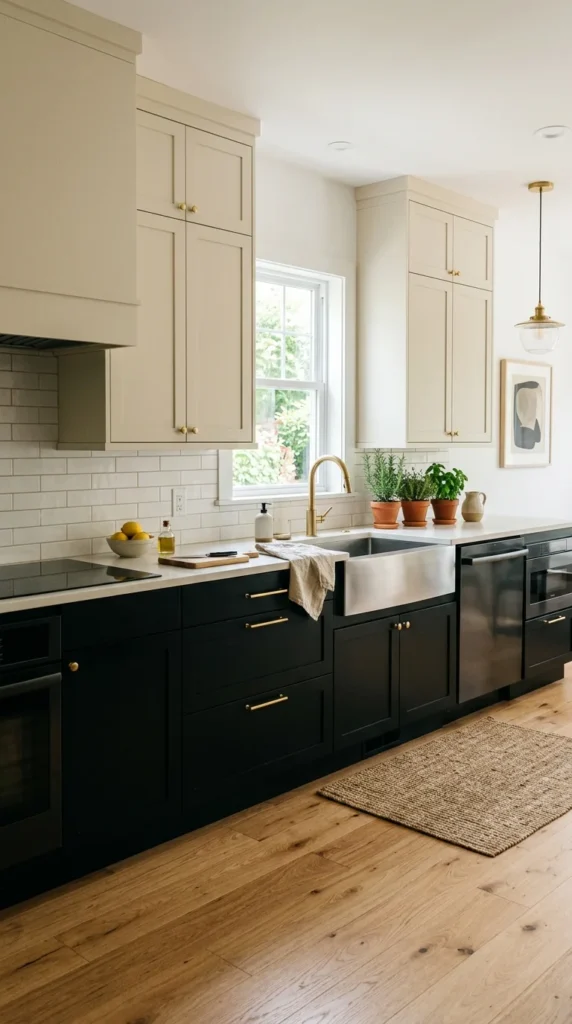
The two-tone approach is a classic design trick to prevent a kitchen from feeling too heavy. By placing black cabinets on the bottom (the “base”) and beige cabinets on the top, you ground the room while keeping the eye-level area light and airy. This technique is particularly effective in smaller kitchens where dark upper cabinets might feel claustrophobic.
4. Brass Hardware
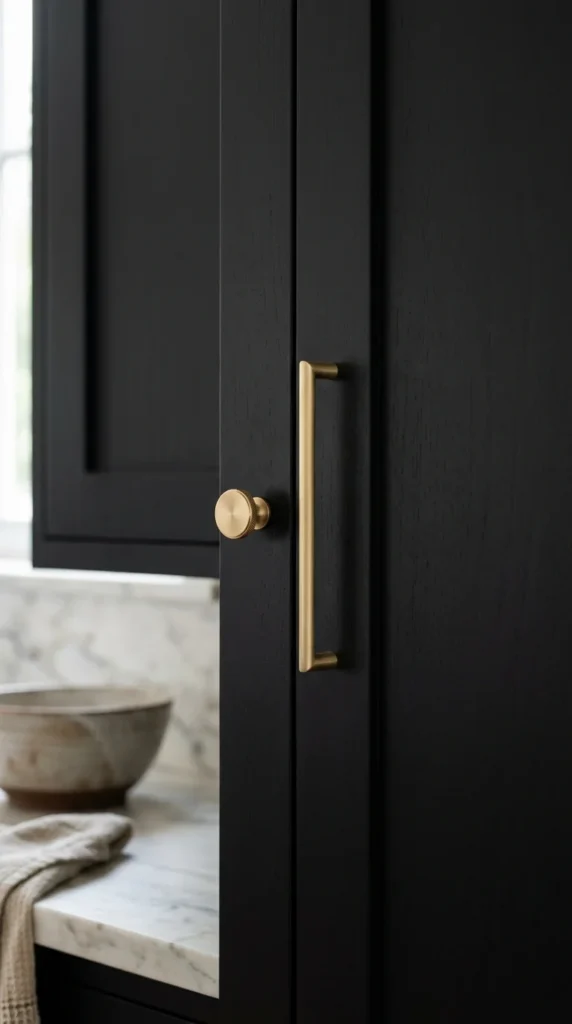
While the primary palette is black and beige, adding a third “metallic” element like brass or gold elevates the look to a luxury level. Brass hardware provides a warm shimmer that complements beige tones and stands out beautifully against black surfaces. It adds a jewelry-like finish to the functional elements of the kitchen.
5. Statement Island
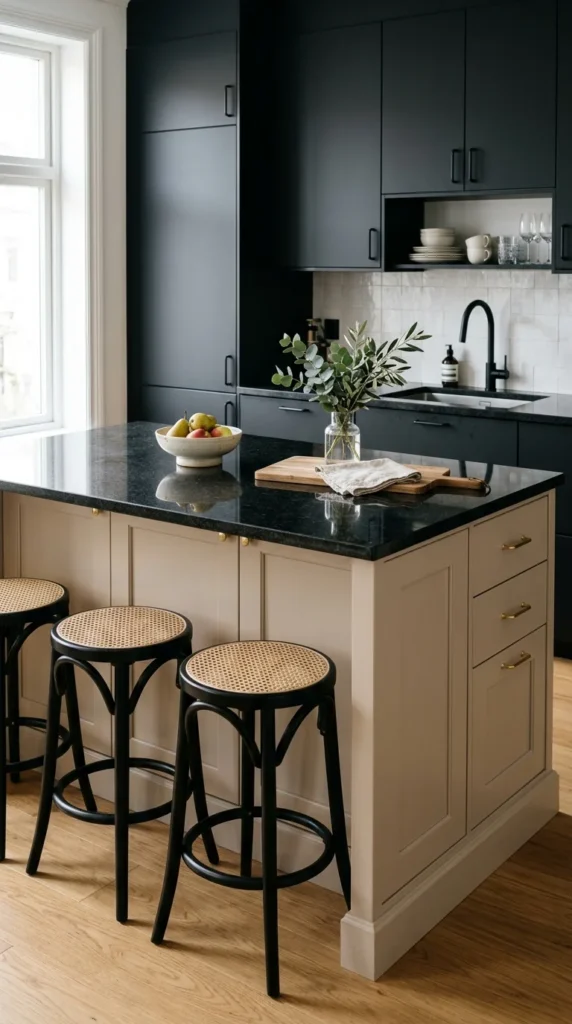
Make your kitchen island the star by finishing it in a contrasting color to the perimeter cabinets. A beige island in a sea of black cabinetry creates a bright workstation in the center of the room. Conversely, a black island in a beige kitchen adds a sense of gravity and professional-grade style.
6. Fluted Textures
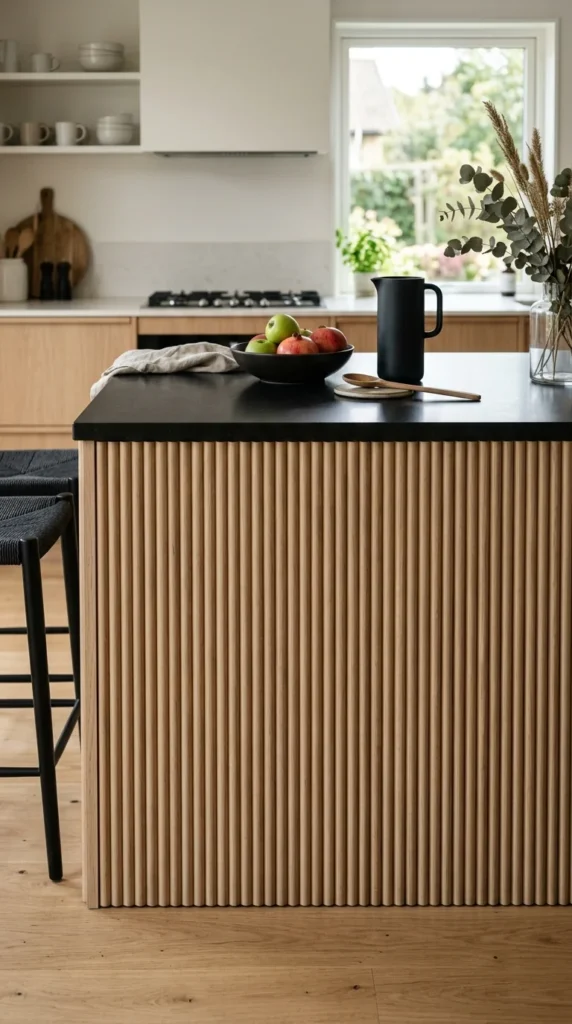
Texture is the key to making a neutral palette feel “designed” rather than plain. Fluted or ribbed detailing on the kitchen island or cabinet faces adds vertical lines that catch the light. In a black and beige kitchen, fluted wood in a light oak or beige stain adds a mid-century modern flair that softens the sharpness of black accents.
7. Pendant Lighting
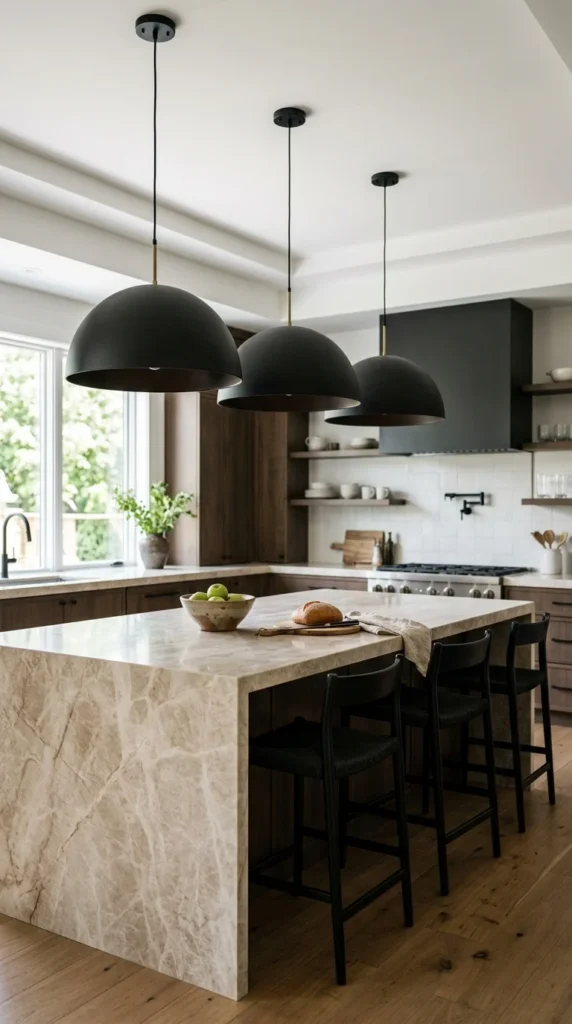
Lighting is the “exclamation point” of the kitchen. Large, architectural pendant lights in matte black can define the dining or prep area. If your kitchen is predominantly beige, these black fixtures provide the necessary contrast to break up the monochromatic space.
8. Oak Accents
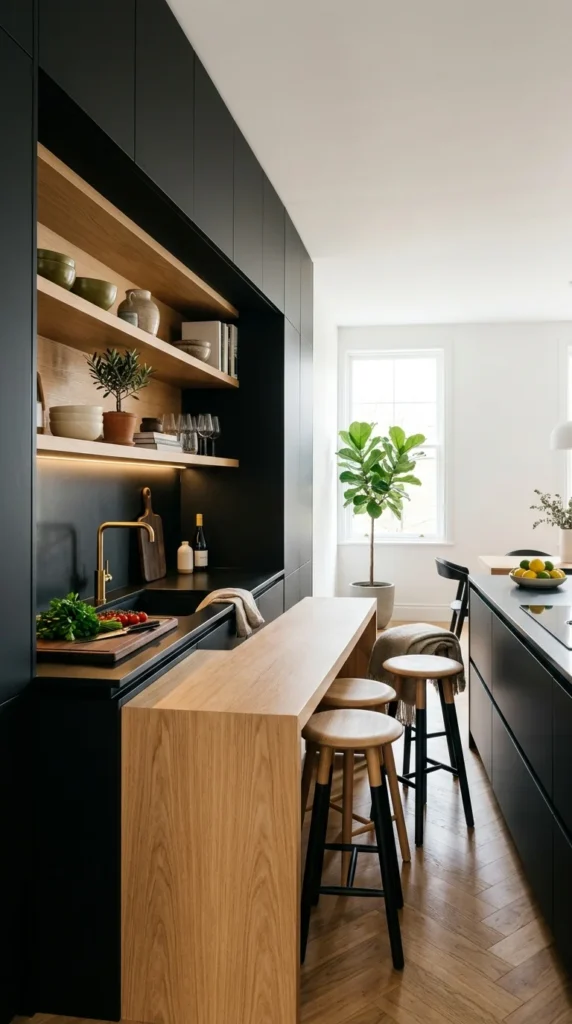
Natural wood is the most common way to introduce “beige” into a kitchen. Light oak, ash, or maple provide those warm, sandy tones naturally. Integrating wood through open shelving, a butcher block section on the island, or even the ceiling beams adds an organic warmth that prevents the black elements from feeling too cold.
9. Checkerboard Flooring
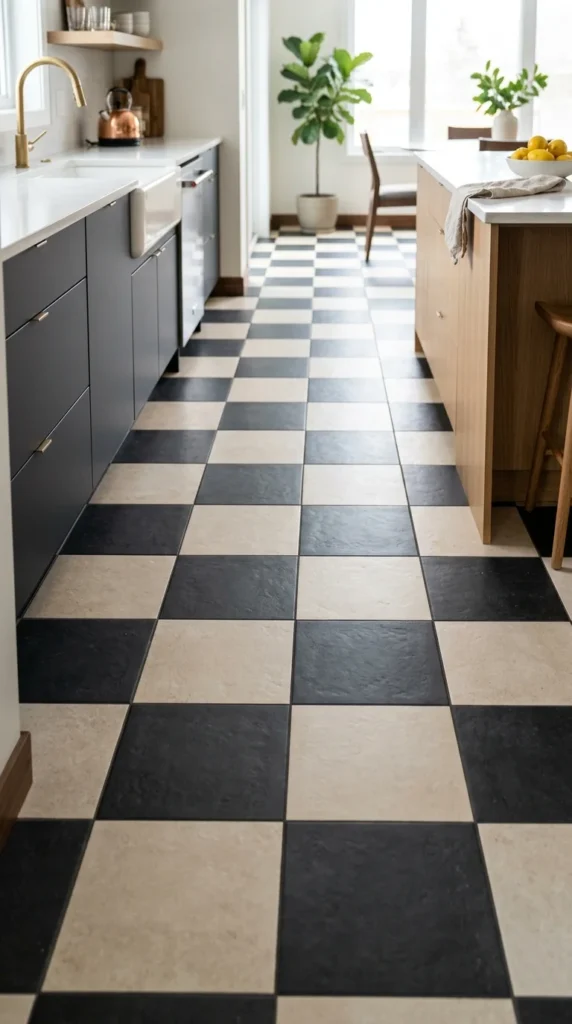
For a nod to traditional or transitional design, consider a checkerboard floor. Instead of the high-contrast white and black, use beige and black. This softens the look and hides dust and debris better than pure white tiles. It provides a rhythmic pattern that anchors the entire room.
10. Limewash Walls
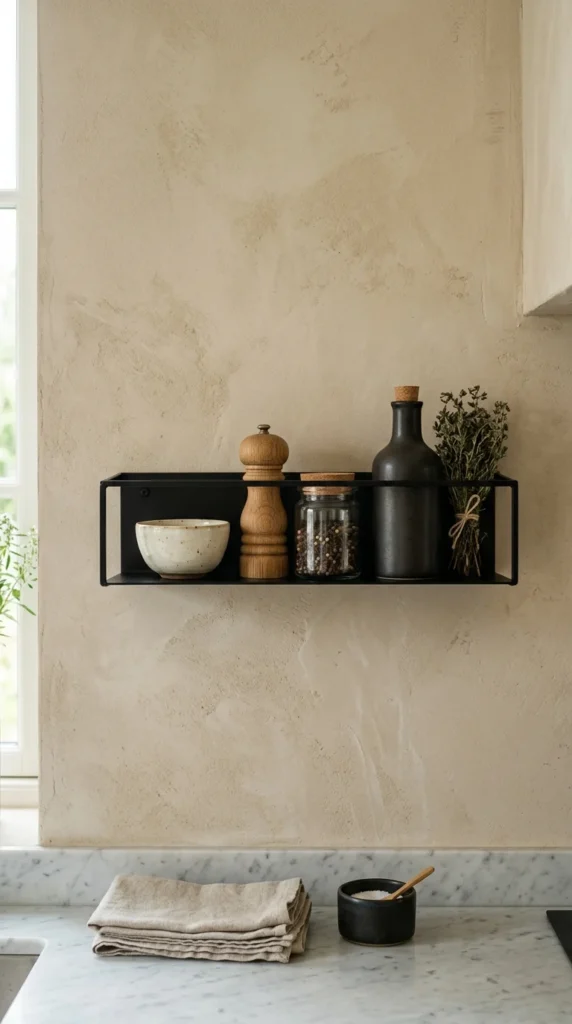
Limewash or plaster finishes on the walls add a tactile, “old-world” quality to a modern kitchen. A beige limewash wall provides a soft, cloudy texture that looks stunning behind black open shelving. This depth of color is far more engaging than a standard flat paint.
11. Integrated Appliances
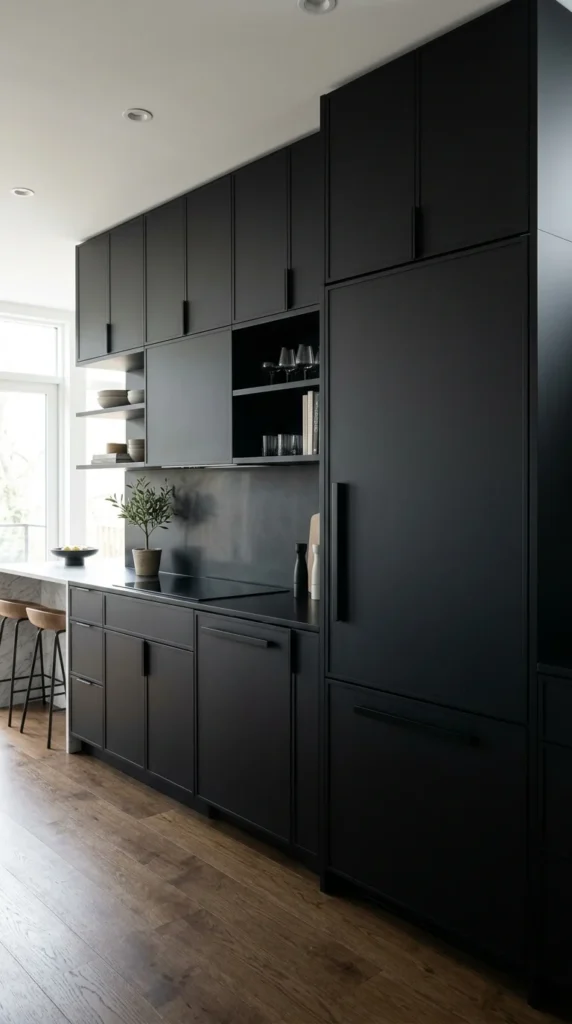
To maintain a sophisticated, elevated look, use “appliance garages” or integrated panels. When appliances like the refrigerator are paneled in black to match the cabinets, the kitchen looks like a cohesive piece of furniture. This allows the beige elements—like the counters or a tiled backsplash—to take center stage without the distraction of stainless steel.
12. Tiled Backsplash
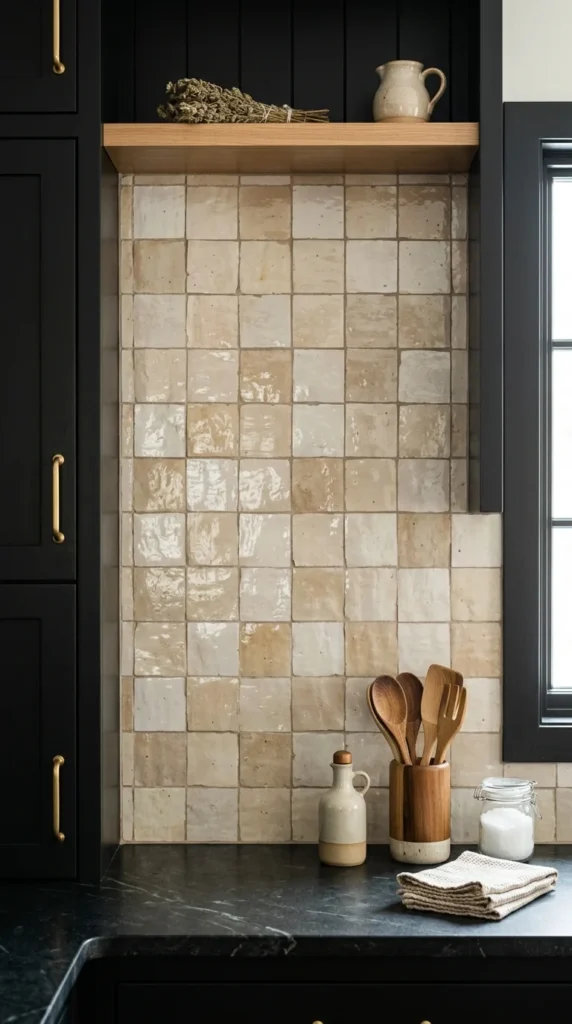
Zellige tiles are hand-crafted and offer a shimmering, iridescent quality. Choosing these in a beige or cream tone adds a “handmade” feel to the kitchen. The slight imperfections in the tiles reflect light in different directions, providing a beautiful contrast to the flat, solid nature of black cabinetry.
13. Leather Seating
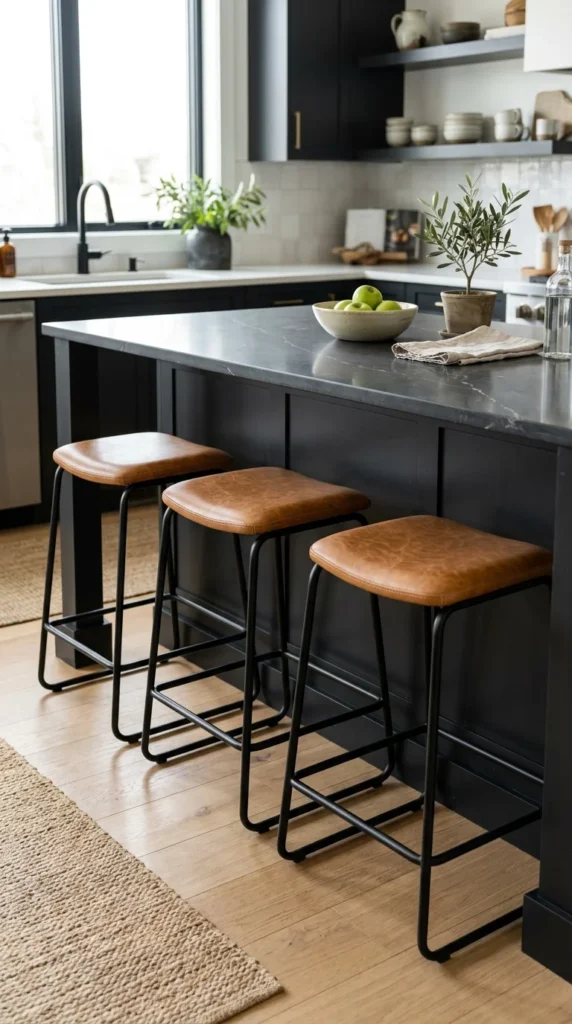
Incorporate beige through your furniture choices. Leather bar stools in a tan, camel, or beige shade introduce a new material into the mix. Leather is durable, easy to clean, and adds a layer of sophisticated comfort that complements both the black and the neutral tones of the room.
14. Industrial Windows
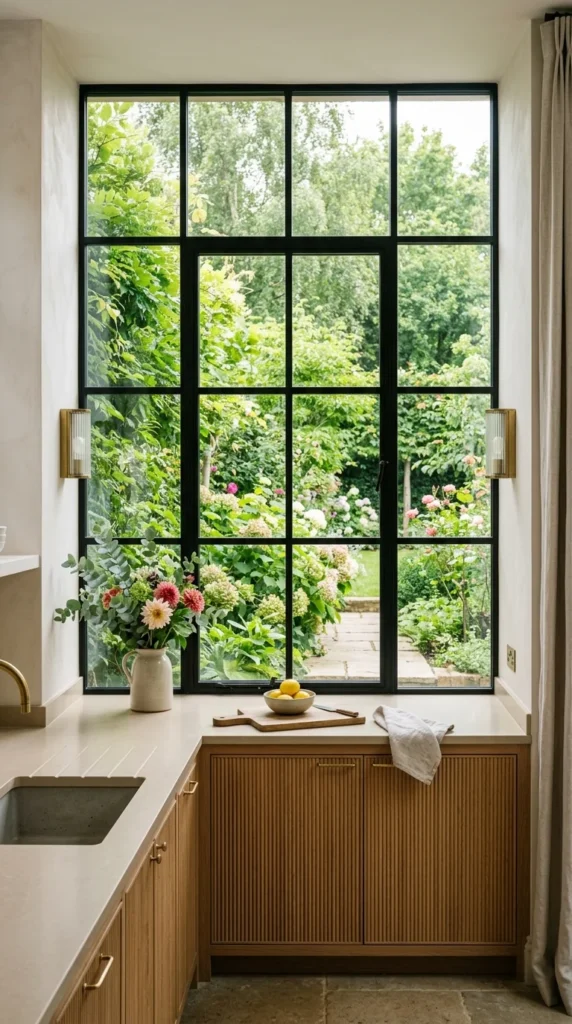
Black-framed windows (often called Crittall-style) provide a graphic, industrial edge. If your kitchen has a view, these windows frame the outdoors like a painting. The black frames echo other black elements in the kitchen, while the natural light enhances the warmth of the beige surfaces.
15. Minimalist Hardware
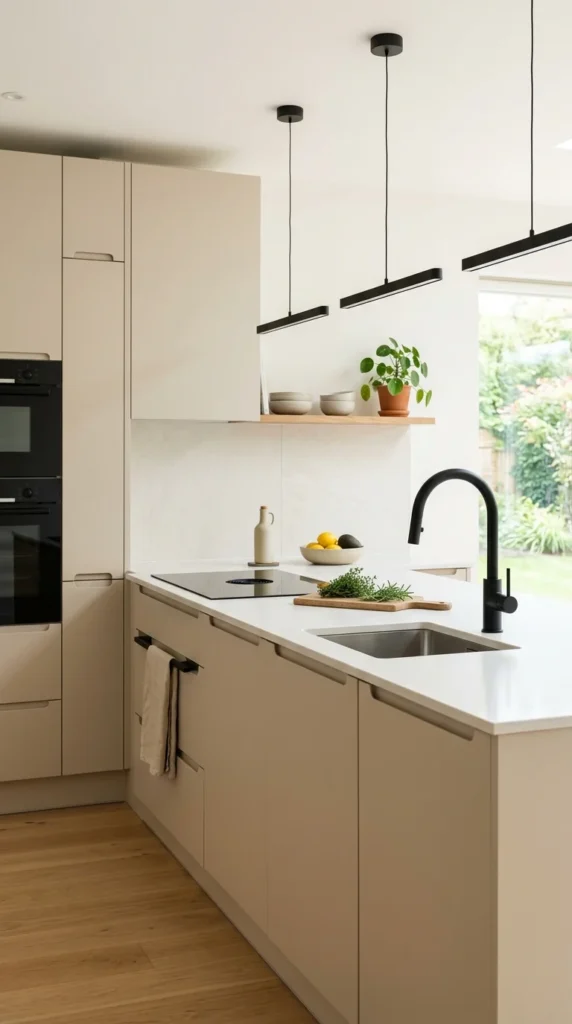
Sometimes, the best hardware is no hardware at all. Handle-less beige cabinets create a monolithic, minimalist look. To keep the “black and beige” theme, you can use black “shadow gaps” or recessed channels. This creates a clean, architectural line that defines the cabinetry without the clutter of traditional pulls.
16. Dark Range Hoods
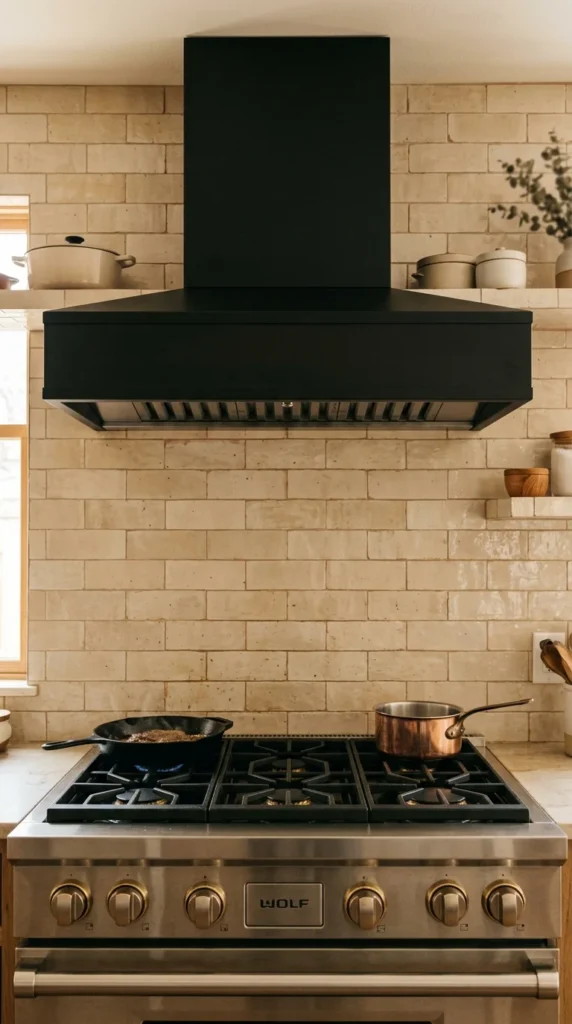
The range hood is a natural focal point. A custom black hood—whether made of powder-coated metal or painted wood—creates a vertical anchor in the kitchen. When placed against a light beige wall, it becomes a sculptural element that draws the eye upward, emphasizing the height of the room.
17. Open Shelving
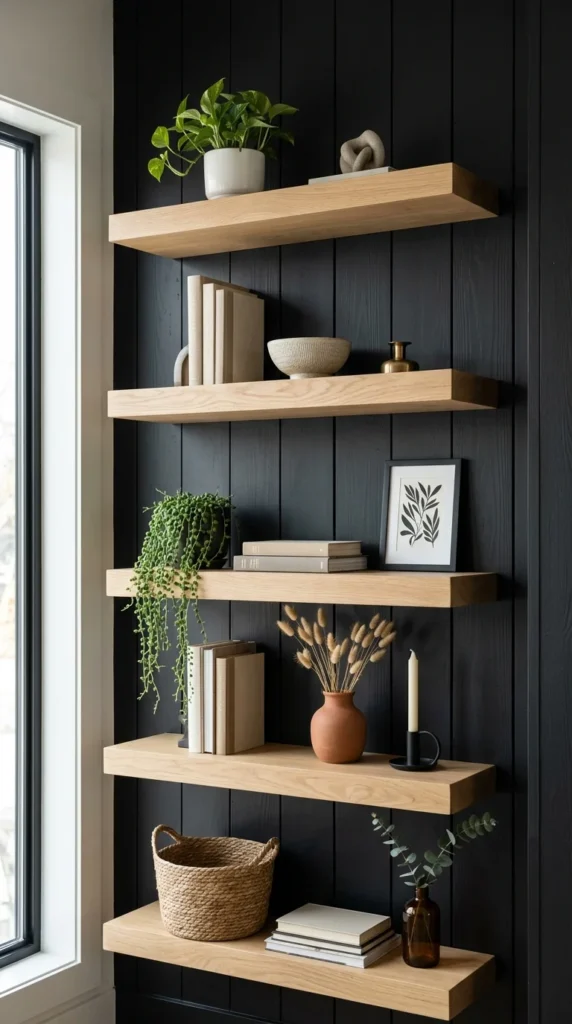
Open shelving allows you to display curated ceramics and glassware. Using light beige wood shelves against a dark black wall creates a striking “floating” effect. This is an excellent way to lighten up a dark corner and show off your favorite neutral-toned kitchenware.
18. Breakfast Nook
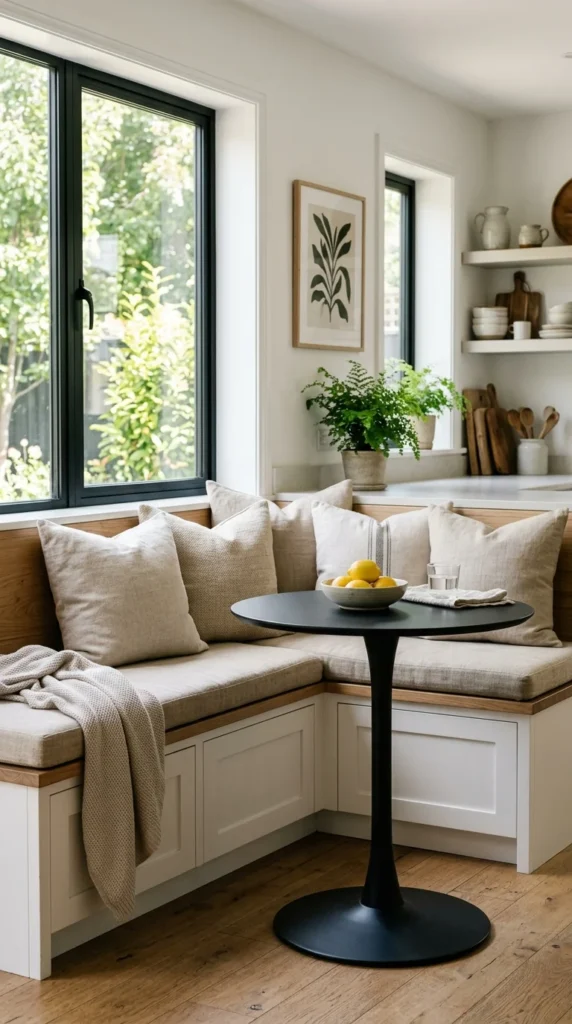
If your kitchen has space for a casual dining area, use it to reinforce the color palette. A built-in bench with beige upholstery and a black cafe table creates a cozy, high-end bistro vibe. Adding black and beige throw pillows can further tie the look together.
19. Stone Sinks
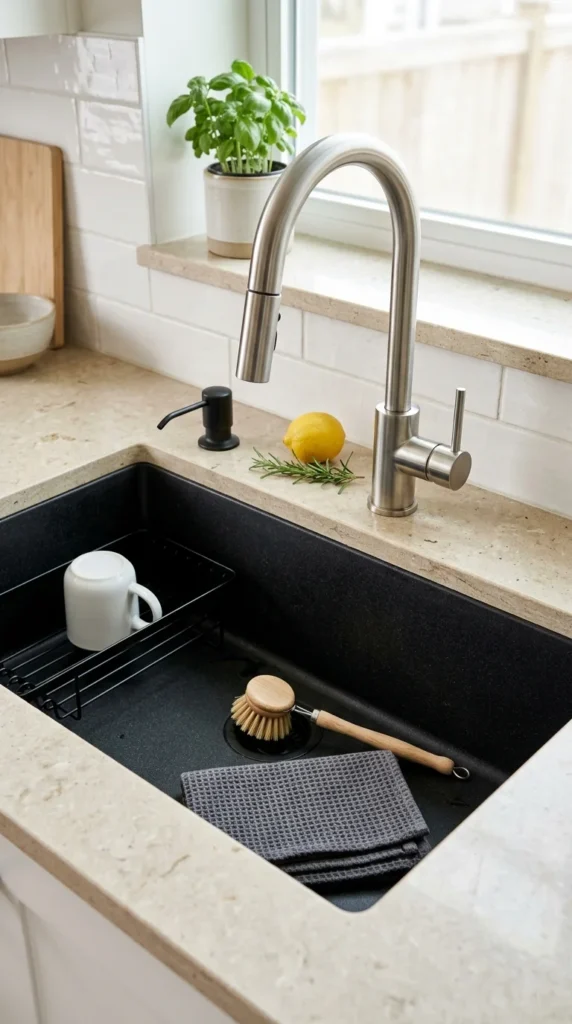
Instead of a standard stainless steel sink, opt for a black granite composite or a beige fireclay sink. A black sink integrated into a beige countertop creates a seamless, high-end look. It feels intentional and adds to the overall “elevated” atmosphere of the design.
20. Arched Doorways
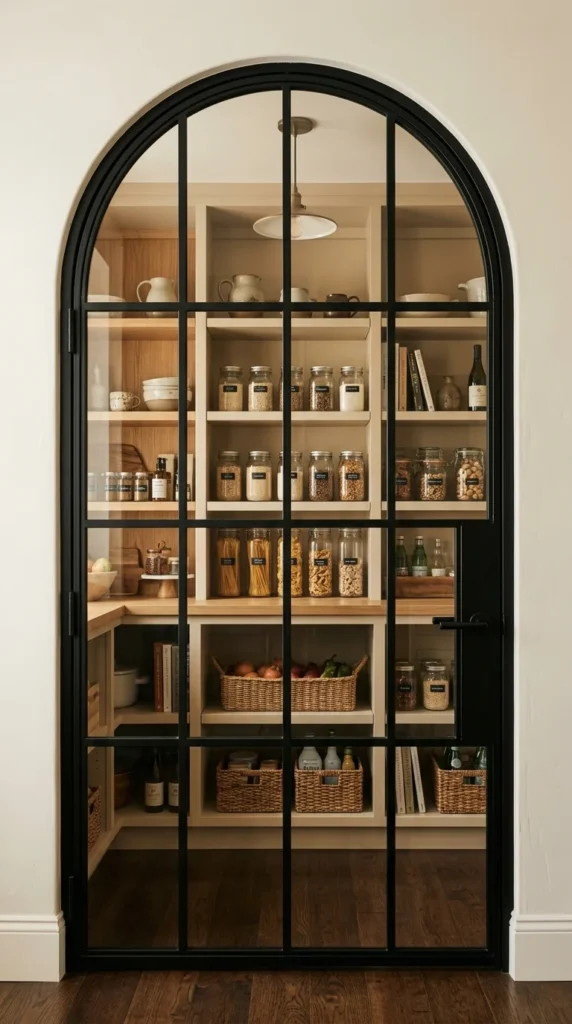
Architectural curves are a major trend in interior design. An arched pantry door with a black steel frame adds a sense of softness and elegance. It breaks up the straight lines of the cabinetry and provides a sophisticated transition between the kitchen and the storage areas.
21. Natural Greenery
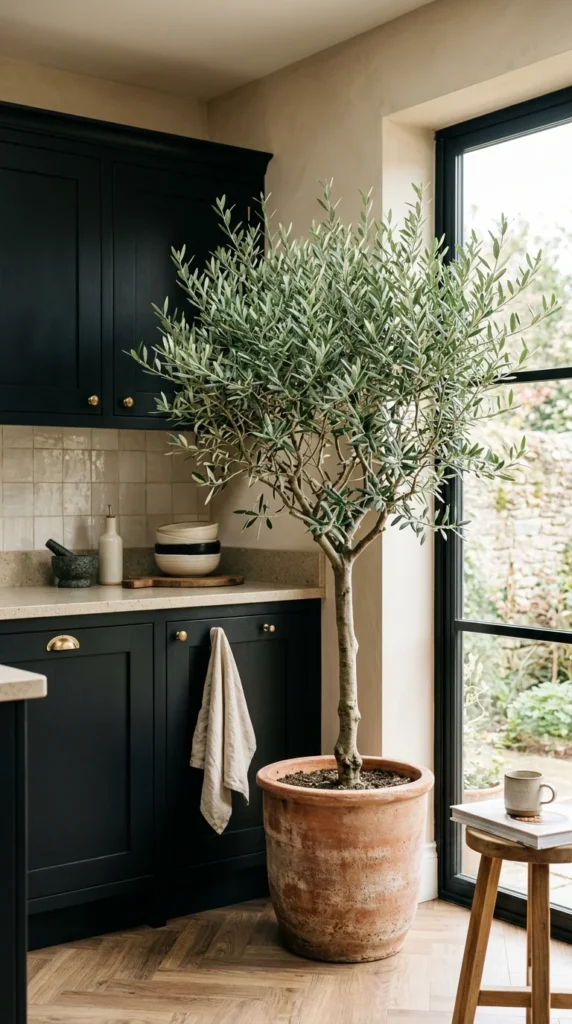
While not a “color” in the palette, green is the perfect accent for black and beige. The organic shapes of an olive tree or potted herbs soften the sharp lines of a modern kitchen. The muted green of the leaves complements the warmth of the beige and the depth of the black perfectly.
22. Jute and Sisal
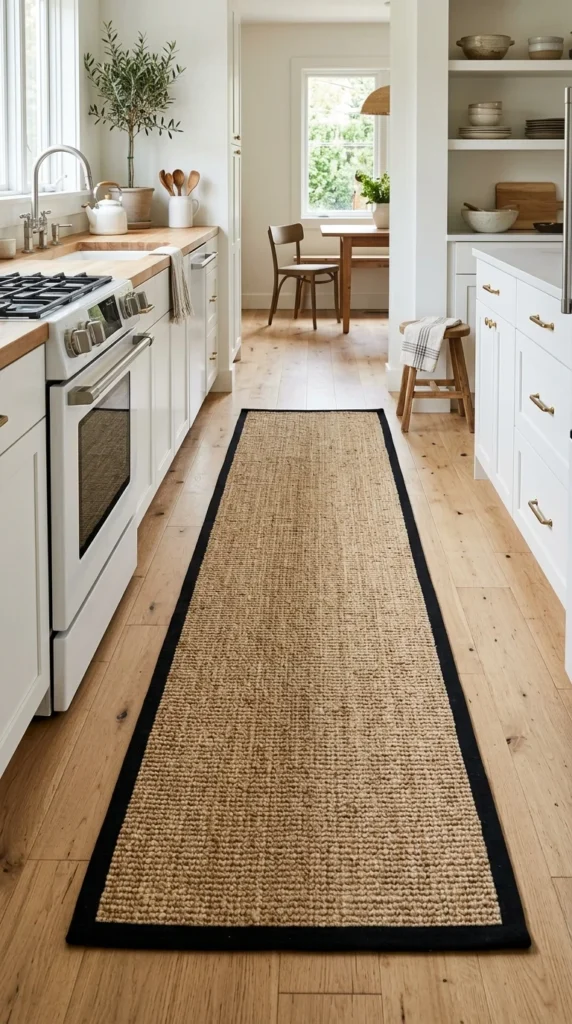
Underfoot, a jute or sisal runner provides a rugged, beige texture that is incredibly durable for kitchen use. Choosing a rug with a black border or a subtle black weave reinforces the room’s color story while adding much-needed acoustic dampening and comfort.
23. Glass-Front Cabinets
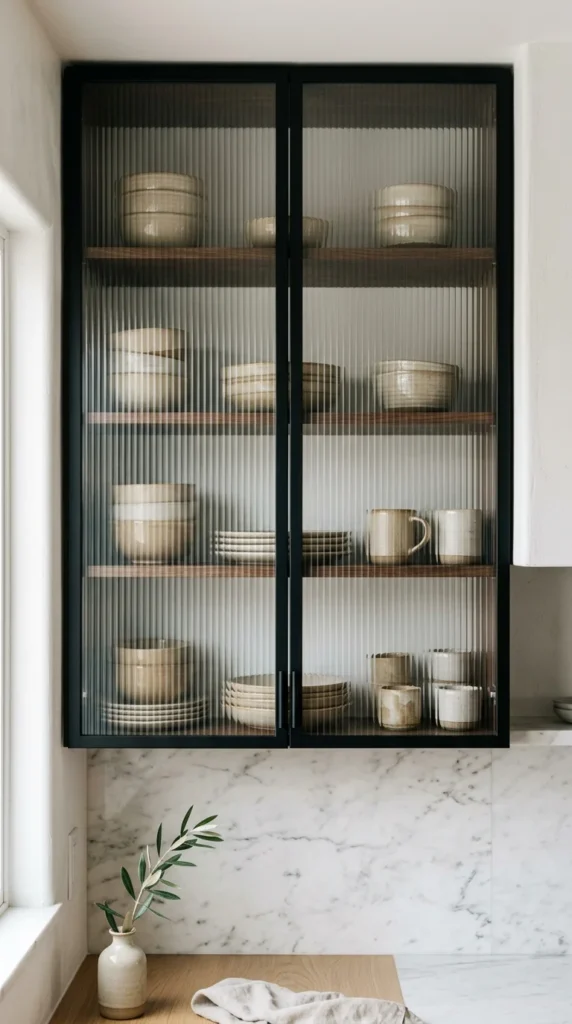
Glass-front cabinets add depth and prevent a wall of cabinetry from feeling too solid. Using black frames with reeded or fluted glass offers a peek at the beige dishes inside without showing every detail. It adds a layer of sophisticated “visual mystery” and reflects light beautifully throughout the day.