
The intersection of organic textures and botanical hues has become the gold standard in high-end interior design. Moving away from the sterile, all-white kitchens of the past decade, designers are increasingly turning to the “green and wood” pairing to create spaces that feel grounded, sophisticated, and timelessly inviting. This combination taps into biophilic design principles, fostering a sense of calm by mimicking the natural world.
Green, in its vast spectrum from muted sage to regal emerald, acts as a versatile neutral that provides more personality than gray but less visual noise than primary colors. When juxtaposed with the warmth of natural timber—ranging from the honeyed tones of white oak to the deep, chocolatey swirls of walnut—the result is a kitchen that feels curated rather than manufactured.
Below are seven distinct ways to implement this designer-approved palette, ensuring your culinary space feels both cozy and architecturally significant.
1. Sage & Oak
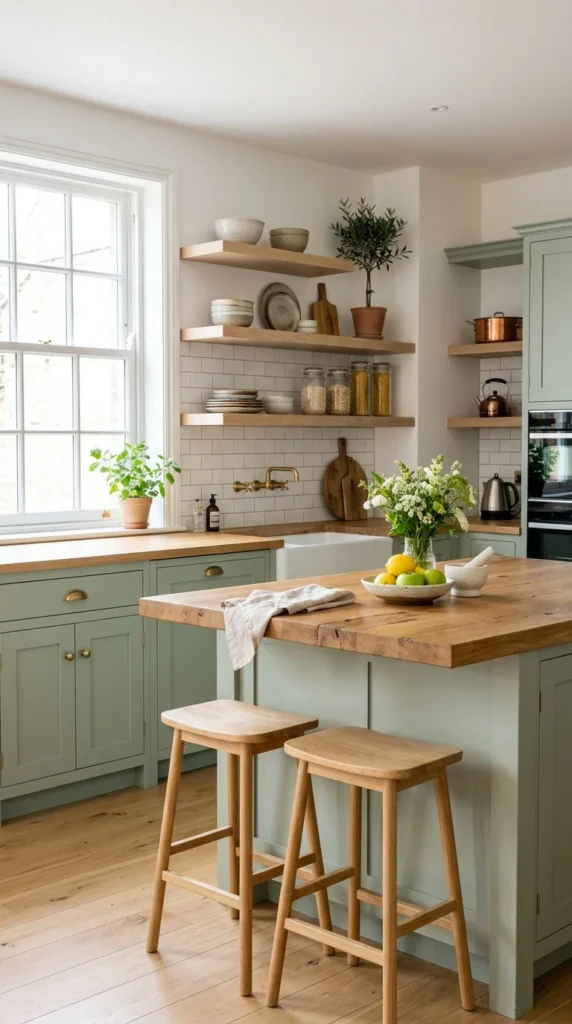
The combination of sage green and white oak is the quintessential choice for those seeking a “Modern Mediterranean” or “New Nordic” aesthetic. Sage is a soft, desaturated green with gray undertones that reflects light beautifully, making it an excellent choice for smaller kitchens or spaces with limited natural light.
To achieve a designer-made look with this pairing, focus on the finish of the wood. White oak with a matte, clear-coat finish preserves the wood’s natural grain without adding the yellowing common in older lacquer finishes. Use the sage for the base cabinetry to ground the room, and use the oak for open shelving or a waterfall island. This creates a vertical transition that draws the eye upward, making the ceilings feel higher and the room more expansive.
2. Emerald & Walnut
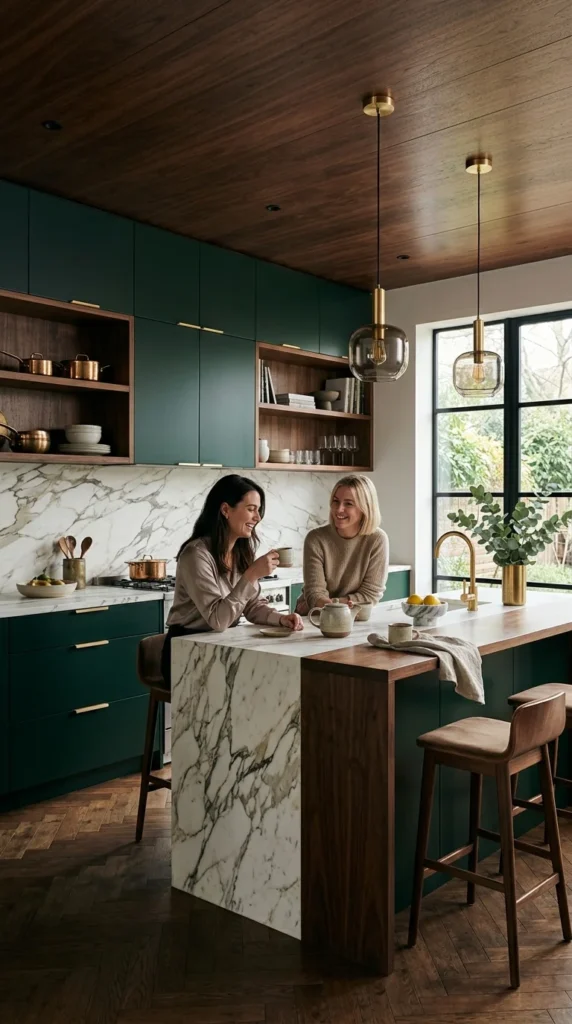
For a kitchen that exudes drama and mid-century modern elegance, look no further than the pairing of emerald green and walnut. Emerald is a high-pigment, jewel-toned hue that demands attention. When paired with the dark, swirling grain of walnut, it creates a palette that feels incredibly expensive and curated.
Designers often use this duo to create a “furniture-like” feel in the kitchen. Instead of traditional cabinetry, consider integrated walnut panels for the refrigerator and dishwasher to break up the expanses of green. Incorporating brass or gold hardware is essential here; the warm metallic tones act as a bridge between the coolness of the green and the richness of the wood, adding a layer of “jewelry” to the functional space.
3. Forest & Reclaimed
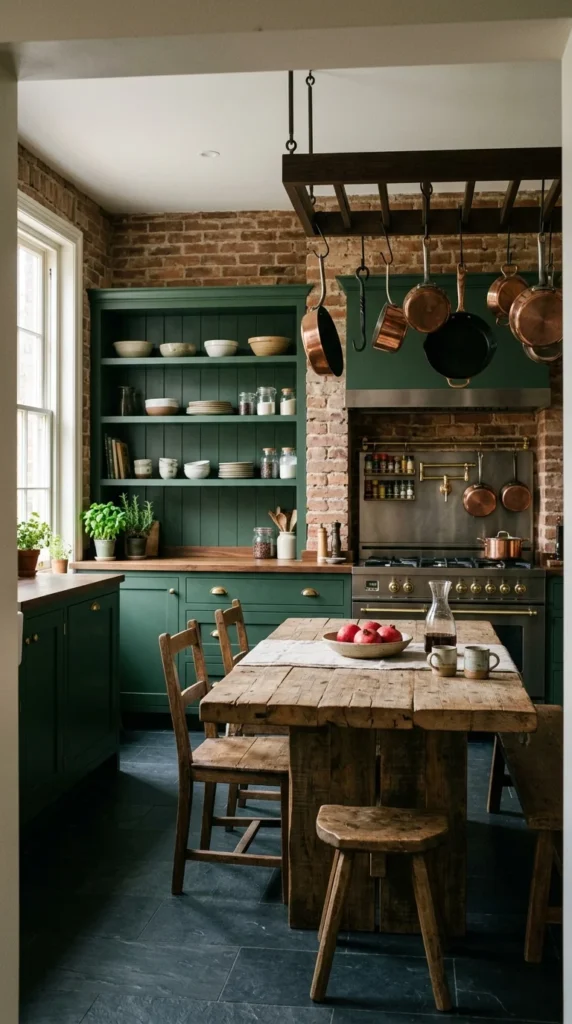
The “Forest and Reclaimed” aesthetic is all about texture and history. Forest green is a deep, blackened green that provides a sturdy, traditional foundation. When paired with reclaimed wood—wood that shows its history through nail holes, knots, and varied patinas—the kitchen takes on a “modern farmhouse” or “English country” soul.
The key to keeping this look “designer-made” rather than just “rustic” is the balance of clean lines. If the wood is rugged and textured, keep the cabinetry doors simple—perhaps a clean Shaker or even a slim-frame profile. This prevents the room from feeling too cluttered. Use the reclaimed wood for high-impact areas, such as a custom range hood or a heavy-duty butcher block island, to serve as a focal point.
4. Olive & Cherry
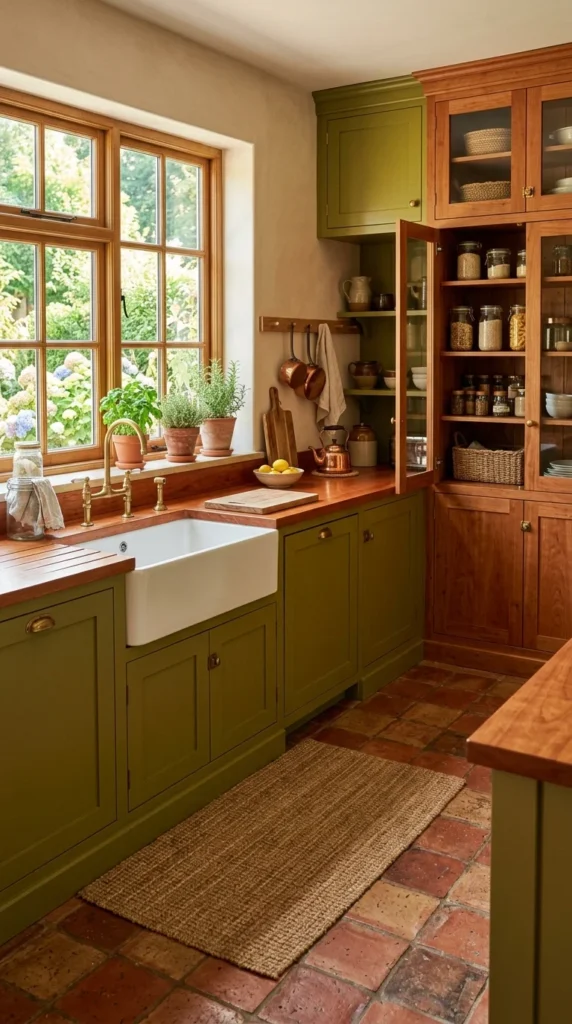
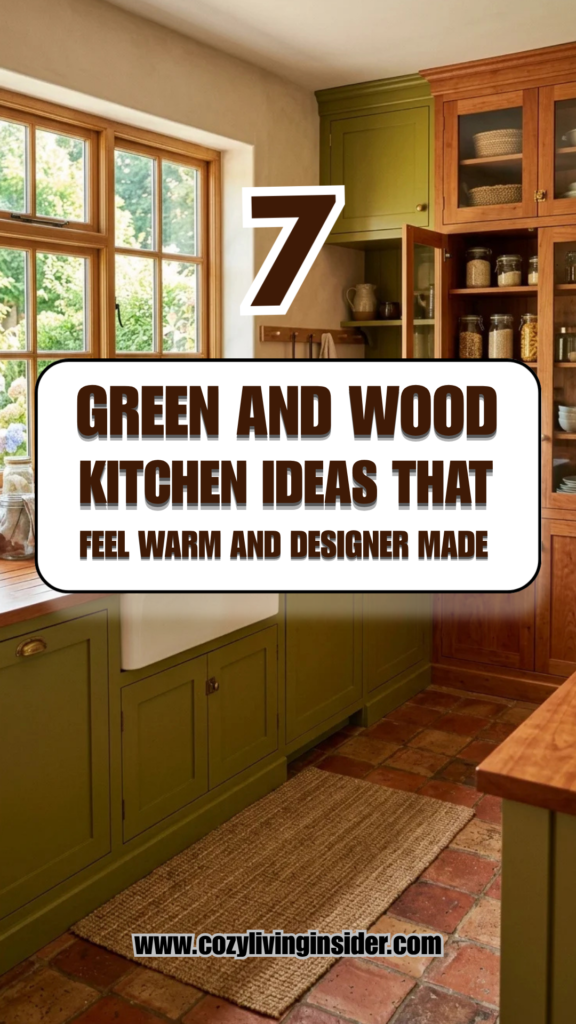
Olive green is a complex, earthy shade that brings an immediate sense of warmth to a home. It pairs exceptionally well with woods that have red or amber undertones, such as cherry or mahogany. This combination is particularly effective in traditional or transitional homes where a sense of “heritage” is desired.
To master this look, aim for a tonal balance. Olive green can vary from light khaki to deep moss; choose a shade that complements the specific stain of your cherry wood. This pairing works best when accessorized with organic materials—think terracotta floor tiles, linen Roman shades, and unlacquered brass faucets that will develop a patina over time, echoing the natural aging process of the wood.
5. Mint & Maple
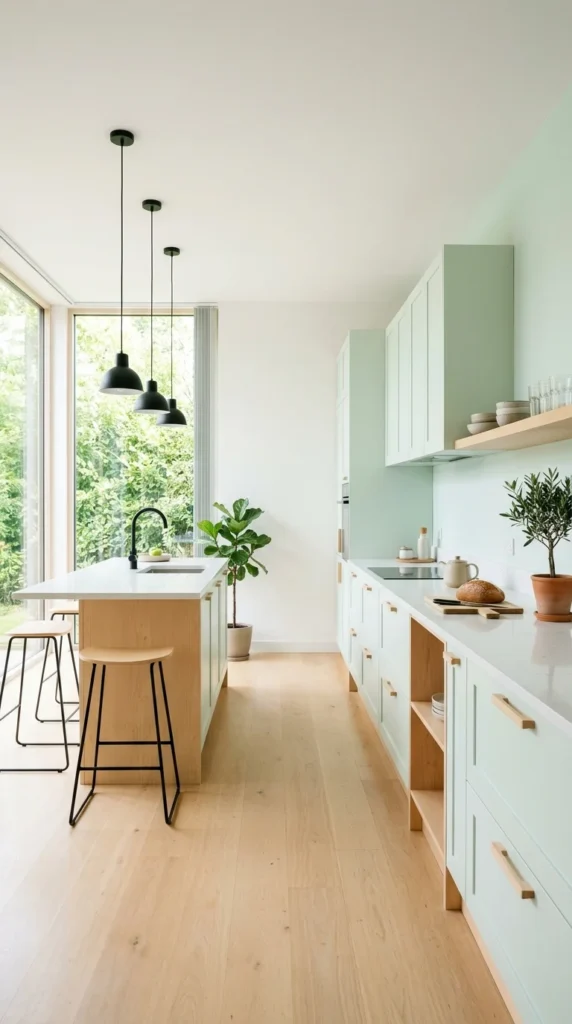
If you prefer a kitchen that feels fresh, youthful, and energetic, consider mint green and maple. Mint provides a subtle pop of color that feels clean and hygienic, while maple offers a smooth, fine-grained wood texture that is incredibly durable and light in color.
This pairing is a staple of contemporary minimalist design. To keep it from looking “pastel” or “nursery-like,” introduce high-contrast accents. Black hardware, charcoal gray stone countertops, or industrial-style lighting can ground the lightness of the mint and maple. This combination is ideal for urban apartments or homes where the kitchen is part of an open-concept living area, as it feels light and non-intrusive.
6. Hunter & Dark Oak
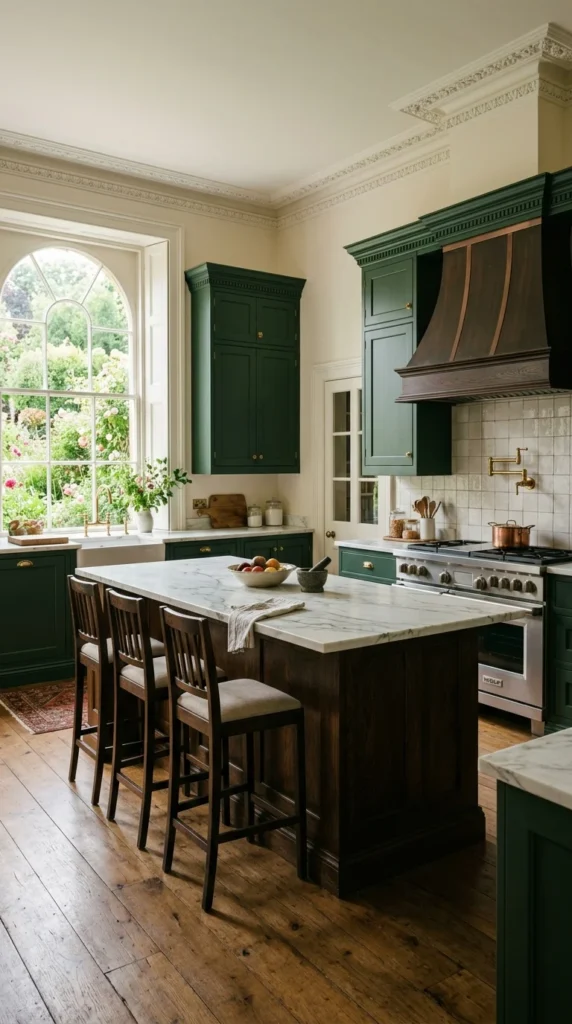
Hunter green is a classic, masculine shade that evokes a sense of permanence and tradition. When paired with dark-stained oak, it creates a moody, “gentleman’s club” atmosphere that is perfect for large, formal kitchens. Dark oak provides a heavy, structural feel that matches the weight of the hunter green.
In a designer-led hunter and dark oak kitchen, lighting is the most critical element. Because both colors absorb a significant amount of light, you must layer your lighting. Use under-cabinet LED strips to illuminate the workspace, decorative sconces for ambiance, and large-scale pendants over the island. Incorporating light-colored stone, such as Calacatta marble or white quartzite, for the countertops will prevent the space from feeling too dark.
7. Seafoam & Bamboo
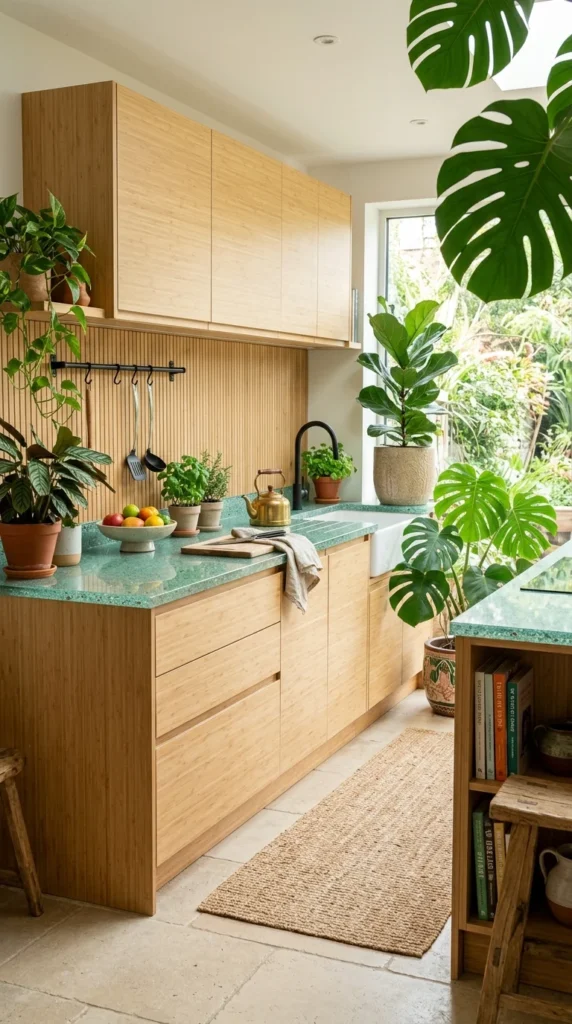
For the environmentally conscious homeowner, seafoam green and bamboo offer a “Coastal Zen” vibe that is as sustainable as it is beautiful. Seafoam is a desaturated green with blue-gray notes that feels airy and tranquil. Bamboo, a rapidly renewable resource, provides a unique linear grain that adds a modern, architectural texture to the kitchen.
This idea focuses on “clean” design—clean for the environment and clean for the eye. Use flat-panel bamboo cabinets to highlight the verticality of the wood grain. The seafoam can be introduced through a glass tile backsplash or a recycled glass countertop. This pairing works exceptionally well with integrated appliances and handleless cabinet designs, emphasizing a sleek, clutter-free lifestyle that feels both organic and high-tech.