
Achieving a picturesque front yard does not have to be a full-time job. Homeowners are increasingly moving away from the high-maintenance demands of traditional manicured lawns in favor of landscapes that are both resilient and visually striking. A low-maintenance yard prioritizes sustainable choices, clever hardscaping, and plants that thrive with minimal intervention. By strategically selecting elements that require less water, pruning, and mowing, you can enhance your home’s curb appeal while reclaiming your weekends.
1. Native Plants
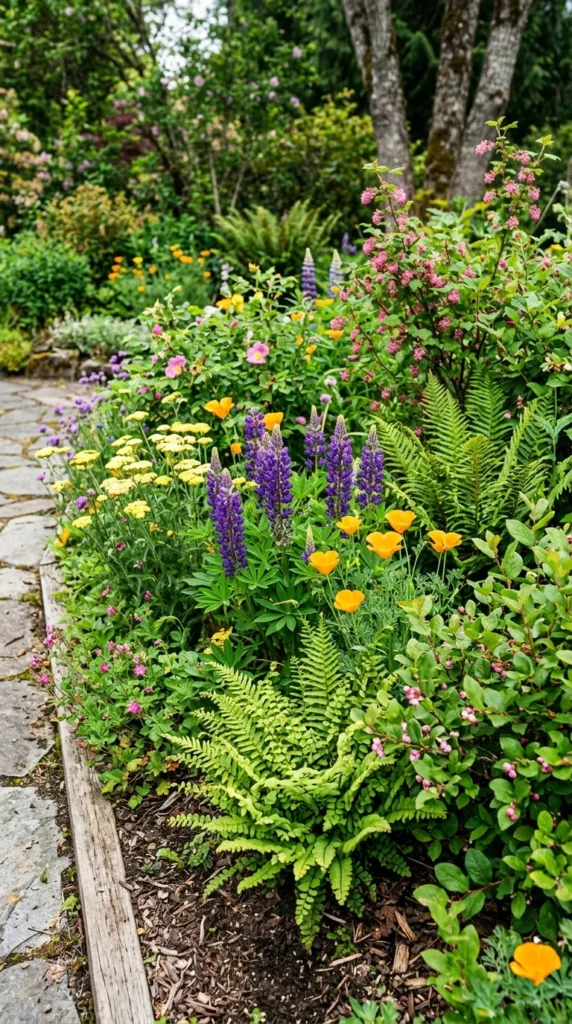
Native plants are the backbone of a low-maintenance landscape. Because these species have evolved to thrive in your specific climate and soil conditions, they generally require less water, fertilizer, and pest control than exotic varieties. Beyond their resilience, native plants support local pollinators like bees and butterflies, creating a living ecosystem right in your front yard. Once established, these plants often require nothing more than occasional pruning to maintain their shape.
2. Perennial Borders
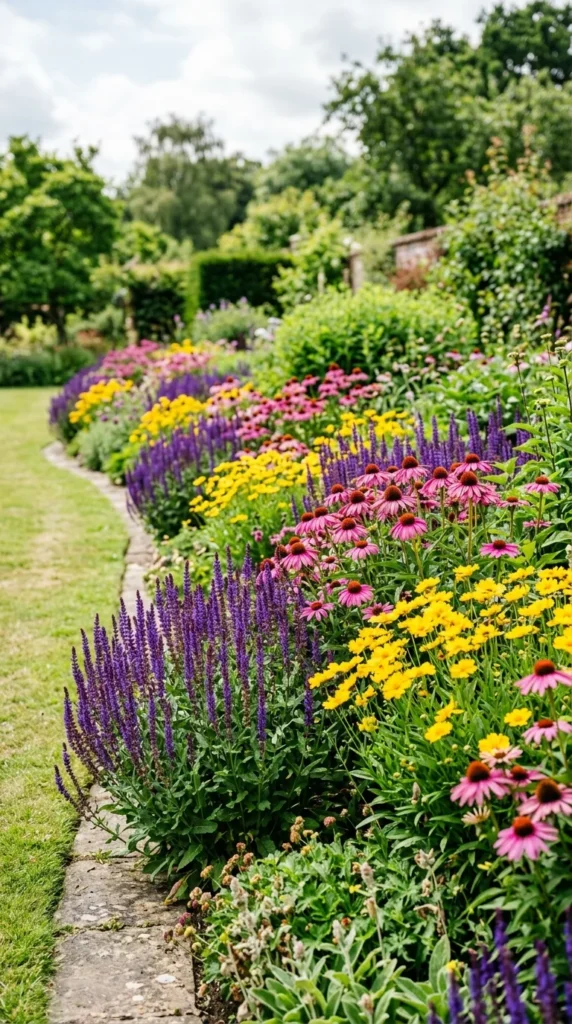
Unlike annuals that must be replanted every spring, perennials return year after year, growing larger and more robust with each season. Creating a perennial border allows for a “set it and forget it” approach to color. By choosing varieties with staggered bloom times, you can ensure your front yard remains vibrant from spring through autumn. Popular choices like lavender, hostas, and peonies provide structural beauty and require very little effort beyond a seasonal cut-back.
3. Xeriscaping
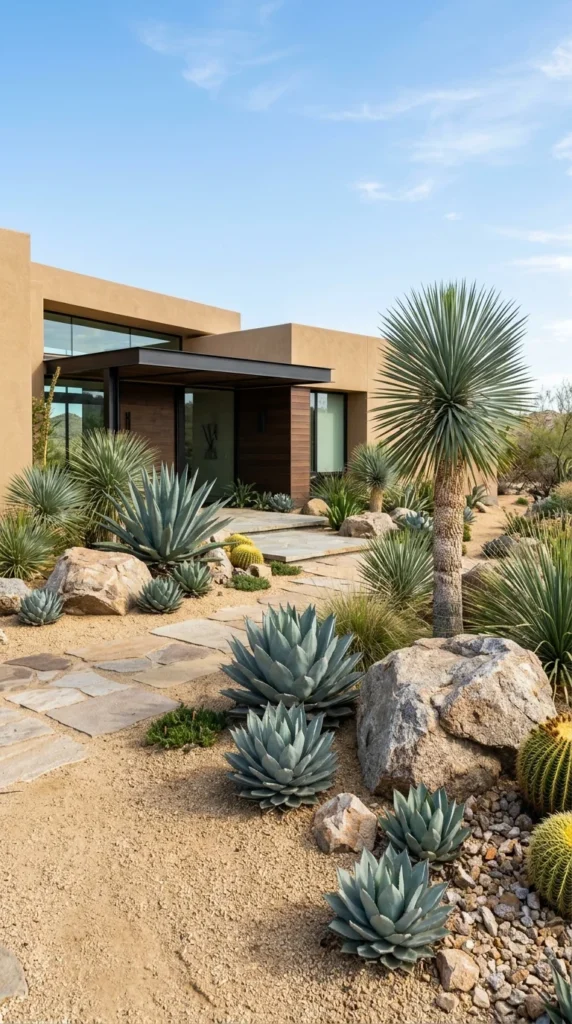
Xeriscaping is a landscaping philosophy designed specifically for water conservation, but its benefits extend far beyond dry climates. By replacing thirsty turf grass with a combination of rocks, mulch, and drought-tolerant plants, you drastically reduce your utility bills and maintenance time. This style often uses “zones” to group plants with similar water needs, ensuring that no drop of water is wasted. The result is a clean, architectural look that feels both modern and grounded.
4. Artificial Turf
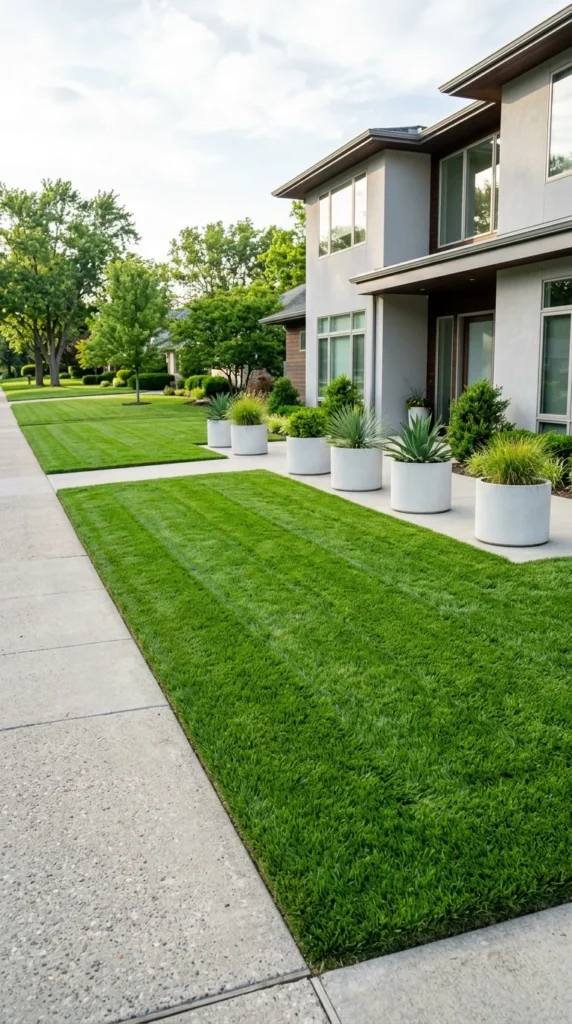
For homeowners who love the look of a green lawn but hate the chores associated with it, high-quality artificial turf is a game-changer. Modern synthetic grass is designed to look and feel remarkably realistic, featuring varied blade heights and colors. It requires no mowing, no watering, and no fertilizing. It is an ideal solution for small urban yards or areas where natural grass struggles to grow due to shade or poor soil quality.
5. Rock Gardens
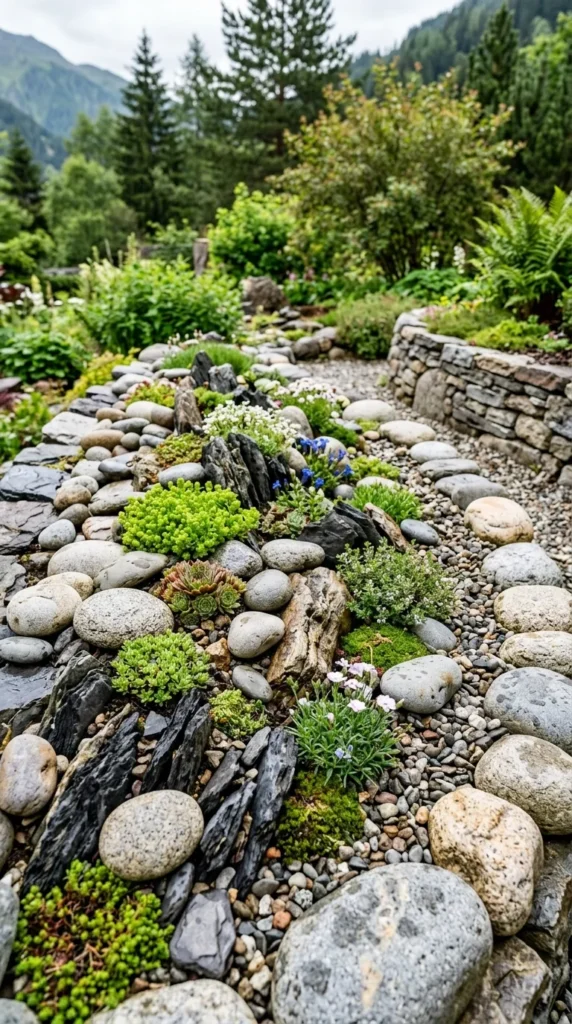
Rock gardens offer a high-impact, low-effort alternative to traditional flower beds. By using a variety of stones—from large accent boulders to fine pea gravel—you can create a landscape with incredible texture and depth. Rock gardens are particularly effective on sloped yards where soil erosion might be a concern. Since rocks don’t die or need water, the only maintenance involved is the occasional removal of a stray weed.
6. Mulched Beds
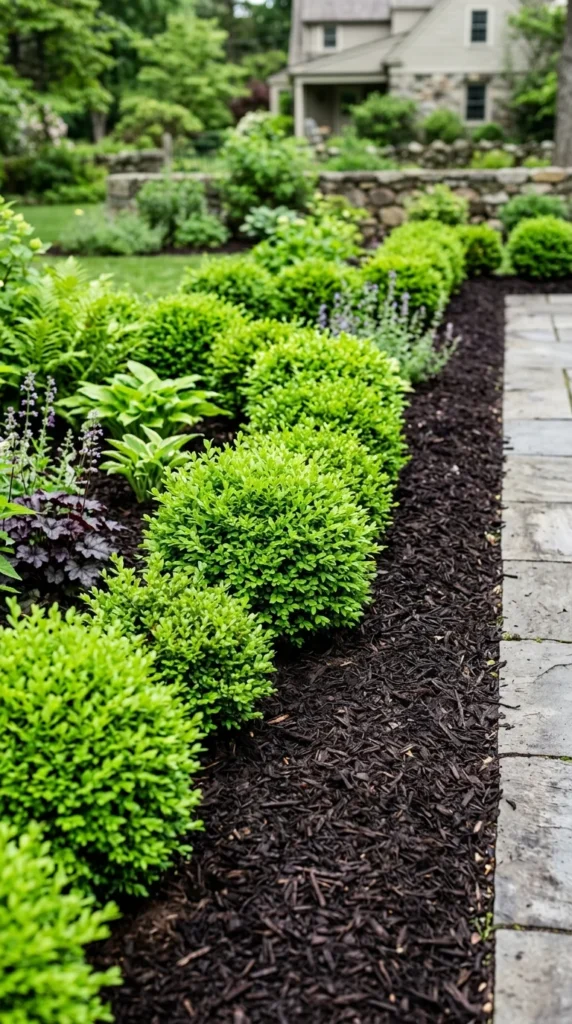
Mulch is one of the most effective tools for reducing yard work. A thick layer of organic mulch, such as wood chips or bark, suppresses weed growth by blocking sunlight and helps the soil retain moisture, reducing the need for watering. As organic mulch breaks down, it also improves soil health. From a design perspective, mulch provides a clean, finished look that makes even the simplest plant arrangements look professional.
7. Potted Evergreens
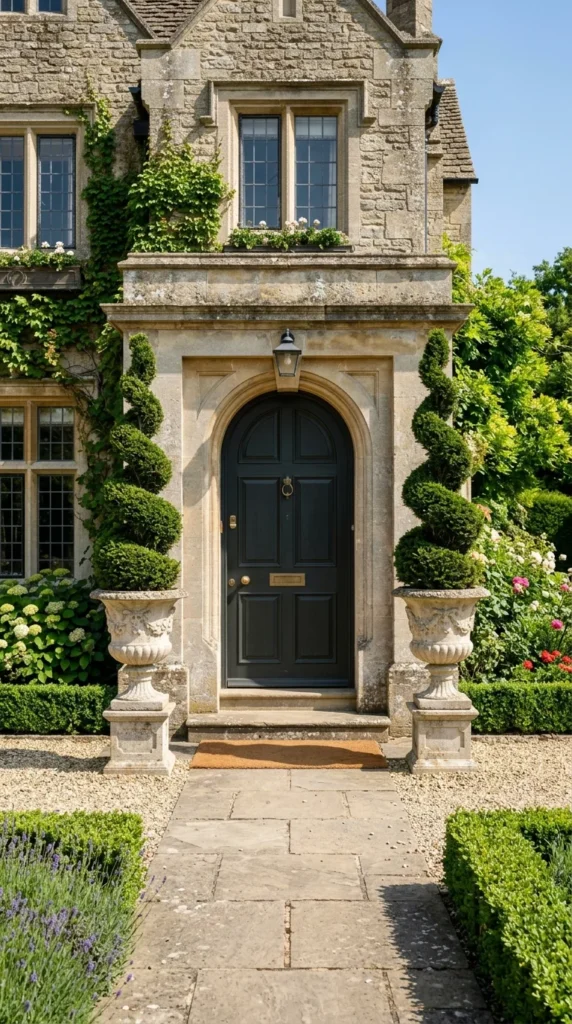
Container gardening is a fantastic way to add greenery without the need for digging or heavy weeding. Potted evergreens, such as dwarf Alberta spruce or boxwood, provide year-round structure and color. Because they are contained, their growth is naturally limited, and they can be easily moved to change the look of your entryway. Pots also allow you to bring “garden” elements onto paved surfaces like porches or walkways.
8. Ground Covers
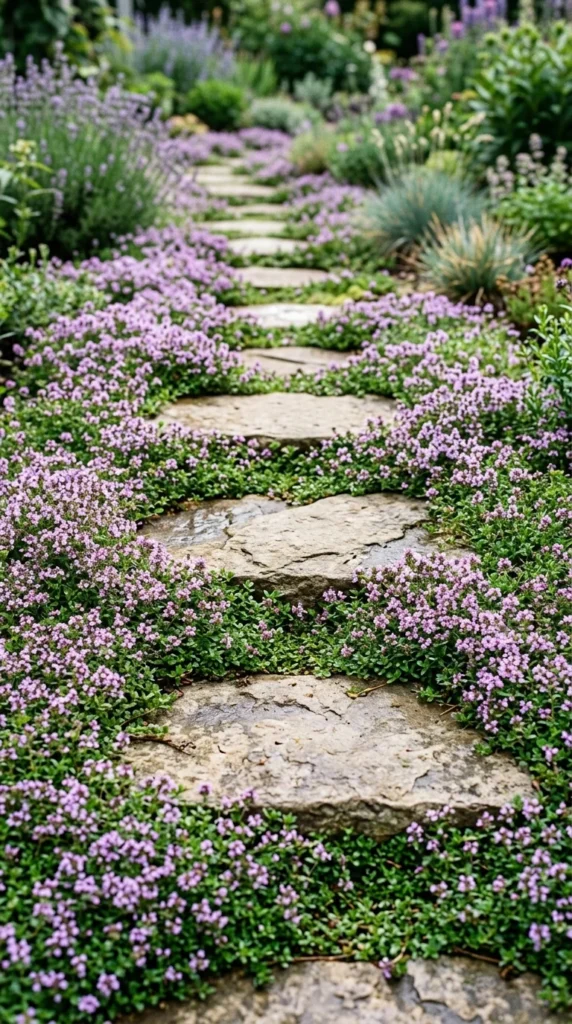
Ground covers are the “living mulch” of the gardening world. Species like creeping thyme, pachysandra, or clover spread horizontally to create a dense mat that chokes out weeds and covers bare soil. Many ground covers are low-growing enough that they never need mowing. They are perfect for filling in awkward gaps, covering steep banks, or replacing a traditional lawn with a more textured, flowering alternative.
9. Gravel Paths
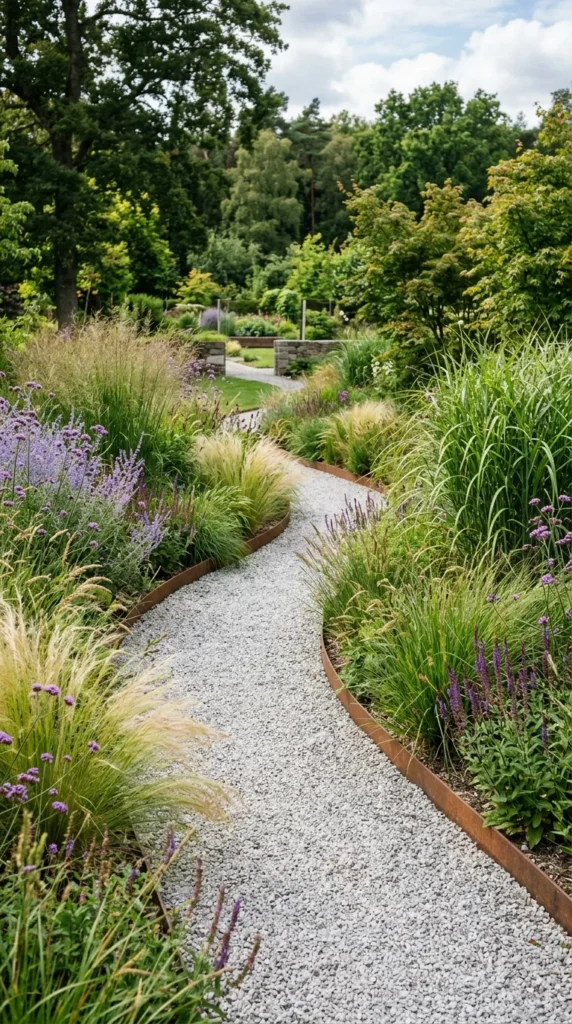
Gravel is an underrated material for front yard design. It is affordable, easy to install, and provides excellent drainage. A gravel path creates a clear sense of movement through the yard and eliminates the need for maintaining a grass walkway. Unlike pavers, gravel is permeable, allowing rainwater to soak into the ground rather than running off into the street. It also adds a satisfying “crunch” underfoot that enhances the sensory experience of the home.
10. Ornamental Grasses
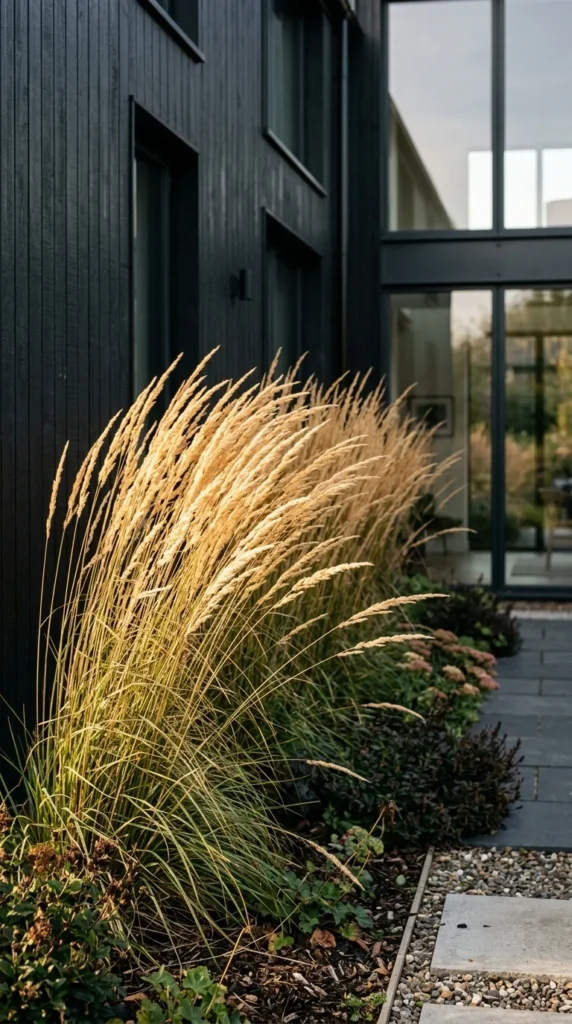
Ornamental grasses provide movement, sound, and height with almost zero effort. Varieties like Blue Fescue, Miscanthus, or Fountain Grass are incredibly hardy and drought-tolerant. They don’t require deadheading or frequent fertilizing; usually, a single cut-back in late winter is all they need to thrive. Their feathery textures provide a beautiful contrast to the hard lines of a house’s architecture.
11. Hardscape Focal Points
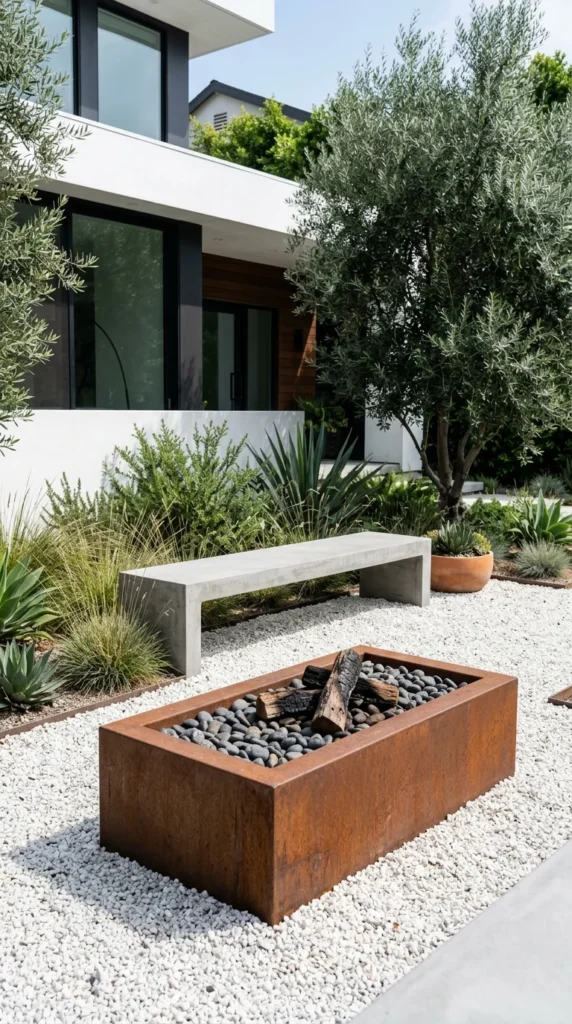
Hardscaping refers to the non-living elements of a landscape, such as patios, walls, and benches. By increasing the ratio of hardscape to softscape (plants), you naturally decrease the amount of maintenance required. A well-placed stone bench or a decorative fountain serves as a focal point that draws the eye, making the surrounding yard feel complete even with minimal planting. Hardscapes are permanent and require only occasional cleaning.
12. Succulent Arrangements
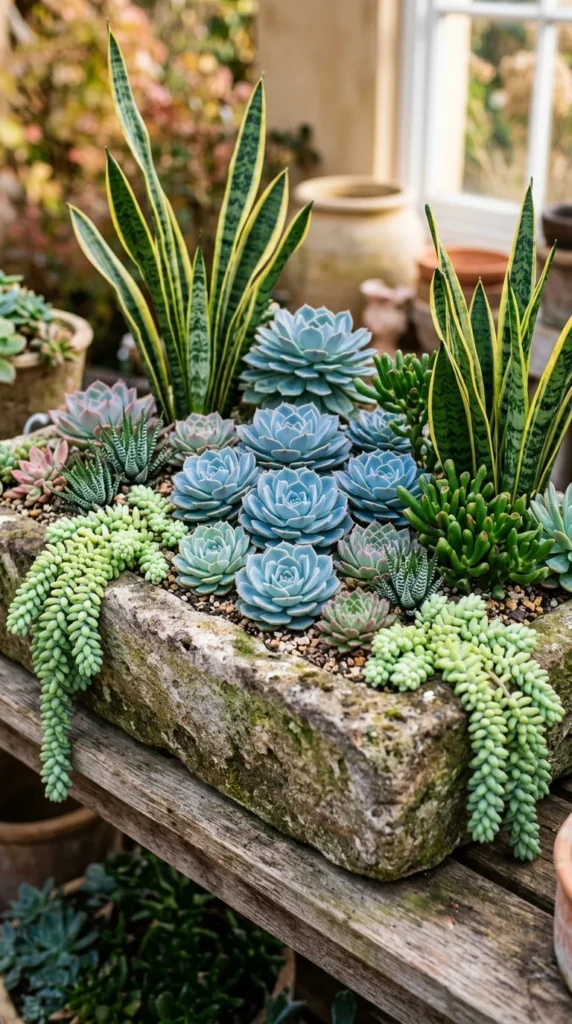
In warmer climates, succulents are the ultimate low-maintenance plants. They store water in their fleshy leaves, allowing them to survive long periods of neglect. Their geometric shapes and unusual colors—ranging from seafoam green to deep burgundy—offer a modern, sculptural aesthetic. When planted in groups, succulents create a “jewel box” effect that provides massive curb appeal with very little water or pruning.
13. Raised Planters
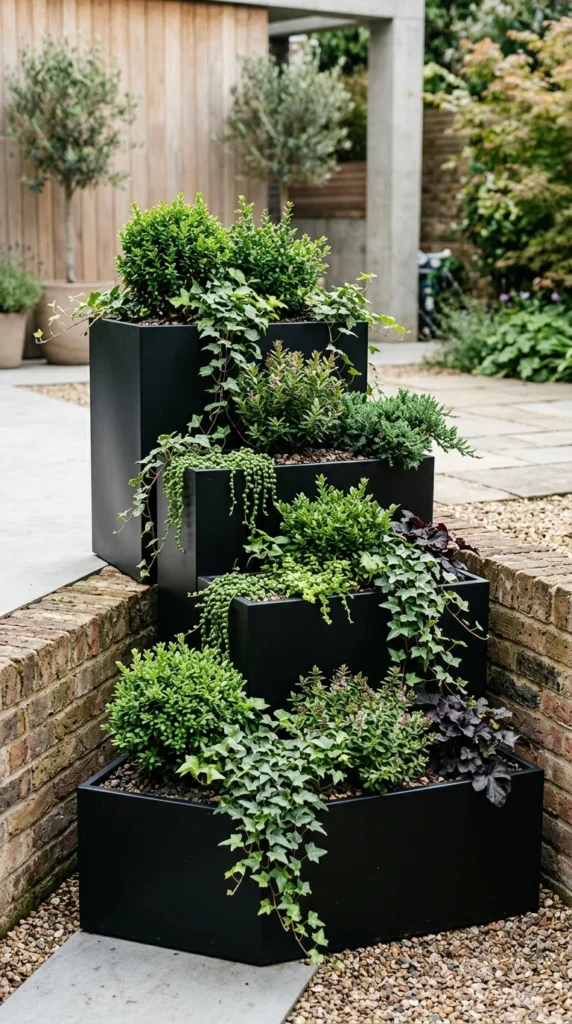
Raised planters solve several gardening problems at once. They provide excellent drainage, prevent soil compaction, and act as a physical barrier against many common garden weeds. For the homeowner, they bring the plants closer to waist height, making any necessary maintenance much easier on the back. Raised beds made of stone, brick, or high-quality wood also add a sophisticated architectural element to the front of the home.
14. Drip Irrigation
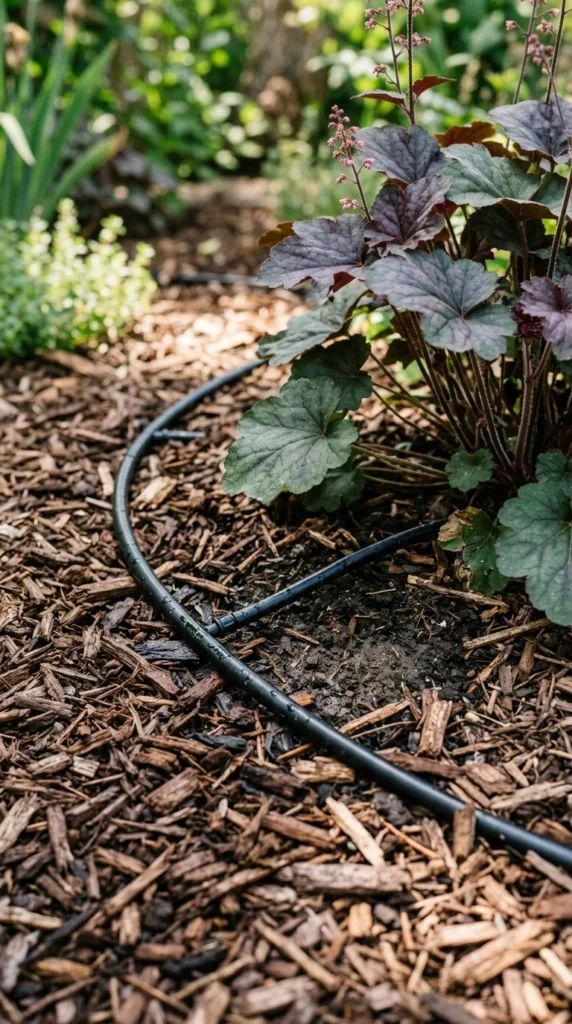
While not a “plant” idea, installing a drip irrigation system is the single best way to automate your yard maintenance. Unlike oscillating sprinklers that lose a lot of water to evaporation and wind, drip systems deliver water directly to the roots of the plants. By putting the system on a smart timer, you ensure your landscape stays hydrated without ever having to pull out a hose. It is an invisible upgrade that pays for itself in time and water savings.
15. Evergreens
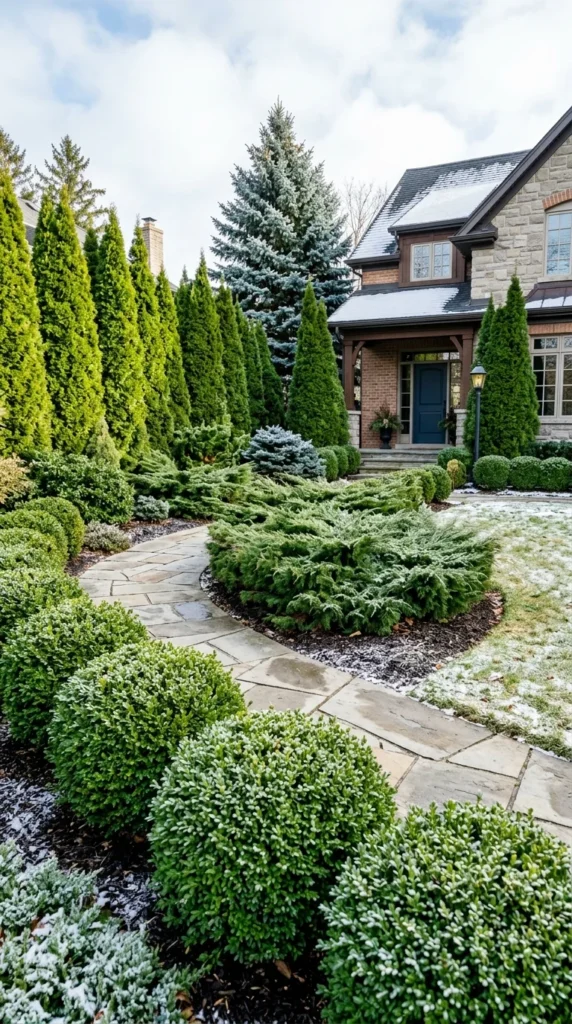
Deciduous trees and shrubs drop their leaves in the autumn, creating a rake-heavy chore for the homeowner. Evergreens, however, keep their foliage year-round. Incorporating a mix of evergreen shrubs and trees ensures that your front yard doesn’t look barren during the winter months. Because they grow slowly and maintain their shape well, they require far less frequent pruning than many flowering deciduous species.
16. Flowering Shrubs
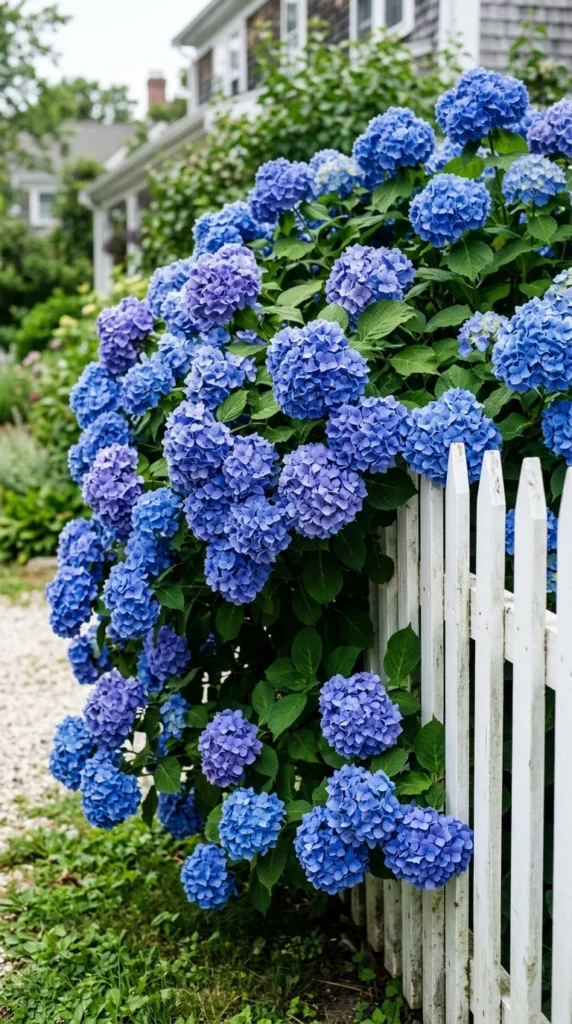
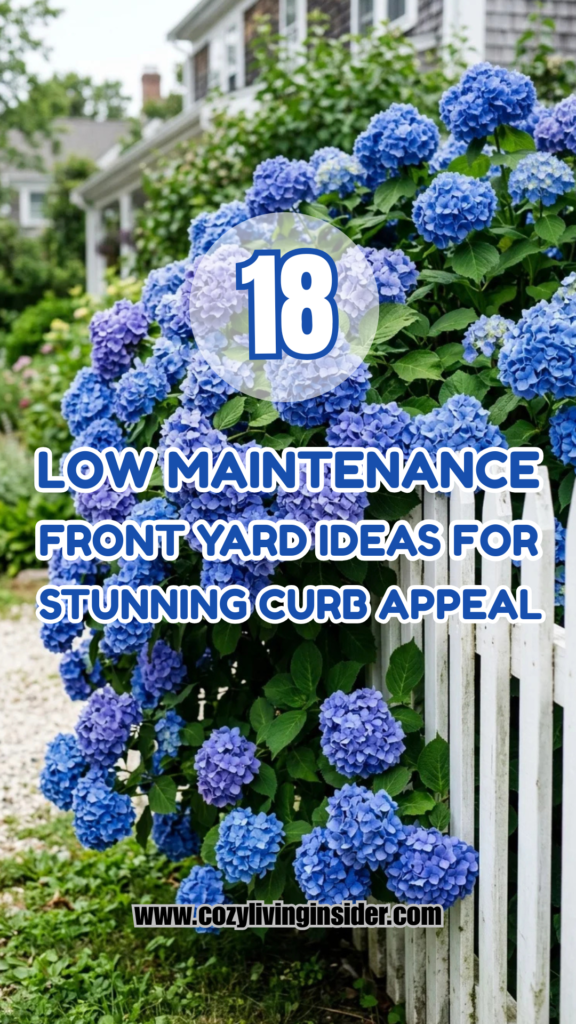
Flowering shrubs offer the visual impact of a flower garden with the structural permanence of a tree. Choices like hydrangeas, azaleas, or lilacs provide a massive burst of color during their blooming season and remain attractive green backdrops for the rest of the year. Once they reach maturity, most flowering shrubs are quite independent, requiring only an annual trim to keep them within their designated space.
17. Meadow Lawns
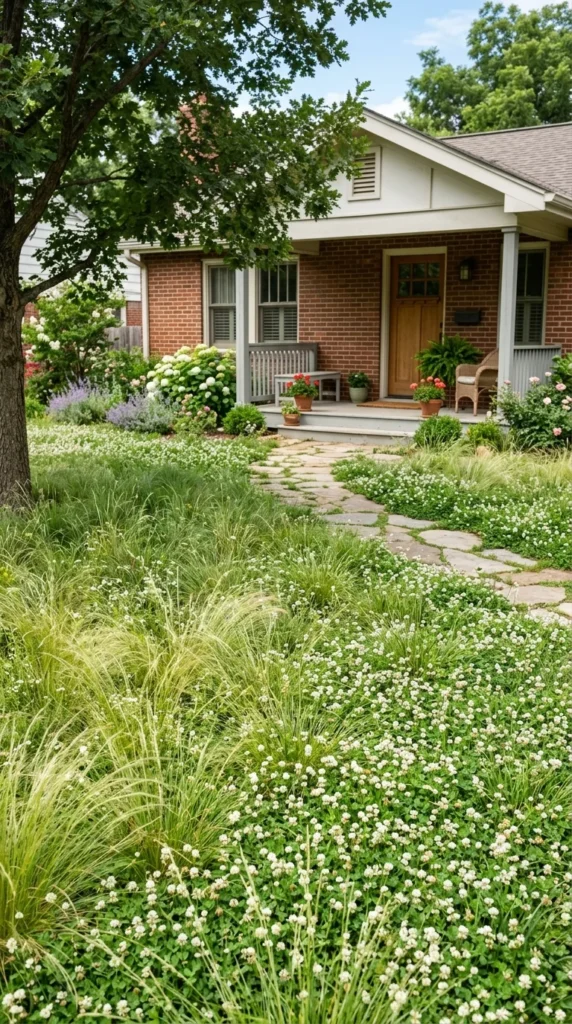
The “no-mow” or meadow lawn is a rising trend for eco-conscious homeowners. By using specific grass blends that only grow to a certain height or stay low to the ground, you can eliminate the weekly mowing routine. These lawns often incorporate clover or wildflowers, which stay green even in the heat of summer and provide a soft, romantic look that stands out from the standard suburban lawn.
18. Solar Lighting
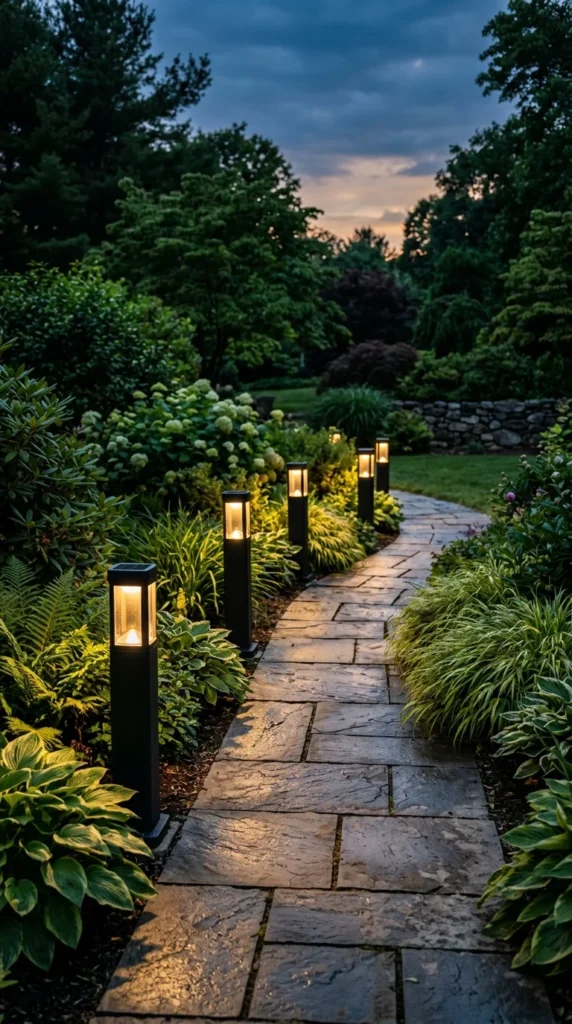
Curb appeal doesn’t end when the sun goes down. Solar lighting is a maintenance-free way to highlight your landscaping and improve home security. Because they are powered by the sun, there is no need for complicated underground wiring or an increase in your electricity bill. Simply stake them into the ground along paths or near focal points, and they will automatically illuminate your hard work every evening.